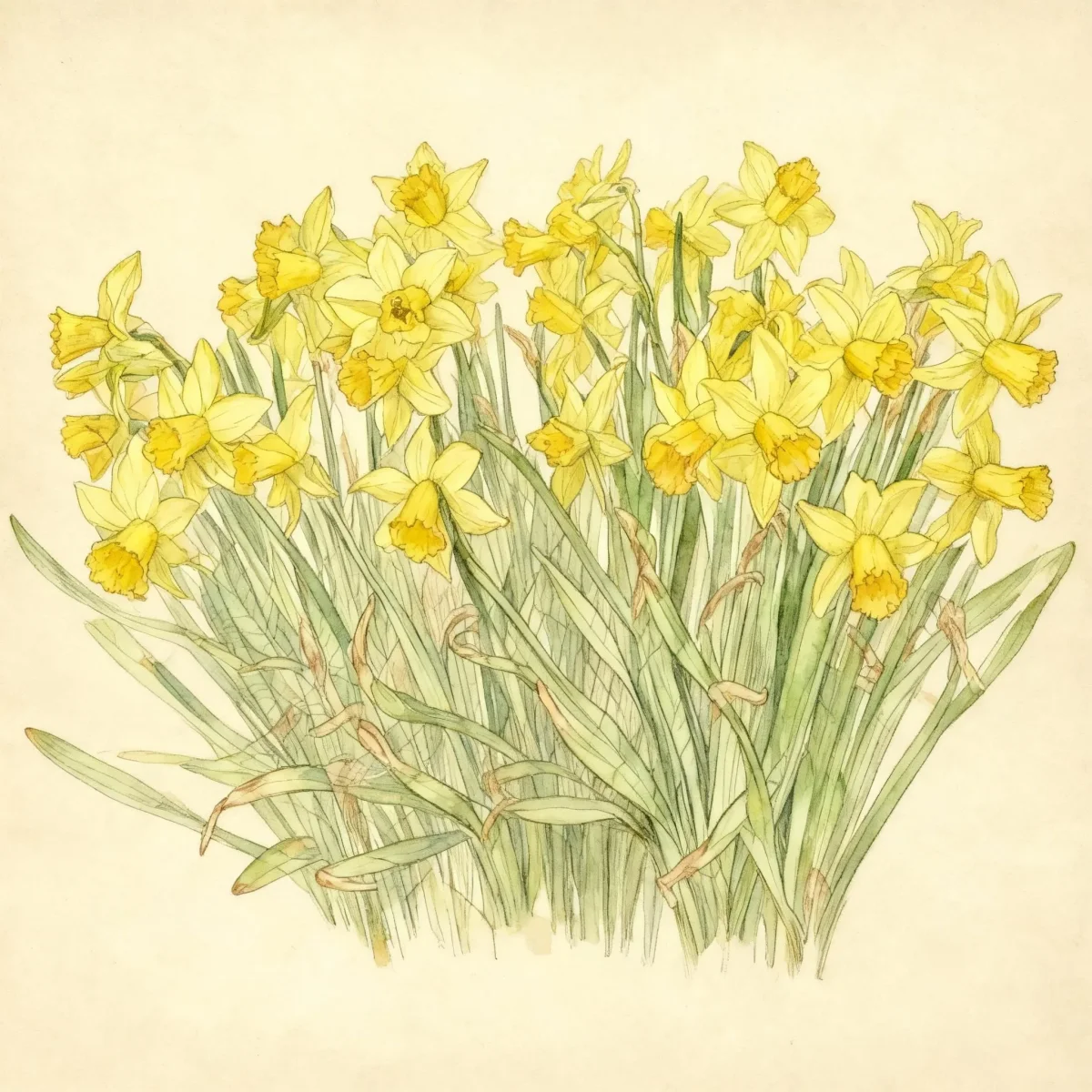
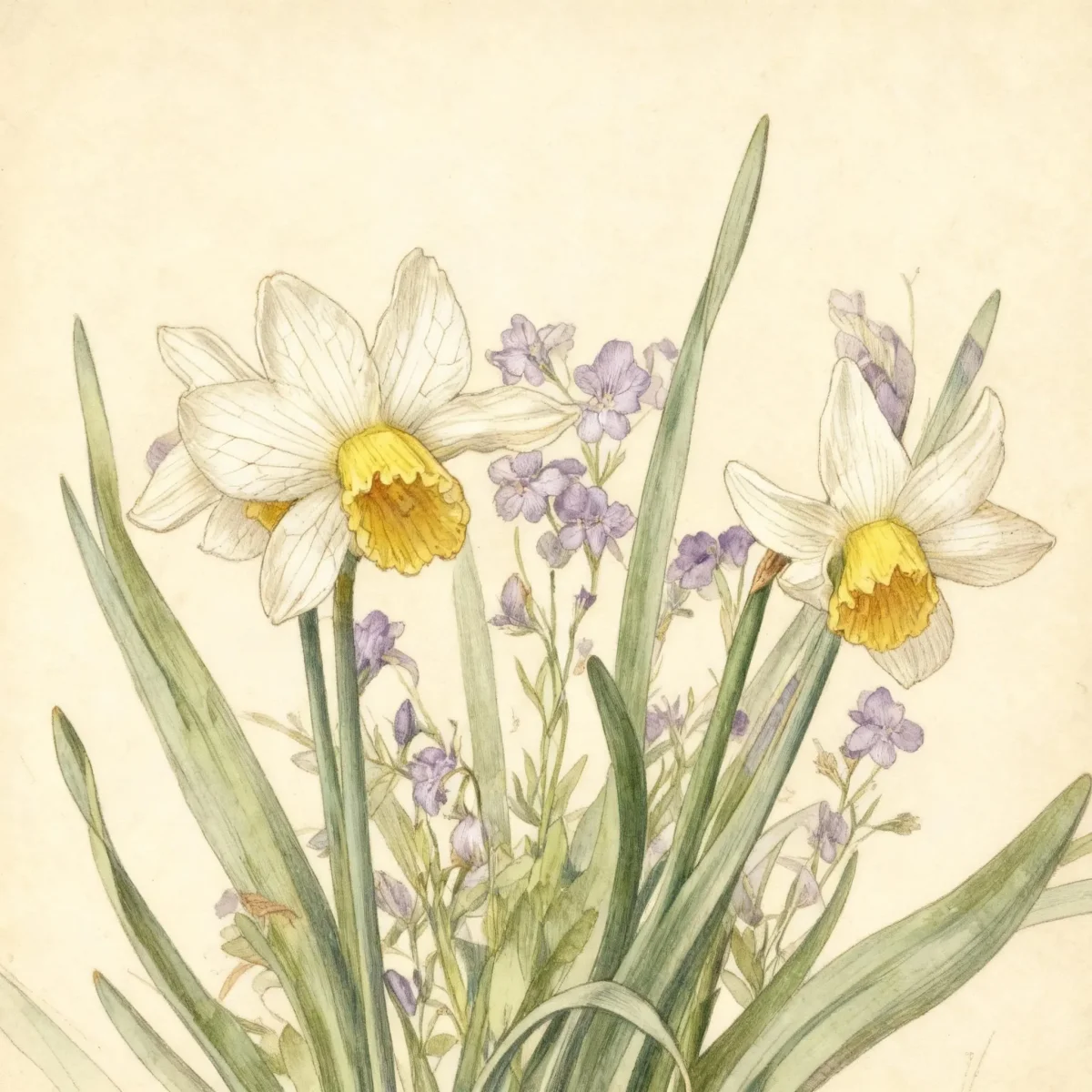
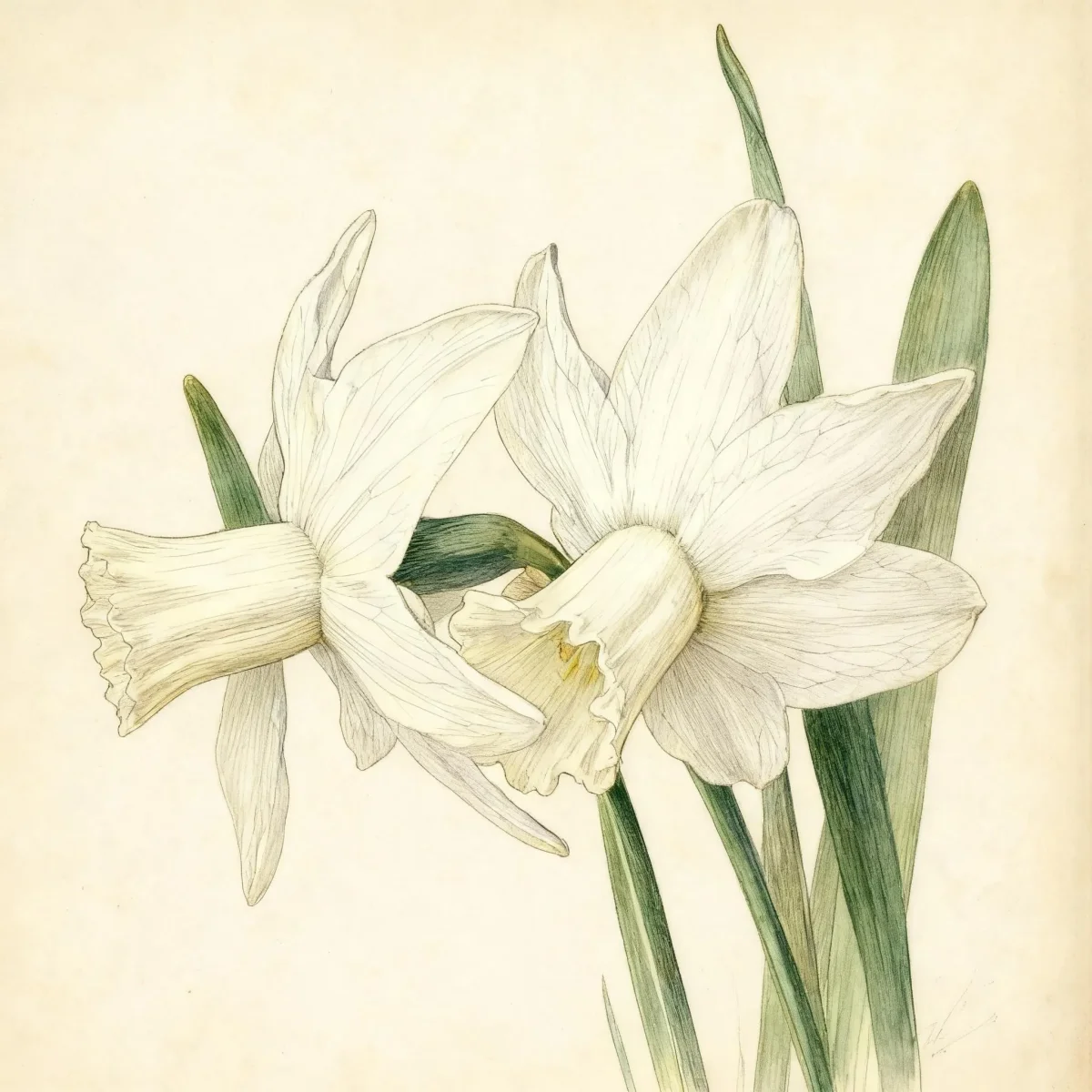
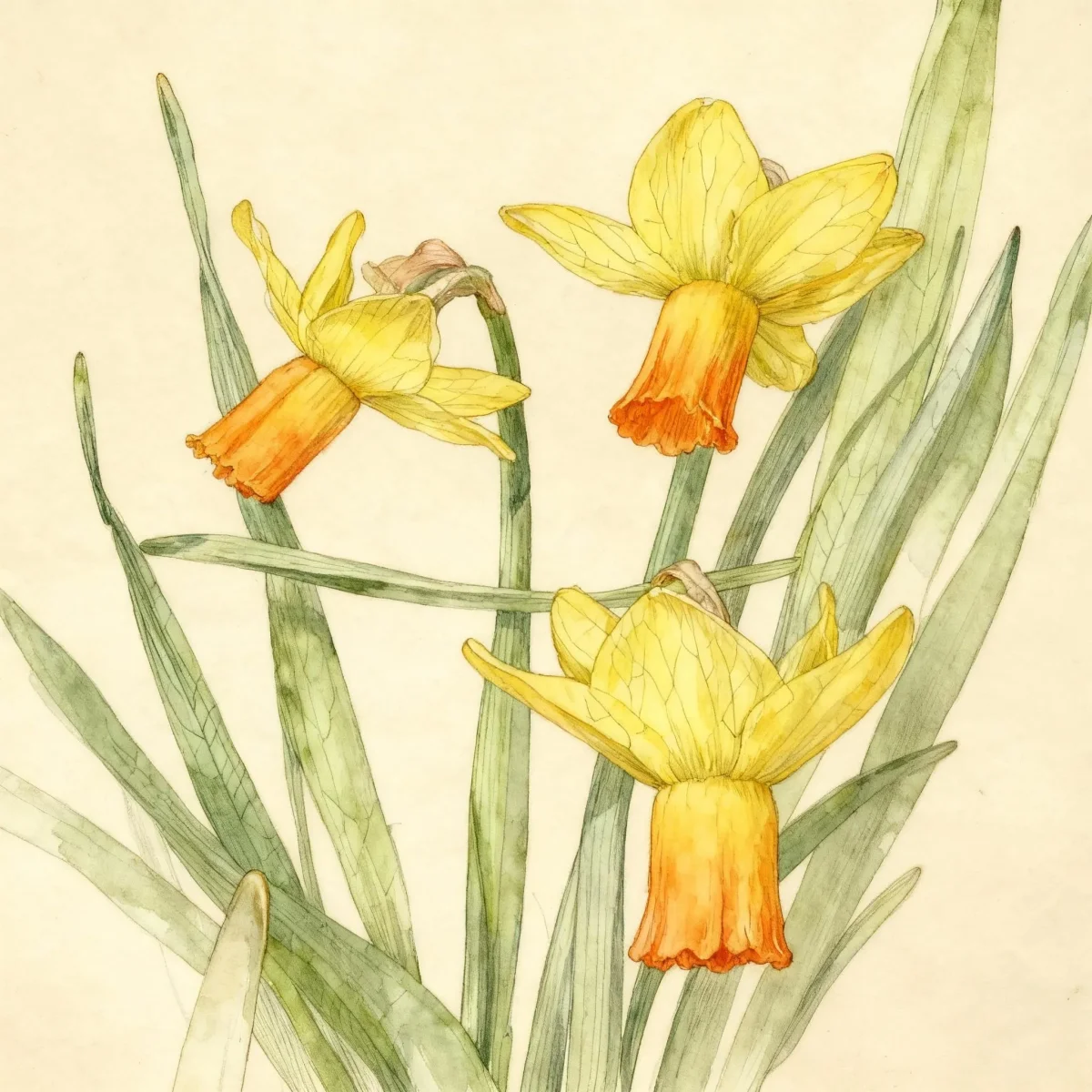
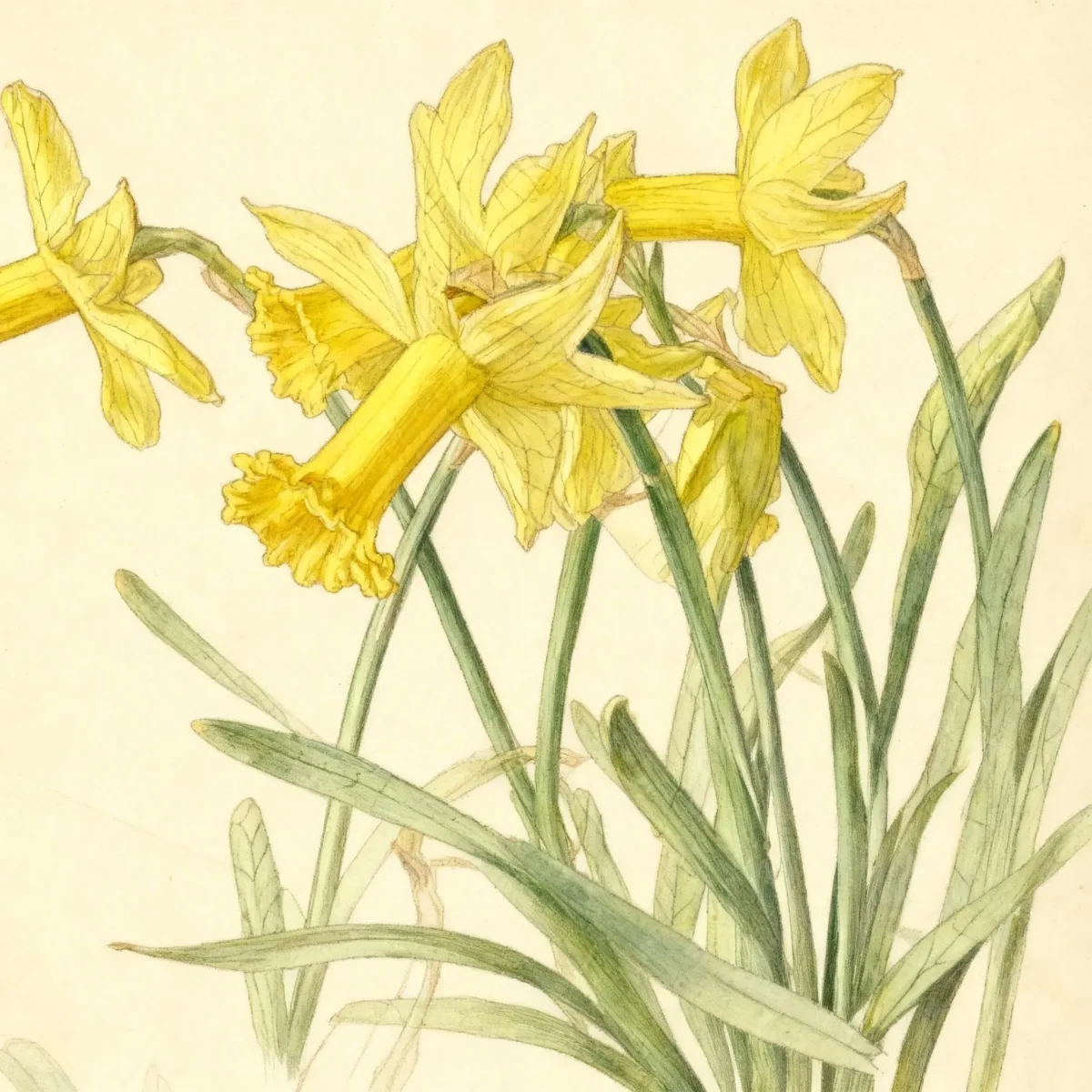
Cyclamineus daffodil (Narcissus 'Straight Arrow')
Narcissus 'Straight Arrow' is a striking Cyclamineus daffodil known for its yellow petals and orange-red trumpet. Low maintenance and deer resistant.
Scroll down to discover growing tips, care requirements, companion plants, and more
Complete Plant Information
Overview
Narcissus ‘Straight Arrow’ provides a spirited rush of color early in the spring season, making it a quintessential spring bulb. This variety belongs to the Cyclamineus daffodil group, distinguished by its gracefully swept-back petals, offering a unique architectural element to the garden compared to standard trumpet types. Gardeners value this plant for its reliability and its low maintenance requirements once established.
As a hardy bulb, Narcissus ‘Straight Arrow’ thrives in average yet well-drained soils, preferring locations that receive full sun to partial afternoon shade. Its vibrant yellow petals contrasting with the deep orange-red trumpet create a powerful visual display that signals the true arrival of spring. Beyond its beauty, this popular daffodil is a practical choice as it is naturally avoided by deer and rabbits.
For the best early season impact, plant Narcissus ‘Straight Arrow’ in mass groupings early in the fall. These reliable performers deliver consistent seasonal returns, requiring little intervention beyond allowing the foliage to naturally complete its cycle after the March to April bloom period. Enjoy the showy display and fragrance this Cyclamineus daffodil brings to borders and spring scenes.
Fast Facts
- Plant Family: Amaryllidaceae
- Plant Type: Bulb
- Hardiness Zones: USDA Zones 3-8
- Size at Maturity:
- Height: 0.5-1 ft
- Spread: 0.5-0.75 ft
- Bloom Time: March to April
- Bloom Description: Yellow petals and orange-red trumpet
- Sun Exposure: Full sun to part shade
- Water Needs: Medium
- Maintenance Level: Low
How to Grow
Planting these bulbs should occur in the early to mid-fall before the ground freezes solid. Select a location with average moisture and excellent drainage, as good drainage is crucial to prevent bulb rot. Plant each bulb two to three times as deep as its height, ensuring there is at least three inches of soil covering the top. Space bulbs between four and ten inches apart, remembering that wider spacing can look sparse initially but encourages longer independence before division is required.
Water needs for Narcissus ‘Straight Arrow’ are medium during the active growing season. Keep the soil uniformly moist until the blooms fade. Once dormant, this Cyclamineus daffodil is drought-tolerant. After flowering concludes in the spring, remove the faded flower stem if you wish to prevent seed formation, but critically, do not cut the foliage back. Allow the leaves to completely yellow (which can take several weeks) so the bulb can properly store energy for next year’s display.
To optimize the visual effect, consider the flower’s tendency to face the strongest light source; plant bulbs where any surrounding shade areas are behind the display. Narcissus ‘Straight Arrow’ bulbs can be left undisturbed for many seasons. If clumps become overcrowded or bloom quantity diminishes, divide them immediately after the foliage has died back completely.
Landscape Uses
Daffodils, including the superior Narcissus ‘Straight Arrow’, offer exceptional longevity, blooming reliably year after year unlike many other spring ephemeral bulbs. They excel when planted in large drifts or sweeping masses, rather than solitary accents, achieving a more naturalized garden effect. Plant them liberally in beds, along borders, or in open woodland settings where they can naturalize beneath deciduous trees or in front of shrubs.
These early bloomers mix beautifully with other spring-flowering companions. Consider pairing the early bloom time of Narcissus ‘Straight Arrow’ with late-blooming tulips or early-season grape hyacinths (Muscari) to extend the season of interest in the same area. Because they are deer and rabbit resistant, they serve as a reliable, early flash of color in spots where other bulbs might be browsed clean by wildlife.
Standout Features
Flower Qualities
- Showy
- Fragrant
Noteworthy Characteristics
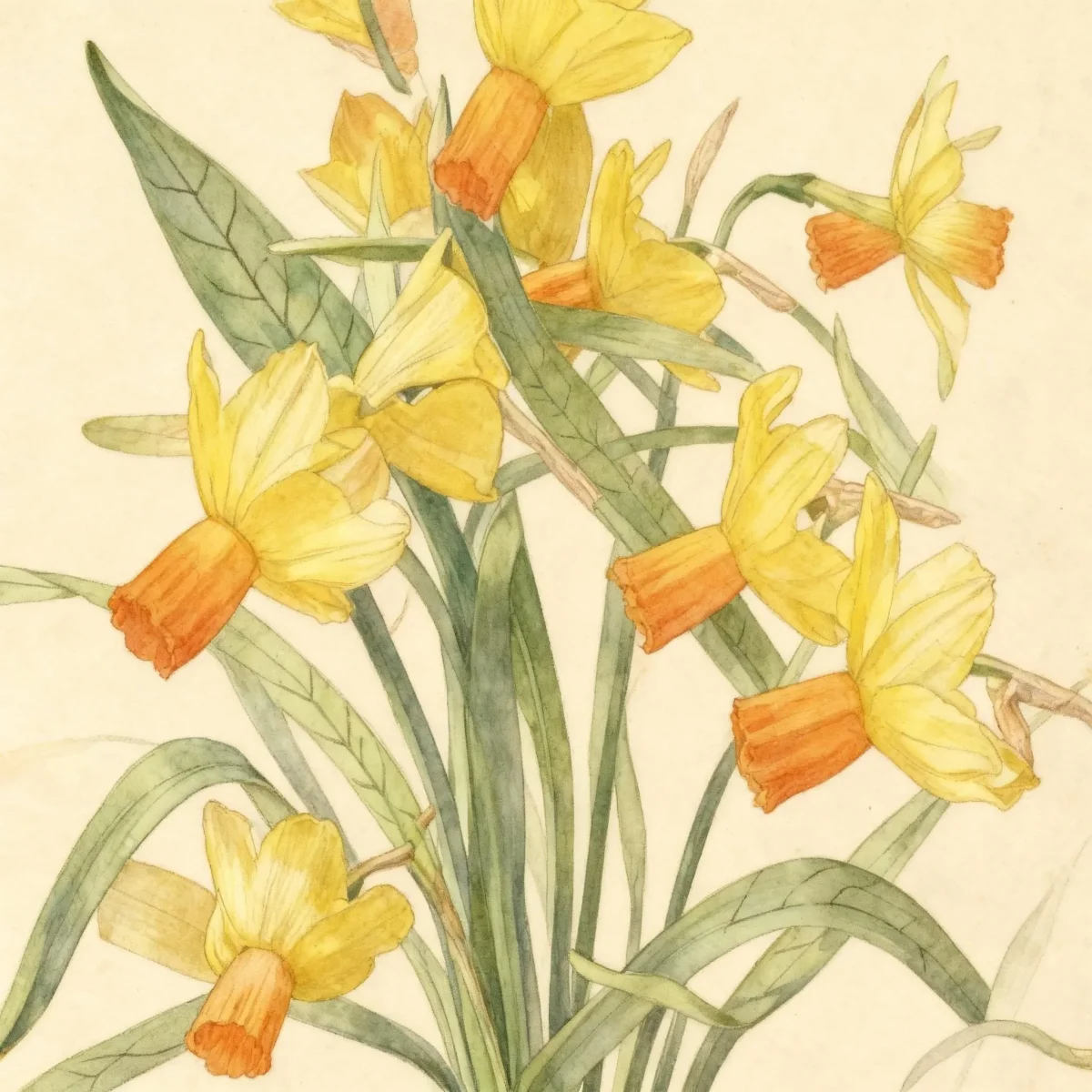
Narcissus is a genus of about 50 species of bulbous perennials from Europe and North Africa, serving as a mainstay of the spring garden. ‘Straight Arrow’ is specifically classified as a cyclamineus daffodil (Division VI), meaning it features a long trumpet paired with petals that are highly reflexed, often reminiscent of cyclamen flowers. This specific hybrid showcases strongly reflexed, bright yellow petals and a deeply contrasting, cylindrical, orange-red trumpet, rising 8-10 inches tall.
Tolerances
- Rabbit
- Deer
- Drought
Potential Problems
Daffodils are often celebrated for being almost entirely free from serious insect or disease issues, provided they are situated in appropriate, well-drained soil. The primary hazard is bulb rot, which occurs exclusively when soil conditions are perpetually saturated or poorly draining. Rarely, pests such as the narcissus bulb fly or slugs and snails might appear; early spring vigilance against slugs is often helpful. Additionally, beware of the Narcissus yellow stripe virus, though it is an infrequent issue.
Frequently Asked Questions
What hardiness zones is Cyclamineus daffodil suitable for?
Narcissus ‘Straight Arrow’ is suitable for USDA Zones 3 through 8, offering reliable perennial performance across a wide climatic range.
How large does Narcissus ‘Straight Arrow’ grow?
This variety typically reaches a height between 0.5 and 1 foot tall, with a spread covering about 0.5 to 0.75 feet at maturity.
When does Narcissus ‘Straight Arrow’ bloom?
This daffodil typically blooms early in the spring season, generally visible from March to April, displaying its attractive yellow petals and orange-red trumpet.
What sun exposure does Cyclamineus daffodil need?
Narcissus ‘Straight Arrow’ performs best when given full sun to partial shade exposure, tolerating afternoon shade well.
Conclusion
The Narcissus ‘Straight Arrow’ offers exceptional value to the early spring garden through its brilliant, contrasting bicolors and low-maintenance nature. As a highly desirable Cyclamineus daffodil, it promises reliable, fragrant blooms that deer and rabbits will leave untouched. Plan your autumn plantings now, ensuring an ideal, well-drained spot to welcome this early herald of the growing season.
Companion Planting
When planning garden beds around Narcissus ‘Straight Arrow’, consider companion plants that either bloom after the daffodils fade or require similar sun and soil conditions. Because the large leaves of daffodils must remain intact through late spring to feed the bulb, avoid planting dense, low-growing annuals right at the base that might smother the foliage. Excellent companions include early spring-flowering perennials like Snowdrops (Galanthus) that bloom just before, or later bloomers like Siberian Iris growing slightly taller nearby.
Another effective strategy is integrating early-season annuals like pansies or violas in the foreground. These offer continuous color once the daffodil foliage begins to yellow, effectively masking the fading leaves while the Narcissus ‘Straight Arrow’ finishes its naturalizing process. Ensure any companion planting respects the daffodil’s requirement for well-drained, organically enriched loam throughout the year.
Design Ideas for Early Spring Impact
To maximize the impact of Narcissus ‘Straight Arrow’, utilize grouping strategies rather than planting individuals randomly. Plant these bulbs in groupings of at least six, but ideally dozens, along curving lines that mimic natural drifts found in meadows or woodland edges. The height of this variety (up to 1 foot) makes it perfect for the middle ground in a layered border design.
For formal designs, plant the bulbs in tight, defined patterns near walkways or entry points where their fragrance and showy flowers can be easily appreciated up close. For a more informal look, scatter them randomly beneath semi-mature deciduous trees. They naturalize well, meaning they will multiply and spread over time, creating an increasingly authentic spring display with minimal yearly effort for this hardy Cyclamineus daffodil.