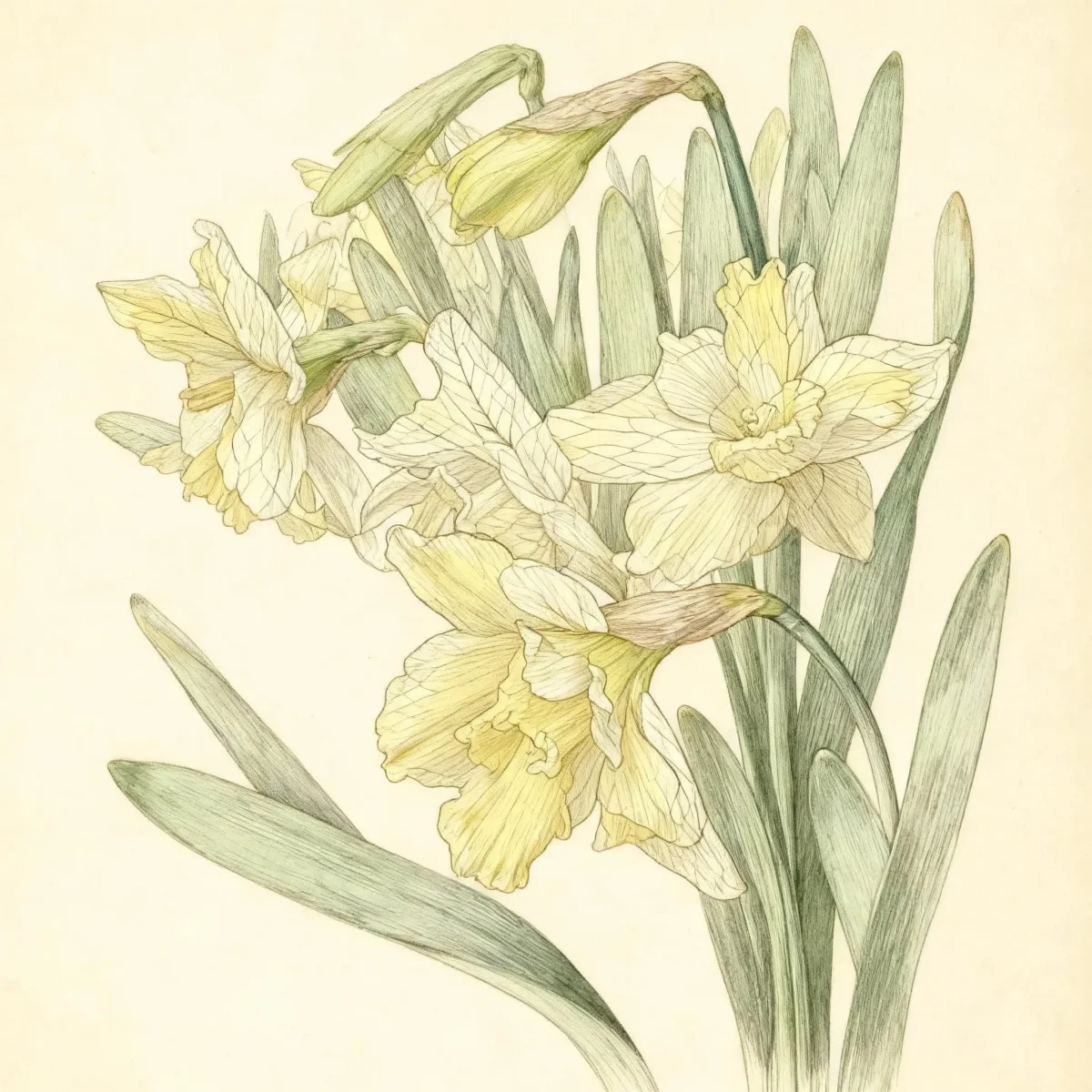
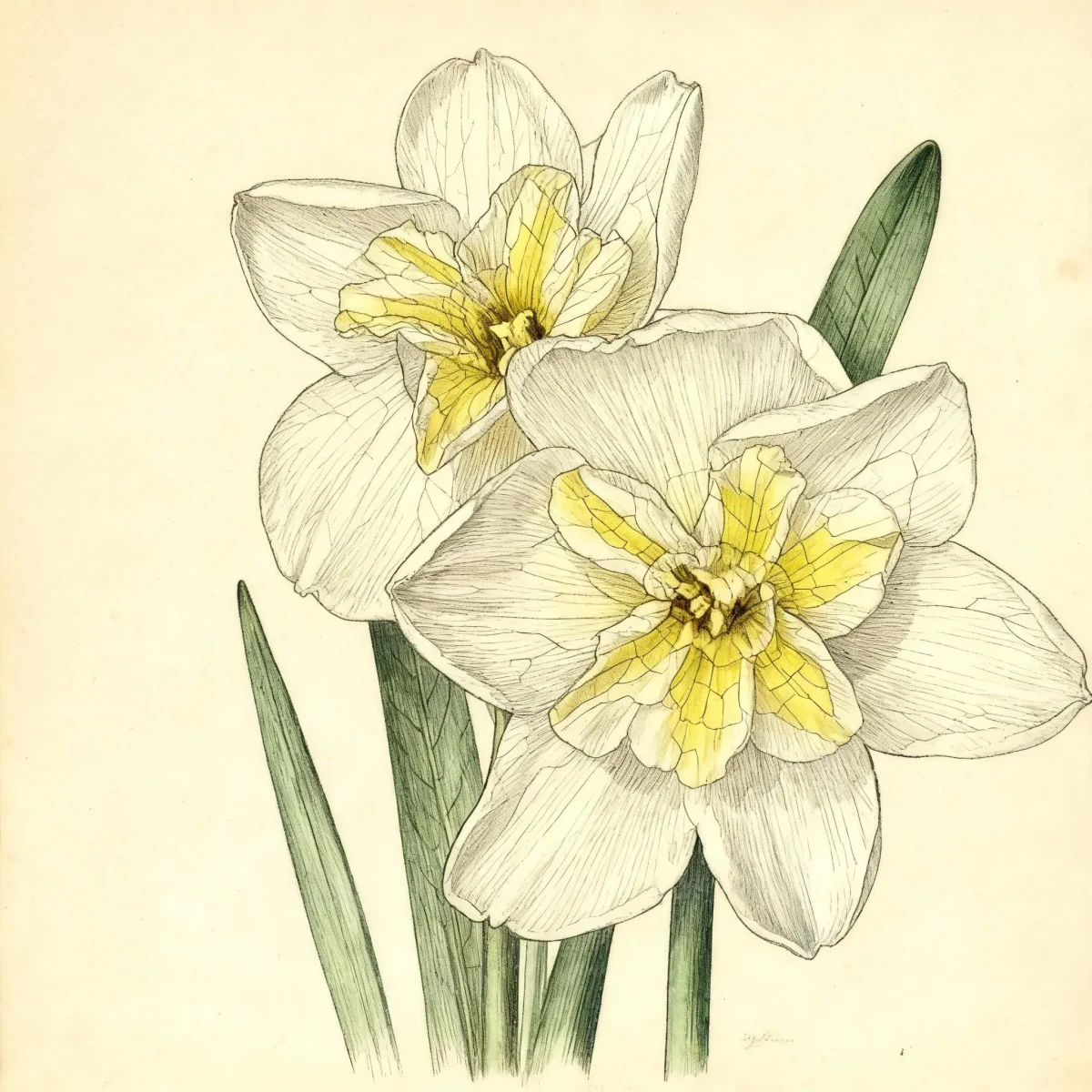
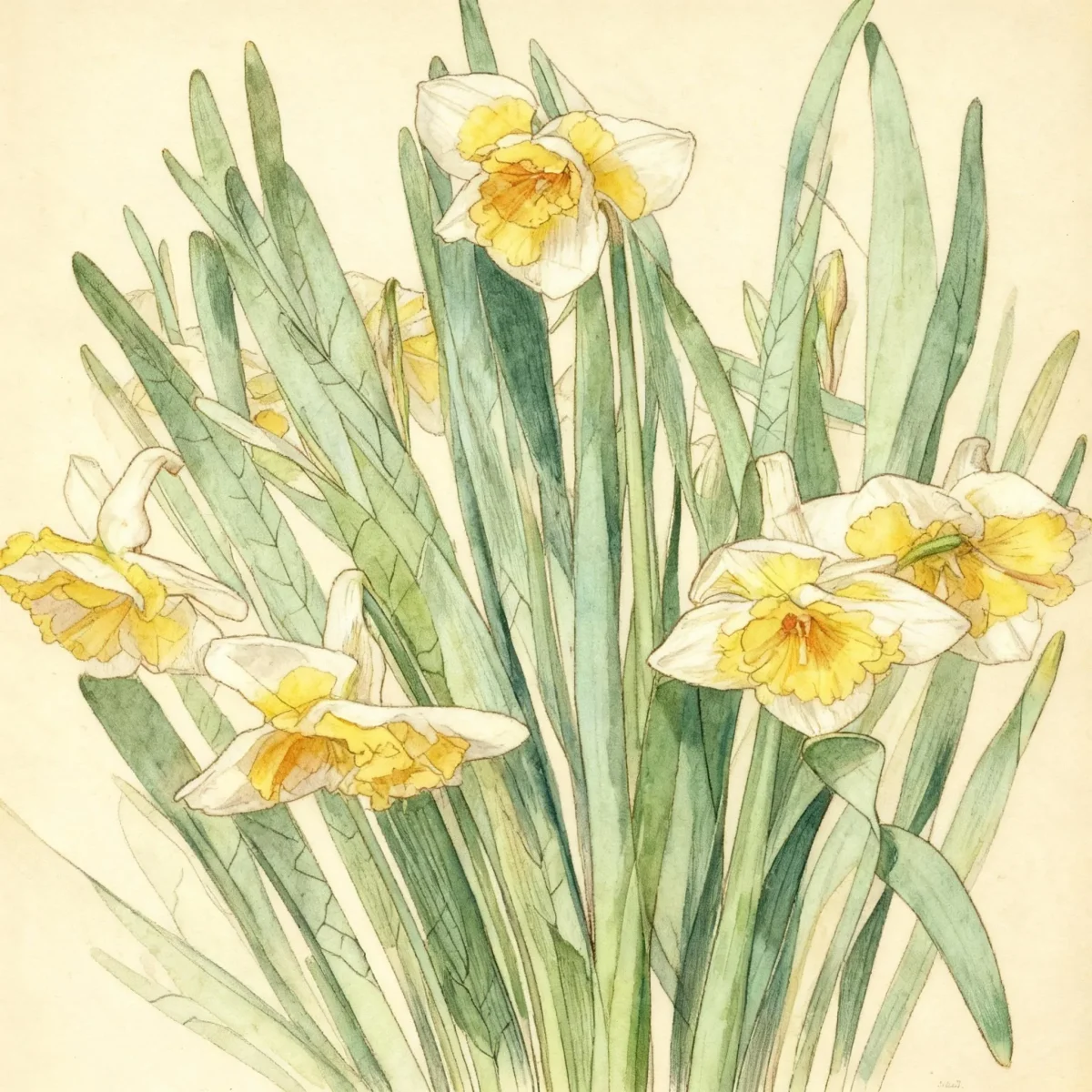
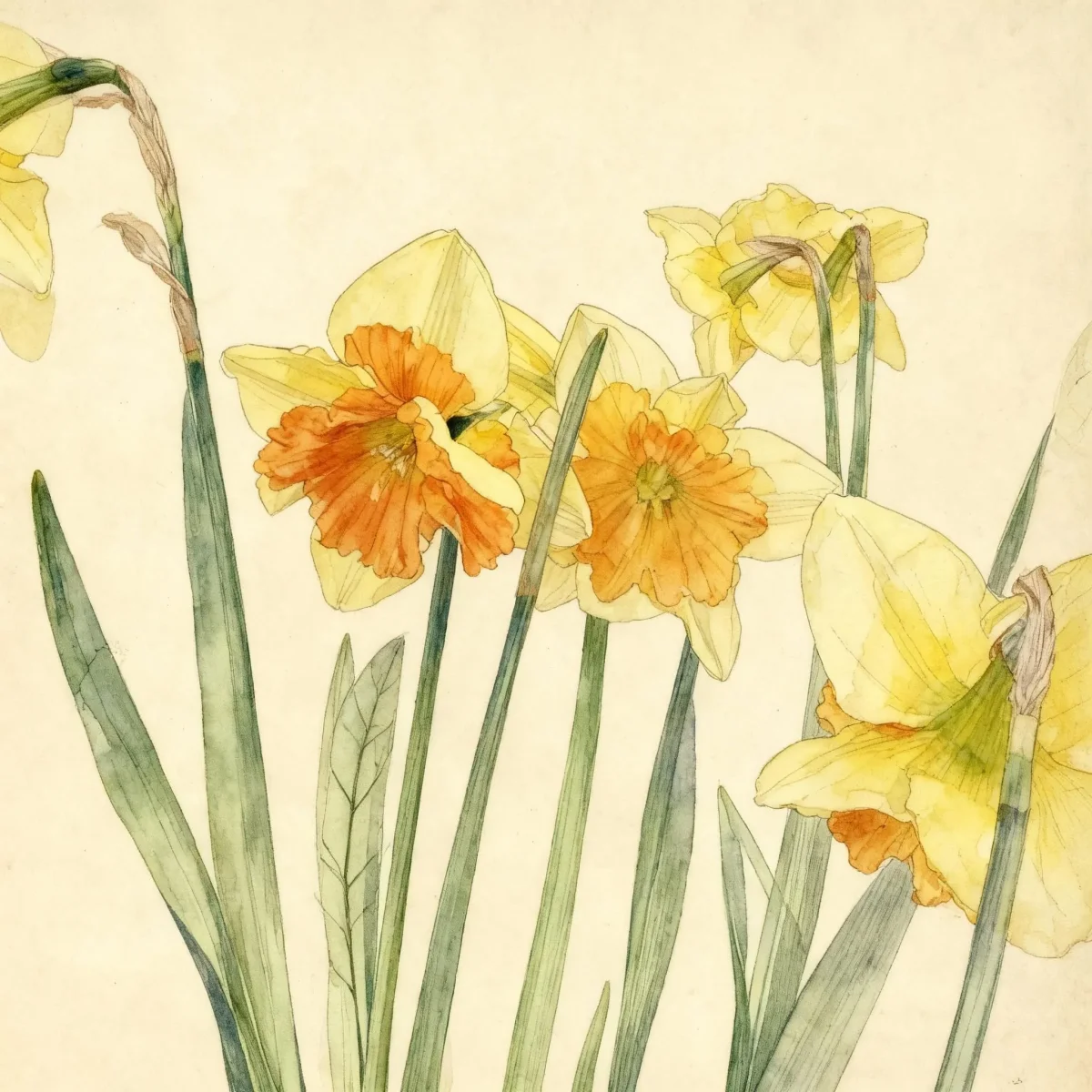
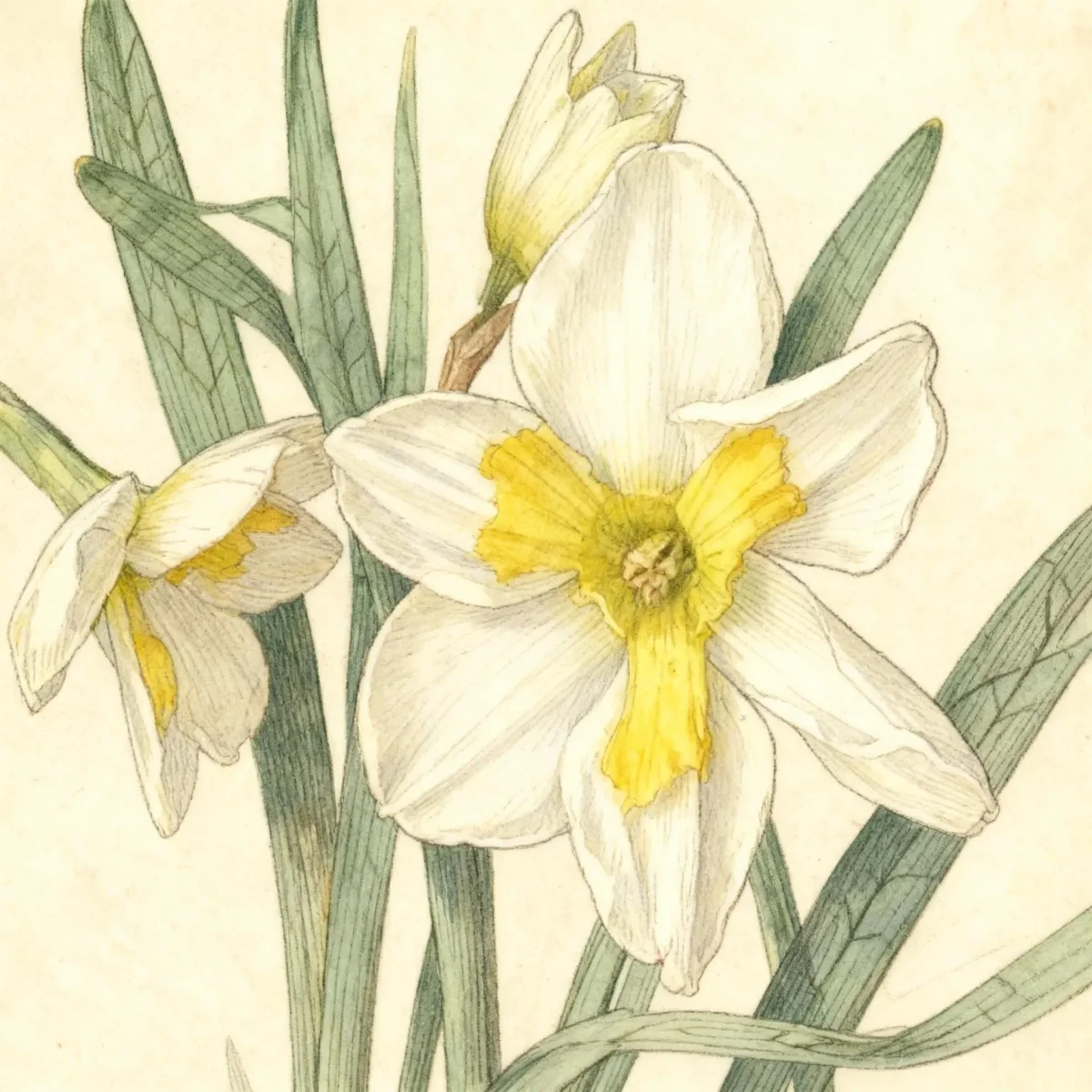
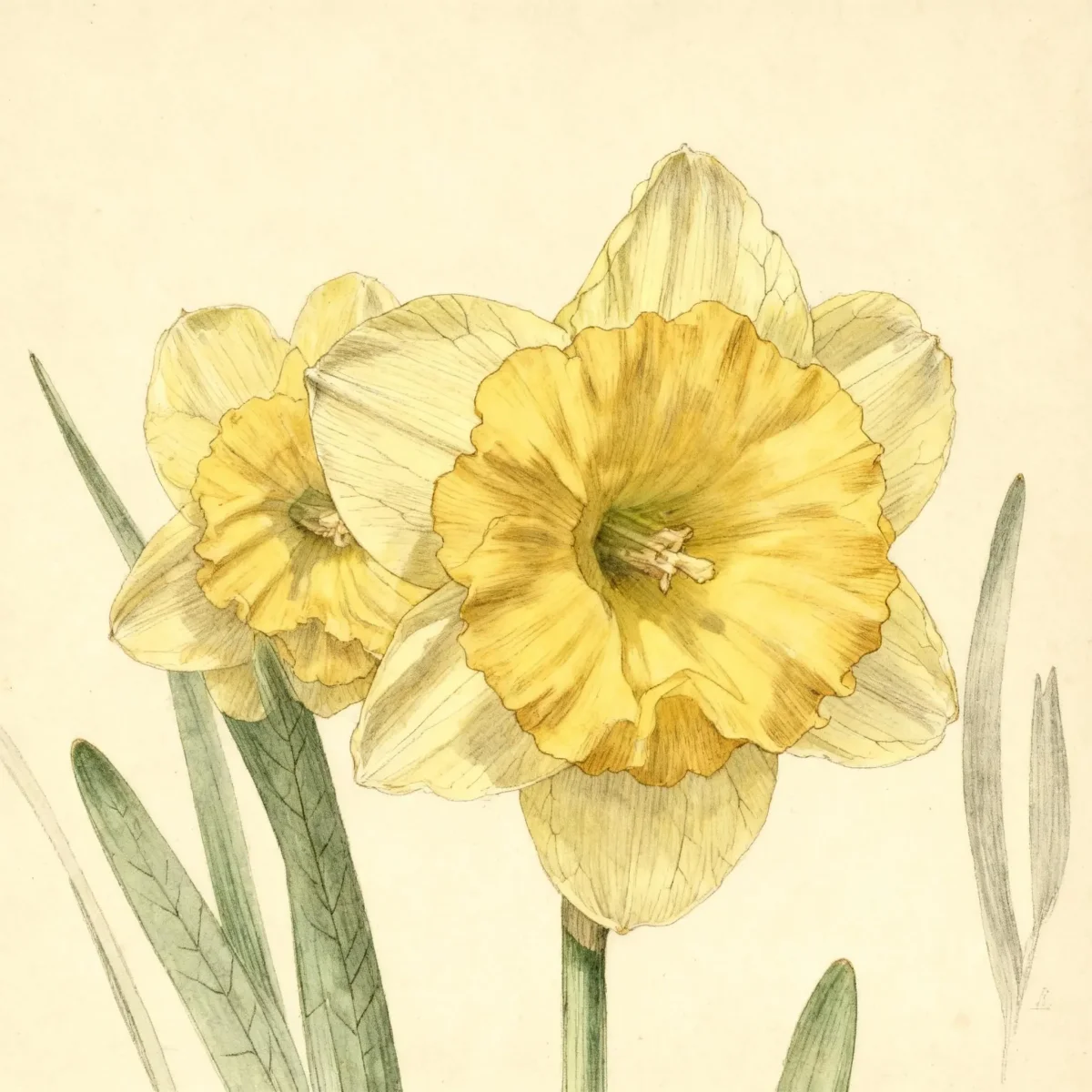
Split-corona daffodil (Narcissus 'Flyer')
Narcissus 'Flyer' is a striking Split-corona daffodil offering bright yellow blooms. Low maintenance, deer resistant, and reliably perennial for Zones 3-9.
Scroll down to discover growing tips, care requirements, companion plants, and more
Complete Plant Information
Overview
Narcissus ‘Flyer’ brings unique architectural interest to the spring garden, recognized as a member of the Split-corona daffodil group. Its distinctive bloom features ruffled, pale yellow corona segments set against vivid yellow petals, ensuring it stands out among spring bulbs. As a reliable perennial, this daffodil thrives in average soils, offering robust performance with low maintenance requirements once established. Planting Narcissus ‘Flyer’ in quantity creates sweeping drifts of color, providing essential early-season cheer and excellent value year after year.
This celebrated cultivar, registered in 1978, is prized for its structure and dependable return. It fits seamlessly into mixed borders or naturalized areas, brightening landscapes between one and two feet tall. Gardeners appreciate the low upkeep associated with daffodils, as they require minimal care beyond proper initial planting and bulb division only when blooming wanes.
Gardeners seeking dependable spring color should consider the Split-corona daffodil group, with ‘Flyer’ being an excellent anchor. It performs well in full sun but tolerates some light shade, making placement flexible. Furthermore, its natural resistance to common garden pests adds significantly to its appeal in both formal and informal settings.
Fast Facts
- Plant Family: Amaryllidaceae
- Plant Type: Bulb
- Hardiness Zones: USDA Zones 3-9
- Size at Maturity:
- Height: 1-2 ft
- Spread: 0.5-1 ft
- Bloom Time: April
- Bloom Description: Yellow
- Sun Exposure: Full sun to part shade
- Water Needs: Medium
- Maintenance Level: Low
How to Grow
Planting Narcissus ‘Flyer’ bulbs should occur in the early to mid-fall season to allow root development before the ground freezes. Daffodils require excellent drainage; plant them in organically rich loams where moisture is medium and consistent during active growth. The general rule for depth is 2–3 times the height of the bulb, typically resulting in a planting depth of 3–6 inches, spaced 4–8 inches apart. Ensure that the location provides good morning sun or full sun exposure, as flowers naturally tend to face the strongest light source.
Watering needs are important during spring growth but change once blooming concludes. Keep the soil uniformly moist while the foliage is actively growing and flowering; however, drought is well-tolerated once the leaves begin to yellow and the plant goes dormant. Never prematurely cut back the foliage until it yellows, as this is how the bulb replenishes necessary energy reserves for next year’s display.
Maintenance for this Split-corona daffodil is refreshingly low, as bulbs can remain undisturbed for many years. Deadhead spent flowers after bloom to prevent unsightly seed heads from forming, but leave the foliage intact. If bloom quality declines slowly over several seasons, lift and divide the clumps in summer, immediately following the death of the foliage.
Landscape Uses
Daffodils, unlike many spring annuals, are superb naturalizing bulbs that improve when left alone, making Narcissus ‘Flyer’ ideal for long-term landscape planning. They perform best when planted in substantial groups of six or more bulbs to create effective drifts of color rather than isolated specimens. These bulbs are magnificent when massed under deciduous trees where they receive full sun in spring before the tree canopy leafs out, or planted along the front edge of shrub borders to provide early color contrast.
Consider incorporating the bright yellow blooms of Narcissus ‘Flyer’ alongside early-flowering grape hyacinths (Muscari) or late-blooming species tulips for extended spring interest. Because they excel in quantity plantings, use them liberally in woodland areas or along walkways where their performance as a perennial investment is fully realized. Allow them to naturalize freely, letting them colonize areas where they can achieve their best sweeping effect.
Standout Features
Flower Qualities
- Showy
- Good Cut
Noteworthy Characteristics
Narcissus is a genus of about 50 species of bulbous perennials from Europe and North Africa that form a mainstay of the spring garden. Flowers typically exhibit a corona (cup/trumpet) surrounded by six petals (perianth segments) in various colors. Narcissus ‘Flyer’ is specifically classified as a Division 11a Split-Cupped Collar daffodil, featuring tightly packed, ruffled, pale yellow corona segments set against vivid yellow petals. The genus name honors the mythological figure Narcissus, who fell in love with his own reflection.
Tolerances
- Rabbit
- Deer
- Drought
Potential Problems
Daffodils, including the Narcissus ‘Flyer’ cultivar, are generally celebrated for being pest-free when grown in suitable conditions. The primary issue arises from poor soil drainage, which can lead to bulb rot. Ensure your planting site features well-drained, medium-moisture soil to prevent this common cultural failure.
Infrequent pests to monitor include slugs and snails, particularly when foliage is emerging, and occasionally, the narcissus bulb fly or narcissus nematode attack the underground structures. Rarely, Narcissus yellow stripe virus may present, characterized by streaking on foliage. If pests become an issue, standard cultural practices focusing on healthy soil and removing infected material usually suffice, especially since rabbits and deer actively avoid the bulbs and foliage.
Frequently Asked Questions
What hardiness zones is Split-corona daffodil suitable for?
Narcissus ‘Flyer’ is hardy and reliably perennial across USDA Zones 3 through 9.
How large does Narcissus ‘Flyer’ grow?
This daffodil typically achieves a height between 1 and 2 feet tall, with a spread ranging from 0.5 to 1 foot wide.
What sun exposure does Split-corona daffodil need?
This plant performs best when positioned in an area receiving full sun, though it will tolerate partial shade.
When does Narcissus ‘Flyer’ bloom?
This variety typically blooms in April, producing striking yellow flowers.
Conclusion
Narcissus ‘Flyer’ delivers exceptional value as a low-maintenance, deer-resistant, and long-lived spring bloomer. The unique visual structure of this Split-corona daffodil ensures it remains a highlight in the early season landscape. Before planting, confirm your soil features excellent drainage and select a site that receives adequate sunlight, then plan your fall planting today.
Companion Planting
Selecting appropriate companions is key to maximizing the impact of spring bulbs like Narcissus ‘Flyer’. Since daffodils complete their growth cycle relatively early, pair them with later-emerging perennials that can fill the gap once the yellow foliage begins to yellow. Consider planting hostas or early summer flowering perennials like Siberian Iris near the daffodil clumps; the broad leaves of these companions will effectively mask the fading daffodil foliage.
For continuous color throughout spring, combine Narcissus ‘Flyer’ with plants that have slightly different bloom schedules. Late-blooming tulips or alliums planted slightly behind the daffodils will emerge just as the daffodils are finishing, creating a beautiful layered effect. Ensure all companion species share the requirement for medium water needs and well-drained soil, a cultural necessity for success with any daffodil.
Propagation Tips
The primary and recommended propagation method for Narcissus ‘Flyer’ is division, as this maintains the exact characteristics of this specific hybrid. Do not attempt to propagate by seed unless you are interested in breeding new, unproven varieties, as seedlings rarely breed true to the parent hybrid. Division should only be executed when the clumps become overcrowded, which is indicated by a noticeable reduction in flower size and quantity over several successive springs.
To divide your Split-corona daffodil bulbs, wait until the foliage has completely died back, usually late summer. Carefully dig up the entire clump, taking care not to damage the bulbs. Gently separate the bulbs, peeling away loose soil. Replant the separated bulbs immediately into new locations following the standard planting depths—3 to 6 inches deep—ensuring a fresh start for years of future blooms.