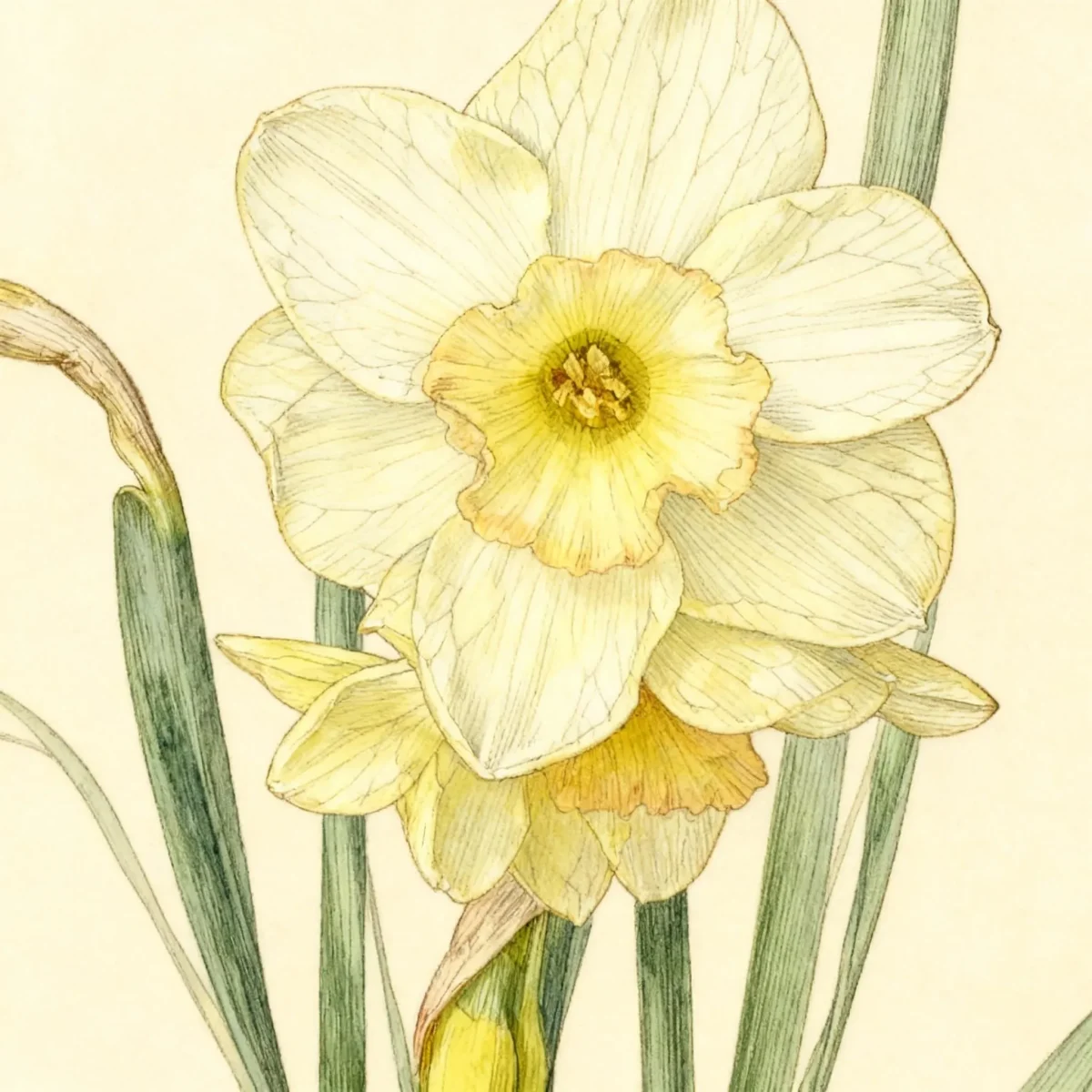
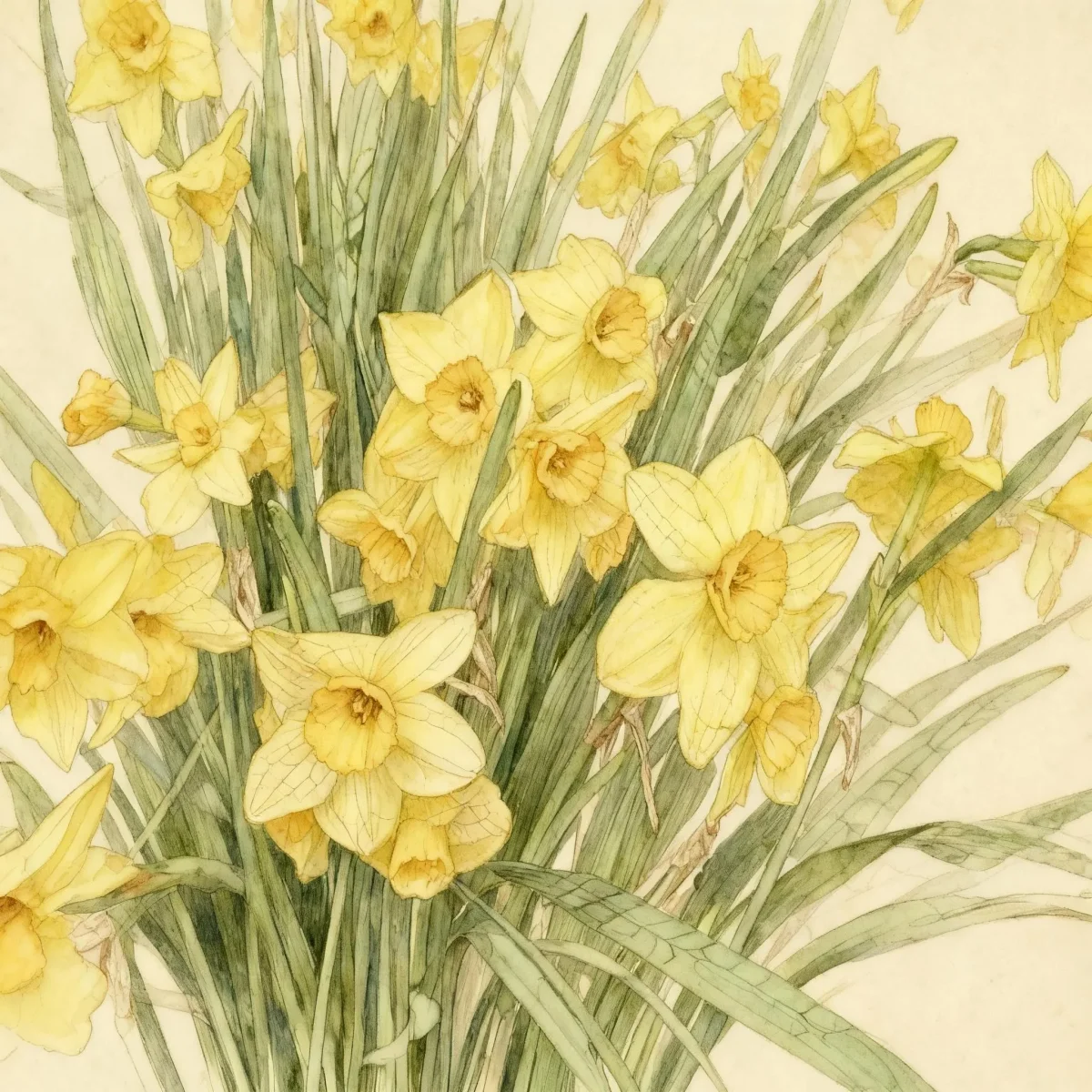
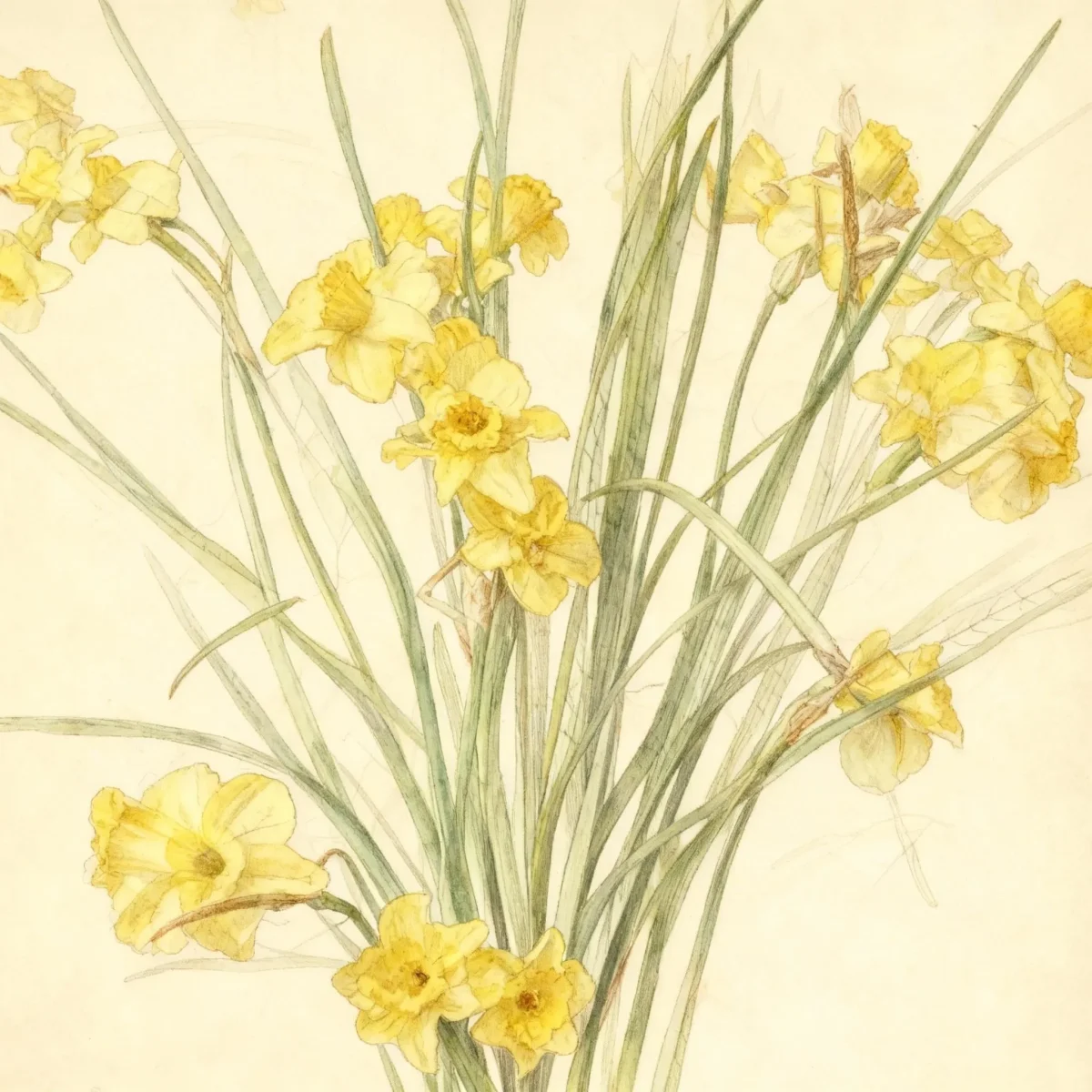
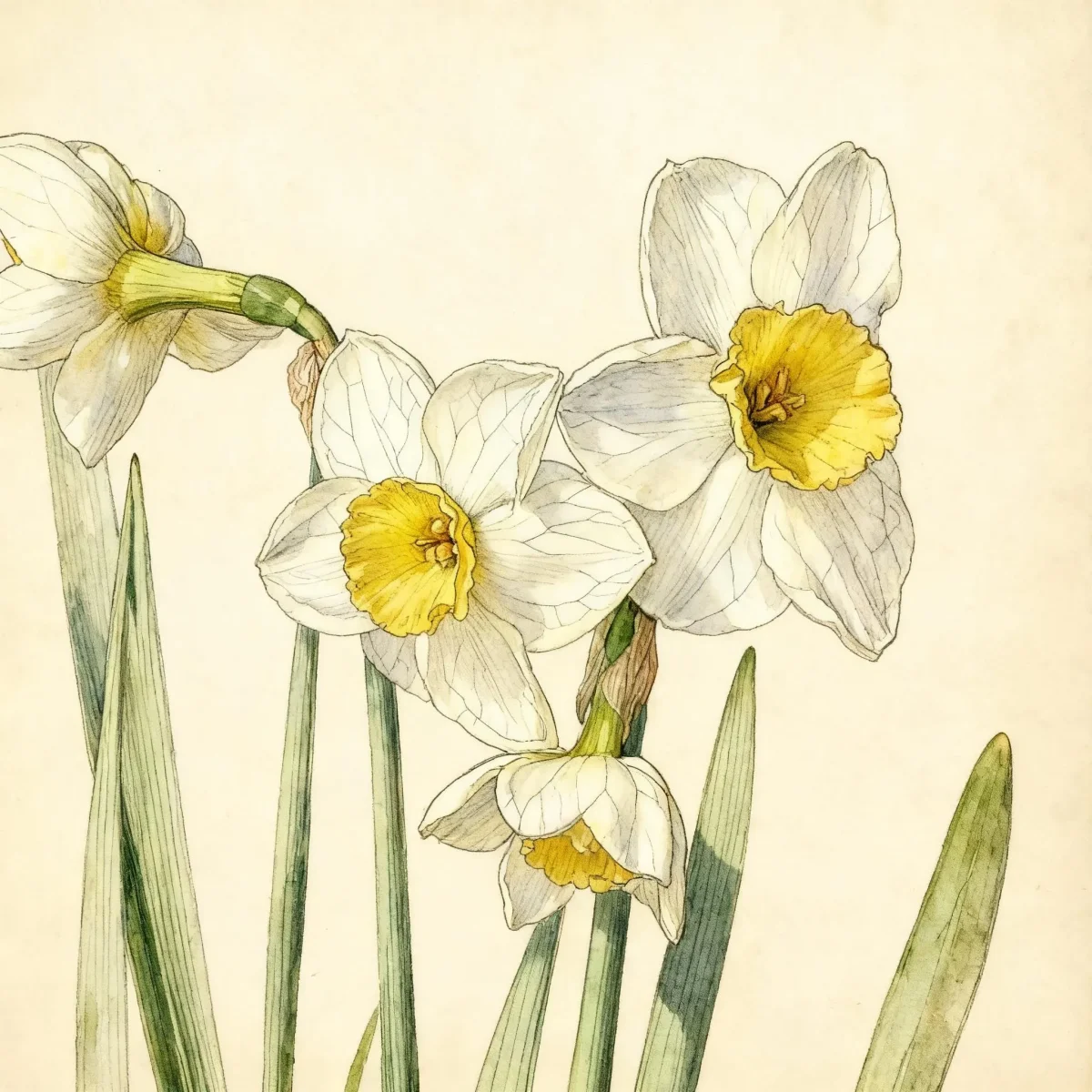
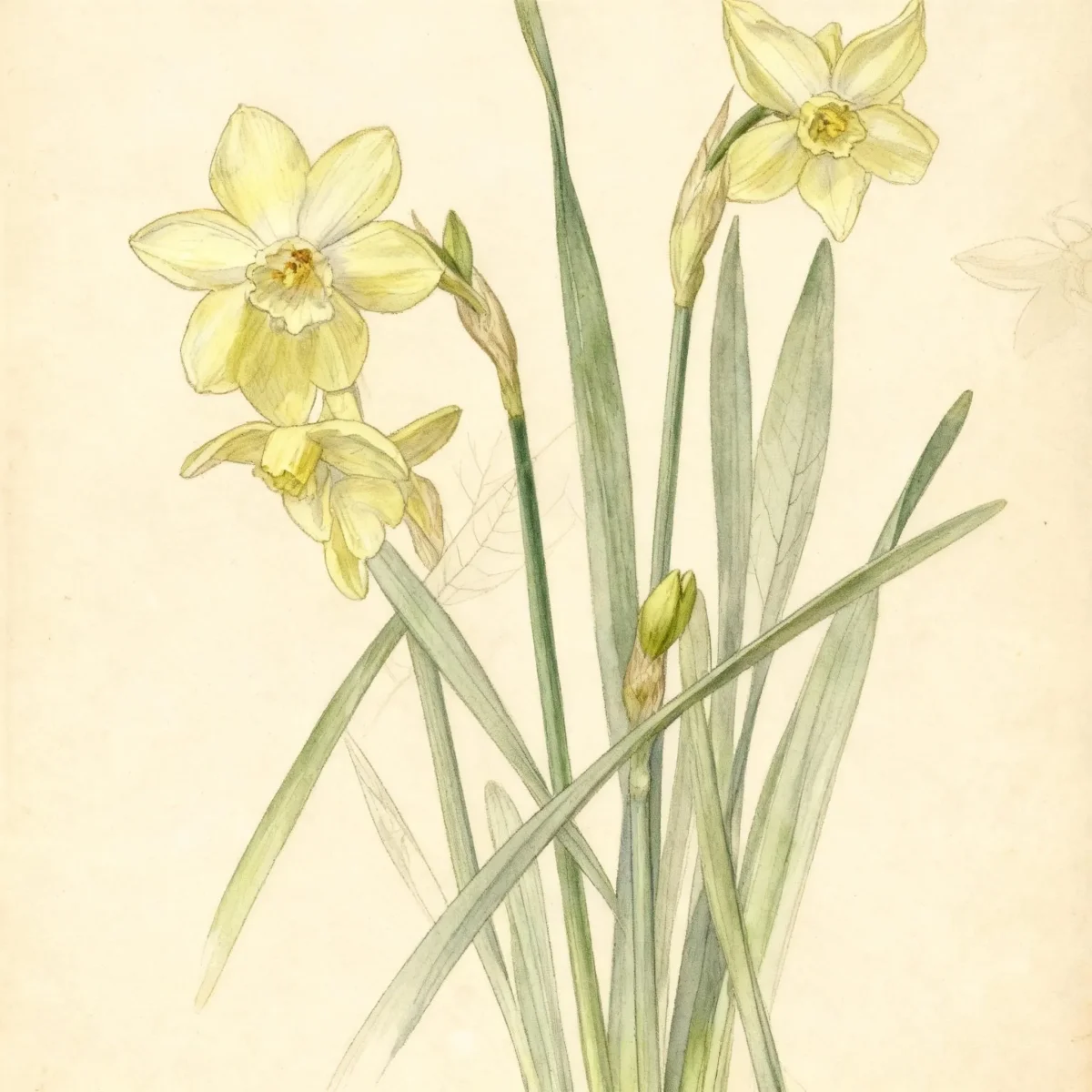
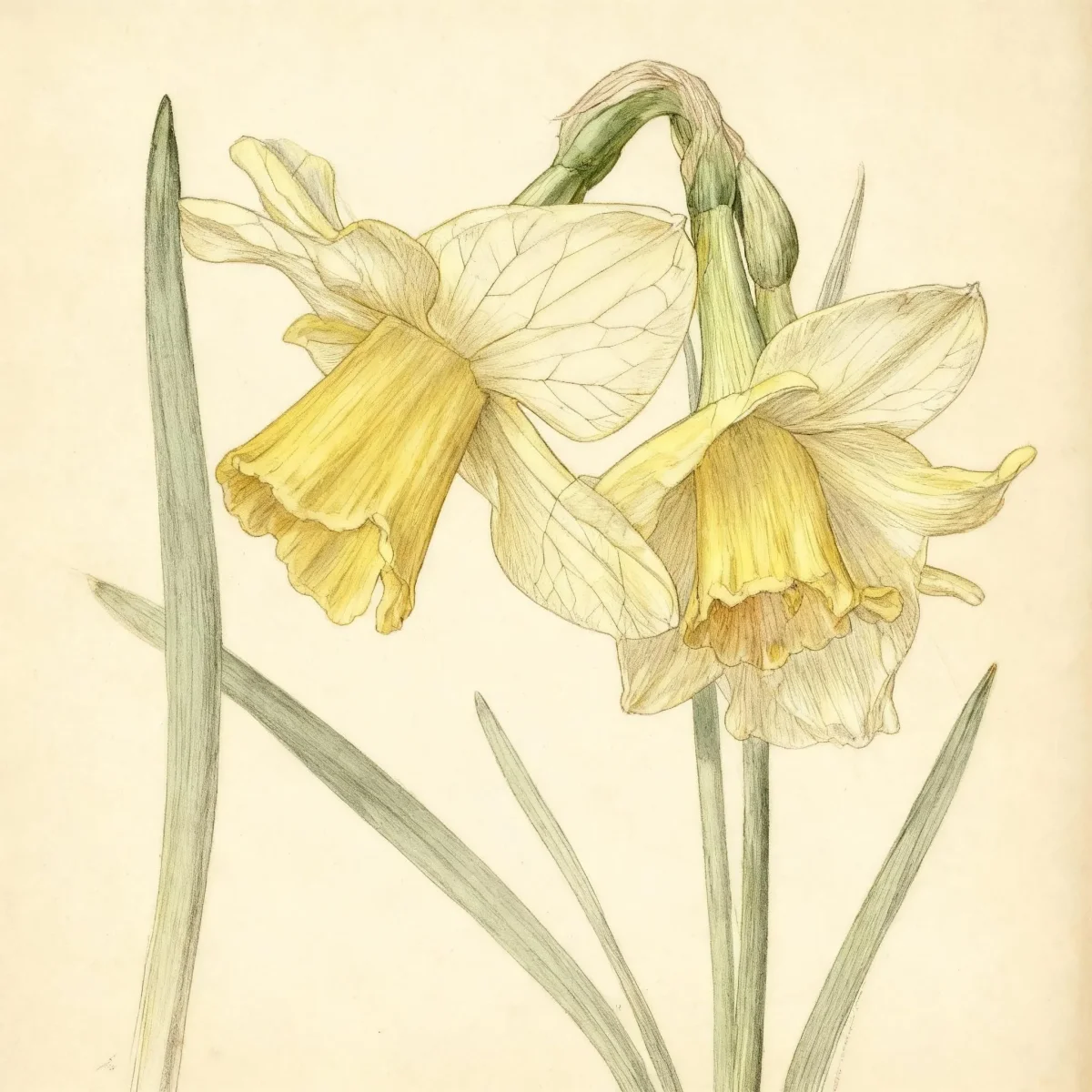
Jonquilla daffodil (Narcissus 'Pink Angel')
Narcissus 'Pink Angel' is a lovely Jonquilla daffodil, offering showy, fragrant blooms in mid-spring. Low maintenance, deer and rabbit resistant.
Scroll down to discover growing tips, care requirements, companion plants, and more
Complete Plant Information
Overview
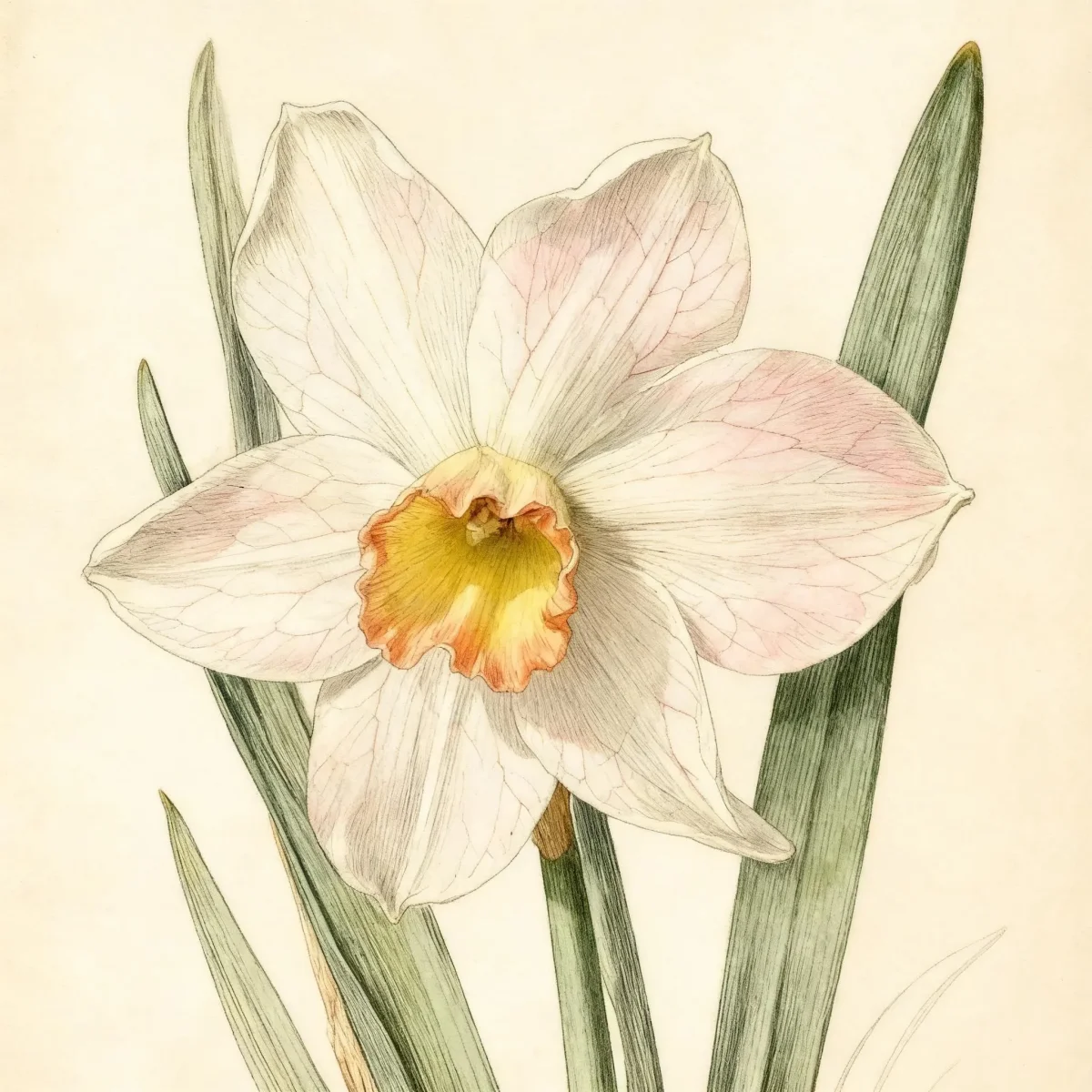
Narcissus ‘Pink Angel’ is a highly valued member of the Jonquilla daffodil group, providing early-to-mid-spring color with remarkable ease of care. Gardeners appreciate this cultivar for its delicate yet impactful blooms, which feature snow-white petals highlighted by a distinctive pink-rimmed white cup. As a Jonquilla daffodil, Narcissus ‘Pink Angel’ naturally tends to produce multiple, often fragrant flowers atop slender stems, making it a standout in any early season display.
This bulbous perennial requires minimal intervention once established, thriving in average, well-drained soils. It offers excellent pest resistance, being largely ignored by deer and rabbits, which enhances its reliability in naturalized settings. Planting Narcissus ‘Pink Angel’ in generous drifts ensures a spectacular, low-effort reappearance year after year.
The structure of Narcissus ‘Pink Angel’, rising to about 1 to 1.5 feet, makes it perfect for softening the edges of borders or naturalizing under deciduous trees where it can enjoy the spring sun before full summer shade develops. Its combination of fragrance, longevity, and low maintenance cements its status as a spring garden essential.
Fast Facts
- Plant Family: Amaryllidaceae
- Plant Type: Bulb
- Hardiness Zones: USDA Zones 4-8
- Size at Maturity:
- Height: 1-1.5 ft
- Spread: 0.5-0.75 ft
- Bloom Time: April to May
- Bloom Description: Snow white with pink-rimmed white cup
- Sun Exposure: Full sun to part shade
- Water Needs: Medium
- Maintenance Level: Low
How to Grow
Successful cultivation of this Jonquilla daffodil begins with proper fall planting. Plant Narcissus ‘Pink Angel’ bulbs in early to mid-fall, ensuring good soil drainage is paramount, as bulbs will rot in soggy conditions. Place bulbs 2 to 3 times as deep as the bulb is tall, generally 3-6 inches deep, spacing them 4 to 8 inches apart.
Once established, care is remarkably simple. Keep soils uniformly moist throughout the active growing season in spring, though the bulbs tolerate summer drought once dormant. Deadhead spent flowers by removing the stem top to prevent seed formation, but absolutely do not cut back the foliage until it yellows naturally. This allows the leaves to photosynthesize and recharge the bulb for next year’s display.
Narcissus ‘Pink Angel’ bulbs can be left undisturbed for many years. If clump size or bloom quality diminishes after several seasons, divide the clumps immediately after the foliage completely dies back. Remember that flowers tend to turn toward the light, so position plantings so any overhead shade falls behind the display for the best view.
Landscape Uses
Daffodils, unlike many ephemeral spring bloomers, are celebrated for their ability to persist and naturalize effectively, making the Jonquilla daffodil ‘Pink Angel’ invaluable. These bulbs perform best when planted in large, sweeping drifts rather than isolated groupings, encouraging at least six bulbs per cluster for maximum visual impact. They are ideally sited in formal beds, informal borders, or naturalized into open woodland areas where they can multiply over time.
Consider planting Narcissus ‘Pink Angel’ in front of taller, later-blooming shrubs. As the shrubs leaf out, the daffodil foliage will have naturally browned and can be easily trimmed away, maximizing space efficiency. They mix beautifully with other early bloomers like Scilla, Muscari, and early Tulips, creating continuous waves of spring color.
Because this variety prefers full sun to partial shade and matures relatively early, it excels beneath the canopy of deciduous trees. In containers, ensure pots are deep enough to accommodate the required planting depth and protect the pots from extreme freezing if overwintered outdoors in colder zones.
Standout Features
Flower Qualities
- Showy
- Fragrant
Noteworthy Characteristics
Narcissus is a genus of about 50 species of bulbous perennials from Europe and North Africa, forming a backbone of the spring garden. Narcissus ‘Pink Angel’ is specifically classified as a jonquillia daffodil (Division VII), characterized by generally having 1 to 5 fragrant flowers per stem with spreading petals and a small cup. This specific hybrid rises 14–16 inches tall in spring, typically bearing up to three flowers per stem, each featuring snow-white petals and a white cup rimmed in pink with a green eye, exhibiting a mild scent.
Tolerances
- Rabbit
- Deer
- Drought
Potential Problems
With correct bulb placement and well-drained soil, the Jonquilla daffodil is remarkably trouble-free. The primary threat to Narcissus ‘Pink Angel’ is bulb rot, which occurs exclusively in poorly-drained or waterlogged sites. Watch out for infrequent pests like slugs and snails when new growth first emerges. While generally pest-free, issues like narcissus bulb fly or narcissus yellow stripe virus can occur, though proper culture usually prevents these problems.
Frequently Asked Questions
What hardiness zones is Jonquilla daffodil suitable for?
Narcissus ‘Pink Angel’ is suitable for USDA Hardiness Zones 4 through 8.
How large does Narcissus ‘Pink Angel’ grow?
This variety typically reaches a height between 1 and 1.5 feet, spreading modestly between 0.5 and 0.75 feet wide.
What sun exposure does Narcissus ‘Pink Angel’ need?
This plant thrives best when situated in an area receiving full sun to light part shade exposure.
When does Narcissus ‘Pink Angel’ bloom?
Expect blooms from this Jonquilla daffodil to appear from April through May, displaying snow-white petals with a pink-rimmed white cup.
Conclusion
Narcissus ‘Pink Angel’ provides exceptional spring scenery with minimal gardener input, celebrated for its fragrance and reliable multi-bloom stems. Integrating this classic Jonquilla daffodil into your landscape ensures dependable, pest-resistant color year after year. Check your local USDA zone compatibility and plan to plant these bulbs in the early fall for next spring’s spectacular show.
Companion Planting
When integrating Narcissus ‘Pink Angel’ into borders, select companions whose foliage emerges later, allowing the daffodil foliage time to naturally subside without looking messy. Early flowering tulips pair well, though plant them slightly behind the narcissus. Consider low-growing, textural groundcovers like hardy Geraniums or Alchemilla mollis (Lady’s Mantle) to grow beneath the daffodils and help disguise the yellowing foliage later in the season. Cool-weather annuals, such as pansies or violas, can be planted immediately around established clumps of Jonquilla daffodil for continuous color interest.
Design Ideas for Drifts and Masses
The true impact of Narcissus ‘Pink Angel’ is achieved through mass planting rather than singular specimens. Aim for groupings of at least six bulbs, scaling up to dozens for ‘sweeping drifts’ that mimic naturalized meadows. In a formal setting, plant them in tight, repeating geometrical patterns near walkways where their fragrance can be easily appreciated. For a cottage garden aesthetic, scatter bulbs randomly through perennial beds; the naturalized look of the Jonquilla daffodil is one of its key aesthetic advantages.