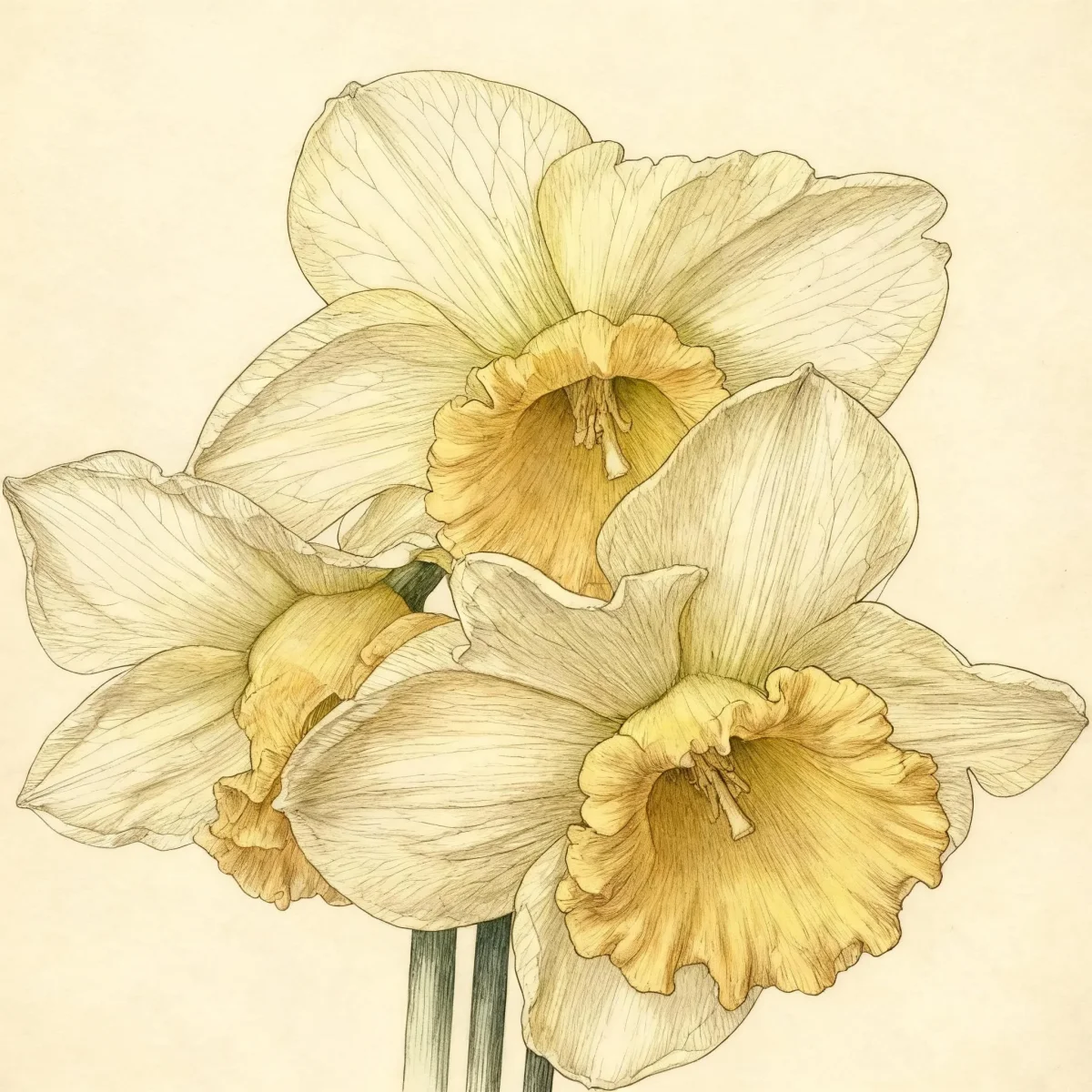
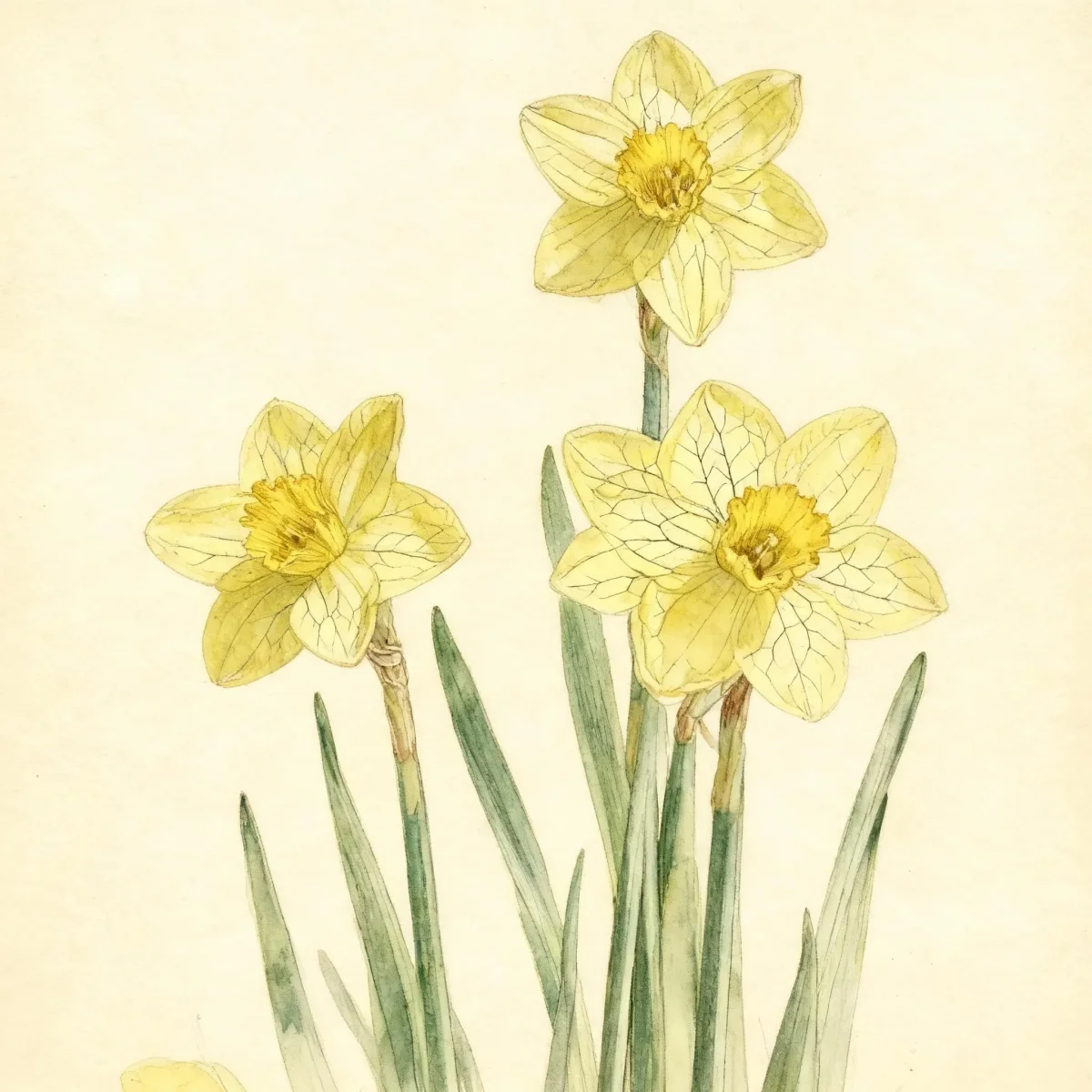
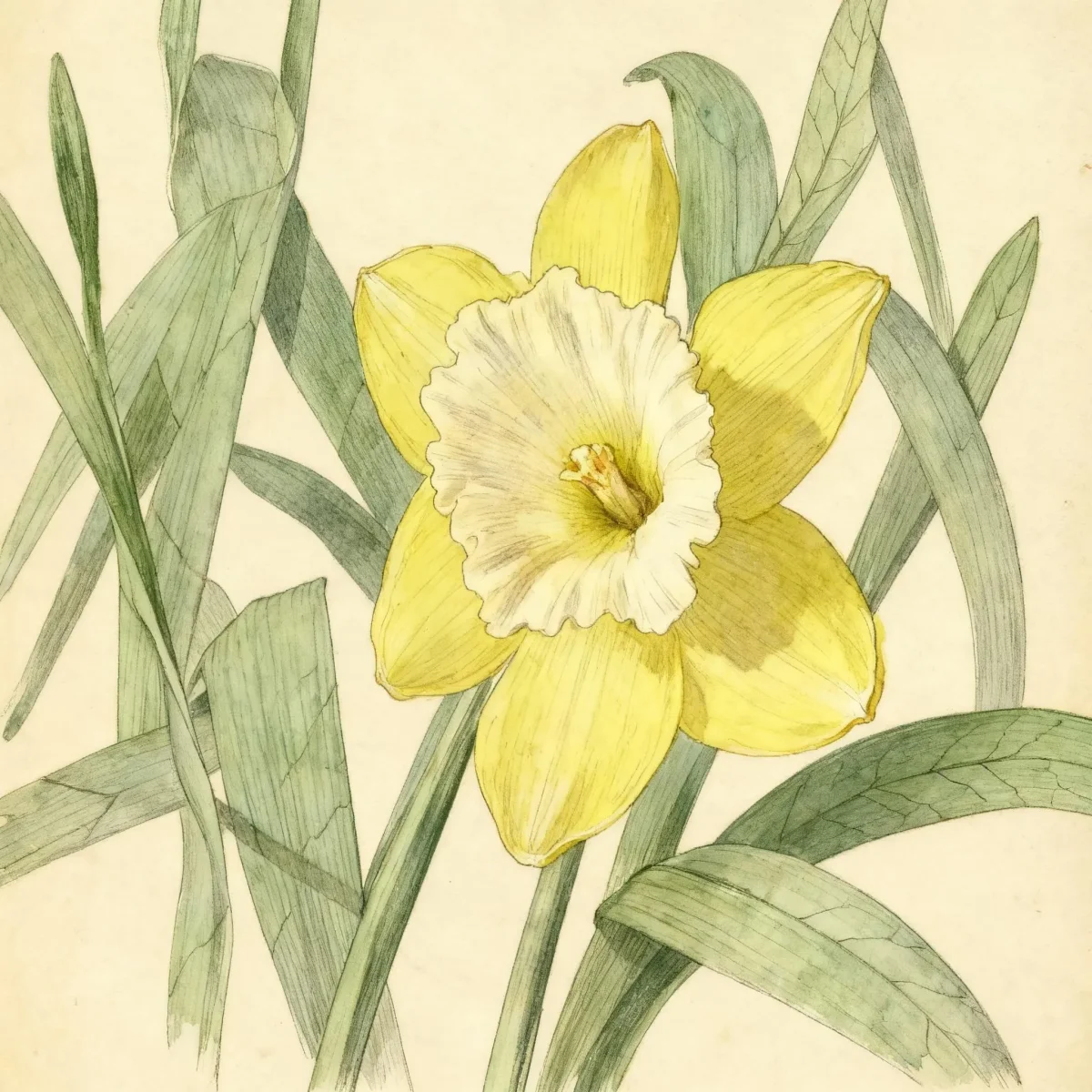
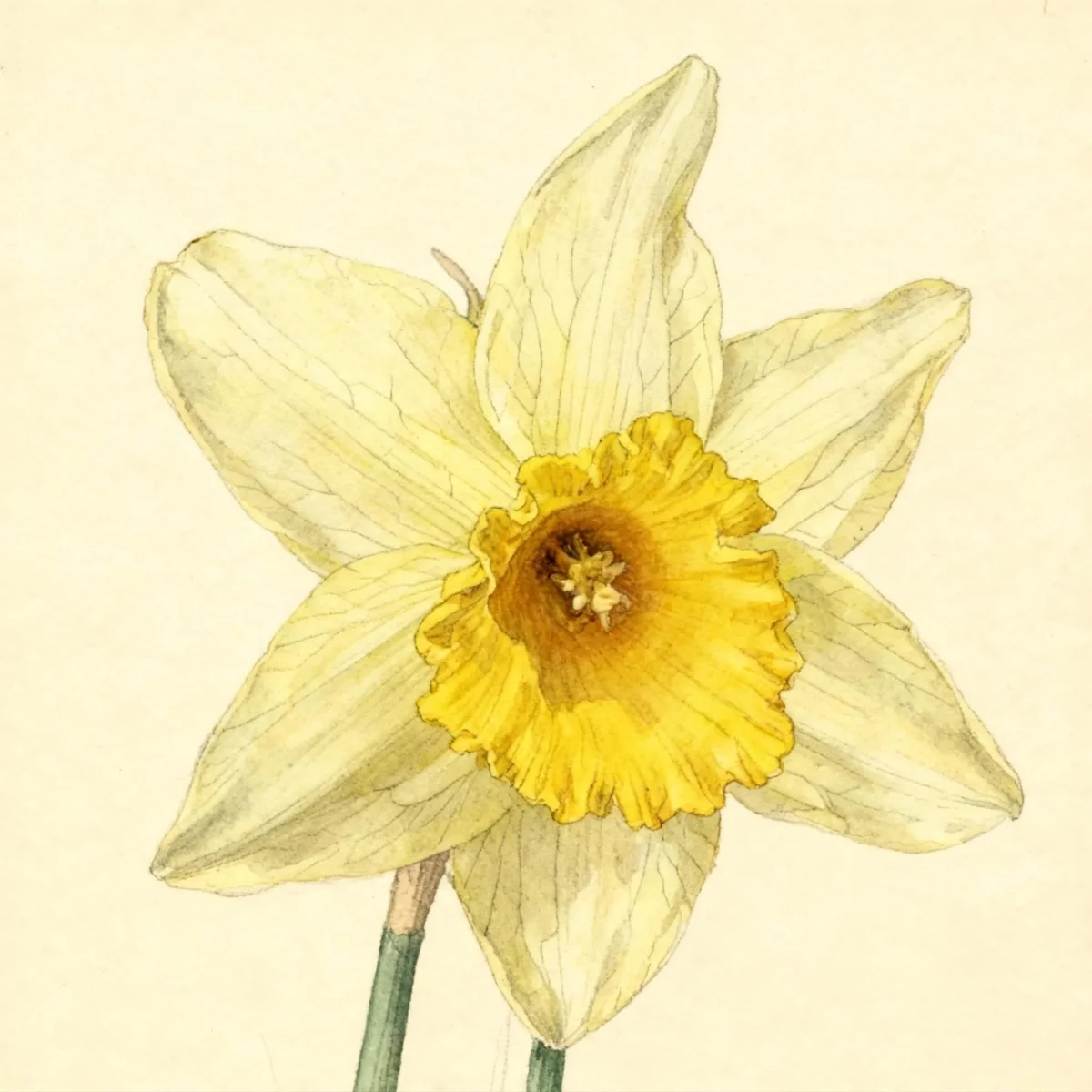
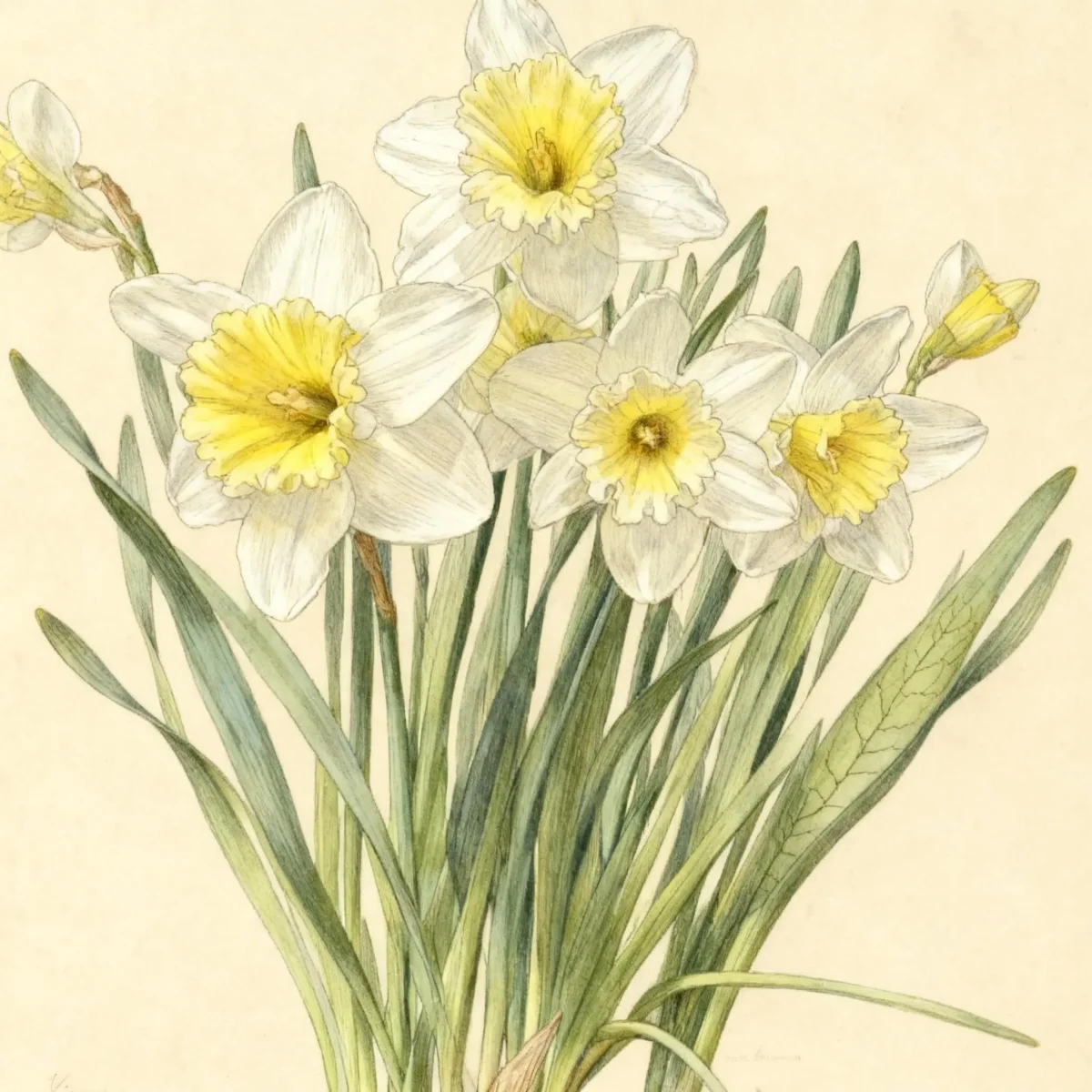
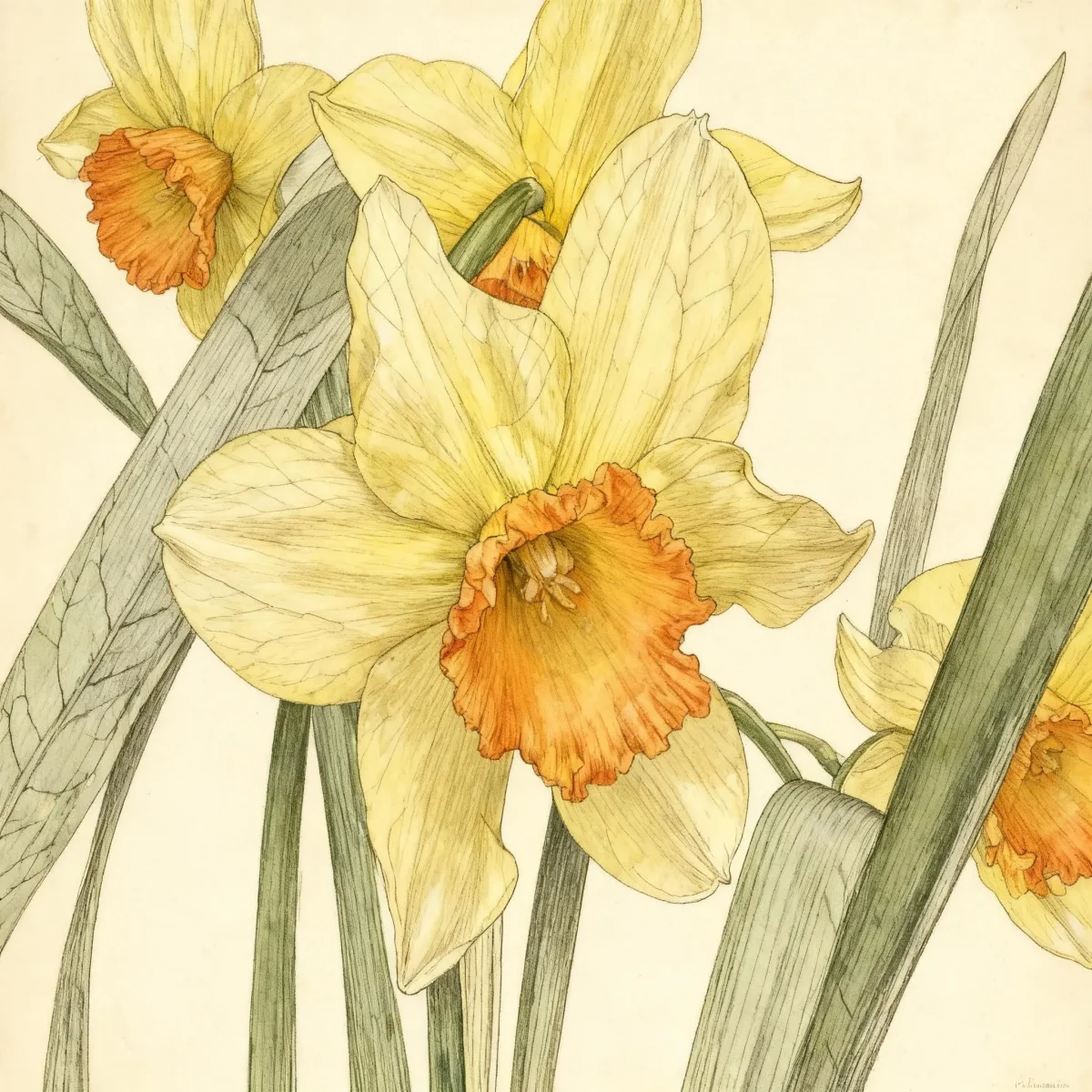
Large-cupped daffodil (Narcissus 'Monal')
Narcissus 'Monal' is a showy Large-cupped daffodil blooming in April with distinctive orange-red cups. Low maintenance and deer resistant.
Scroll down to discover growing tips, care requirements, companion plants, and more
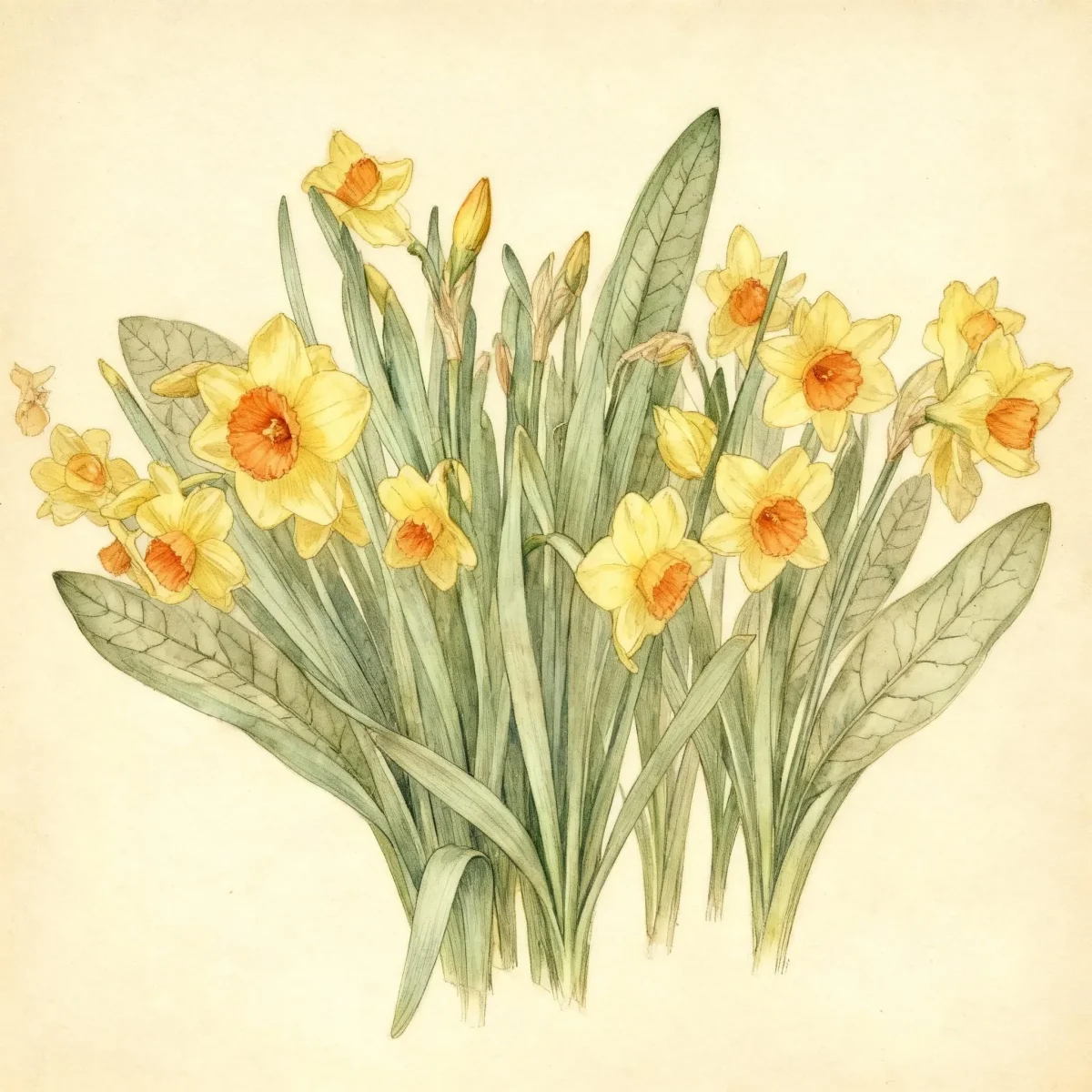
Complete Plant Information
Overview
Narcissus ‘Monal’ is a standout variety within the Large-cupped daffodil classification, prized by gardeners for its vibrant coloration and reliable spring performance. This Division 2 cultivar features striking yellow petals contrasted beautifully against a deep orange-red, funnel-shaped cup, making it a focal point in early spring displays. As a bulbous perennial, it offers low maintenance once establishment, returning year after year to provide early season cheer.
Belonging to the Amaryllidaceae family, the Large-cupped daffodil offers excellent garden utility. It stands between 1 and 2 feet tall, providing strong vertical accents, and it is naturally resistant to common browsing pests like deer and rabbits. Narcissus ‘Monal’ thrives in bright conditions, preferring full sun or even tolerating partial shade, provided the soil conditions are right.
For those seeking long-lasting color without seasonal replanting, Narcissus ‘Monal’ is an exceptional choice. This hybrid is noted for its durability and ability to be naturalized, transforming simple beds into sweeping drifts of color. Its qualities as a cut flower further enhance its value in the home garden.
Fast Facts
- Plant Family: Amaryllidaceae
- Plant Type: Bulb
- Hardiness Zones: USDA Zones 3-8
- Size at Maturity:
- Height: 1-2 ft
- Spread: 0.5-0.75 ft
- Bloom Time: April
- Bloom Description: Yellow petals with an orange-red cup
- Sun Exposure: Full sun to part shade
- Water Needs: Medium
- Maintenance Level: Low
How to Grow
Planting Narcissus ‘Monal’ bulbs should occur in early to mid-fall before the ground freezes hard. They perform best in organically rich loams that offer medium moisture and excellent drainage, as good drainage is paramount to preventing bulb rot. When planting, aim for a depth two to three times the height of the bulb itself, ensuring there are at least 3 inches of soil above the top. Spacing should range from 4 to 10 inches apart, depending on the desired initial look; wider spacing encourages naturalizing over time.
Care for these Large-cupped daffodils is minimal once established. Keep the soil uniformly moist throughout the spring growing season, though they often tolerate drought once they enter dormancy. After the spectacular blooms of Narcissus ‘Monal’ fade in April, lightly deadhead the flower stems to prevent seed production. Crucially, allow the foliage to fully yellow and brown before cutting it back; this process allows the bulb to store necessary energy for next year’s display.
These bulbs are long-lived perennials and benefit from being left undisturbed for many years. If clump density or bloom quality decreases, it is time to divide. Perform division shortly after the foliage has died back naturally in late spring or early summer. For optimal visual impact, position plantings so that any slight shade cast by nearby trees or shrubs falls behind the flowers, as the blooms tend to naturally orient themselves towards the brightest light source.
Landscape Uses
Daffodils, including excellent cultivars like Narcissus ‘Monal’, are indispensable for providing early season structure and color where other plants hesitate to bloom. Unlike tulips, these bulbs are reliable repeat performers, making them ideal candidates for permanent placement in borders, along pathways, or naturalized into woodland margins. Plant them liberally in groupings of six bulbs minimum, or sweep them through larger drifts to maximize their visual impact across the landscape.
The strong structure and vibrant bicolored nature of the Large-cupped daffodil make it visually effective when massed beneath deciduous shrubs or trees, where they compete favorably with developing spring foliage. They mix seamlessly with other spring-flowering companions such as early bloomers like snowdrops or later-flowering masses of poet’s narcissus, creating layered interest throughout the season. Allowing Narcissus ‘Monal’ to naturalize under lawns or open woodland areas creates a beautiful, effortless effect year after year.
Standout Features
Flower Qualities
- Showy
- Good Cut
Noteworthy Characteristics
Narcissus is a genus of about 50 species of bulbous perennials from Europe and North Africa, serving as a mainstay of the spring garden. ‘Monal’ is easily identified as a Division 2 or Large-Cupped daffodil, characterized by a cup length greater than one-third, but less than or equal to, the petals. Hybridized by Grant E. Mitsch, this variety boasts a magnificent golden yellow perianth paired with a deep orange-red, funnel-shaped corona, earning it the Wister Award for garden merit.
Tolerances
- Rabbit
- Deer
- Drought
Potential Problems
Gardeners rarely encounter major insect or disease issues when growing Narcissus ‘Monal’, provided cultural requirements are met, particularly regarding soil drainage. The greatest risk comes from bulb rot, which occurs if the planting site remains waterlogged or heavy clay impairs percolation. Ensure soils are well-drained before planting to mitigate this threat.
Infrequent pests may include slugs and snails, particularly when new foliage emerges, and occasionally the narcissus bulb fly or nematode. Vigilance early in the season can manage soft-bodied pests. While no serious viral issues are generally expected, watch for signs of Narcissus yellow stripe virus. Fortunately, this popular Large-cupped daffodil is generally avoided by both deer and rabbits due to toxins contained within the bulb structure.
Frequently Asked Questions
What hardiness zones is Large-cupped daffodil suitable for?
Narcissus ‘Monal’ is suitable for USDA Zones 3 through 8, offering excellent cold hardiness for northern gardeners as well as reliable perennial performance further south.
How large does Narcissus ‘Monal’ grow?
This Large-cupped daffodil typically reaches a mature height between 1 and 2 feet tall, with a spread of half a foot to three-quarters of a foot wide.
When does Large-cupped daffodil bloom?
Narcissus ‘Monal’ reliably blooms during April, presenting its signature flower which features bright yellow petals with an orange-red cup.
What sun exposure does Narcissus ‘Monal’ need?
This plant prefers and thrives best in full sun but integrates well into gardens that only receive part shade throughout the day.
Conclusion
Narcissus ‘Monal’ delivers exceptional, low-maintenance color that reliably signals the arrival of spring. The striking contrast between its golden petals and deep orange-red cup establishes this Large-cupped daffodil as a superior choice for perennial displays. Be sure to check your site’s hardiness zone compatibility (3-8) and plan your fall planting window now to enjoy this spectacular bloom next April.
Companion Planting
When designing borders featuring Narcissus ‘Monal’, consider pairing it with plants that have similar cultural requirements—namely sun exposure and good drainage—but which bloom slightly earlier or later. Early companions like Crocus or Scilla provide a prelude to the daffodil show. For mid-to-late spring interest that complements the yellow and orange tones, consider groundcovers like creeping thyme in drier spots once the daffodil foliage begins to fade.
For structural contrast in the summer garden after the foliage has fully senesced, taller perennials like Siberian Iris or Peonies can fill the space where the height of the Large-cupped daffodil once shone. Planting these bulbs near early spring emerging perennials ensures that the fading daffodil leaves are screened gradually as the perennials grow taller, maintaining aesthetic appeal throughout the season.
Design Ideas for Mass Planting
Mass planting is strongly recommended for achieving the most dramatic effect with Narcissus ‘Monal’. Instead of isolated dots, aim for drifts incorporating at least a dozen bulbs per area. This creates the appearance of a naturalized sweep, which is visually much stronger than solitary specimens. Consider planting bulbs beneath deciduous trees where the early spring sun reaches the ground before the leaf canopy fills in.
When integrating Narcissus ‘Monal’ into formal beds or along the foundation of a structure, utilize the ‘rule of three,’ planting in clusters of three to five bulbs spaced closely together, and repeating these clusters intermittently along the border. This repetition builds rhythm which guides the eye across the landscape design. Due to the deer and rabbit resistance, these daffodils are excellent for low hedging near open lawn areas where browsing pressure is high.