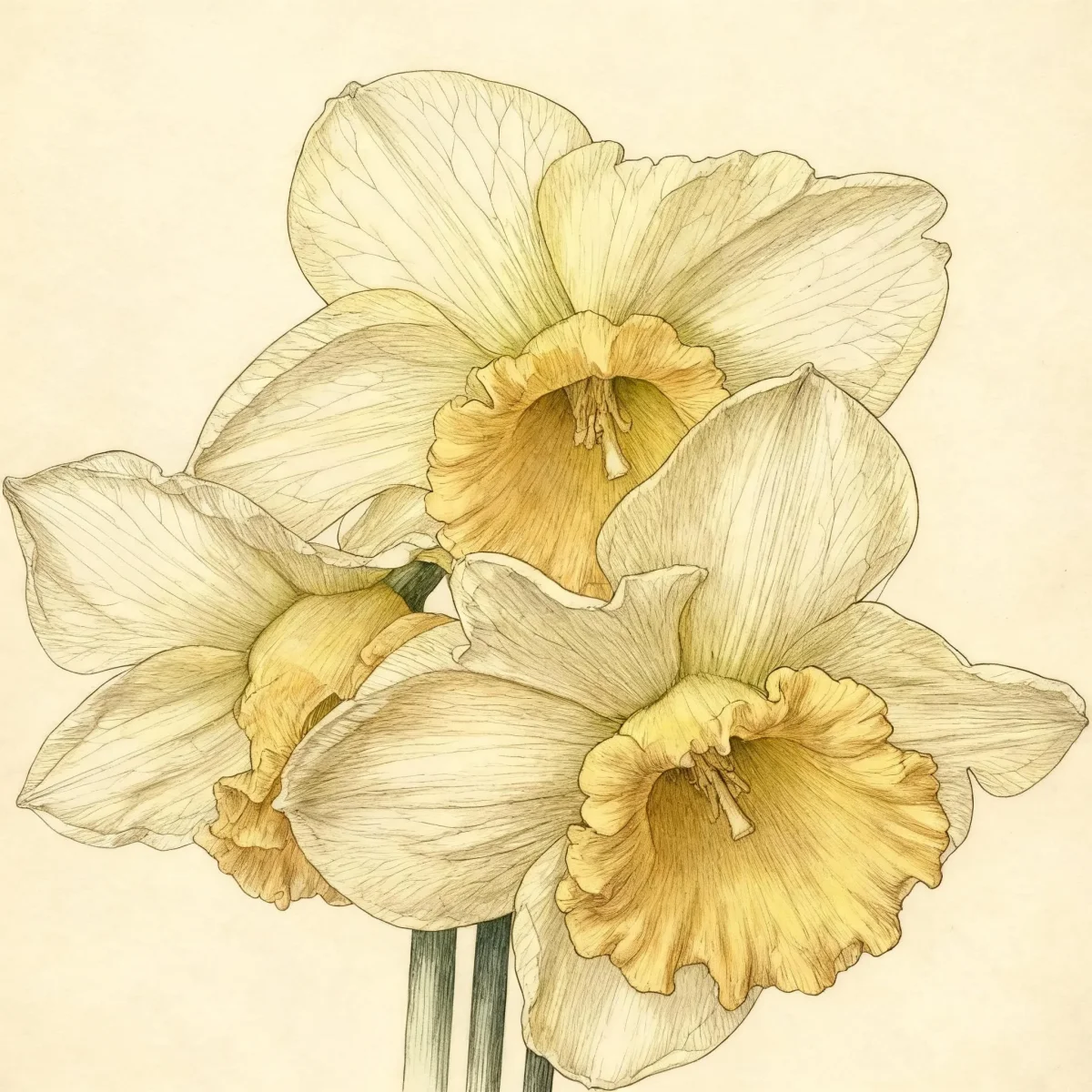
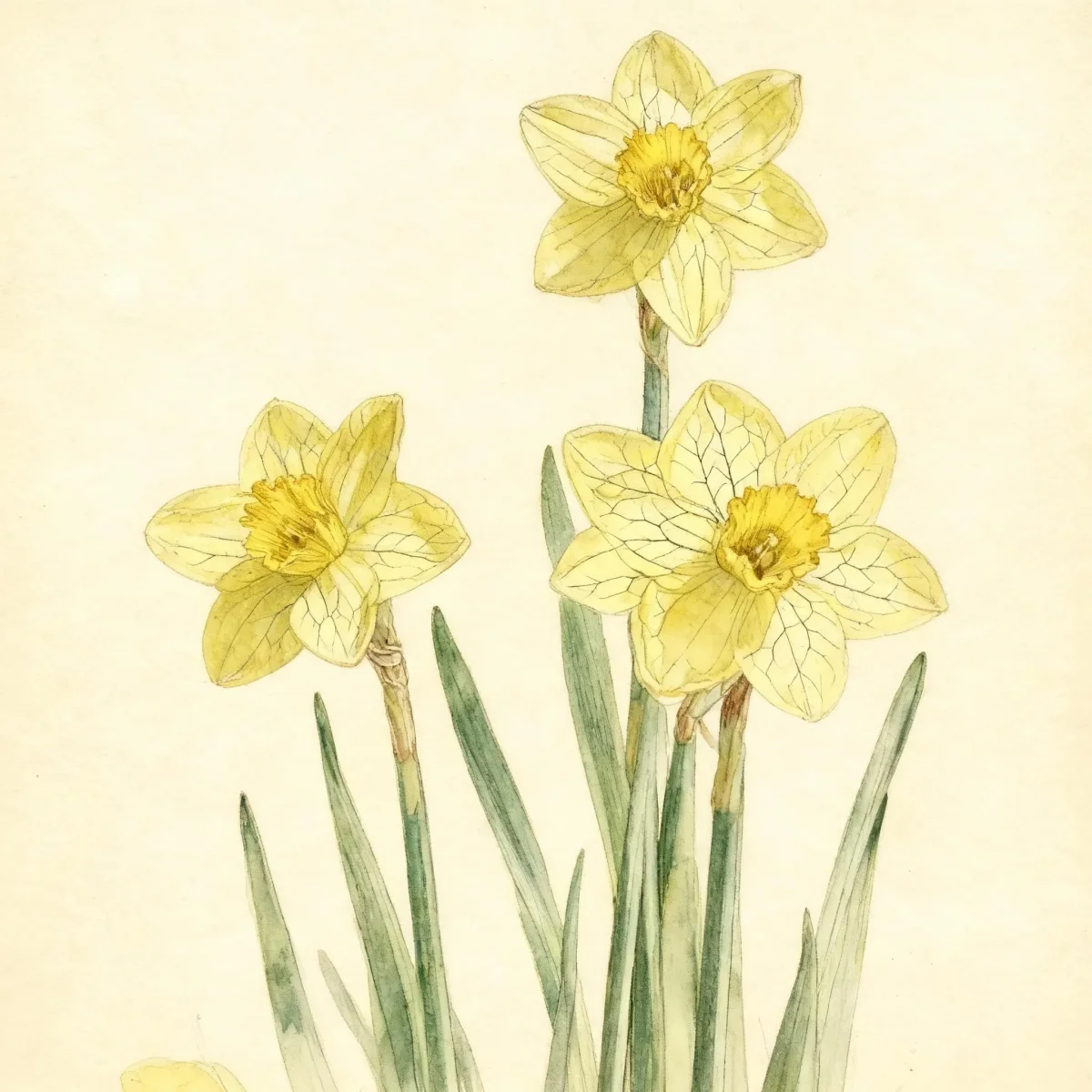
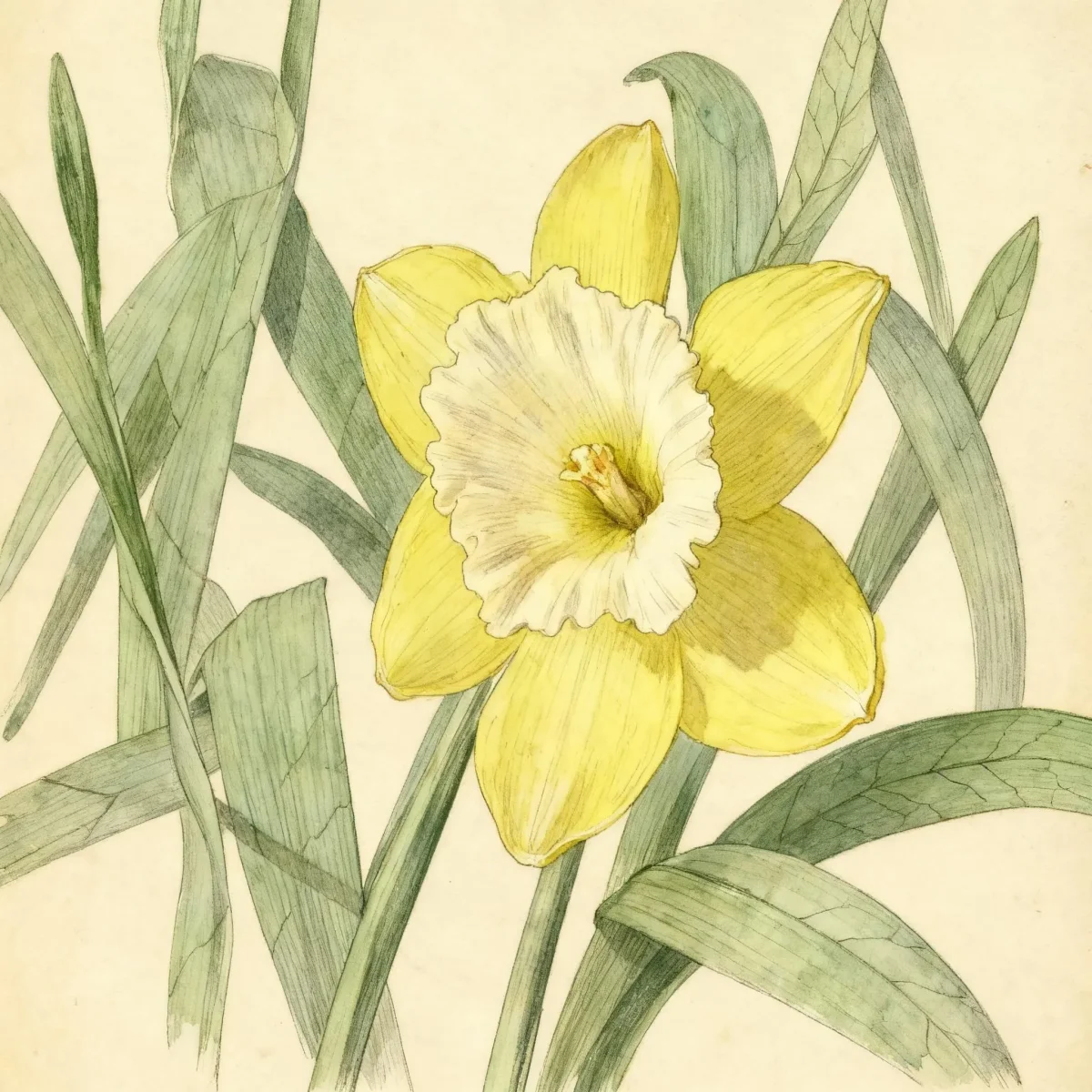
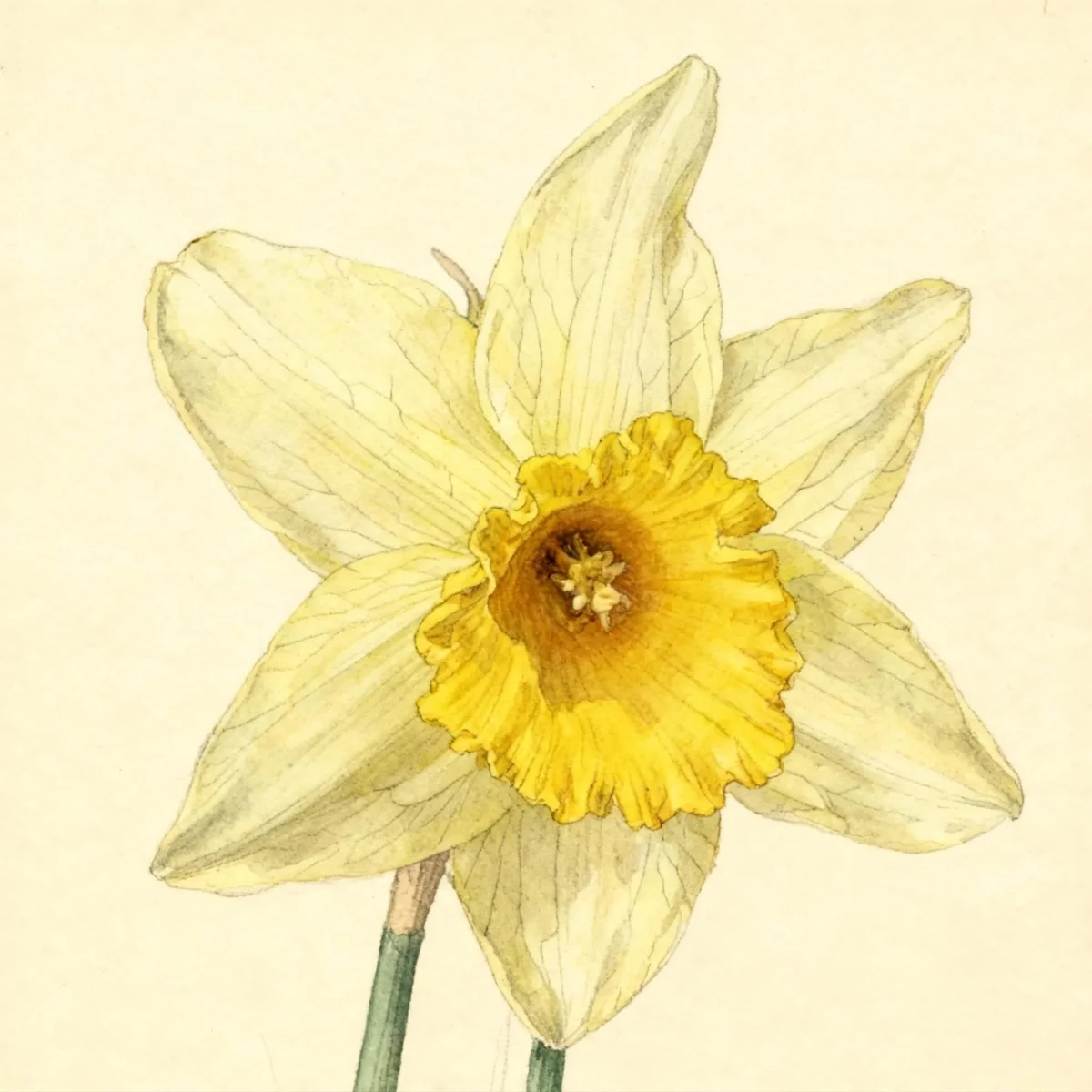
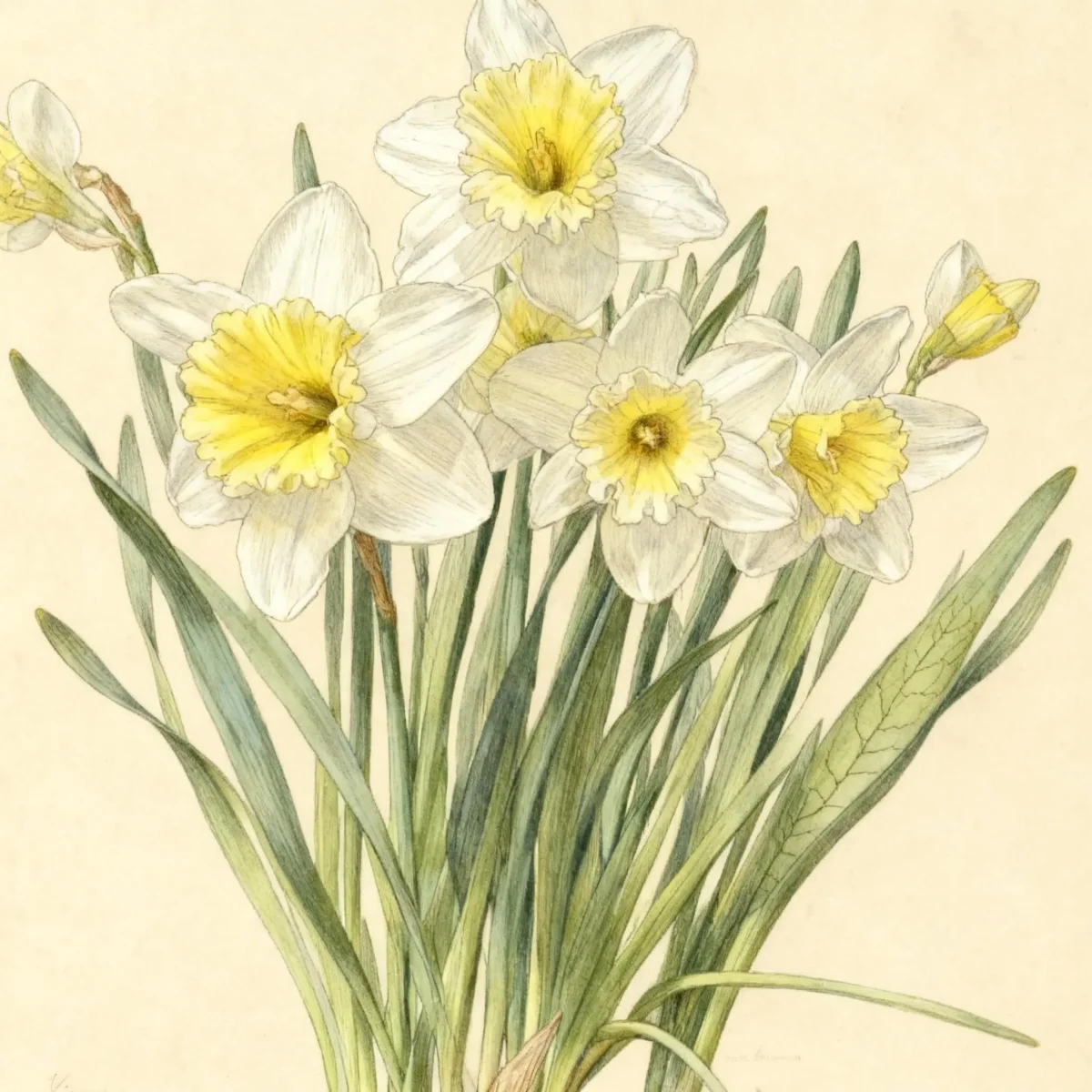
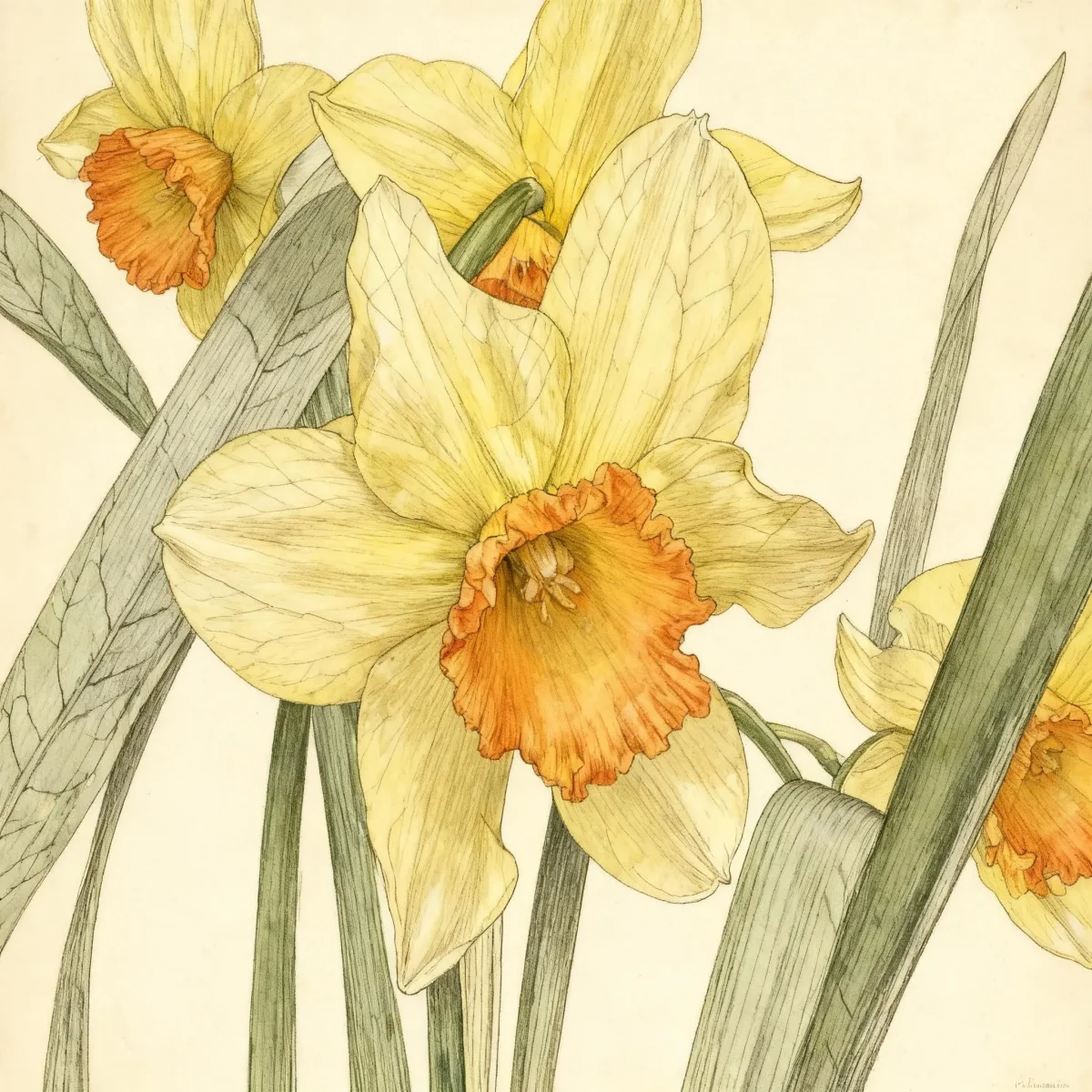
Large-cupped daffodil (Narcissus 'Chromacolor')
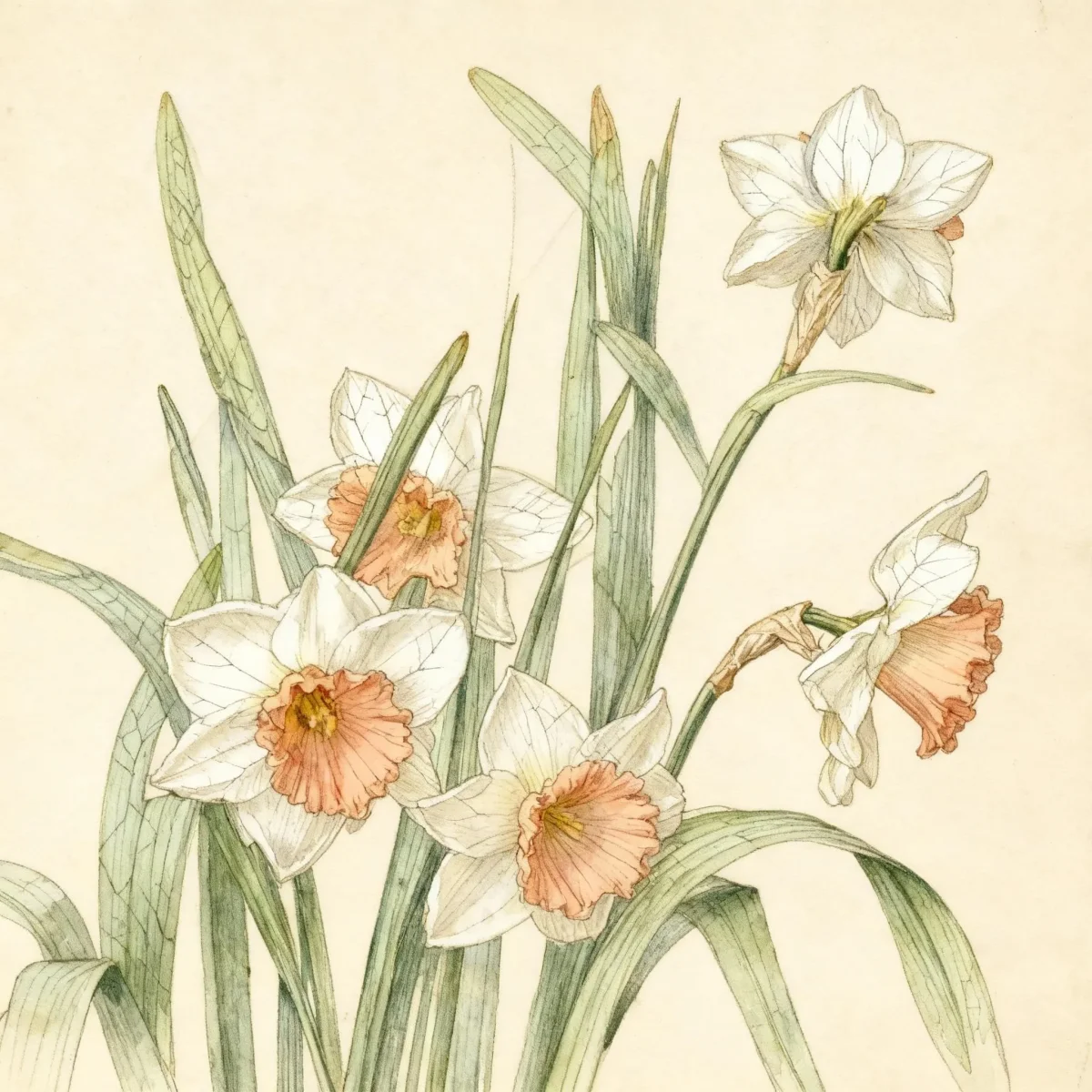
Narcissus 'Chromacolor' is a visually arresting Large-cupped daffodil featuring white petals and a deep pink cup, perfect for spring color.
Scroll down to discover growing tips, care requirements, companion plants, and more
Complete Plant Information
Overview
Narcissus ‘Chromacolor’ is a standout member of the Large-cupped daffodil division, renowned for its attractive, bicolored spring display. This cultivar brings vibrant contrast to early-to-mid spring gardens with its pure white petals sharply set against a deep pink central cup. As a classic bulb, it offers low maintenance and reliable performance, making it an essential component for seasonal color schemes.
This variety thrives when planted in masses, creating sweeping drifts of color that signal the end of winter. The Narcissus ‘Chromacolor’ matures to a manageable height of 1 to 1.5 feet tall, making it ideal for borders and naturalizing areas where it can reliably reappear year after year. Gardeners appreciate this daffodil for its hardiness across numerous zones and its relative immunity to common garden pests.
Cultivating the Large-cupped daffodil ‘Chromacolor’ successfully relies on proper drainage and placement where its flowers can face the brightest light. Once established, this bulb requires minimal intervention other than allowing the foliage to naturally senesce after blooming. Its dependable return makes Narcissus ‘Chromacolor’ a cornerstone of perennial spring plantings.
Fast Facts
- Plant Family: Amaryllidaceae
- Plant Type: Bulb
- Hardiness Zones: USDA Zones 3-8
- Size at Maturity:
- Height: 1-1.5 ft
- Spread: 0.5-1 ft
- Bloom Time: April
- Bloom Description: White petals and pink cup
- Sun Exposure: Full sun to part shade
- Water Needs: Medium
- Maintenance Level: Low
How to Grow
For successful establishment, plant Narcissus ‘Chromacolor’ bulbs in early to mid-fall. Ensure the planting location receives full sun to partial shade, remembering that flowers tend to turn toward the sun, so position taller backdrops accordingly. Good soil drainage is crucial, as these bulbs prefer average, medium moisture, well-drained soils, ideally organically rich loams. Plant each bulb 2 to 3 times as deep as its height, generally 3–6 inches deep, spaced about 4–8 inches apart.
Watering should maintain uniform soil moisture throughout the active growing season. While the plant tolerates drought once dormant, consistent moisture helps the bulb establish robust energy stores for the following year. Maintenance is generally low; after the striking white petals and pink cup fade, remove the spent flower stem above the foliage if seed formation is to be prevented.
Crucially, never cut back the foliage until it naturally begins to yellow. This material is necessary for photosynthesis to recharge the bulb for next spring’s show. If the clumps of Large-cupped daffodil begin to decline after several years, divide them immediately after the leaves die back. Narcissus ‘Chromacolor’ bulbs left undisturbed often naturalize beautifully.
Landscape Uses
Daffodils, unlike spring ephemeral tulips, are celebrated for their ability to return consistently, making them exceptional choices for long-term landscape planning. Narcissus ‘Chromacolor’ excels when planted in large, sweeping drifts rather than small, isolated groupings; aim for at least six bulbs together to maximize impact. They function perfectly at the front of borders, tucked into beds near foundations, or allowed to naturalize gently in open woodland settings or beneath deciduous trees.
This Large-cupped daffodil mixes exceptionally well with other early bloomers, creating layered spring interest. Consider pairing the white and pink tones of ‘Chromacolor’ with deep blue Muscari or early yellow flowering Crocus for high-impact color juxtaposition. Because they possess excellent pest resistance, they also function well when massed in front of later-blooming shrubs where the fading foliage of the daffodil will be masked by fresh shrub growth.
Allowing this bulb to naturalize means placing it where it will not be heavily disturbed by summer cultivation. Their robust nature means they can be tucked under the canopy of trees where competition is slightly higher, provided they receive adequate sun in early spring before leaf-out.
Standout Features
Flower Qualities
- Showy
Noteworthy Characteristics
Narcissus is a genus of about 50 species of bulbous perennials from Europe and North Africa. They are a mainstay of the spring garden. Flowers generally feature a trumpet or cup (the corona) surrounded by six petals (perianth segments), in colors ranging from white to yellow to orange to pink to bicolors. ‘Chromacolor’ is a large-cupped daffodil (Division II); by definition, its cup is more than 1/3 but less than the length of the petals. Each flower features striking white petals and a deep pink cup, blooming mid-season in April. Narrow, strap-shaped, green leaves appear in erect clumps beneath the flowers.
Tolerances
- Rabbit
- Deer
- Drought
Potential Problems
Daffodils, including the beautiful Narcissus ‘Chromacolor’, are generally robust and free from serious insect or disease issues when cultural needs are met. The primary cultural problem centers around poor drainage, which can lead to bulb rot. If planting soil remains soggy, preventative measures like amending heavily with grit or sand are vital before fall planting. Infrequent pests may include slugs, snails, or narcissus bulb fly. If the plant appears weakened or discolored by disease, ensure proper airflow around the foliage and avoid over-crowding. Because deer and rabbits typically avoid this plant due to the presence of toxic alkaloids in the bulb, they rarely pose a threat.
Frequently Asked Questions
What hardiness zones is Large-cupped daffodil suitable for?
The Narcissus ‘Chromacolor’ is quite adaptable, suitable for growing in USDA Hardiness Zones 3 through 8.
How large does Narcissus ‘Chromacolor’ grow?
When mature, this Large-cupped daffodil typically reaches a height between 1 and 1.5 feet, with a spread of 0.5 to 1 foot.
When does Large-cupped daffodil bloom?
Narcissus ‘Chromacolor’ blooms reliably in April, showcasing its distinctive white petals and pink cup during the mid-spring season.
What sun exposure does Narcissus ‘Chromacolor’ need?
This daffodil performs best when situated where it receives full sun to part shade exposure across the growing season.
Conclusion
The Narcissus ‘Chromacolor’ offers gardeners an excellent combination of resilience, low maintenance, and spectacular mid-spring color contrast. Its signature white petals and pink cup make this Large-cupped daffodil a sophisticated addition to any spring display, naturalizing well over time. Ensure you purchase bulbs in the fall and plant them in well-drained soil to guarantee a stunning return year after year.
Companion Planting
To create magnificent, layered spring displays, pair Narcissus ‘Chromacolor’ with early-flowering, low-growing companions. Scilla siberica (Siberian Squill) provides an excellent, long-lasting carpet of deep blue beneath the taller daffodil stems, complementing the pink and white tones. For mid-to-late spring interest that emerges as the daffodil foliage yellows, consider planting early-blooming tulips or late-flowering Alliums near your drifts of Large-cupped daffodil. The differing flower shapes and bloom times ensure continuous visual interest in your beds.
Propagation Tips
Propagation of Narcissus ‘Chromacolor’ is primarily achieved through division, as seed propagation rarely results in true-to-type flowering plants matching the parent cultivar. Bulbs that have flowered profusely for several years may become overcrowded, leading to decreased bloom size and quantity; this signals the need for division. Wait until the foliage has completely died back, usually in summer, before carefully digging up the clumps. Gently separate the main bulb from the offsets; replant the larger bulbs immediately at the correct depth and spacing in fall, or store them in a cool, dry place until planting time. Offsets may take a year or two to reach flowering maturity.