Michaelmas daisy (Aster 'Celeste')
Discover Aster 'Celeste', a compact Michaelmas daisy delivering violet-blue blooms in late summer. Low maintenance and drought tolerant.
Scroll down to discover growing tips, care requirements, companion plants, and more
Complete Plant Information
Overview
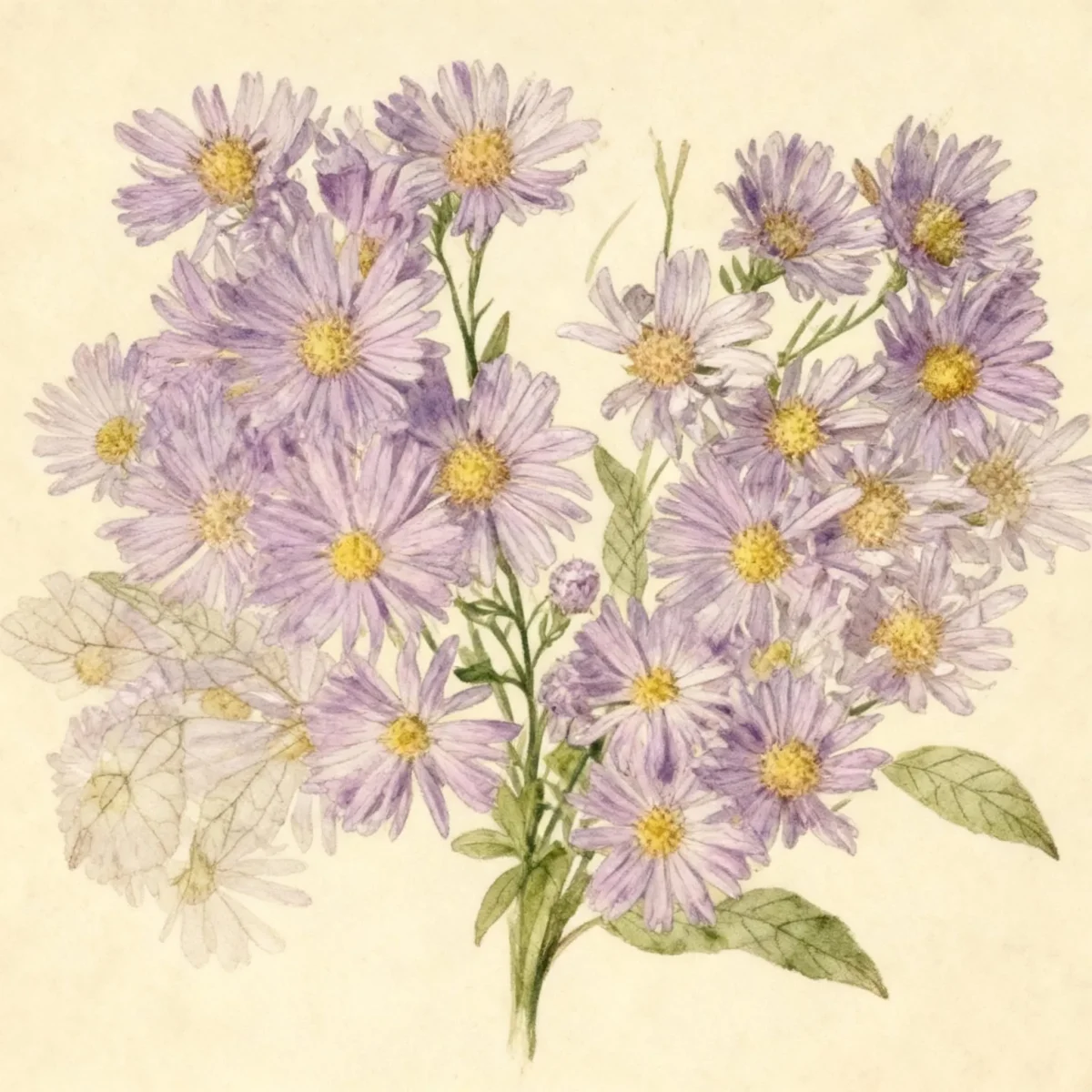
Aster ‘Celeste’ stands out as a prime component for vibrant late-season garden displays, earning its place as a dependable Michaelmas daisy variety. This herbaceous perennial produces a profusion of small, daisy-like flowers, characterized by striking violet-blue ray florets surrounding sunny yellow centers, ensuring color when many other plants fade. As a compact hybrid, Aster ‘Celeste’ typically stays between two to two-and-a-half feet tall, forming a tidy, rounded mound that often negates the need for staking required by its taller relatives. Gardeners rely on this variety for its low maintenance needs and its ability to attract essential late-season pollinators, making it a wonderful functional and aesthetic addition to nearly any sunny perennial border.
Fast Facts
- Plant Family: Asteraceae
- Plant Type: Herbaceous perennial
- Hardiness Zones: USDA Zones 4-8
- Size at Maturity:
- Height: 2-2.5 ft
- Spread: 2-2.5 ft
- Bloom Time: August to September
- Bloom Description: Violet-blue rays and yellow center disks
- Sun Exposure: Full sun
- Water Needs: Medium
- Maintenance Level: Low
How to Grow
The ideal time to plant Aster ‘Celeste’ is when conditions are mild, ensuring establishment before the stress of summer heat. Locate plants where they receive full sun exposure, which is crucial for abundant flowering and minimizing common fungal issues. This perennial thrives in average, medium soils, although it shows a preference for organically rich compositions that offer consistent moisture retention without becoming waterlogged. Due to its susceptibility to powdery mildew, ensure good air circulation around the plants; morning watering encourages foliage to dry quickly.
To manage height and maximize bushiness on your Michaelmas daisy, pinch back the growing tips several times before mid-July. While this cultivar is compact, thinning out some stems during the summer promotes better airflow throughout the dense foliage, further aiding disease prevention. Following the bloom period in late fall or early winter, plants can be cut back neatly to the ground to prepare for the next growing season.
Landscape Uses
Aster ‘Celeste’ is highly versatile in landscape design, excelling where reliable upfront structure and late-season color are desired. Its neat, rounded habit makes it an excellent choice for borders, especially along pathways where its constant two-foot presence provides a clean edge. This compact Michaelmas daisy also blends seamlessly into the mixed planting scheme of cottage gardens, providing that quintessential late-summer burst of blue hues. Consider planting Aster ‘Celeste’ in butterfly gardens, as its late bloom coincides perfectly with the needs of migrating or overwintering pollinators looking for nectar. It also performs well as a freestanding specimen or clustered in drifts for mass impact.
Standout Features
Flower Qualities
- Showy
Noteworthy Characteristics
Asters are the mainstay of many fall gardens producing daisy-like flowers. Genus name comes from the Latin word aster meaning star for the shape of the flowers. ‘Celeste’ is a hybrid perennial aster with daisy capitulum form that resulted from an open breeding program by Yoder involving A. Novae-belgii and A. Pilosus var. Pringlei. This is a compact, clump-forming aster that typically forms a rounded foliage mound to 24-30” tall and as wide, featuring a profuse bloom of daisy-like asters (to 1” diameter) with violet-blue rays and yellow center disks from late summer to early fall. Flowers are attractive to butterflies.
Tolerances
- Drought
Potential Problems
Aster ‘Celeste’ generally exhibits resistance to serious insect infestations or diseases, making it a relatively worry-free choice. However, like many asters, it remains susceptible to powdery mildew, especially when planted in areas with poor air circulation or high humidity. To combat this, ensure adequate spacing and water at the base rather than overhead. Another occasional concern is Aster wilt, which is more likely to occur in heavy, poorly-drained clay soils; amending the soil to improve drainage is the best preventative measure.
Frequently Asked Questions
What hardiness zones is Michaelmas daisy suitable for?
Aster ‘Celeste’ is reliably hardy across USDA Zones 4 through 8, offering flexibility for gardeners in temperate climates.
How large does Aster ‘Celeste’ grow?
This compact cultivar typically reaches a mature height between 2 and 2.5 feet, with a similar spread of 2 to 2.5 feet, forming a noticeable but manageable mound.
What sun exposure does Aster ‘Celeste’ need?
For optimal flowering and health, Aster ‘Celeste’ requires full sun exposure throughout the growing season.
When does Michaelmas daisy bloom?
You can expect this dependable perennial to bloom profusely from August straight through September, providing excellent late-season color.
Conclusion
The combination of low maintenance, compact size, and vibrant violet-blue late-summer blooms makes Aster ‘Celeste’ an indispensable component for fall garden design. Planting this reliable Michaelmas daisy offers guaranteed structure and vital support for pollinators as the season winds down. Before purchasing, confirm that your garden offers full sun and possesses medium water needs to ensure your Aster ‘Celeste’ thrives for years to come.
Companion Planting
When selecting neighbors for Aster ‘Celeste’, focus on plants that share its cultural requirements for full sun and medium moisture, while offering contrasting textures or bloom times. Pair this upright aster with shorter, dome-shaped plants like ornamental grasses or Sedum ‘Autumn Joy’ which share a similar bloom window but offer different flower forms. To further combat potential humidity issues around the base of the aster, interplanting with low-growing groundcovers that tolerate dry shade (once established) can help shade the soil surface and regulate temperature without crowding the base.
Wildlife Benefits
While the primary focus is often aesthetic, the late-season bloom of Aster ‘Celeste’ provides crucial foraging opportunities for beneficial insects. As summer annuals fade, these late-blooming daisy-like flowers offer readily accessible nectar for bees, including late-season bumblebees preparing for winter. Furthermore, the presence of nectar-rich aster flowers helps fuel migrating monarch butterflies that require substantial energy reserves for their long journey south. Simply ensuring the plants are healthy and not treated with broad-spectrum insecticides will maximize the appeal of this Michaelmas daisy to local wildlife populations.