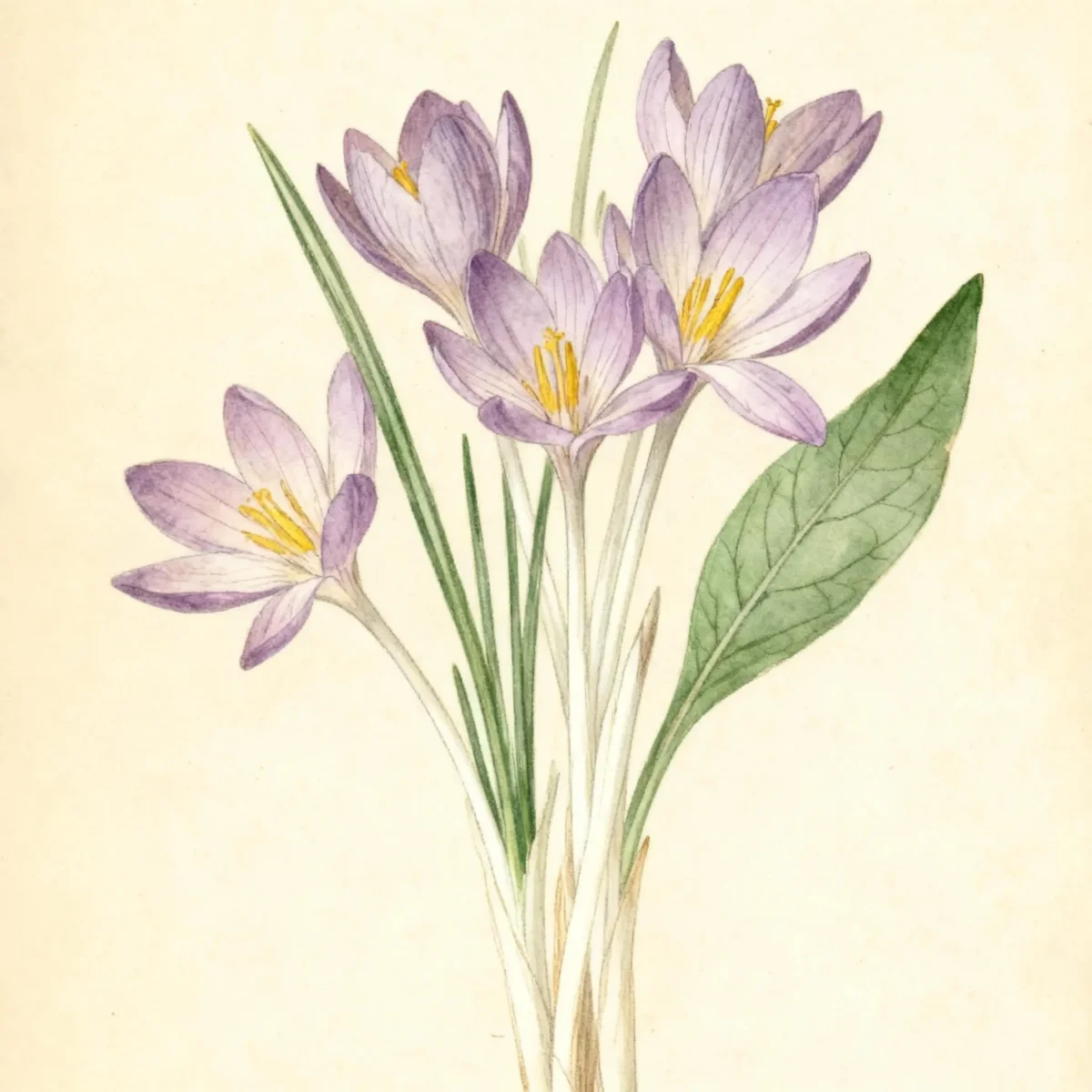
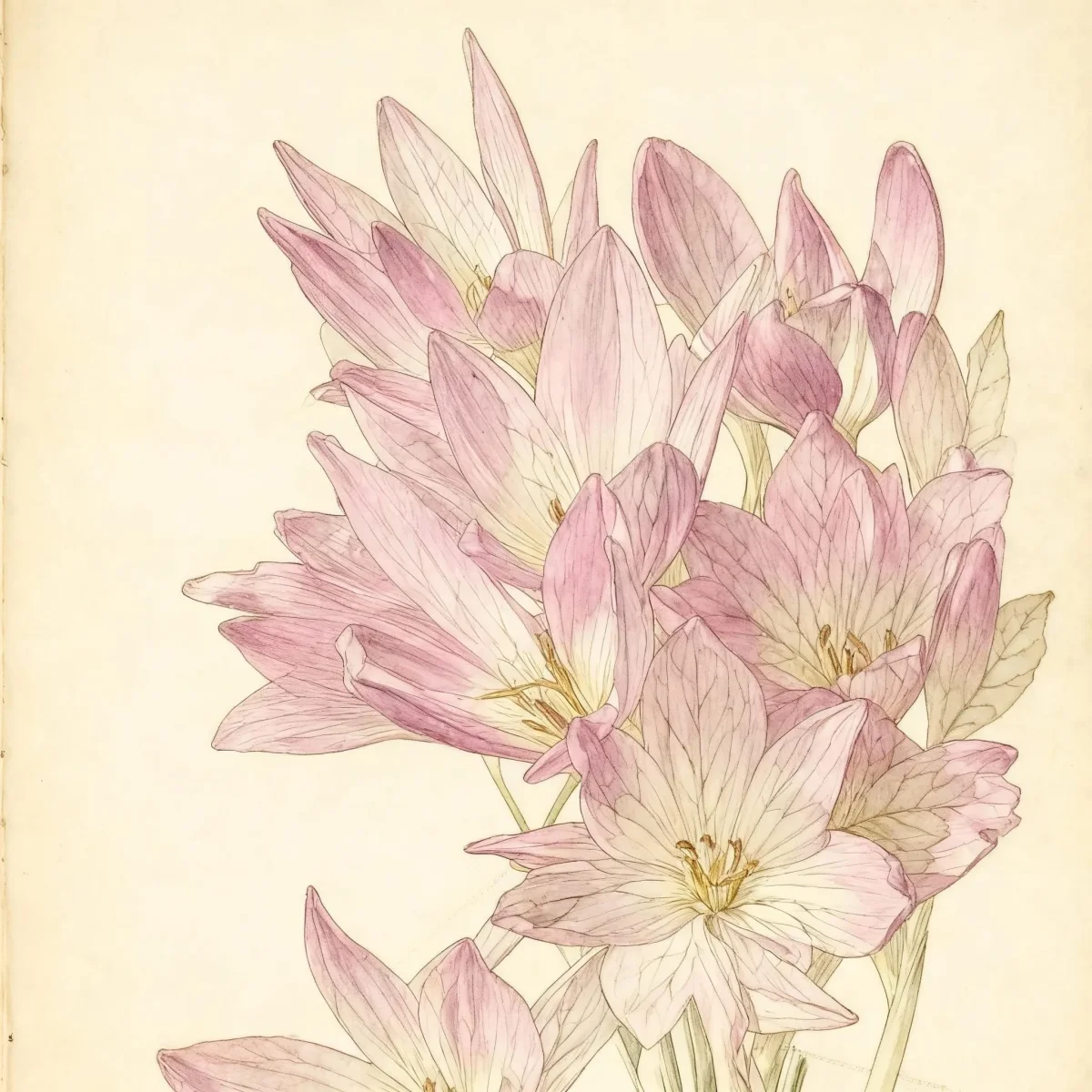
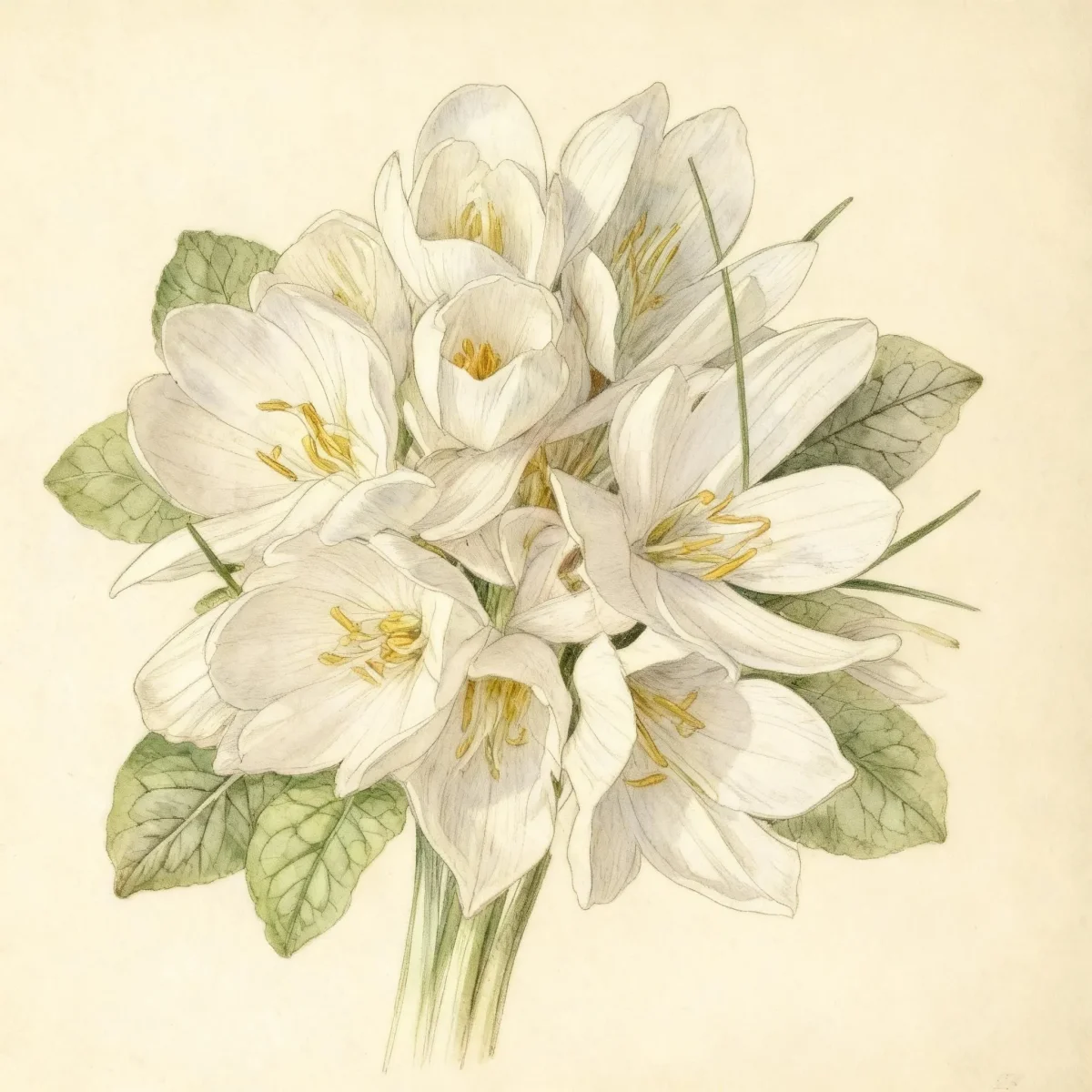
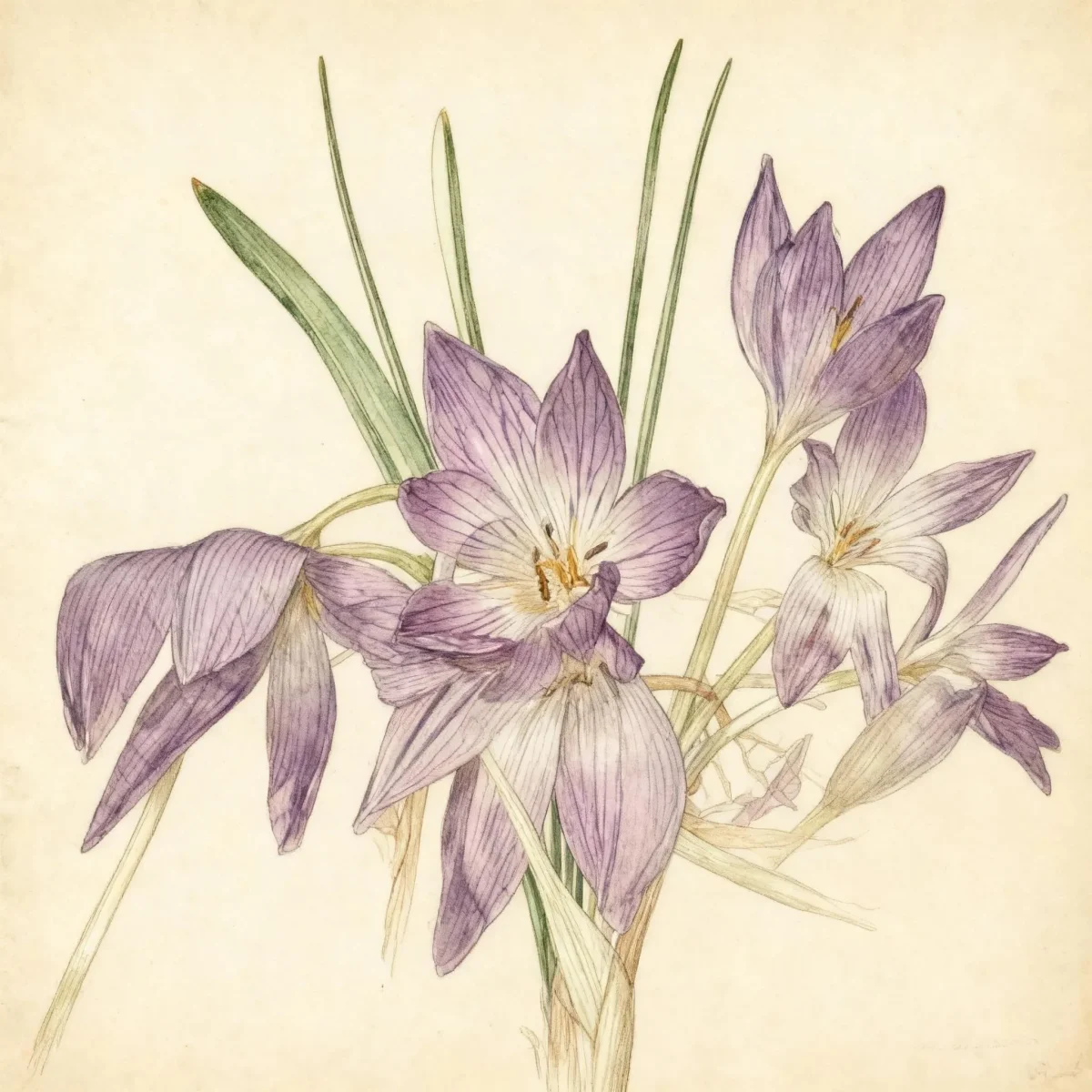
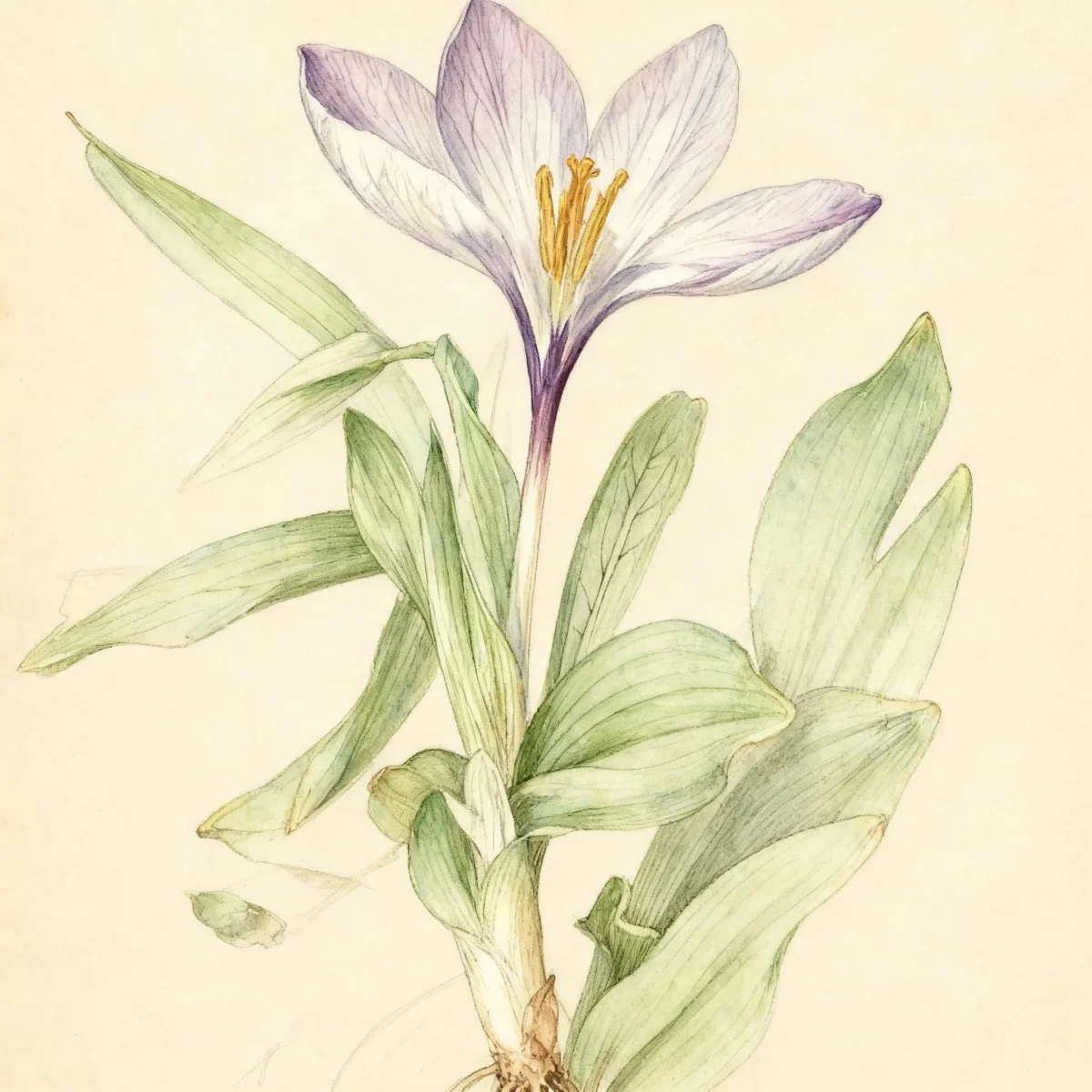
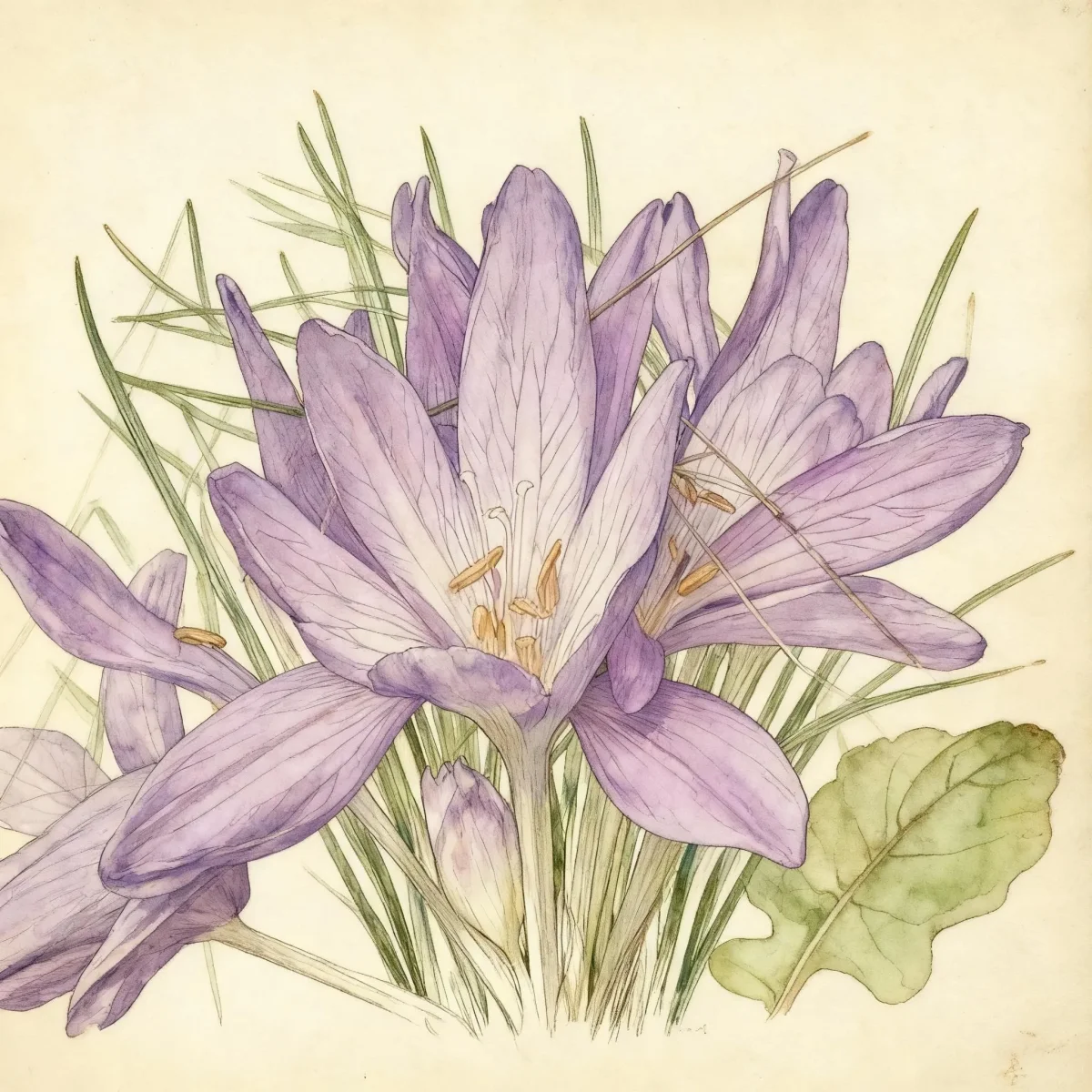
Autumn crocus (Colchicum tenorei)
Discover Colchicum tenorei, the stunning Autumn crocus, blooming pale violet fall color in zones 4-7.
Scroll down to discover growing tips, care requirements, companion plants, and more
Complete Plant Information
Overview
Colchicum tenorei, commonly recognized as the Autumn crocus, offers a striking display of unexpected late-season color. This cormous perennial stands out dramatically as most summer gardens begin to fade, delivering crocus-like blooms in shades of pale violet to rosy pink during the autumn months. Its ease of growth in well-drained soils makes Colchicum tenorei a reliable addition for extending the garden’s vibrancy.
Native to Italy, this plant provides excellent functional value by thriving in conditions ranging from full sun to partial shade. While the flowers provide significant autumnal impact, gardeners should be aware that the unsightly foliage appears in spring and dies back by summer, preceding the naked flower stems that emerge later. Planning its placement around masking foliage is key to maximizing the appeal of the Autumn crocus.
For gardeners seeking low-fuss bulbs that naturalize well, Colchicum tenorei is an excellent choice. It emerges dependably each fall, giving landscapes a unique, almost magical pop when other plants are winding down. It is often referred to as “Naked Ladies” because the flowers emerge without accompanying leaves, a stark contrast to its springtime foliage display.
Fast Facts
- Plant Family: Colchicaceae
- Plant Type: Bulb
- Native Range: Italy
- Hardiness Zones: USDA Zones 4-7
- Size at Maturity:
- Height: 0.25-0.5 ft
- Spread: 0.25-0.5 ft
- Bloom Time: September to October
- Bloom Description: Pale violet to rosy pink
- Sun Exposure: Full sun to part shade
- Water Needs: Medium
- Maintenance Level: Medium
How to Grow
Successfully establishing Colchicum tenorei requires attention to planting time and soil drainage. These bulbs—technically corms—must be planted in August to ensure bloom later the same fall season. Ensure their location provides organically rich, medium-moisture soil that drains exceptionally well, avoiding soggy winter conditions. Plant the corms 2 to 3 inches deep and space them about 6 inches apart to allow for naturalizing.
Ongoing care for the Autumn crocus is relatively straightforward. Established plants require a medium amount of water, benefiting from consistent moisture during their active growing periods in spring and fall. Minimal fertilization is usually necessary if the soil is organically rich. If division becomes necessary, plan this task during the mid-summer dormant period when the foliage has completely died back.
A crucial aspect of growing these fall bloomers is managing expectations regarding their foliage. The floppy, somewhat unattractive leaves appear in the spring; allow them to yellow and die back naturally to feed the corm for the next autumn flush. Planting Colchicum tenorei near low-growing ground covers can help mask this unsightly spring decline while providing support for the slender flower stems.
Landscape Uses
The naturalizing habit of Colchicum tenorei makes it perfect for spreading informally through meadows or beneath deciduous trees where summer shade is present but fall sun reaches the ground. They excel in woodland beds or naturalized settings where their late bloom won’t awkwardly combine with the dying foliage of their own earlier growth cycle. This plant is an excellent component for filling seasonal gaps.
Consider planting the Autumn crocus along walkways or near patios, allowing you to enjoy the delicate colors up close. To solve the common issue of weak flower stems flopping, strategically plant companions with low, dense growth near the corms. Early spring ephemerals or low, mat-forming ground covers are ideal as they will hide the yellowing foliage while supporting the flower stems before they collapse.
Because the spring foliage of Colchicum tenorei is visually compromised by mid-summer, it performs best when integrated into mixed borders where taller, summer-blooming perennials can take over visually as the crocus foliage disappears. This ensures that you enjoy the brilliant fall flowers without dwelling on the less attractive spring growth phase.
Flower Qualities
- Showy
Noteworthy Characteristics
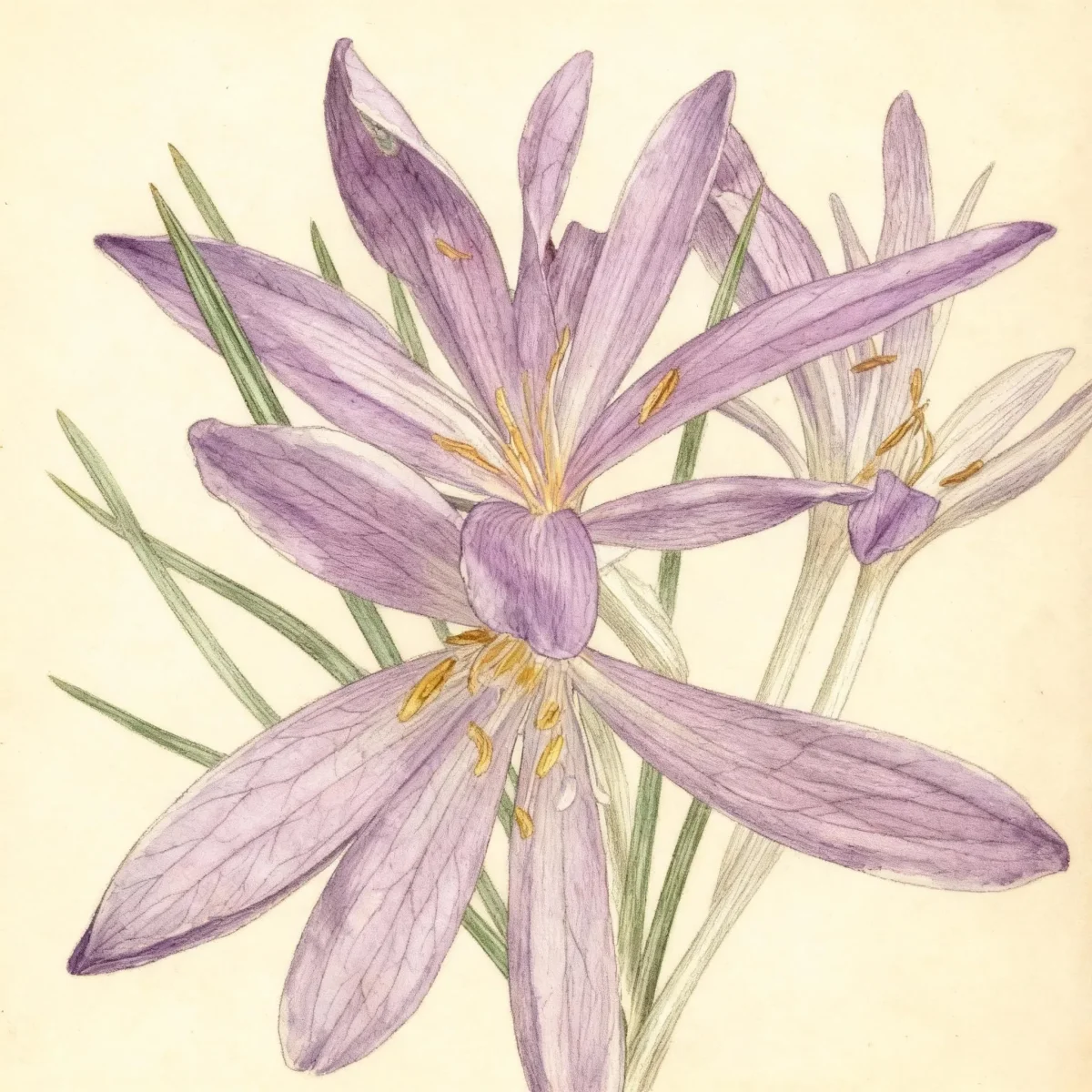
Colchicum tenorei, commonly known as autumn crocus, is a cormous perennial that typically grows to 4-6” tall and is noted for its fall bloom of crocus-like flowers. It is native to Italy. Plants send up somewhat unattractive foliage (4-6 dark green elliptic to lanceolate basal leaves) in spring. Letters gradually yellow and die by summer when the plants go dormant. Naked flower stems rise from the ground to 4-6” tall in late summer to early fall bearing funnel-shaped, star-shaped, pale violet to lilac to rosy pink flowers. Flowers typically bloom September to October. Autumn crocuses are in their own family, the Colchicum family, but some experts continue to assert they actually belong in the Lily family. By contrast, spring-blooming crocuses (genus Crocus), sometimes referred to as the true crocuses, are in the Iris family and are botanically unrelated to the autumn crocuses.Genus name come from the abundance of the plant in Colchis, the Black Sea region of Georgia, Caucasus.
Tolerances
- Rabbit
- Deer
Potential Problems
This plant generally avoids serious insect or disease issues, making Colchicum tenorei a low-risk addition to the garden. However, vulnerable, tender new growth in spring and fall can attract slugs and snails, which may chew holes in the leaves or flowers. Monitor damp environments and apply appropriate baits or controls promptly to protect your emerging blooms.
The most frequent functional problem relates to aesthetics: weak flower stems tend to flop, creating a tangled appearance, particularly after rain. To mitigate this, avoid planting the corms directly in isolated pockets. Instead, interplant them with supportive ground covers or site them near structural, low-growing perennials that will offer physical support before the flowers reach full height.
Frequently Asked Questions
What hardiness zones is Autumn crocus suitable for?
Colchicum tenorei is hardy in USDA Zones 4 through 7, making it suitable for a wide range of temperate climates.
How large does Autumn crocus grow?
When fully mature, the Autumn crocus typically reaches a height and spread between 0.25 and 0.5 feet tall.
When does Colchicum tenorei bloom?
This plant is prized for its late-season color, blooming reliably from September into October with striking pale violet to rosy pink flowers.
What sun exposure does Autumn crocus need?
Colchicum tenorei performs best when situated in an area receiving full sun to part shade conditions.
Conclusion
Colchicum tenorei remains a highly valuable plant for gardeners looking to combat the late-season lull, providing unexpected and delicate rosy pink autumnal color. By understanding the dual seasonal nature—the less attractive spring foliage followed by the magnificent naked stems—you can site your Autumn crocus perfectly for maximum impact. Always confirm soil drainage is excellent before planting corms in August for a guaranteed fall show.
Companion Planting
Due to the specific growth cycle of Colchicum tenorei, strategic companion planting is essential for year-round garden appeal. Select low-growing perennials or ground covers with foliage that emerges later in the spring or remains green later into summer. Excellent partners include creeping thyme, Sedum varieties such as ‘Angelina’, or low ornamental grasses whose fresh spring growth can effectively mask the thinning and yellowing leaves of the Colchicum tenorei foliage as it fades toward summer dormancy.
When choosing companions, prioritize those that thrive in the same sun and moisture profiles—full sun to part shade with medium water needs. Avoid aggressive spreaders, as these may compete too heavily with the developing corms. By grouping the Autumn crocus with plants that emerge later, you create successional interest: striking early spring bulbs, followed by foliage cover, culminating in the late-season flower display of the Colchicum tenorei.
Seasonal Care Calendar
Late Summer (August) is the critical window for planting Colchicum tenorei corms. Plant them immediately upon acquisition to ensure they establish roots quickly enough to bloom that same season. Keep the planting area consistently moist until flowering begins.
Autumn (September–October) is when you enjoy the primary payoff. Water only if the season is unusually dry, as excessive moisture during bloom can cause stem collapse. Do not cut back the stems immediately after the flowers fade, as they are producing energy.
Spring is when the foliage emerges. This stage requires patience; resist the urge to tidy up the grassy leaves, as they are crucial for replenishing the corm stores. Allow the foliage to decline completely, yellowing and collapsing naturally before summer dormancy begins.
Propagation Tips
The primary and simplest method for propagating Colchicum tenorei is corm division. As the plants naturalize and spread, the established clumps will become crowded, leading to smaller blooms over time. The ideal time to divide these corms is during their mid-summer dormancy, typically around July or early August, before you plant new corms for the fall show.
Gently lift the clump using a garden fork, taking care not to slice into the corms themselves. Mature corms will have produced small offsets (baby corms) attached to them. Separate these offsets—they should be roughly the size of a marble or larger—from the parent corm.
Replant the new offsets and the parent corm immediately at the recommended depth of 2-3 inches. Smaller offsets may take a year or two to reach flowering size, so planting them slightly shallower or marking their location can be helpful. This process ensures the longevity and vigorous blooming of your Autumn crocus population.
Design Integration for Fall Color
Integrating Colchicum tenorei successfully hinges on acknowledging its unique bloom time, often referred to as the “third spring” due to its early fall appearance. Utilize the pale violet to rosy pink blooms to provide delicate contrast against deep burgundy or rust-colored late-season foliage from plants like Japanese maples or certain Heucheras. This plant excels in informal groupings rather than rigid lines.
Consider using these bulbs near evergreen shrubs or dark green conifers. The stark, naked flower stems of the Autumn crocus stand out dramatically against a dark backdrop, making the fall display highly visible, especially along paths or near seating areas. Furthermore, their short stature (under 6 inches) means they don’t obscure mid-height fall bloomers like hardy asters or mums that might follow shortly after.
This plant is perfect for naturalized woodland edges or rock gardens where a touch of unexpected color is desired before winter sets in. Ensure any areas chosen allow for their medium water needs during active growth while providing the essential well-drained soil required for overwintering the corms successfully.