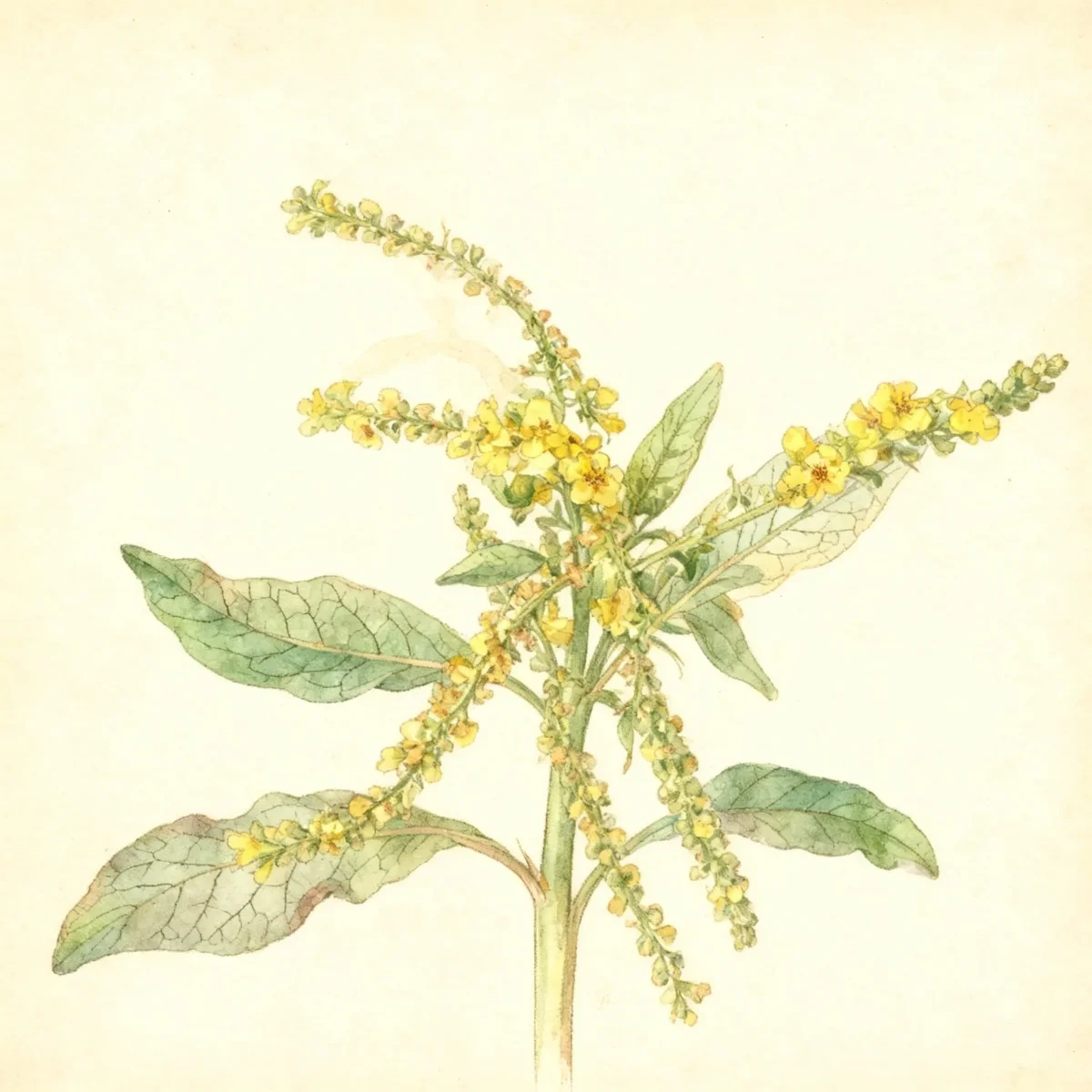
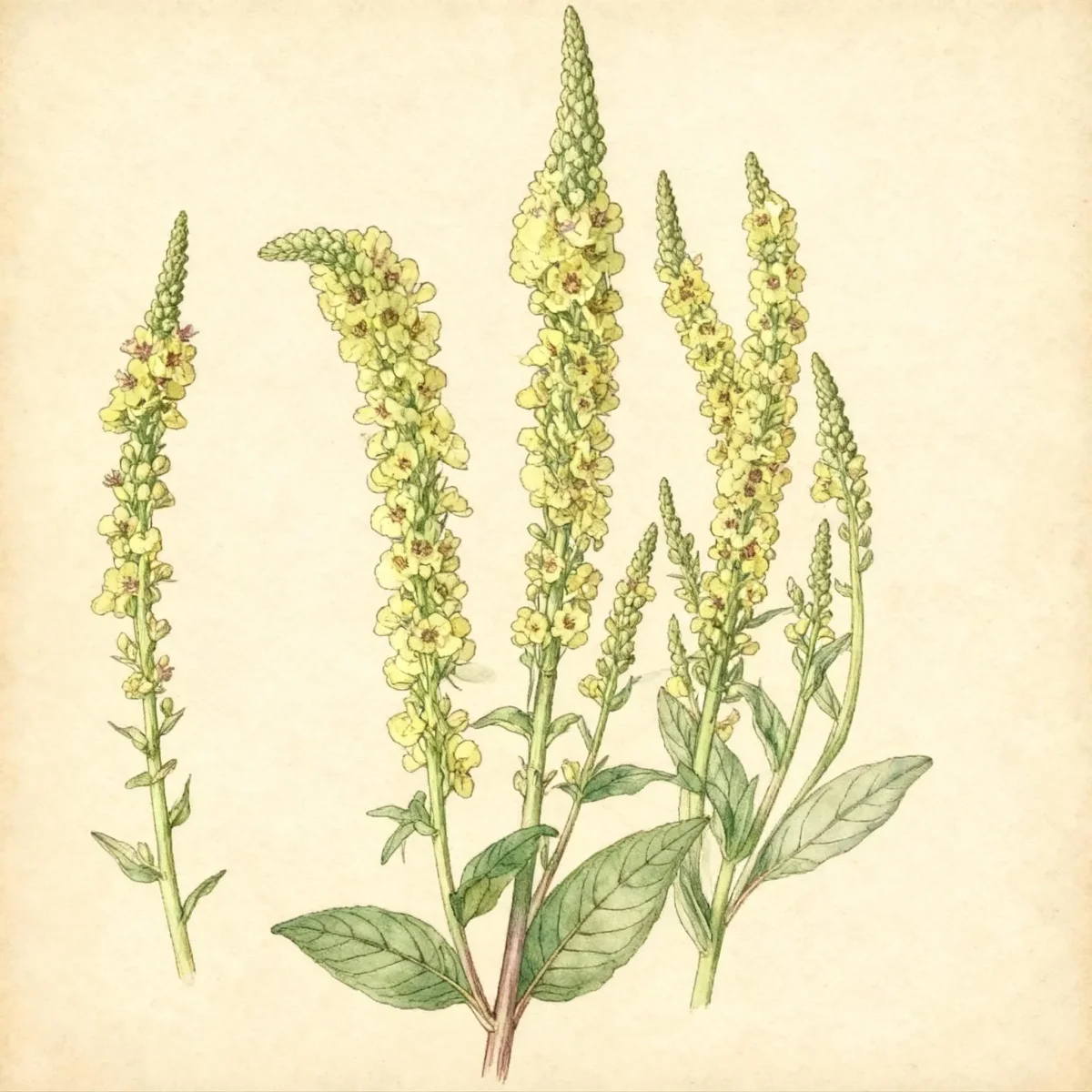
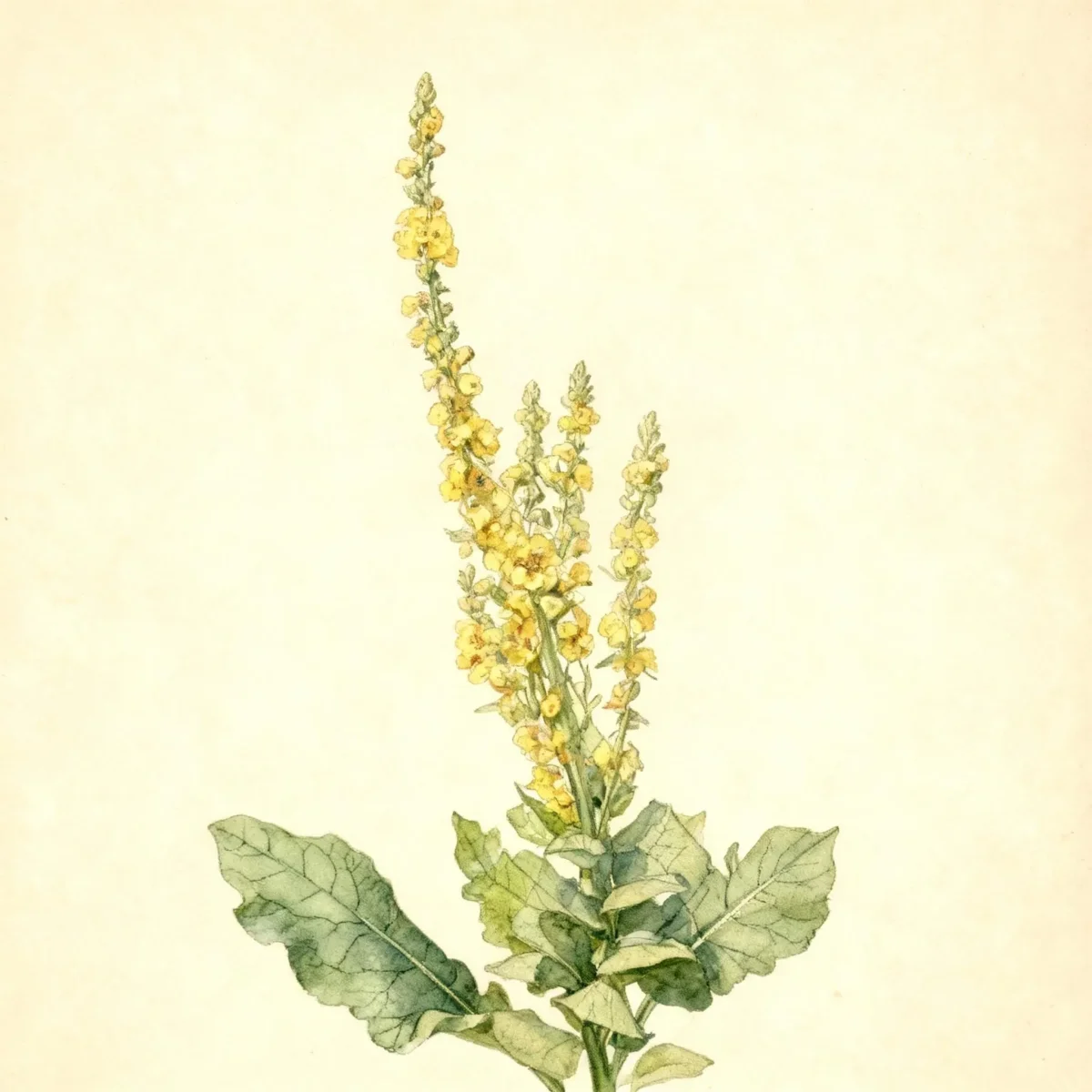
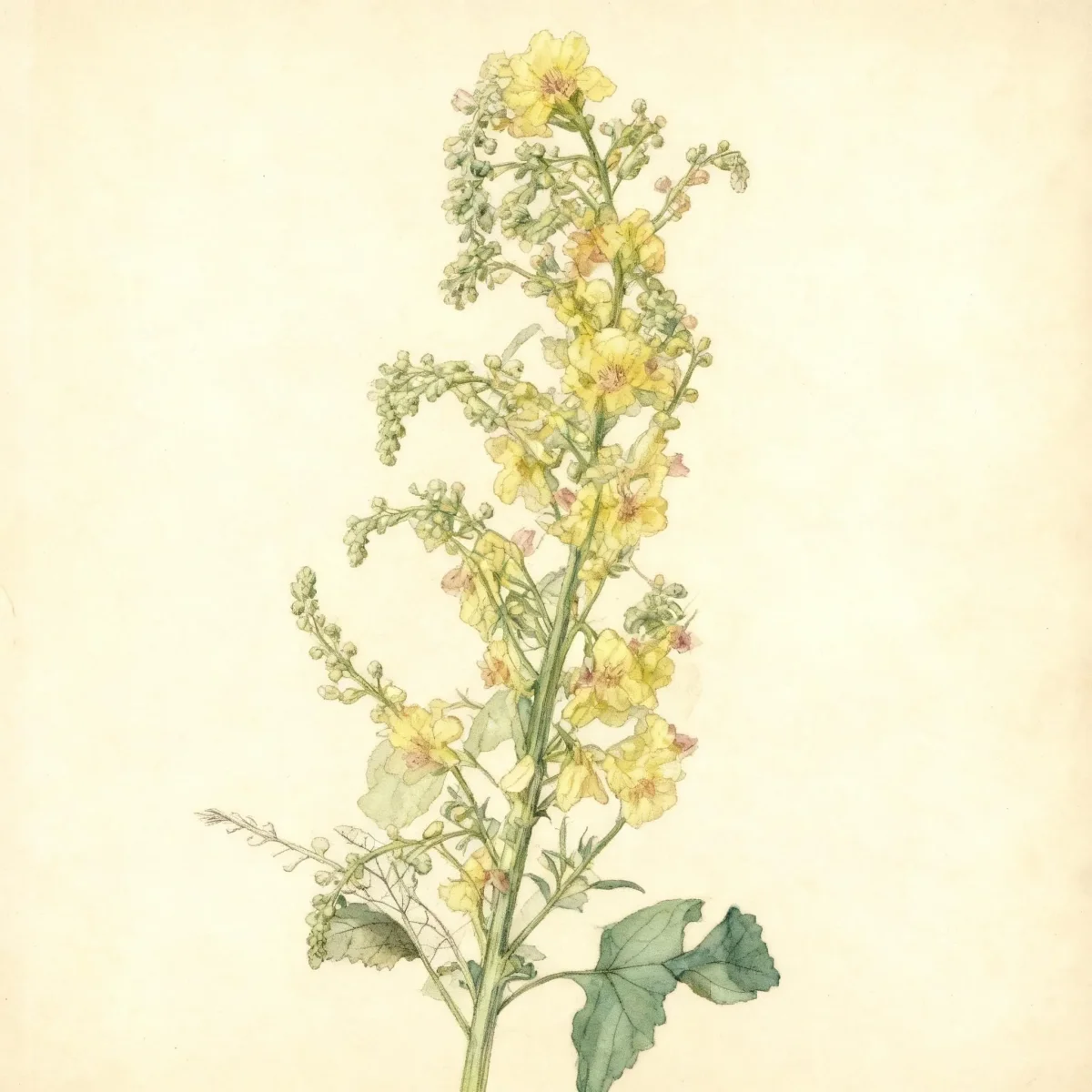
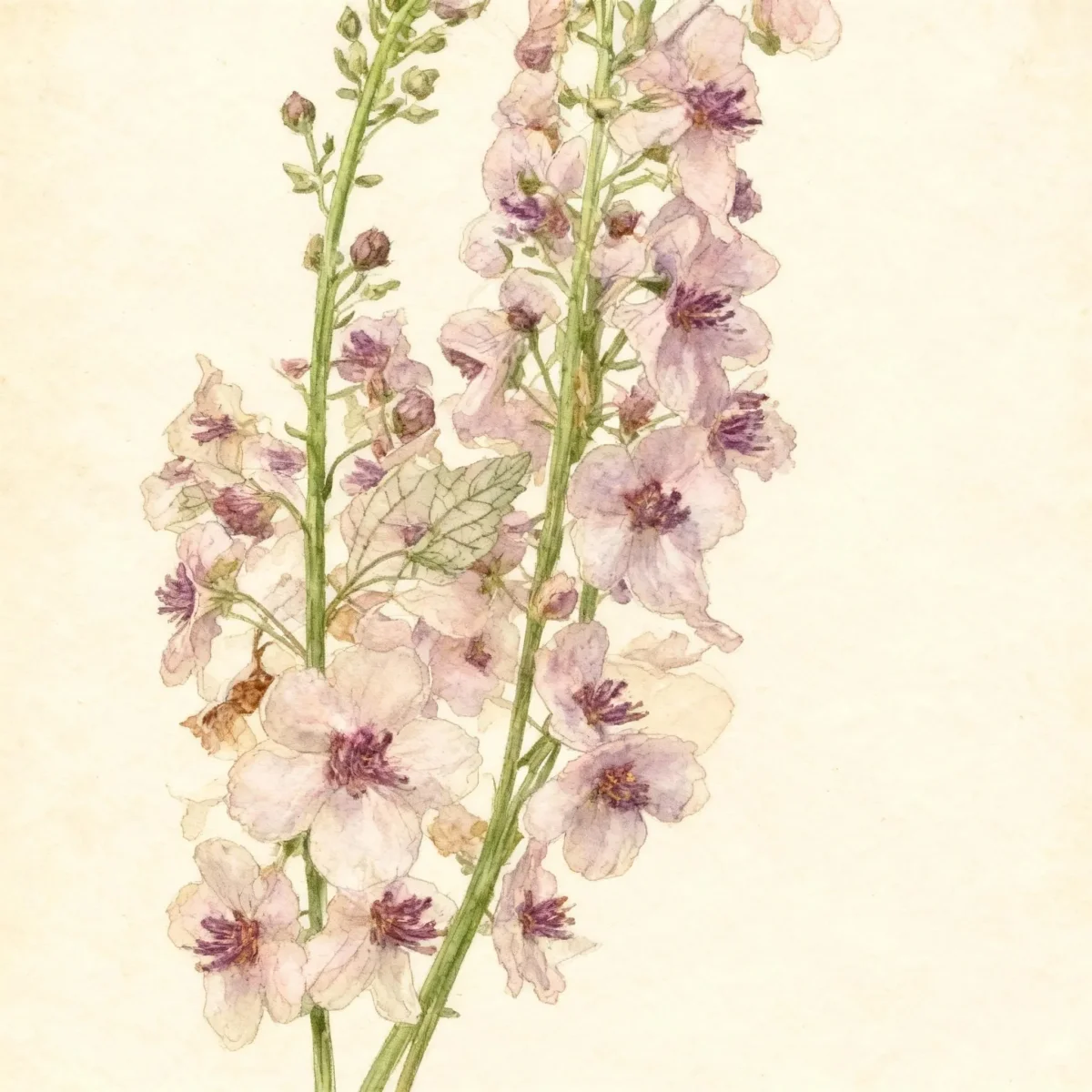
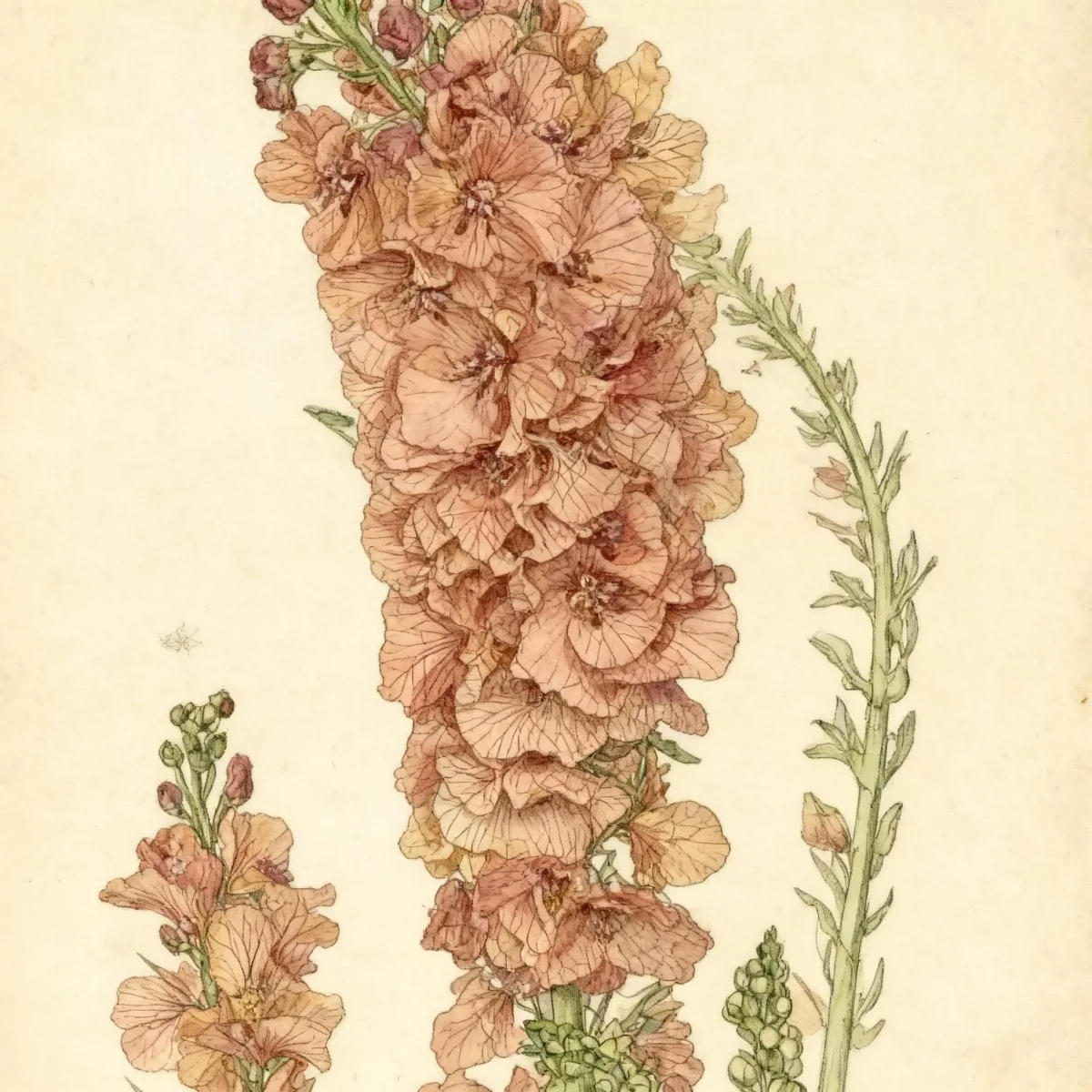
Nettle-leaved mullein (Verbascum chaixii 'Album')
Verbascum chaixii 'Album' (Nettle-leaved mullein) offers striking white spikes, excels in dry, sunny spots, and requires low maintenance.
Scroll down to discover growing tips, care requirements, companion plants, and more
Complete Plant Information
Overview
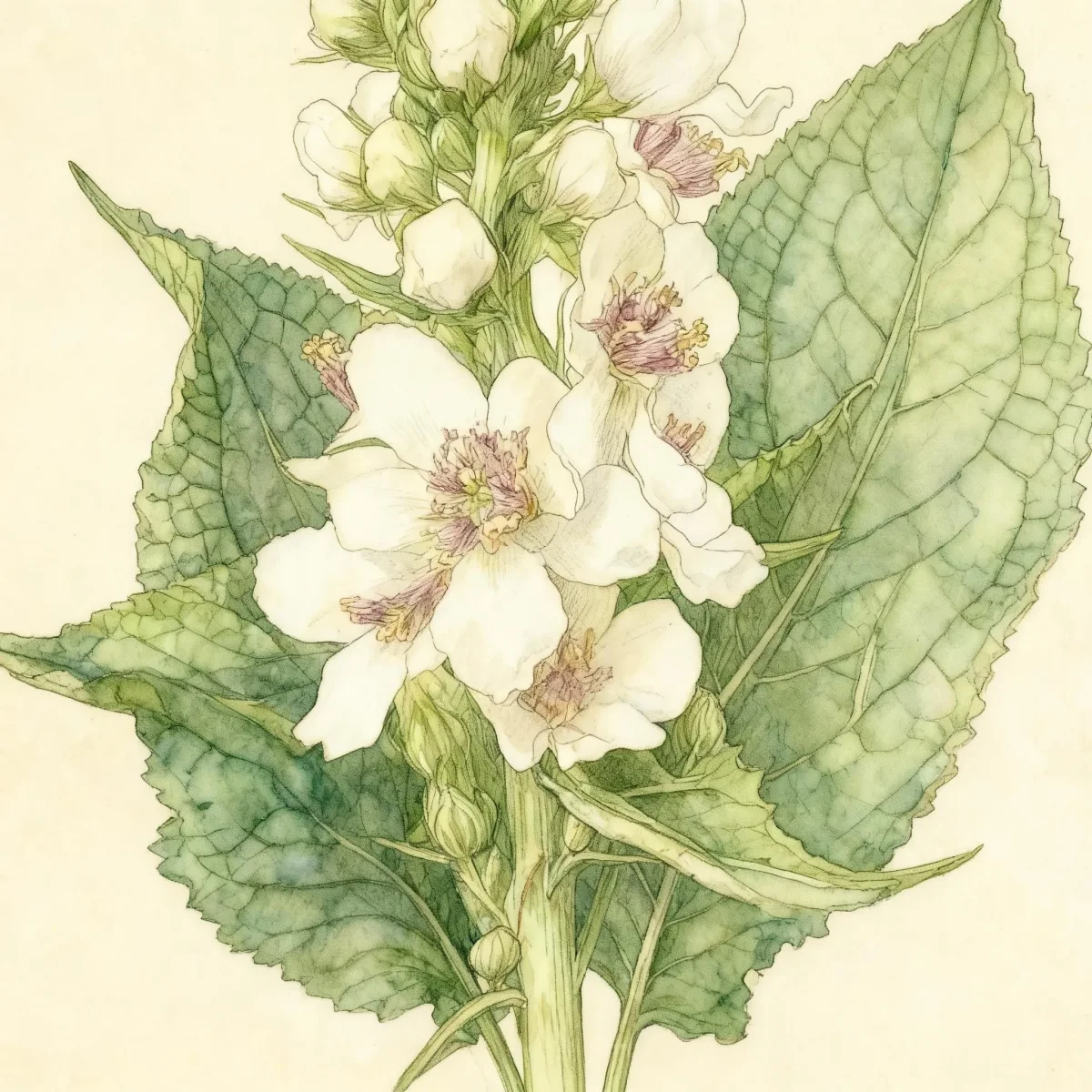
Verbascum chaixii ‘Album’, known commonly as Nettle-leaved mullein, is a superb choice for gardeners seeking vertical interest in lean conditions. This herbaceous perennial produces elegant spires of pure white flowers, each accented by contrasting purple stamens, adding sophistication to the summer garden. It is valued for its ability to thrive where many other perennials struggle.
The distinctive basal rosette of dull grayish-green leaves forms a neat mound from which the flower stalks ascend, maintaining visual appeal even when not in bloom. Growing this cultivar offers a low-maintenance structural element perfect for sunny borders.
Gardeners benefit from the drought tolerance of Verbascum chaixii ‘Album’ once established, making it excellent for xeriscaping or creating naturalized drifts. Its relatively compact size compared to some larger mulleins ensures it brings vertical height without becoming overwhelming.
Fast Facts
- Plant Family: Scrophulariaceae
- Plant Type: Herbaceous perennial
- Hardiness Zones: USDA Zones 5-8
- Size at Maturity:
- Height: 2-3 ft
- Spread: 1-1.5 ft
- Bloom Time: May to July
- Bloom Description: White with purple stamens
- Sun Exposure: Full sun
- Water Needs: Dry to medium
- Maintenance Level: Low
How to Grow
Planting Verbascum chaixii ‘Album’ is easiest in spring or fall in a location receiving full sun exposure. This plant demands well-drained soil; wet, poorly drained conditions are usually fatal. It readily establishes in average soils but excels when soil fertility is kept low to moderate, preventing overly lush, floppy growth.
Watering requirements are minimal once established. While it prefers dry to medium moisture, consistent moisture during its first year will aid establishment. Avoid over-fertilizing, as this can reduce flower production and necessitate staking.
Maintenance for Nettle-leaved mullein is generally low. Deadheading spent flower spikes promptly encourages a longer bloom cycle through mid-summer. However, leaving a few spikes to mature allows the plant to successfully self-seed, naturally expanding the planting over time. Root cuttings taken in late winter or early spring are an excellent method for intentional propagation.
Landscape Uses
The vertical structure of Verbascum chaixii ‘Album’ makes it a fantastic vertical accent. It is highly recommended for use in traditional borders, adding height between shorter perennials without the width of shrubs. Its preference for poor, dry soils means it performs exceptionally well when naturalized in lean garden areas.
Consider planting Nettle-leaved mullein on dry, rocky slopes or scree gardens where heavy, rich soil is unavailable. It pairs nicely with sun-loving, drought-tolerant companions like Sedum, ornamental grasses, or Catmint (Nepeta). Its upright form provides excellent contrast against mounding plants.
Standout Features
Flower Qualities
- Showy
Noteworthy Characteristics
Verbascum chaixii is a narrow-leaved mullein species that is sometimes commonly called nettle-leaved mullein. It is a somewhat short-lived perennial which forms a large basal rosette (8-12” wide) of woolly, coarsely toothed, dull grayish-green, ovate-oblong leaves (3-6” long) from which rise spire-like, unbranched stems (2-3” tall) with terminal racemes of 5 lobed, nearly flat, yellow flowers (1 inch diameter) with purplish stamens. Blooms in late spring to early summer.The genus name Verbascum comes from the Latin word barbascum which means “bearded”, in reference to the hairy stamen filaments of some species.‘Album’ is a white-flowered cultivar of the species.
Tolerances
- Deer
- Drought
- Dry Soil
- Shallow-Rocky Soil
Potential Problems
This plant generally exhibits no serious insect or disease problems under appropriate growing conditions. The main concern is ensuring excellent drainage; wet winter soil often proves fatal to Verbascum chaixii ‘Album’. In extremely hot, dry spells, monitor for spider mites. If plants establish in rich, fertile garden loam, they may grow excessively tall and require structural support; therefore, avoid amending the soil heavily where this mullein is grown.
Frequently Asked Questions
What hardiness zones is Nettle-leaved mullein suitable for?
Verbascum chaixii ‘Album’ is reliably hardy across USDA Zones 5 through 8.
How large does Verbascum chaixii ‘Album’ grow?
This cultivar typically reaches a mature height between 2 and 3 feet tall, spreading moderately between 1 and 1.5 feet wide.
When does Nettle-leaved mullein bloom?
You can expect the striking white blooms of this plant to appear from May extending through July.
What sun exposure does Verbascum chaixii ‘Album’ need?
This variety requires conditions of full sun to flower optimally and maintain good structure.
Conclusion
The crisp white spikes and robust tolerance for poor soils make Verbascum chaixii ‘Album’ an invaluable architectural plant for sunny borders and naturalized areas. Ensure your site provides the full sun and excellent drainage this Nettle-leaved mullein craves for years of low-effort beauty. Check your local USDA zone compatibility before adding this easy perennial to your landscape plan.
Companion Planting
To complement the upright form and dry-loving nature of Verbascum chaixii ‘Album’, consider pairing it with species that share similar cultural needs. Echinacea (Coneflower) and Salvias are excellent partners, as they all thrive in hot, unimpeded sunlight and prefer conditions that dry out between waterings. Avoid planting near moisture-loving hostas or ferns, which require richer, damper soil environments that are detrimental to mullein health.
Propagation Tips
While Nettle-leaved mullein is best known for its ability to self-seed modestly, dedicated propagation can be achieved through specific methods. As the plant is a somewhat short-lived perennial, maintaining the stand is important. Root cuttings taken during the late winter or very early spring dormancy are highly successful. Carefully excavate a section of root, take small pieces, and plant them horizontally just beneath the soil surface in a protected area to encourage new basal rosettes to form.