Doublefile viburnum (Viburnum plicatum f. tomentosum)
Grow the stately Viburnum plicatum f. tomentosum, the Doublefile viburnum, valued for tiered branching and spring snow-white blooms.
Scroll down to discover growing tips, care requirements, companion plants, and more
Complete Plant Information
Overview
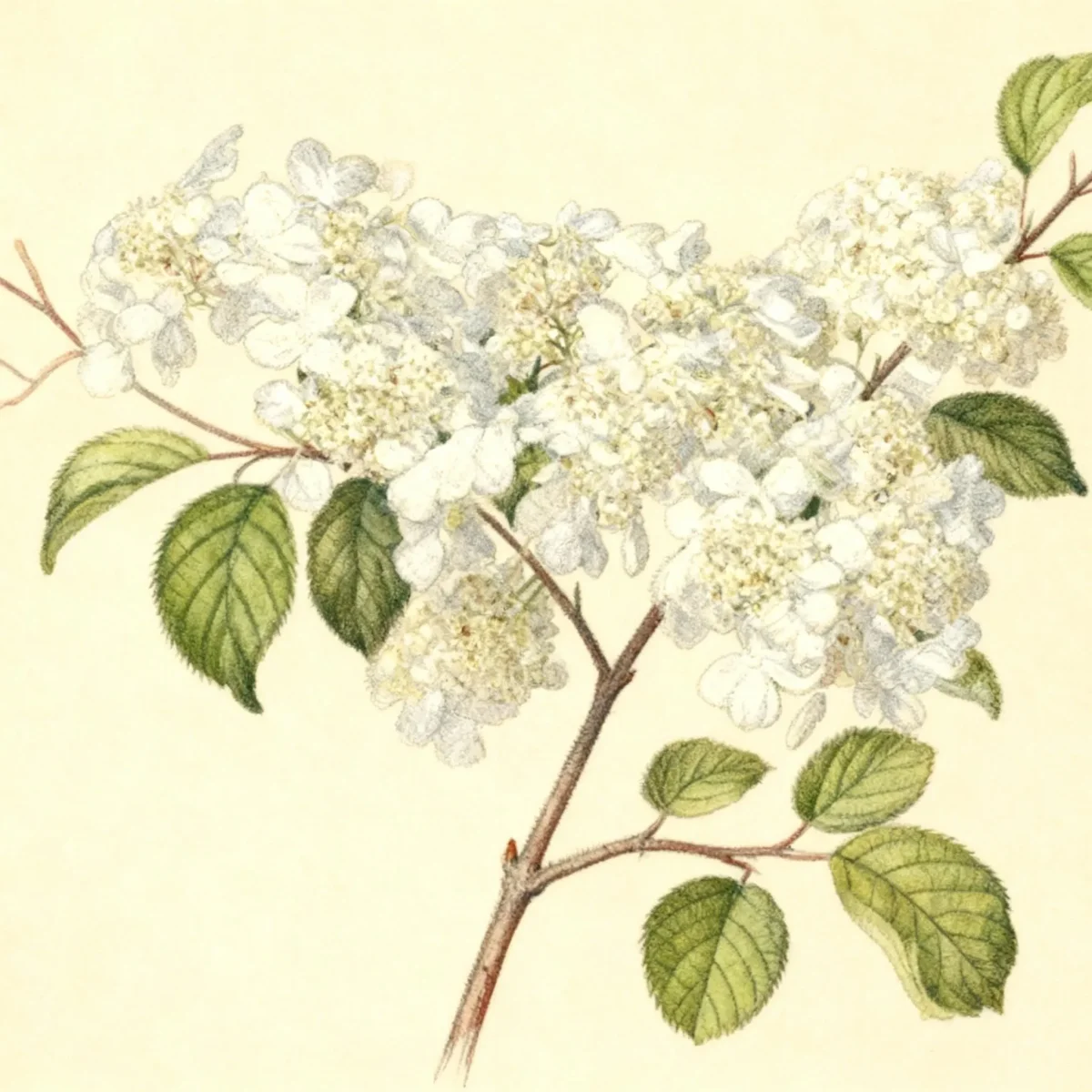
The Doublefile viburnum, or Viburnum plicatum f. tomentosum, is a highly desirable deciduous shrub celebrated for its elegant, tiered branching pattern that gracefully holds its spring flowers horizontally. This habit provides exceptional structure, making it a stunning focal point even in winter. Gardeners prize this shrub for its reliably gorgeous display of snow-white flowers in mid to late spring, often followed by attractive fruit.
As a tough, relatively low-maintenance landscape plant, Viburnum plicatum f. Tomentosum thrives across USDA Zones 5 through 8. It typically reaches mature heights between 8 to 15 feet with a spread of 10 to 18 feet, offering substantial presence in mixed borders or as a specimen plant.
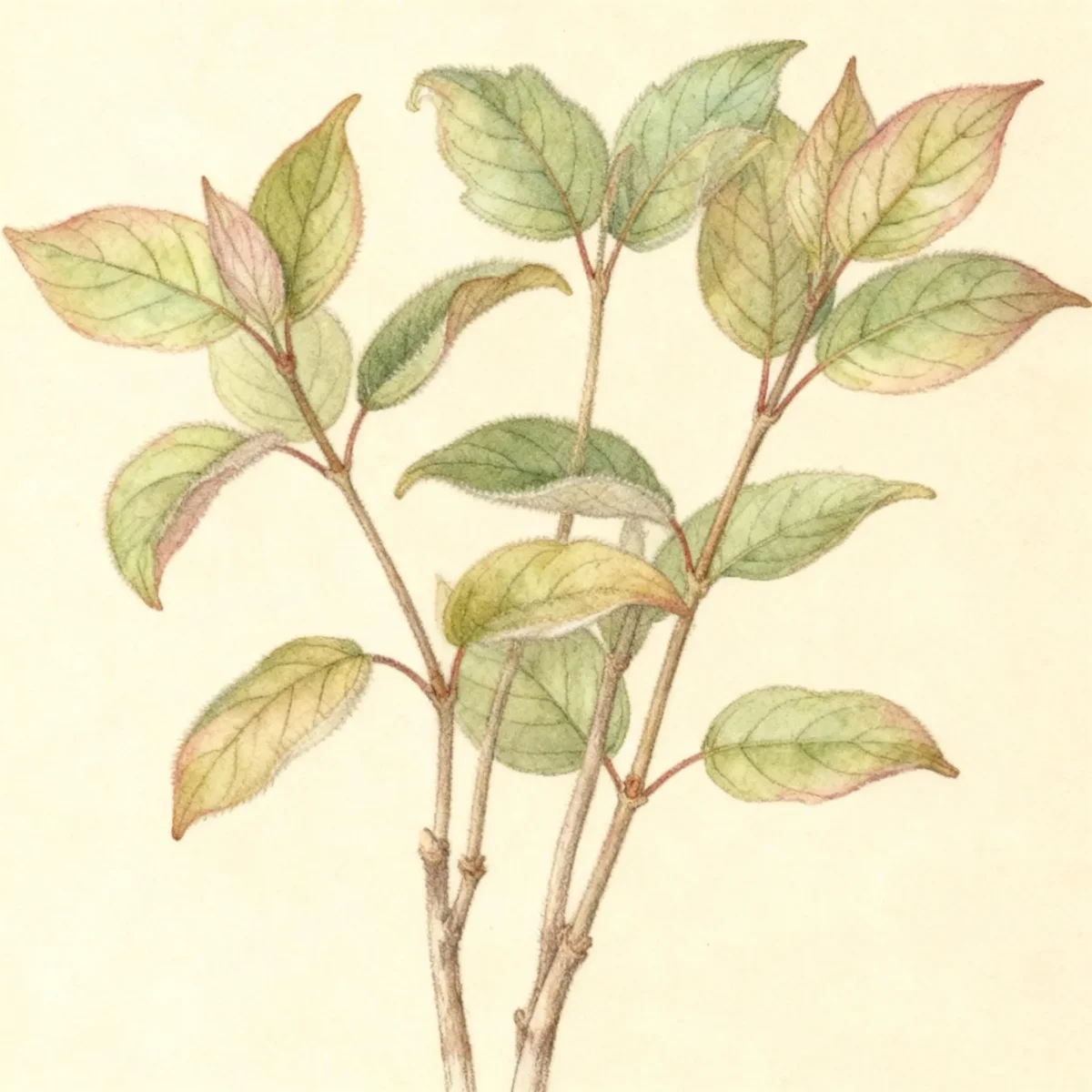
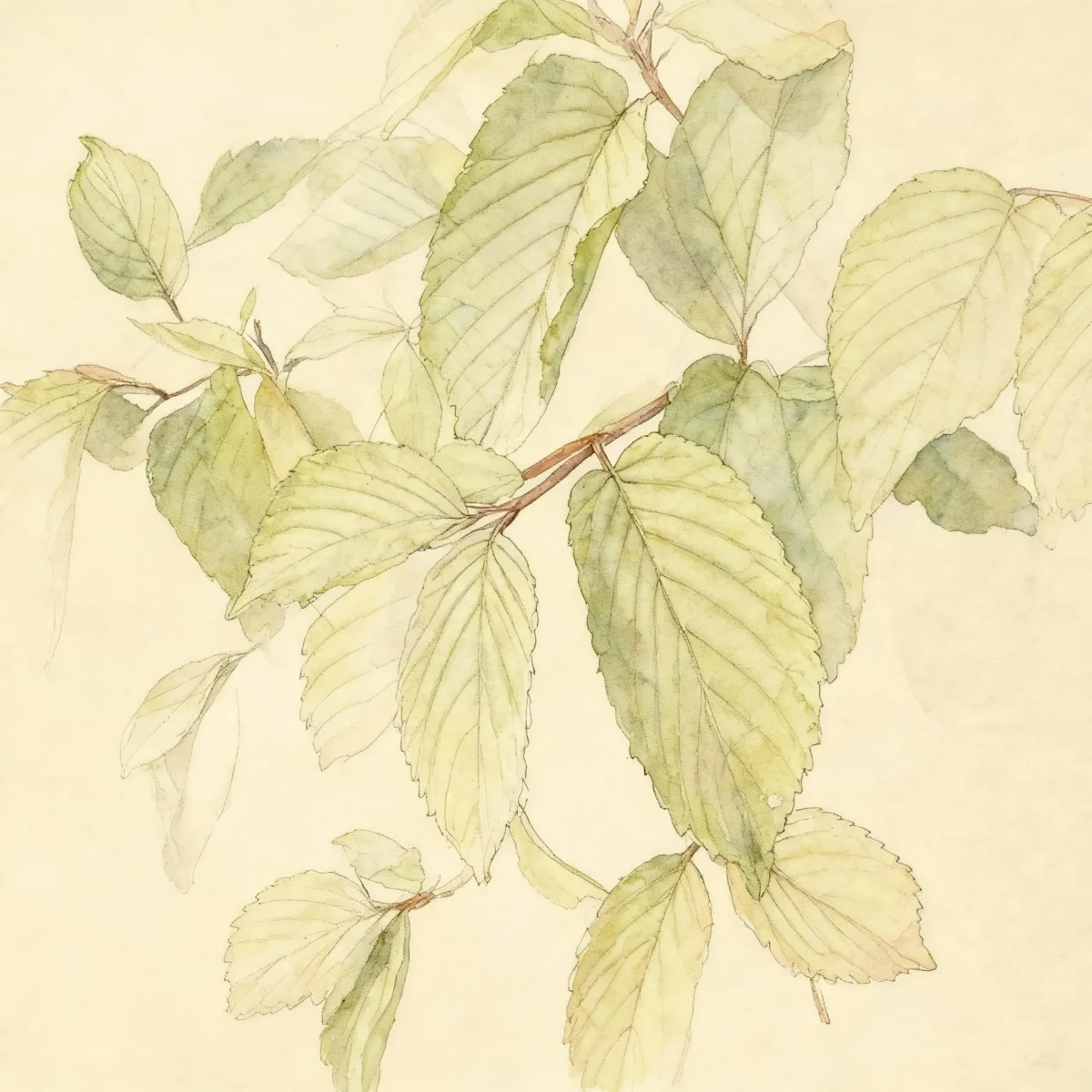
Native to forests and thickets in China and Japan, this viburnum offers seasonal interest from its pleated foliage, which frequently turns pleasing burgundy or purplish red hues in autumn. Its overall robustness and architectural form ensure it remains a foundational element in any established garden setting.
Fast Facts
- Plant Family: Adoxaceae
- Plant Type: Deciduous shrub
- Native Range: China, Japan
- Hardiness Zones: USDA Zones 5-8
- Size at Maturity:
- Height: 8-15 ft
- Spread: 10-18 ft
- Bloom Time: April to May
- Bloom Description: Snow-white
- Sun Exposure: Full sun to part shade
- Water Needs: Medium
- Maintenance Level: Low
How to Grow
The Doublefile viburnum establishes easily when planted in spring or fall. Select a site that receives full sun to partial shade, ensuring the location has average, medium moisture, well-drained soil. While it tolerates a variety of soil conditions, Viburnum plicatum f. tomentosum performs best in moist loams where consistent, even moisture can be maintained, especially during establishment.
Water needs are medium; regular deep watering is beneficial during dry periods, though established plants exhibit good durability once rooted. Fertilization is rarely required for healthy specimens planted in rich soil. Pruning should be infrequent, focusing only on removing dead or crossing branches, and must be completed immediately after the flowering period ends in late spring to avoid removing next year’s flower buds.
Be aware that competition from turf grass can negatively impact growth; ensure a sufficient mulch ring is maintained around the base to retain soil moisture and moderate soil temperature. Avoid excessive disturbance of the root zone in established plantings.
Landscape Uses
Viburnum plicatum f. tomentosum is incredibly versatile, working perfectly in formal settings as a pruned hedge or used more naturally as a specimen or in drifts within a shrub border. Its distinctive horizontal branching makes it an excellent screen or backdrop plant where vertical interest is desired throughout the year. Plant it near foundations where its structure can add architectural weight without becoming overly dense or crowding structures.
When planning companion plantings, consider species that appreciate similar partial shade and moist conditions, such as Japanese painted fern (Athyrium niponicum) or hostas, which offer contrasting foliage textures beneath the canopy of the viburnum. The late spring flowering of the Doublefile viburnum also pairs well with early-flowering bulbs whose foliage disappears before the shrub reaches full leaf-out.
For a classic woodland edge presentation, situate this robust shrub among understory trees like Japanese maples, allowing the crisp white blooms of Viburnum plicatum f. Tomentosum to stand out against finer textures or deeper colored foliage.
Standout Features
Flower Qualities
- Showy
Fruit Qualities
- Showy
Noteworthy Characteristics
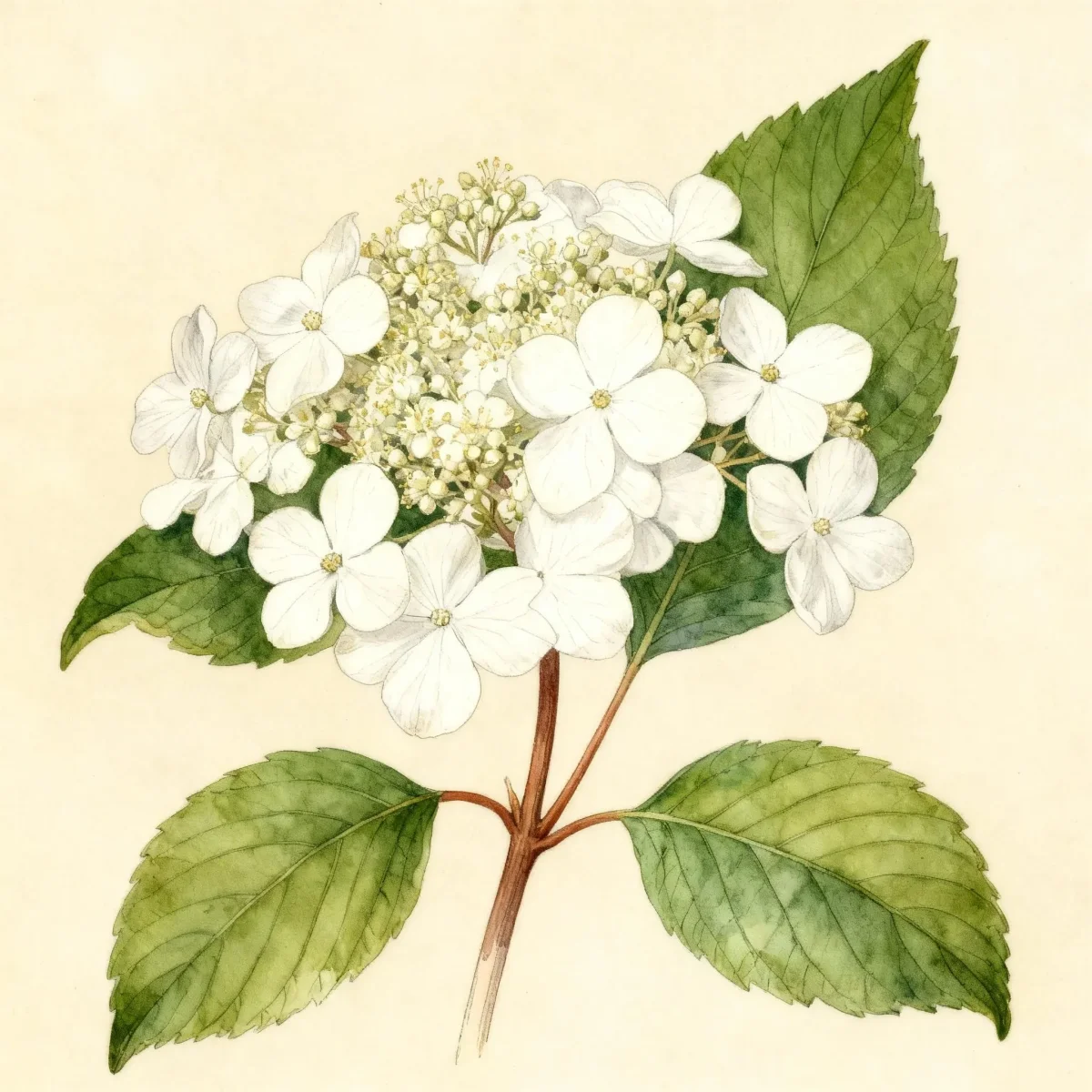
Viburnum plicatum f. tomentosum is distinguished as a dense, upright, multi-stemmed deciduous shrub, commonly reaching 8-15 feet tall and sometimes wider. Its attractive ovate, dark green leaves, which are strongly veined and deeply pleated above, turn appealing shades of burgundy or purplish red in the fall. This fertile form features flat-topped flower clusters composed of sterile outer rings surrounding fertile inner florets, which develop into egg-shaped fruits, contrasting with the sterile snowball form. The wild fertile doublefile form is native to forests in China and Japan and possesses fine hairs on its young stems and leaf undersides.
Tolerances
- Drought
Potential Problems
This shrub generally exhibits low susceptibility to serious insect or disease problems, making it a reliable choice. The most common issue reported involves wildlife interference rather than pathogens. Squirrels are known to occasionally eat the unopened flower buds late in the winter or very early spring.
If squirrels severely prune the buds, the result can be significantly reduced bloom quantity or a complete lack of flowers for the season. While full prevention is difficult, cultural practices that promote overall plant health can sometimes lessen the impact. Ensure the soil remains adequately moist going into winter, as stressed plants are often targeted first.
Frequently Asked Questions
What hardiness zones is Doublefile viburnum suitable for?
The Doublefile viburnum (Viburnum plicatum f. tomentosum) is hardy and reliably grows in USDA Zones 5 through 8, making it suitable for a wide range of temperate gardens.
How large does Viburnum plicatum f. Tomentosum grow?
Mature specimens of Viburnum plicatum f. Tomentosum typically reach heights between 8 to 15 feet tall, often spreading out to 10 to 18 feet wide, establishing a broad, structural presence.
What sun exposure does Doublefile viburnum need?
This shrub performs optimally when provided with full sun to part shade. Direct afternoon sun is tolerated better if consistent moisture is maintained throughout the growing season.
When does Viburnum plicatum f. tomentosum bloom?
The beautiful, large flower clusters appear in spring, generally blooming from April to May, presenting a mass of snow-white color across the tiered branches.
Conclusion
The stately structure, reliable spring snow-white blooms, and excellent fall color firmly establish the Doublefile viburnum as a premier landscape shrub. For year-round interest and low maintenance, Viburnum plicatum f. tomentosum is an exceptional selection for most gardeners in compatible zones. Before planting, confirm your local USDA hardiness zone compatibility and prepare your soil to maintain consistent, medium moisture levels for the best performance.
Companion Planting
When selecting partners for your Viburnum plicatum f. tomentosum, focus on plants that thrive in its slightly protected, partially shaded environment and enjoy rich, consistently moist soil. Shade-loving perennials like Solomon’s Seal (Polygonatum spp.) offer elegant vertical architecture that complements the shrub’s horizontal branching. Additionally, using groundcovers or low-growing shrubs that do not aggressively compete for surface roots will help maintain the optimal moisture levels preferred by the Doublefile viburnum.
Consider the texture contrast provided by large-leaved plants like Bigleaf Hydrangeas (Hydrangea macrophylla), which share similar cultural requirements and bloom later than the viburnum, extending the season of interest in the same location. This layering effect enhances the visual weight of the Viburnum plicatum f. Tomentosum as a mid-level anchor in the border.
Seasonal Care Calendar
Early Spring (Before Bud Break): Inspect branches for any winter damage. This is the last safe time to perform major structural pruning, though the ideal time is immediately post-bloom. If utilizing fertilizer, apply a slow-release granular fertilizer formulated for acid-loving or general shrubs now.
Late Spring (Post-Bloom): Perform any necessary pruning immediately after the flowers fade. If fruits have set, avoid pruning, as the following year’s flowers will be compromised. Apply a thick layer of organic mulch to conserve moisture during the summer months.
Summer: Monitor watering closely, ensuring medium moisture levels are maintained during hot, dry spells. Supplemental, deep watering is crucial during droughts to keep the soil evenly moist, aiding the plant’s low maintenance profile.
Fall: As temperatures cool, the dark green foliage of the Viburnum plicatum f. tomentosum will transform into attractive burgundy-red tones. Reduce supplemental watering as dormancy approaches, allowing the shrub to acclimate to winter conditions.