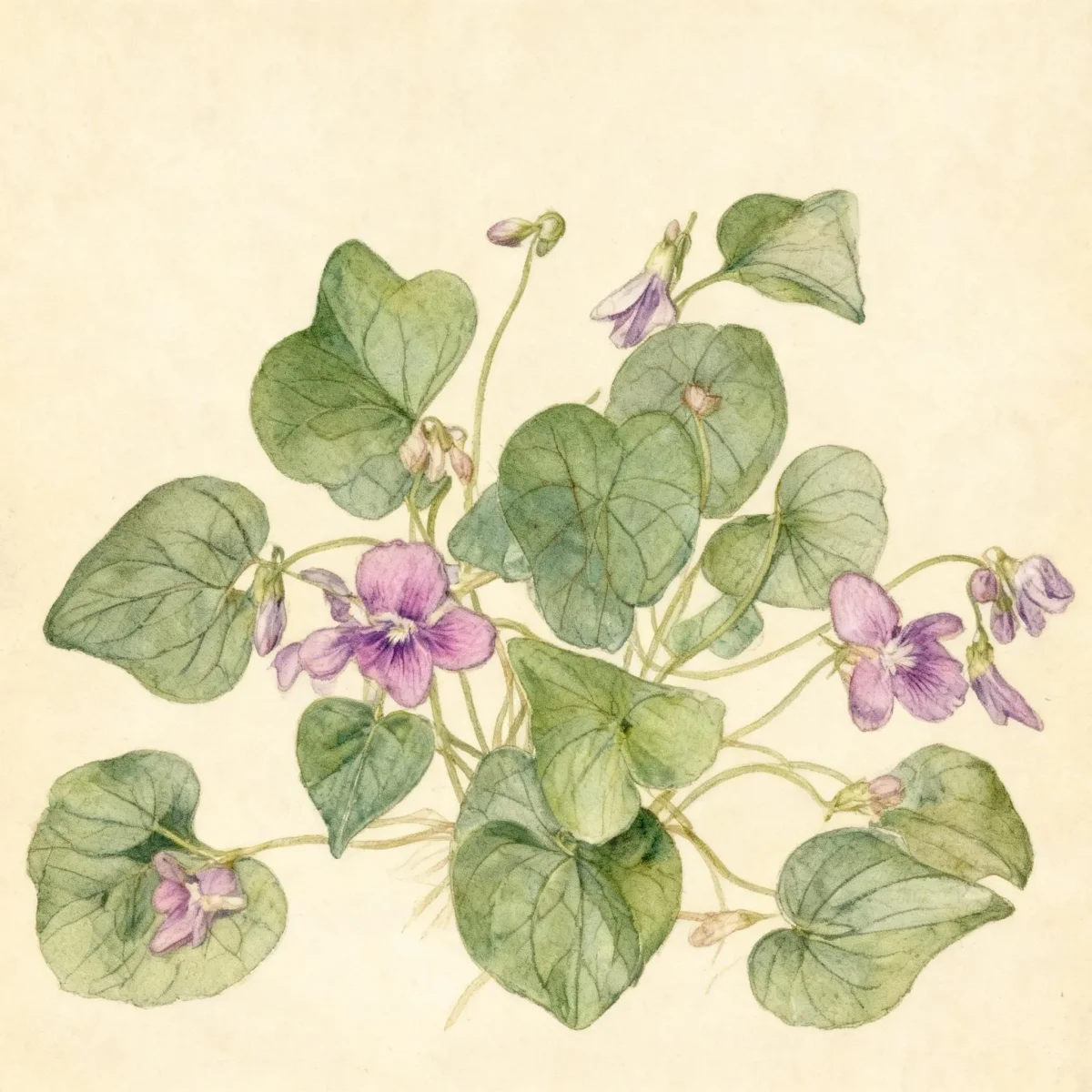
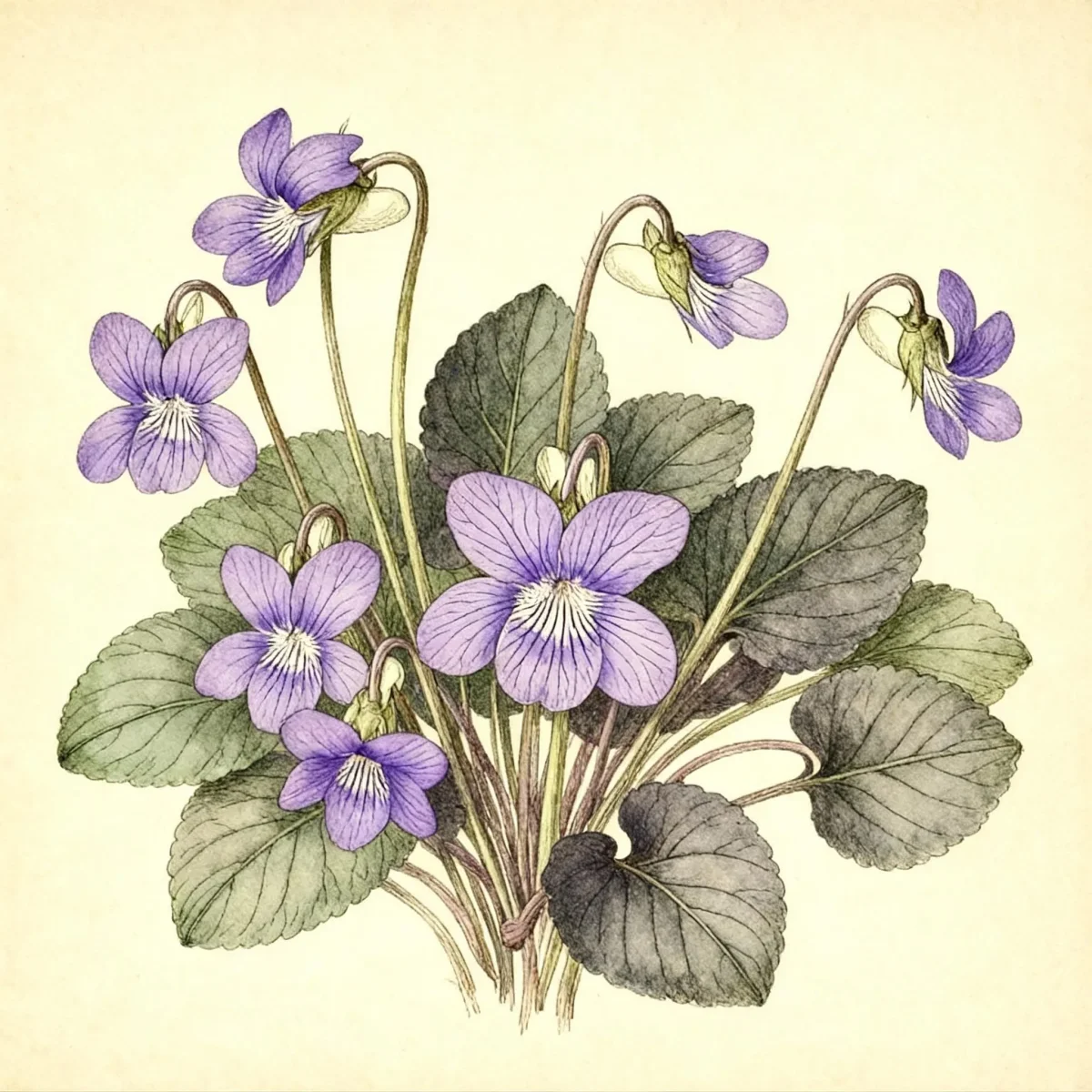
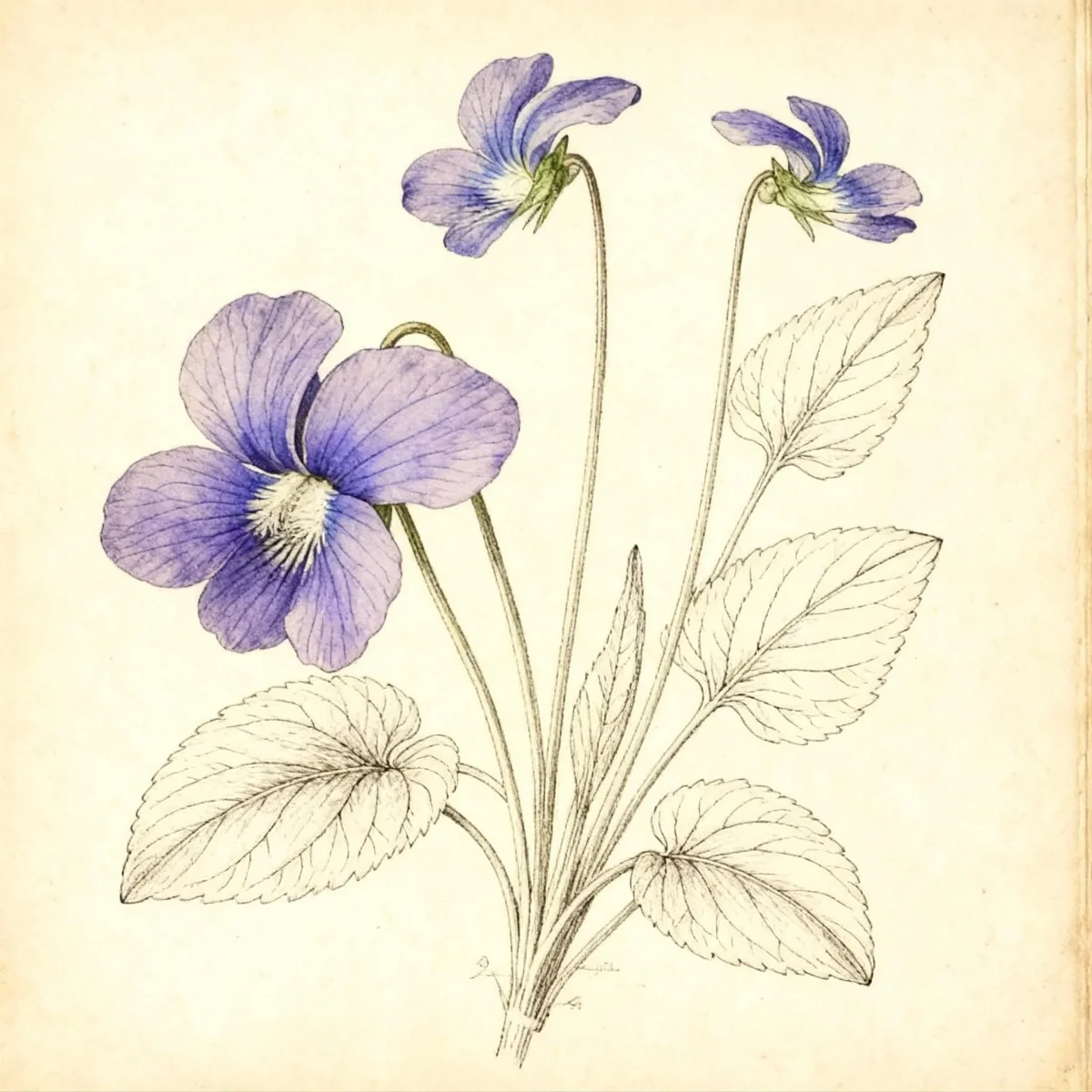
Fanleaf violet (Viola 'Dancing Geisha')
Viola 'Dancing Geisha', the Fanleaf violet, is a stunning low-growing perennial ground cover offering silvery, swirled leaves and blue spring blooms.
Scroll down to discover growing tips, care requirements, companion plants, and more
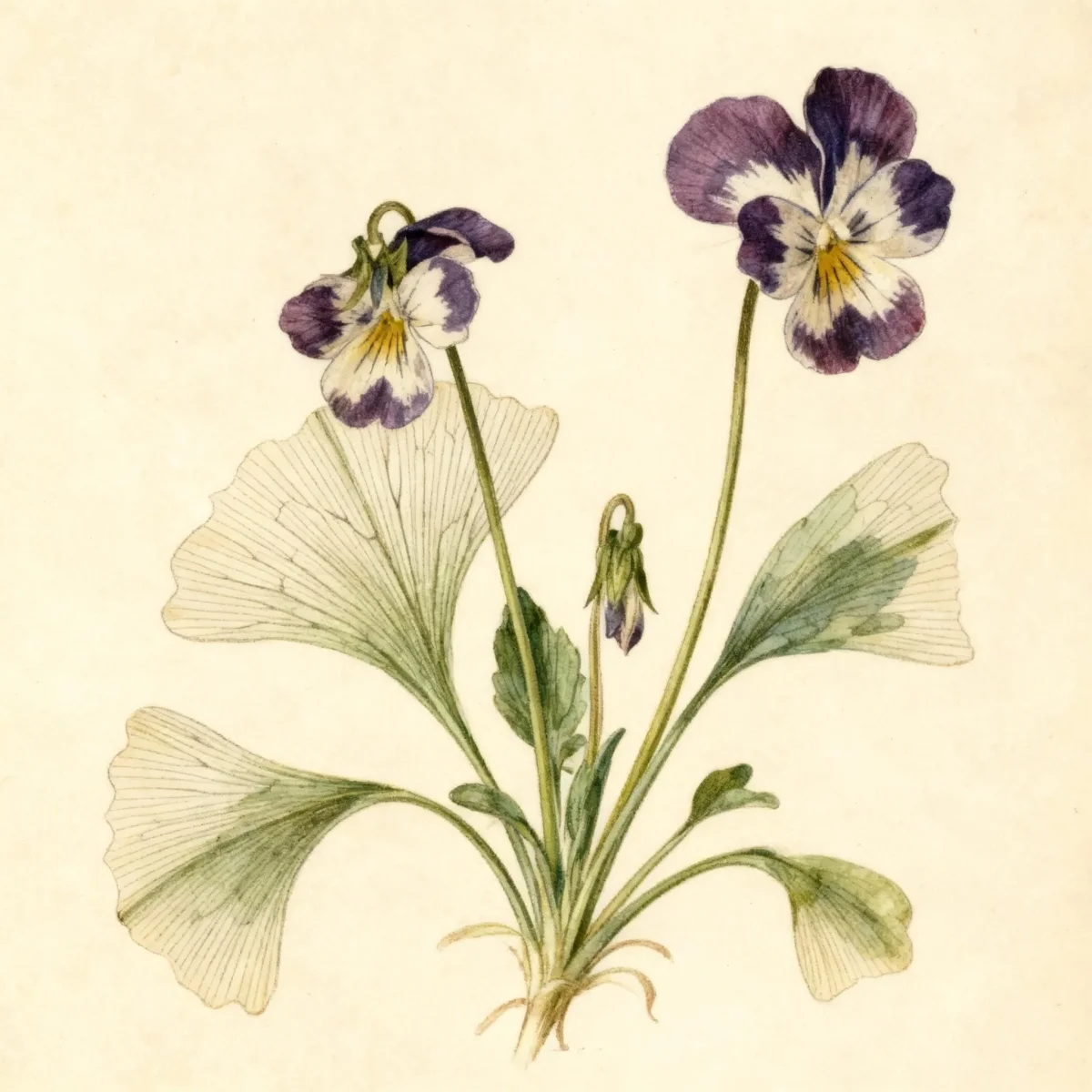
Complete Plant Information
Overview
The Fanleaf violet, scientifically known as Viola ‘Dancing Geisha’, brings striking foliage detail to shaded garden spaces. This herbaceous perennial is highly valued for its spreading habit and unique, silvery, swirled, heart-shaped leaves, which provide outstanding texture contrast throughout the season. Gardeners appreciate Viola ‘Dancing Geisha’ for its low maintenance requirements and early spring color.
Flowering typically occurs from April to May, displaying charming blue blooms that signal the start of the growing season. As a compact plant, rarely exceeding a half-foot in height, it excels where bulkier perennials might overwhelm a space. Consider incorporating Viola ‘Dancing Geisha’ into woodland settings or rock gardens for dependable, low-level coverage.
This reliable violet hybrid offers significant aesthetic appeal combined with practical resilience, handling deep shade and deer pressure with ease. Successfully growing Viola ‘Dancing Geisha’ relies primarily on providing consistent moisture and rich, well-drained soil conditions.
Fast Facts
- Plant Family: Violaceae
- Plant Type: Herbaceous perennial
- Hardiness Zones: USDA Zones 4-8
- Size at Maturity:
- Height: 0.25-0.5 ft
- Spread: 0.5-1 ft
- Bloom Time: April to May
- Bloom Description: Blue
- Sun Exposure: Part shade to full shade
- Water Needs: Medium
- Maintenance Level: Low
How to Grow
Planting Viola ‘Dancing Geisha’ is best done in the spring or early fall when soil temperatures are moderate. Locate this Fanleaf violet in areas receiving part shade to full shade, though it can tolerate full sun if the summer climate remains cool. The key to successful establishment is soil preparation; ensure the area is amended to be organically rich, humusy, and moisture-retentive.
Maintain consistent moisture levels, as this plant is intolerant of drought. Water deeply when the top inch of soil feels dry to the touch. Heavy, poorly drained soil should be avoided, as should allowing the plant to dry out completely, even during hot spells. Fertilization is generally unnecessary if the soil is rich; otherwise, a light application of compost in spring is usually sufficient.
Maintenance for Viola ‘Dancing Geisha’ is commendably low. Minimal pruning is required, focusing mainly on removing spent foliage if necessary during early spring cleanup. Low maintenance makes this perennial a fantastic choice for naturalized areas where ongoing care is impractical.
Landscape Uses
Viola ‘Dancing Geisha’ serves exceptionally well as a foreground planting or ground cover, particularly in shaded borders or woodland gardens. Its low, spreading habit makes it an excellent choice for softening the edges of pathways or suppressing weeds beneath taller shrubs. Use this Fanleaf violet as an edger to provide continuous visual interest right where the lawn or pathway meets the planting bed.
If you are establishing a woodland garden design, Viola ‘Dancing Geisha’ offers excellent texture alongside ferns or hostas that share similar moisture and shade requirements. For rock gardens, its compact size ensures it cascades gracefully over stones without obscuring them. Consider planting densely to maximize its naturalizing potential, letting the blue flowers create a low carpet in spring.
Standout Features
Flower Qualities
- Showy
Noteworthy Characteristics
Viola is a genus of about 500 species found worldwide in temperate areas. Many hybrids have been made for their showy flowers. Genus name comes from the Latin name for various sweet-scented flowers. ‘Dancing Geisha’ is a spreading, low-growing (2” high) plant that features silvery, swirled, heart-shaped leaves and blue flowers in spring.
Tolerances
- Deer
- Heavy Shade
Potential Problems
Viola ‘Dancing Geisha’ generally exhibits strong resistance, showing no serious insect or disease problems under good growing conditions. The most significant threat to this Fanleaf violet is inconsistent soil moisture; drought stress can weaken the plant, making it more susceptible to opportunistic pests or fungal issues. Ensure excellent drainage while maintaining adequate moisture to prevent long-term decline.
Frequently Asked Questions
What hardiness zones is Fanleaf violet suitable for?
Viola ‘Dancing Geisha’ is reliably hardy in USDA Zones 4 through 8.
How large does Viola ‘Dancing Geisha’ grow?
This perennial is very low-growing, typically reaching a height between 0.25 and 0.5 feet tall, with a spread of 0.5 to 1 foot.
What sun exposure does Viola ‘Dancing Geisha’ need?
This plant thrives best in part shade to full shade environments, though it may tolerate some direct sun if summers are mild.
When does Fanleaf violet bloom?
The Fanleaf violet produces its blue flowers primarily during the peak spring season, from April to May.
Conclusion
The exceptional foliage and resilient performance in shady conditions make Viola ‘Dancing Geisha’ an indispensable ground cover for textured garden design. Offering low maintenance and excellent deer resistance, this Fanleaf violet is a workhorse for woodland edges. Before planting, confirm your site falls within USDA Zones 4-8 and ensure the soil remains consistently moist and rich.
Companion Planting
When selecting partners for Viola ‘Dancing Geisha’, prioritize plants that enjoy the same moist, humus-rich, and shaded conditions. Shade-loving woodland companions like Hosta (smaller varieties work best due to the low stature of the violet), various ferns (such as Japanese Painted Fern or Maidenhair Fern), and Tiarella (Foamflower) provide excellent textural contrast. These companions will complement the silvery, swirled leaves of the Fanleaf violet without outcompeting it for scarce light or nutrients.
Seasonal Care Calendar
Early spring is the ideal time to refresh the soil beneath your Viola ‘Dancing Geisha’. Apply a thin top dressing of compost just before new growth emerges to replenish organic matter, which supports moisture retention and fertility. During summer, diligently monitor for drought; this is the most critical watering period, as Viola ‘Dancing Geisha’ does not tolerate drying out. In the fall, leave the leaf litter in place if possible, as it provides insulating mulch for the winter months, protecting the low-growing crowns.