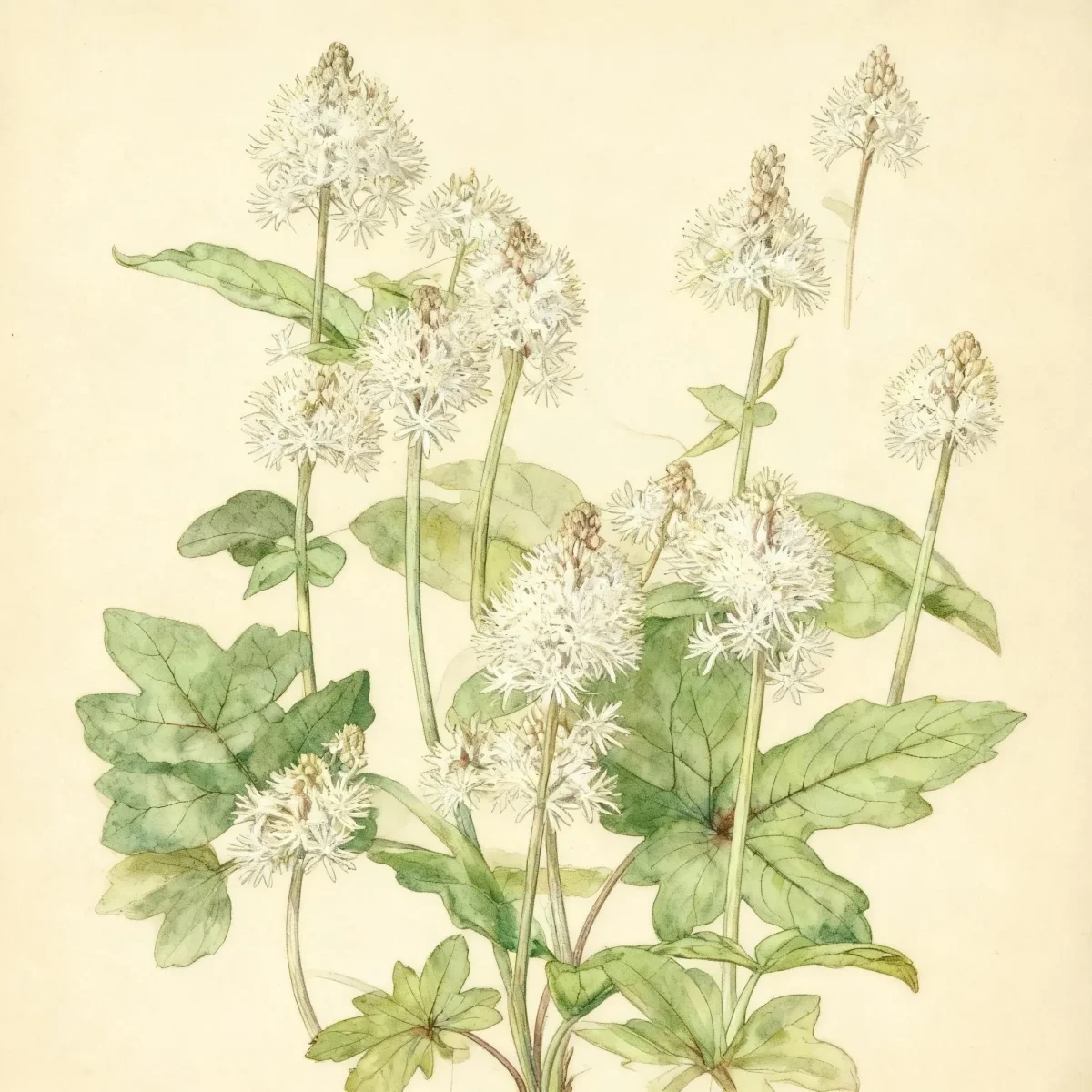
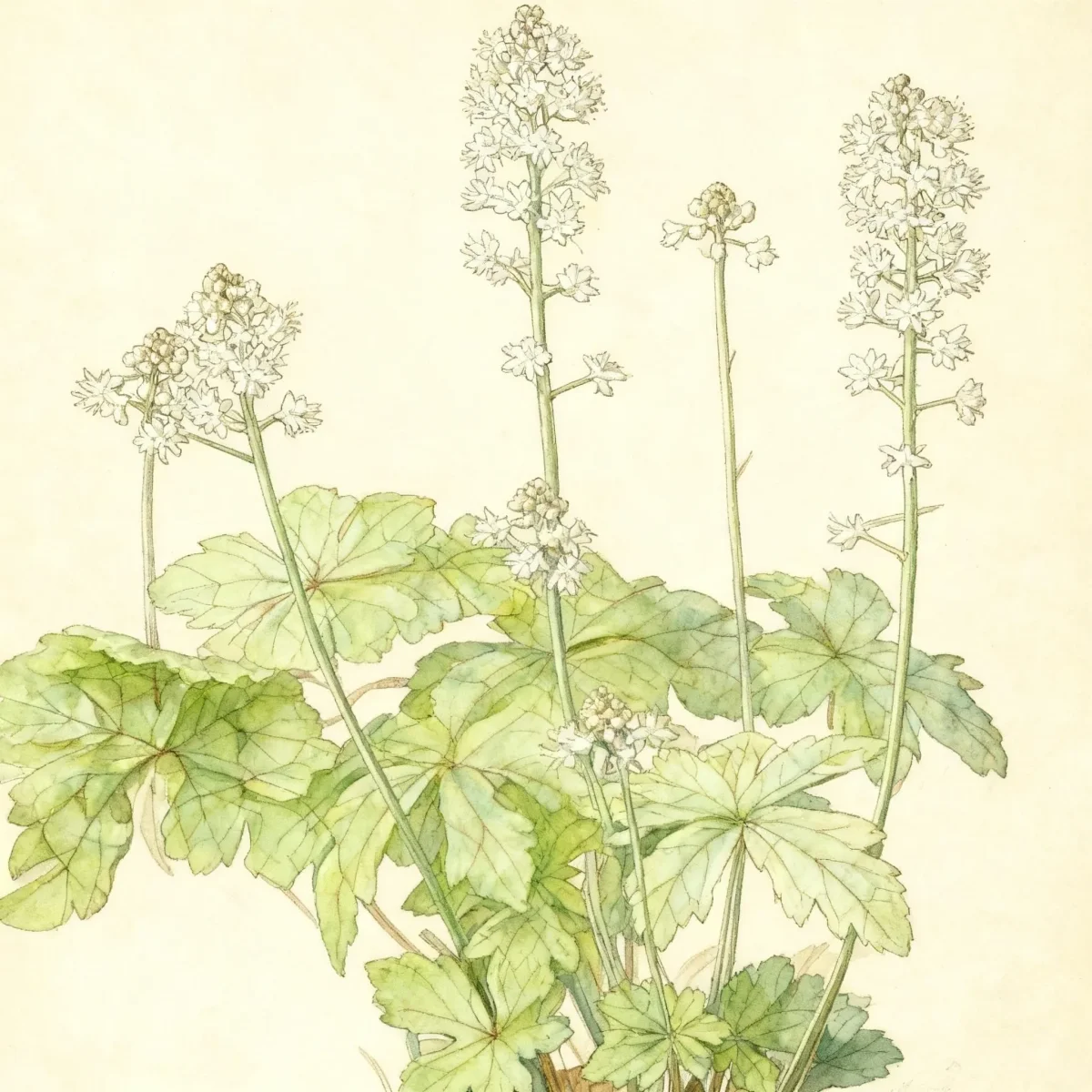
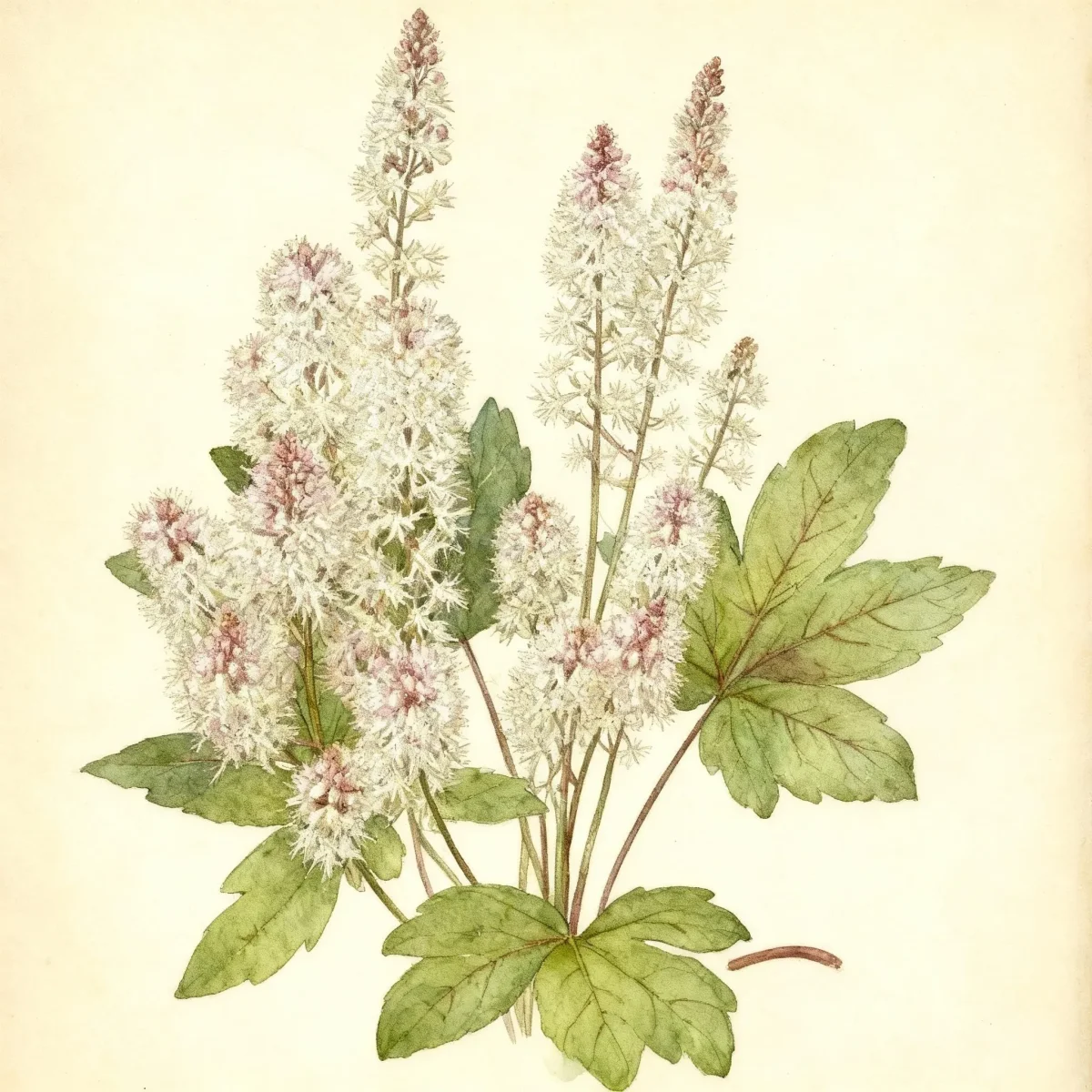
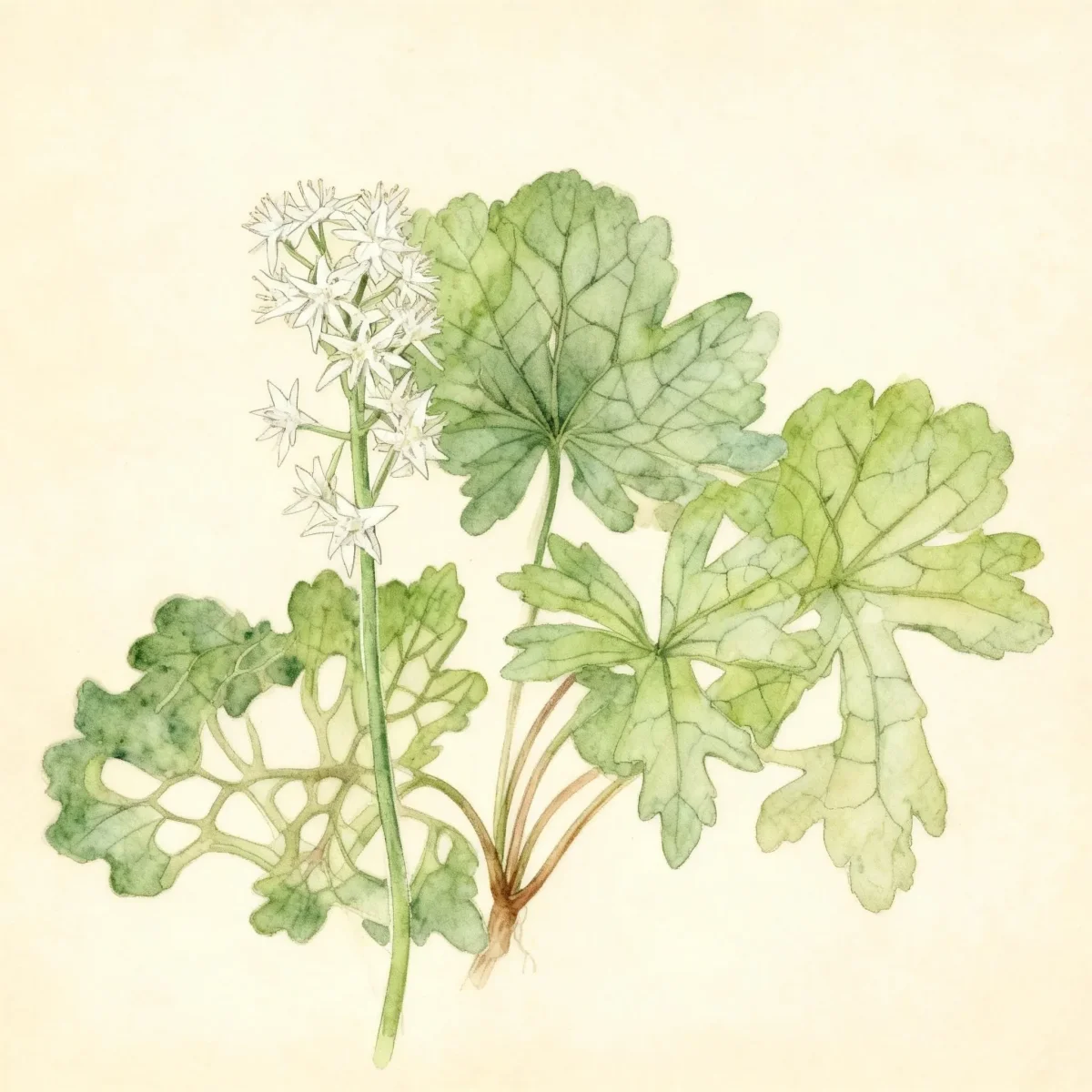
Foam flower (Tiarella cordifolia 'Oakleaf')
Tiarella cordifolia 'Oakleaf' (Foam flower) is a low-maintenance perennial offering airy white spring blooms and distinctive oak-shaped foliage.
Scroll down to discover growing tips, care requirements, companion plants, and more

Complete Plant Information
Overview
Tiarella cordifolia ‘Oakleaf’, commonly known as Foam flower, is a highly valuable woodland perennial celebrated for its dense foliage mounds and delicate spring flower display. This cultivar is particularly sought after due to its striking, bright oak-like leaves, setting it apart from many woodland natives. It spreads effectively via runners, making it an excellent choice for quickly establishing ground cover in shady areas.
As a genus member related to Heuchera, the Foam flower brings textural interest to damp, shaded borders. Its performance relies heavily on consistent moisture and protection from intense afternoon sun, rewarding attentive care with low maintenance throughout the growing season. The ethereal texture of the white blooms—created by prominent stamens—gives the plant its common name, Foam flower.
Gardeners utilize Tiarella cordifolia ‘Oakleaf’ to soften transitions between woodland plantings and manicured beds. Its semi-evergreen nature offers some winter interest, especially in milder climates, providing consistent coverage where other shade plants might thin out.
Fast Facts
- Plant Family: Saxifragaceae
- Plant Type: Herbaceous perennial
- Hardiness Zones: USDA Zones 4-9
- Size at Maturity:
- Height: 0.5-1 ft
- Spread: 0.5-1 ft
- Bloom Time: May
- Bloom Description: White
- Sun Exposure: Part shade to full shade
- Water Needs: Medium
- Maintenance Level: Low
How to Grow
Successful cultivation of Tiarella cordifolia ‘Oakleaf’ begins with selecting the right microclimate; these plants excel in part shade to full shade locations. They require average, medium, well-drained soil, but their preference leans heavily toward humusy, organically rich, and moisture-retentive conditions. Planting is best done in spring or early autumn to allow the root system to establish before seasonal extremes.
Maintain consistent soil moisture, as the Foam flower soil should not be allowed to dry out, which stresses the foliage. However, good drainage is crucial; wet soils, particularly during winter dormancy, are fatal and should be avoided entirely. Fertilization is usually unnecessary if the soil is organically rich, but a yearly top-dressing of compost can replenish needed nutrients.
After the white flower spikes fade in late spring, the removal of the spent flower stems will improve the appearance of the low-growing foliage mound. While generally hardy, the winter foliage color hinges on ambient temperatures; expect retained foliage color to vary based on winter severity. Protection from harsh winter winds or extreme freezes may ensure better semi-evergreen retention.
Landscape Uses
The dense, attractive habit of Tiarella cordifolia ‘Oakleaf’ makes it invaluable as an effective ground cover across broad, shaded expanses, mimicking natural woodland floors. Use this Foam flower cultivar in shaded rock gardens where its texture contrasts nicely with stone, or integrate it into woodland gardens for a cohesive, naturalistic feel. It performs exceptionally well along the fronts of borders needing perpetual ground coverage or near moist areas like stream banks.
Because it spreads steadily via stolons, massing Tiarella cordifolia ‘Oakleaf’ is an excellent strategy for erosion control on gentle slopes where sunlight is filtered. It serves as a wonderful textural companion to plants sharing similar moisture and shade needs, such as Hellebores, certain Hostas, or other woodland companions like Mitella (miterwort), as they share similarities in leaf structure. The bright mounds of foliage ensure visual interest exists even when the plant is not in bloom.
Standout Features
Flower Qualities
- Showy
Noteworthy Characteristics
Tiarella cordifolia, commonly called foamflower, is clump-forming perennial which spreads rapidly by runners (stolons) to form dense, 1-2’ wide clumps of foliage. Plants are in the same family as and somewhat suggestive of Heuchera, Tellima and Mitella. Sometimes commonly called false miterwort because of its similarity to Mitella (miterwort). Semi-glossy, heart-shaped, 3-5 lobed leaves (4” across) rise directly from the stolons. Leaves may have reddish variegation along the veins. Foliage is evergreen in mild winters, often turning reddish bronze in autumn and winter. Tiny, white flowers with very long stamens (foamy texture of stamens results in the common name) appear in airy racemes in spring for about 6 weeks on numerous, erect, wiry, mostly leafless flower stems which rise well above the foliage clump to a height of 10-12”. Flower buds are pinkish.Genus name comes from the Greek tiara meaning a small crown in reference to the form of the fruit.Specific epithet means heart-shaped leaf. ‘Oakleaf’ is noted for its bright oak-like foliage and its spires of white flowers in spring. It forms a basal foliage mound of three-lobed, oak-like, dark green leaves. Leaves may acquire attractive red tints in fall. Foliage mound typically grows to 6” tall and 10” wide. Tiny white flowers bloom in spring in bottle-brush-like racemes atop erect, wiry, mostly leafless stems which rise above the foliage mound to a height of 9-12”.
Tolerances
- Rabbit
- Deer
Potential Problems
Tiarella cordifolia ‘Oakleaf’ is generally praised for its resilience against common pests and diseases. Gardeners typically report no serious insect or disease problems when the plant is sited correctly. The primary cultural issue to guard against is overly wet soil, especially during the dormant winter period, which can lead to root issues or rot.
Prevention centers on establishing the Foam flower in well-drained soil, even when prioritizing moisture retention. Avoid planting in low spots where water pools after heavy rains. If the foliage begins to look stressed or sparse outside of winter, check soil aeration and moisture levels immediately.
Frequently Asked Questions
What hardiness zones is Foam flower suitable for?
Tiarella cordifolia ‘Oakleaf’ thrives in USDA hardiness zones 4 through 9, making it adaptable to a wide range of climates across North America.
How large does Foam flower grow?
At maturity, the foliage mound of Tiarella cordifolia ‘Oakleaf’ typically reaches 0.5 to 1 foot in height and spreads between 0.5 to 1 foot wide.
When does Foam flower bloom?
The airy racemes of white flowers on the Foam flower generally appear during the month of May.
What sun exposure does Tiarella cordifolia ‘Oakleaf’ need?
This perennial prefers filtered light conditions, thriving best in situations ranging from part shade to full shade throughout the day.
Conclusion
The distinctive oak-shaped foliage and delicate white flower spikes ensure that Tiarella cordifolia ‘Oakleaf’ remains a staple for shaded garden areas. Its low maintenance requirements and ability to form dense, attractive mats make it an essential structural plant. Before planting, verify that your site provides the consistent moisture and shade that this lovely Foam flower variety requires for optimal performance.
Companion Planting
When integrating Tiarella cordifolia ‘Oakleaf’ into a shade garden design, selecting companions with similar cultural needs—medium water, rich soil, and shade tolerance—is key. Plants that offer contrasting leaf textures or colors will enhance the visual appeal of the Foam flower’s foliage. Consider pairing it with dark green Hosta varieties or ferns such as Japanese Painted Fern (Athyrium niponicum) whose fronds offer a different architectural shape. Epimediums (Barrenwort) are also excellent partners, as they share hardiness ranges and soil preferences, creating a layered, lush woodland effect under established trees.
Design Ideas for Ground Coverage
Utilizing the spreading habit of Tiarella cordifolia ‘Oakleaf’ is highly effective when looking to suppress weeds and create naturalistic tapestry effects. In larger woodland borders, plant drifts of this Foam flower several feet apart; in just a few seasons, the stolons will connect these groups into an unbroken carpet of attractive semi-evergreen leaves. For a more formal look, use the Tiarella as a low, clean edging along a shaded path or beneath taller shrubs, ensuring the 6-inch foliage mound remains neatly defined while the flower stems rise gracefully over it.