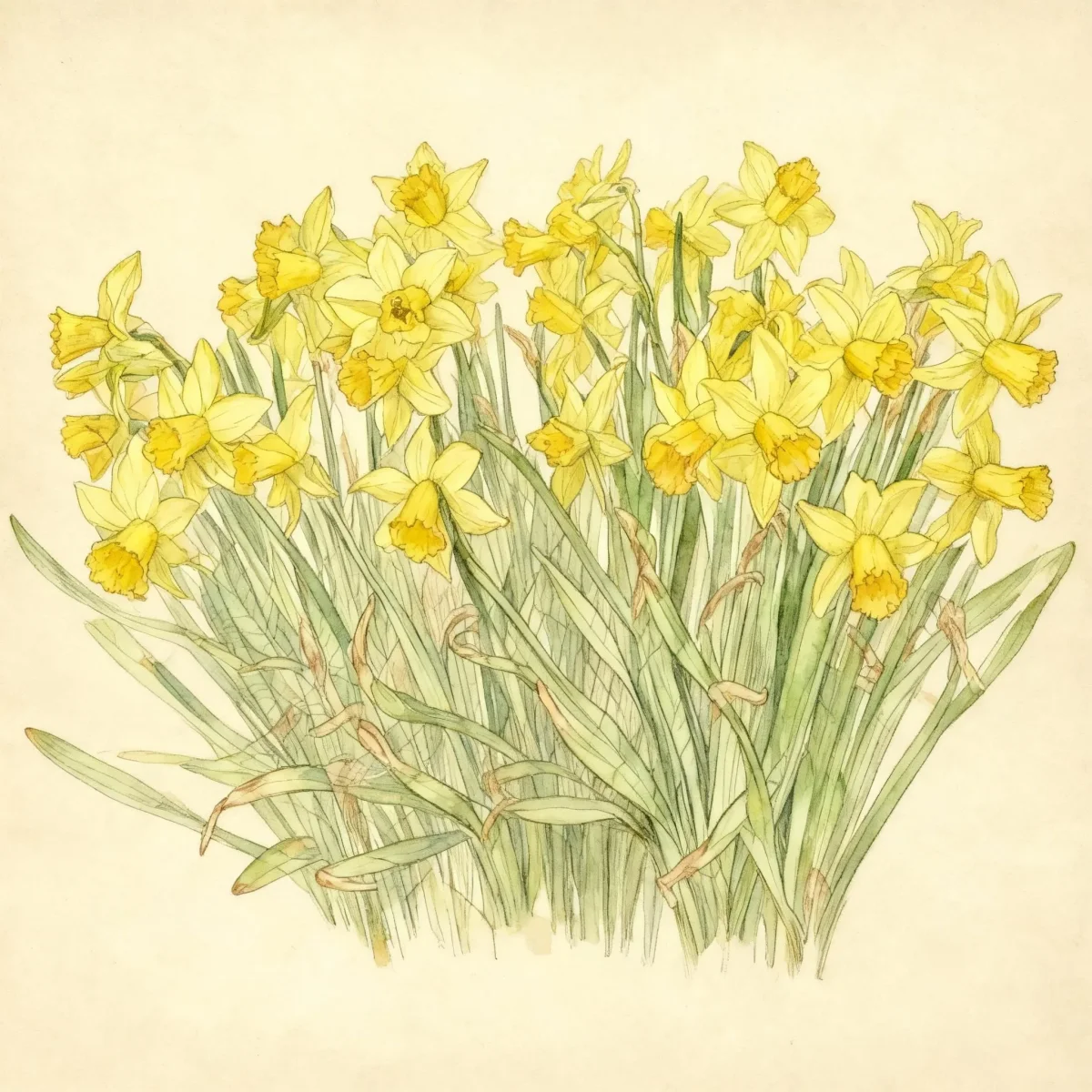
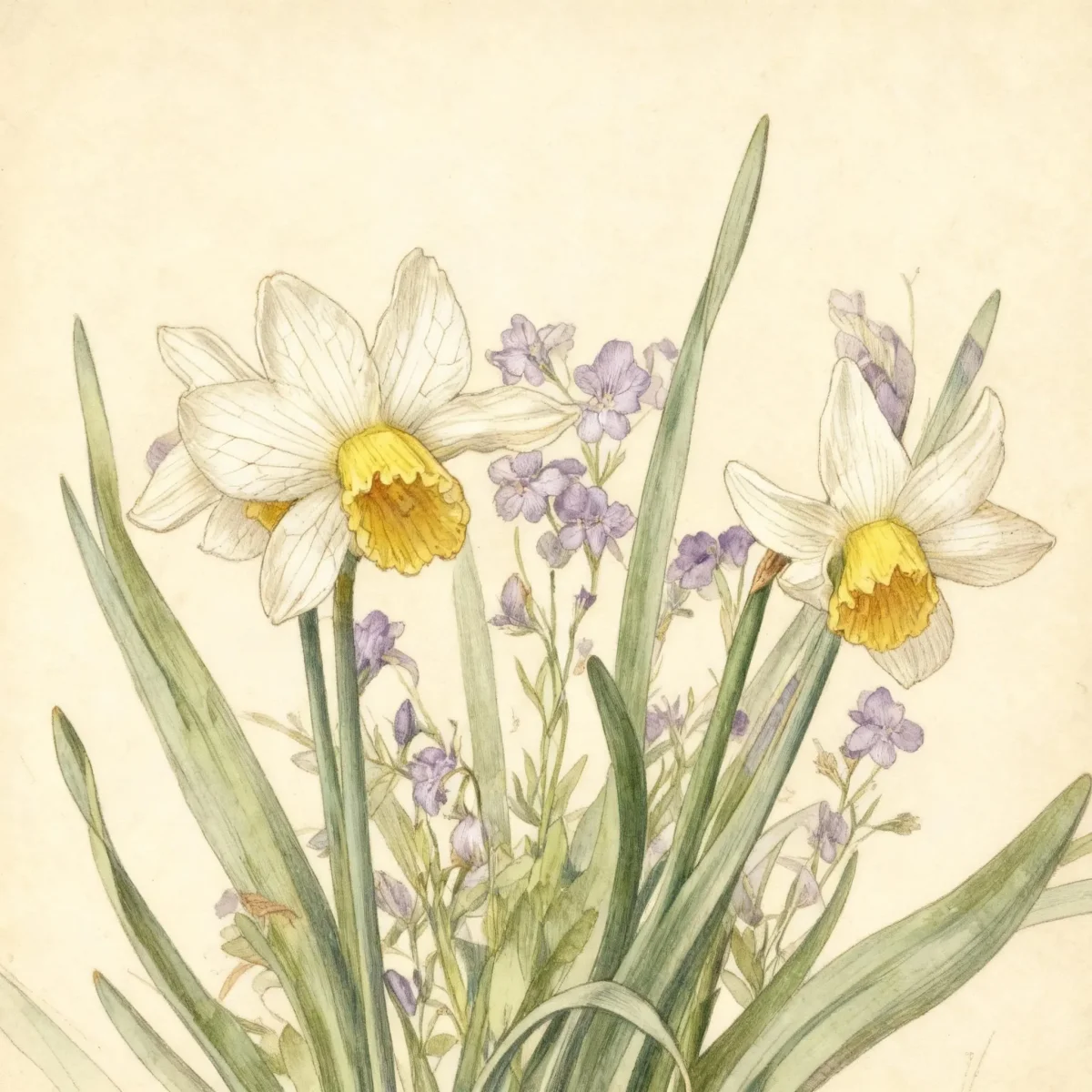
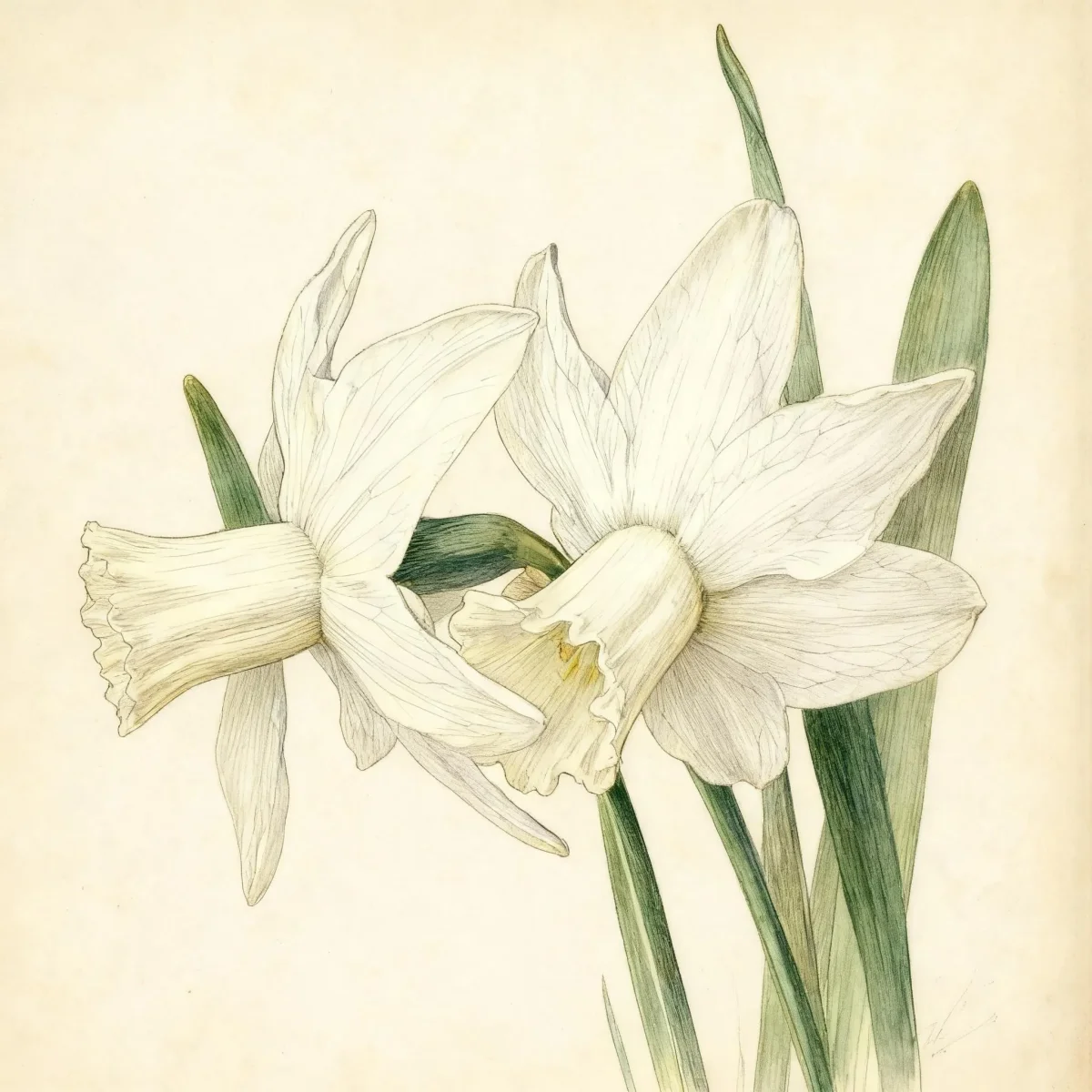
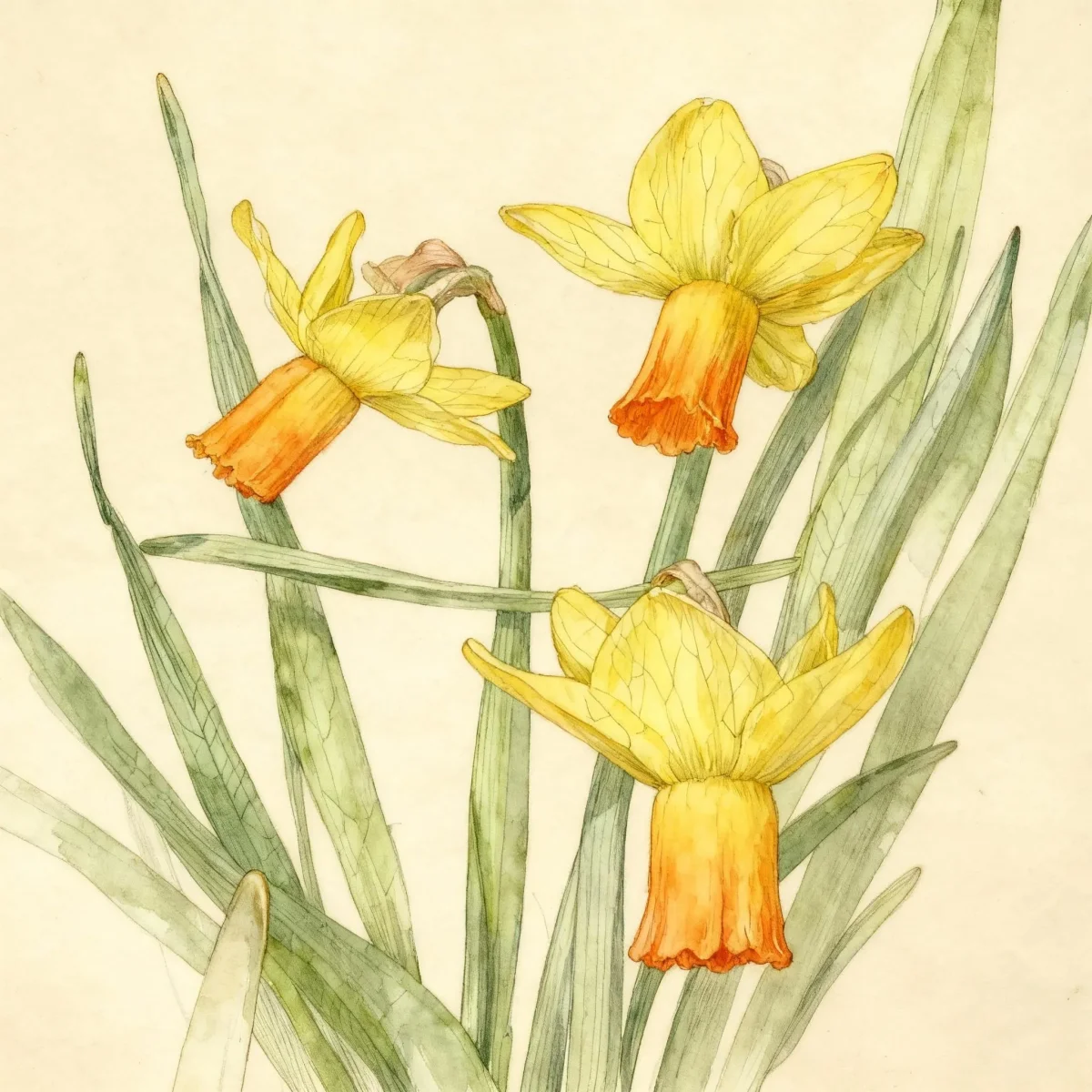
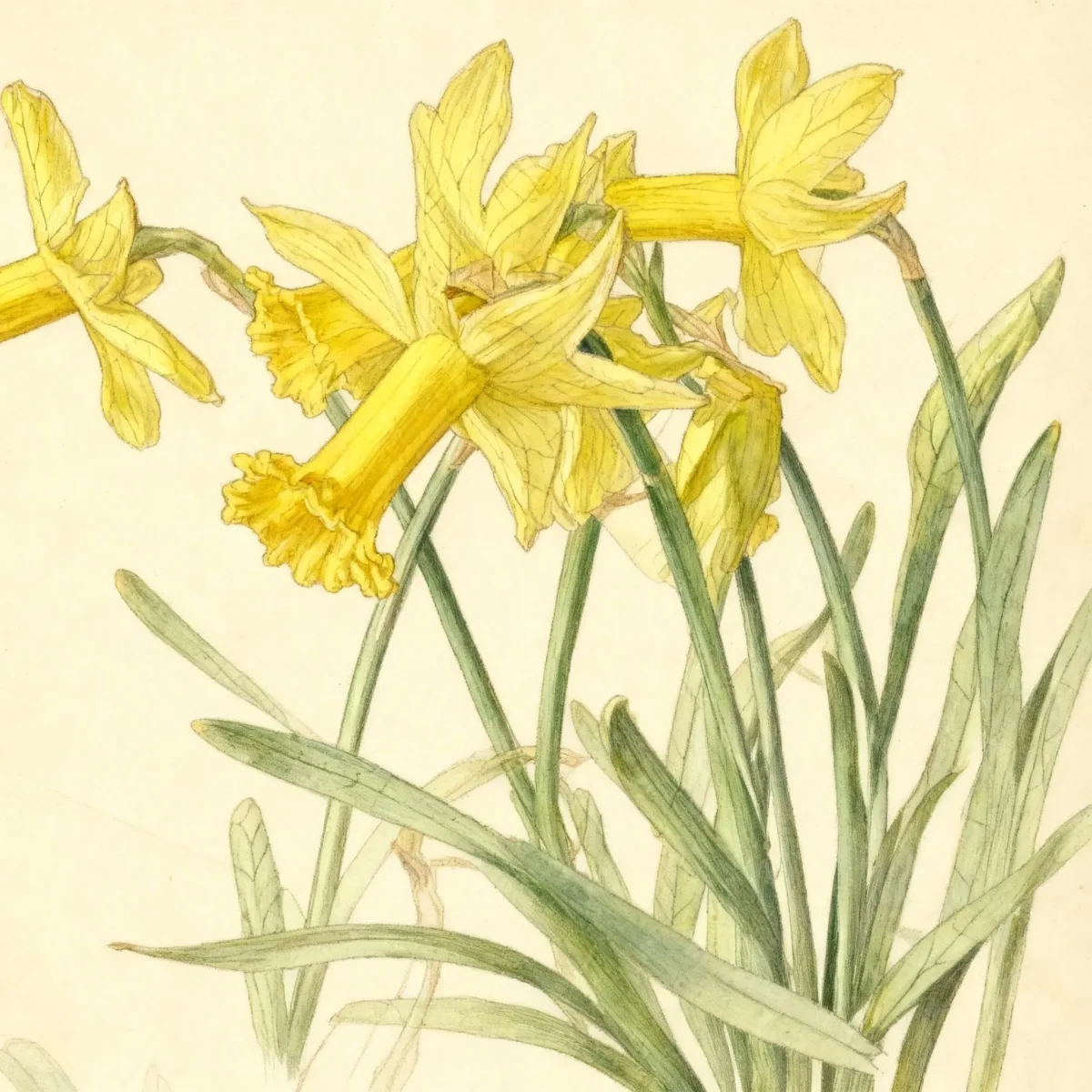
Cyclamineus daffodil (Narcissus 'Elizabeth Ann')
Narcissus 'Elizabeth Ann' is a delightful Cyclamineus daffodil blooming in April with white and pink-rimmed trumpets.
Scroll down to discover growing tips, care requirements, companion plants, and more
Complete Plant Information
Overview
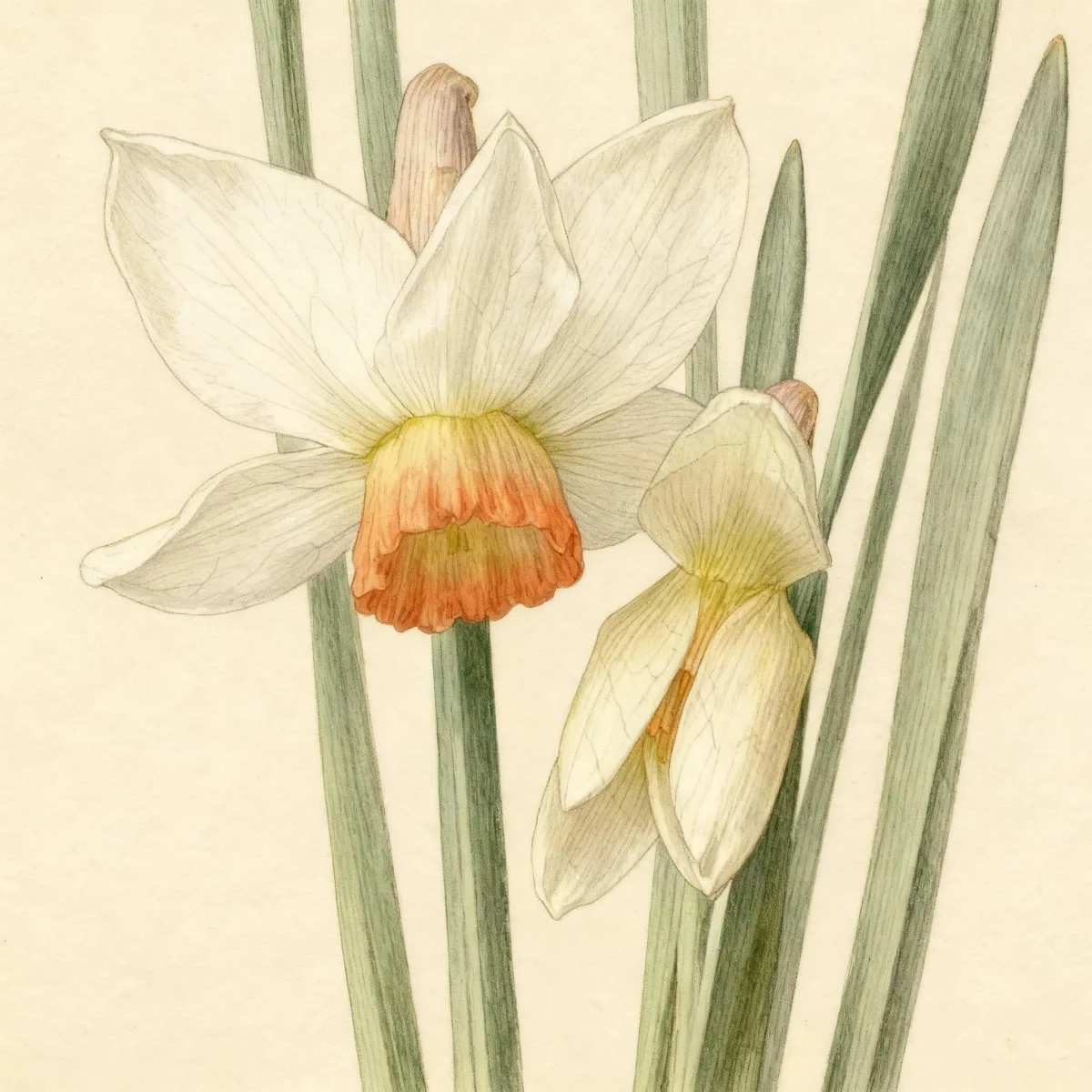
Narcissus ‘Elizabeth Ann’ brings structure and early color to the spring garden, distinguishing itself as a treasured Cyclamineus daffodil hybrid. This variety is valued for its elegant bloom structure, featuring sharply reflexed petals and a distinctive trumpet rimmed with rose-pink, offering excellent visual interest as one of the first flowers emerging after winter. Gardeners appreciate the low maintenance required by Narcissus ‘Elizabeth Ann’, which establishes readily in average soils and returns reliably year after year. It is a superb choice for gardeners looking to naturalize drifts of bulbs or provide bright, late mid-season displays, anchoring the spring palette with its clear white and pink tones.
As a member of Division VI, the Cyclamineus daffodil grouping, ‘Elizabeth Ann’ exhibits characteristics designed for longevity and resilience in the garden. Its miniature stature makes it perfect for foreground plantings where taller varieties might obstruct views, allowing its unique, slightly swept-back petals to shine. Proper late-fall planting ensures that this bulb benefits from the cool dormancy period necessary before rewarding the gardener with its showy April blossoms.
For perennial success, ensure your planting sites for Narcissus ‘Elizabeth Ann’ provide excellent drainage, meeting the medium moisture needs during active growth. While the foliage remains green for several weeks post-bloom, allowing this essential energy storage process to complete is key to securing robust flowers for the following spring. This reliable performance cements the Cyclamineus daffodil as a must-have staple.
Fast Facts
- Plant Family: Amaryllidaceae
- Plant Type: Bulb
- Hardiness Zones: USDA Zones 3-8
- Size at Maturity:
- Height: 1-1.5 ft
- Spread: 0.75-1 ft
- Bloom Time: April
- Bloom Description: White with pink-rimmed trumpet
- Sun Exposure: Full sun to part shade
- Water Needs: Medium
- Maintenance Level: Low
How to Grow
Planting Narcissus ‘Elizabeth Ann’ bulbs should occur in early to mid-fall before the ground freezes hard. Choose a location receiving full sun to light afternoon shade, ensuring the soil is well-drained; standing water is detrimental and can lead to bulb rot. Plant bulbs 2 to 3 times as deep as the bulb is tall, typically placing them 3 to 6 inches deep and spacing them 4 to 8 inches apart. This spacing allows for natural clumping over time without requiring frequent division.
Water should be medium and consistent throughout the spring growing season to support flower production and foliage development. Once the flowers fade in April, resist the urge to cut back the foliage. Allow the leaves to yellow naturally over several weeks, as this process replenishes the bulb’s energy stores for next year’s bloom. You may remove the spent flower head (the top portion of the stem) to prevent seed development, though this is not usually necessary for vigor.
For long-term success with your Cyclamineus daffodil, bulbs can be left undisturbed for many years. If you notice a significant decline in flower quality or quantity, it is an indicator that division is needed. This should be done immediately after the foliage has completely died back, allowing you to transplant the offsets to fresh areas of the garden. Avoid planting in areas where afternoon shade will be excessive, as the flowers tend to display best when facing the available light source.
Landscape Uses
Daffodils, including the striking Narcissus ‘Elizabeth Ann’, are indispensable for creating layers of spring color that reliably return year after year, unlike many annual displays. Plant these bulbs in quantity—groups of six or more bulbs create a much greater visual impact than single specimens. They look spectacular massed beneath deciduous shrubs or trees, where they receive plenty of sun in early spring before the canopy leafs out fully, and benefit from the accompanying shade later in the season.
Use the relatively short stature of this Cyclamineus daffodil in the front of established borders where they won’t be dwarfed by taller perennials emerging later. They mix beautifully with other early bloomers like Scilla, species tulips, and early grape hyacinths, creating layered drifts of cool colors. Because Narcissus contains alkaloids toxic to rodents, they are an excellent choice for areas where squirrels might otherwise dig up more palatable bulbs, ensuring your Narcissus ‘Elizabeth Ann’ display remains intact.
Consider planting them near walkways or entryways to maximize appreciation for their delicate bloom structure and subtle coloring. When planning, remember that the flowers often face the best available light, so position plantings where the feature face of the bloom is directed toward viewing areas.
Standout Features
Flower Qualities
- Showy
Noteworthy Characteristics
Narcissus is a genus of about 50 species of bulbous perennials from Europe and North Africa. They are a mainstay of the spring garden. Depending upon species or hybrid type, flowers appear singly or in clusters atop stems rising from 6-30” tall. Flowers generally feature a trumpet or cup (the corona) surrounded by six petals (perianth segments), in colors ranging from white to yellow to orange to pink to bicolors. Flowers are sometimes fragrant. Flowers bloom in early spring. Narrow, linear to strap-shaped, green leaves appear in erect to sprawling clumps. Cultivated daffodils have been organized into 13 divisions based on the characteristics of the blooms.Genus name honors a beautiful youth who became so entranced with his own reflection that he pined away and the gods turned him into this flower.‘Elizabeth Ann’ is a cyclamineus narcissus (Division VI). By definition, a cyclamineus daffodil usually features only one flower per stem, with each flower having significantly reflexed perianth segments (petals), a generally long but narrow corona (trumpet or cup) and a short pedicel (neck). ‘Elizabeth Ann’ is a late mid-season blooming miniature daffodil that rises to 10-14” tall and features rounded, slightly reflexed, white flowers (to 2.5” across) with a cup-shaped trumpet that is rimmed with rose-pink.
Tolerances
- Rabbit
- Deer
- Drought
Potential Problems
Daffodils, including Narcissus ‘Elizabeth Ann’, are remarkably disease and insect-resistant when planted in appropriate soil conditions. The primary concern for bulb health is poor drainage; soggy soil invites bulb rot, which can quickly destroy clumps. If drainage is suspect, amend the soil heavily with grit or plant bulbs in raised beds. Infrequent pests may include slugs and snails which can chew on emerging foliage, best managed by standard preventative measures early in spring.
While most common garden pests avoid this plant due to its natural toxins, gardeners should be aware of infrequent issues like narcissus bulb fly or viral infections such as Narcissus yellow stripe virus, though adherence to proper, low-maintenance cultural guidelines minimizes these risks. Always purchase healthy, firm bulbs from reputable sources to start your planting off right.
Frequently Asked Questions
What hardiness zones is Cyclamineus daffodil suitable for?
Narcissus ‘Elizabeth Ann’ is hardy across a wide range, thriving in USDA Zones 3 through 8.
How large does Narcissus ‘Elizabeth Ann’ grow?
This miniature daffodil typically reaches a height between 1 and 1.5 feet, with a spread of about 0.75 to 1 foot.
When does Cyclamineus daffodil bloom?
You can expect the beautiful white flowers with pink-rimmed trumpets of Narcissus ‘Elizabeth Ann’ to appear in April.
What sun exposure does Narcissus ‘Elizabeth Ann’ need?
This variety performs best when situated in locations receiving full sun to light part shade.
Conclusion
The Cyclamineus daffodil offers classic elegance combined with exceptional garden durability, making Narcissus ‘Elizabeth Ann’ a superior choice for early spring excitement. Its resistance to both wildlife pests and general cultural fussiness means successful blooms are almost guaranteed with minimal intervention. Before the first frost, ensure you have planned your fall planting sites to experience the charming performance of this reliable hybrid next April.
Design Ideas
When incorporating Narcissus ‘Elizabeth Ann’ into formal garden designs, consider flanking pathways or edging perennial beds. Because they are shorter and bloom slightly later than some trumpet varieties, they pair excellently with early-blooming crocuses or scillas underneath them, creating a tiered effect of color. Their clean white and pink contrast well against deep green evergreens or newly emerging blue foliage from plants like Hostas, providing sharp definition before the summer explosion of growth begins.
For a more naturalized look, scatter bulbs liberally across lawns or open woodland floors, allowing clumps of the Cyclamineus daffodil to form and spread organically over time. Remember that they tolerate drought once dormant, making them excellent candidates for underplanting beneath larger, established trees whose roots might compete during mid-summer but do not significantly interfere with shallow bulb roots in early spring.
Companion Planting
Companion planting daffodils helps maximize spring visual interest while ensuring subsequent plantings thrive once the daffodil foliage dies back. Pair Narcissus ‘Elizabeth Ann’ with early-blooming perennials that have contrasting foliage textures, such as Brunnera or Lungwort (Pulmonaria), whose ground-covering leaves will naturally mask the fading daffodil foliage. Since these companions also prefer medium moisture and similar light conditions (part shade), their cultural needs align well.
Another effective strategy involves pairing this Cyclamineus daffodil with early irises or late-blooming spring ephemerals. By the time the irises begin demanding substantial energy and moisture in late spring, the daffodil’s job is done, and its foliage will be ready to be cut back without harming the bulb. Planning for sequential bloom ensures the garden looks vibrant continuously from the first thaw through summer.