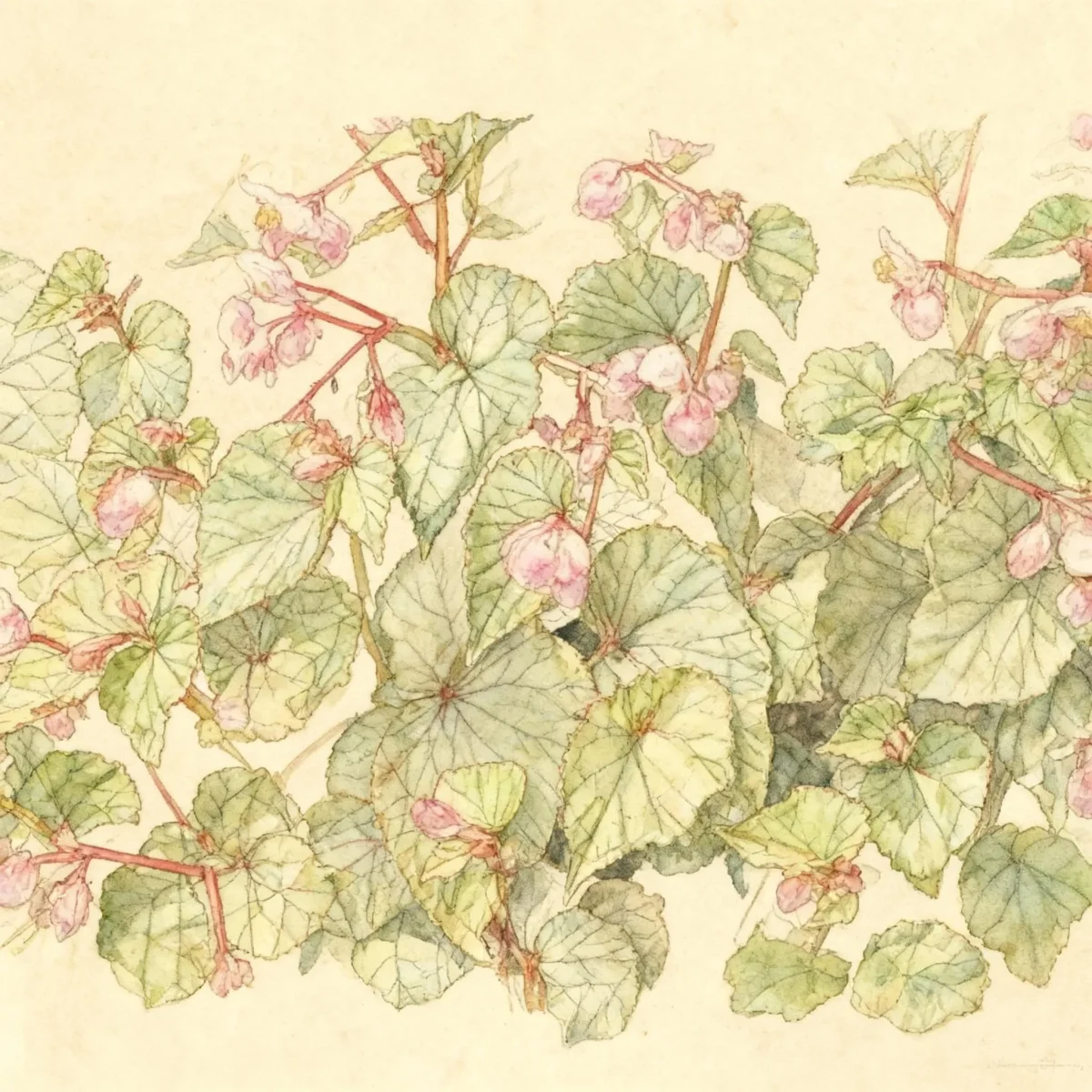
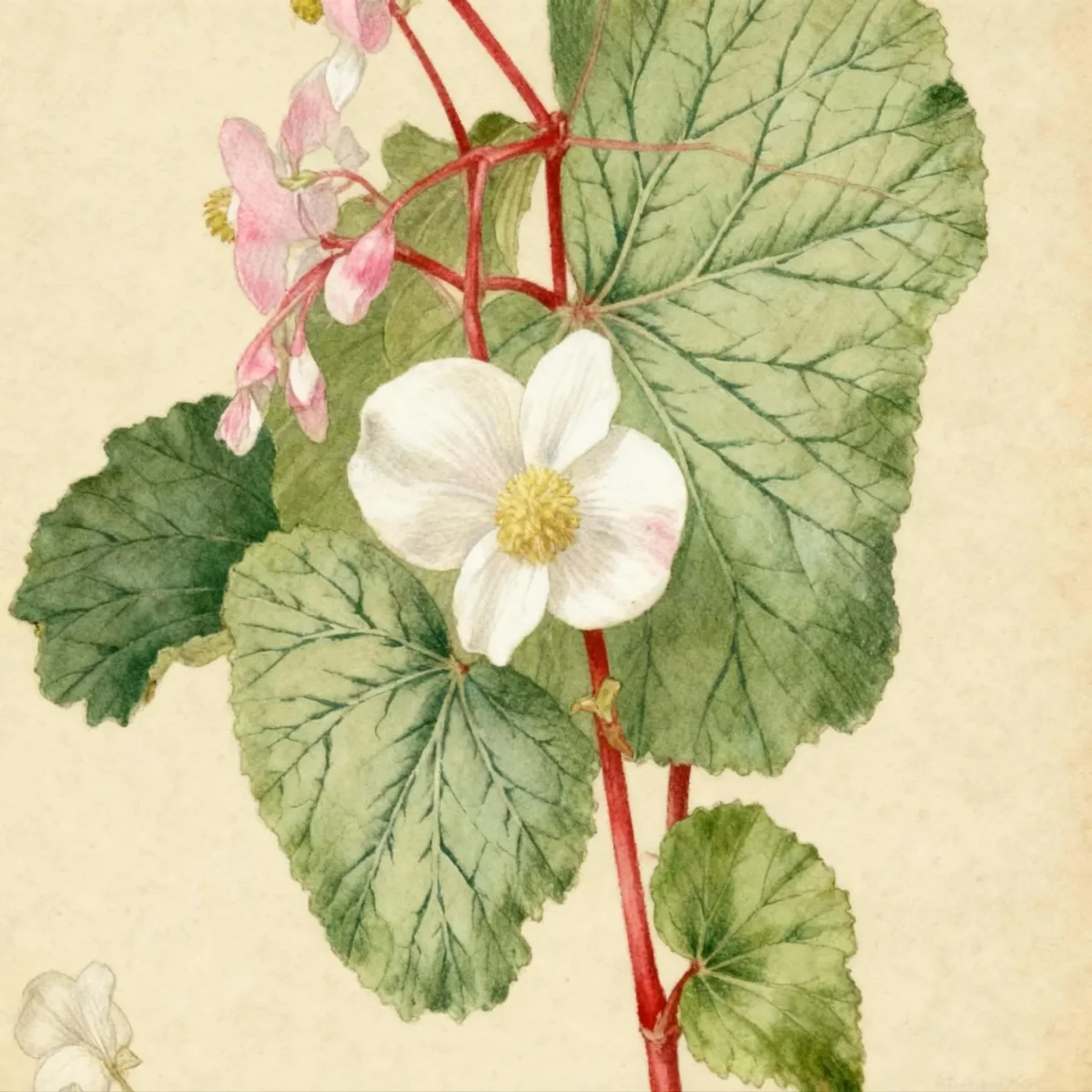
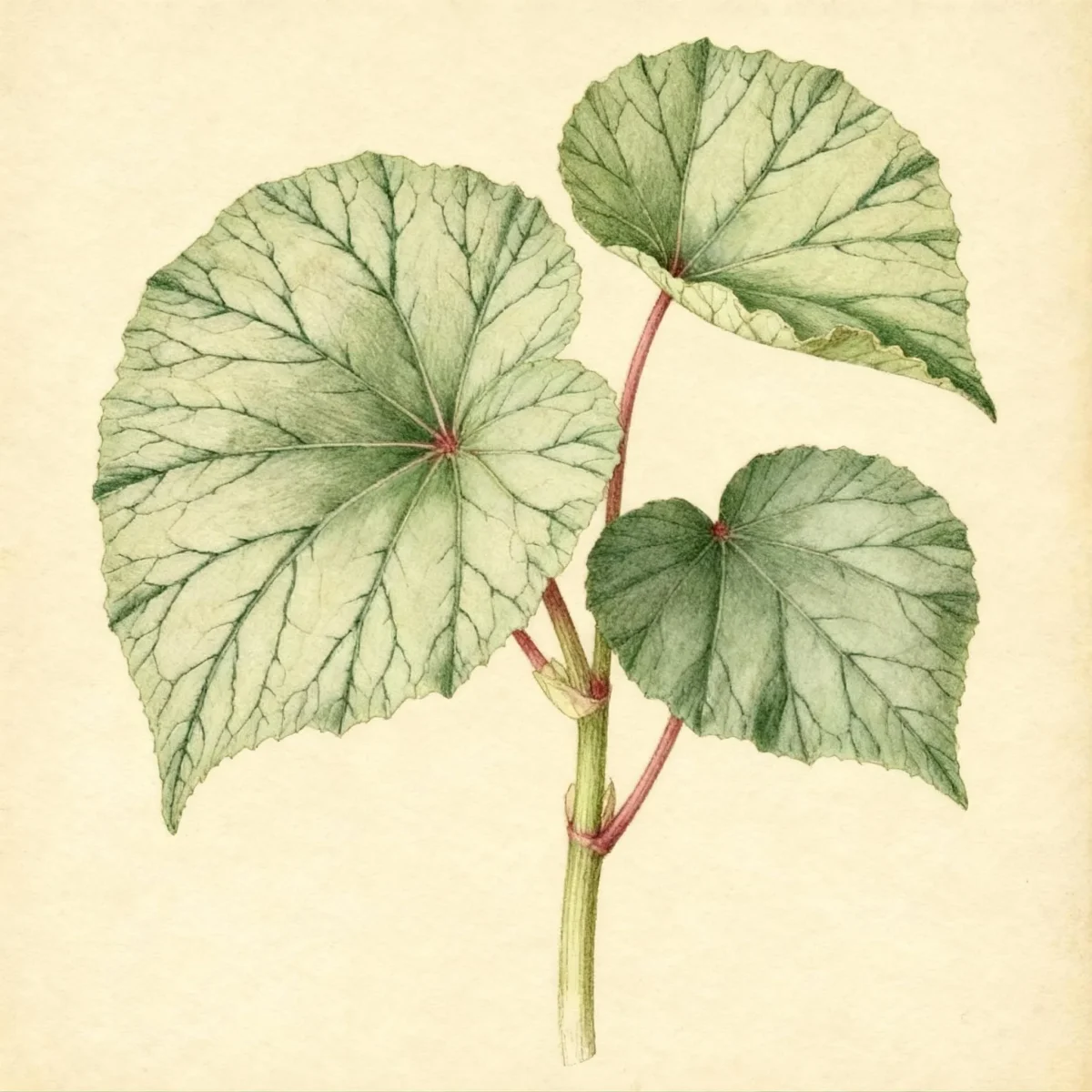
Hardy begonia (Begonia grandis 'Wildwood Premier')
Discover Begonia grandis 'Wildwood Premier', the hardy begonia, offering unique foliage and pink summer blooms in shaded gardens. Ideal for Zones 6-9.
Scroll down to discover growing tips, care requirements, companion plants, and more
Complete Plant Information
Overview
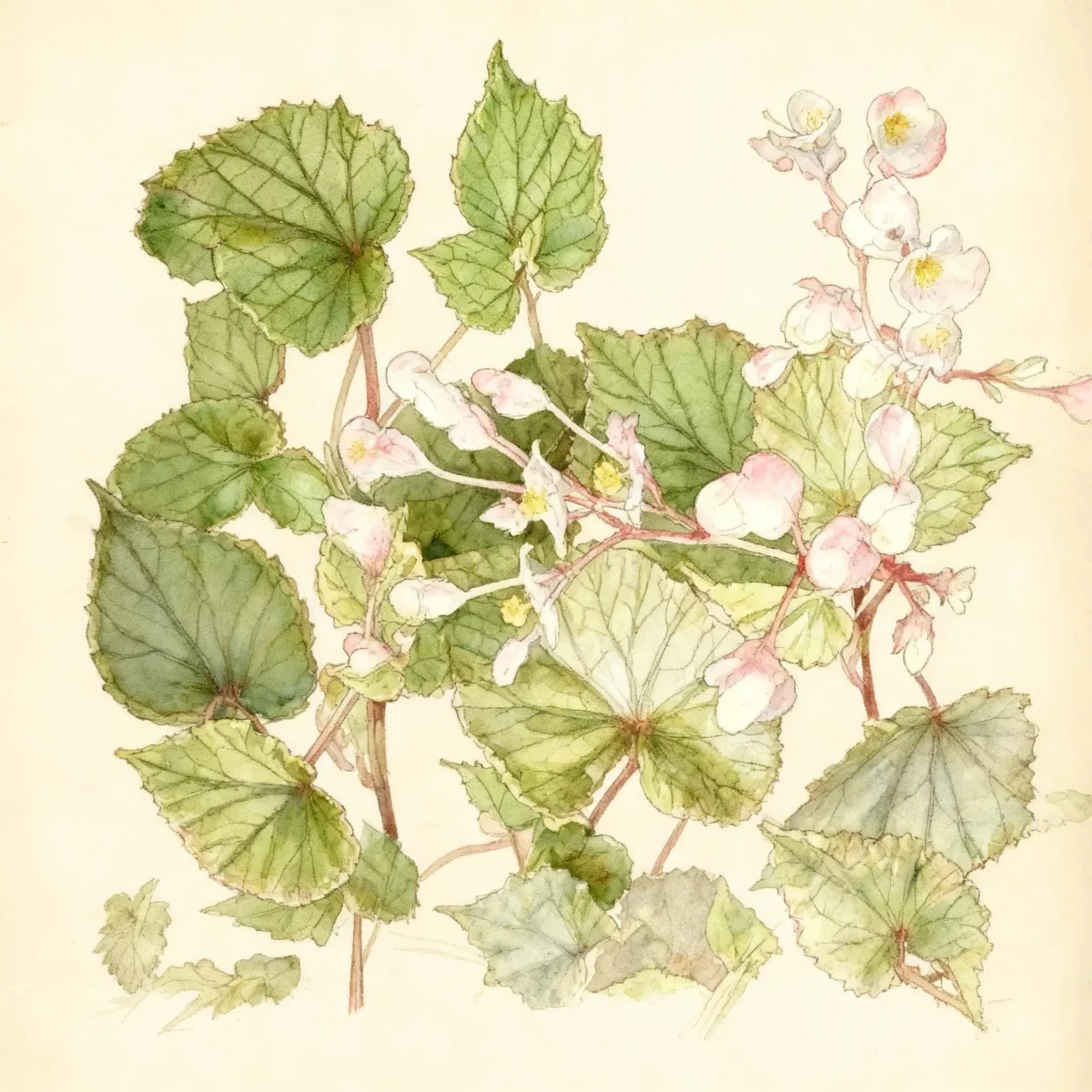
Begonia grandis ‘Wildwood Premier’ is a standout choice for gardeners seeking reliable seasonal color and texture in deep shade areas. Valued specifically because it is one of the few begonias reliably winter hardy throughout much of the eastern United States, this plant offers significant aesthetic appeal. Its unique selling point is the highly attractive foliage, featuring large, olive-green leaves dramatically accented by bright red undersides and distinct red veining.
This herbaceous perennial forms a pleasing, clump-forming mound reaching up to two feet tall. From mid-summer until frost, the Hardy begonia provides attractive pink flowers in drooping clusters, extending the garden’s visual interest when many other perennials are fading. As a tuberous-rooted species, it provides dependable, long-lasting performance when cultural needs regarding moisture and shade are met.
The Begonia grandis ‘Wildwood Premier’ is exceptionally useful for adding depth and variegation to woodland settings or moisture-retentive borders. Its ability to tolerate heavy shade makes it an indispensable component in challenging, dark garden pockets where few other flowering plants can thrive.
Fast Facts
- Plant Family: Begoniaceae
- Plant Type: Herbaceous perennial
- Hardiness Zones: USDA Zones 6-9
- Size at Maturity:
- Height: 1.5-2 ft
- Spread: 1-1.5 ft
- Bloom Time: July to October
- Bloom Description: Pink
- Sun Exposure: Part shade to full shade
- Water Needs: Medium to wet
- Maintenance Level: Medium
How to Grow
For optimal growth, plant Begonia grandis ‘Wildwood Premier’ where it receives part shade to full shade. The cultural requirements center on soil composition, needing organically rich, moist, and reliably well-drained media. Planting should be done carefully, ensuring the soil does not have periods where it becomes completely dry, as this species prefers consistent moisture.
Watering requirements trend toward medium to wet; avoid desiccated soil conditions, especially during active growth in summer. While hardy, gardeners in borderline areas, such as the St. Louis region, should apply a heavy winter mulch to safeguard the tubers. Deadheading spent flowers can encourage a slightly longer bloom period into the fall.
A unique aspect of the Hardy begonia is its natural method of propagation. In autumn, tiny bulblets form in the leaf axils before dropping to the ground, allowing for self-propagation. These bulblets can be collected and deliberately planted for new specimens. Be patient in the spring; new growth from the tubers tends to emerge late, so resist the urge to clean up the area too early.
Landscape Uses
The Begonia grandis ‘Wildwood Premier’ excels as a good late-summer flowering plant specifically designed for shaded gardens. Where deep shade precludes sun-loving bloomers, this begonia brings texture, contrasting foliage color, and reliable pink flowers from July to October. It is highly effective when integrated into established woodland garden designs.
This plant partners exceptionally well with companion shade lovers, making integration into existing landscapes simple. Consider mixing the bold, colorful leaves of Begonia grandis ‘Wildwood Premier’ with the fine textures of ferns or the mounding shapes of hostas. Using it along shaded borders provides a lush, layered effect that remains attractive throughout the growing season.
Standout Features
Flower Qualities
- Showy
Noteworthy Characteristics
Begonia grandis, commonly called hardy begonia, is the only species of Begonia that is winter hardy to the St. Louis area. It is a monoecious, tuberous-rooted, clump-forming perennial that typically forms a bushy mound of foliage to 2’ tall on branching stems. ‘Wildwood Premier’ is noted for its unusually attractive foliage, featuring large, ovate, olive-green leaves with red veining and bright red undersides, making it distinct from the species. Drooping clusters of pink flowers (to 1” across) appear reliably from July sometimes blooming to frost.
Tolerances
- Heavy Shade
- Black Walnut
Potential Problems
This cultivar is generally robust, known for having no serious insect or disease problems when grown in appropriate conditions. The primary concern for any gardener attempting cultivation is marginal winter hardiness. In areas near the edge of its hardiness range, particularly where temperatures dip severely, winter survival can be uncertain. Ensure adequate winter protection via heavy mulching in colder zones to insulate the tubers against deep freezes.
Frequently Asked Questions
What hardiness zones is Hardy begonia suitable for?
The Hardy begonia (Begonia grandis ‘Wildwood Premier’) is best suited for USDA Hardiness Zones 6 through 9.
How large does Begonia grandis ‘Wildwood Premier’ grow?
This perennial typically reaches a height between 1.5 and 2 feet, spreading outward to occupy a width of 1 to 1.5 feet at maturity.
What sun exposure does the Hardy begonia need?
Begonia grandis ‘Wildwood Premier’ thrives best in conditions ranging from part shade to full shade, needing protection from intense afternoon sunlight.
When does Begonia grandis ‘Wildwood Premier’ bloom?
This plant offers a long bloom window, producing attractive pink flowers from July well into October.
Conclusion
The Begonia grandis ‘Wildwood Premier’ offers a rare combination of winter toughness and superb foliage/flower display, making it a top-tier choice for shaded garden areas. Its vibrant leaf coloration and reliable summer bloom provide lasting garden value. Before planting, verify that your location falls within USDA Zones 6-9 and plan for consistent moisture management to ensure your Hardy begonia thrives year after year.
Companion Planting
Successfully integrating Begonia grandis ‘Wildwood Premier’ into your landscape requires pairing it with other plants that share its preference for moist, rich soil and shade. Excellent companions include many common woodland plants that value similar environmental conditions. Consider using astilbes, which offer contrasting feathery plumes, or various coral bells (Heuchera), whose leaf colors can complement the red undersides of the begonia foliage.
When designing a shaded border, utilize the upright clump of Hardy begonia as a mid-layer element. Groupings of ferns, such as Japanese Painted Fern or Tassel Fern, offer fine texture that contrasts beautifully against the broad leaves of the Begonia grandis ‘Wildwood Premier’. This combination creates depth and year-round interest in low-light areas.
Ensure that any companion plants do not aggressively outcompete the begonia for moisture, as both require consistent water. Focus on textural contrast rather than competing bloom times to maximize the visual interest provided by the long-lasting foliage of this exceptional plant.
Propagation Tips
While the Hardy begonia may self-seed, the most straightforward and reliable method for increasing your stock of Begonia grandis ‘Wildwood Premier’ is by harvesting the small bulblets. These miniature tubers form in the leaf axils (the angle between the leaf stem and the main plant stem) as the season progresses toward autumn. Wait until these bulblets are mature and easily detach before collecting them.
Once harvested, the tiny bulblets should be planted immediately either directly into well-drained potting mix kept consistently moist or stored in a dry, cool, dark location over winter if planting must be delayed until spring. Planting these bulblets results in genetically identical clones of the superior ‘Wildwood Premier’ variety.
For gardeners preferring vegetative propagation, stem cuttings can also be rooted, though this is more labor-intensive than collecting the readily available bulblets. Successfully propagating Begonia grandis ‘Wildwood Premier’ ensures you can fill out large shaded areas cost-effectively or share this superior hardy cultivar with friends.