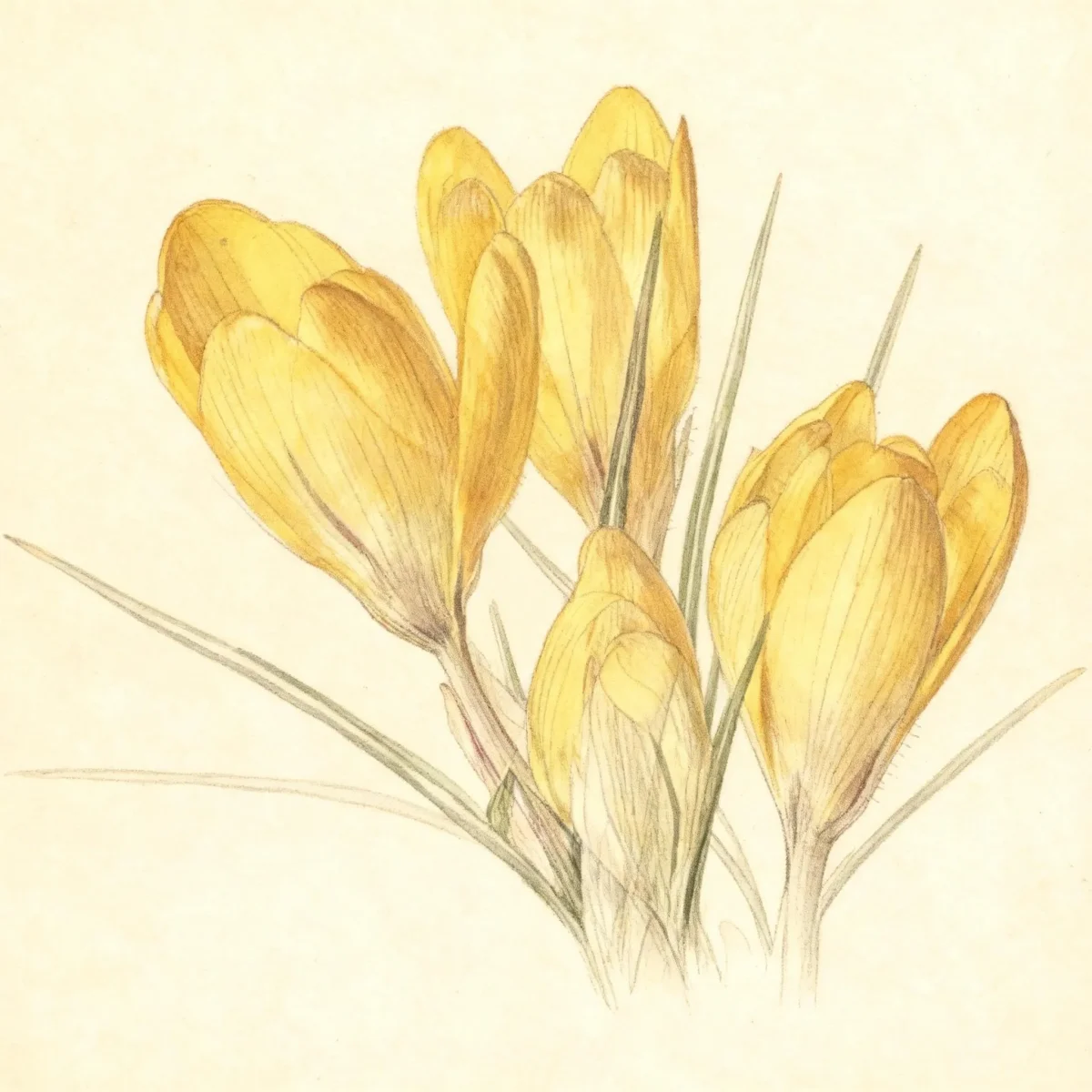
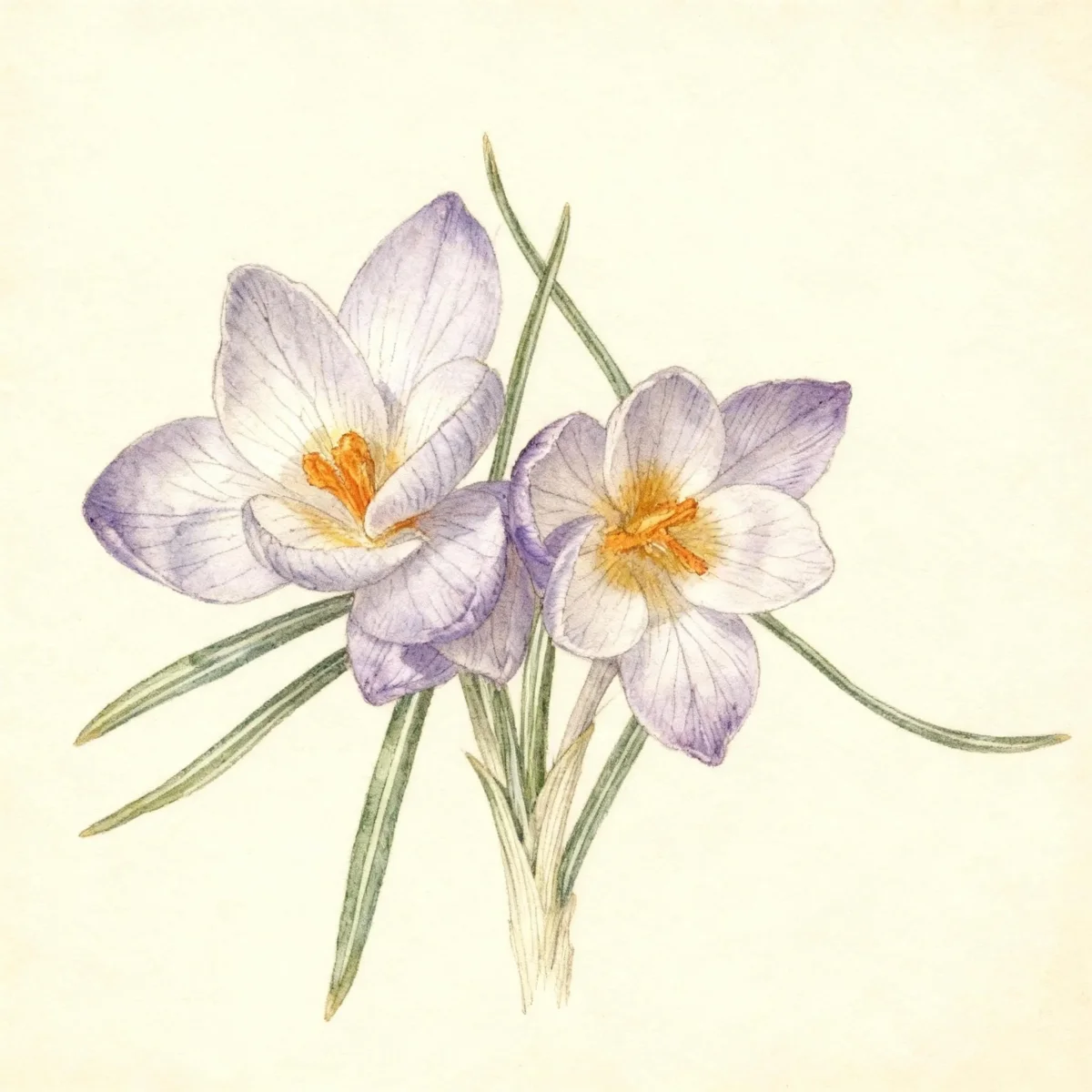
Snow crocus (Crocus chrysanthus 'Advance')
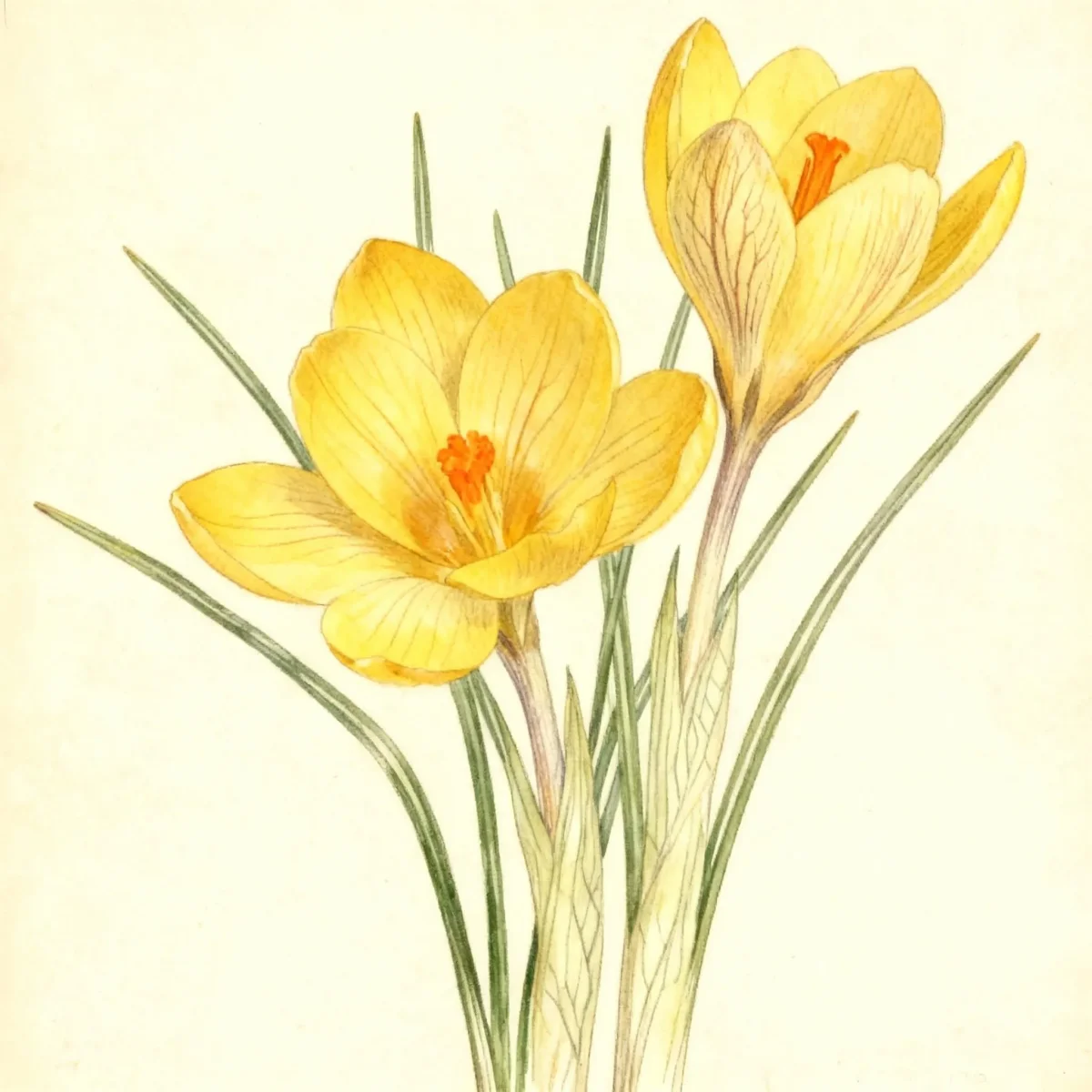
Crocus chrysanthus 'Advance', the earliest Snow crocus, offers bright lemon yellow blooms in late winter. Low maintenance.
Scroll down to discover growing tips, care requirements, companion plants, and more
Complete Plant Information
Overview
The Crocus chrysanthus ‘Advance’, commonly known as Snow crocus, signals the true end of winter with its vibrant, early flowering display. This variety is highly valued for its timing, often appearing while snow is still present, providing crucial early color when few other plants are active. As one of the earliest bulbs to emerge, the Snow crocus brings welcome cheer to the late winter landscape.
Crocus chrysanthus ‘Advance’ develops short, grass-like basal leaves that accompany its cup-like flowers. The blooms themselves feature a bright lemon yellow hue, occasionally accented by attractive purple shading on the exterior. Its low maintenance requirements and naturalizing habit make it an excellent choice for hands-off gardening.
Gardeners seeking naturalistic spring displays should embrace the Crocus chrysanthus ‘Advance’ for its ability to form spectacular, self-propagating drifts. These bulbs thrive in sunny spots and provide essential early season interest before larger perennials awaken.
Fast Facts
- Plant Family: Iridaceae
- Plant Type: Bulb
- Hardiness Zones: USDA Zones 3-8
- Size at Maturity:
- Height: 0.25-0.5 ft
- Spread: 0.25-0.5 ft
- Bloom Time: February to March
- Bloom Description: Lemon yellow with purple shading
- Sun Exposure: Full sun to part shade
- Water Needs: Medium
- Maintenance Level: Low
How to Grow
The ideal time to plant Crocus chrysanthus ‘Advance’ corms is in the fall, well before the ground freezes. Successful cultivation depends heavily on soil conditions; these bulbs thrive in average, medium moisture, well-drained soils. They perform best in sandy or gritty mixes, so garden soil heavy in clay should be amended with sand to ensure excellent drainage, as wet, soggy winter conditions are detrimental. Plant corms approximately 3 to 4 inches deep and space them 3 to 6 inches apart.
Ongoing care for this low-maintenance bulb is minimal during the growing season. Water according to medium needs, ensuring the soil doesn’t remain waterlogged. Since corms store energy, heavy fertilization is usually unnecessary. A key cultural note for naturalizing bulbs planted in lawns is foliage management: allow the grass-like leaves to remain totally unmowed for about six weeks after the Crocus chrysanthus ‘Advance’ finishes blooming until the foliage yellows naturally.
When the plants go dormant in late spring, the requirement for attention ceases until the next winter. Crocus chrysanthus ‘Advance’ readily naturalizes through offsets and light self-seeding, creating larger drifts of color year after year without intervention.
Landscape Uses
The primary strength of the Snow crocus lies in its ability to naturalize, meaning it spreads and multiplies over time to create large, informal swathes of color. This characteristic makes the Crocus chrysanthus ‘Advance’ perfect for mass plantings in lawns, where the early bloom provides unexpected brightness underfoot. They also perform wonderfully when used under deciduous trees or in sunny woodland margins, popping up before the tree canopy leafs out.
For formal areas, group these small bulbs in sweeping drifts along walkways or nestled at the front of mixed shrub borders where their low height won’t be obscured. Their early bloom also makes them excellent candidates for rock gardens or contained plantings near the house entryway, offering the first signs of spring right where you can admire them up close.
Standout Features
Flower Qualities
- Showy
Noteworthy Characteristics
Crocus chrysanthus is native from Greece to Bulgaria and Turkey, and it is commonly called snow crocus, as it is one of the earliest crocuses to bloom. The species features upright, cup-like flowers that are yellow-orange, sometimes with maroon markings on the outside, and they possess a mild honey fragrance. The cultivar ‘Advance’ specifically offers upright, cup-like flowers that are lemon yellow with purple shading on the outside, typically growing only 4-6 inches tall.
Tolerances
- Deer
- Black Walnut
Potential Problems
While generally free from serious insect or disease issues, the main concern for Crocus chrysanthus ‘Advance’ involves foraging rodents. Squirrels, mice, and other small animals are notorious for digging up and consuming newly planted corms before they have a chance to establish roots. To combat this, plant corms deeper than suggested or cover planting areas with hardware cloth until growth begins. A benefit noted is that deer tend to avoid eating the foliage or flowers.
Frequently Asked Questions
What hardiness zones is Snow crocus suitable for?
Crocus chrysanthus ‘Advance’ is reliably hardy in USDA Zones 3 through 8.
When does Snow crocus bloom?
This Snow crocus typically blooms in late winter, specifically from February to March, with flowers described as lemon yellow with purple shading.
How large does Crocus chrysanthus ‘Advance’ grow?
This variety generally reaches a height between 0.25 to 0.5 feet (about 4-6 inches) with a similar spread.
What sun exposure does Snow crocus need?
Crocus chrysanthus ‘Advance’ performs best when planted in locations receiving full sun to part shade.
Conclusion
The Crocus chrysanthus ‘Advance’ is an invaluable early spring accent, rewarding gardeners with vibrant, lemon-yellow color when the garden needs it most. Its low maintenance needs and impressive ability to naturalize make the Snow crocus a staple for easy, exciting spring scenery. Ensure your planting location has sharp drainage and check your regional hardiness zone before placing your fall corm order.
Companion Planting
When planning spring bulb displays, consider companions that share similar needs for sun exposure and soil drainage. Dwarf irises or other very early-blooming bulbs like Scilla or Chionodoxa pair well with Crocus chrysanthus ‘Advance’, as they offer succession blooming or complementary colors right after the crocus fades. Because the foliage of the Snow crocus dies back quickly, avoid planting it under perennials that emerge late, as the crocus patches will be completely hidden by mid-spring.
For natural areas like under deciduous trees, consider interplanting with spring ephemerals such as Bloodroot (Sanguinaria canadensis) or Trout Lily (Erythronium). These woodland natives share the preference for dappled early spring light before the tree canopy fills in, creating a stunning, layered effect as the season progresses.
Sequential Bloom Planning
Successfully integrating Crocus chrysanthus ‘Advance’ into your garden design relies on planning sequences of bloom to maximize color duration. Since this variety flowers in February and March, it covers the earliest gap in the season. Follow these small bulbs with mid-spring bloomers for a seamless transition of interest.
Excellent follow-up sources of color include Muscari (Grape Hyacinth), Daffodils (Narcissus), and Tulips (Tulipa). By staggering the planting depths—crocuses shallow, tulips deep—you can fit several seasons of bulb color into the exact same patch of ground, ensuring that Scilla is followed by golden Crocus chrysanthus ‘Advance’, which is then succeeded by radiant later tulips.