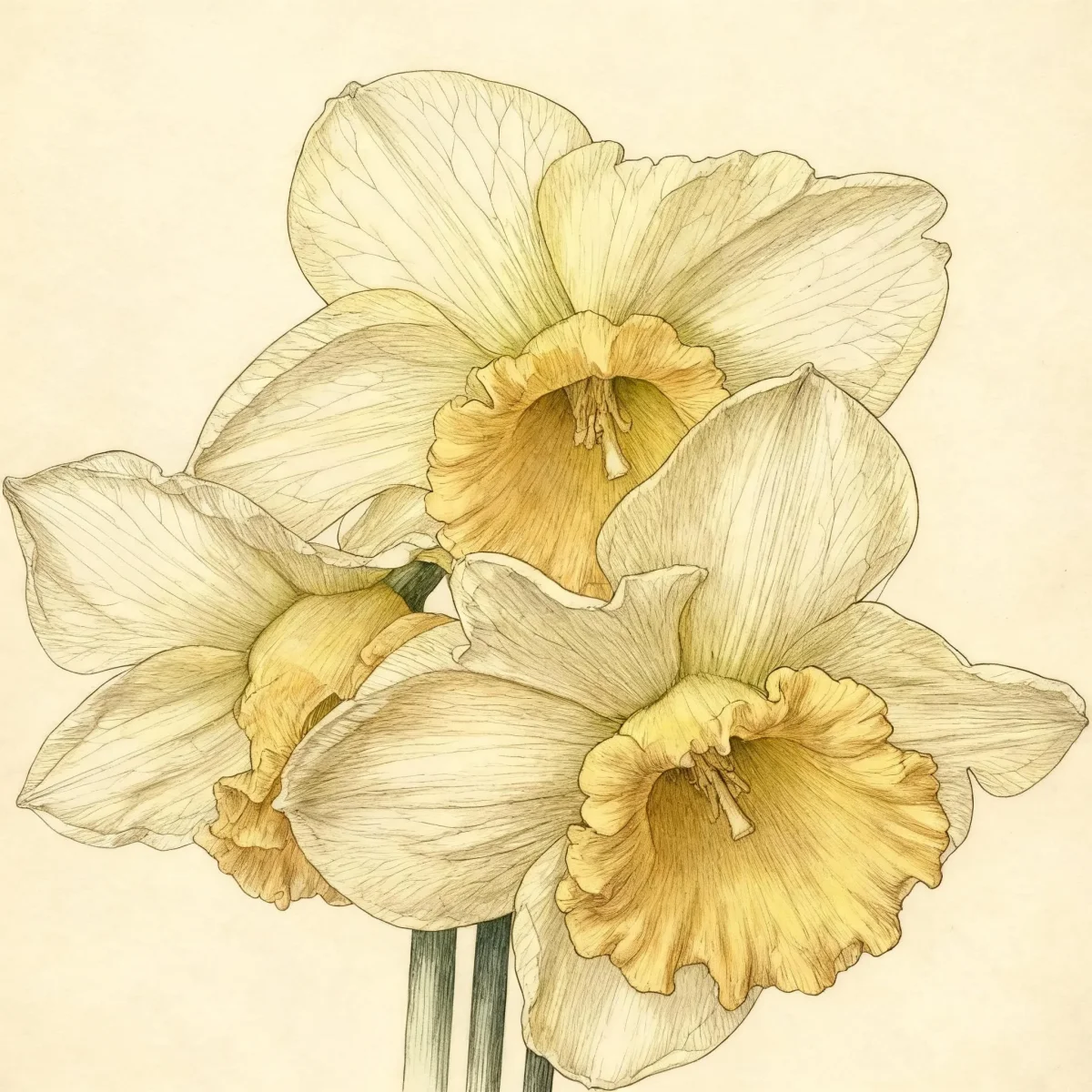
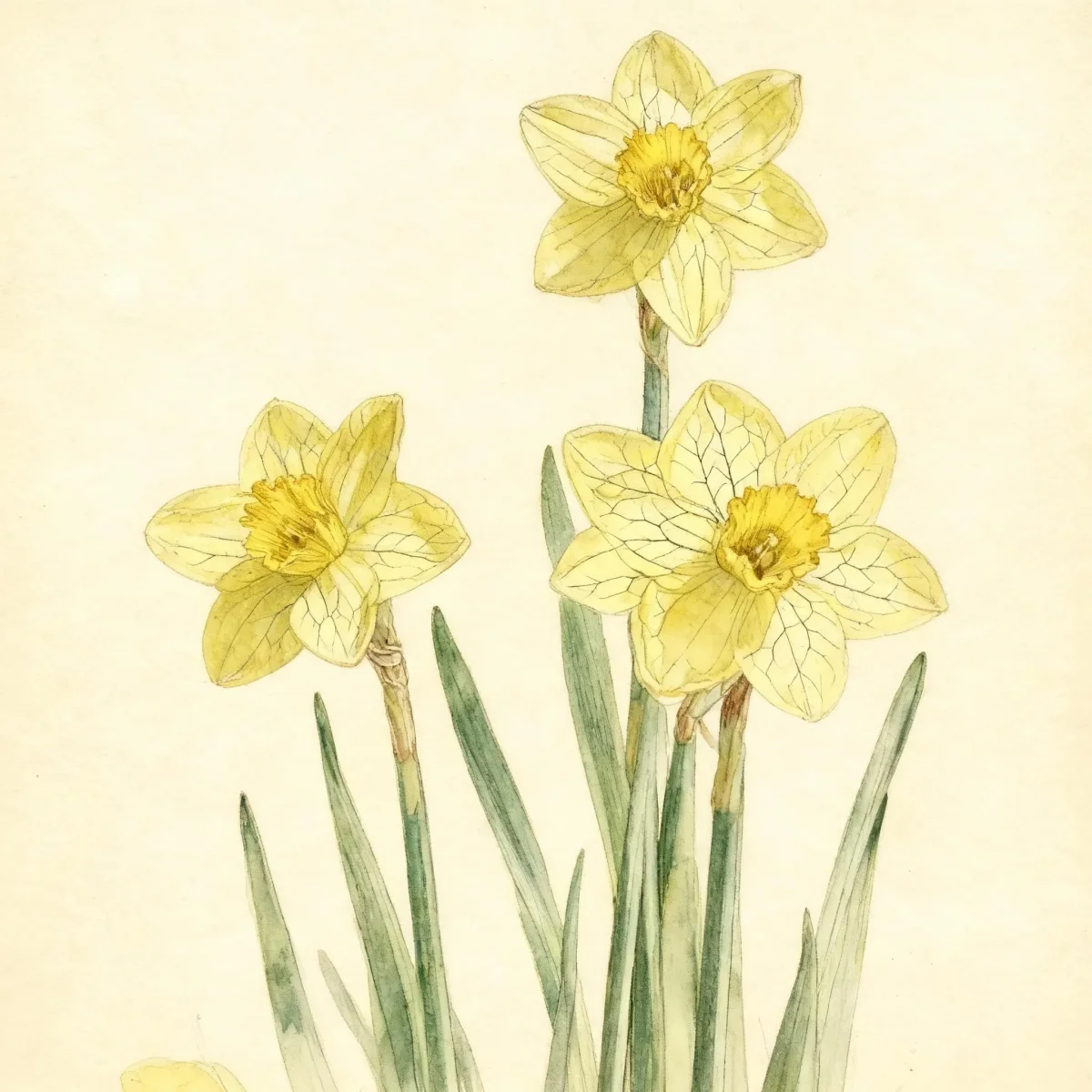
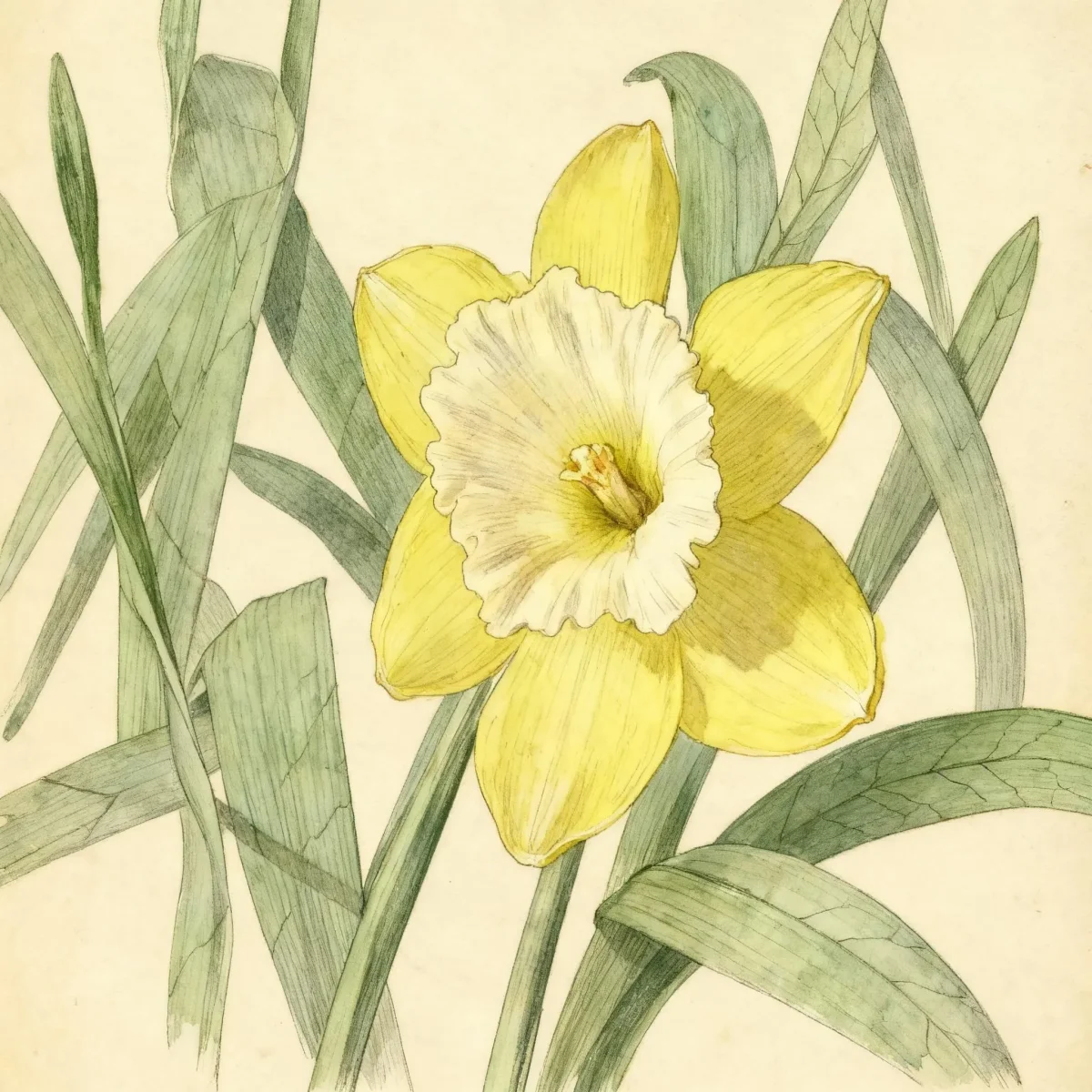
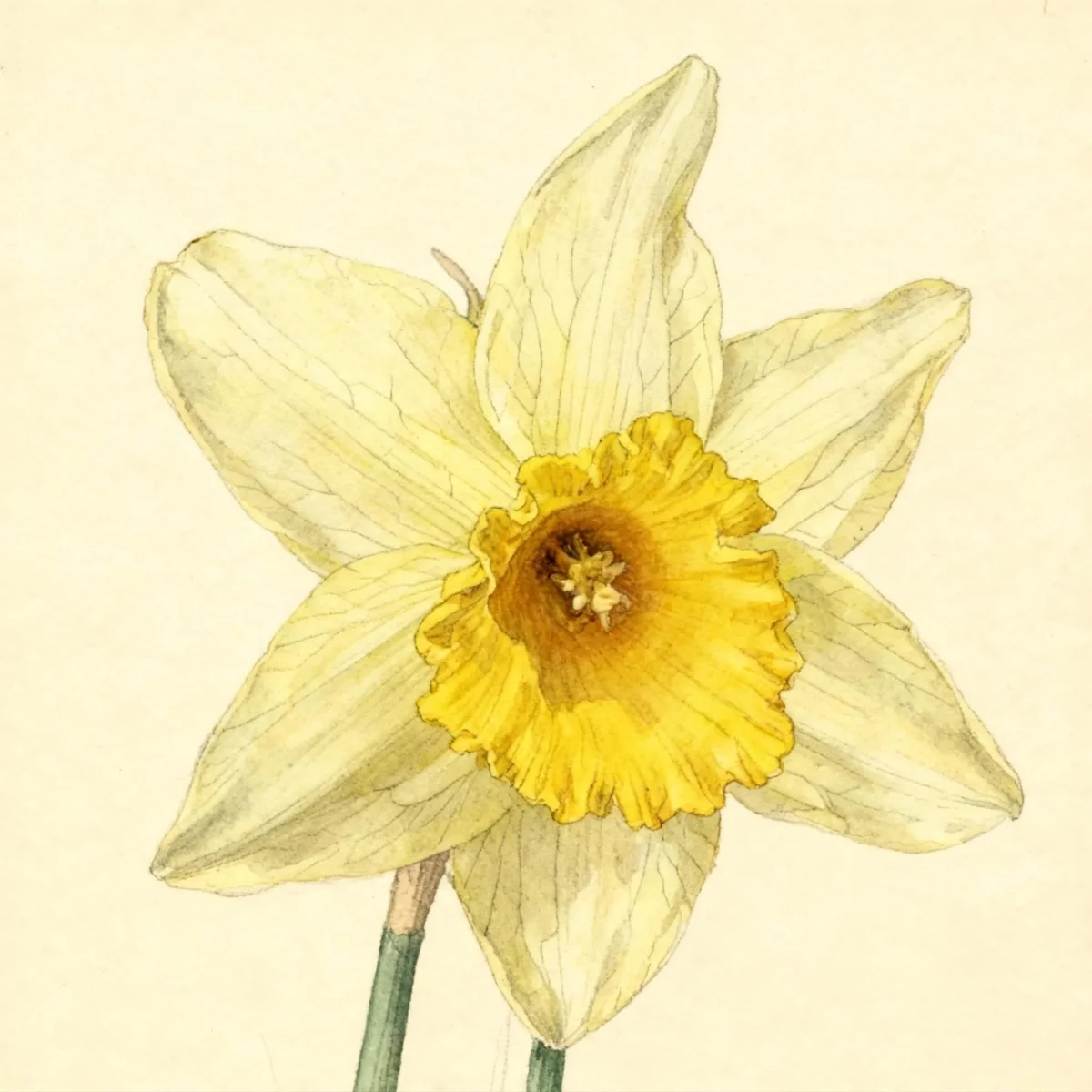
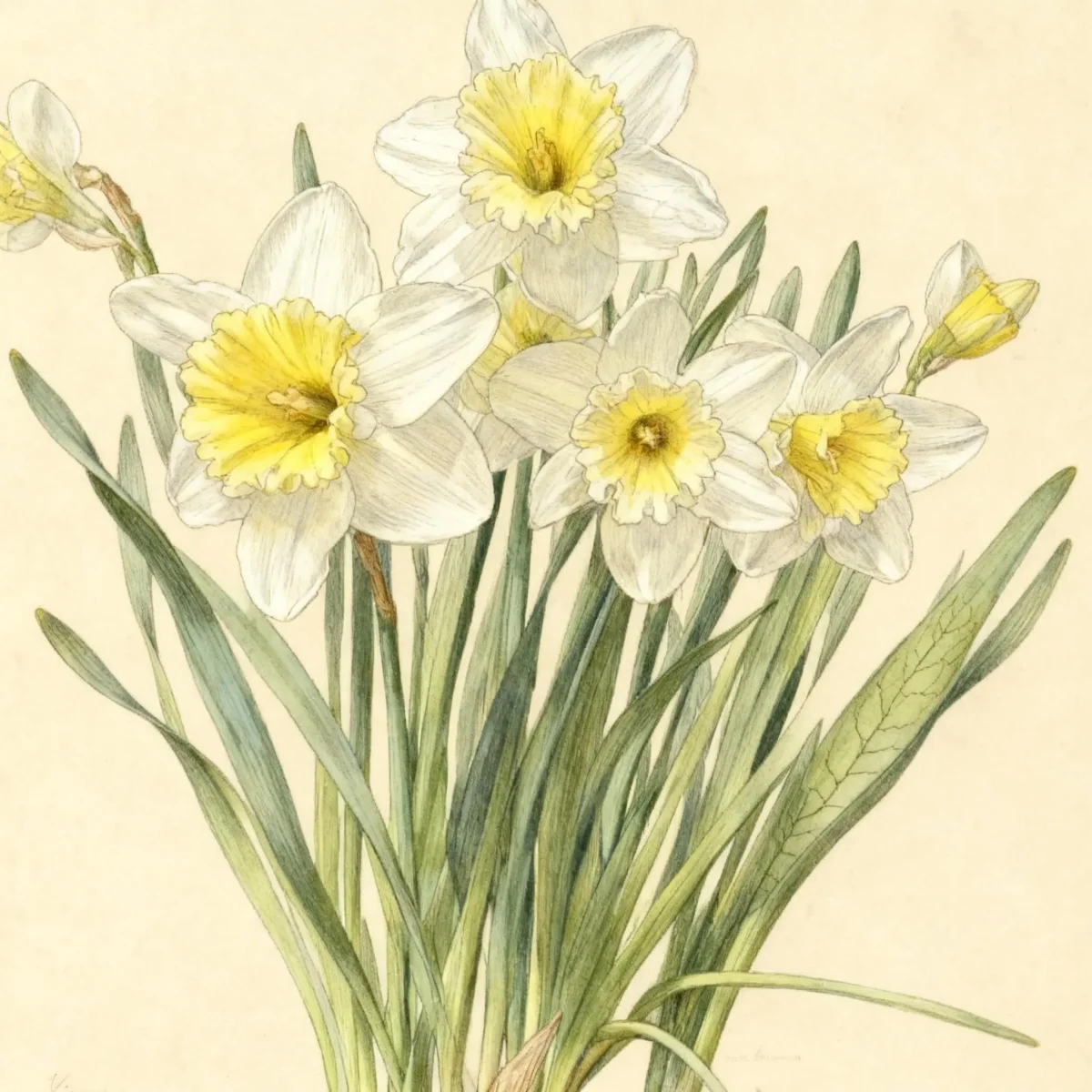
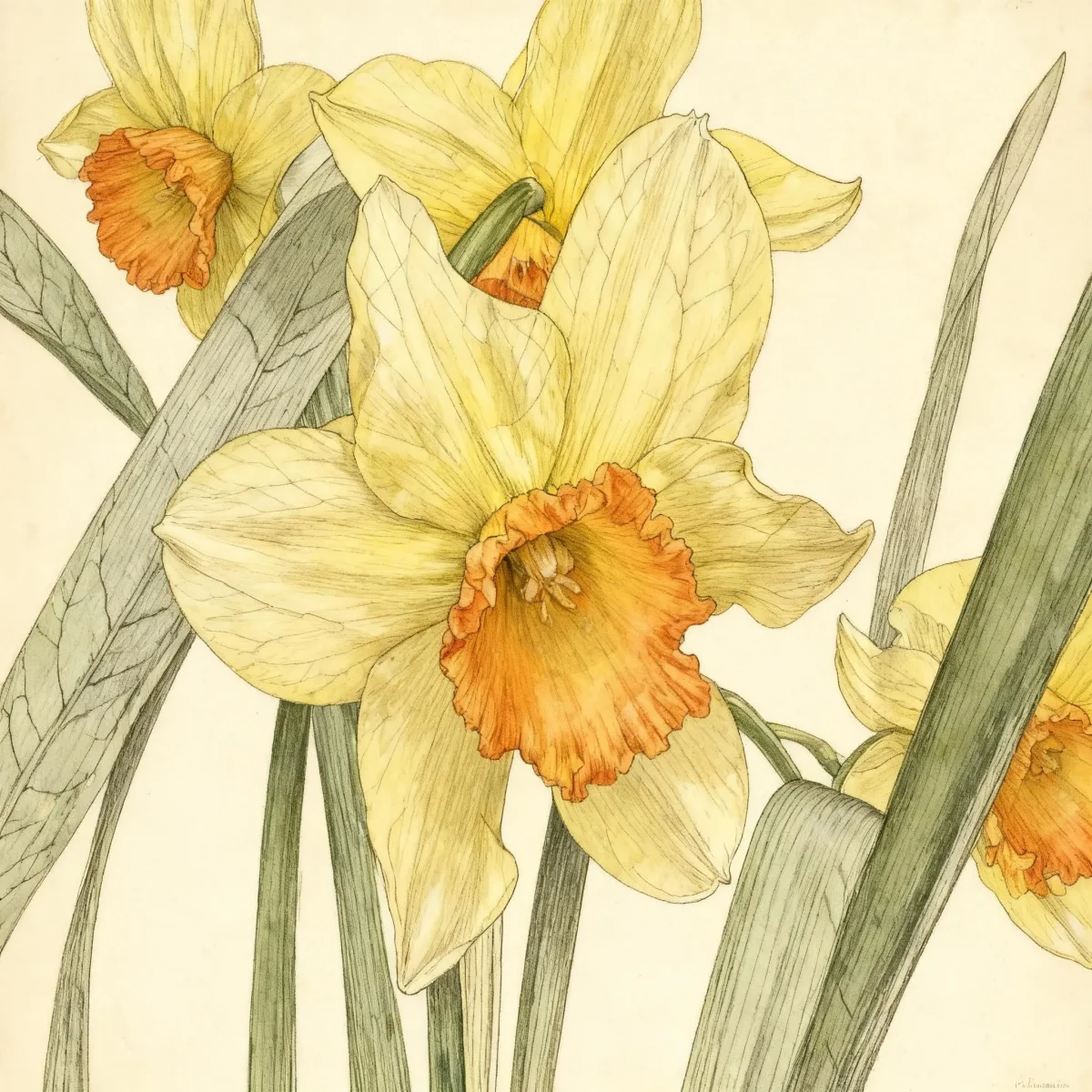
Large-cupped daffodil (Narcissus 'Blues')
Narcissus 'Blues' is a low-maintenance Large-cupped daffodil blooming white with an orange cup in April.
Scroll down to discover growing tips, care requirements, companion plants, and more
Complete Plant Information
Overview
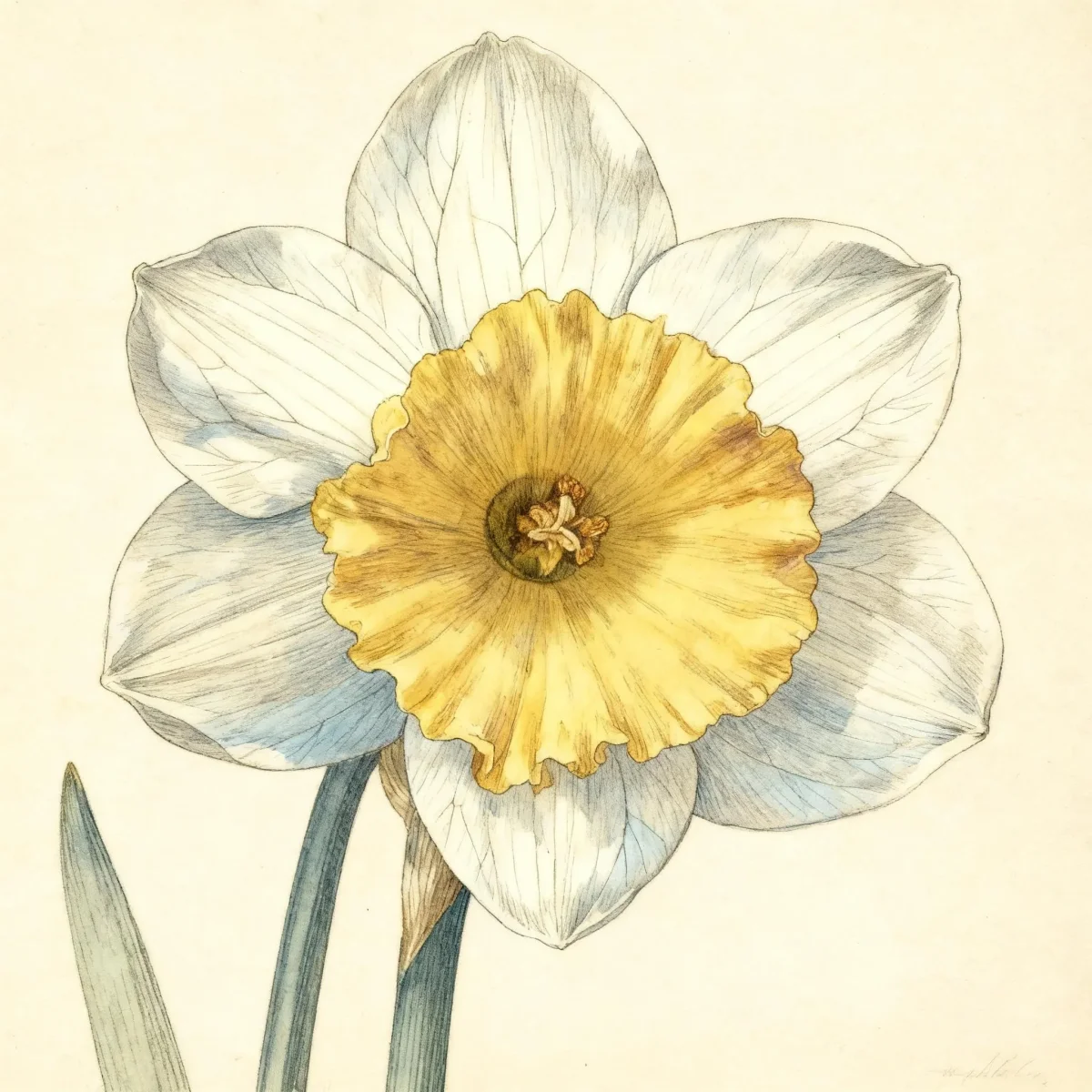
Narcissus ‘Blues’, a member of the large-cupped daffodil group, brings reliable color to the early spring landscape. This cultivar is highly valued for its striking contrast, featuring pristine white perianth segments set against a vibrant yellow to orange cup. As a bulb, it establishes easily and requires low maintenance once planted correctly.
This perennial offers consistent performance across a wide range of climates, thriving in USDA Hardiness Zones 3 through 8. The height is modest, typically reaching 1 to 1.25 feet tall when in bloom during April. Narcissus ‘Blues’ combines aesthetic appeal with practical durability, making it a staple in foundational spring plantings.
Gardeners appreciate the longevity of daffodils, as they reliably return year after year without extensive seasonal intervention. The deer-resistant nature of Narcissus ‘Blues’ ensures that its early floral display remains intact, providing essential color when few other plants are showing life.
Fast Facts
- Plant Family: Amaryllidaceae
- Plant Type: Bulb
- Hardiness Zones: USDA Zones 3-8
- Size at Maturity:
- Height: 1-1.25 ft
- Spread: 0.5-0.75 ft
- Bloom Time: April
- Bloom Description: White with yellow to orange cup
- Sun Exposure: Full sun to part shade
- Water Needs: Medium
- Maintenance Level: Low
How to Grow
Planting Narcissus ‘Blues’ bulbs should occur in early to mid-fall to allow for sufficient root development before the ground freezes. Select a location offering full sun exposure, though partial shade is tolerated, ensuring the spot is in average, medium-moisture, well-drained soil. Good drainage is critical to prevent bulb rot. Plant each bulb 2 to 3 times as deep as the bulb is tall, generally resulting in 3-6 inches deep, spaced 4 to 8 inches apart.
During the active growing season, maintain medium moisture levels; however, the bulbs tolerate drought once they become fully dormant. After the spring flowers have faded, resist the urge to cut back the foliage. Allow the leaves to fully yellow naturally, as this process replenishes the bulb’s energy for next year’s bloom of this Large-cupped daffodil.
After flowering, remove the spent flower stem above the foliage to prevent seed formation, which diverts energy from bulb multiplication. Clumps of Narcissus ‘Blues’ can be left undisturbed for several years. If flowering diminishes, divide the clumps immediately after the foliage dies back.
If placement is considered, remember that the flowers generally face the sun; position taller shrubs or structures to the rear of the planting area to ensure maximum sun exposure for the blooms.
Landscape Uses
Daffodils, unlike many other spring bulbs, are renowned for their ability to naturalize and perform reliably year after year. Narcissus ‘Blues’ functions beautifully when planted in large sweeps or drifts, creating significant impact across the landscape. They are ideal for mixing with other spring-flowering bulbs, providing continuous color interest.
Consider using this cultivar in perennial borders where their foliage emerges before summer perennials fully fill in the space. They also excel in wild gardens, open woodland settings, or planted en masse beneath deciduous trees where they receive ample sun early in the season. Plantings should ideally consist of at least six bulbs to achieve a substantial display.
As a Division 2 large-cupped daffodil, Narcissus ‘Blues’ offers strong architectural elements for early spring beds. Their deer-resistant properties make them an excellent choice for gardens frequented by local wildlife, ensuring the white and orange display goes unspoiled.
Standout Features
Flower Qualities
- Showy
- Fragrant
- Good for cut flowers
Noteworthy Characteristics
Narcissus ‘Blues’ is a Division 2 large-cupped cultivar, distinguished by having a cup length that is less than or equal to the length of the outer petals. It reliably produces one striking white flower per stem, accented by a rich orange cup. This cultivar exhibits deer resistance and is highly regarded both for its ability to naturalize effectively and its performance as a fresh cut flower.
Tolerances
- Deer resistant
Potential Problems
Daffodils, including Narcissus ‘Blues’, are generally robust and free from serious insect or disease issues when planted in suitable, well-drained culture. The most common risk is bulb rot, which occurs when soil remains soggy due to poor drainage, emphasizing the need for well-draining loams during fall planting.
Infrequent pests may include slugs and snails, especially when foliage is young, and occasionally the narcissus bulb fly or narcissus nematode. For aesthetic protection, keep an eye out for Narcissus yellow stripe virus, though it is uncommon. Fortunately, deer and rabbits instinctively avoid consuming this bulb, preserving the delicate spring blooms of your Large-cupped daffodil.
Frequently Asked Questions
What hardiness zones is Large-cupped daffodil suitable for?
Narcissus ‘Blues’ thrives in USDA Hardiness Zones 3 through 8.
How large does Large-cupped daffodil grow?
This variety typically reaches a mature height between 1 and 1.25 feet, with a spread spanning 0.5 to 0.75 feet.
What sun exposure does Narcissus ‘Blues’ need?
This bulb performs best when situated in full sun, though it can tolerate partial shade conditions.
When does Large-cupped daffodil bloom?
Narcissus ‘Blues’ blooms in April, presenting flowers that are white with a distinguishing yellow to orange cup.
Conclusion
The Narcissus ‘Blues’ large-cupped daffodil provides gardeners with an outstanding, low-effort return on investment with its crisp white and fiery orange spring displays. Its deer resistance and naturalizing tendencies make it a foundational element for long-term spring garden success. Before the fall, ensure your soil drains well and plant your bulbs deeply to guarantee the return of this spectacular Narcissus ‘Blues’ next April.
Companion Planting
To maximize the visual impact of Narcissus ‘Blues’ fading foliage, strategically plant later-emerging perennials nearby. Good companions include Hostas, Siberian Iris, or Peonies, whose larger leaves will soon emerge to conceal the yellowing daffodil leaves in late spring. Ensure that companion plants also prefer medium moisture conditions, as the daffodil bulbs prefer soil that remains uniformly moist during their early growth phase.
Propagation Tips
While Narcissus ‘Blues’ can be left alone for many years, eventually, the clumps may become overcrowded, leading to reduced bloom quality and density. If this decline occurs, division is necessary. Wait until just after the foliage completely dies back in late spring or early summer. Dig up the entire clump, carefully separate the bulbs, and replant them immediately in their new locations according to standard planting depth guidelines, ensuring at least 3 inches of soil covers the top of the bulb.