Bayberry (Myrica pensylvanica 'Morton')
Grow the compact Bayberry, Myrica pensylvanica 'Morton', ideal for hedges, wet sites, and erosion control. Low maintenance shrub with aromatic leaves.
Scroll down to discover growing tips, care requirements, companion plants, and more
Complete Plant Information
Overview
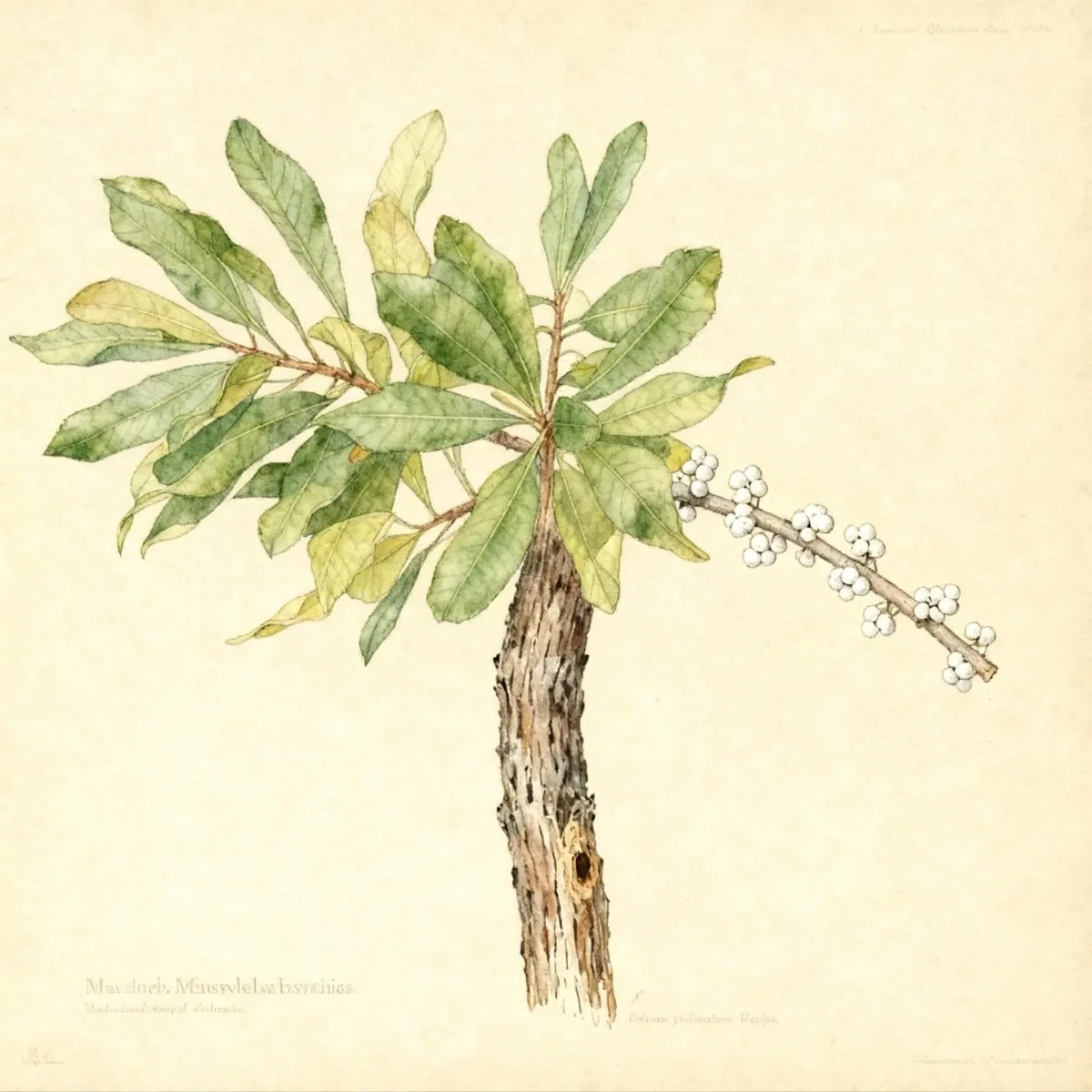
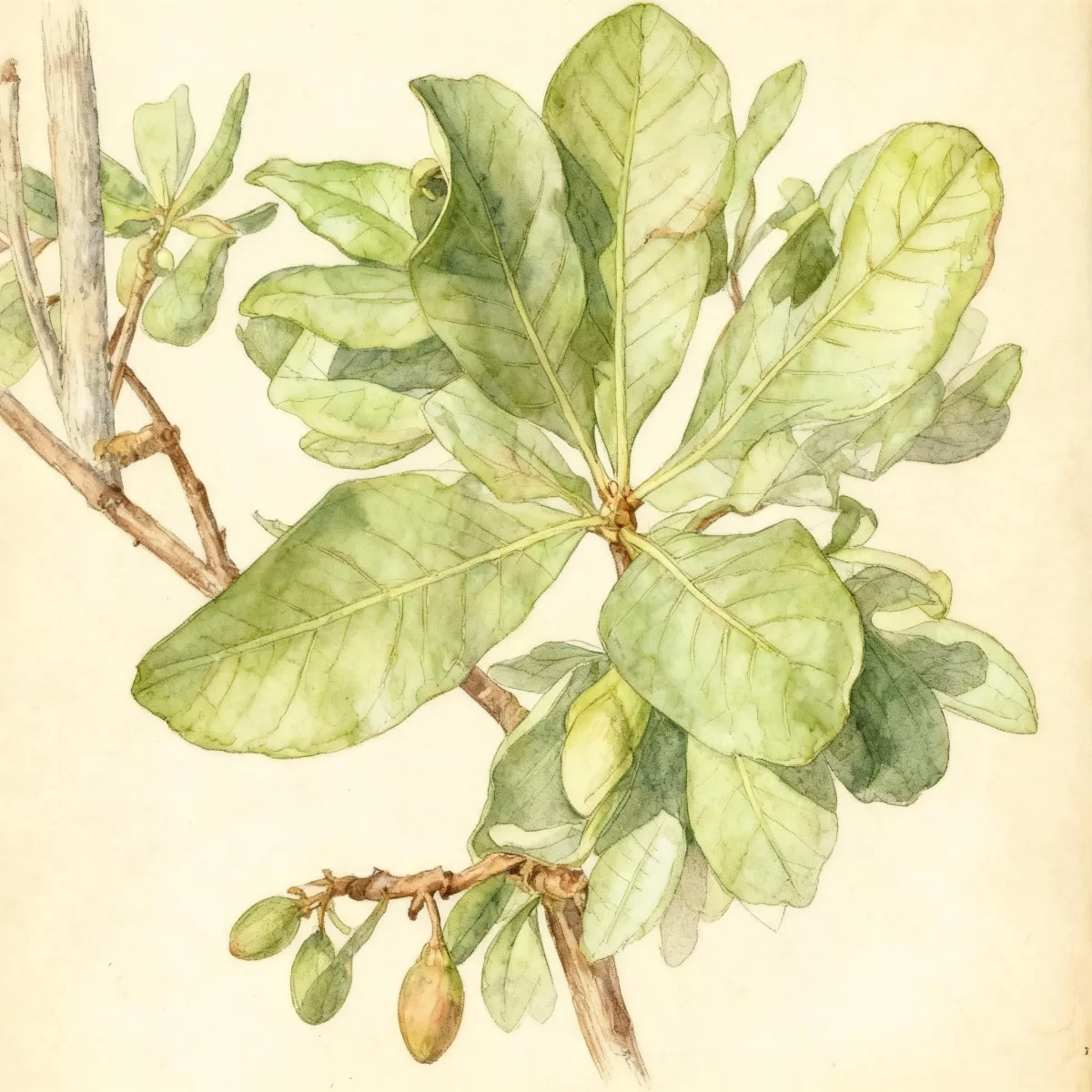
Myrica pensylvanica ‘Morton’, commonly known as Bayberry, is a highly adaptable and dense-branching deciduous shrub valued for its resilience and tolerance across varied soil types. This specific cultivar, ‘Morton’, offers a notably compact, rounded habit, making it slightly more manageable than the species if space is a concern. Bayberry brings excellent texture to the landscape with its glossy, aromatic grayish-green leaves that persist longer in milder climates, acting as a semi-evergreen accent.
A significant attraction for gardeners is the functional beauty provided by the female plants. If successfully pollinated, these produce clusters of tiny, waxy, grayish-white fruits that often cling tightly to the stems throughout the winter months, providing crucial winter interest and sustenance for wildlife. This hardiness combined with its ability to handle poor soils and urban stressors defines the modern utility of planting Myrica pensylvanica ‘Morton’.
This shrub thrives across a wide environmental spectrum, from dry upland spots to persistently wet areas, and exhibits exceptional tolerance to wind and salt spray, making it a superb choice for challenging sites near coastal areas or salted roadways. Its low maintenance requirements ensure that once established, this Bayberry provides consistent four-season screening or mass planting effect with minimal intervention.
Fast Facts
- Plant Family: Myricaceae
- Plant Type: Deciduous shrub
- Hardiness Zones: USDA Zones 3-6
- Size at Maturity:
- Height: 4-5 ft
- Spread: 5-7 ft
- Bloom Time: May
- Bloom Description: Yellowish-green
- Sun Exposure: Full sun to part shade
- Water Needs: Dry to medium
- Maintenance Level: Low
How to Grow
Plant Myrica pensylvanica ‘Morton’ during the dormant season, either early spring once the soil is workable or in the fall before the ground freezes hard. This versatile shrub performs best when sited in full sun, though it tolerates light or partial shade well. It is easily established in average, well-drained soils, but truly excels when given slightly moist, peaty, or sandy, acidic conditions.
Maintenance for this Bayberry is typically low. Avoid heavy fertilization, as it is adapted to lean soils. Watering needs are minimal once established; it manages dry periods admirably, although consistent moisture during establishment helps root development. Since shrubs tend to sucker, they can form dense colonies, which may require occasional selective pruning if you wish to maintain a stricter shape or spread control.
A vital consideration for successful fruiting is sex identification. Bayberry is mostly dioecious, meaning male and female flowers appear on separate plants. Groups of female shrubs require at least one male plant nearby to ensure ample insect pollination and subsequent development of the waxy fruits. In its southern range, the shrub may retain its leaves longer, appearing semi-evergreen.
Landscape Uses
Myrica pensylvanica ‘Morton’ excels when used in mass plantings or informal hedges where its dense, rounded form provides excellent structure. Its adaptability makes it versatile enough for inclusion in woodland gardens, shrub borders, or as a natural screen separating properties. Because it handles wet soils and drought equally well, it is an excellent structural component for rain gardens or stabilizing sloping banks against erosion.
The excellent salt tolerance of this Bayberry makes it indispensable for plantings near driveways that receive de-icing salts or in coastal landscapes subject to sea spray. Consider grouping this compact form toward the back of layered borders, allowing lower-growing, shade-tolerant perennials to fill in the foreground, or use it to define a corner in a large herb garden where its aromatic foliage can be appreciated up close.
Standout Features
Flower Qualities
- Insignificant
Fruit Qualities
- Showy
Noteworthy Characteristics
Myrica pensylvanica, commonly called bayberry, provides a dense-branching deciduous shrub structure, though the ‘Morton’ clone is notably compact, usually reaching 5’ tall and 7’ wide. Its leathery, grayish-green leaves are dotted with resin and release a strong aroma when crushed, a key identification trait. Female plants display attractive clusters of grayish-white, waxy fruits in late summer that persist remarkably through winter, which historically have been used to make scented candles.
Tolerances
- Drought
- Erosion
- Wet Soil
Potential Problems
This selection generally demonstrates exceptional resistance to serious insect or disease problems, contributing significantly to its low-maintenance profile. Gardeners rarely need to apply chemical treatments for pests or pathogens affecting Bayberry. Focus management efforts instead on ensuring proper drainage variations are not encountered during site selection, although its tolerance level is quite high.
Frequently Asked Questions
What hardiness zones is Bayberry suitable for?
Myrica pensylvanica ‘Morton’ is highly cold-hardy, thriving in USDA Zones 3 through 6.
How large does Myrica pensylvanica ‘Morton’ grow?
This specific cultivar typically matures to a height between 4 and 5 feet, with a spread ranging from 5 to 7 feet.
What sun exposure does Bayberry need?
This shrub prefers full sun but performs well even with part shade, making it flexible for varied light conditions.
When does Bayberry bloom?
The blooms occur in May, typically presenting a less conspicuous yellowish-green color.
Conclusion
The Bayberry, Myrica pensylvanica ‘Morton’, stands out as a superb choice for gardeners seeking a durable, attractive screen or foundational planting that performs reliably across diverse soil and moisture conditions. Its compact size and low maintenance profile, coupled with its winter interest from waxy fruit, ensure year-round value in the landscape. Before planting, confirm your location falls within USDA Zones 3-6 and ensure you include male stock if you desire the characteristic fruit display.
Wildlife Benefits
The waxy berries produced by pollinated female Bayberry shrubs are a critical late-season food source for numerous bird species. Many birds rely on these high-energy fruits throughout the winter months after other food sources have diminished. Planting this North American native supports local ecosystems, providing both shelter and sustenance.
Soil Adaptability and pH
One of the greatest assets of Myrica pensylvanica ‘Morton’ is its ability to thrive where other woody plants struggle. It tolerates poor soils and is known to prefer acidic conditions. While it appreciates moist, peaty media, its tolerance for both drought and saturated, wet soil conditions provides unparalleled site flexibility when designing eco-conscious landscapes or working with variable drainage.