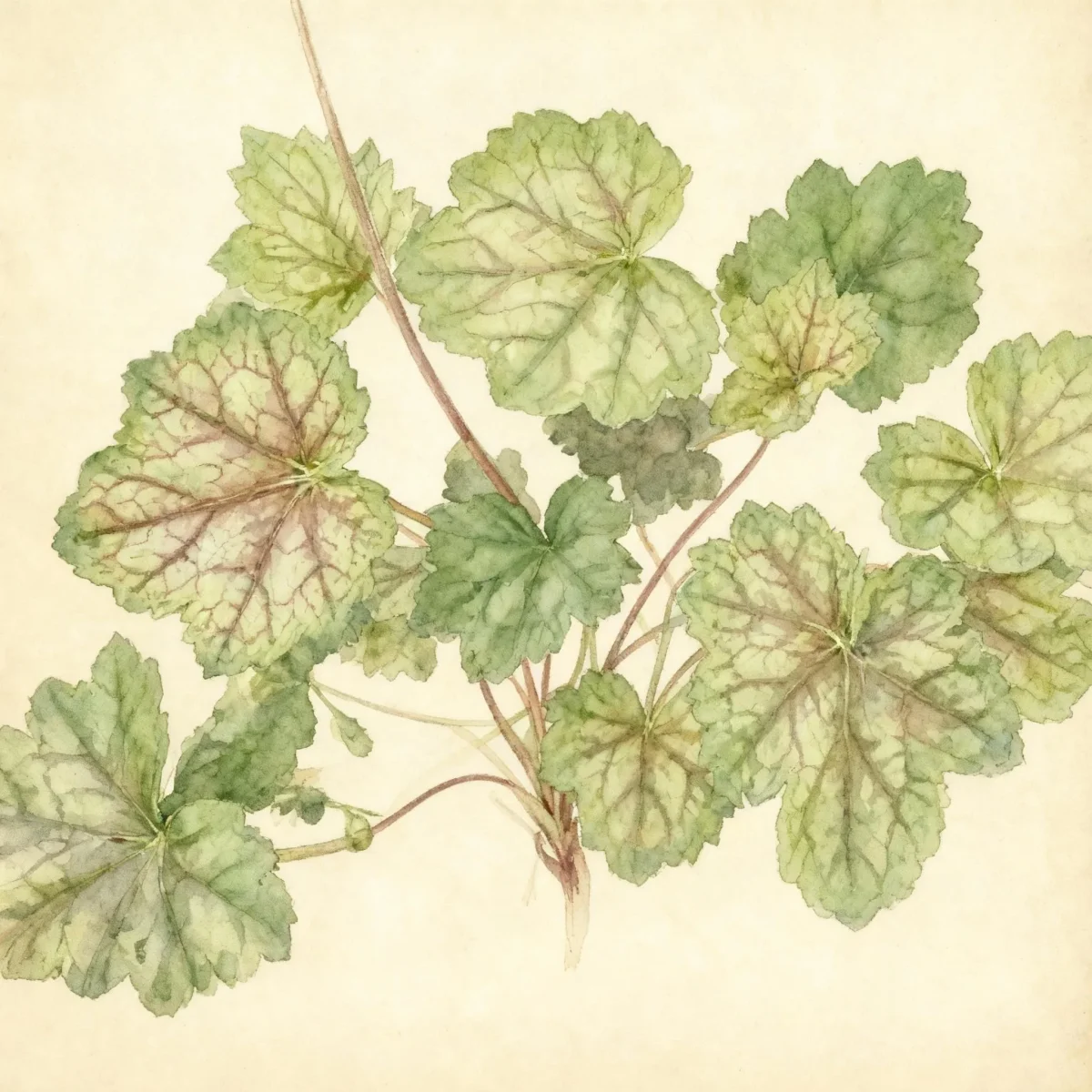
Coral bells (Heuchera 'Vesuvius')
Heuchera 'Vesuvius' Coral bells offer deep purple foliage with silver overlay and vibrant orange-red blooms.
Scroll down to discover growing tips, care requirements, companion plants, and more
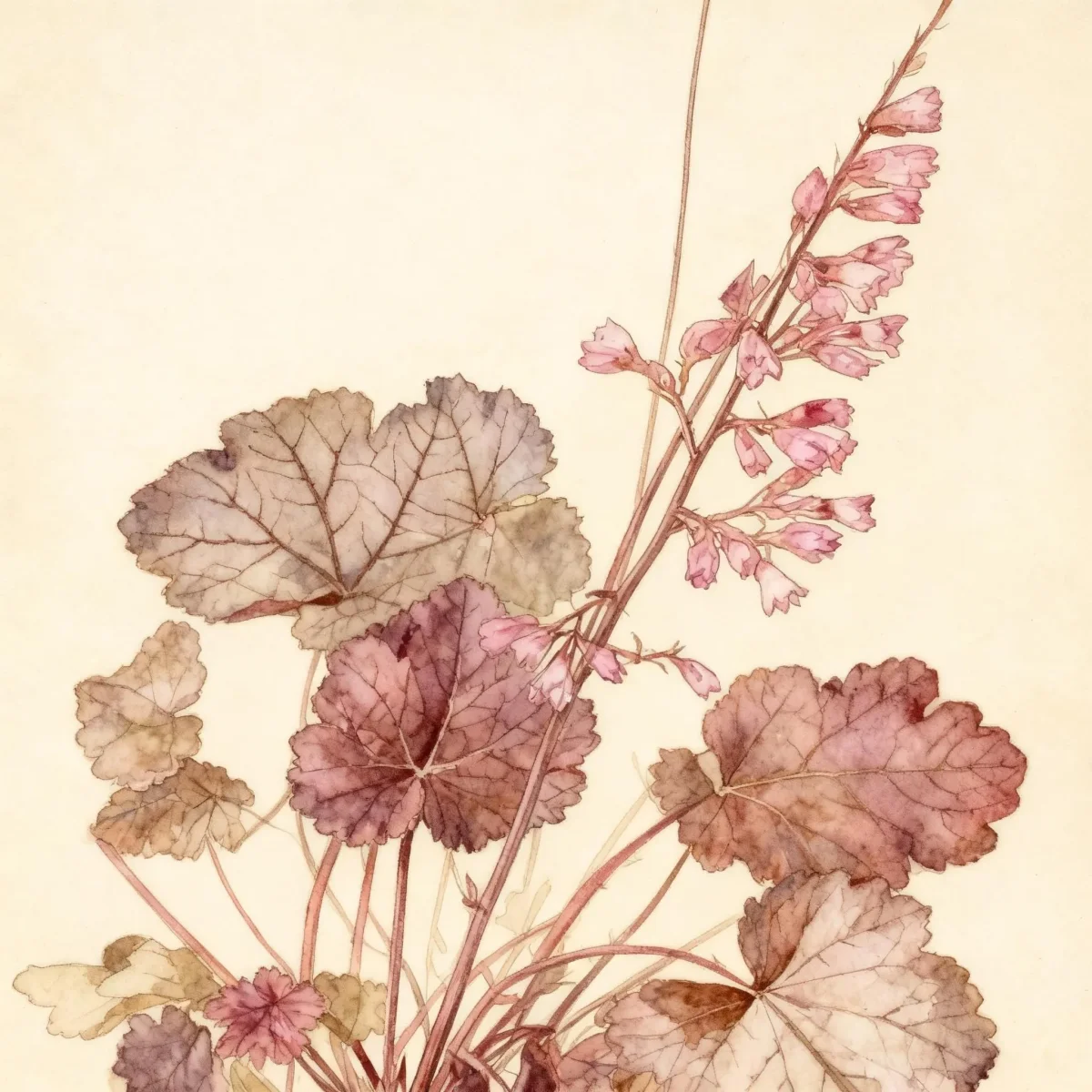
Complete Plant Information
Overview
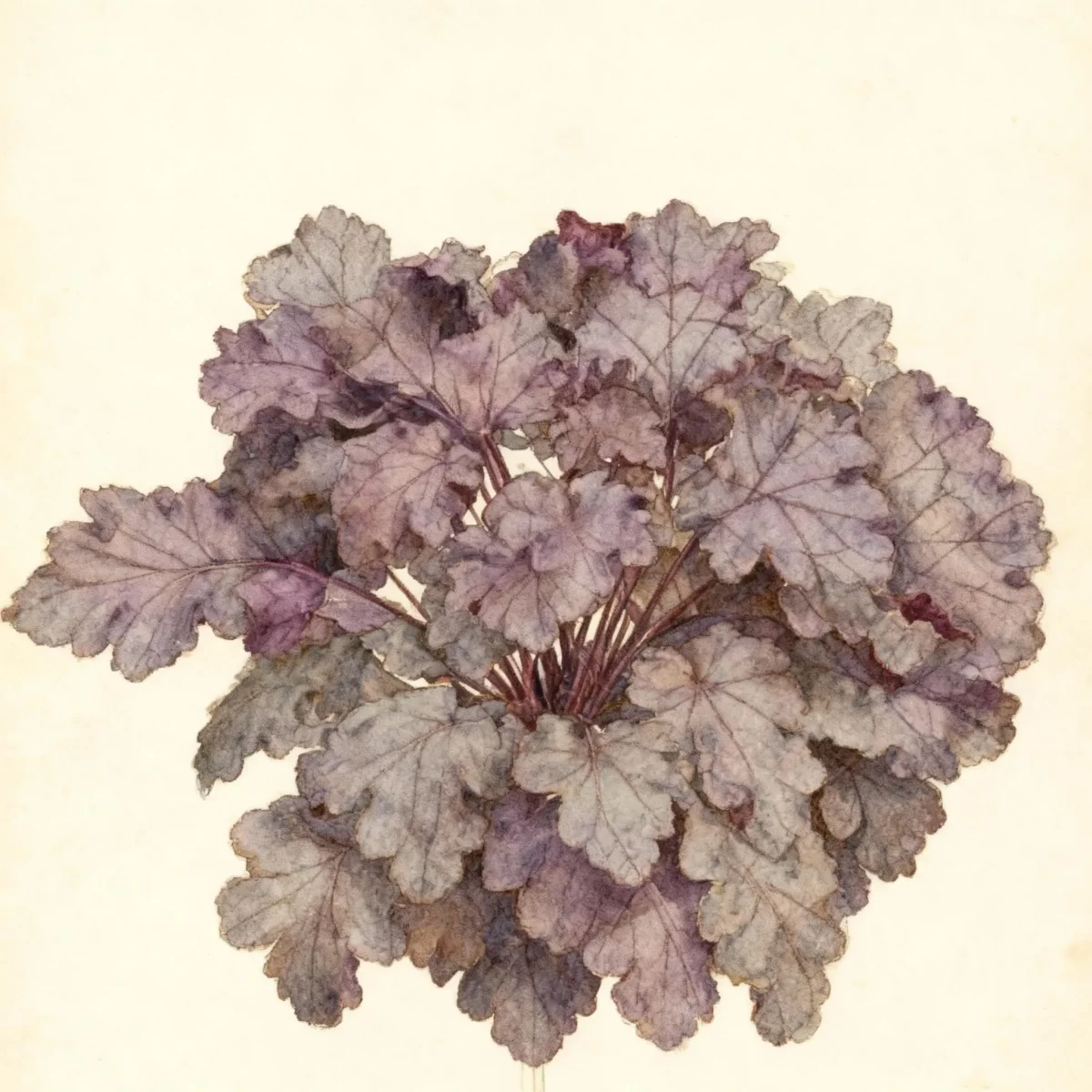
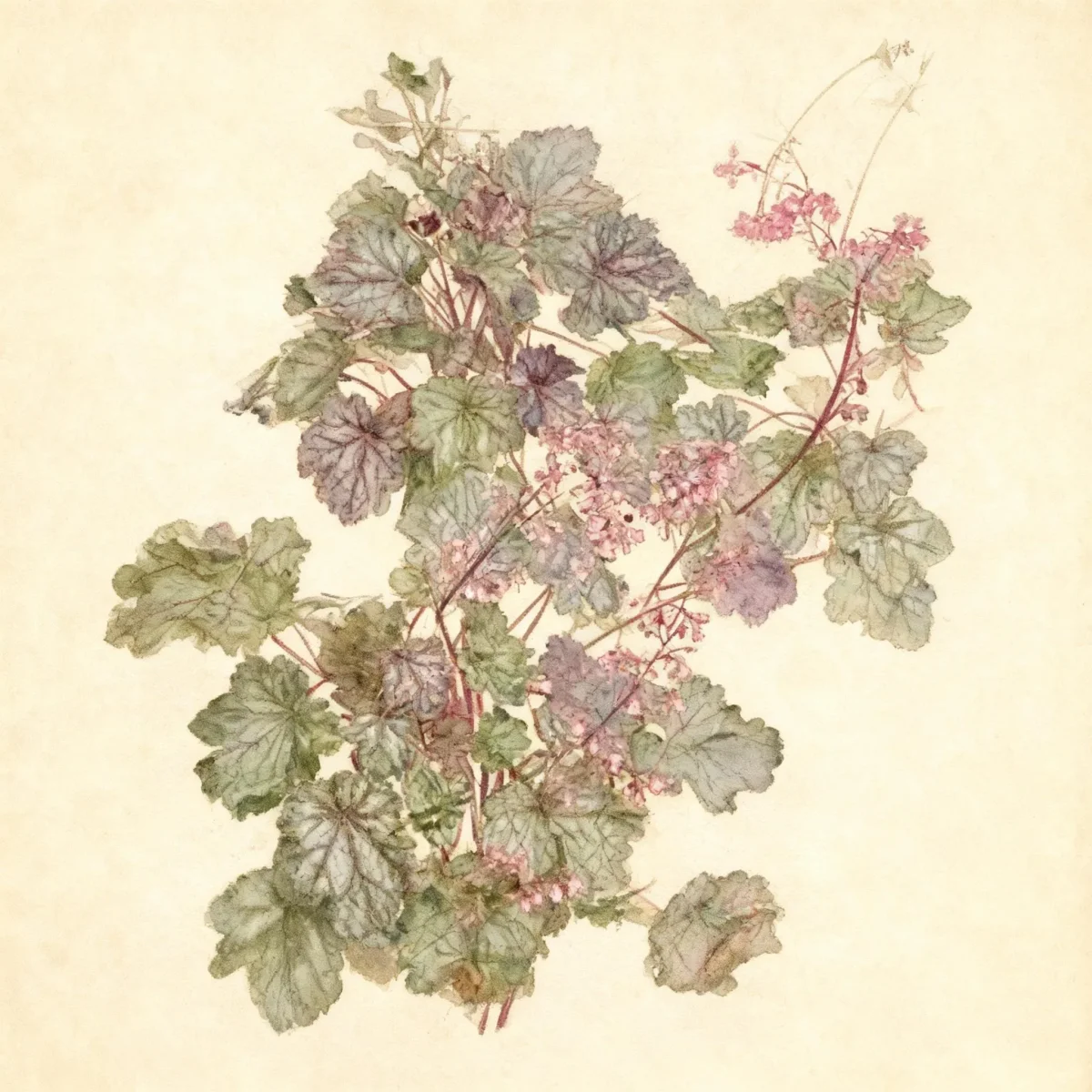
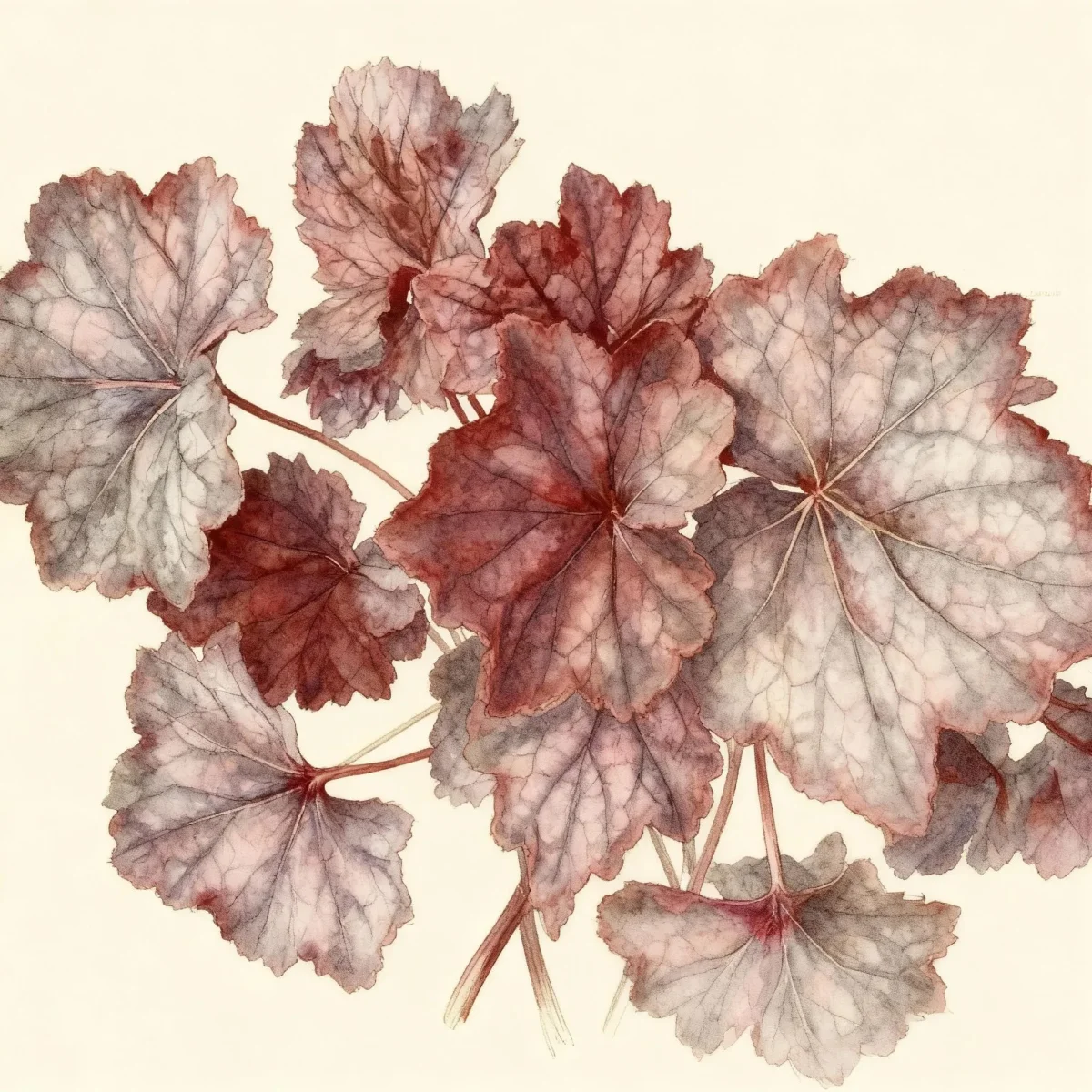
Heuchera ‘Vesuvius’, widely known as Coral bells, is a stunning herbaceous perennial prized for its dynamic leaf coloration throughout the seasons. This specific cultivar, Heuchera ‘Vesuvius’, presents deep purple foliage contrasted beautifully with a light silver overlay, setting it apart in the garden border. It forms a neat, basal mound from which slender stems elevate delicate orange-red flowers in early summer.
This adaptable plant thrives across a broad range of conditions, performing best when protected from harsh afternoon sun in warmer regions. The vigorous breeding in modern Coral bells ensures excellent season-long visual interest, making Heuchera ‘Vesuvius’ a valuable backbone plant for texture and contrasting color when blooms fade.
Gardeners appreciate this selection for its relatively tidy habits and strong reblooming potential compared to many other hybrid heucheras. Providing medium moisture and well-drained soil brings out the best performance in this handsome, clump-forming perennial.
Fast Facts
- Plant Family: Saxifragaceae
- Plant Type: Herbaceous perennial
- Hardiness Zones: USDA Zones 4-9
- Size at Maturity:
- Height: 1.5-2 ft
- Spread: 1-1.5 ft
- Bloom Time: June to July
- Bloom Description: Orange-red
- Sun Exposure: Full sun to part shade
- Water Needs: Medium
- Maintenance Level: Medium
How to Grow
Planting Coral bells is best achieved in spring or fall, ensuring the location offers organically rich, humusy soil that drains exceptionally well. While ‘Vesuvius’ can handle full sun, especially in northern climates, performance is optimal with afternoon shade, particularly where summer heat is intense. Consistent moisture is crucial if planting in brighter light, as drought can lead to scorched foliage and decline.
Maintenance for Heuchera ‘Vesuvius’ is generally low to medium. Remove the spent flower stems promptly to encourage rebloom throughout the summer season. In cold winter climates, the foliage may experience some winter burn or color loss depending on temperature severity; applying a winter compost mulch after the ground freezes helps insulate the roots and prevents frost heaving.
Divide established clumps every three to four years during the spring to maintain vigor and prevent overcrowding. Because Heuchera ‘Vesuvius’ is a hybrid, propagation should be done via division rather than seed to ensure true characteristics are retained.
Landscape Uses
Coral bells excel when massed together or planted in thoughtful groupings to showcase their foliage rather than relying solely on summer flowers. Heuchera ‘Vesuvius’ works beautifully as an established edger along winding paths or neatly defining the front of a mixed border where its deep color provides contrast to lighter green or silver foliage.
Consider pairing this vibrant cultivar with plants that appreciate similar partial shade and moisture conditions, such as Hostas, Astilbes, or various ferns. In rock gardens, the dense, mounding habit of the Coral bells forms an excellent textural base against stone hardscaping. Utilizing Heuchera ‘Vesuvius’ in woodland garden settings connects it with its ancestral habitat while providing reliable color transitions throughout the year.
Standout Features
Flower Qualities
- Showy
Noteworthy Characteristics
Heuchera, commonly called coral bells or alumroot, is a genus consisting of about 55 species of evergreen to semi-evergreen herbaceous perennials which are all native to North America. Leaves of hybrid plants are available in an expanded variety of colors including various shades of green, blue-green, violet, purple, maroon, bronze, silver-black, orange-yellow, yellow, or red, but often with a streaked, mottled or marbled variegation which sometimes includes bold contrasting veins. ‘Vesuvius’ is a clump-forming coral bells hybrid cultivar that features deep purple leaves with a light silver overlay and bright orange-red flowers, reportedly inclined to rebloom more frequently than most other hybrids.
Tolerances
- Frost heaving of roots may occur when winter temperatures fluctuate widely.
Potential Problems
Potential problems for Coral bells include frost heaving if winter temperatures experience wide fluctuations, which can push roots out of the soil. Monitor for common fungal issues like powdery mildew and rust, which often appear in humid or overly dense conditions. Potential insect problems include damage from weevils and foliar nematodes, requiring vigilance in cultural care. Good air circulation and avoiding overhead watering can mitigate most disease risks.
Frequently Asked Questions
What hardiness zones is Coral bells suitable for?
Heuchera ‘Vesuvius’ is generally suited for USDA Hardiness Zones 4 through 9.
How large does Coral bells grow?
Heuchera ‘Vesuvius’ typically reaches a height between 1.5 and 2 feet, spreading to occupy an area between 1 and 1.5 feet wide.
What sun exposure does Coral bells need?
This plant performs best when given full sun to partial shade, though afternoon shade is highly recommended, especially in hotter climates.
When does Coral bells bloom?
The flowering season for Heuchera ‘Vesuvius’ is typically from June through July, producing showy orange-red blooms.
Conclusion
The rich foliage and bright blooms make Heuchera ‘Vesuvius’ an indispensable perennial for adding year-round structure and color contrast to shaded borders and mixed plantings. Ensure your planting site offers rich, well-drained soil to maximize the performance of this superb Coral bells cultivar. Before planting, confirm USDA zone compatibility to enjoy the unique attributes of Heuchera ‘Vesuvius’ across multiple seasons.
Companion Planting Suggestions
When selecting companions for Heuchera ‘Vesuvius’, focus on plants that share similar requirements for medium moisture and part shade, which highlights the foliage contrast. Consider pairing the dark leaves of this Coral bells with softer, contrasting textures like fine-leaved Astilbes or silver-leafed Lamb’s Ears (Stachys byzantina) if sun exposure is minimal. Hostas of light green or chartreuse varieties also make excellent partners, as their broad leaves balance the mounding habit of the Heuchera foliage mound.
Seasonal Care Calendar
Spring is the ideal time for dividing mature clumps of Heuchera ‘Vesuvius’ and applying a light, balanced fertilizer if necessary, though established plants rarely require heavy feeding. During the summer months, focus primarily on consistent watering, especially during dry spells, and deadhead (remove spent flower stalks) to encourage the plant’s known tendency to rebloom. In late fall, after the first hard freeze in cold regions, top dress the root zone with a layer of compost mulch to protect the roots through winter dormancy.