Lamb's ear (Stachys byzantina 'Cotton Boll')
Stachys byzantina 'Cotton Boll' or Lamb's ear features velvety, silver-gray foliage, ideal for ground cover, low maintenance zones 4-8.
Scroll down to discover growing tips, care requirements, companion plants, and more
Complete Plant Information
Overview
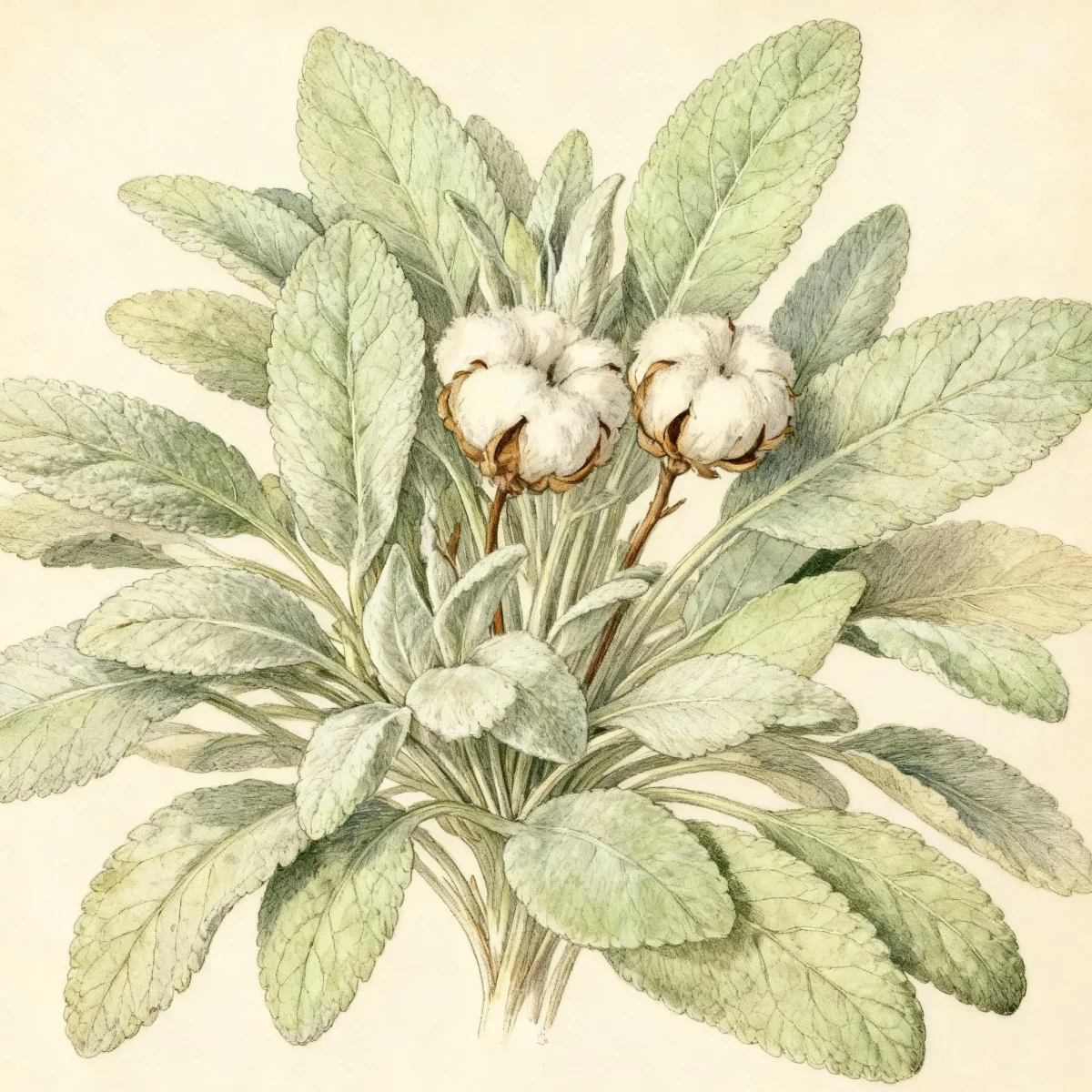
Stachys byzantina ‘Cotton Boll’, commonly known as Lamb’s ear, is treasured primarily for its striking, highly textural foliage. The thick, soft, velvety, silver-gray leaves form a dense, low-spreading mat that provides exceptional contrast against greener garden plants. This cultivar maintains its visual appeal throughout the season, though the leaves are evergreen only in warmer climates.
As an herbaceous perennial, Lamb’s ear offers a low-maintenance solution for gardeners looking to fill spaces quickly. Its growth habit is characterized by creeping stems that root as they spread, making it an excellent choice for informal ground cover or edging. While it does produce small flowers, most gardeners choose to remove the flowering stems to emphasize the desirable mat of foliage.
The durability of Stachys byzantina ‘Cotton Boll’ is another major benefit, as it exhibits excellent drought tolerance once established and handles various adverse conditions well. Incorporating this plant ensures textural interest and silvery color across borders, rock gardens, or pathways with minimal effort required from the caretaker.
Fast Facts
- Plant Family: Lamiaceae
- Plant Type: Herbaceous perennial
- Hardiness Zones: USDA Zones 4-8
- Size at Maturity:
- Height: 0.5-1.5 ft
- Spread: 0.5-1.5 ft
- Bloom Time: May to July
- Bloom Description: White
- Sun Exposure: Full sun
- Water Needs: Dry to medium
- Maintenance Level: Low
How to Grow
Stachys byzantina ‘Cotton Boll’ thrives when planted in average, well-drained soils. Ideal conditions include full sun exposure, which helps the woolly leaves dry quickly after rain or dew. If planting in regions experiencing hot summers, providing a bit of light afternoon shade can prevent scorching, although too much shade will hinder leaf drying and potentially introduce fungal issues.
When establishing ground cover sections of Lamb’s ear, space starter plants approximately 12 to 18 inches apart to allow room for natural spread via its creeping stems. Watering requirements are minimal; the plant is highly drought tolerant. Gardeners should strictly avoid overwatering, especially in humid environments, as saturated foliage is highly susceptible to rot and leaf spot diseases.
Maintenance is generally low for Stachys byzantina ‘Cotton Boll’. If mid-summer foliage begins to look ragged or declines due to moisture issues, simply prune away the damaged leaves. Many enthusiasts prefer removing the flowering stems entirely before they open fully to maintain a dense, tidy foliage mat, enhancing the ground cover effect of the silver leaves. Divisions can be performed as needed when the plant becomes too crowded.
Landscape Uses
The primary strength of Stachys byzantina ‘Cotton Boll’ lies in its functional aesthetic as a ground cover or border plant. Its dense, rapidly spreading mat effectively suppresses weeds while providing year-round color (in warmer zones) and compelling texture. Use this Lamb’s ear cultivar to effectively edge pathways or soften the hard lines of stone in rock gardens.
Because of its silver, fuzzy texture, this plant serves as an excellent textural foil when paired with deep green, fine-leaved plants, or bold hostas. It creates visual pockets of light in shaded border areas. While it can naturalize, being mindful of its mild aggressiveness in rich soils is key, ensuring it doesn’t overtake more delicate neighbors.
Standout Features
Noteworthy Characteristics
Stachys byzantina, known as lamb’s ears, is grown primarily for its thick, soft, velvety, silver-gray leaves which typically form a rapidly spreading mat approximately 4-6” off the ground. Leaves are evergreen in warm climates, but will depreciate considerably in harsh winters. Erect, small-leaved flowering stems with terminal spikes of insignificant, tiny, purplish-pink flowers appear in summer rising above the foliage to 10-15” tall. Many gardeners remove the flowering stems to enhance the ground cover effect. Notwithstanding its unusual cottony flowers, ‘Cotton Boll’ is primarily grown by many gardeners for its foliage. Dense rosettes of tongue-shaped leaves (to 4” long) are a woolly gray-green and will form a foliage mat of 4-6” tall. Leaf shape and texture resemble a lamb’s ear, hence the sometimes used common name, and the signature of this cultivar is the unusual white flowers that resemble cottony balls.
Tolerances
- Rabbit
- Deer
- Drought
- Dry Soil
- Black Walnut
- Air Pollution
Potential Problems
The main concern when growing Lamb’s ear, particularly in humid summers, is moisture retention, which leads to disease. Tends to rot and develop leaf diseases in humid summer climates. Well-drained soils are essential in order to combat potential rot problems which often occur in humid St. Louis summers. Even with well-drained soils, some summer die-out may occur where high humidity and/or moisture on foliage is present. To manage this, ensure planting sites receive adequate air circulation and avoid overhead watering that leaves foliage wet overnight.
Another practical consideration is its spreading habit; this plant can spread aggressively, especially in overly rich soils. If the mat becomes too thick, divide the clumps as necessary to maintain vigor and control its boundaries within the garden design. Fortunately, ‘Cotton Boll’ reportedly performs better in humid climates than some other S. Byzantina cultivars.
Frequently Asked Questions
What hardiness zones is Lamb’s ear suitable for?
Stachys byzantina ‘Cotton Boll’ is reliably hardy in USDA Zones 4 through 8.
How large does Stachys byzantina ‘Cotton Boll’ grow?
This plant typically reaches a mature height between 0.5 and 1.5 feet tall, spreading between 0.5 and 1.5 feet wide.
What sun exposure does Lamb’s ear need?
For the best foliage performance and to prevent disease, Stachys byzantina ‘Cotton Boll’ requires full sun.
When does Lamb’s ear bloom?
The plant produces its flowers, often removed by gardeners, from May to July; the blooms are described as small and white.
Conclusion
Stachys byzantina ‘Cotton Boll’ is an indispensable plant for adding soft texture and silvery color to borders and ground cover applications. Its low maintenance requirements and high tolerance for drought make it a reliable performer, provided excellent drainage is ensured, especially in humid regions. Check your local USDA zone compatibility before planting your selection of this distinctive Lamb’s ear this season.
Companion Planting
Selecting companions for Stachys byzantina ‘Cotton Boll’ should focus on plants that appreciate similar growing conditions—full sun and dry to medium moisture levels. Plants with dark green or deep purple foliage create the most striking contrast against the silver leaves of the Lamb’s ear. Consider pairing it with dark-leaved Sedums, Nepeta (Catmint), or hardy, upright ornamental grasses that can tolerate drier soil once established.
Good companion planting also involves using plants with different textures. While the Lamb’s ear is soft and mounding, pairing it with plants that have fine, linear leaves, such as certain varieties of Ornamental Grasses or fine-textured Artemisia, enhances the overall garden design. Avoid pairing it directly with very lush, moisture-loving perennials, as the differing water needs could lead to rot issues for the Stachys.
Propagation Tips
The easiest and most common method for reproducing Stachys byzantina ‘Cotton Boll’ is through division or by utilizing its natural creeping habit. The plant spreads readily by subterranean or creeping stems that root wherever they touch the soil surface. To propagate, gently sever rooted sections away from the main crown during the spring or early fall.
For a faster increase in numbers, established clumps of Lamb’s ear can be dug up in early spring before active summer growth begins. Carefully use a sharp spade or knife to divide the root ball into smaller sections, ensuring each new piece has established roots and several healthy leaf rosettes. Plant these divisions immediately into prepared, well-drained soil.