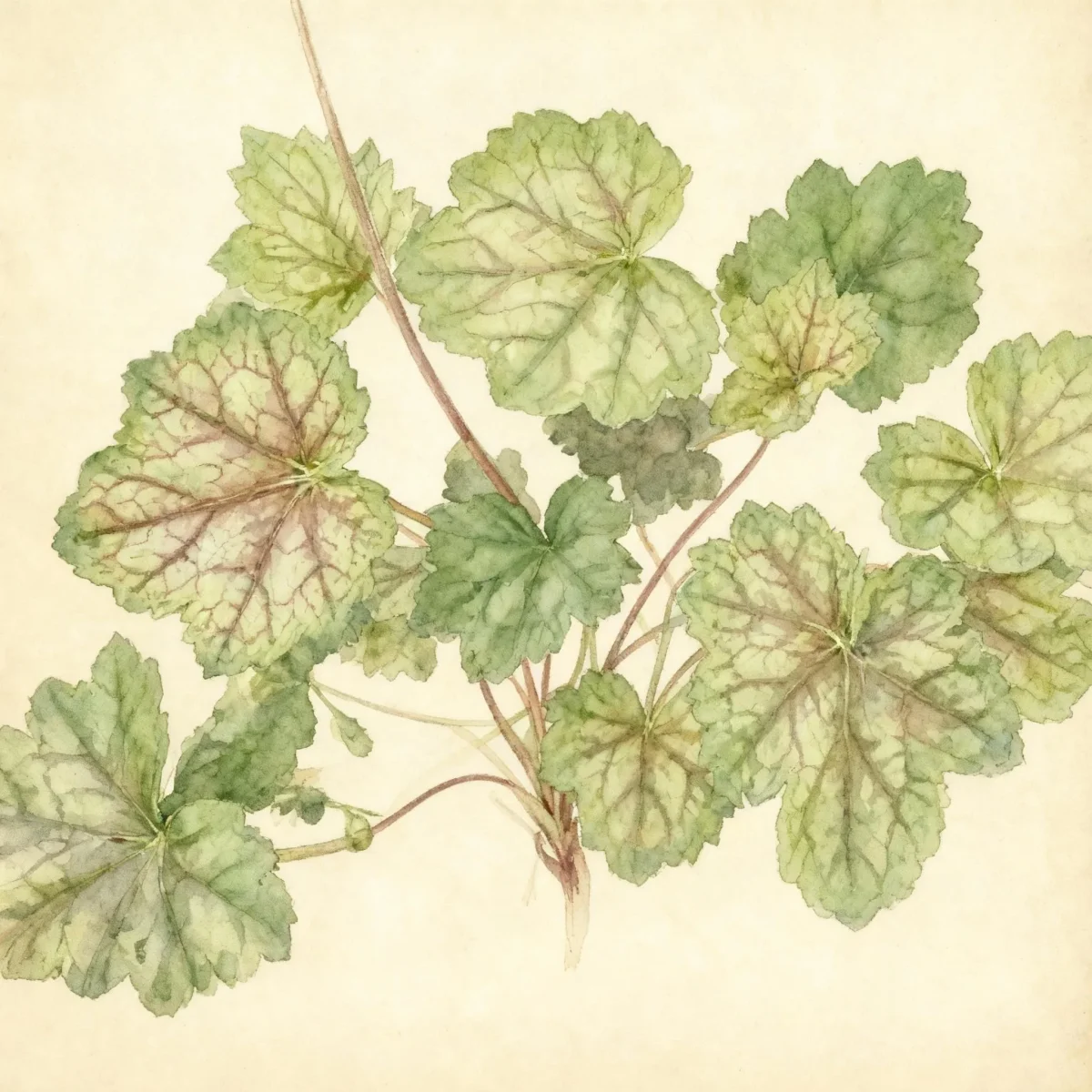
Coral bells (Heuchera 'Black Beauty')
Discover Heuchera 'Black Beauty', the stunning Coral Bells, featuring shiny deep maroon foliage perfect for shade gardens.
Scroll down to discover growing tips, care requirements, companion plants, and more
Complete Plant Information
Overview
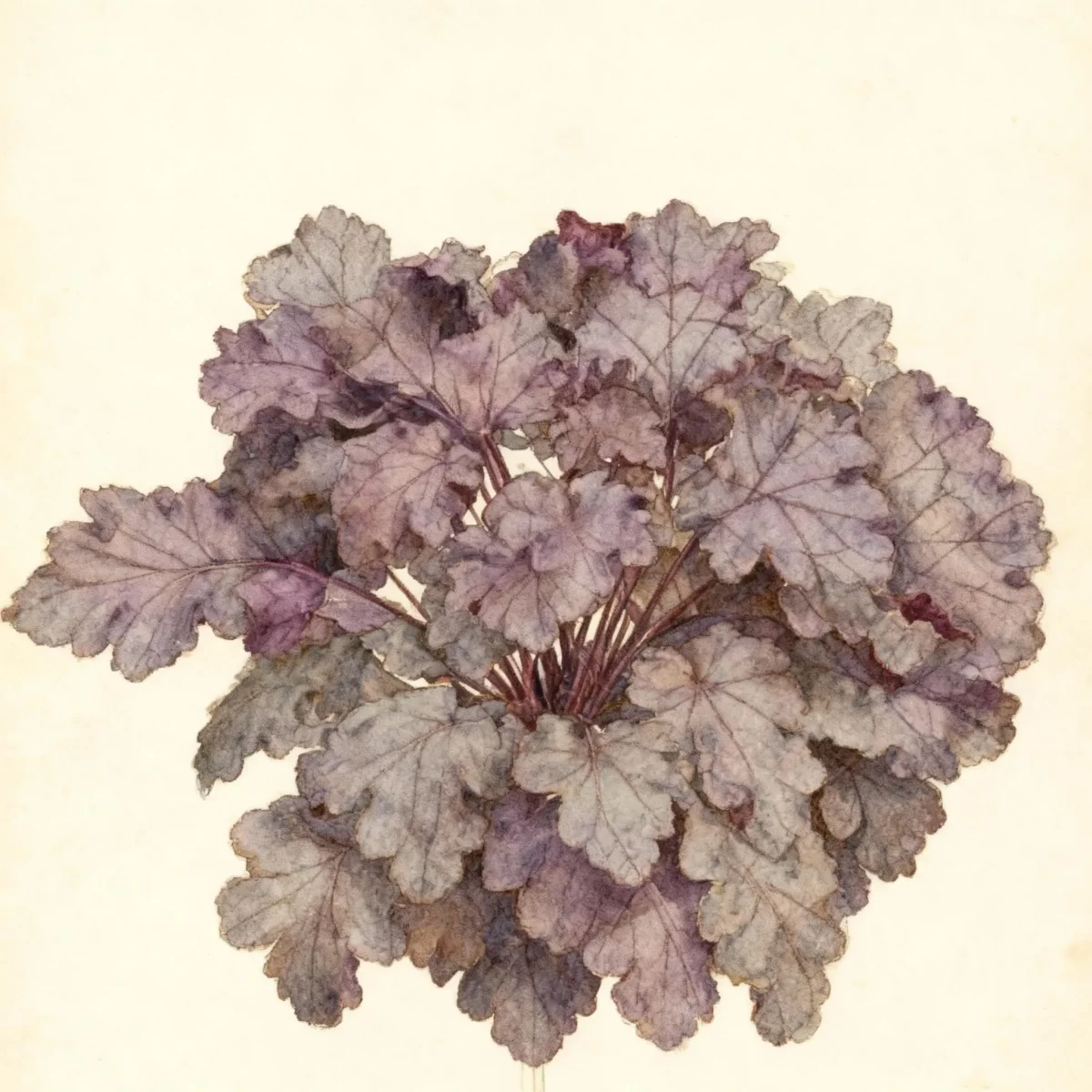
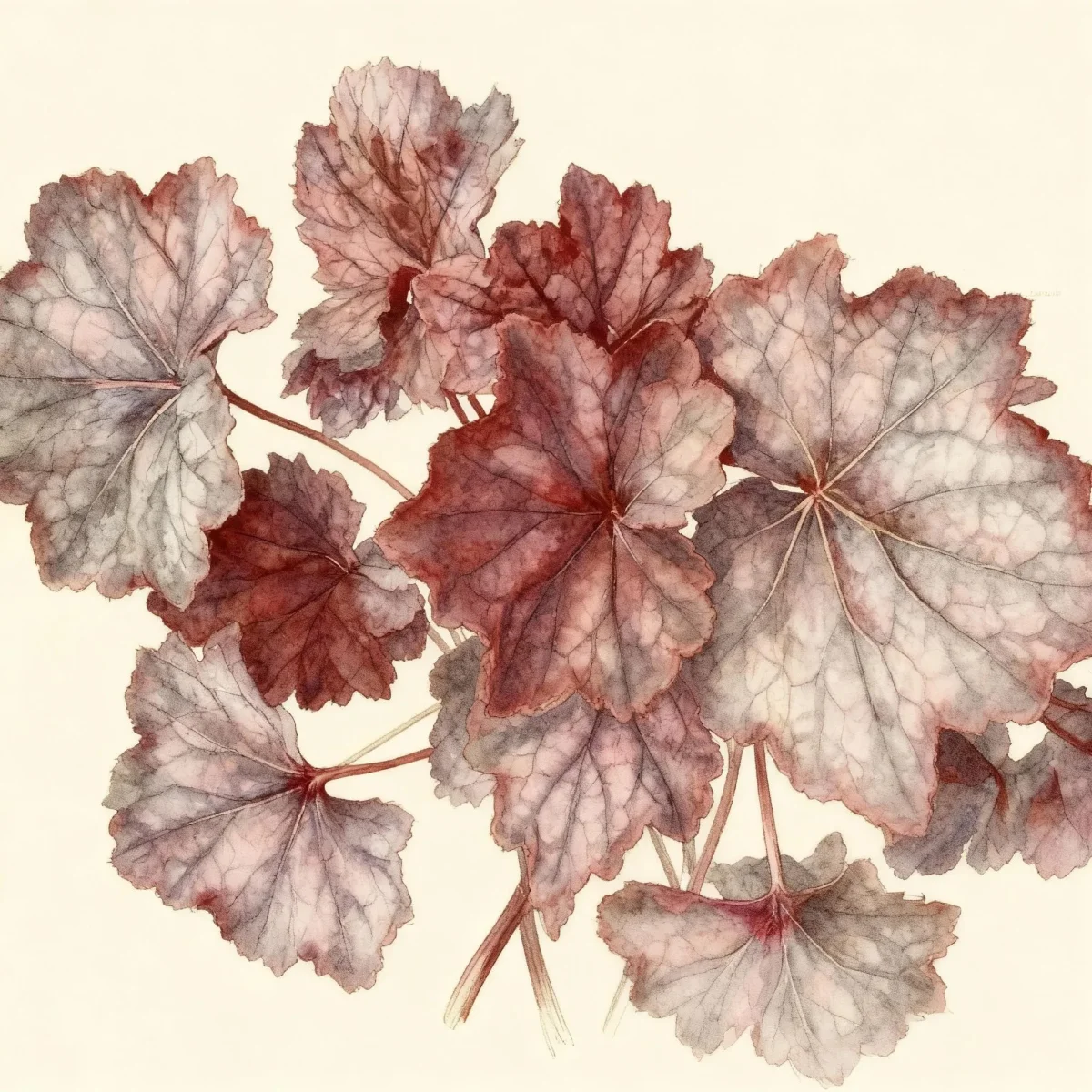
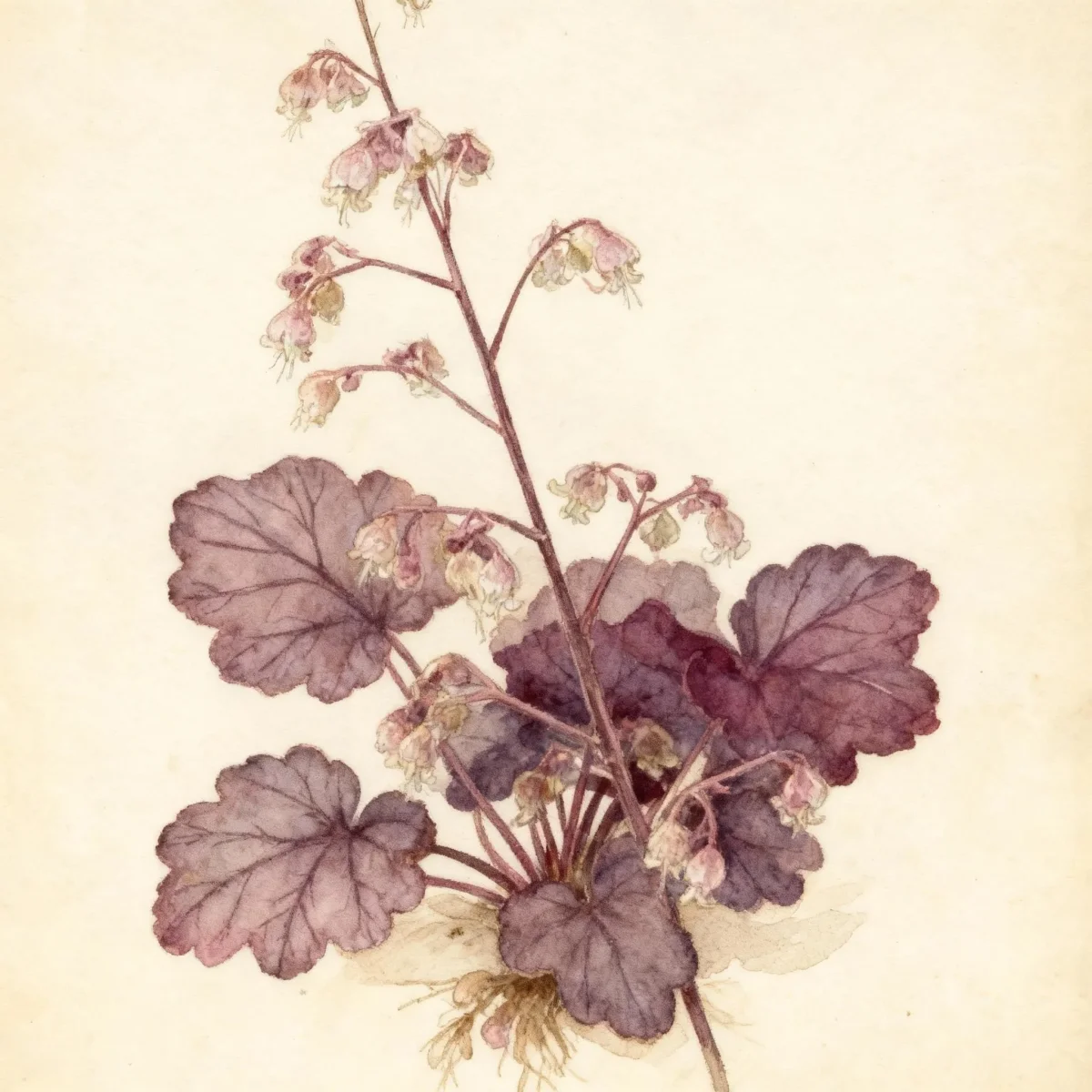
Heuchera ‘Black Beauty’, widely known as Coral bells, offers exceptional foliage color, making it a staple for gardeners seeking year-round interest. This cultivar is prized for its shiny, deep maroon leaves which provide rich contrast against brighter greens in the garden scheme. As an evergreen to semi-evergreen herbaceous perennial, it maintains its base color even through mild winters.
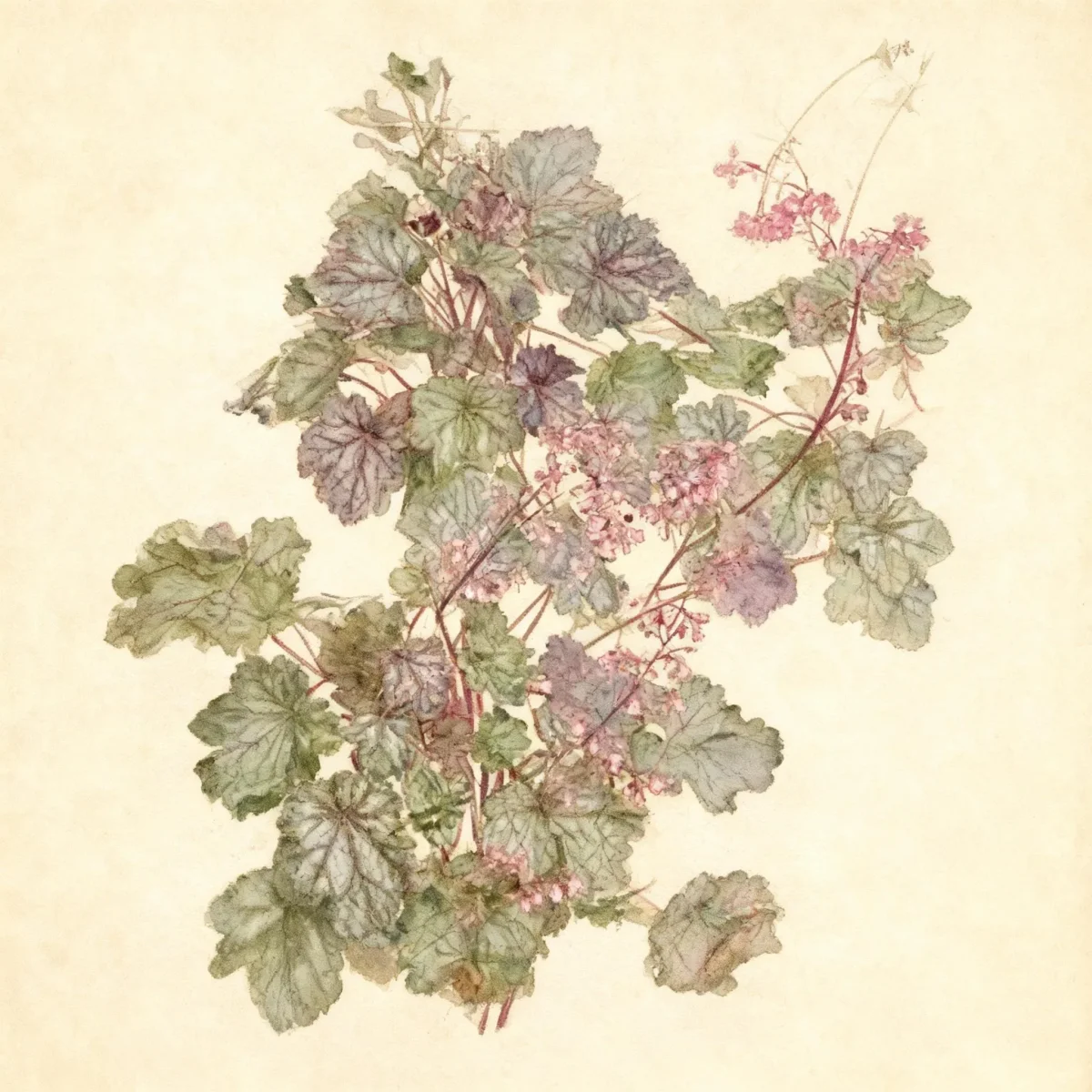
The structure of Heuchera ‘Black Beauty’ forms a neat basal mound of deeply lobed leaves, typically reaching heights up to 2 feet with a similar spread. While the delicate white flowers borne on airy stems in early summer are a pleasant bonus, the primary ornamental value lies squarely in the dramatic, near-black foliage that defines this cultivar.
This variety of Coral bells thrives when provided with consistent moisture and well-drained conditions. Understanding the balance of sun exposure, often dictated by its unknown parentage, is key to maximizing the dark pigment development and minimizing leaf scorch in hotter climates.
Fast Facts
- Plant Family: Saxifragaceae
- Plant Type: Herbaceous perennial
-
- Native Range:
- Hardiness Zones: USDA Zones 4-9
- Size at Maturity:
- Height: 1.5-2 ft
- Spread: 1-1.5 ft
- Bloom Time: June to July
- Bloom Description: White
- Sun Exposure: Full sun to part shade
- Water Needs: Medium
- Maintenance Level: Medium
How to Grow
Heuchera ‘Black Beauty’ performs best when planted in organically rich, humusy soils that retain medium moisture but drain exceptionally well. While the preference is for part shade—especially protection from harsh afternoon sun in southern locations—some hybrids tolerate full sun, provided moisture is rigorously consistent to prevent foliage decline. Late spring or early fall are ideal planting times.
Watering requirements are medium; allow the soil to approach dryness between waterings, but do not let the root zone dry out completely, especially when situated in sunnier spots. Fertilization is rarely required if the initial soil preparation was rich in organic matter. Pruning involves the simple removal of faded flower stems to potentially encourage a light repeat bloom.
In colder zones, applying a winter compost mulch after the ground freezes helps insulate the roots and prevents damaging frost heaving, which can lift the shallow roots of Coral bells. Foliage is semi-evergreen, with winter color intensity depending on the severity of the cold. Plan to divide dense clumps every three to four years during the spring to maintain vigor.
Landscape Uses
Heuchera ‘Black Beauty’ excels as an accent plant due to its intensely dark foliage. Use it effectively as an edger along walkways or paths where the dark mounds can create a sharp visual line against lighter stone or gravel. Its manageable size also makes it superb for filling spaces in rock gardens or providing deep color accents within open woodland garden designs.
When mass planting or grouping, place Heuchera ‘Black Beauty’ near plants with lime green, silver, or bright yellow foliage to maximize contrast. Consider pairing it with hostas, ferns, or low-growing groundcovers that share similar shade and moisture preferences throughout the growing season. This cultivar brings essential color structure to shaded borders.
Standout Features
Flower Qualities
- Showy
Noteworthy Characteristics
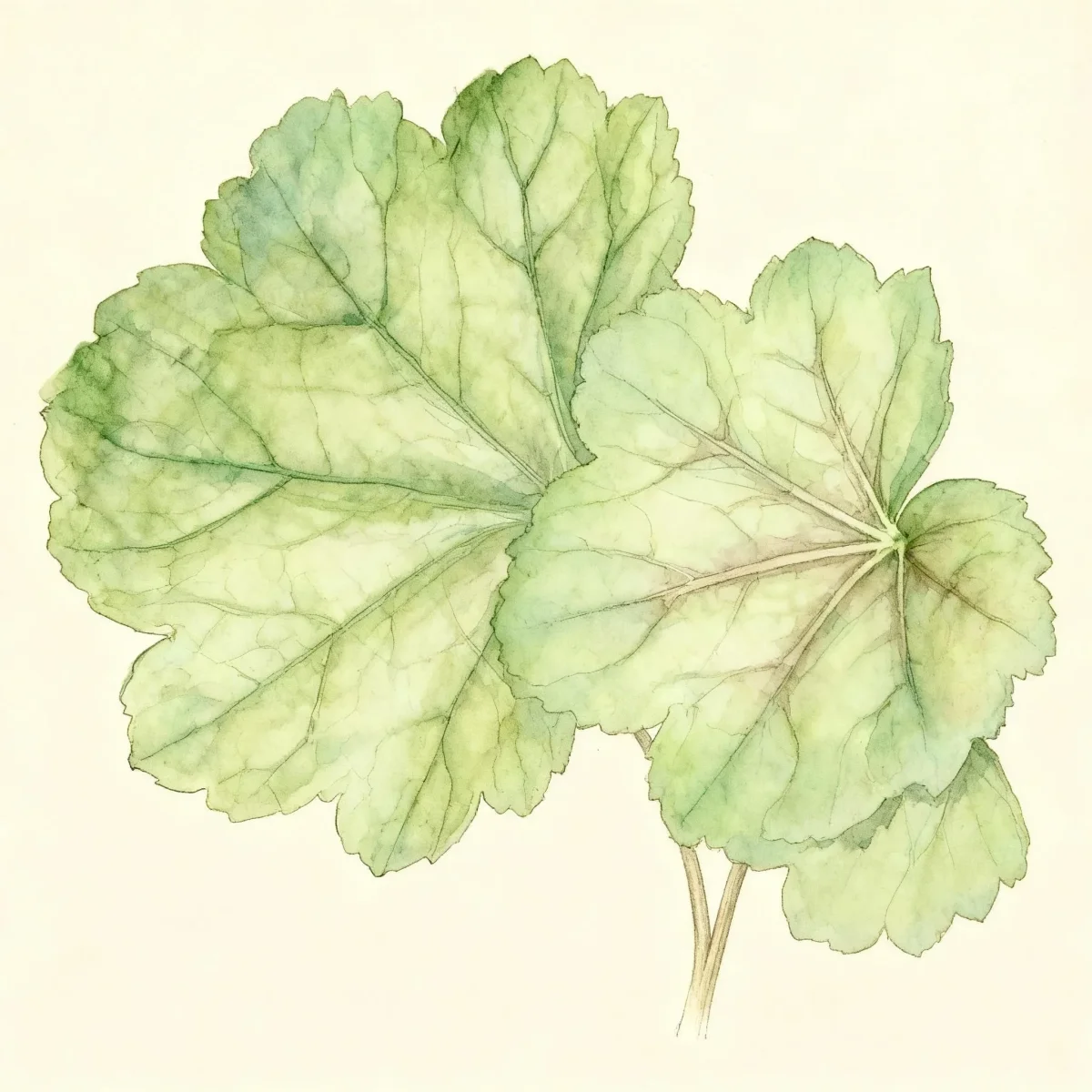
The genus Heuchera, commonly known as coral bells or alumroot, comprises about 55 evergreen to semi-evergreen perennial species native across North America. Leaves of hybrid plants are available in an expanded variety of colors including various shades of green, blue-green, violet, purple, maroon, bronze, silver-black, orange-yellow, yellow, or red. ‘Black Beauty’ is specifically noted for its clump-forming habit, featuring shiny, deep maroon leaves and airy panicles of whitish flowers that rise above the 10-inch tall basal mound.
Tolerances
No data provided to list.
Potential Problems
Root damage from frost heaving is a risk, particularly when winter temperatures fluctuate rapidly; applying a compost mulch after the ground freezes mitigates this concern. Gardeners should watch for common landscape diseases affecting Heuchera, including powdery mildew and rust, both treatable with good air circulation and appropriate fungicides if necessary. Insect pests, such as weevils and foliar nematodes, can also bother Heuchera ‘Black Beauty’, requiring diligent inspection and targeted treatment.
Frequently Asked Questions
What hardiness zones is Coral bells suitable for?
Heuchera ‘Black Beauty’ is reliably hardy in USDA Zones 4 through 9.
How large does Coral bells grow?
This cultivar typically reaches a mature height between 1.5 and 2 feet tall, spreading to form a mound 1 to 1.5 feet wide.
What sun exposure does Heuchera ‘Black Beauty’ need?
Optimal conditions for Heuchera ‘Black Beauty’ range from full sun to part shade, though afternoon shade is highly recommended in warmer climates to protect the foliage.
When does Coral bells bloom?
This variety of Coral bells produces its inconspicuous white flowers primarily from June to July.
Conclusion
The deep, nearly black tones of Heuchera ‘Black Beauty’ provide outstanding textural and color contrast essential for sophisticated shaded garden designs. This reliable Coral bells cultivar offers low-to-medium maintenance with the key requirement being consistent, well-drained moisture retention. Evaluate your site conditions, especially afternoon sun intensity, before planting this exceptional perennial.
Companion Planting
When selecting companions for Heuchera ‘Black Beauty’, focus on textures and colors that amplify its dark foliage. Plants that thrive in similar part-shade conditions with medium moisture needs are ideal partners. Consider pairing it with chartreuse-leaved hostas, silver-leafed Lamb’s Ears (Stachys byzantina), or bright pink astilbes to create dynamic visual tension in the border.
Grouping this Coral bells cultivar with shade-loving woodland plants immediately creates a layered, rich tapestry. Think about ferns for their delicate fronds or Japanese forest grass (Hakonechloa macra) for fluid, golden movement that beautifully offsets the static mound of the Heuchera. Proper spacing ensures good air circulation, which benefits the foliage health of all surrounding shade plants.
Propagation Tips
The primary propagation method recommended for hybrid Coral bells like Heuchera ‘Black Beauty’ is garden division. This process should be performed in the spring once the plant has begun active growth. Carefully dig up the established clump and gently separate it into smaller sections, ensuring each division has a healthy set of roots and several crown buds.
After dividing, immediately replant the sections into the prepared soil mixture, ensuring they are set at the same depth they were previously growing. Keep the newly divided plants consistently moist for several weeks to help them re-establish quickly. While species plants can be grown from seed, dividing healthy clumps is the only way to guarantee true-to-type replication of the ‘Black Beauty’ characteristics.