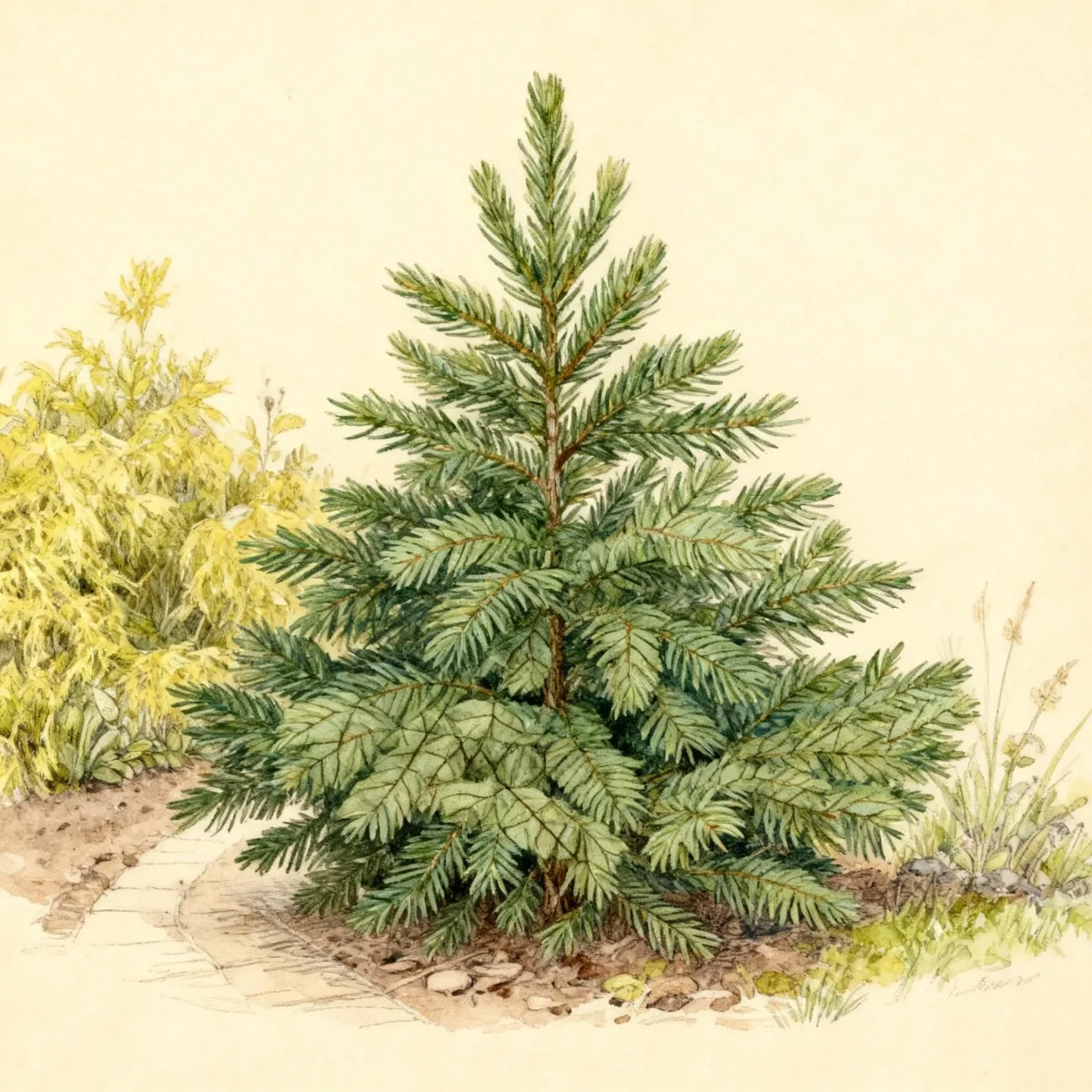
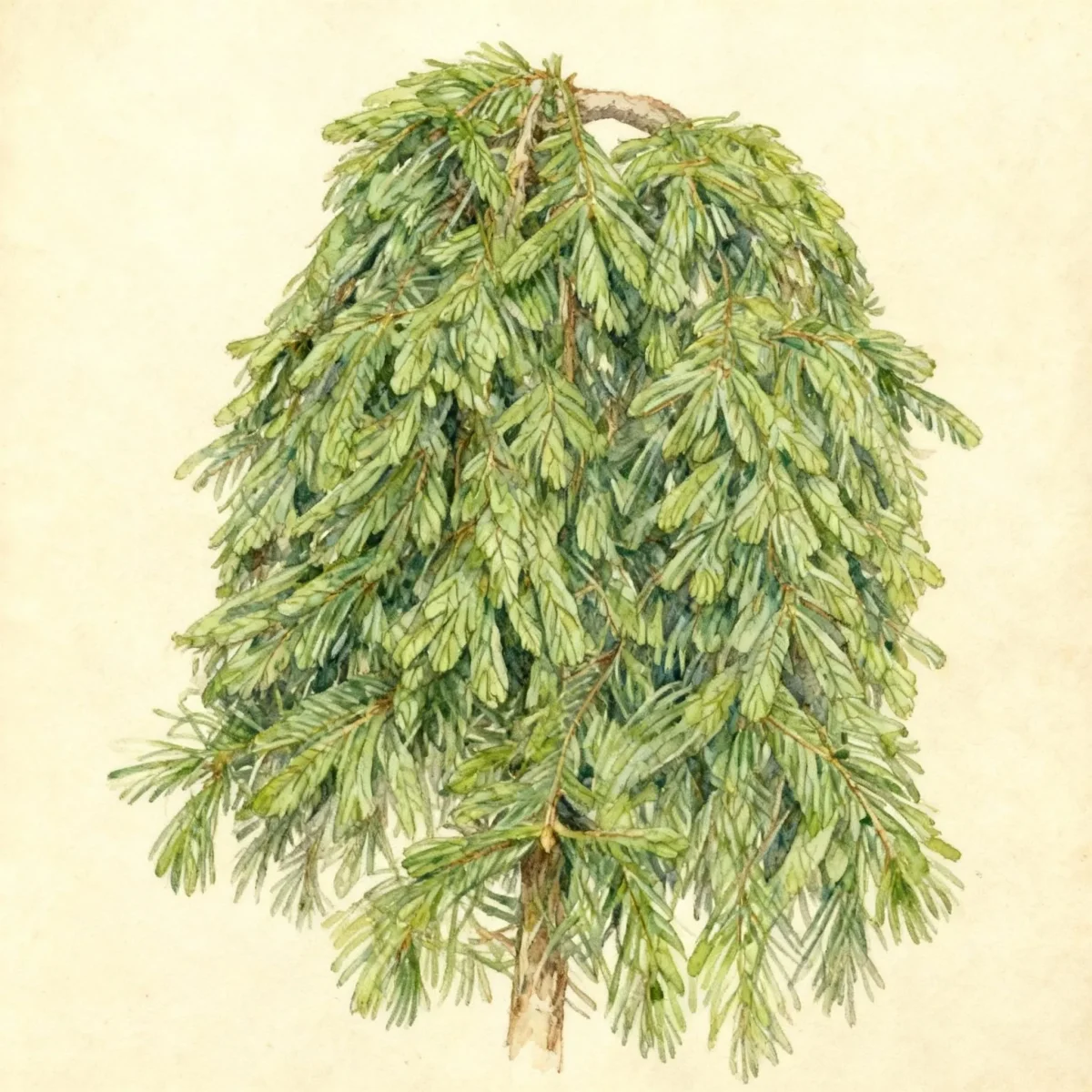
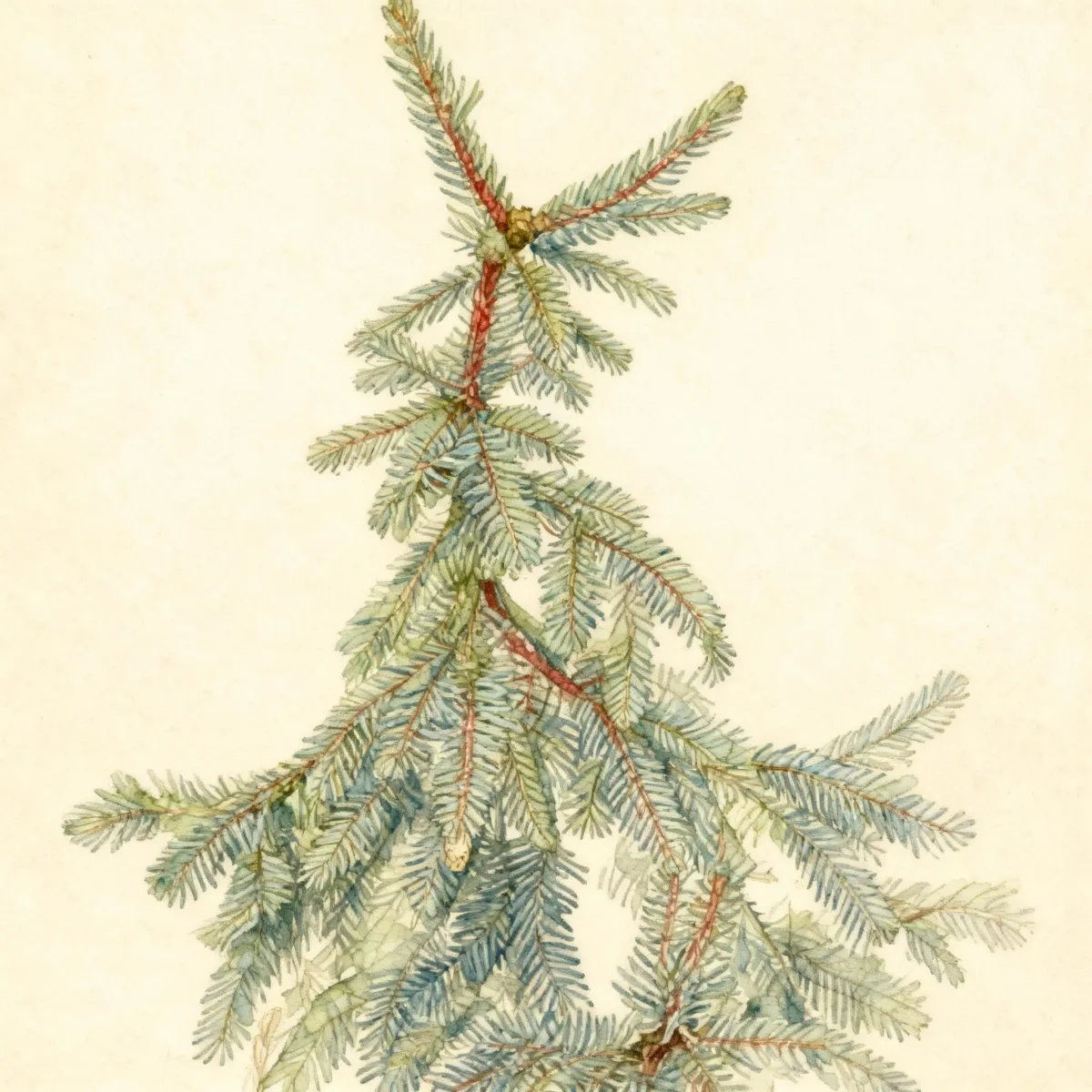
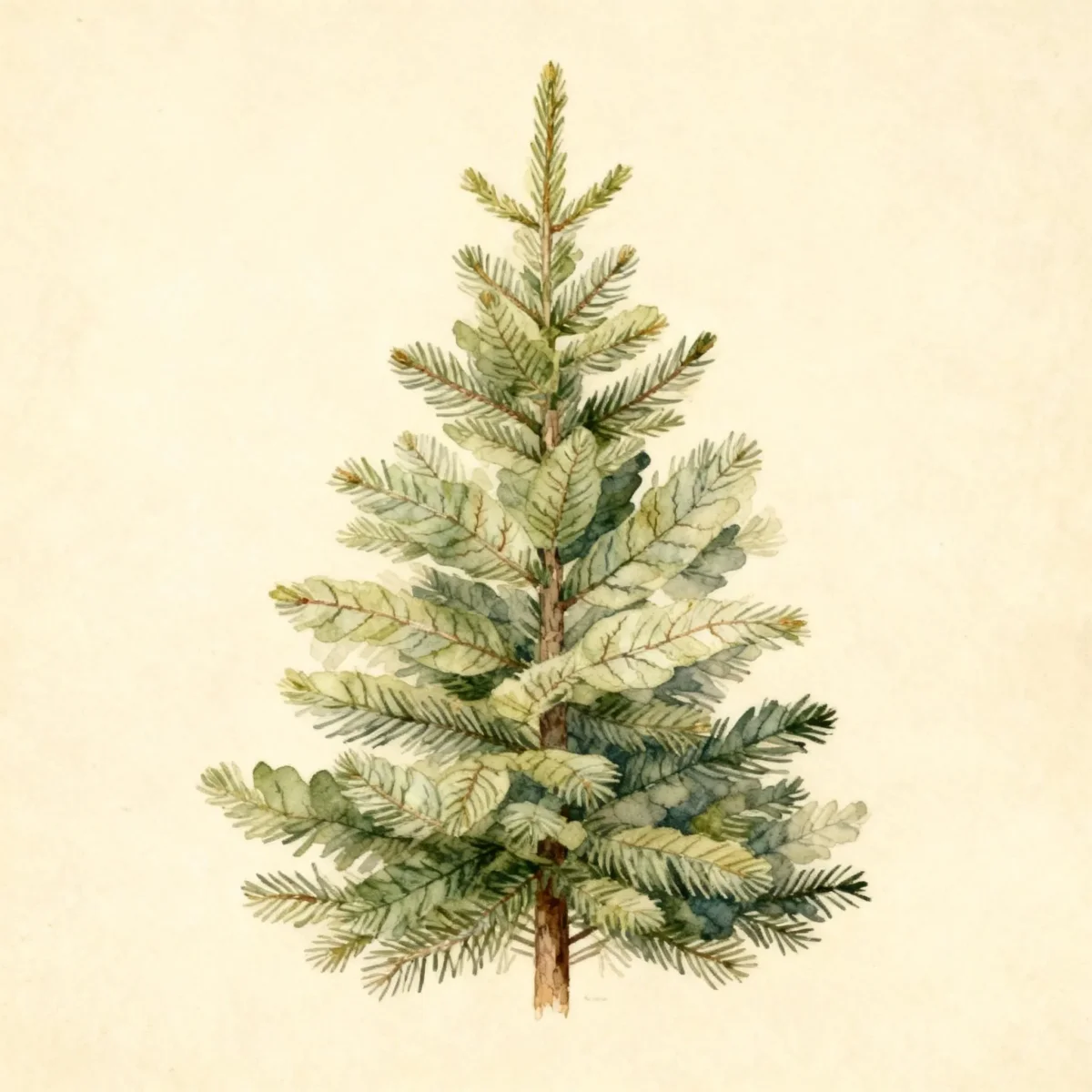
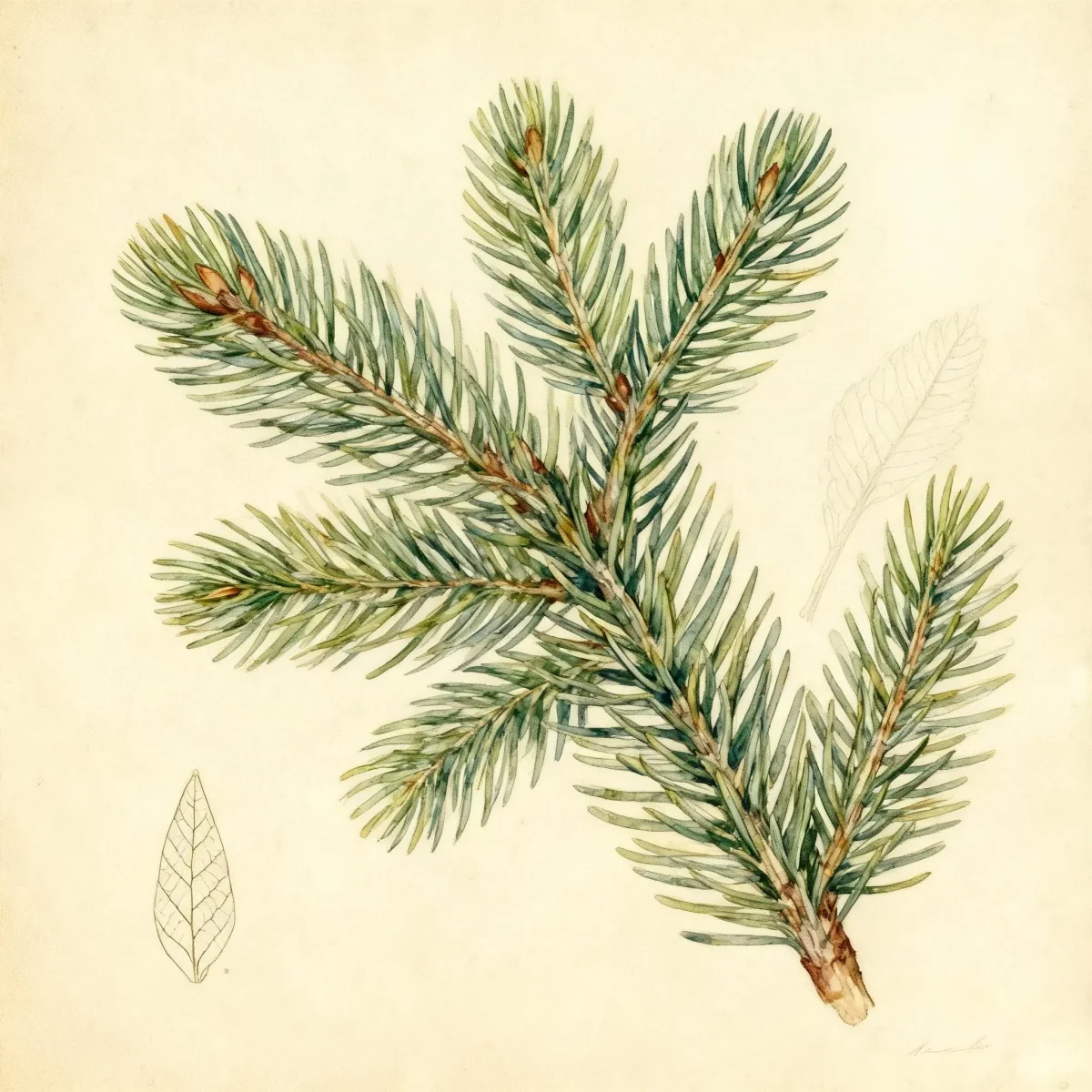
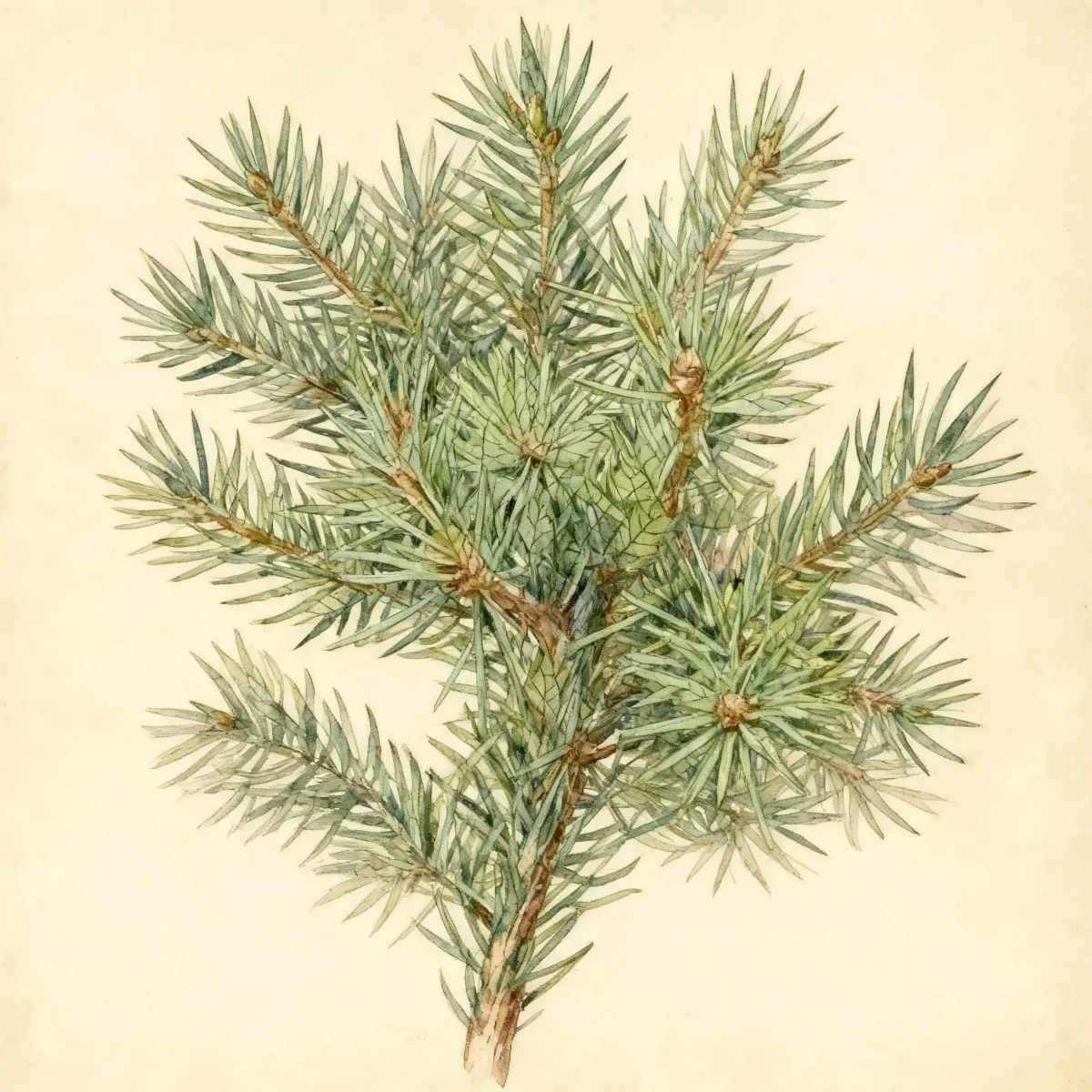
Dwarf Norway spruce (Picea abies 'Humphrey's Gem')
Picea abies 'Humphrey's Gem' is a slow-growing Dwarf Norway spruce perfect for small gardens and rockeries.
Scroll down to discover growing tips, care requirements, companion plants, and more
Complete Plant Information
Overview
Picea abies ‘Humphrey’s Gem’, commonly known as Dwarf Norway spruce, offers the classic texture and deep green color of its larger relatives in a miniature, manageable form. This cultivar is highly valued for its slow growth rate and dense, flattened globular habit, making it an excellent choice where space is at a premium. Gardeners seeking year-round structure will find the Dwarf Norway spruce invaluable for detailed landscape design.
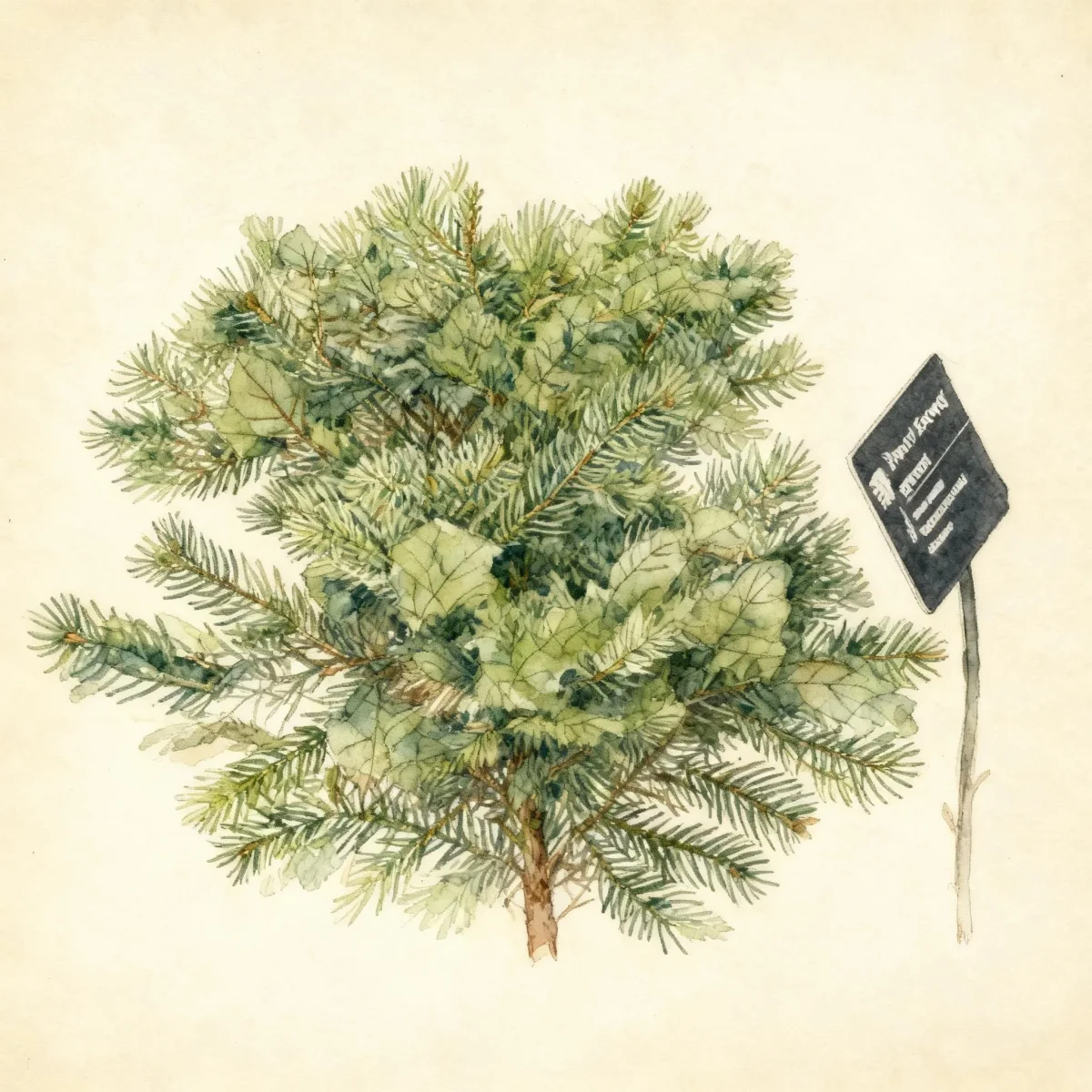
The appeal of this specific cultivar lies in its ability to provide strong architectural interest without overwhelming the planting area. Over the first decade, Picea abies ‘Humphrey’s Gem’ typically develops into a compact mound, rarely exceeding two feet in height. This makes it suitable for focal points in smaller beds or year-round interest containers.
As a needled evergreen, the Dwarf Norway spruce provides excellent texture contrast against deciduous plants and perennials. Its low maintenance requirement, coupled with its hardiness across a wide zone range, ensures that this variety remains a reliable and rewarding addition to the rock garden or foundation planting.
Fast Facts
- Plant Family: Pinaceae
- Plant Type: Needled evergreen
- Hardiness Zones: USDA Zones 3-7
- Size at Maturity:
- Height: 1-2 ft
- Spread: 1.5-2.5 ft
- Bloom Time: Non-flowering
- Bloom Description: Non-flowering
- Sun Exposure: Full sun
- Water Needs: Medium
- Maintenance Level: Low
How to Grow
Planting the Dwarf Norway spruce is best performed in spring or fall to allow the root system time to establish before seasonal extremes. Ensure placement is in full sun, which is crucial for maintaining dense foliage and preventing legginess. This plant thrives in average, acidic, evenly moist, and well-drained soils. It performs particularly well in rich, sandy soil mixes.
Watering should be consistent, targeting a medium moisture level, especially during the first few growing seasons. While established specimens show some tolerance for dryish soils, deep, regular watering during dry spells is recommended for optimal health. Fertilization is usually unnecessary if the soil is reasonably rich; excessive feeding can encourage undesirable rapid growth.
A key consideration for Picea abies ‘Humphrey’s Gem’ is its preference for cool summer climates. Gardeners situating this plant far south, beyond USDA Zone 7, may observe poorer performance due to heat stress. Pruning is generally minimal, focusing only on removing any dead or damaged growth as needed.
Landscape Uses
The compact nature of the Dwarf Norway spruce makes it a designer’s favorite for highly structured plantings. Use Picea abies ‘Humphrey’s Gem’ effectively along border fronts where its slow, mounding shape won’t quickly encroach on neighboring plants. It excels in rock gardens, providing essential evergreen contrast against stones and drought-tolerant groundcovers.
For foundation plantings, this cultivar offers a tidy, permanent accent that stays close to the structure. Unlike its towering relatives, the Dwarf Norway spruce is perfectly sized for specimen placement near entryways or patios where year-round color and texture are desired without significant trimming.
Container gardening is another excellent application for this needled evergreen. Planted in a substantial pot, it provides vertical interest throughout winter, pairing beautifully with seasonal annuals or smaller broadleaf evergreens. Always ensure containers have excellent drainage to match the spruce’s well-drained soil preference.
Standout Features
Noteworthy Characteristics
Picea abies, commonly called Norway spruce, is frequently discussed in its larger forms, noting its rapid growth and pendulous branches. However, the ‘Humphrey’s Gem’ cultivar represents a significant departure, being a slow-growing dwarf variety that assumes a dense, flattened globular mound shape, reaching only about 12 inches tall and 18 inches wide after ten years. Its needles are spirally arranged, four-sided, and deep green, adding fine texture to the garden year-round. The genus name itself is derived from the Latin word pix, referencing the sticky resin found in spruce bark.
Tolerances
- Deer
- Air Pollution
Potential Problems
Potential health issues often center around fungal diseases encouraged by poor air circulation or excessive moisture. Watch carefully for Cytospora canker, wood decay, needle cast, and rust, particularly in humid environments. To manage these, ensure adequate spacing between plants and avoid overhead watering during the growing season.
Insect pests can also pose a threat to the health of your Dwarf Norway spruce. Be vigilant for signs of aphids, bagworms, budworms, and borers during regular inspections. Red spider mites are noted as potentially troublesome, especially when conditions become hot and dry. A strong stream of water can sometimes dislodge light infestations of soft-bodied pests.
Frequently Asked Questions
What hardiness zones is Dwarf Norway spruce suitable for?
The Picea abies ‘Humphrey’s Gem’ is reliably hardy across USDA Zones 3 through 7, offering excellent cold tolerance for northern and mid-temperate gardeners.
How large does Dwarf Norway spruce grow?
This specific cultivar remains significantly smaller than the species, maturing to a height between 1 and 2 feet and spreading 1.5 to 2.5 feet wide, forming a dense mound.
What sun exposure does Picea abies ‘Humphrey’s Gem’ need?
This Dwarf Norway spruce requires full sun exposure to maintain its dense form and best color quality in the landscape.
When does Picea abies ‘Humphrey’s Gem’ bloom?
As a conifer, Picea abies ‘Humphrey’s Gem’ is non-flowering and does not produce noticeable blooms.
Conclusion
The Dwarf Norway spruce, Picea abies ‘Humphrey’s Gem’, provides unparalleled structure and deep green color in a diminutive package suitable for modern, space-conscious gardening. Its low maintenance needs and excellent tolerance to deer and pollution secure its place as a superb year-round architectural plant. Before planting, confirm your site offers full sun and acidic, well-drained soil, matching the cooler climate preferred by this outstanding cultivar.
Companion Planting
When selecting companions for your Dwarf Norway spruce, focus on plants that share its preferences for acidic soil and full sun, while offering contrasting textures. Low-growing flowering shrubs like dwarf rhododendrons or azaleas create beautiful color washes against the dark green needles of Picea abies ‘Humphrey’s Gem’. In rock gardens, consider cascading sedums or low-growing juniper varieties that soften the edges of the planting bed.
For foundation accents, pair this spruce with perennials that offer seasonal interest but do not vigorously compete for root space. Hostas with chartreuse or silvery foliage can provide a brilliant contrast at the base, provided they are planted far enough away that they do not shade the lower branches of the Dwarf Norway spruce, which requires consistent light.
Design Ideas
Utilize the tight, mounding habit of Picea abies ‘Humphrey’s Gem’ in structured, formal designs where symmetry is important. A trio placed flanking a small pathway or gate creates an inviting, year-round entry feature. In contemporary designs, repeat the same compact spruce across a gravel bed to establish strong visual rhythm and repetition.
For year-round color, plant this spruce near deciduous shrubs that offer brilliant fall foliage, such as Japanese maples pruned to a small stature, or vibrant red winter dogwoods. The deep green of the Dwarf Norway spruce will serve as a stable backdrop, highlighting the seasonal changes occurring around it.