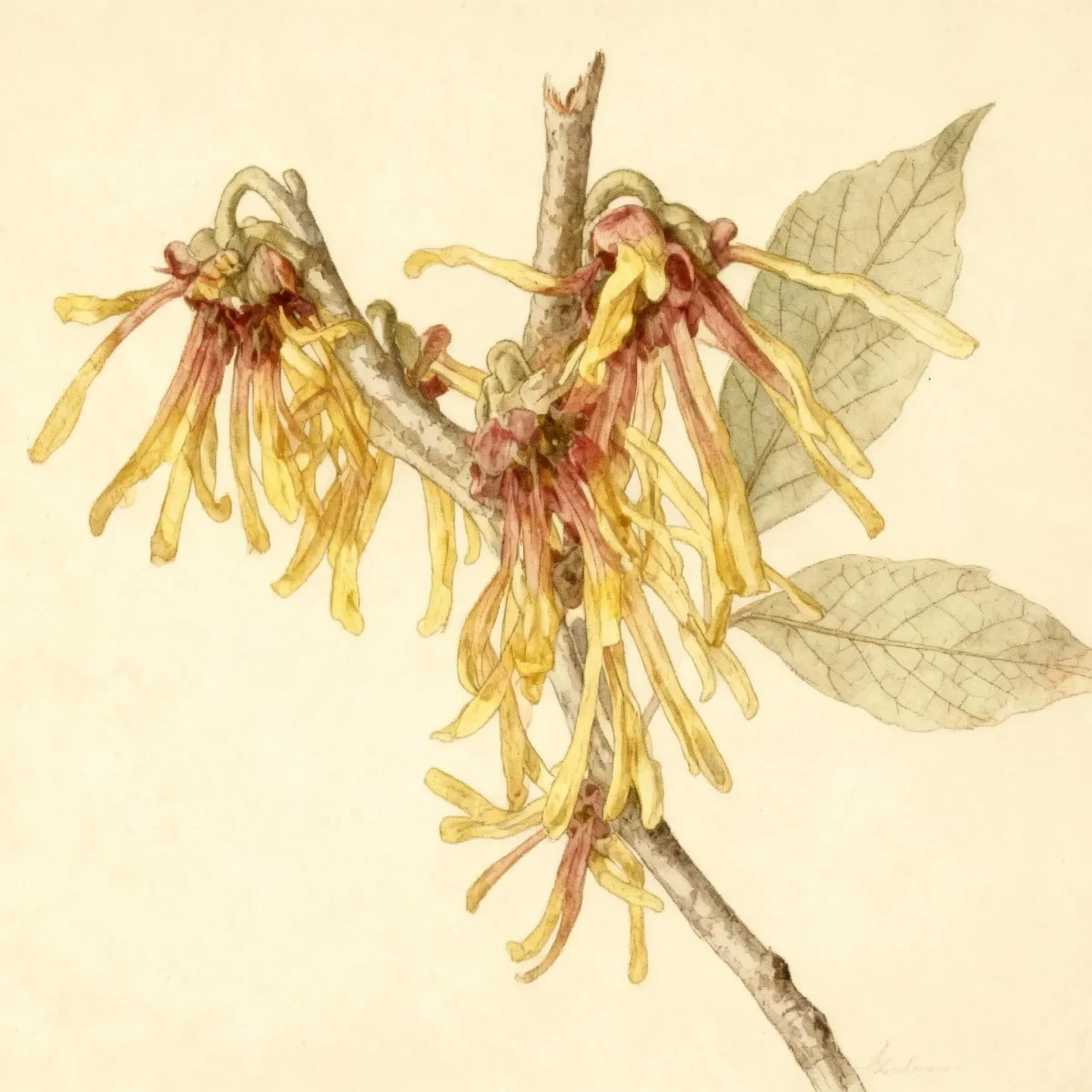
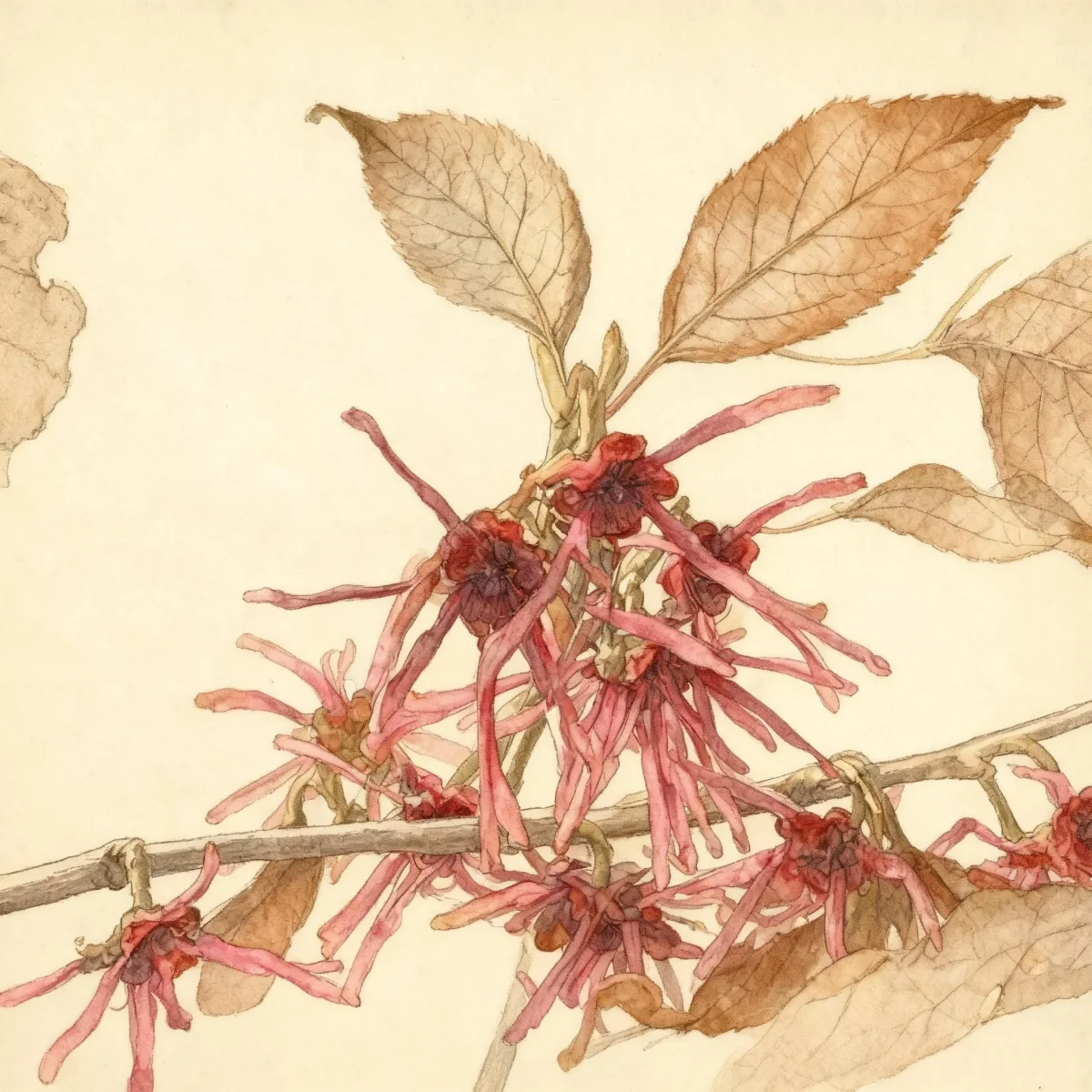
Ozark witch hazel (Hamamelis vernalis 'Purpurea')
Hamamelis vernalis 'Purpurea' (Ozark witch hazel) offers early, fragrant, burgundy blooms, thriving in Zones 4-8 with low maintenance.
Scroll down to discover growing tips, care requirements, companion plants, and more
Complete Plant Information
Overview
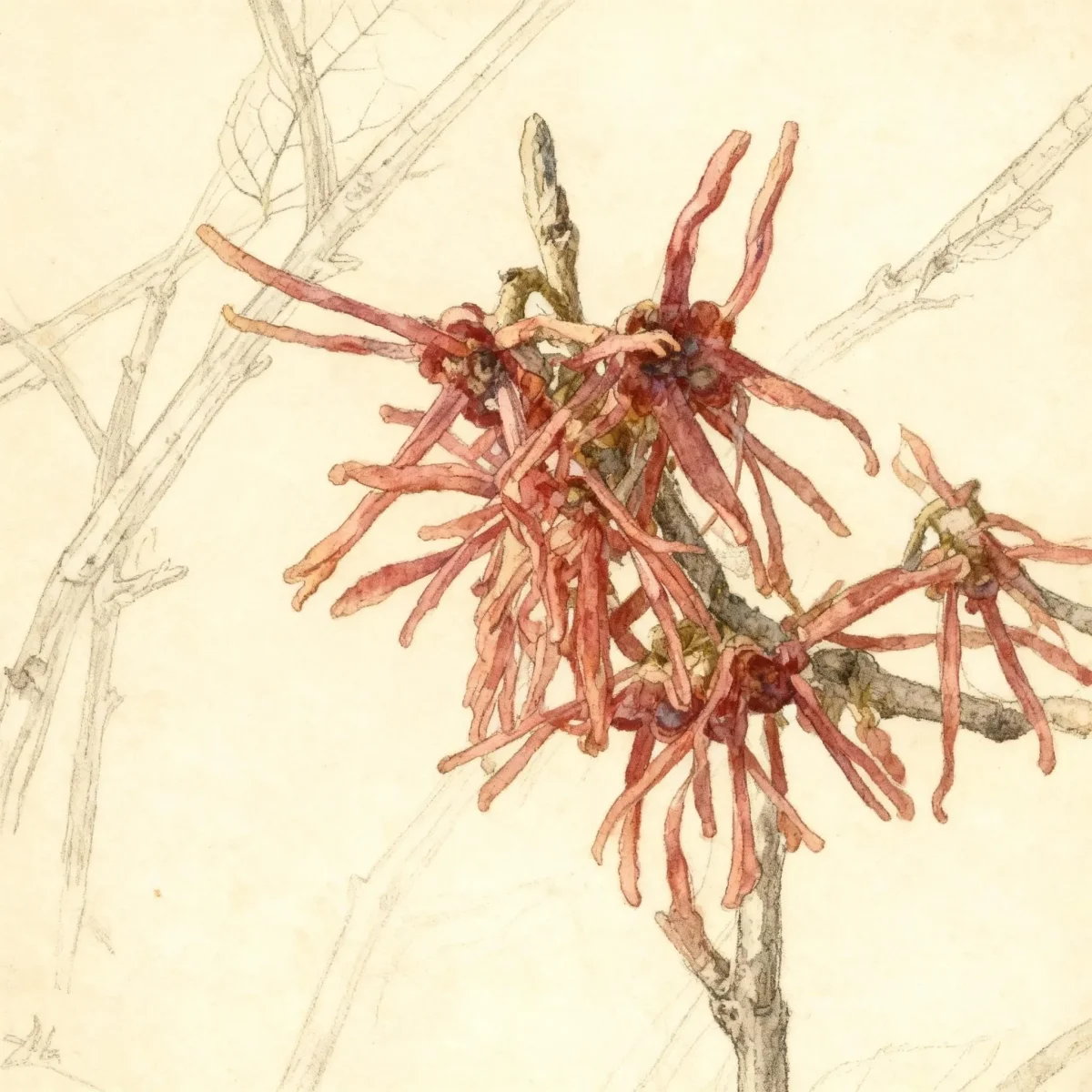
The Hamamelis vernalis ‘Purpurea’, commonly known as Ozark witch hazel, is a standout deciduous shrub valued for its crucial winter interest. Unlike many spring bloomers, this cultivar provides deep, burgundy flowers from January through March, often before the landscape wakes up. Its ribbon-like petals offer a surprisingly fragrant display during cold weather, making it an excellent focal point.
This species is native to the Ozark Plateau and is adaptable, though it performs best with consistent moisture. While it tolerates various soil conditions, including clay, ensuring adequate water is key to preventing summer scorch. The low maintenance requirements and seasonal appeal make Hamamelis vernalis ‘Purpurea’ a practical choice for year-round structure.
Gardeners appreciate the Ozark witch hazel not only for its early color but also for its moderate size, making it useful for screens or borders, and its attractive golden fall foliage that follows the summer growth phase. It adds texture and reliable winter structure where few other shrubs can compete.
Fast Facts
- Plant Family: Hamamelidaceae
- Plant Type: Deciduous shrub
- Hardiness Zones: USDA Zones 4-8
- Size at Maturity:
- Height: 6-10 ft
- Spread: 8-12 ft
- Bloom Time: January to March
- Bloom Description: Burgundy
- Sun Exposure: Full sun to part shade
- Water Needs: Medium
- Maintenance Level: Low
How to Grow
When planting Ozark witch hazel, aim for early spring or fall when the ground is workable, avoiding the stress of mid-summer heat. Locate it in a spot receiving full sun for the best flowering potential, although it tolerates part shade. Hamamelis vernalis ‘Purpurea’ thrives in average, medium moisture, well-drained soils that should ideally be acidic and organically rich.
Consistent moisture management is important; drought stress can cause leaf scorch during the summer months. While this shrub demonstrates tolerance for clay soils, excellent drainage is mandatory to protect the root system. Fertilization is typically unnecessary if the soil is healthy; focus instead on amending with compost to improve organic content.
Pruning should be scheduled immediately following the bloom period in spring to shape the plant or control size, as pruning later may remove the next year’s flower buds. A critical maintenance task for this species is the prompt removal of root suckers to prevent the shrub from spreading aggressively and forming dense colonies.
Landscape Uses
The superior winter-flowering nature of Hamamelis vernalis ‘Purpurea’ makes it indispensable for winter interest plantings and shrub borders. Its habit lends itself well to forming a tall hedge or useful screen located where structure is needed during colder months. It also functions excellently as a naturalized specimen in woodland gardens where the soil remains consistently moist.
Due to its adaptability regarding sun exposure and tolerance for erosion-prone sites, the Ozark witch hazel fits seamlessly into rain gardens or along stream beds. For companion plantings, consider pairing it with early spring ephemerals or evergreen shrubs that provide a dark backdrop to showcase the burgundy February flowers.
Standout Features
Flower Qualities
- Showy
- Fragrant
Noteworthy Characteristics
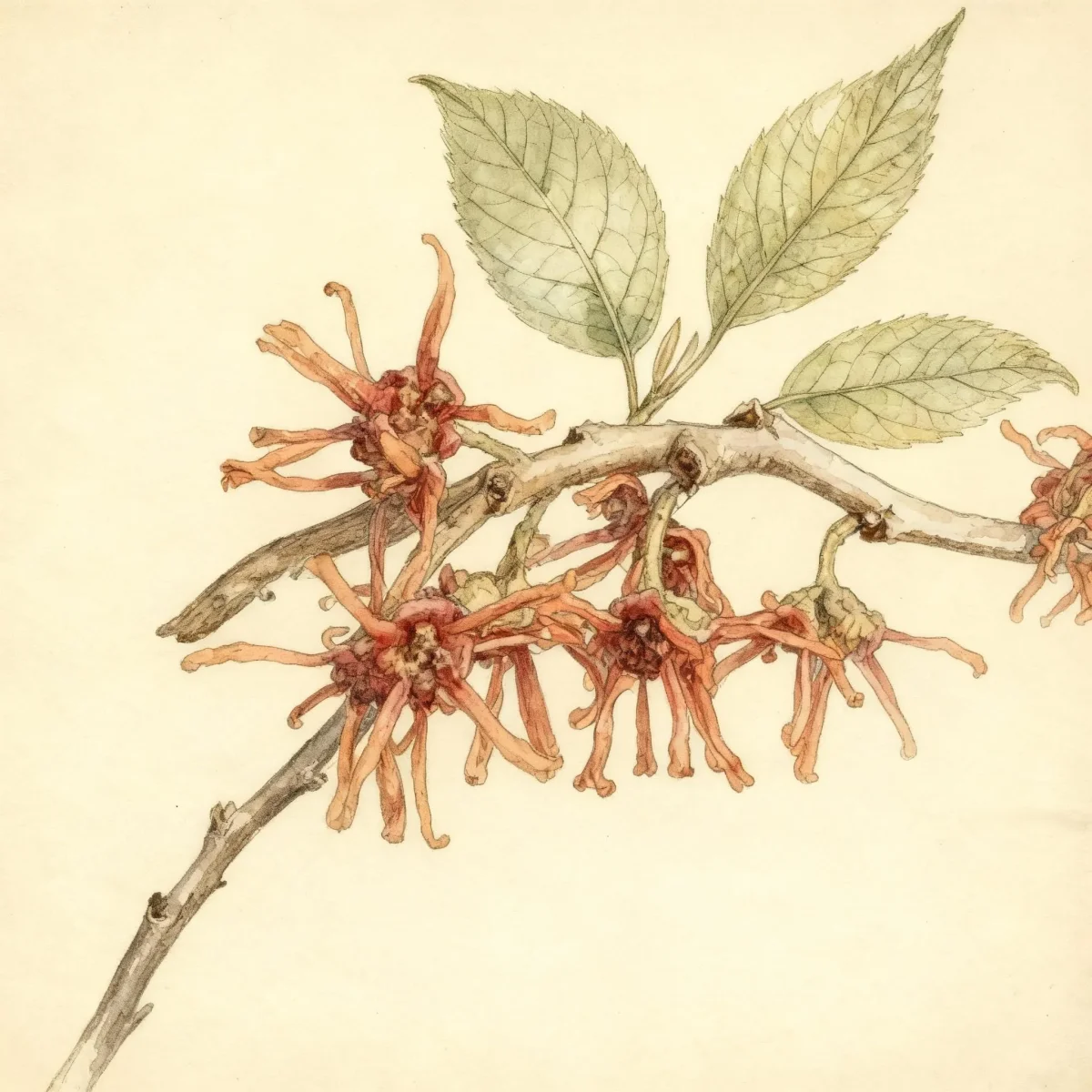
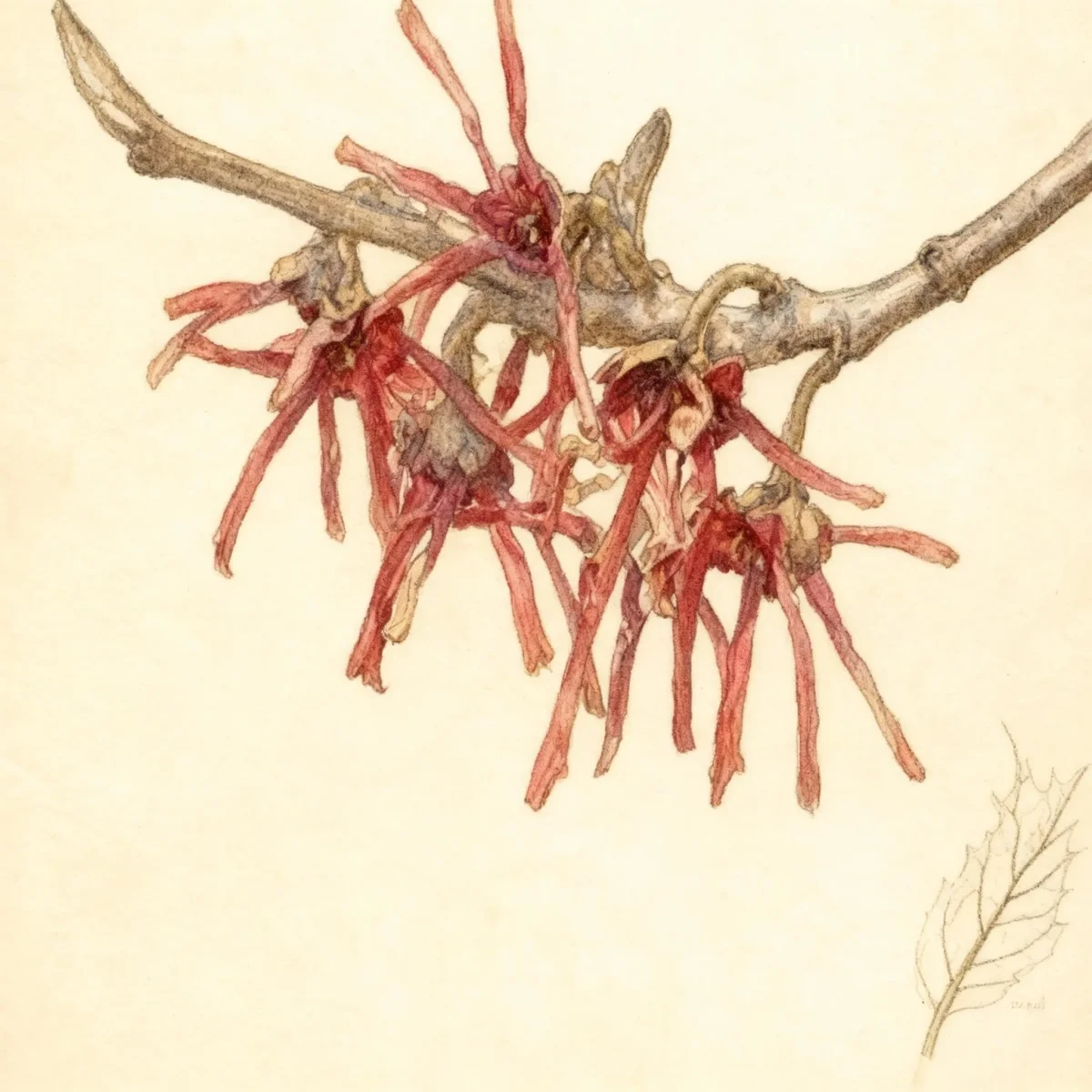
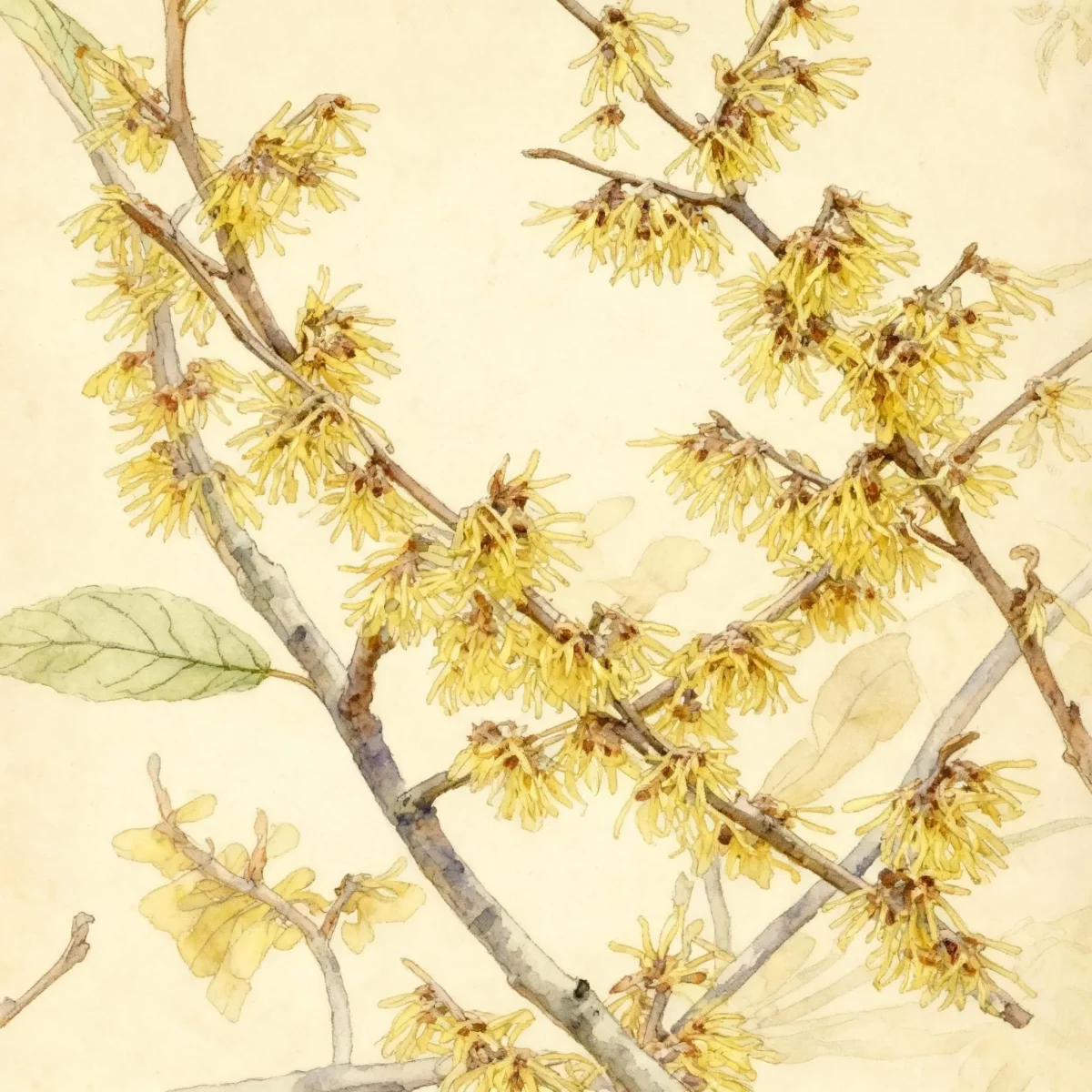
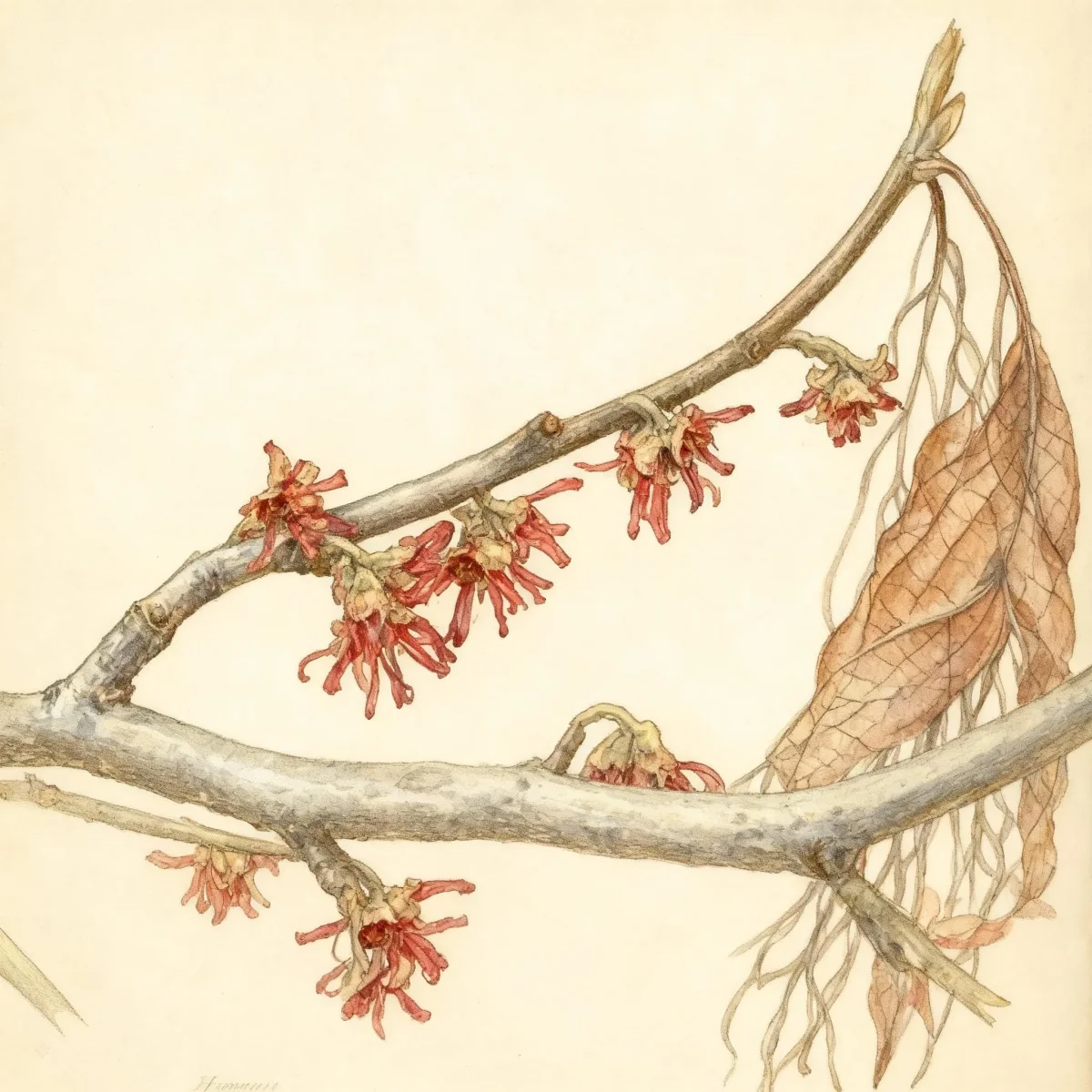
Hamamelis vernalis, commonly called Ozark witch hazel, is native to the Ozark Plateau extending from southern Missouri through northwestern Arkansas to eastern Oklahoma. Flowers appear in mid to late winter prior to the emergence of the foliage, featuring narrow, ribbon-like, curled petals that transition from red at the base to copper orange at the tip, although ‘Purpurea’ specifically features burgundy flowers. The leaves emerge with reddish-bronze tints before maturing to dark green, delivering golden yellow fall color later in the season.
Tolerances
- Deer
- Erosion
- Clay Soil
Potential Problems
Insect issues are generally minor for the Ozark witch hazel. Be vigilant for signs of chewing damage caused by caterpillars or Japanese beetles on the foliage during the active growing season. You may also occasionally observe signs of less serious pests like gall aphids, scale insects, leafrollers, or leafminers.
Potential diseases are infrequent but may include powdery mildew or localized leaf spots. Fortunately, insect and disease pressures typically do not become severe enough to require chemical intervention. Maintain good air circulation through thoughtful pruning to mitigate fungal issues like powdery mildew.
Frequently Asked Questions
What hardiness zones is Ozark witch hazel suitable for?
The Ozark witch hazel (Hamamelis vernalis ‘Purpurea’) is well-suited for USDA Hardiness Zones 4 through 8.
How large does Hamamelis vernalis ‘Purpurea’ grow?
This shrub typically reaches a mature height between 6 and 10 feet, with a spread ranging from 8 to 12 feet wide.
What sun exposure does Hamamelis vernalis ‘Purpurea’ need?
It performs best in full sun, which encourages the most abundant flowering, but it can adequately tolerate partial shade conditions.
When does Ozark witch hazel bloom?
The characteristic bloom time for this species is during the late winter months, specifically January to March, with the cultivar ‘Purpurea’ displaying burgundy blooms.
Conclusion
The Hamamelis vernalis ‘Purpurea’ offers invaluable winter hardiness and fragrance to any garden design, providing necessary color when little else is active. Its low maintenance and tolerance for clay soil make the Ozark witch hazel a highly practical, worthwhile addition. Before planting, confirm that your site falls within USDA Zones 4-8 and plan for medium moisture to ensure the best winter performance.
Companion Planting
When selecting companions for Hamamelis vernalis ‘Purpurea’, focus on plants that thrive in similar moist, slightly acidic conditions during the early growing season. Early spring ephemerals, such as snowdrops (Galanthus) or winter aconite (Eranthis hyemalis), emerge just as the witch hazel finishes blooming, offering a sequential color display.
For summer texture, integrate ferns or woodland perennials that appreciate the filtered light the shrub provides once fully leafed out. Since the Ozark witch hazel can spread slowly via suckers, ensure companions are robust enough to compete gracefully around the established root zone, particularly in woodland garden settings.
Wildlife Benefits
While the winter flowers are prized by people, they also serve as an excellent early nectar source for overwintering queen bumblebees emerging from hibernation. The fine structure of the bare branches provides crucial shelter for small birds during severe winter weather when other dense cover has yet to fully emerge.
Though the fruit is not showy, the dehiscent capsules released in autumn provide a lingering food source for smaller wildlife before they shut down for winter. Planting Hamamelis vernalis ‘Purpurea’ supports biodiversity by providing sustenance and structure during the leanest months of the year.