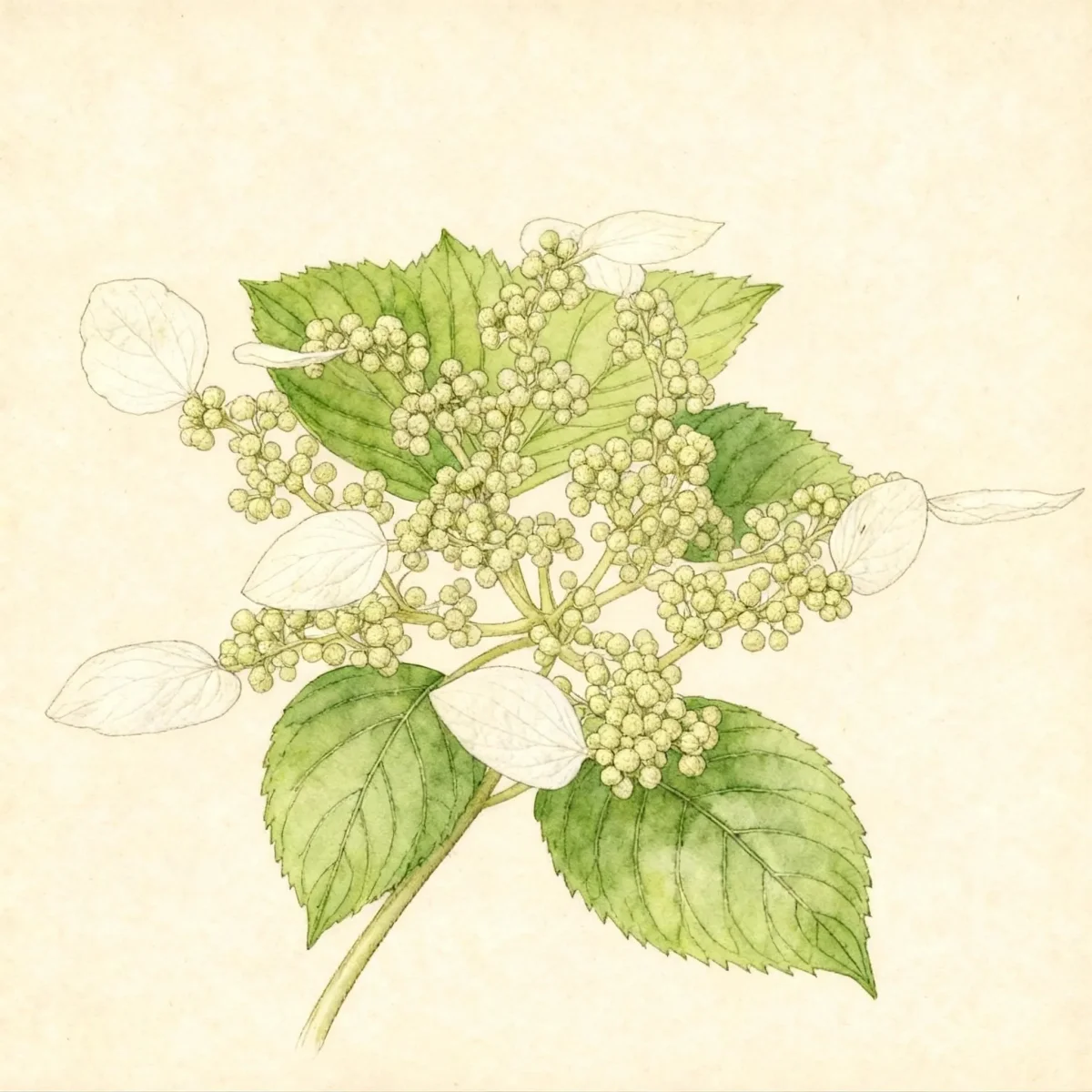
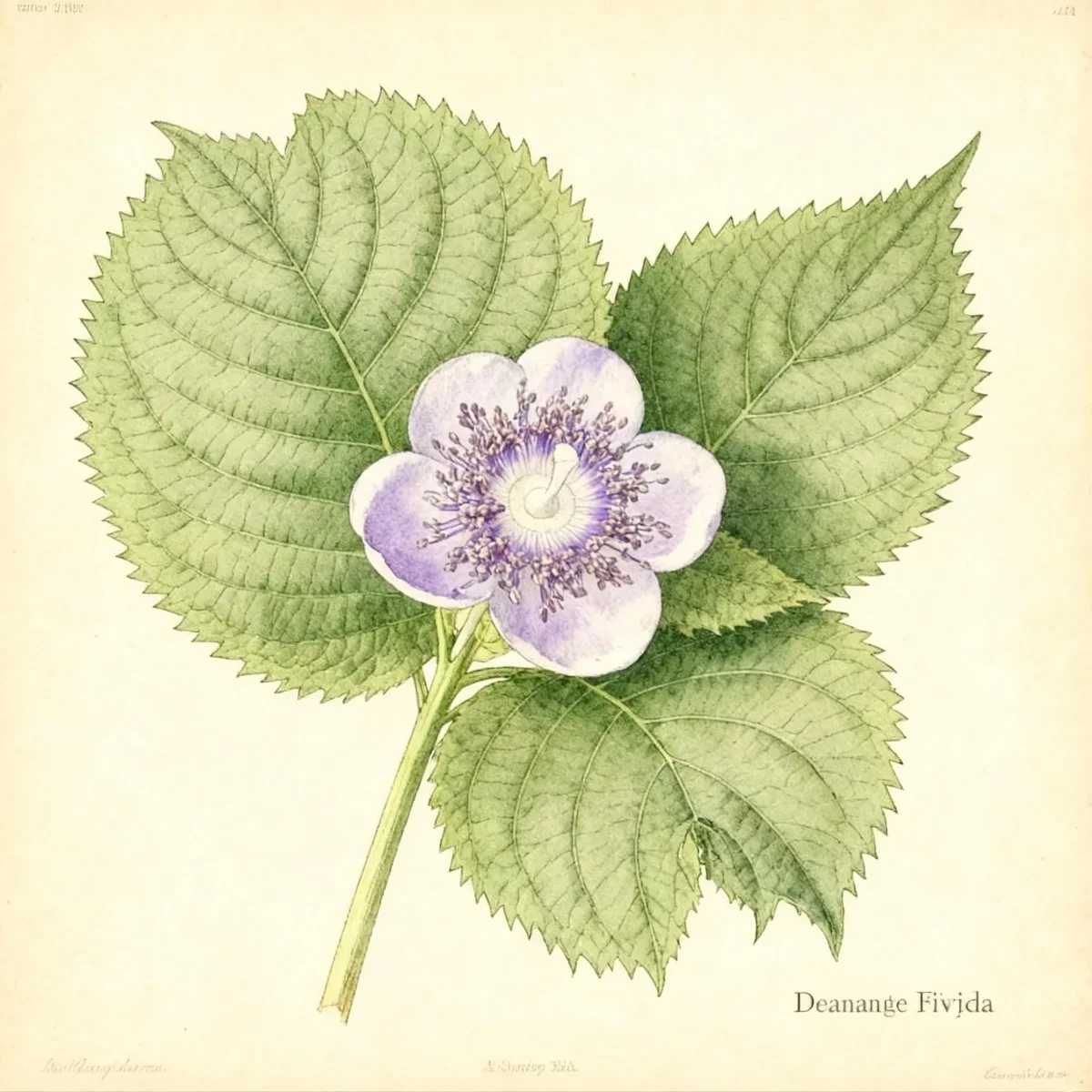
Climbing hydrangea (Hydrangea anomala subsp. petiolaris 'Miranda')
Discover Hydrangea anomala subsp. petiolaris 'Miranda', a vigorous Climbing hydrangea valued for variegated foliage and fragrant white blooms in Zones 4-8.
Scroll down to discover growing tips, care requirements, companion plants, and more
Complete Plant Information
Overview
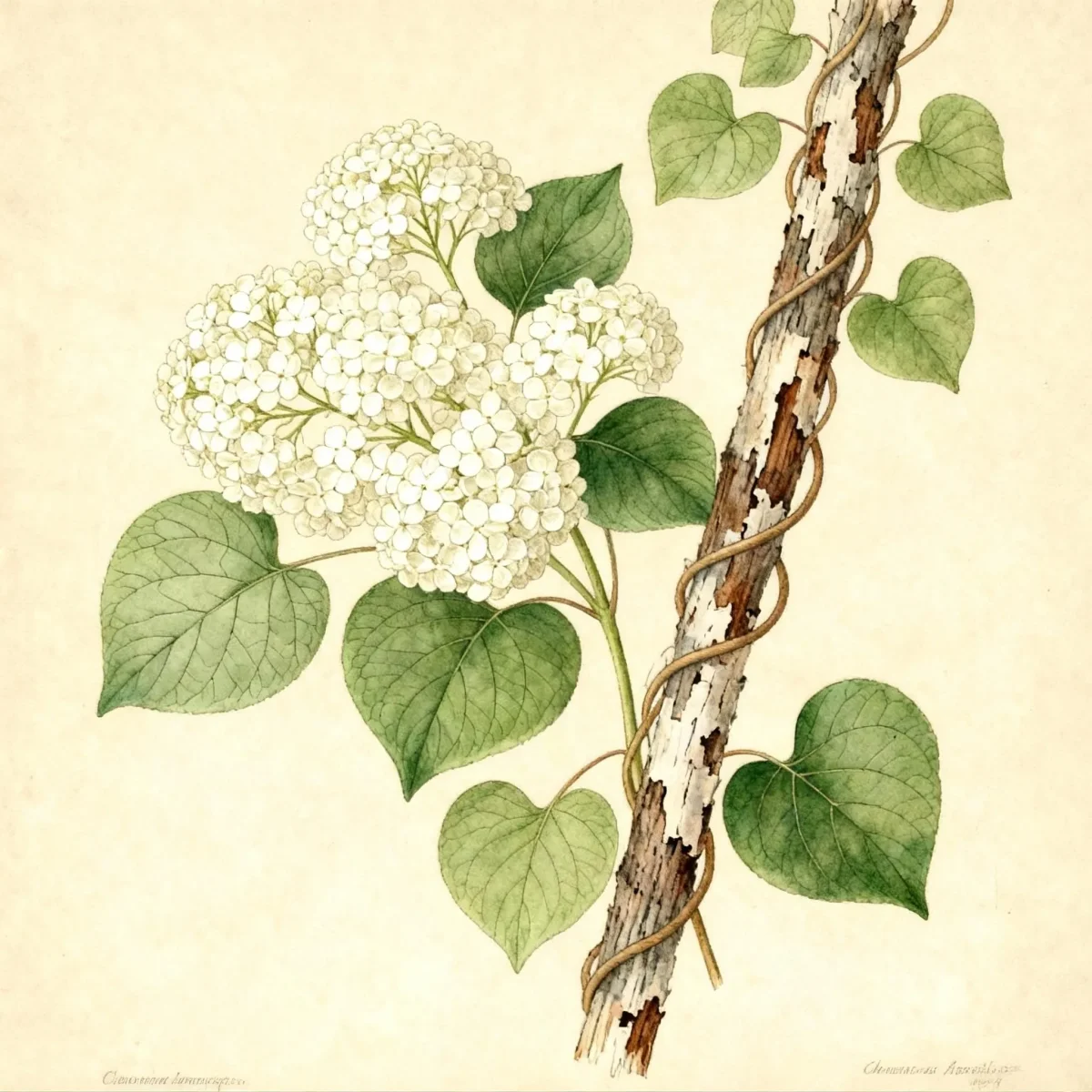
Hydrangea anomala subsp. petiolaris ‘Miranda’ is a highly versatile, deciduous woody vine celebrated for its unique variegated foliage and textural interest throughout the year. This cultivar of the Climbing hydrangea features dark green leaves beautifully edged in yellow, dramatically brightening deep shade locations where other plants struggle. Once established, Hydrangea anomala subsp. Petiolaris ‘Miranda’ becomes vigorous, allowing it to cling tenaciously to supports using aerial rootlets.
It offers the classic clustered white flowers typical of hydrangeas, which are notably fragrant, providing excellent visual and sensory appeal in late spring. While slow to establish initially, its low maintenance requirements and ability to scale large structures make it an indispensable anchor plant for vertical gardening designs. Gardeners seeking year-round structure, color variation, and resilience will find Hydrangea anomala subsp. petiolaris ‘Miranda’ an exceptional choice.
Fast Facts
- Plant Family: Hydrangeaceae
- Plant Type: Vine
- Hardiness Zones: USDA Zones 4-8
- Size at Maturity:
- Height: 30-50 ft
- Spread: 5-6 ft
- Bloom Time: May
- Bloom Description: White
- Sun Exposure: Part shade to full shade
- Water Needs: Medium
- Maintenance Level: Low
How to Grow
The ideal environment for establishing Climbing hydrangea is in rich, fertile, moist but well-drained soil. Aim for a location receiving part shade to full shade, as this mimics its native woodland habitat. Tolerating full sun is possible, but only if soil moisture is kept consistently high, which may be challenging during hot summers.
Establishment requires patience, as the vine is slow to start growing vigorously. Provide a strong support structure immediately, such as a sturdy wall (brick, stone, or wood), arbor, or a mature tree trunk, as it utilizes aerial rootlets to cling vertically. Ensure the planting site offers excellent drainage to prevent root issues.
Water needs are medium; regularly provide deep soakings, especially during establishment and extended dry periods, though established plants show good drought tolerance. Maintenance is generally low. Propagate Hydrangea anomala subsp. petiolaris ‘Miranda’ via stem cuttings or seeds if you wish to expand your collection. Note that this species typically does not thrive in the extreme heat and humidity of the deepest South (USDA Zone 8 may be borderline).
Landscape Uses
The Climbing hydrangea is extremely versatile, offering architectural interest across multiple seasons. It excels when used to cover large, imposing vertical surfaces, clinging securely to building walls where its exfoliating bark provides winter texture. It functions exceptionally well on sturdy arbors, fences, or the broad trunks of established trees, creating a stunning, tiered effect as lateral branches extend outward.
For ground-level applications, this vine can be allowed to sprawl across low stone walls, cover unsightly tree stumps, or cascade over rock piles, covering vast areas effectively if unsupported. Although rarely used as a ground cover, it manages steep embankments well, anchoring soil where other plants struggle. Its large flat-topped clusters of fragrant white flowers are perfect for informal cottage gardens or woodland settings where structure is needed in shadier corners.
Standout Features
Flower Qualities
- Showy
- Fragrant
- Good Cut
- Good Dried
Noteworthy Characteristics
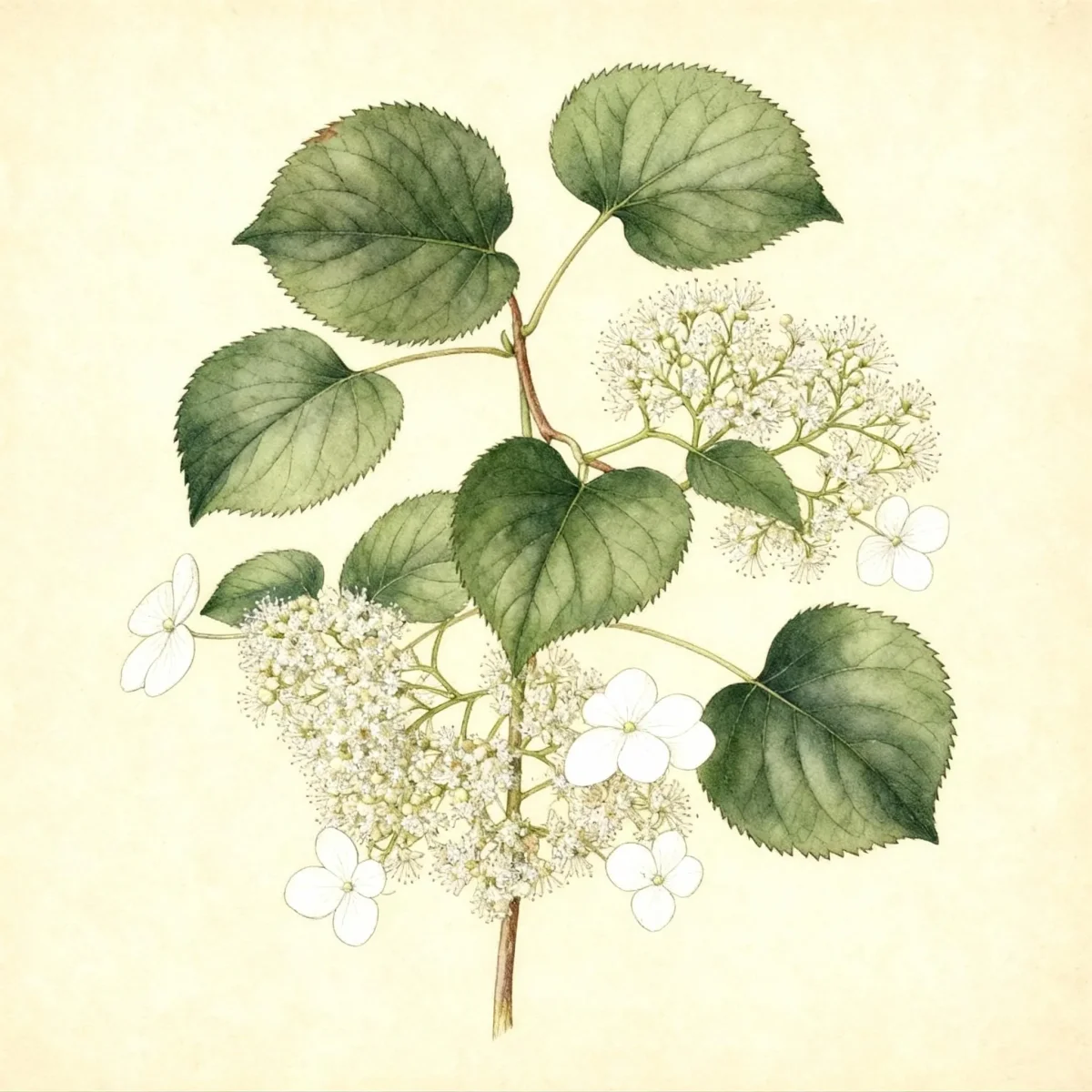
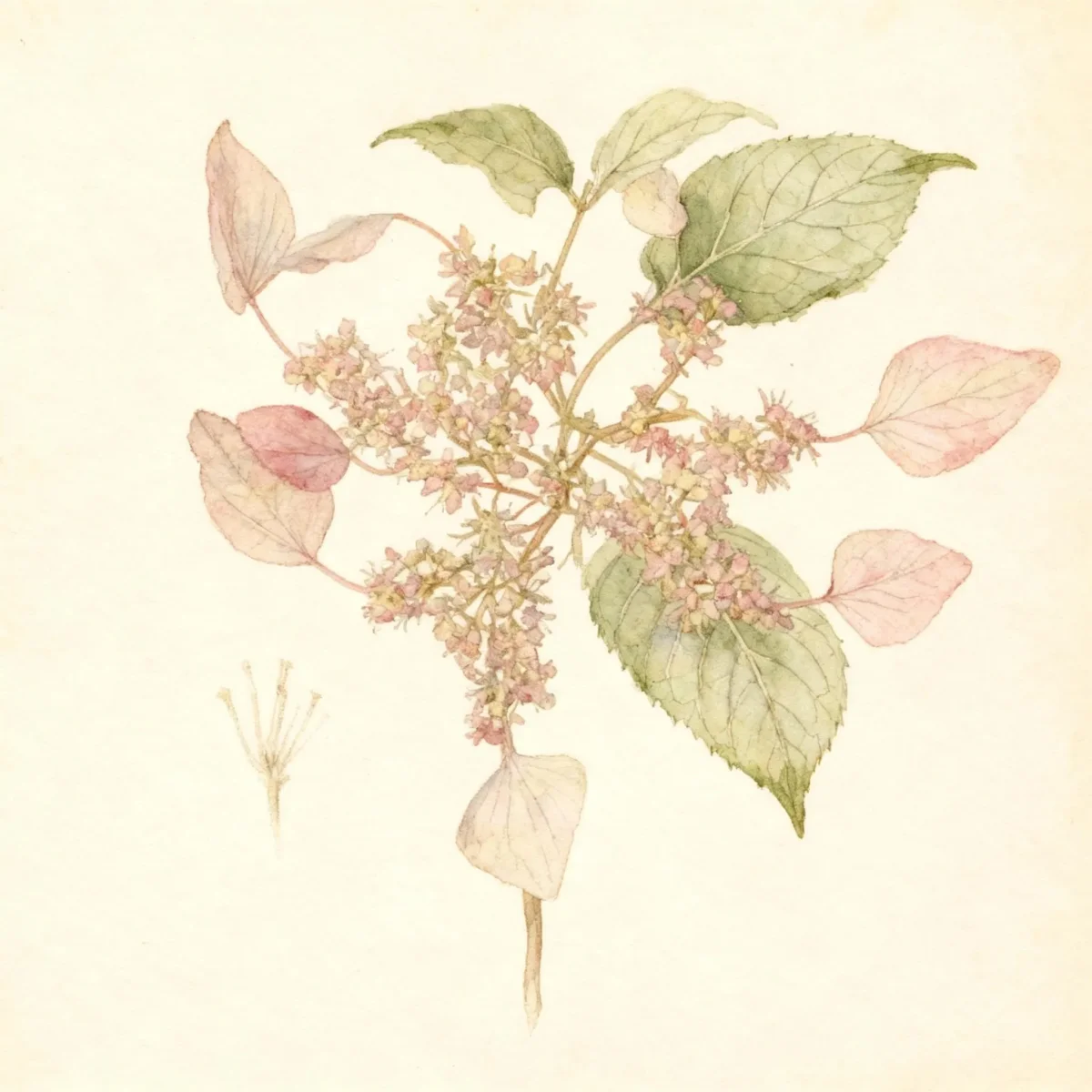
Hydrangea anomala subsp. petiolaris ‘Miranda’ is a vigorous, sprawling, deciduous vine distinguished by its aerial rootlets that help it cling and climb vertically, often reaching 30 to 40 feet. The ‘Miranda’ cultivar specifically introduces visual impact with its dark green, heart-shaped leaves edged in bright yellow margins that may soften to creamy white later in the season. In late spring, this Climbing hydrangea produces large, flat-topped clusters of fragrant white flowers, followed by attractive reddish-brown exfoliating bark on mature stems that provides winter appeal.
Tolerances
- Rabbit
- Drought
- Heavy Shade
Potential Problems
Generally, Hydrangea anomala subsp. Petiolaris ‘Miranda’ is resistant to most serious insect pests and diseases, which contributes significantly to its low maintenance profile. The primary structural consideration for this vine is ensuring it has adequate support. If allowed to climb vertically onto buildings, walls, or large trees, these structures must be robust enough to support the vine’s mature weight and significant lateral spread. Regular inspection of the attachment points is advisable, especially after heavy storms.
Frequently Asked Questions
What hardiness zones is Climbing hydrangea suitable for?
Hydrangea anomala subsp. petiolaris ‘Miranda’ is reliably hardy in USDA Zones 4 through 8, though performance in the warmest end of that range (Zone 8) might be challenging in humid climates.
How large does Hydrangea anomala subsp. petiolaris ‘Miranda’ grow?
This vigorous vine typically matures to a height between 30 and 50 feet, while its spread is relatively contained, usually only 5 to 6 feet wide, though its lateral branching can project several feet from the support structure.
What sun exposure does Hydrangea anomala subsp. petiolaris ‘Miranda’ need?
This plant prefers part shade to full shade conditions, thriving best when protected from harsh afternoon sun, though it can tolerate more sun if soil moisture is consistently maintained.
When does Climbing hydrangea bloom?
The fragrant white flowers of Hydrangea anomala subsp. petiolaris ‘Miranda’ typically appear during the month of May, blooming in flat-topped clusters.
Conclusion
The variegated foliage and reliable blooming of Hydrangea anomala subsp. petiolaris ‘Miranda’ make it an outstanding, low-maintenance choice for adding vertical dimension and texture to shaded garden areas. This hardy Climbing hydrangea provides year-round appeal thanks to its clinging habit and attractive bark. Before planting, confirm your site offers the necessary support and appropriate moisture levels for this magnificent vine to flourish.
Companion Planting
When selecting partners for Hydrangea anomala subsp. petiolaris ‘Miranda’, focus on plants that share similar cultural requirements for moisture and shade, emphasizing textural contrast. Hosta varieties with blue or deep green foliage make excellent foreground companions, as their broad leaves contrast beautifully with the vine’s heart-shaped, variegated leaves. Ferns, such as Japanese Painted Fern or Athyrium, thrive in the moist, shady conditions this hydrangea prefers and enhance the woodland aesthetic. Consider placement near structures that require softening, allowing shade-loving groundcovers like Vinca or Pachysandra to fill in beneath the vine’s base.
Propagation Tips
While propagation of Climbing hydrangea is possible via seed, gardeners seeking immediate results often find success with stem cuttings. The best time to take semi-hardwood cuttings is typically during mid-summer when the stems have begun to firm up but are not fully woody. Select healthy, non-flowering stems about 4 to 6 inches long, ensuring each cutting has at least two leaf nodes. Dip the base in rooting hormone and place them in a well-draining, humid medium, such as a mix of peat moss and perlite, keeping them consistently moist and shaded until roots develop.