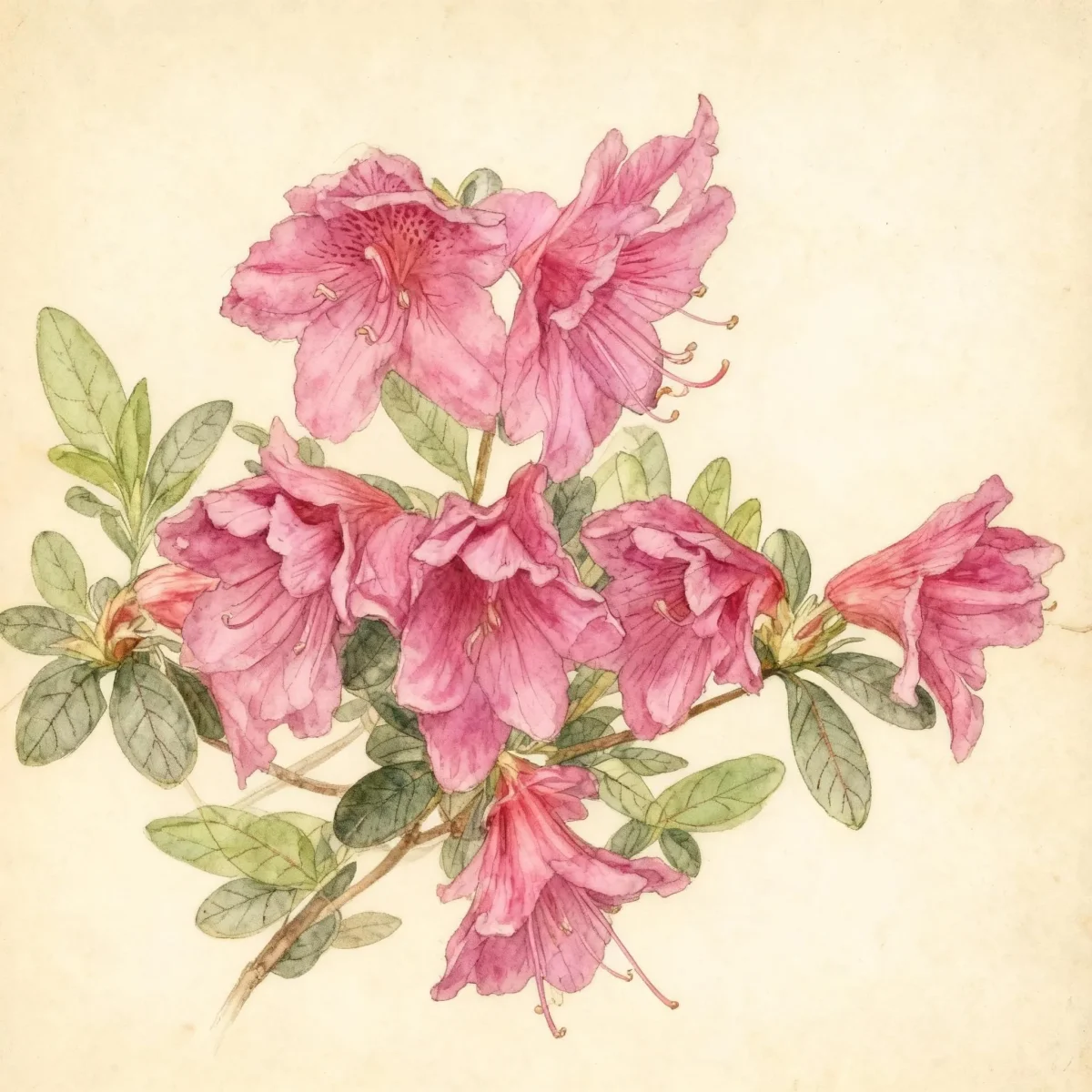
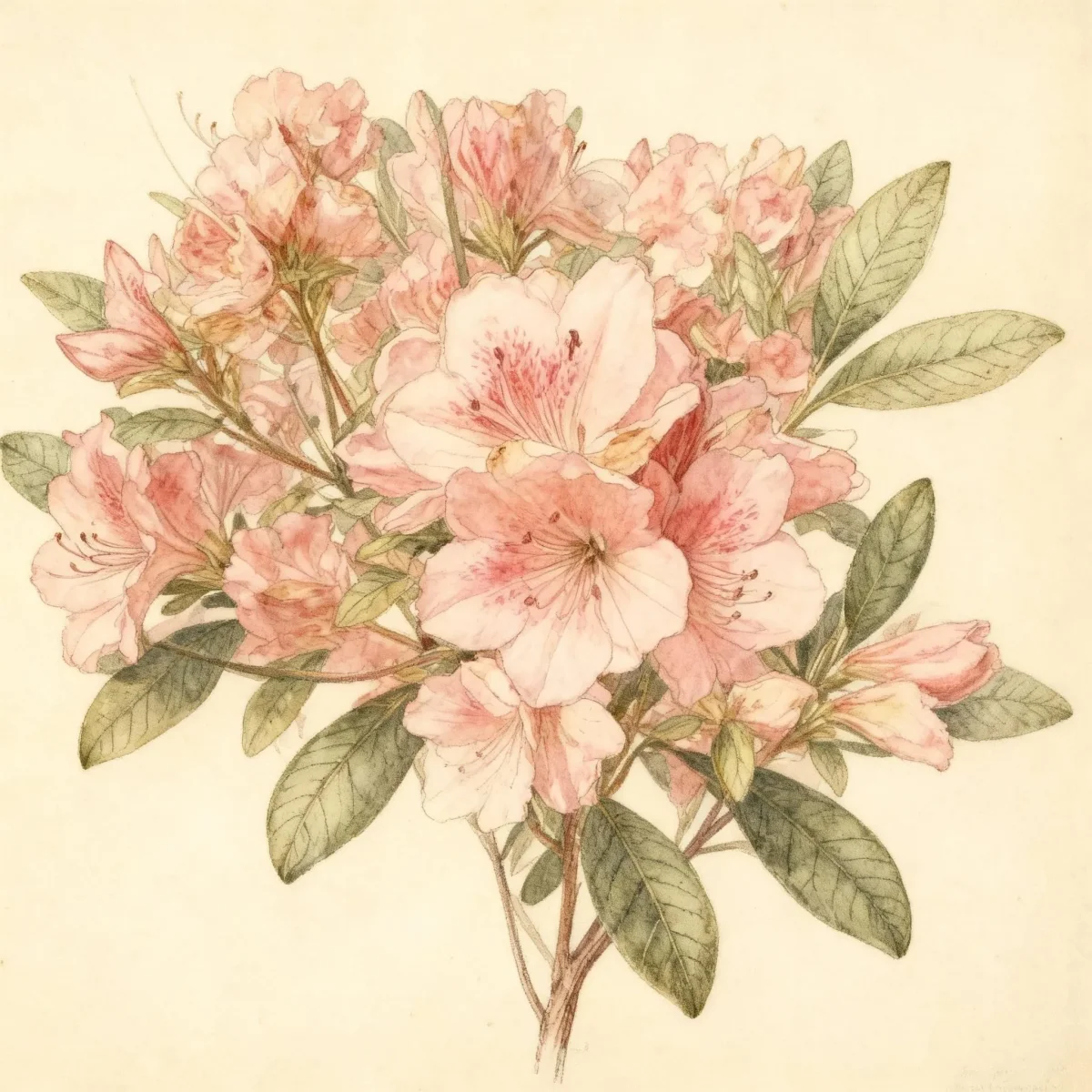
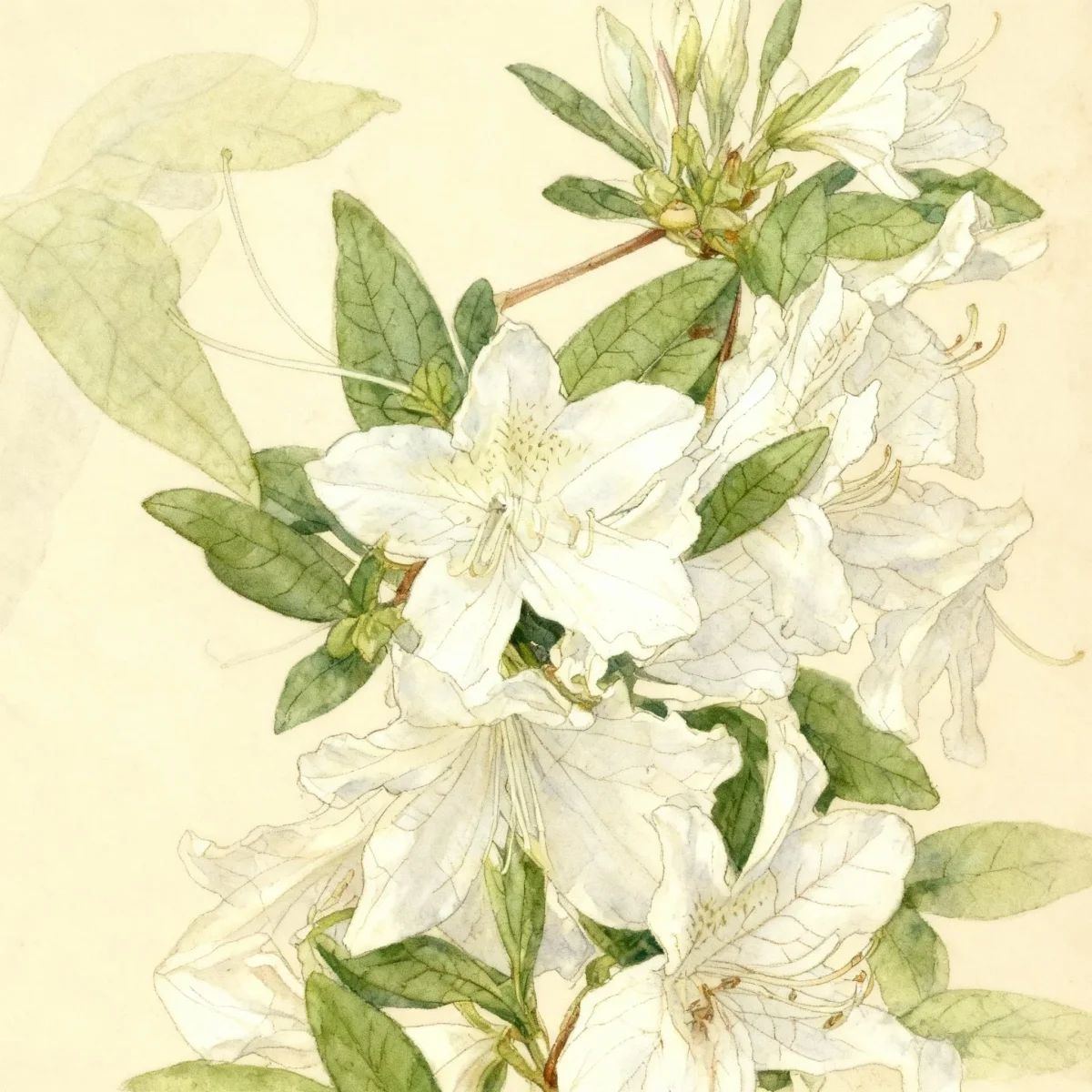
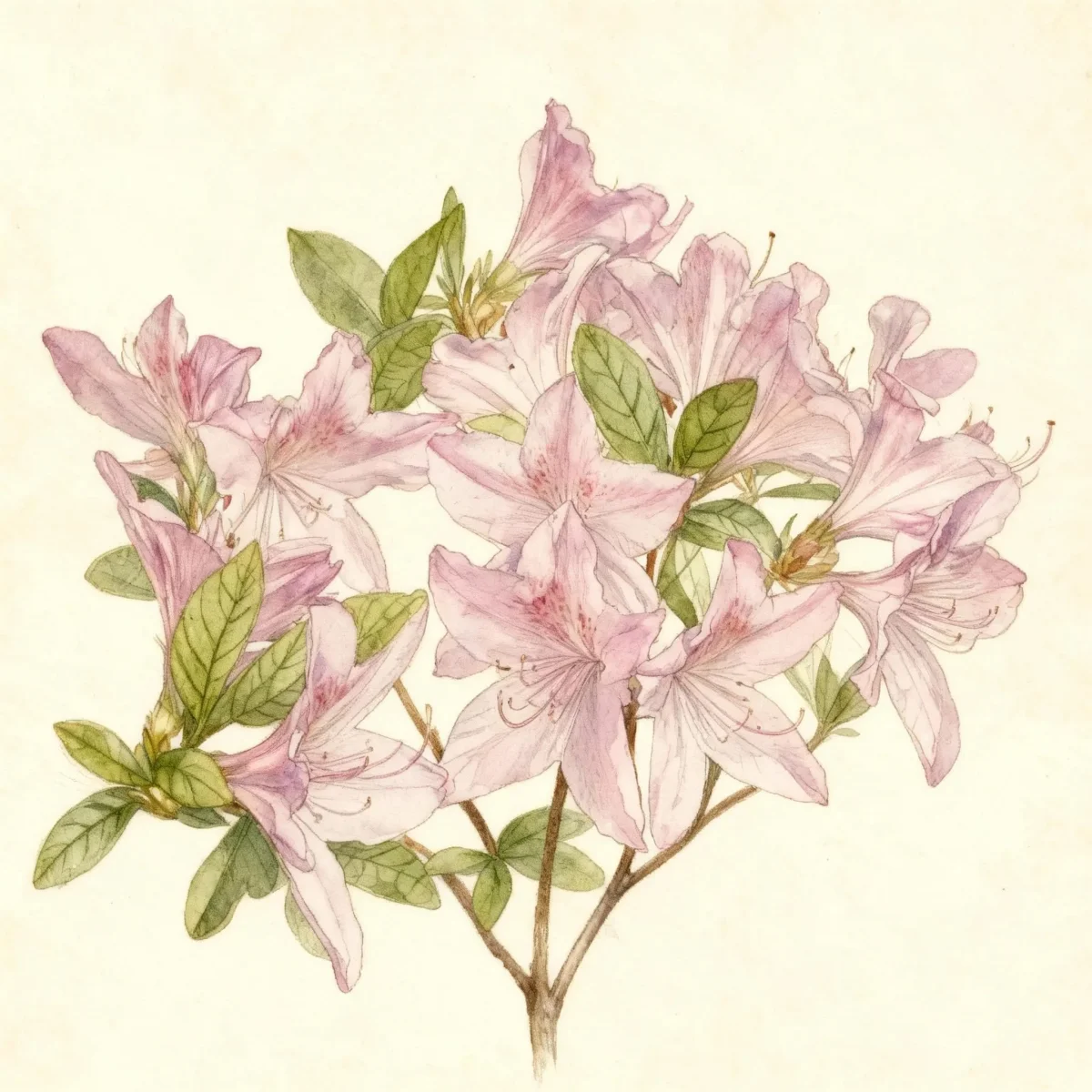
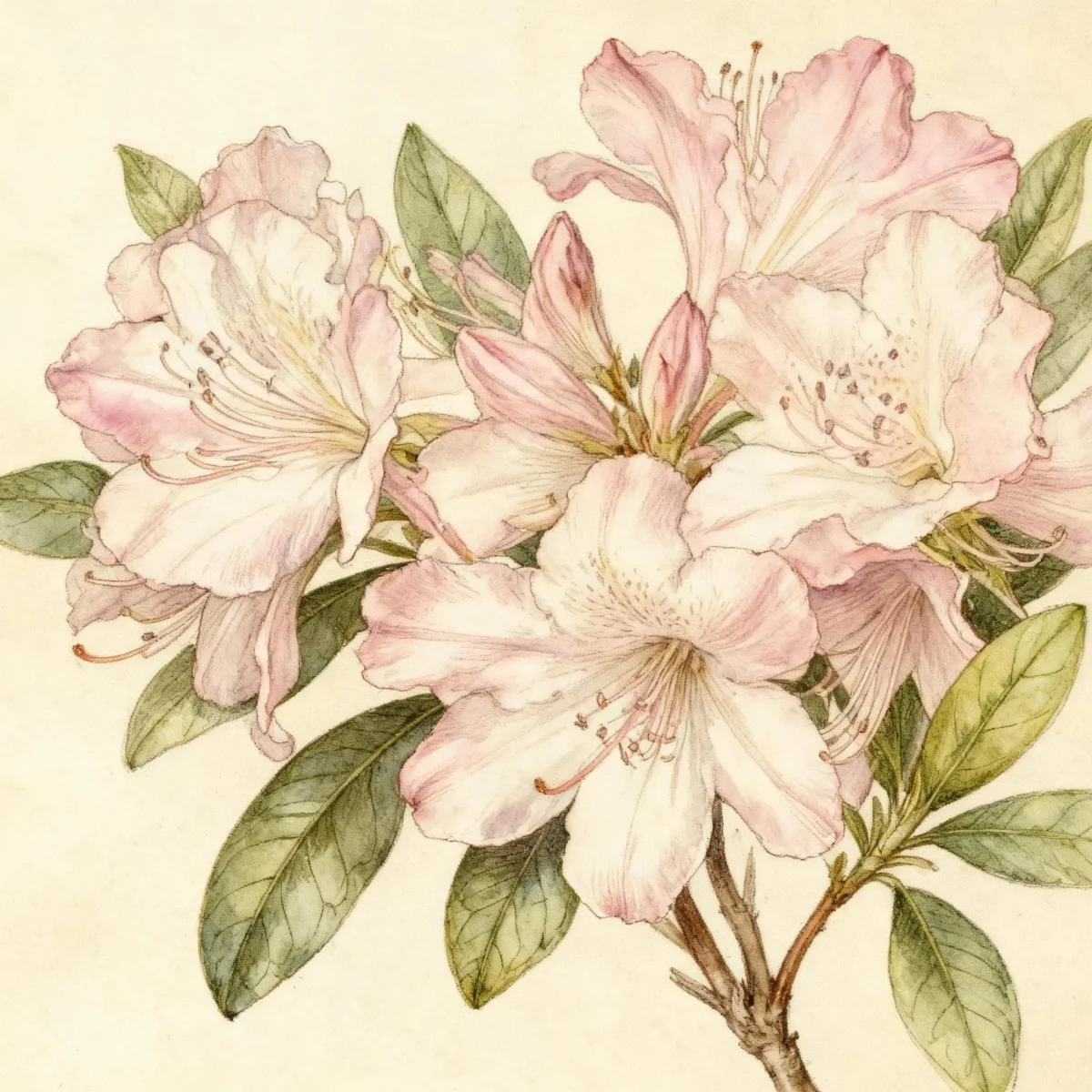
Evergreen azalea (Rhododendron 'Delaware Valley White')
Rhododendron 'Delaware Valley White' is a stunning Evergreen azalea offering abundant white spring blooms, ideal for partial shade, Zones 5-8.
Scroll down to discover growing tips, care requirements, companion plants, and more
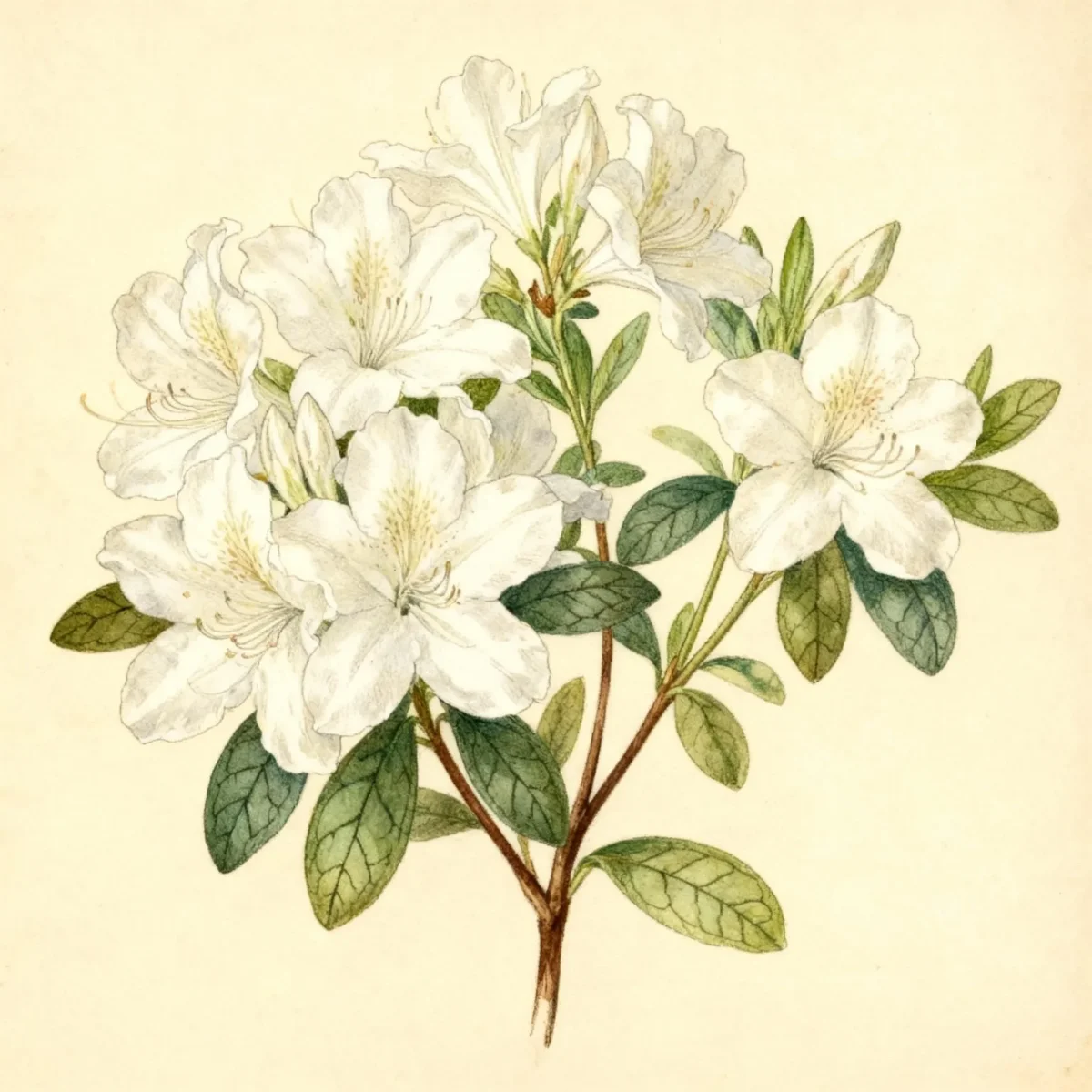
Complete Plant Information
Overview
Rhododendron ‘Delaware Valley White’ provides spectacular early-to-mid-season color, making it a cherished addition to temperate gardens. As an Evergreen azalea, it offers valuable year-round foliage interest in addition to its prolific display of pure white, funnel-shaped flowers. This cultivar typically matures into a compact shrub, often reaching 3 to 4 feet in height and spread.
Gardeners value the reliability and brightness of this variety, especially when paired correctly with dappled shade to prevent leaf scorch. Proper soil acidity and drainage are critical for the health and long-term success of Rhododendron ‘Delaware Valley White’. Its multi-stemmed structure allows it to function beautifully as a backdrop or a structured specimen plant in shaded settings.
Although classified as an Evergreen azalea, gardeners should note that ‘Delaware Valley White’ may not exhibit consistent winter hardiness across the entire lower edge of USDA Zone 5. When sited correctly for protection from wind and afternoon sun, this shrub brings classic woodland elegance and structure to any cool, shaded landscape area.
Fast Facts
- Plant Family: Ericaceae
- Plant Type: Broadleaf evergreen
- Hardiness Zones: USDA Zones 5-8
- Size at Maturity:
- Height: 3-4 ft
- Spread: 3-4 ft
- Bloom Time: April to May
- Bloom Description: White
- Sun Exposure: Part shade
- Water Needs: Medium
- Maintenance Level: Medium
How to Grow
Planting Rhododendron ‘Delaware Valley White’ is best done in spring or early fall, ensuring delicate, shallow root systems are disturbed as little as possible. The paramount requirement is acidic soil; aim for a pH range between 5.0 and 5.5, amending heavy clay soils with organic matter or considering raised beds to ensure excellent drainage. These Evergreen azaleas strongly prefer protection from harsh afternoon sun, thriving best in sun-dappled locations or high open shade, often performing perfectly on north or east-facing slopes.
Watering needs for this variety are medium, requiring consistent moisture, especially during dry spells, as the roots must never be allowed to dry out. Applying a thick layer of mulch, such as pine needles or wood chips, is crucial to stabilize soil temperatures and retain that vital medium moisture. Avoid cultivating near the base of the plant due to its fibrous, shallow root structure.
Maintenance for Rhododendron ‘Delaware Valley White’ involves feeding the soil as needed to maintain acidity—use iron sulfate or sulfur to lower pH if necessary. Deadheading, or clipping spent flower clusters immediately after flowering ceases, is advisable to direct energy toward future bud development rather than seed set. Furthermore, take care to site this plant away from the drip line of walnuts, as azaleas are highly sensitive to juglone toxicity.
Landscape Uses
Rhododendron ‘Delaware Valley White’ shines when used in foundational plantings where shelter and shade are abundant, providing continuous structure throughout the winter months. Its clean white flowers make it an exceptional choice for mixed borders, offering contrast against darker green foliage or deep spring blooms like blue forget-me-nots. Given its uniform size (3-4 ft), it performs reliably when planted as a low, informal hedge, softening pathways or property lines.
For woodland gardens or shade gardens, mass plantings of these Evergreen azaleas create stunning drifts of spring color. They pair naturally with other acid-loving plants such as rhododendrons, mountain laurel, and various ferns, which require similar cultural conditions. Whether used as a specimen to catch the light in a shaded corner or massed for a dramatic hedge effect, the beauty of this cultivar is undeniable.
Standout Features
Flower Qualities
- Showy
Noteworthy Characteristics
Rhododendron is a genus of 500 to 900 species and includes both of what we commonly call rhododendrons and azaleas. ‘Delaware Valley White’ is specifically an Evergreen azalea whose hybridization history is primarily attributed to the Glenn Dale hybrids, typically reaching 3-4’ tall when mature. It produces clusters of large, single white, funnel-shaped flowers in late April to May, while its green leaves often develop a yellow hue during the winter season.
Tolerances
- Rabbit
Potential Problems
Rhododendrons and azaleas, including the popular ‘Delaware Valley White’, are targets for various insects and diseases if not maintained in ideal conditions. Common pests include scale, lacebugs, and aphids, while fungal issues like root rot and leaf spot are frequently seen, especially in poorly drained soil. Chlorosis, where the leaves turn distinctly yellow, usually signals improper soil pH, often indicating the soil has become too alkaline for this acid-loving Evergreen azalea. Maintaining the correct acidic soil and ensuring sharp drainage are the best defenses against most maladies.
Frequently Asked Questions
What hardiness zones is Evergreen azalea suitable for?
Rhododendron ‘Delaware Valley White’ is generally hardy in USDA Zones 5 through 8, though gardeners in Zone 5 should monitor closely for winter bud damage.
How large does Rhododendron ‘Delaware Valley White’ grow?
This broadleaf evergreen typically matures to a height between 3 and 4 feet, with a corresponding spread also ranging from 3 to 4 feet.
What sun exposure does Evergreen azalea need?
This plant thrives best in part shade, preferring positions where it receives morning sun but is protected from intense afternoon heat, which can scorch the foliage.
When does Rhododendron ‘Delaware Valley White’ bloom?
This cultivar bursts into bloom between April and May, showcasing masses of beautiful white flowers.
Conclusion
Rhododendron ‘Delaware Valley White’ remains a gardening favorite due to its dependable structure and brilliant white spring flowers, making it an excellent choice for shaded borders and specimen planting. Ensuring your site offers acidic, well-drained soil in partial shade is the key to maximizing the beauty of this Evergreen azalea. Consult your local hardiness zone map and plan your planting before the next warm season arrives to enjoy this classic shrub.
companion planting
Companion planting near Rhododendron ‘Delaware Valley White’ should focus on species that share a preference for acidic, humus-rich soils and dappled light conditions. Consider planting groundcovers such as Oakleaf Hydrangea or native woodland phlox beneath the azalea canopy; these offer textural contrast without competing aggressively for surface nutrients due to the azalea’s shallow root system. Furthermore, pairing this white-blooming evergreen with later-blooming companion shrubs that offer contrasting flower colors, such as rich blues or deep purples, will extend the visual interest throughout the late spring and early summer season.
seasonal care calendar
Spring cleanup involves gently removing any winter debris and performing necessary pruning, which should focus only on clipping faded flower trusses of the Evergreen azalea as soon as blooming concludes in May. In summer, the primary focus shifts to consistent moisture management; supplement rainfall if the top few inches of soil feel dry, and reapply mulch to maintain soil coolness. Autumn is the ideal time to conduct soil testing if you suspect pH drift, applying necessary acidifying amendments like sulfur well before the ground freezes to benefit next year’s flowering of Rhododendron ‘Delaware Valley White’.