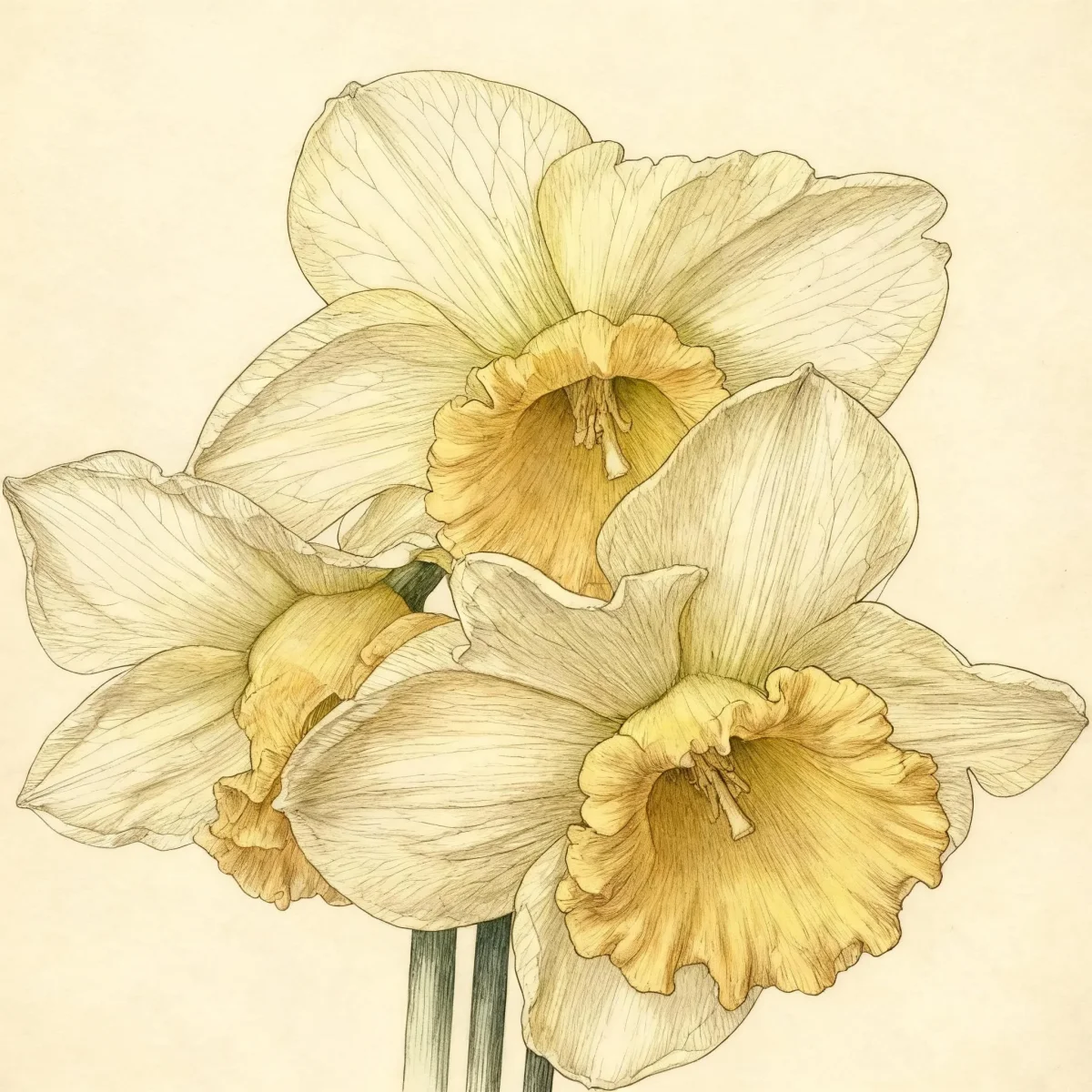
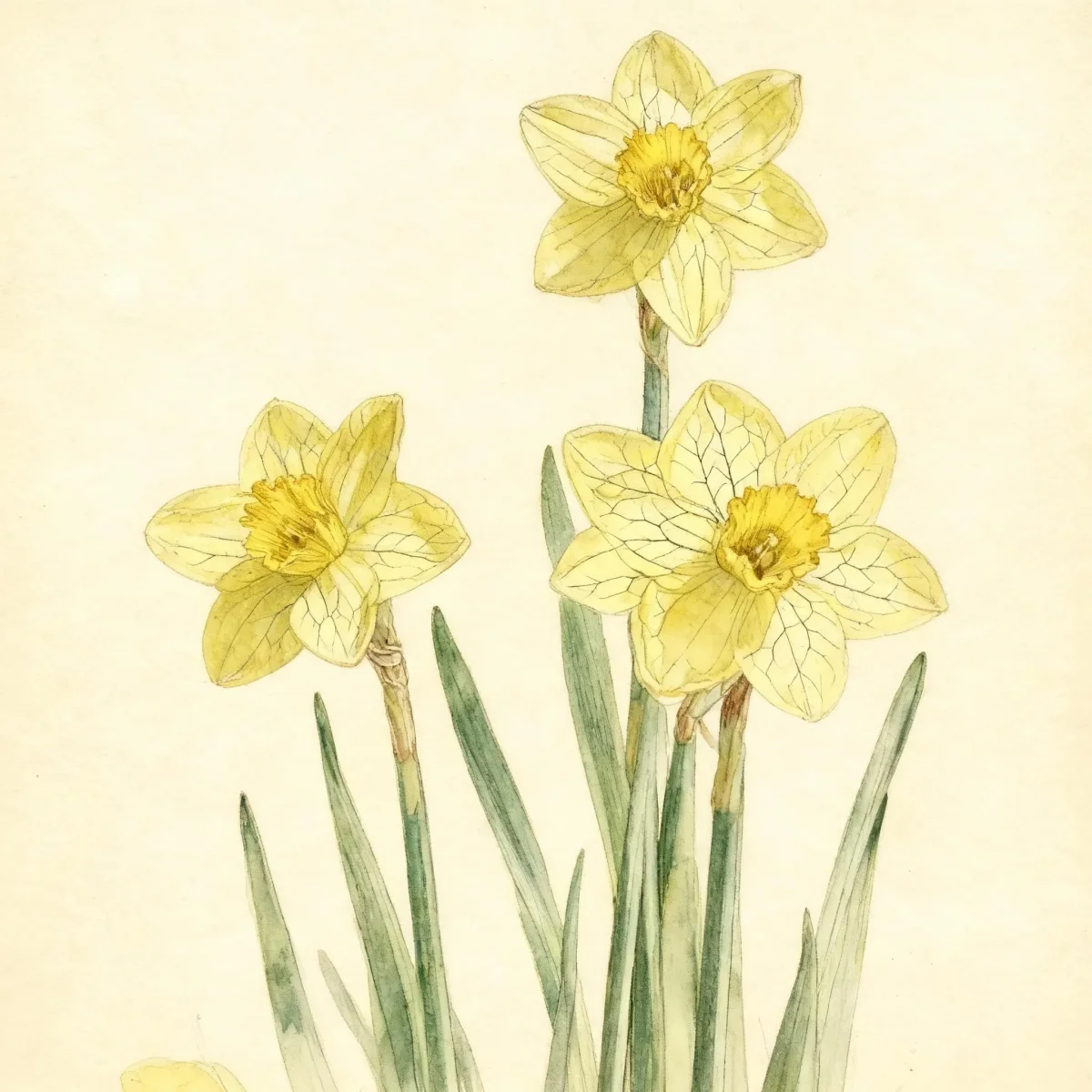
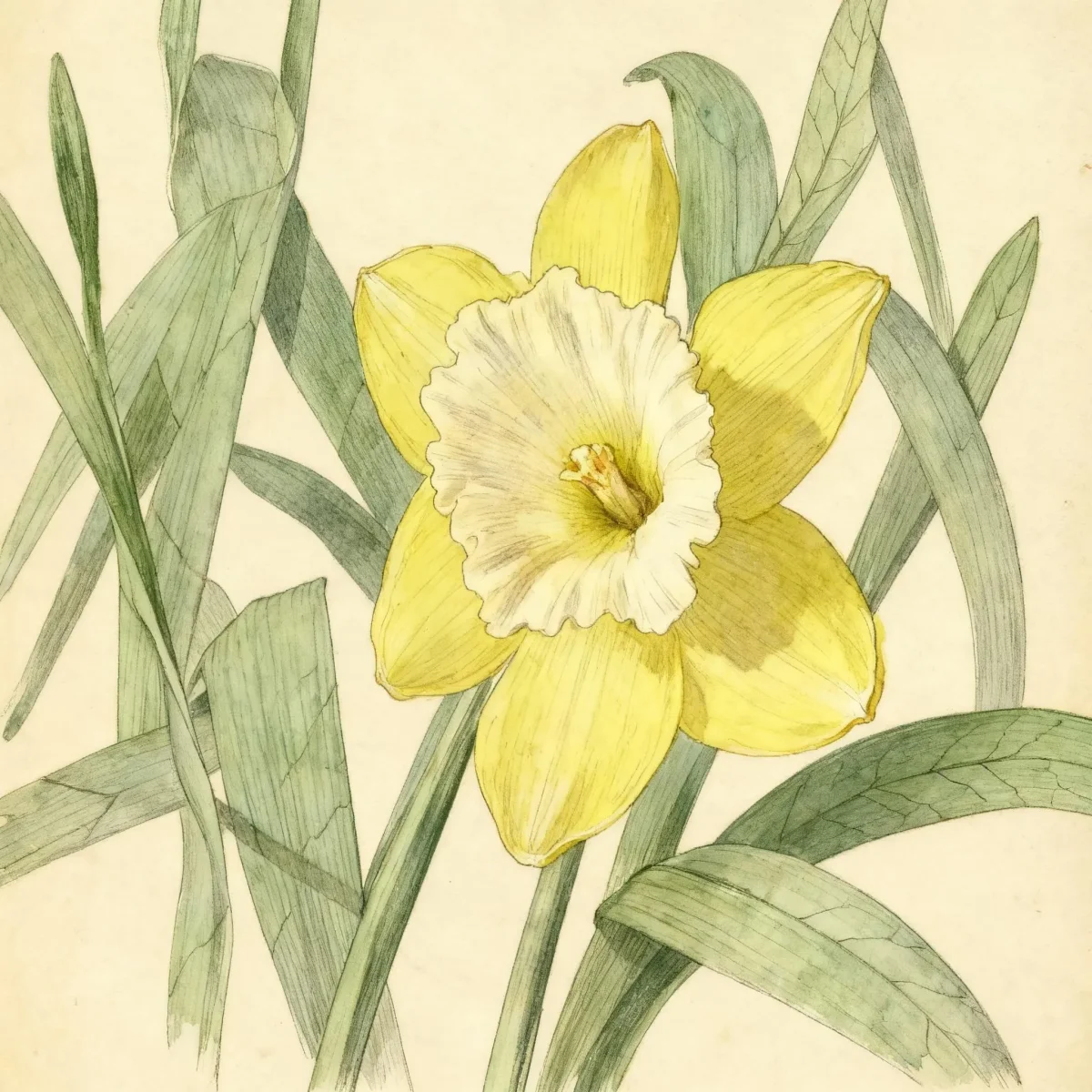
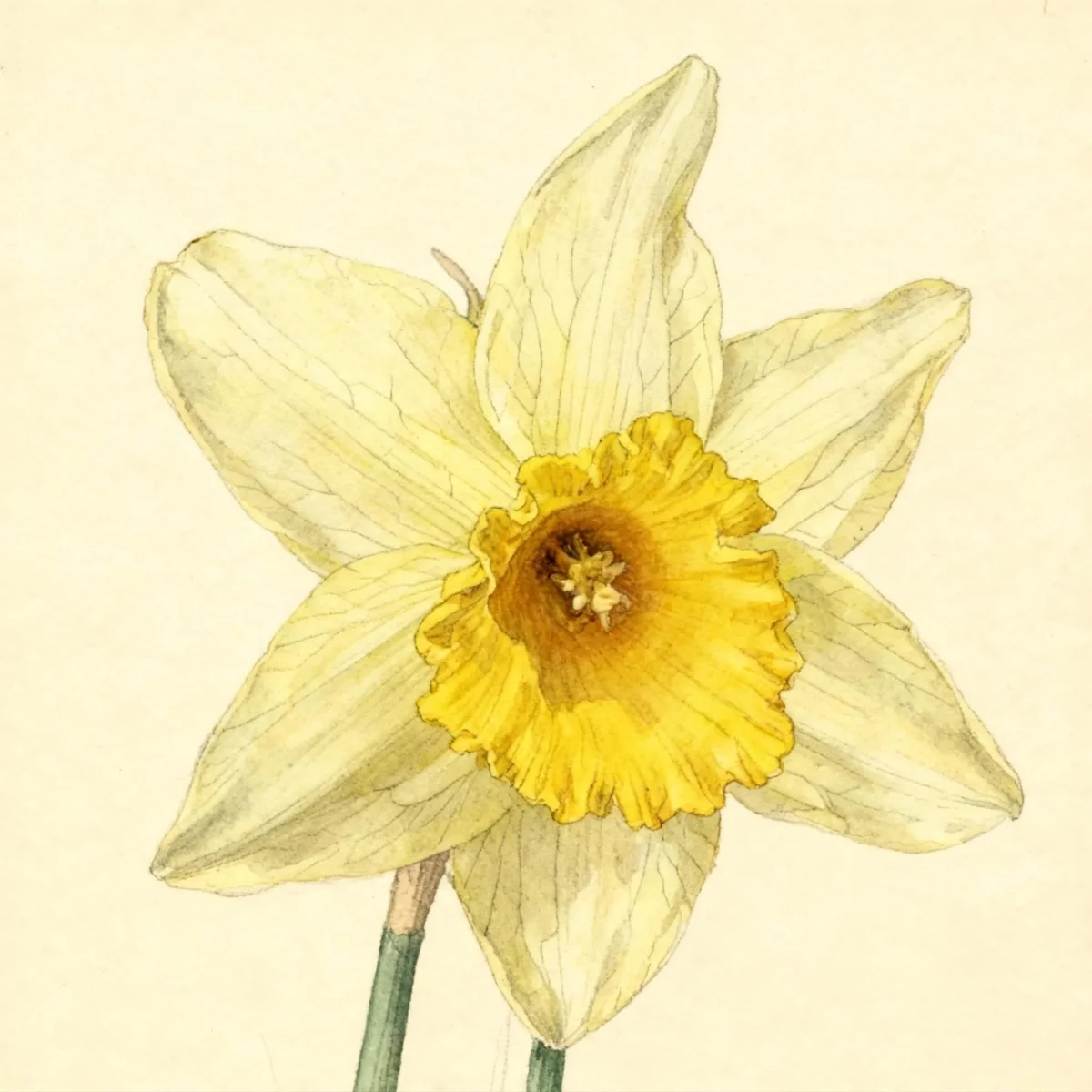
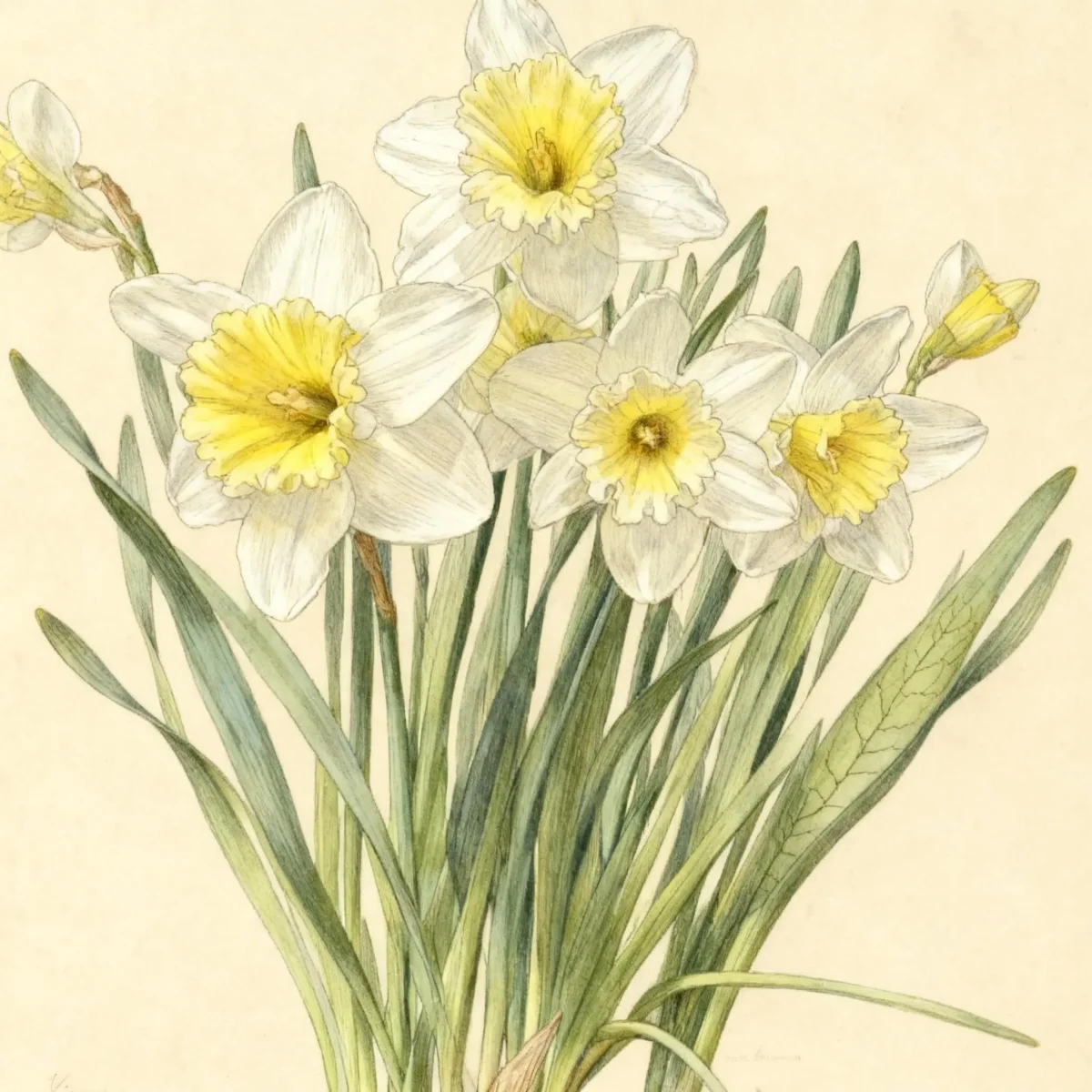
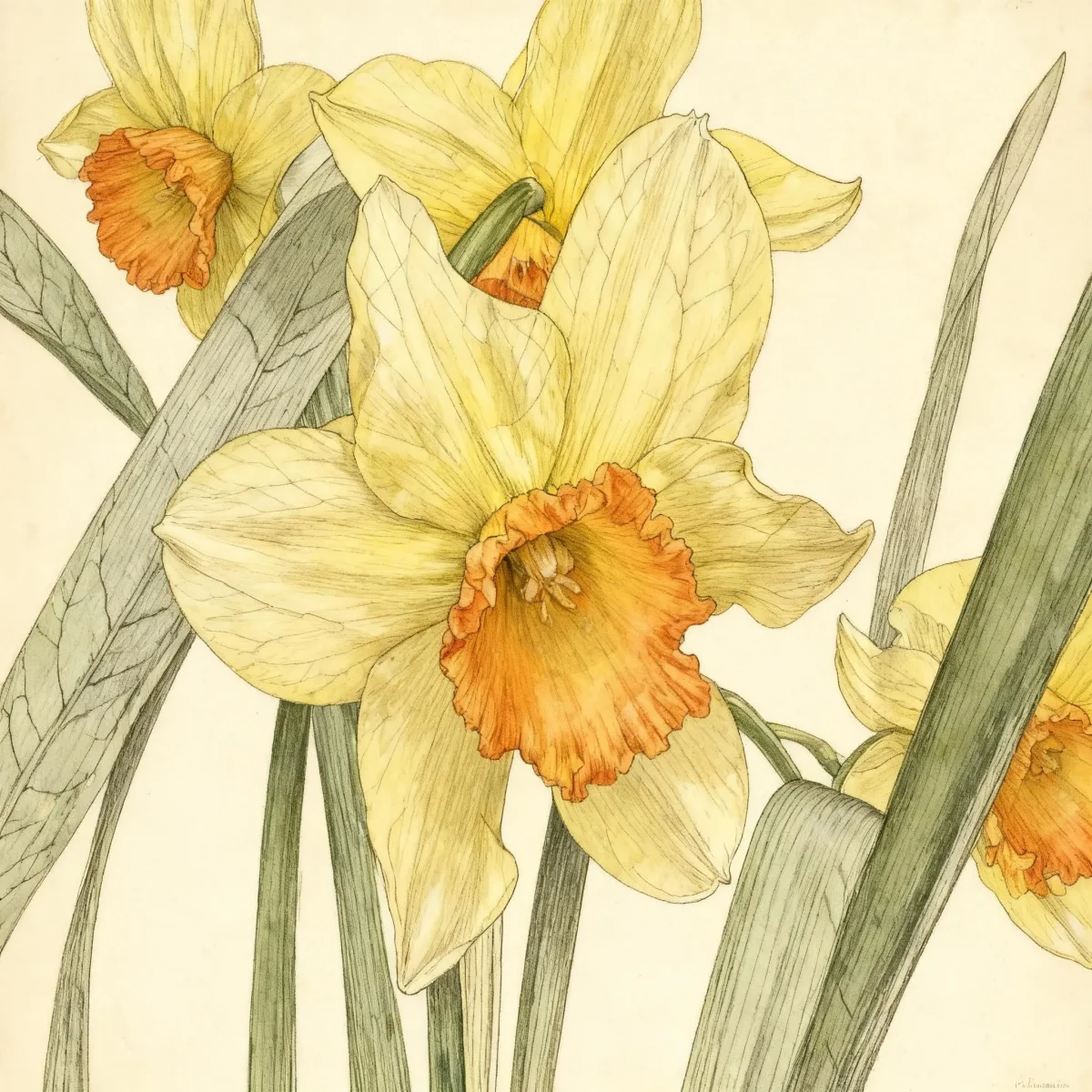
Large-cupped daffodil (Narcissus 'Polbathic')
Narcissus 'Polbathic' is a stunning Large-cupped daffodil, offering bright yellow petals and a striking red cup for mid-spring color.
Scroll down to discover growing tips, care requirements, companion plants, and more
Complete Plant Information
Overview
The Large-cupped daffodil, specifically the cultivar Narcissus ‘Polbathic’, is a prized addition to any spring garden palette. This variety is celebrated for its bold, bicolored display, setting bright yellow petals against a distinctive cylindrical red cup, making it highly valuable for focal points. As a dependable bulb, Narcissus ‘Polbathic’ provides reliable perennial color without demanding excessive attention from the gardener.
Growing between one and one-and-a-half feet tall, this daffodil thrives in full sun to partial shade conditions and requires only medium moisture. Its low maintenance profile ensures that the spectacular bloom of this Large-cupped daffodil returns year after year, creating an enduring spectacle that heralds the arrival of warmer weather.
For maximum impact, gardeners often mass plant Narcissus ‘Polbathic’ to create sweeping drifts of vibrant color. These durable bulbs offer excellent naturalizing potential, quickly filling in areas once established, securing their place as a mainstay of traditional and contemporary spring plantings.
Fast Facts
- Plant Family: Amaryllidaceae
- Plant Type: Bulb
- Hardiness Zones: USDA Zones 3-8
- Size at Maturity:
- Height: 1-1.5 ft
- Spread: 0.75-1 ft
- Bloom Time: April
- Bloom Description: Yellow with cylindrical red cup
- Sun Exposure: Full sun to part shade
- Water Needs: Medium
- Maintenance Level: Low
How to Grow
Planting these beautiful bulbs should be done in the early to mid-fall season to allow for proper root establishment before the ground freezes. Choose a location offering full sun to light part shade, ensuring the soil is organically rich and, most critically, well-drained; bulb rot is a primary concern in wet spots. Depth is key: plant each Narcissus ‘Polbathic’ bulb two to three times as deep as the bulb is tall, aiming for about 3 inches of soil coverage on top. Spacing widely (4-10 inches apart) allows clumps to mature slowly without immediate division.
During the active growing season, keep the soil uniformly moist, though this daffodil tolerates drought once dormancy begins. After the glorious yellow and red blooms of your Large-cupped daffodil fade, deadhead the flower stems to prevent seed formation, but resist the urge to cut the foliage back. The leaves must be left to yellow naturally, as this process replenishes the underground bulb reserves for next spring’s show of Narcissus ‘Polbathic’.
Daffodils are excellent candidates for leaving undisturbed for many years. If the bloom quality or quantity begins to diminish after several seasons, lift and divide the clumps immediately after the foliage has completely died back. Remember that the flowers typically track the sun, so situate plantings so that any overhead shade falls behind the display, maximizing the visibility of the impressive cup.
Landscape Uses
Daffodils possess the wonderful characteristic of perennial blooming, making them far more reliable than annual displays. Narcissus ‘Polbathic’ excels when planted in substantial groupings, ranging from small clusters of six bulbs to large, sweeping naturalized drifts. They are superb for softening the base of taller shrubs or massing under deciduous trees where they receive sun before the canopy leafs out.
These dependable spring bloomers mix exceptionally well with other spring-flowering bulbs like tulips or hyacinths, layering color throughout the garden. Consider using the distinct coloring of this Large-cupped daffodil in formal borders or wild gardens where they can be allowed to naturalize freely. Planting them in quantity ensures that even as squirrels dig up a few, enough of the striking yellow and red blooms of Narcissus ‘Polbathic’ will emerge.
Standout Features
Flower Qualities
- Showy
Noteworthy Characteristics
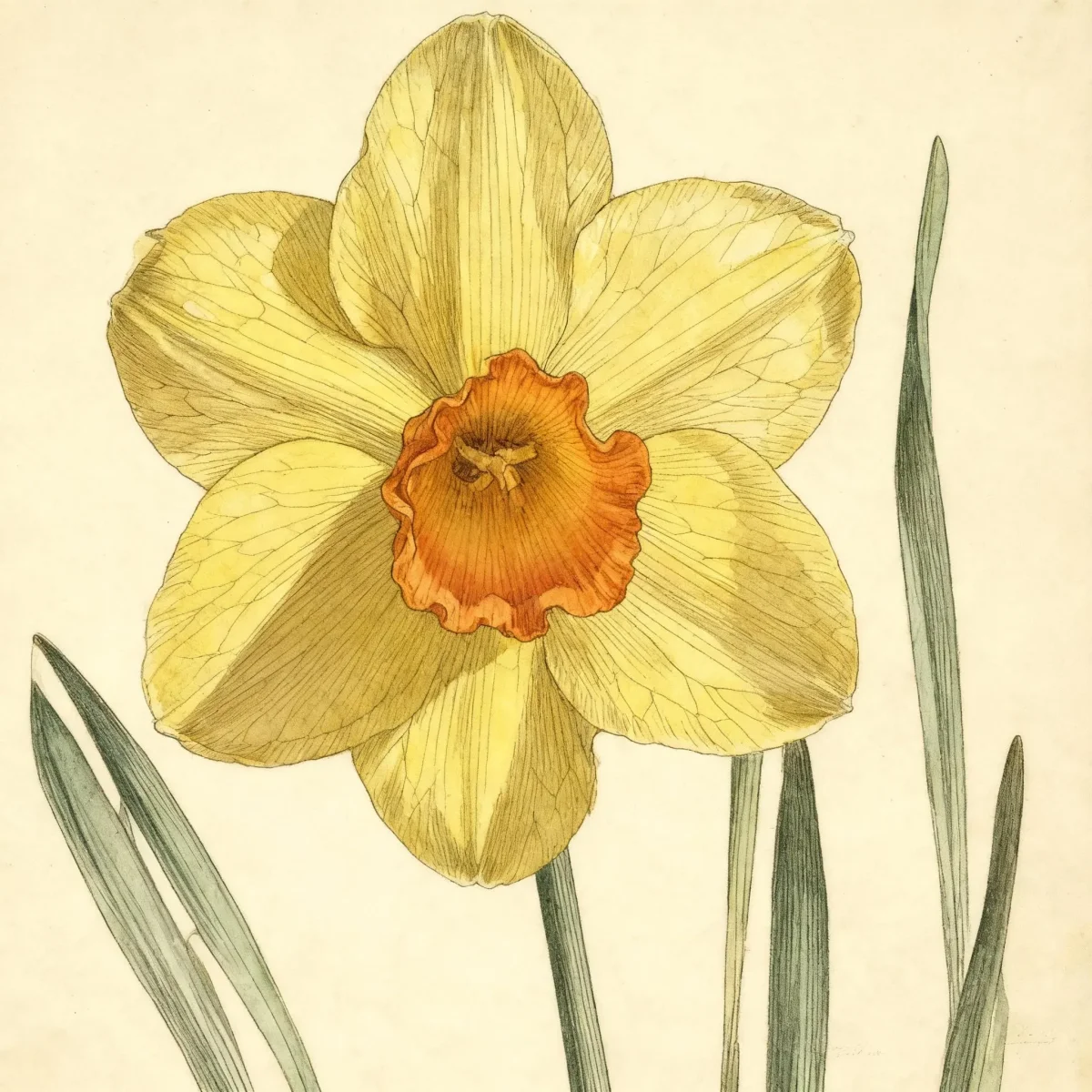
Narcissus is a genus of about 50 species of bulbous perennials from Europe and North Africa, serving as essential mainstays of the spring garden. Flowers generally feature a cup (corona) surrounded by six petals (perianth segments) in various colors. ‘Polbathic’ is specifically classified as a large-cupped daffodil (Division II), meaning its cup length is greater than one-third but less than the full length of the petals. Each flower on Narcissus ‘Polbathic’ displays yellow petals around its cylindrical red cup, rising to heights of 16-18 inches in mid-spring.
Tolerances
- Rabbit
- Deer
- Drought
Potential Problems
Daffodils, including Narcissus ‘Polbathic’, are generally noted for being pest-free when grown in appropriate, well-drained soils. The main cultural concern is bulb rot, which occurs if the soil retains too much moisture. Infrequently, pests like the narcissus bulb fly or slugs may cause minor damage. For virus issues, such as Narcissus yellow stripe, the best strategy is to remove and destroy infected plants to prevent spread. Because this Large-cupped daffodil is deer and rabbit resistant, it avoids significant browsing pressure.
Frequently Asked Questions
What hardiness zones is Large-cupped daffodil suitable for?
This bulb is hardy across USDA Zones 3 through 8, offering wide usability across many climates.
How large does Narcissus ‘Polbathic’ grow?
Narcissus ‘Polbathic’ typically reaches a modest height between 1 and 1.5 feet tall, spreading about 0.75 to 1 foot wide.
When does Large-cupped daffodil bloom?
This variety typically blooms in April, featuring its signature yellow petals and cylindrical red cup, marking it as a mid-season bloomer.
What sun exposure does Narcissus ‘Polbathic’ need?
For the best flowering and health, plant this daffodil where it will receive full sun or light part shade.
Conclusion
The vibrant combination of yellow petals and a bold red cup ensures that Narcissus ‘Polbathic’ captures attention early in the season. This low-maintenance Large-cupped daffodil readily naturalizes, providing dependable, year-over-year spring brilliance with minimal effort required from the gardener. Ensure your site has excellent drainage and plant your bulbs this fall to enjoy the striking return of Narcissus ‘Polbathic’ next April.
Companion Planting
When designing spring displays around your Narcissus ‘Polbathic’, pairing it with plants that offer contrasting texture or bloom time is highly effective. Consider planting early-blooming species like Snowdrops (Galanthus) to bridge the gap before the daffodil emerges. For mid-to-late spring color, plant tulips or grape hyacinths (Muscari) nearby; these companions share similar sun and soil requirements (full sun, well-drained soil).
After the Large-cupped daffodil foliage begins to fade, perennials such as emerging Hostas or low-growing Geraniums can take over the space, hiding the dying leaves while providing consistent groundcover. Since the Daffodil is toxic and avoided by deer and rabbits, you can confidently plant more susceptible annuals or vegetables near established drifts of Narcissus ‘Polbathic’ without fear of pest browsing.
Design Ideas for Naturalizing
Allowing Narcissus ‘Polbathic’ to naturalize transforms formal borders into flowing, woodland-edge vignettes. Instead of rigid rows, toss handfuls of the bulbs randomly across the intended area before planting them at the appropriate depth. This method mimics natural distribution and results in organic drifts that look more mature sooner.
For a dramatic contrast, interplant Narcissus ‘Polbathic’ with white-flowering early spring bulbs like Narcissus ‘Thalia’ or white Muscari. The strong red cup provides a warm anchor against cool whites and blues. Because this species is hardy and relatively tall for a daffodil, it works well planted one row deep in front of evergreen shrubs, where the evergreen backdrop makes the yellow and red flowers pop vividly against the dark foliage.