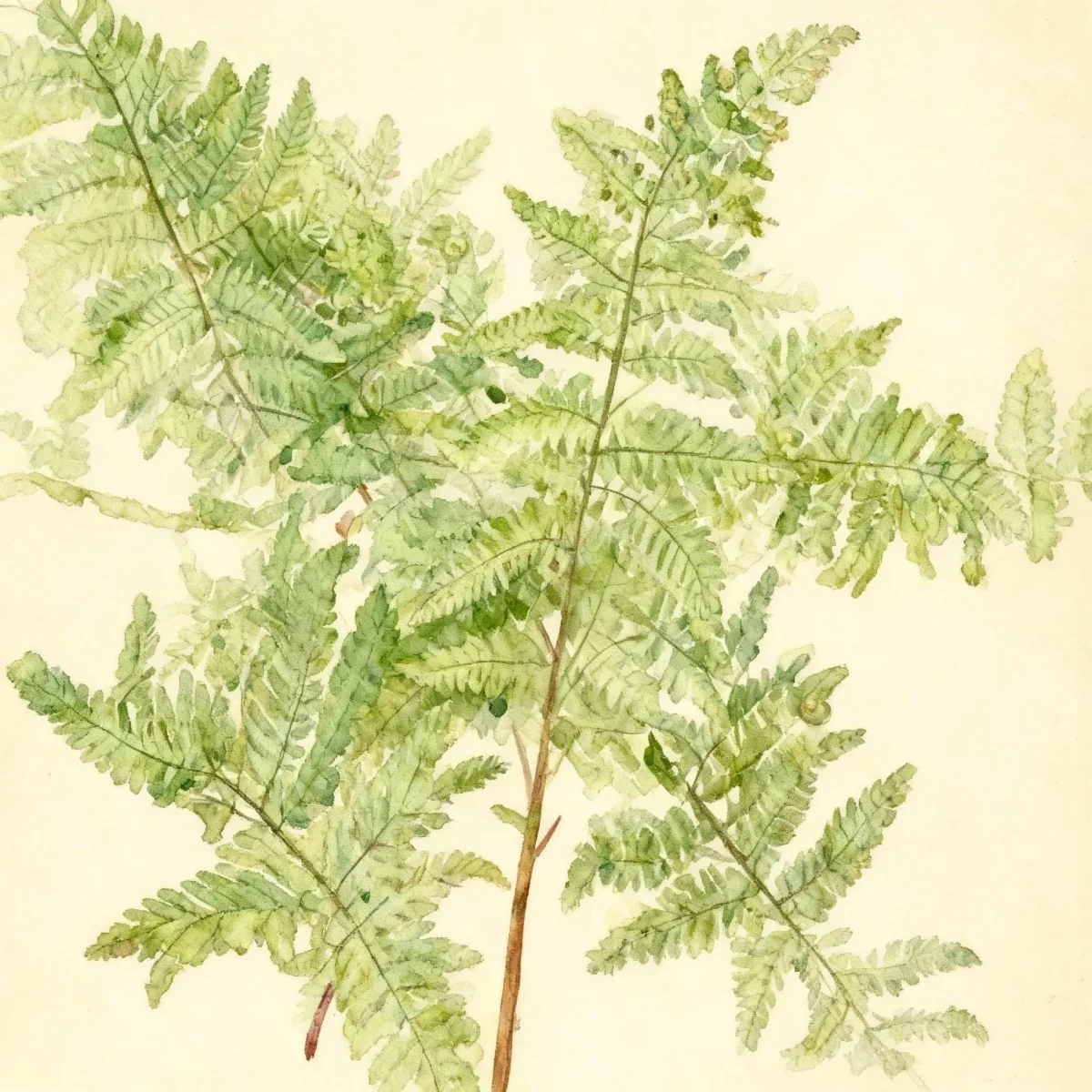
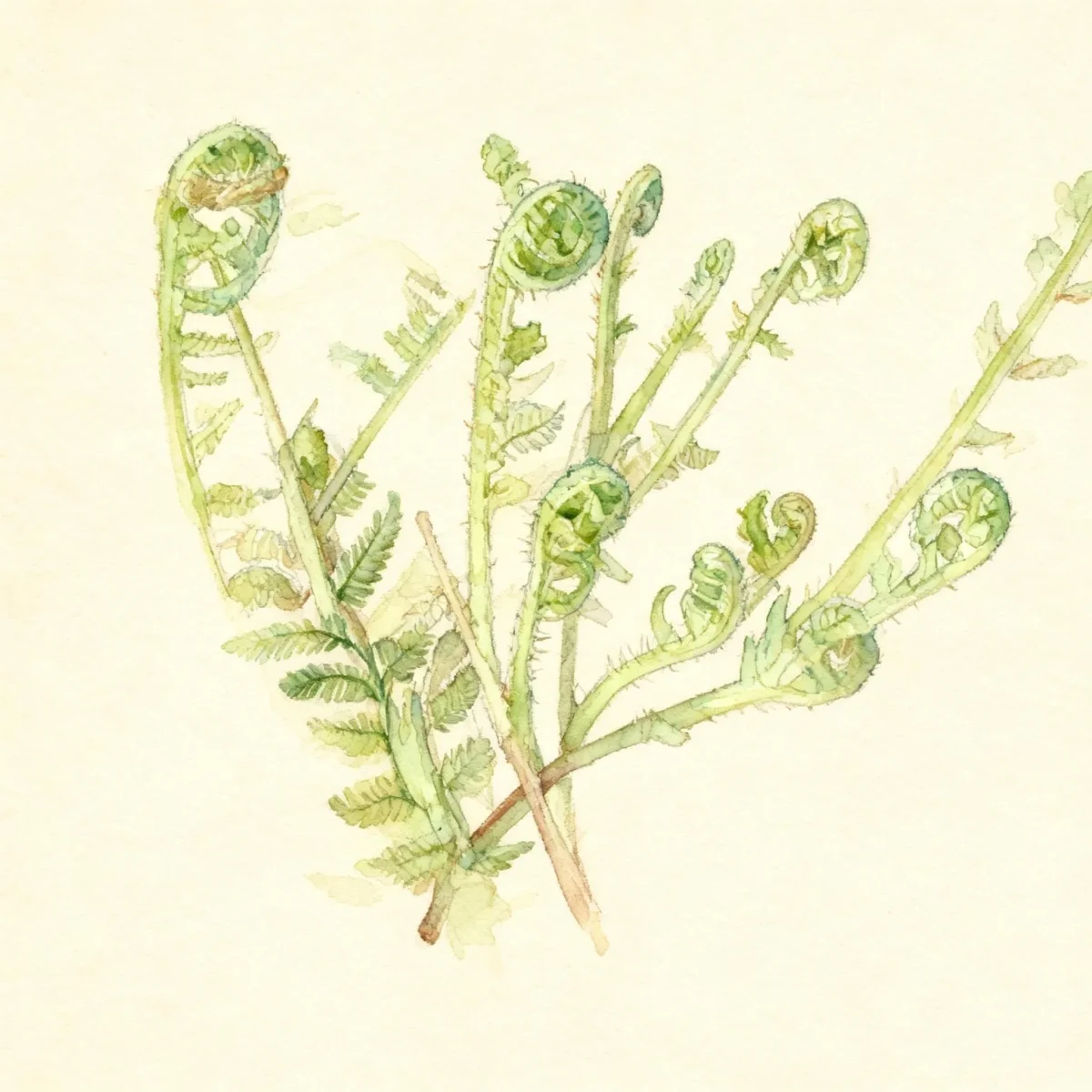
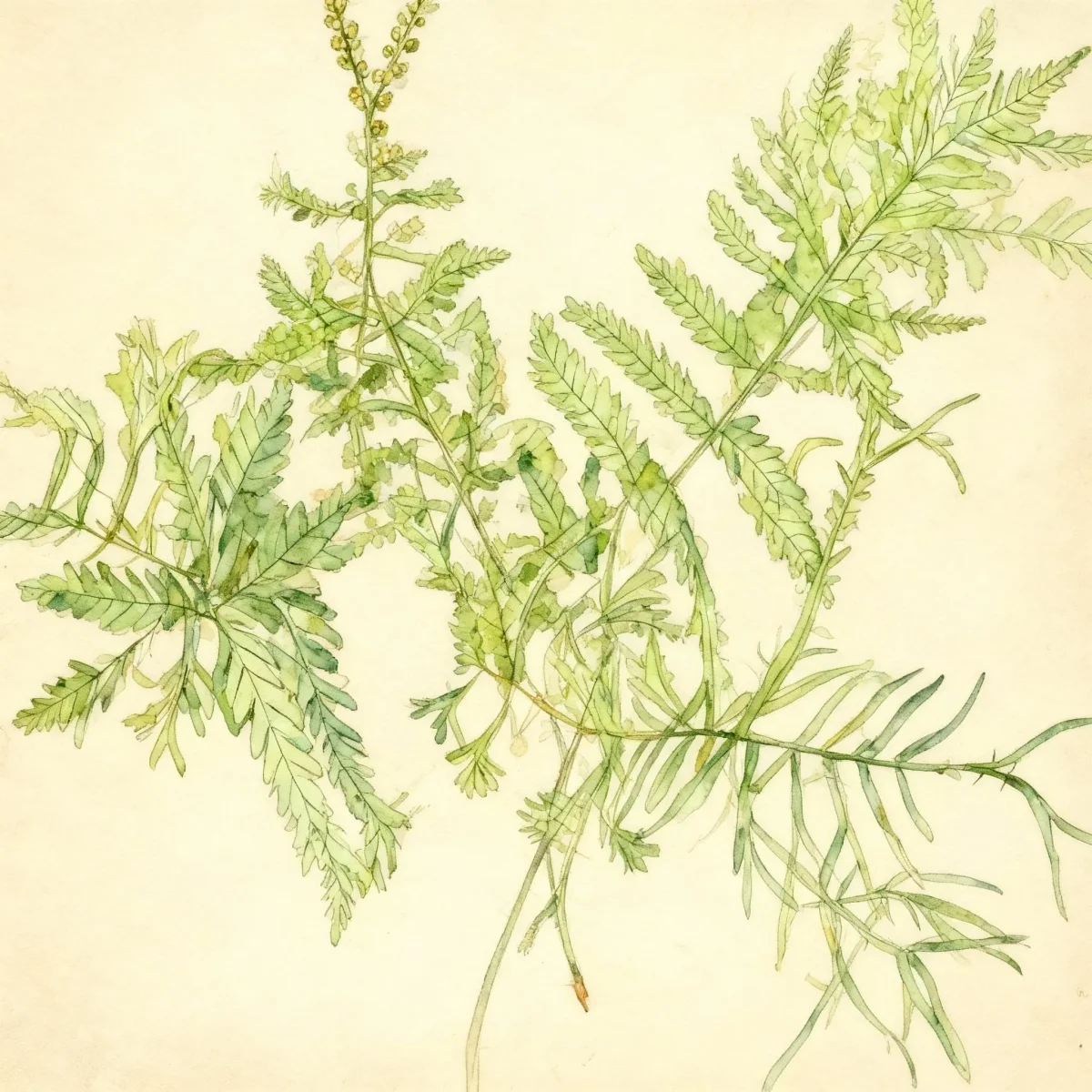
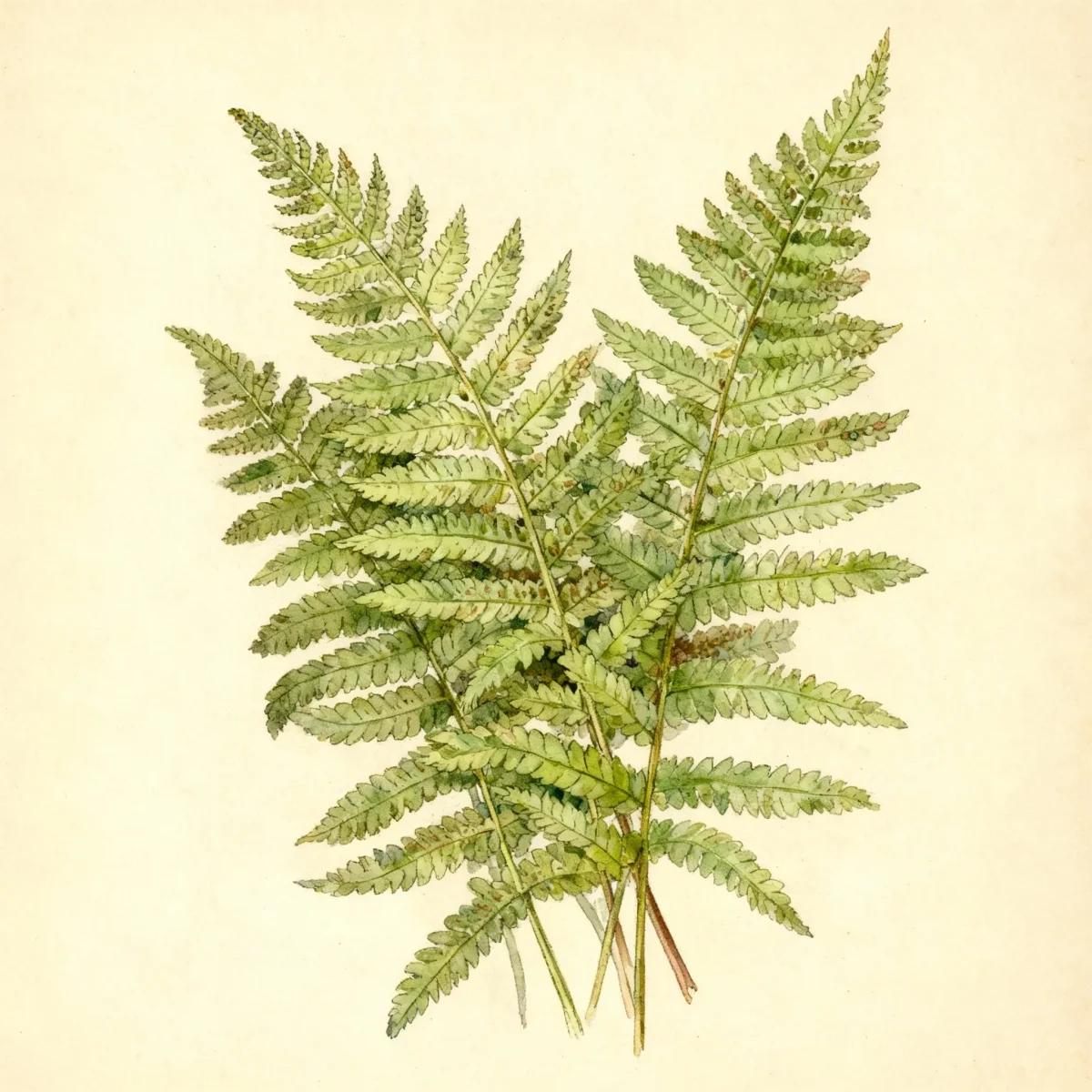
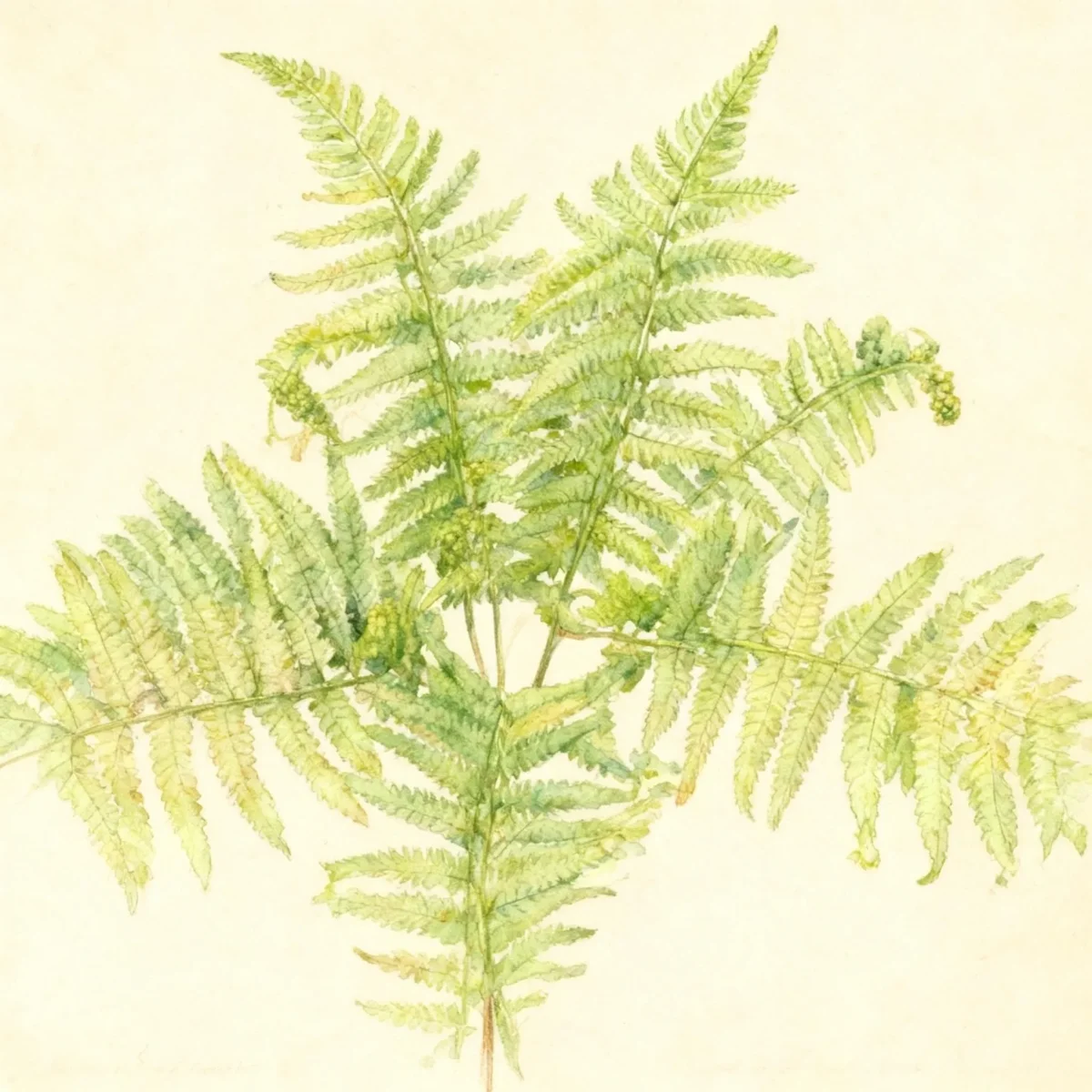
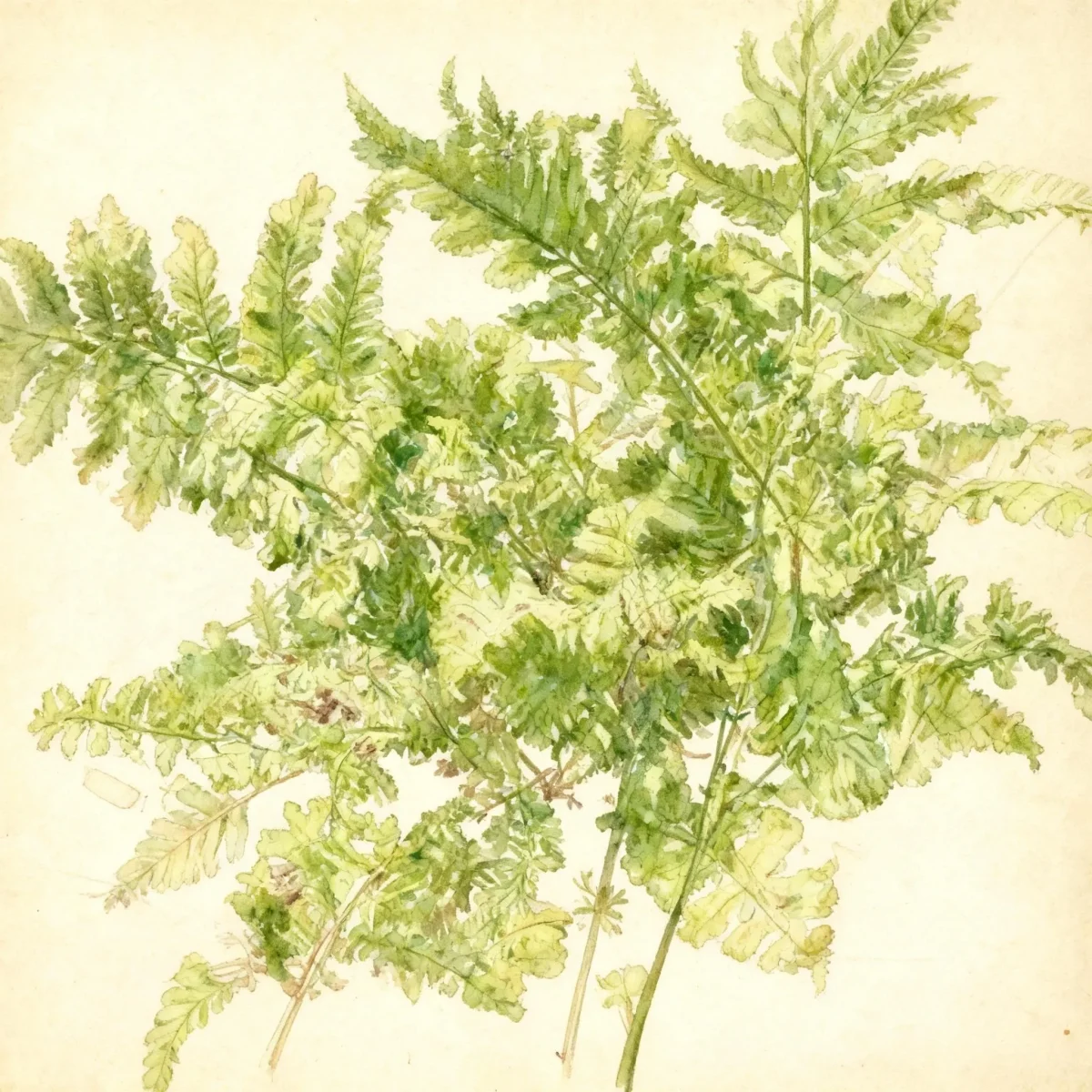
Buckler fern (Dryopteris × complexa 'Robust')
The robust Dryopteris × complexa 'Robust' Buckler fern offers vigorous, deeply divided fronds for deep shade gardens. Easy care and drought tolerant once established.
Scroll down to discover growing tips, care requirements, companion plants, and more
Complete Plant Information
Overview
The Buckler fern, scientifically known as Dryopteris × complexa ‘Robust’, is a highly valued hybrid highly prized for its vigorous growth habit and substantial foliage mass. This hybrid combines the strong structure of one parent with the finely dissected texture of the other, resulting in deeply divided, upright arching fronds that create significant visual interest in shaded areas. Gardeners appreciate the Dryopteris × complexa ‘Robust’ for its reliable performance and lower maintenance needs compared to some delicate ferns.
Typically reaching three to four feet tall, this cultivar offers impressive vertical accent for shade gardens. Its structure forms a substantial, somewhat ruffly display of fronds that emerge light green before maturing to a rich, deep green. Once established, the Buckler fern exhibits surprising drought tolerance, making it a dependable choice even in drier woodland environments.
For gardeners seeking reliable structure and texture in deep shade, the Dryopteris × complexa ‘Robust’ delivers excellent results with minimal fuss. Its hardiness across USDA Zones 5 through 9 ensures its adaptability across many regions, providing enduring greenery where many flowering plants struggle.
Fast Facts
- Plant Family: Dryopteridaceae
- Plant Type: Fern
- Hardiness Zones: USDA Zones 5-9
- Size at Maturity:
- Height: 3-4 ft
- Spread: 3-4 ft
- Bloom Time: Non-flowering
- Bloom Description: Non-flowering
- Sun Exposure: Part shade to full shade
- Water Needs: Medium
- Maintenance Level: Low
How to Grow
Planting the Buckler fern is best achieved in spring or fall to allow the root system to establish before extreme temperatures. Ensure placement is in an area receiving protection from harsh afternoon sun, favoring sun-dappled conditions or consistent part shade to full shade. Optimal aesthetic and health outcomes are achieved when planted in well-drained soils rich in organic matter, mimicking the moist, humusy conditions found on a forest floor.
Watering should be consistent, aiming for medium moisture content, particularly during the first growing season. While surprisingly drought tolerant once established, deep, slow watering during prolonged dry spells is recommended to maintain peak foliage quality. Fertilization is rarely necessary; focus instead on amending the soil annually with compost to maintain richness and drainage.
Site your Dryopteris × complexa ‘Robust’ away from sources of strong wind, which can easily damage the delicate fronds and disrupt the upright arching form. In colder zones (near the lower end of Zone 5), this fern may be fully deciduous; in warmer areas, it remains semi-evergreen. Cut back any dead or unsightly foliage in late winter or early spring just as new growth begins to emerge.
Landscape Uses
The upright, arching habit of the Dryopteris × complexa ‘Robust’ makes it an outstanding choice for structuring woodland or shade gardens. It excels when used as a background element, providing vertical height behind lower-growing shade perennials or groundcovers. Given its substantial size—three to four feet tall—it effectively screens utilities or foundation plantings that require year-round visual interest.
Use several specimens of Buckler fern planted in drifts for a naturalized, immersive forest edge effect. They pair beautifully with hostas, astilbes, and woodland ephemerals, whose varied textures contrast nicely with the finely divided fronds of the fern. This plant excels in damp, shady borders where bold, architectural foliage is needed to anchor a design.
Standout Features
Noteworthy Characteristics
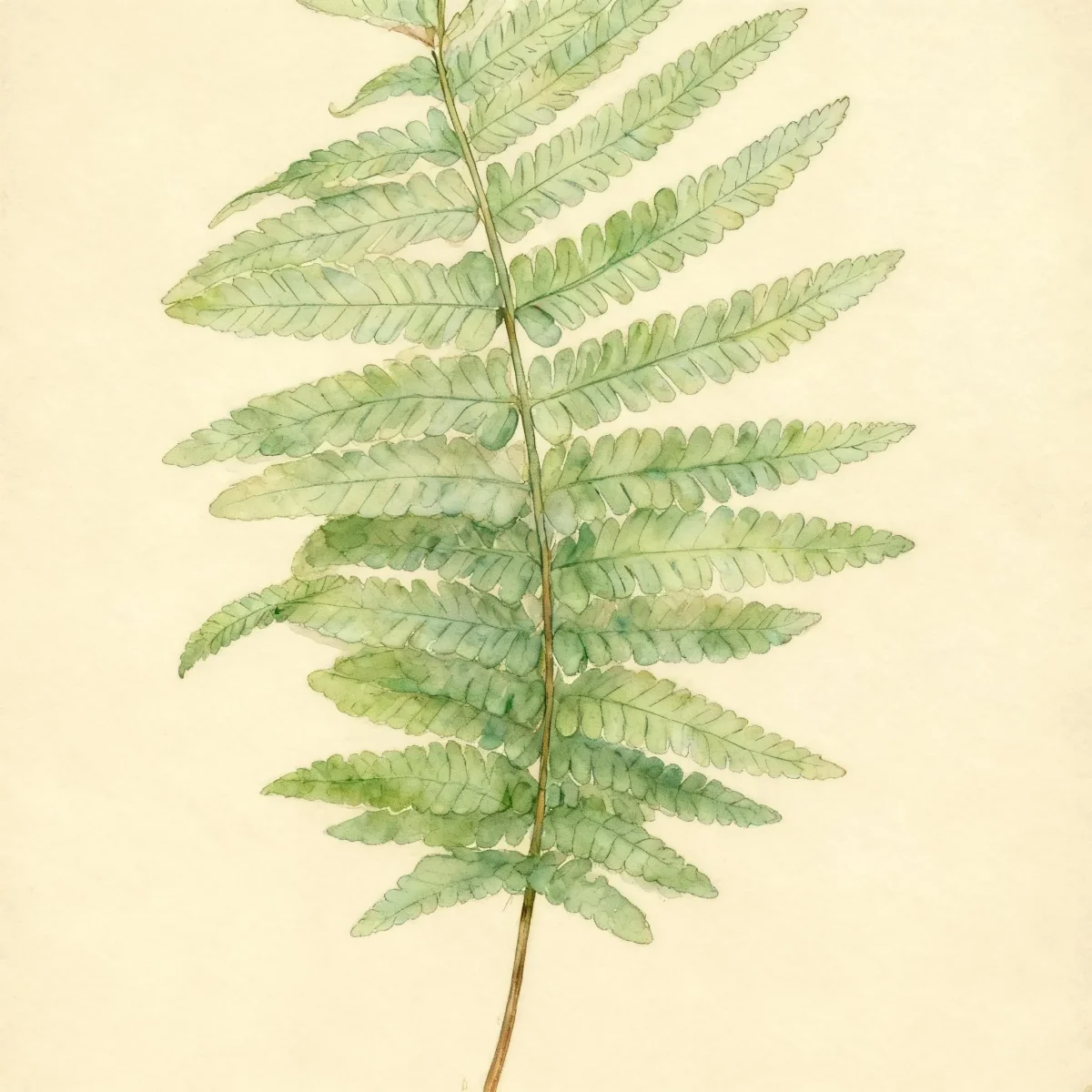
Dryopteris × complexa, commonly known as buckler fern, is a hybrid between D. Affinis and D. Filix-mas. It generally features the stronger fronds of D. Affinis and the more finely divided fronds of D. Filix-mas. Bipinnate upright arching fronds rise to 2-3’ tall from an erect crown. The hybrid name complexa means “complex” in reference to the highly dissected fronds of this hybrid. As its name suggests, ‘Robust’ is a vigorous grower which forms a substantial foliage mass of deeply divided, upright arching fronds which have a somewhat ruffly or wavy appearance.
Tolerances
- Rabbit
- Drought
- Heavy Shade
Potential Problems
This fern variety exhibits remarkable resilience, rarely suffering from serious insect infestations or persistent disease issues under proper growing conditions. The primary cultural issue to avoid is overly dry soil or planting in full, scorching sun, which can lead to browning and crisping of the fronds. Ensure excellent drainage to prevent crown rot, although once established, the Buckler fern manages medium moisture quite well.
Frequently Asked Questions
What hardiness zones is Buckler fern suitable for?
The Dryopteris × complexa ‘Robust’ is reliably hardy in USDA Hardiness Zones 5 through 9.
How large does Buckler fern grow?
Mature specimens of Dryopteris × complexa ‘Robust’ typically achieve a height between 3 and 4 feet and a spread between 3 and 4 feet.
What sun exposure does Buckler fern need?
This fern prefers part shade to full shade, thriving best where it receives dappled sunlight rather than harsh, direct midday rays.
When does Buckler fern bloom?
As a fern, the Dryopteris × complexa ‘Robust’ is non-flowering.
Conclusion
The Buckler fern stands out for its low maintenance, impressive size, and ability to thrive in deep shade environments previously thought difficult to plant. By installing the vigorous Dryopteris × complexa ‘Robust’ in enriched, well-drained soil suited to its medium water needs, you secure rich, reliable texture for years. Always verify your local hardiness zone before planting this excellent woodland specimen.
Companion Planting
When selecting partners for the Buckler fern, prioritize plants that share similar requirements for moisture and shade tolerance. Good pairings include Hosta varieties with blue or chartreuse foliage to set off the rich green of the fern fronds. Other excellent complements are plants like bleeding hearts (Dicentra spectabilis) or various species of Tiarella (Foamflower), which offer seasonal blooms beneath the long-lasting structure of the Dryopteris × complexa ‘Robust’.
Seasonal Care Calendar
Early spring is the ideal time for cleanup and rejuvenation. Remove any tattered or dead fronds from the previous season before new croziers begin to unroll. This simple step ensures the plant puts fresh energy into its upright display. Throughout the summer, monitor moisture, especially if planted near tree roots that can wick away water; consistent medium moisture is healthier than infrequent deep soaking when dealing with Dryopteris × complexa ‘Robust’. In fall, there is generally no necessary intervention unless high winds are expected, in which case tying the fronds loosely can offer protection.