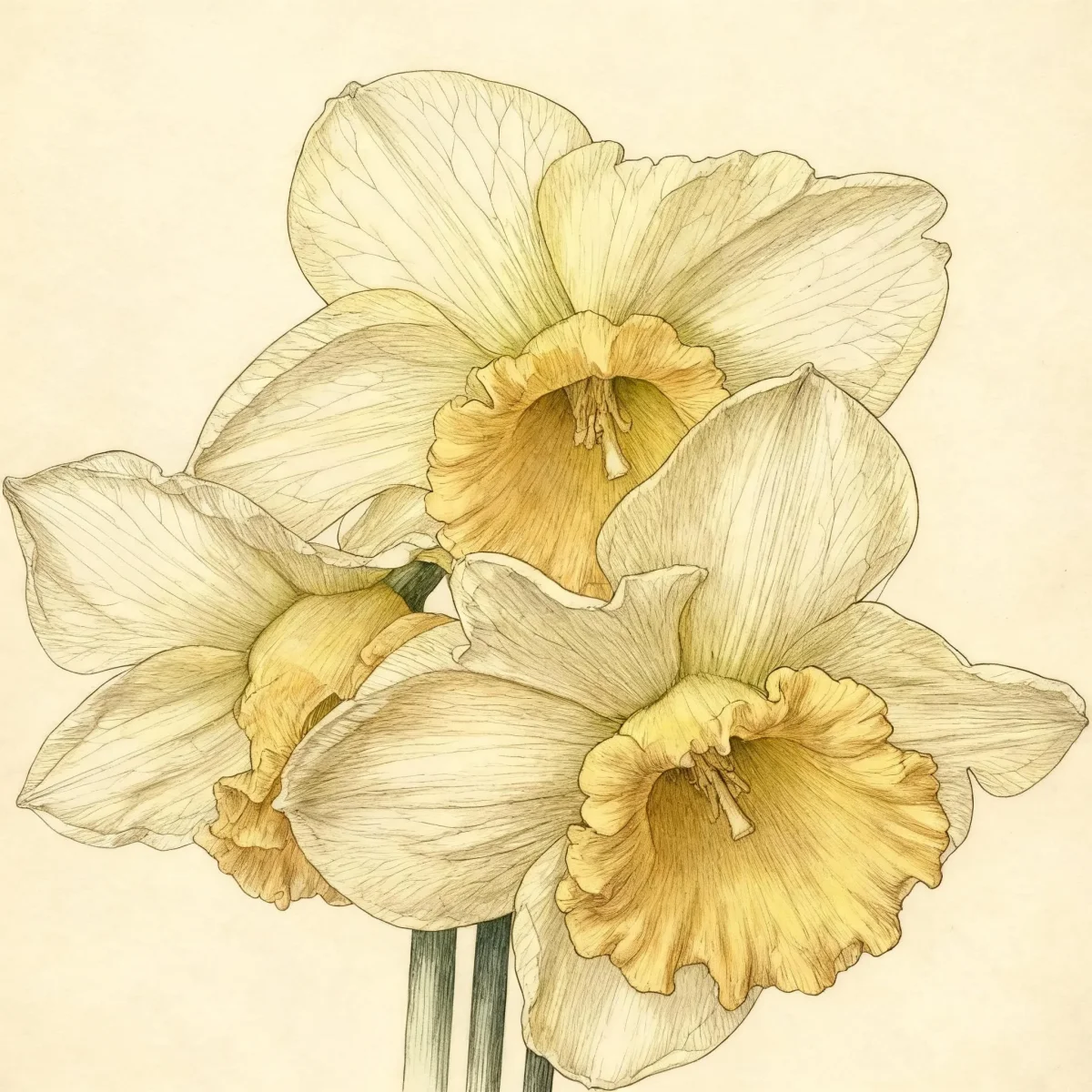
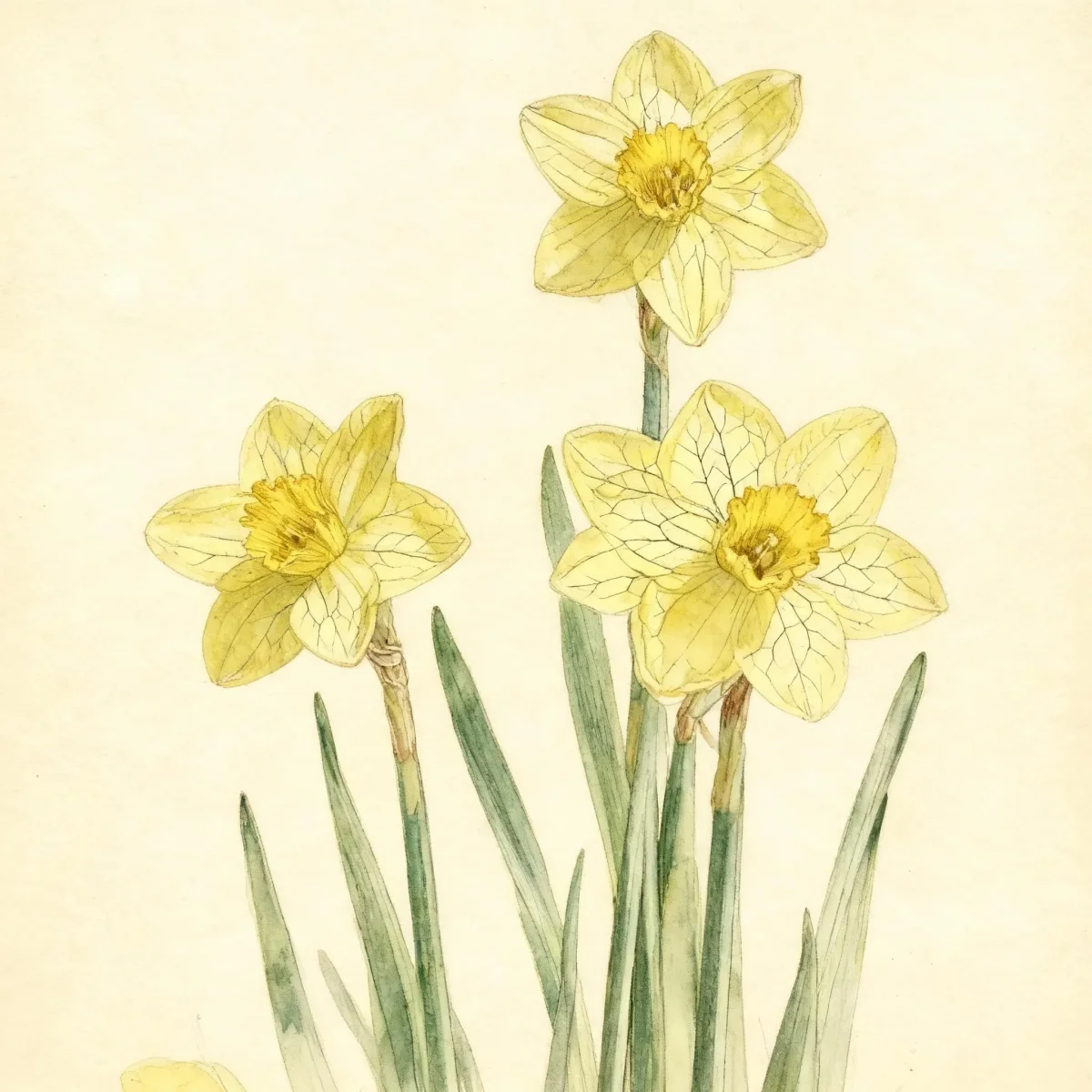
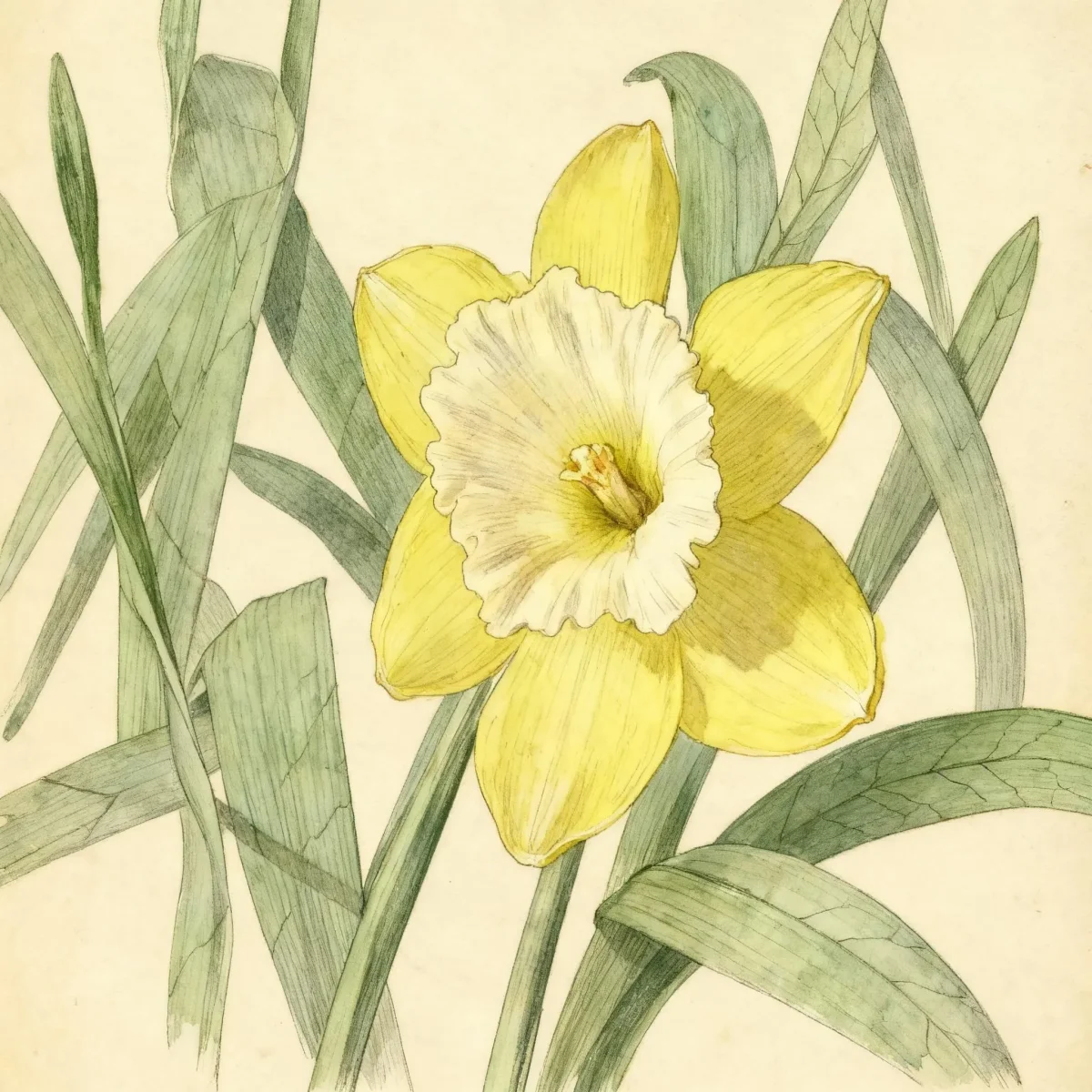
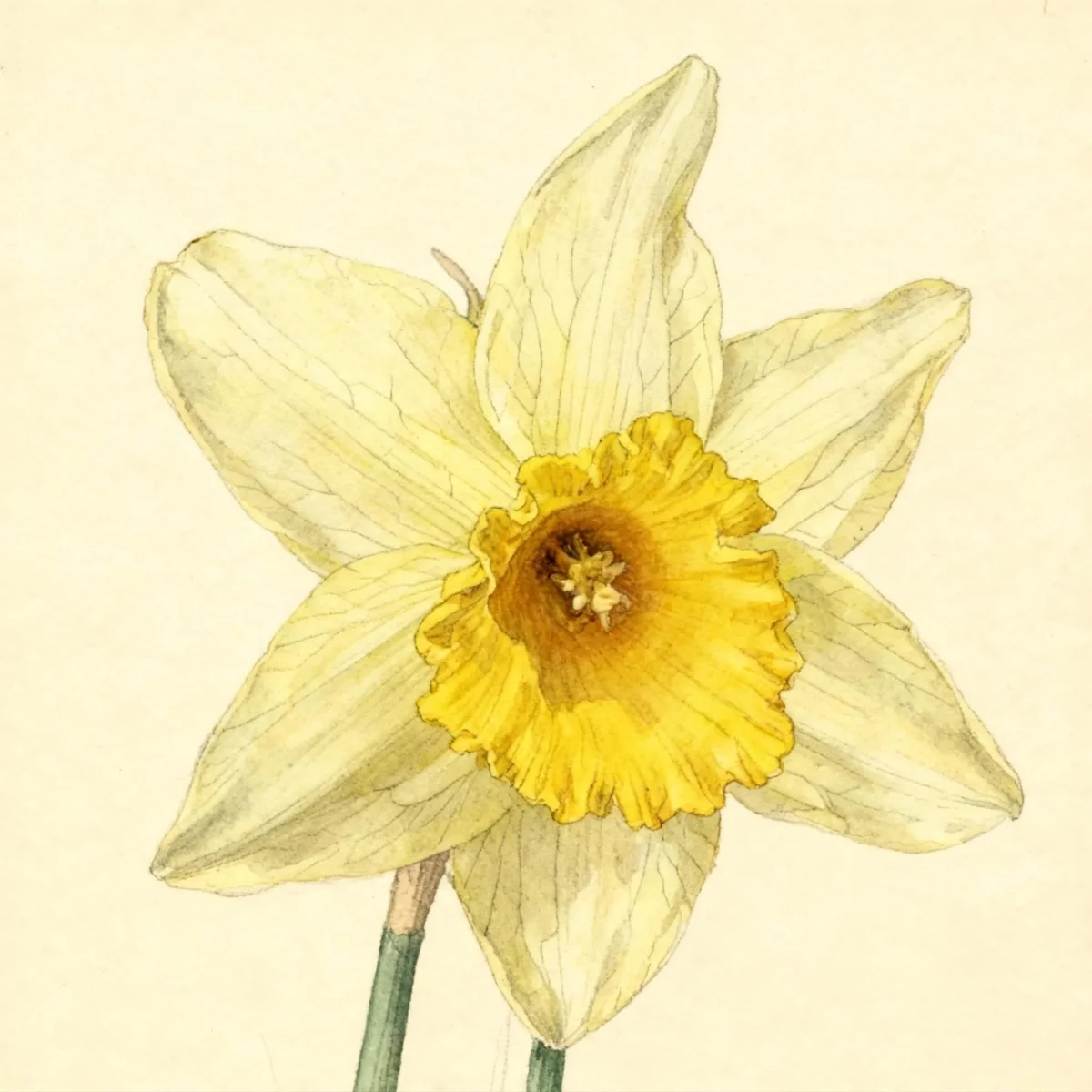
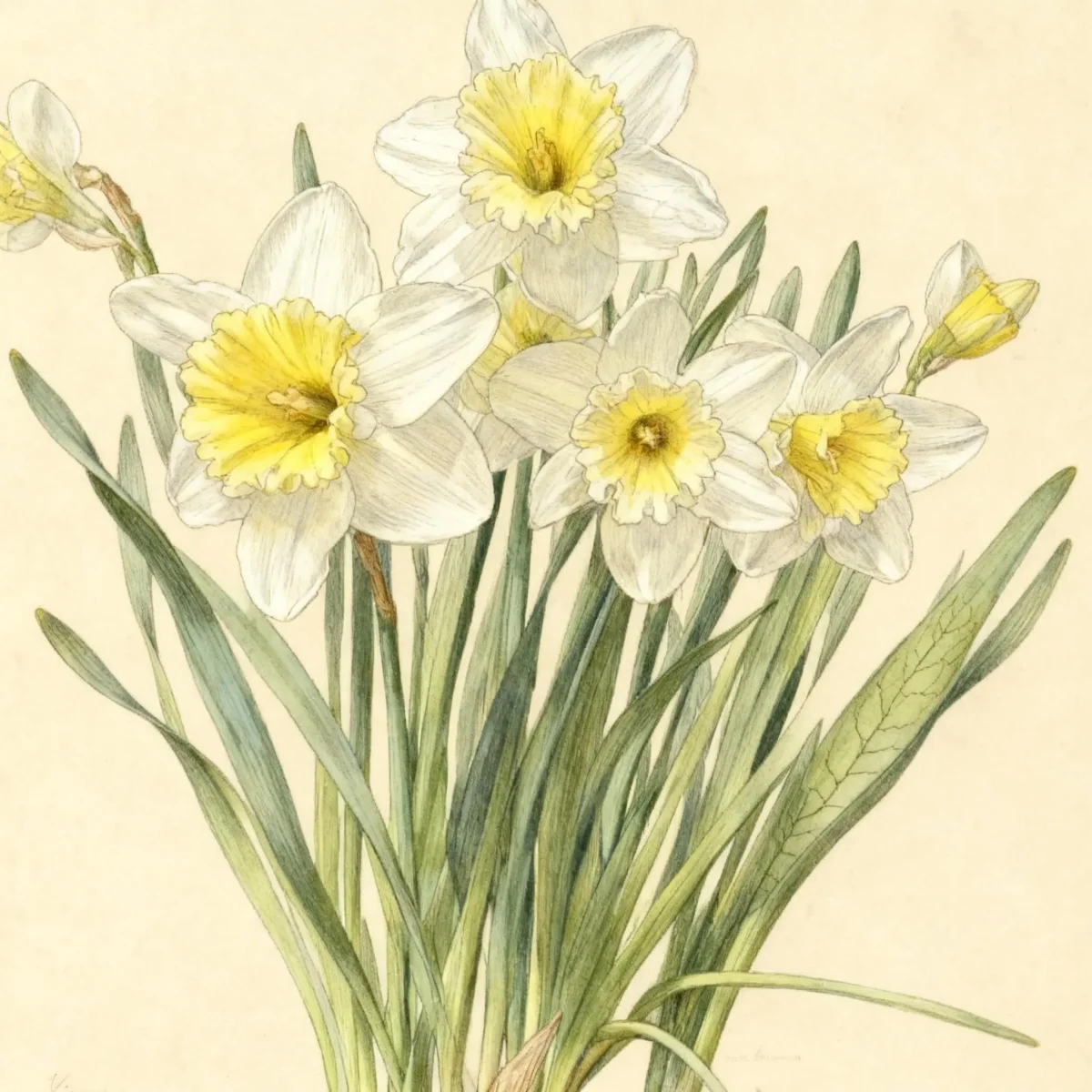
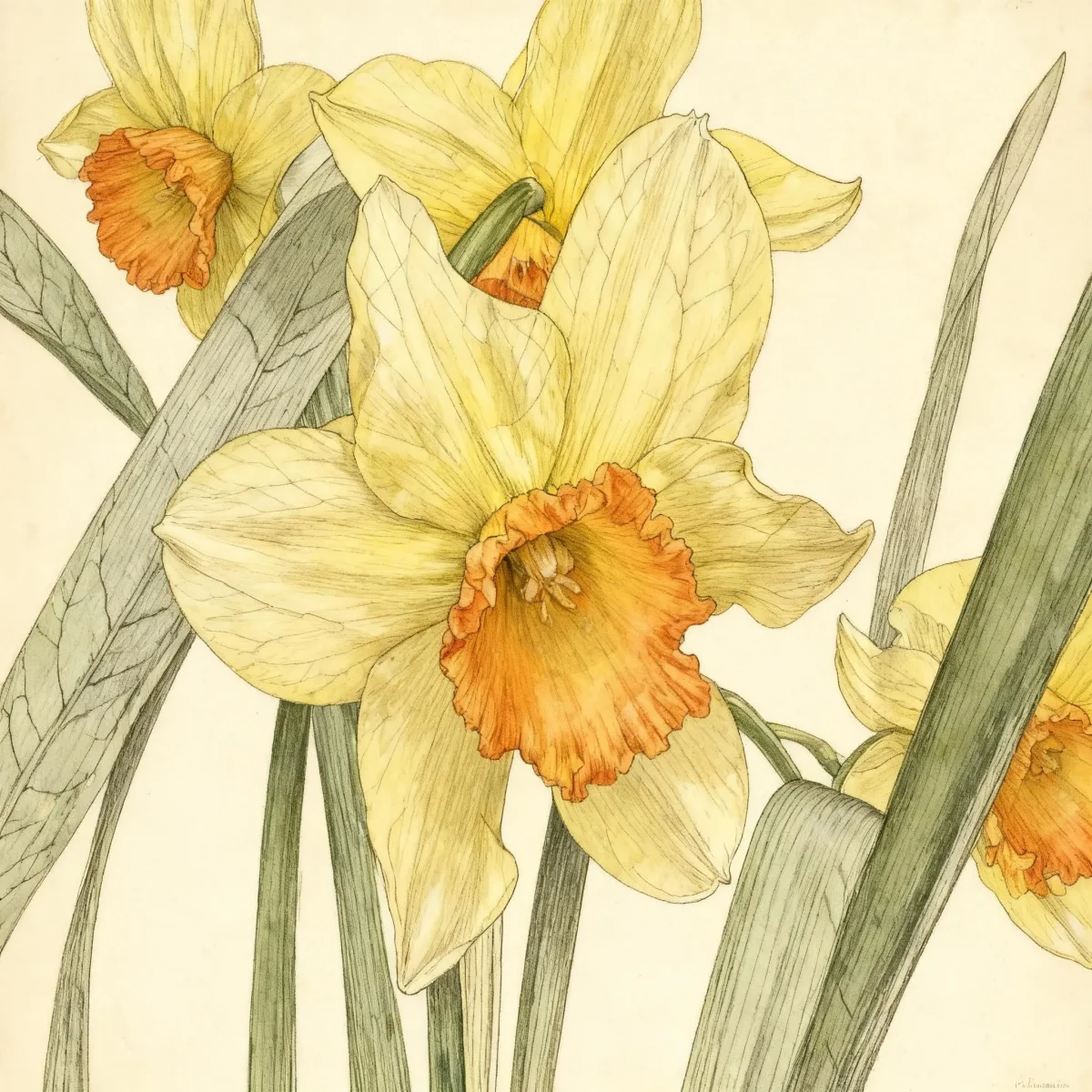
Large-cupped daffodil (Narcissus 'Ambergate')
Narcissus 'Ambergate' is a striking Large-cupped daffodil, offering copper-orange blooms in April. Low care and deer resistant.
Scroll down to discover growing tips, care requirements, companion plants, and more
Complete Plant Information
Overview
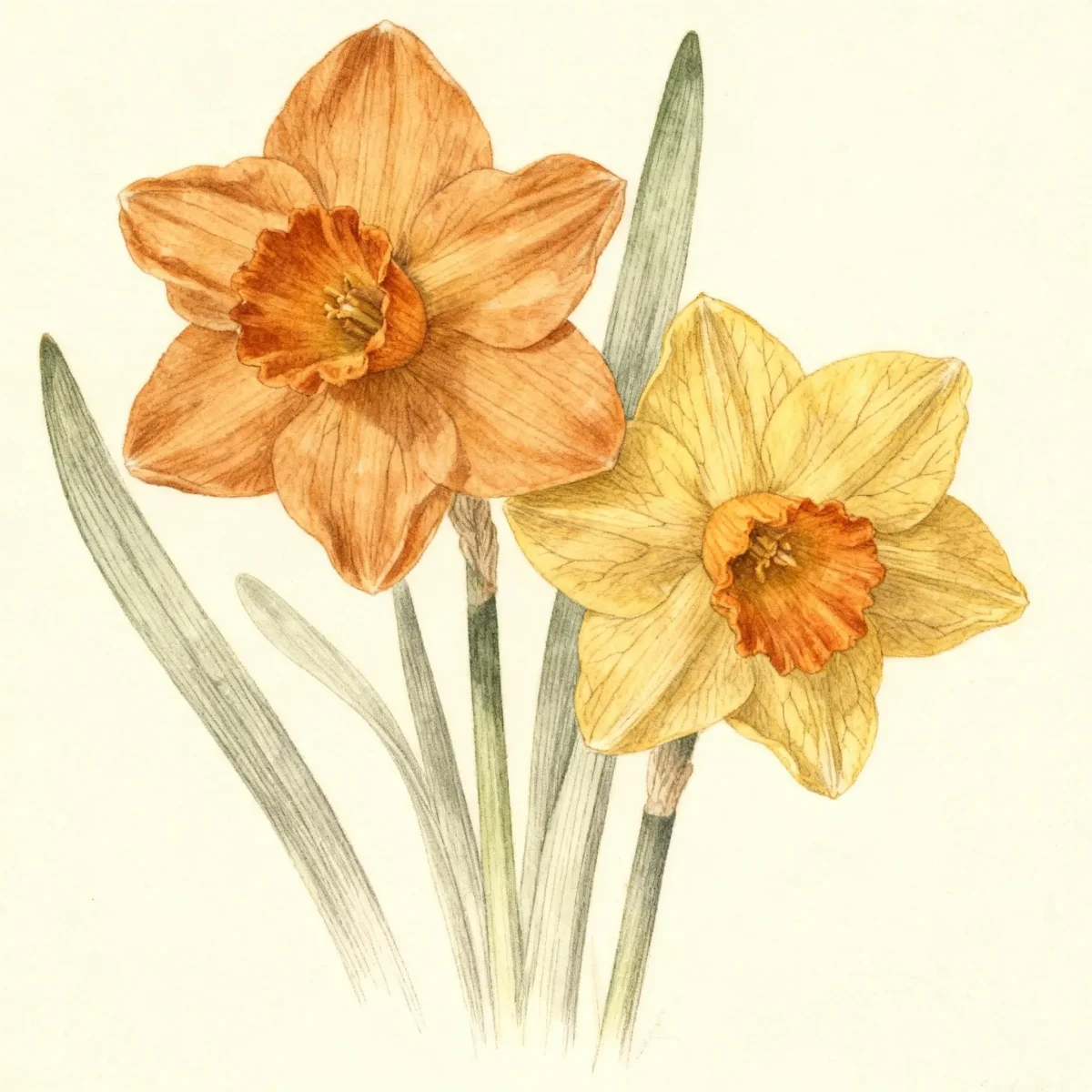
Narcissus ‘Ambergate’ stands out as a robust and reliable addition to the spring garden, classified as a Large-cupped daffodil (Division II). Its most captivating feature is the late-midseason bloom, typically occurring in April, showcasing deep, eye-catching color contrast. The flowers present handsome copper-orange petals set against a pronounced, rich orange-red corona, providing excellent visual interest early in the season.
As a bulb, Narcissus ‘Ambergate’ requires relatively low maintenance once established, thriving in average, well-drained soils. These daffodils return reliably year after year, increasing in effect as the bulbs multiply, making them a solid, long-term investment for seasonal color displays. Gardeners prize this cultivar for its vibrant aesthetics and its resilience against common garden pests like deer due to the inherent toxicity of bulbs.
This variety fits neatly into the 1 to 1.5-foot size range, making the Large-cupped daffodil suitable for mass plantings where impact is desired, yet small enough for borders flanking walkways. Ensure timely planting in the fall to enjoy the showy display of Narcissus ‘Ambergate’ come spring.
Fast Facts
- Plant Family: Amaryllidaceae
- Plant Type: Bulb
- Hardiness Zones: USDA Zones 3-8
- Size at Maturity:
- Height: 1-1.5 ft
- Spread: 0.5-0.75 ft
- Bloom Time: April
- Bloom Description: Copper-orange petals with orange-red corona
- Sun Exposure: Full sun to part shade
- Water Needs: Medium
- Maintenance Level: Low
How to Grow
Planting Narcissus ‘Ambergate’ bulbs must occur in the early to mid-fall, well before the ground freezes hard, to allow for adequate root development. They flourish best in organically rich loams where drainage is impeccable; standing water must be avoided to prevent bulb rot. Plant depth is crucial: aim to bury the bulb 2 to 3 times its height, ensuring at least 3 inches of soil covers the top. Spacing of 4 to 10 inches apart varies by bulb size, although closer spacing may appear sparse initially but will fill in over several seasons.
Cultivation for this Large-cupped daffodil is straightforward, requiring medium water levels during the active growing season. Keep the soil uniformly moist from sprouting until the foliage begins to yellow post-bloom. Once flowers fade in spring, snip off the spent flower stem to prevent seed production, but under no circumstances should the foliage be cut back early. Allow the strap-like leaves to dry completely until they yellow naturally, as this process fuels the bulb for next year’s bloom of Narcissus ‘Ambergate’.
Daffodils can generally be left undisturbed for many years. If you notice a decline in the quantity or vigor of your blooms, divide the clumps once the foliage has completely died back. For optimal visual effect, site the bulbs where any background shade will not obscure them, as the flowers naturally tend to face the sun.
Landscape Uses
Daffodils, including the popular Large-cupped daffodil varieties like ‘Ambergate’, are best utilized when planted in quantity rather than as solitary accents. They excel when massed broadly under deciduous trees or in open woodland settings where they can naturalize freely. Consider using them in sweeping drifts within mixed perennial borders to provide that essential early spring color that tulips often lack.
Narcissus ‘Ambergate’ mixes beautifully with other spring bloomers such as grape hyacinths (Muscari) or early tulips, creating layers of texture and color as the season progresses. Because they establish long-term colonies, they are perfect for creating informal, “wild garden” areas or alongside shrub plantings that won’t crowd them during their growth phase. Their low maintenance level and pest resistance make them excellent foreground plantings that require minimal fuss.
Standout Features
Flower Qualities
- Showy
Noteworthy Characteristics
Narcissus is a genus celebrated for providing the backbone of the spring garden, with ‘Ambergate’ being a specific highlight within Division II, the Large-cupped daffodils. By definition, a large-cup daffodil features a corona (cup) that measures between 1/3 and equal to the length of the surrounding petals (perianth segments). This particular cultivar rises to about 14-16 inches, producing a single flower per stem displaying those characteristic copper-orange petals and a deep orange-red cup. The genus name itself honors the Greek myth involving the youth entranced by his reflection, symbolizing enduring beauty.
Tolerances
- Rabbit
- Deer
- Drought
Potential Problems
Daffodils, including the Narcissus ‘Ambergate’, are generally robust plants, noted for being nearly pest-free when planted in suitable, well-drained cultural conditions. The primary cultural issue leading to failure or disease is neglecting soil drainage; poor moisture evacuation can swiftly lead to bulb rot. Infrequent pests such as slugs, snails, or the narcissus bulb fly should be monitored for, though deer and rabbits typically avoid this plant entirely. For optimal health, address minor issues like the Narcissus yellow stripe virus promptly by removing infected material.
Frequently Asked Questions
What hardiness zones is Large-cupped daffodil suitable for?
Narcissus ‘Ambergate’ is reliably hardy across USDA Zones 3 through 8.
How large does Large-cupped daffodil grow?
This plant reaches a mature height between 1 and 1.5 feet tall, with a spread of 0.5 to 0.75 feet.
What sun exposure does Large-cupped daffodil need?
This daffodil performs optimally in locations receiving full sun, though it tolerates conditions leading into partial shade.
When does Large-cupped daffodil bloom?
The bloom time for Narcissus ‘Ambergate’ is typically in April, noted for its copper-orange petals with an orange-red corona.
Conclusion
The Large-cupped daffodil, Narcissus ‘Ambergate’, provides indispensable, high-impact color when many other perennials are still dormant. Its combination of striking copper-orange blooms, longevity, and low maintenance makes it a wise choice for any gardener. Before winter sets in, ensure your Narcissus ‘Ambergate’ bulbs are planted at the correct depth to guarantee their return next spring.
Companion Planting
When planning companion plantings for Narcissus ‘Ambergate’, consider species that share similar cultural needs, particularly regarding drainage and sun exposure. Pairing them with early-blooming spring perennials ensures continuous interest after the daffodils finish. Good choices include spring phlox (Phlox subulata) or hardy geraniums, whose foliage emerges later but helps camouflage the daffodil leaves as they naturally yellow.
For structural contrast, consider planting them near early-flowering bulbs that bloom slightly earlier or later, like early snowdrops or later-blooming tulips. Since the leaves of the Large-cupped daffodil must remain intact while they senesce, placing shorter groundcovers around the base helps hide the fading foliage, maintaining tidiness in borders throughout late spring.
Design Ideas for Drifts
Creating drifts is the most effective way to utilize the impact of Narcissus ‘Ambergate’ in the landscape. Instead of planting bulbs in rigid rows, scatter them randomly in groups of 10 or more bulbs, mimicking natural distribution. Plant these drifts near the front edge of shrub borders or along paths where their stunning bloom time in April can be easily appreciated at eye level.
For formal displays, large groupings of Narcissus ‘Ambergate’ can be planted in repeating geometric patterns that are then allowed to naturalize slightly over time. Because they are deer and rabbit resistant, they are perfect for naturalized lawn edges or under large, mature trees where fewer typical border plants thrive during early spring. Always remember that the flowers lean toward the light source, so plan backgrounds accordingly.