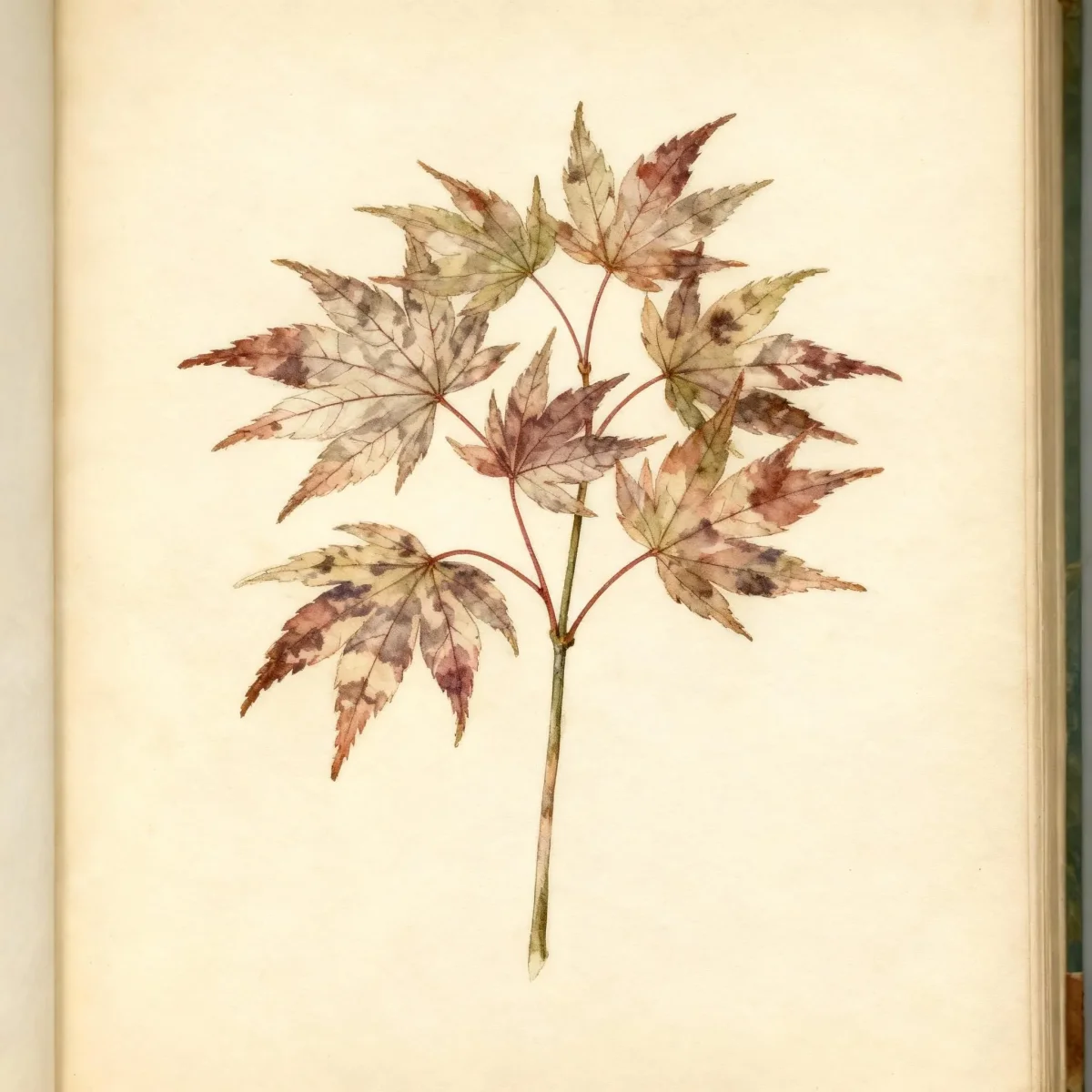
Japanese maple (Acer palmatum var. dissectum 'Red Dragon')
Acer palmatum var. dissectum 'Red Dragon' is a striking Japanese maple known for its deeply cut, cascading foliage displaying brilliant red hues all season.
Scroll down to discover growing tips, care requirements, companion plants, and more

Complete Plant Information
Overview
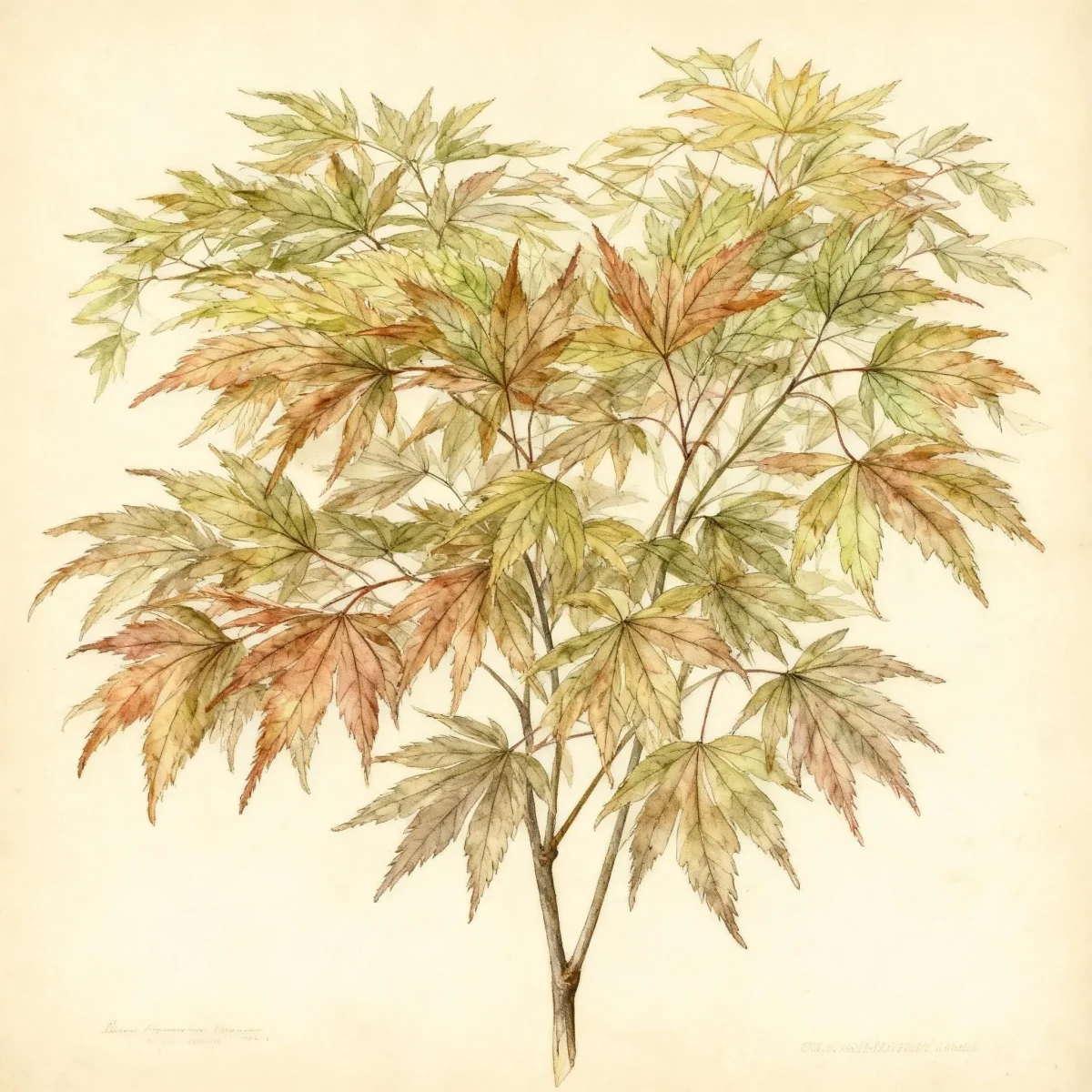
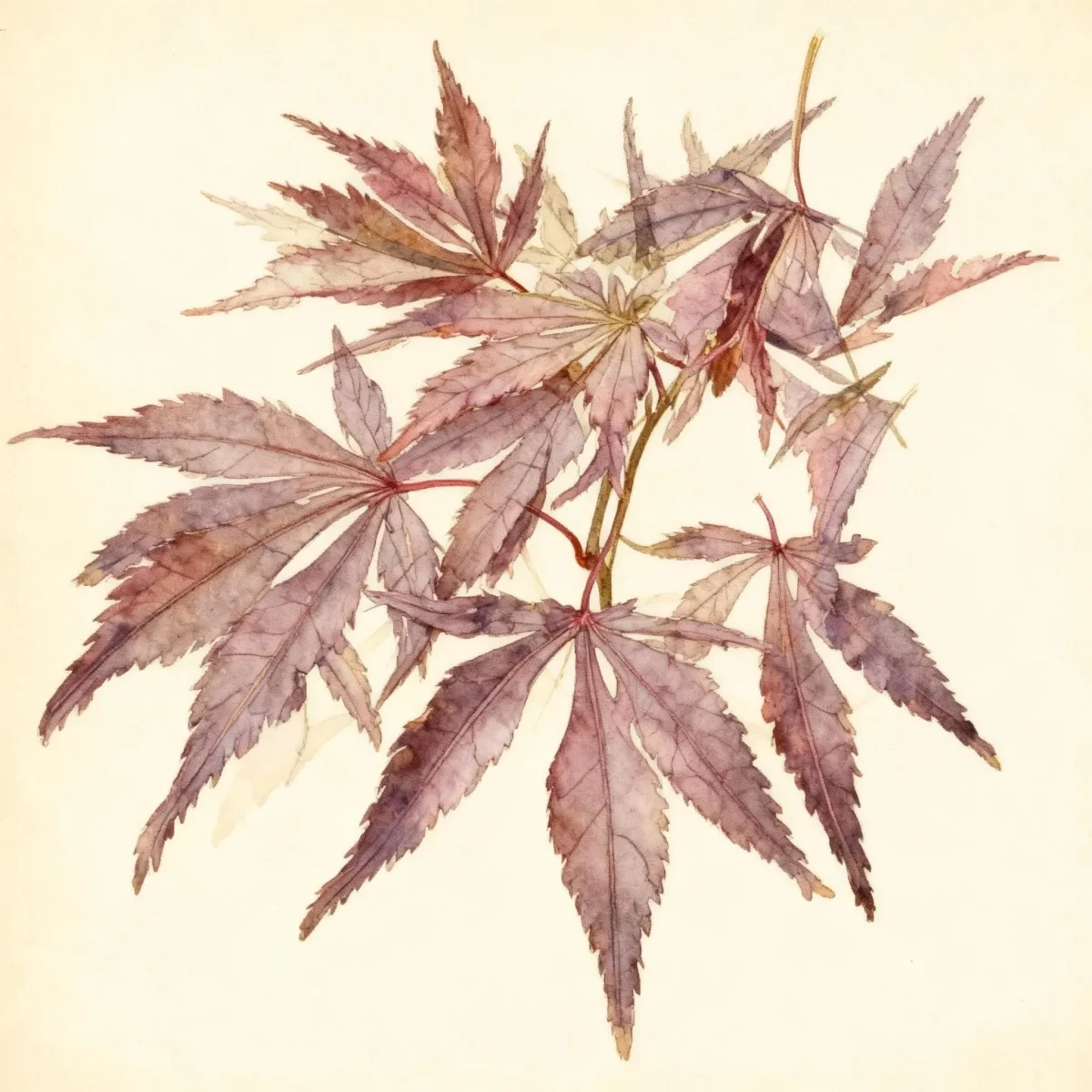
The Acer palmatum var. dissectum ‘Red Dragon’ captivates gardeners with its deeply dissected, feathery leaves that emerge a brilliant cherry red, maturing to burgundy, and finishing as crimson in the fall. This cultivar represents the laceleaf Japanese maple tradition, offering a slow-growing, compact, upright-pendulous mound form perfect for smaller gardens or focal points. Maintaining vibrant color throughout the heat of summer, the Acer palmatum var. Dissectum ‘Red Dragon’ is prized for its year-round visual interest, requiring relatively low maintenance once established.
As a standout example of a dissected Japanese maple, ‘Red Dragon’ offers exquisite texture that contrasts beautifully with broader-leafed shrubs. It thrives best when protected from harsh afternoon sun and drying winds, ensuring the foliage remains pristine rather than scorched. Its moderate size allows this cultivar flexibility in landscape design where its cascading habit can be highlighted.
Fast Facts
- Plant Family: Sapindaceae
- Plant Type: Tree
- Hardiness Zones: USDA Zones 5-8
- Size at Maturity:
- Height: 6-8 ft
- Spread: 6-8 ft
- Bloom Time: April
- Bloom Description: Reddish-purple
- Sun Exposure: Full sun to part shade
- Water Needs: Medium
- Maintenance Level: Low
How to Grow
Planting the dissected Japanese maple, including the stunning ‘Red Dragon’, is best done in the spring or fall when soil temperatures are moderate. Select a location providing moist, organically rich, slightly acidic, and very well-drained soil; sandy loams are also tolerated well. While these maples can handle full sun in cooler Northern zones, gardeners in the southern range should ensure afternoon shade to prevent leaf scorch during hot summers.
Consistent moisture is key for this cultivar; soils should never be allowed to dry out completely, especially when the plant is new. Applying a generous layer of mulch will help keep the shallow roots cool and retain necessary soil moisture. Site the Acer palmatum var. dissectum ‘Red Dragon’ away from areas exposed to strong, drying winds that can stress the delicate foliage.
Pruning should be kept to a minimum, as excessive cutting can lead to significant sap bleeding. If shaping is necessary, schedule pruning for late fall or mid-winter, avoiding spring or summer cuts. Interestingly, the ‘Red Dragon’ variety tends to perform better in sunny environments compared to many other dissectum types, allowing for brighter summer color retention.
Landscape Uses
Dissected forms of Japanese maple like ‘Red Dragon’ are primarily celebrated for their dramatic foliage texture and their low-spreading, graceful shape, making them exceptional specimen or accent plants. Their mature size of 6 to 8 feet makes them ideal accents near patios, entryways, or carefully placed within a rock garden composition. They also function beautifully as a subtle understory planting in areas receiving dappled sunlight beneath larger deciduous trees.
The fine, cascading nature of the ‘Red Dragon’ foliage is dramatically enhanced when planted near reflective surfaces. Consider placing this Acer palmatum var. dissectum ‘Red Dragon’ near a pond or water feature where its silhouette and color can be mirrored, maximizing its visual impact throughout the season. Smaller specimens are also highly effective when showcased in large, high-quality containers.
Standout Features
Flower Qualities
- Insignificant
Noteworthy Characteristics
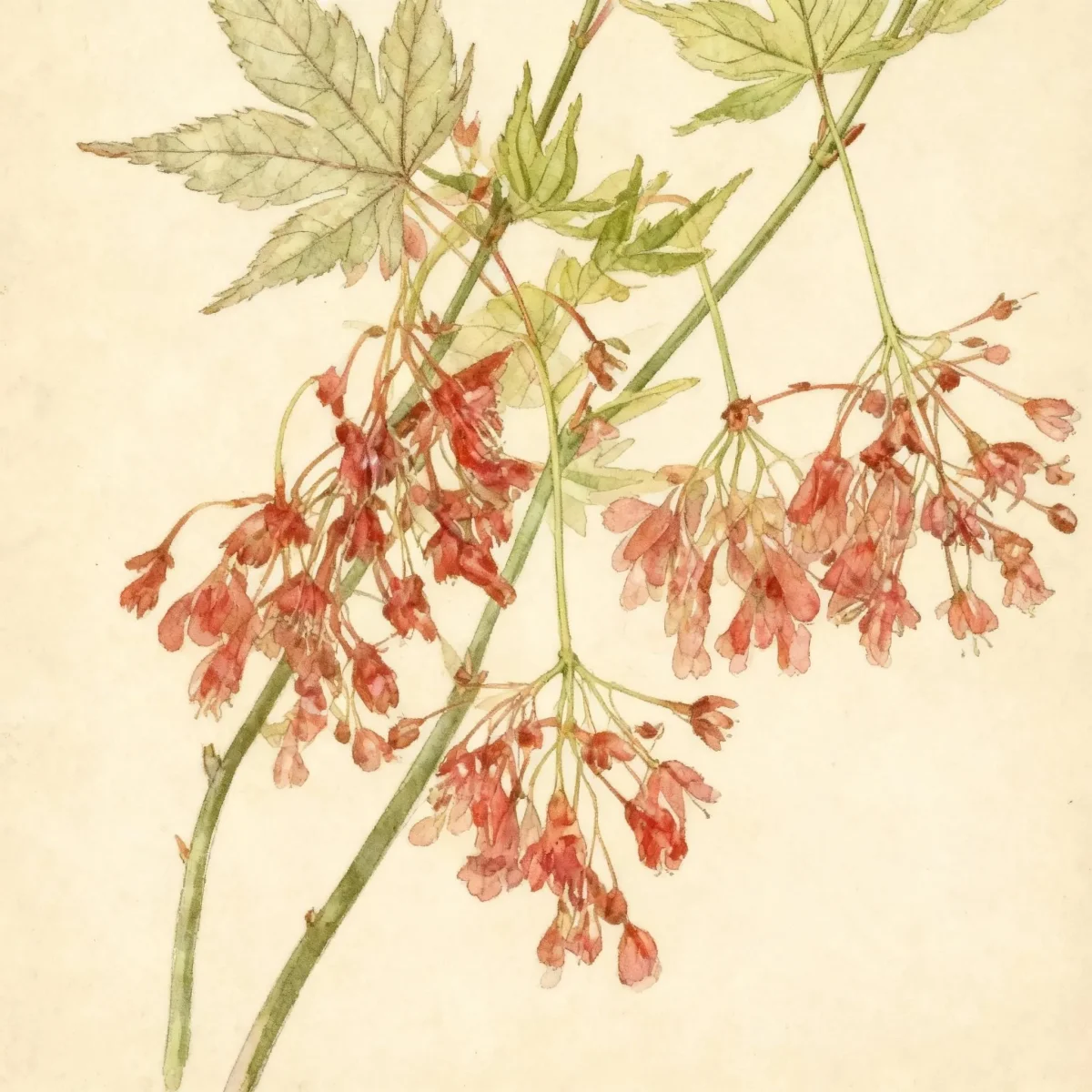
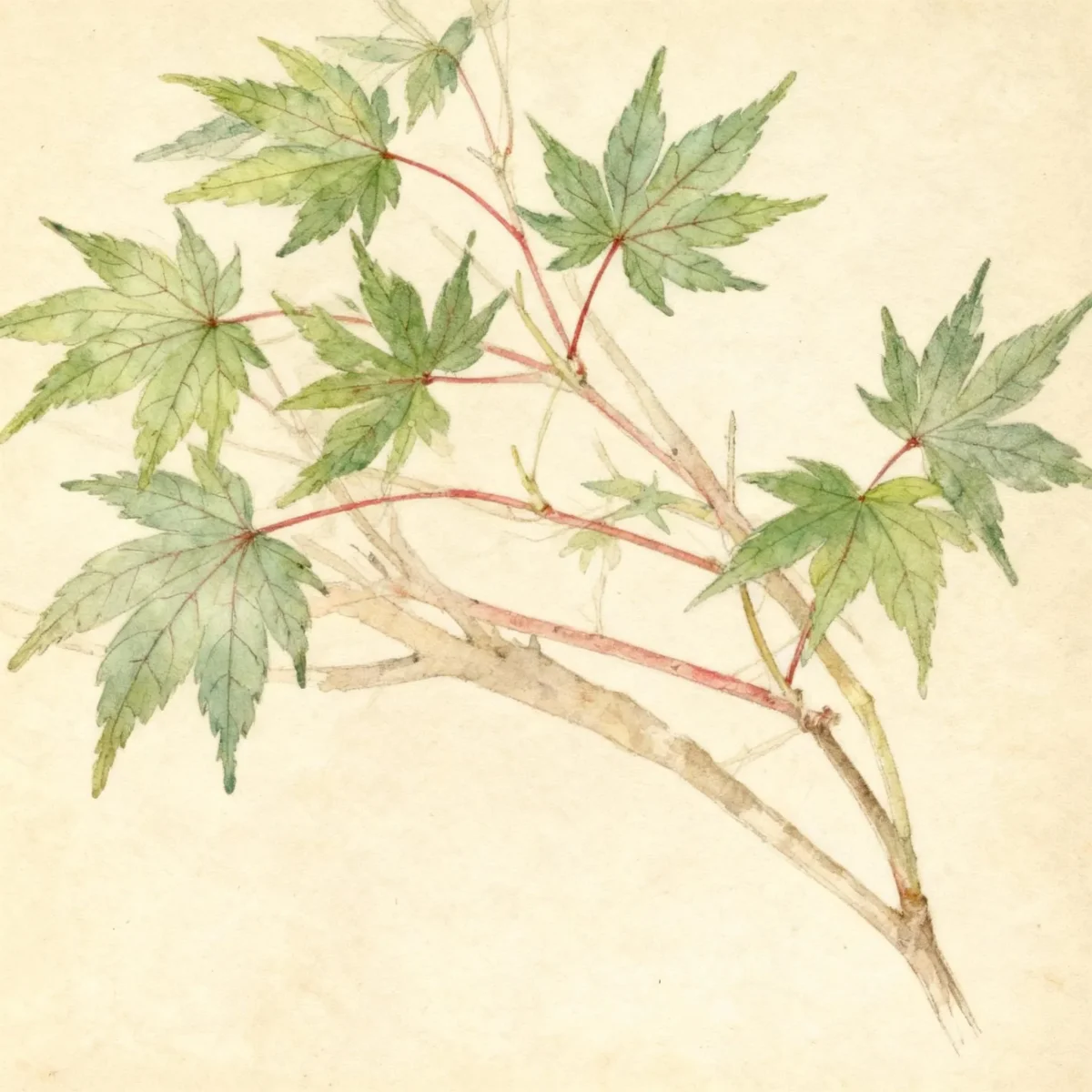
The Acer palmatum, commonly called Japanese Maple, is a deciduous shrub or small tree noted for its broad, rounded form. Specifically, ‘Red Dragon’ is a compact, slow-growing, dissected form that matures into an upright-pendulous mound, usually reaching 6–8 feet tall. Its seven-lobed leaves are deeply cut to the base, emerging bright red, holding a rich burgundy through summer, and shifting to crimson in autumn, resembling the claws of a dragon.
Tolerances
- Rabbit
- Black Walnut
Potential Problems
Potential issues for your Japanese maple can involve both diseases and pests. Fungal problems like stem canker, leaf spots, botrytis, anthracnose, and the serious Verticillium wilt should be monitored. To manage these, ensure excellent air circulation and avoid overhead watering.
Insect threats typically include aphids, scale insects, borers, and root weevils, while spider mites can become troublesome, especially during hot, dry periods. Mitigate mite issues by maintaining consistent soil moisture and applying horticultural oil if infestations are severe. Furthermore, be aware that early spring foliage flush is susceptible to damage from late frosts, which can temporarily mar the look of the Acer palmatum var. dissectum ‘Red Dragon’. If your soil pH is high, you may see chlorosis (yellowing of the leaves).
Frequently Asked Questions
What hardiness zones is Japanese maple suitable for?
This specific cultivar, Acer palmatum var. dissectum ‘Red Dragon’, is suitable for planting in USDA Hardiness Zones 5 through 8.
How large does Acer palmatum var. dissectum ‘Red Dragon’ grow?
This compact, slow-growing tree typically matures to a height between 6 and 8 feet, matching its spread closely at 6 to 8 feet.
When does Japanese maple bloom?
The bloom time for this Japanese maple is April, producing small flowers described as reddish-purple in color.
What sun exposure does Acer palmatum var. dissectum ‘Red Dragon’ need?
It thrives best in conditions ranging from full sun to partial shade, though afternoon shade is recommended in hotter southern climates.
Conclusion
The Acer palmatum var. dissectum ‘Red Dragon’ offers unparalleled year-round texture and color transformation, making it an essential, low-maintenance specimen for refined garden design. Its stunning lacy foliage and deep red tones cement its popularity among lovers of Japanese maple cultivars. Before planting, verify your location falls within USDA Zones 5-8 and prepare well-draining, slightly acidic soil to ensure its best performance.
Companion Planting
Choosing the right companions emphasizes the delicate structure of ‘Red Dragon’. Pair this laceleaf Japanese maple with plants offering bold, contrasting foliage—think hostas with large, blue or gold leaves, or groundcovers like Ajuga reptans. These contrasting textures help draw attention to the fine cuts of the maple’s leaves.
Because this cultivar prefers well-drained soil and some dappled light, select other acid-loving woodland plants for co-planting success. Rhododendrons, Azaleas, and various ferns will share similar cultural needs regarding moisture and soil acidity. Planting these companions together creates a layered, serene woodland garden effect.
Seasonal Care Calendar
Spring is crucial for monitoring new growth; protect emerging leaves from late frosts, which can cause browning or scorch marks on the tender foliage. Simultaneously, ensure mulch is refreshed to maintain cool roots as temperatures rise into early summer.
Summer care focuses primarily on consistent, deep watering, especially during dry spells, as dry soil is a major stressor leading to leaf scorch in the heat. Avoid applying fertilizer during the peak heat of July and August.
Perform any necessary structural pruning in late fall, after the leaves have dropped, well before the threat of deep winter freezes. This timing prevents the vigorous sap bleeding that occurs if cuts are made in late winter or early spring.