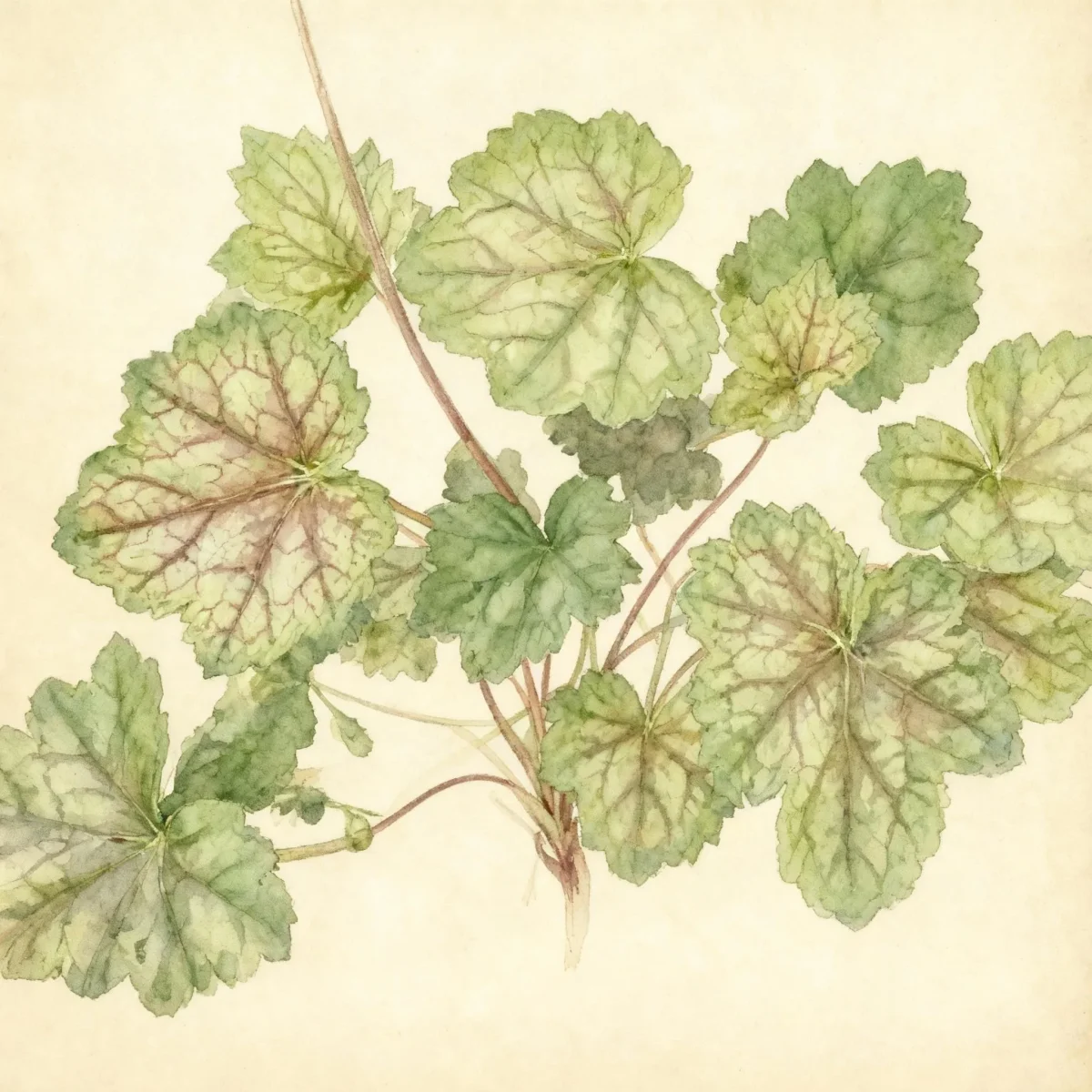
Coral bells (Heuchera 'Veil of Passion')
Heuchera 'Veil of Passion' coral bells offer dark, silver-veiled foliage and pink blooms from June to July, thriving in partial shade.
Scroll down to discover growing tips, care requirements, companion plants, and more
Complete Plant Information
Overview
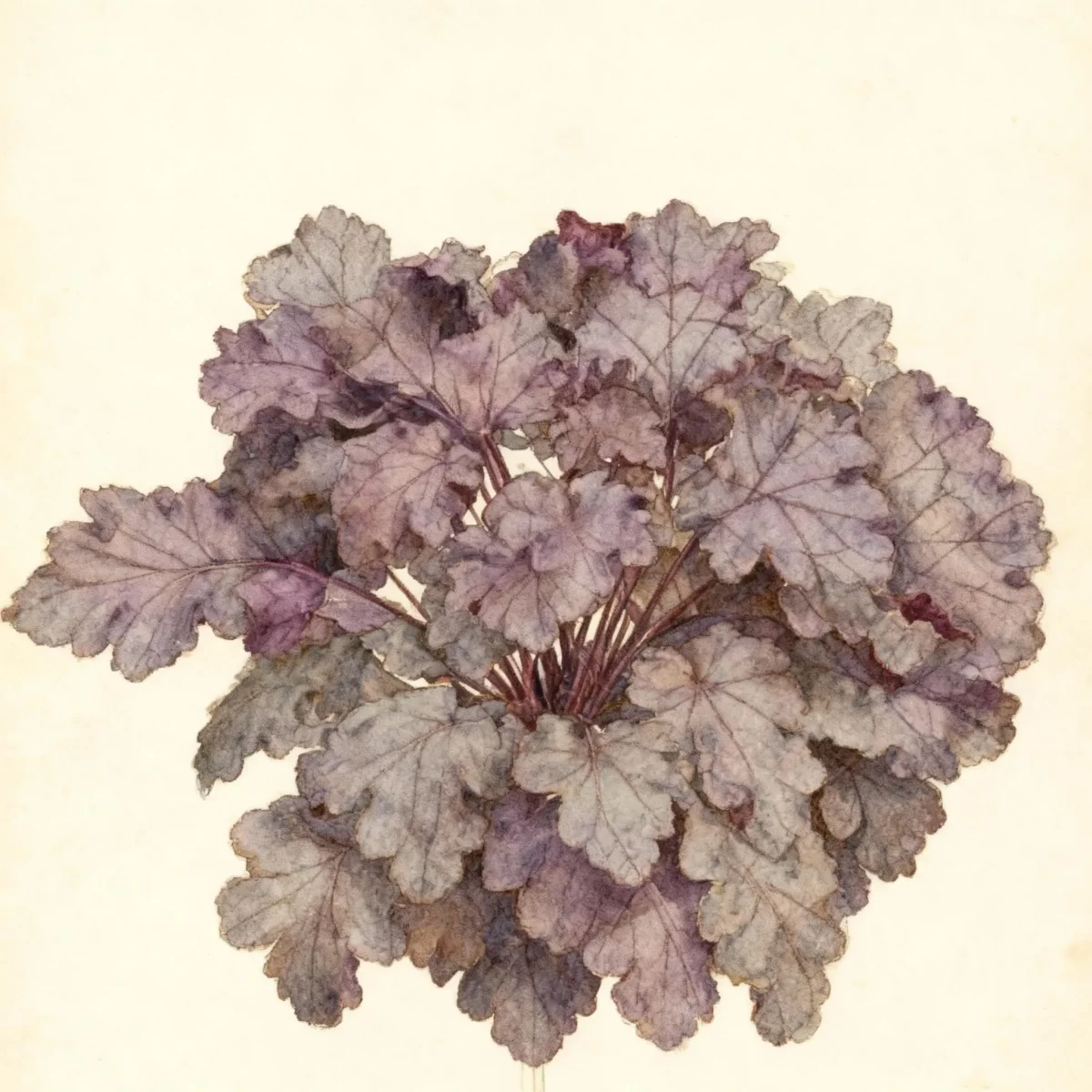
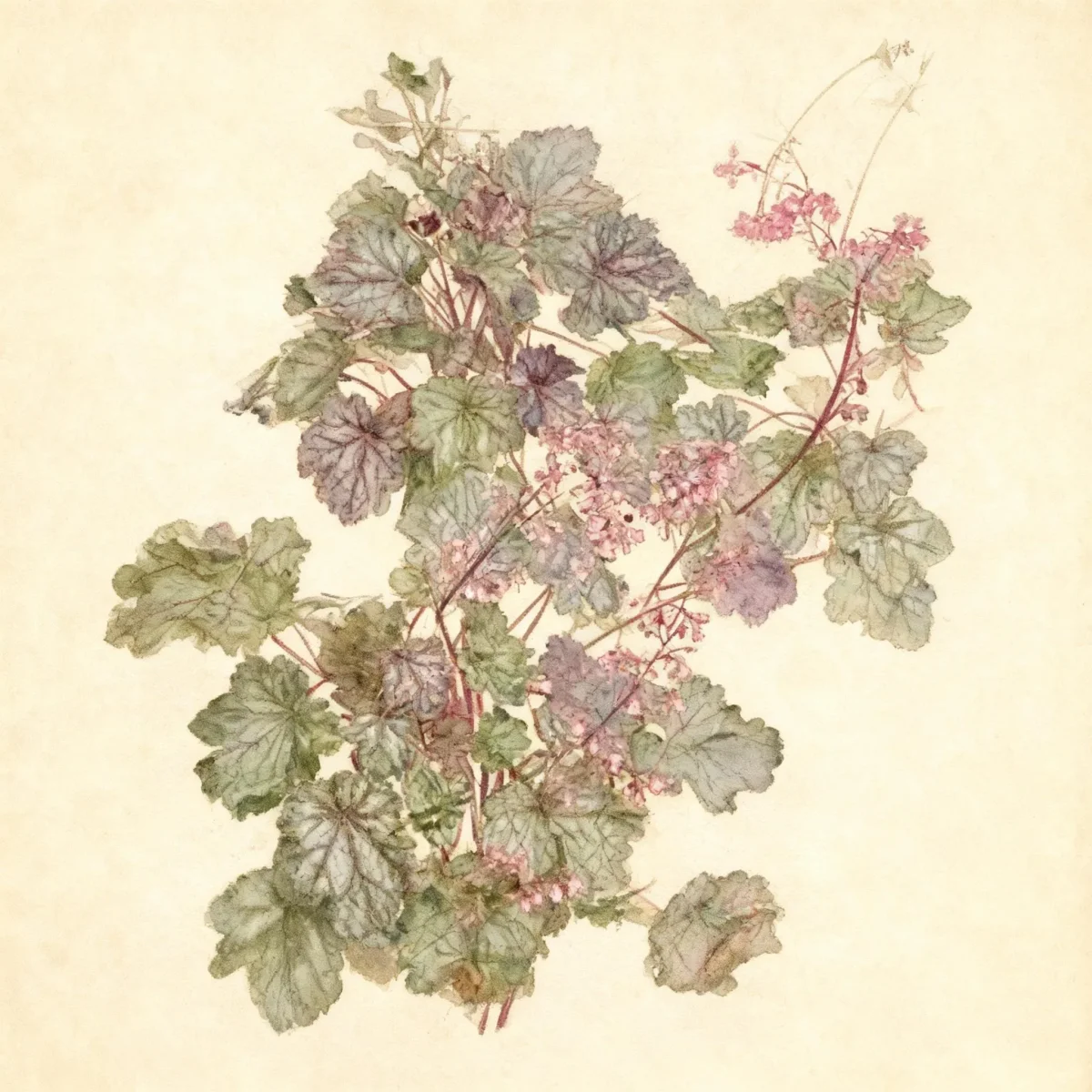
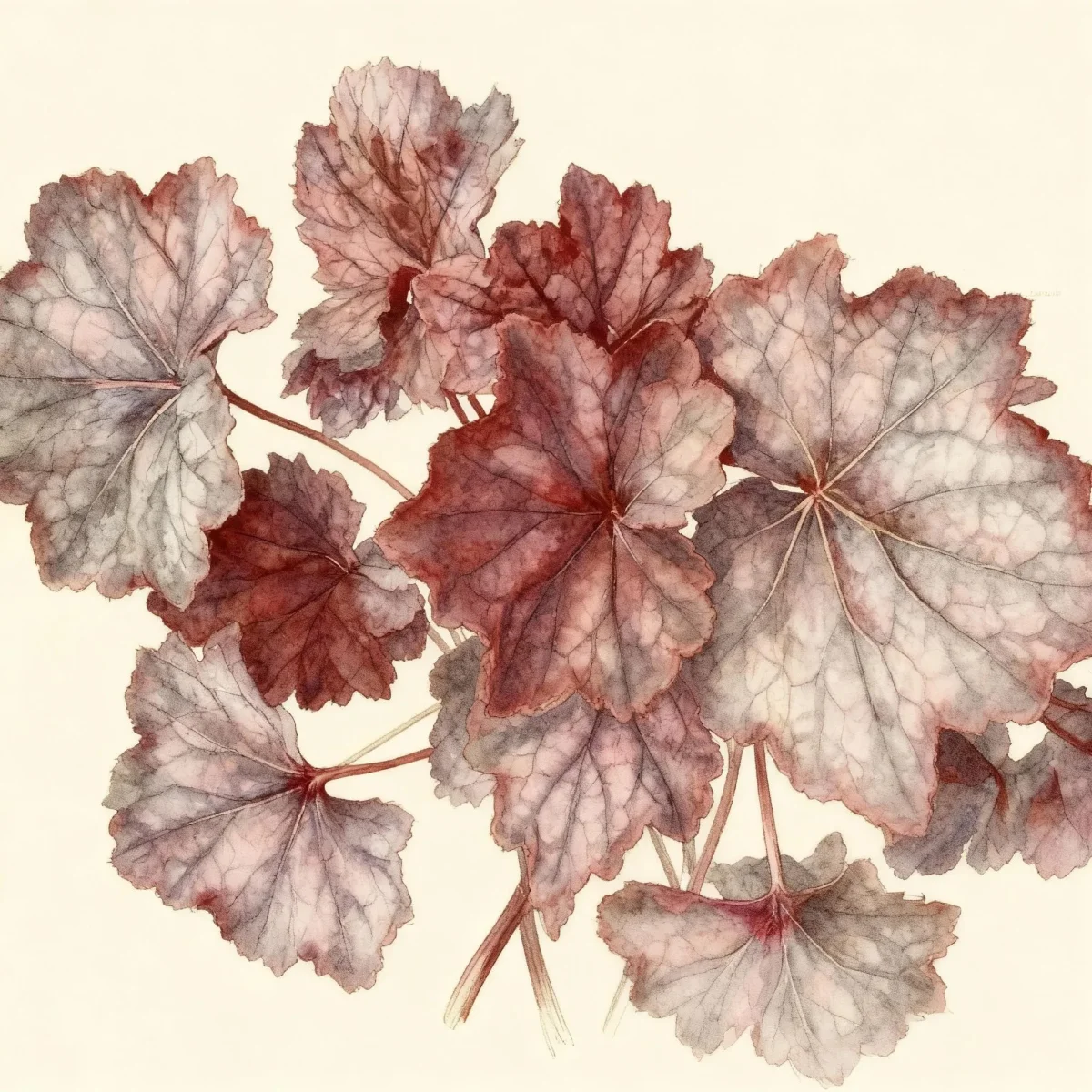
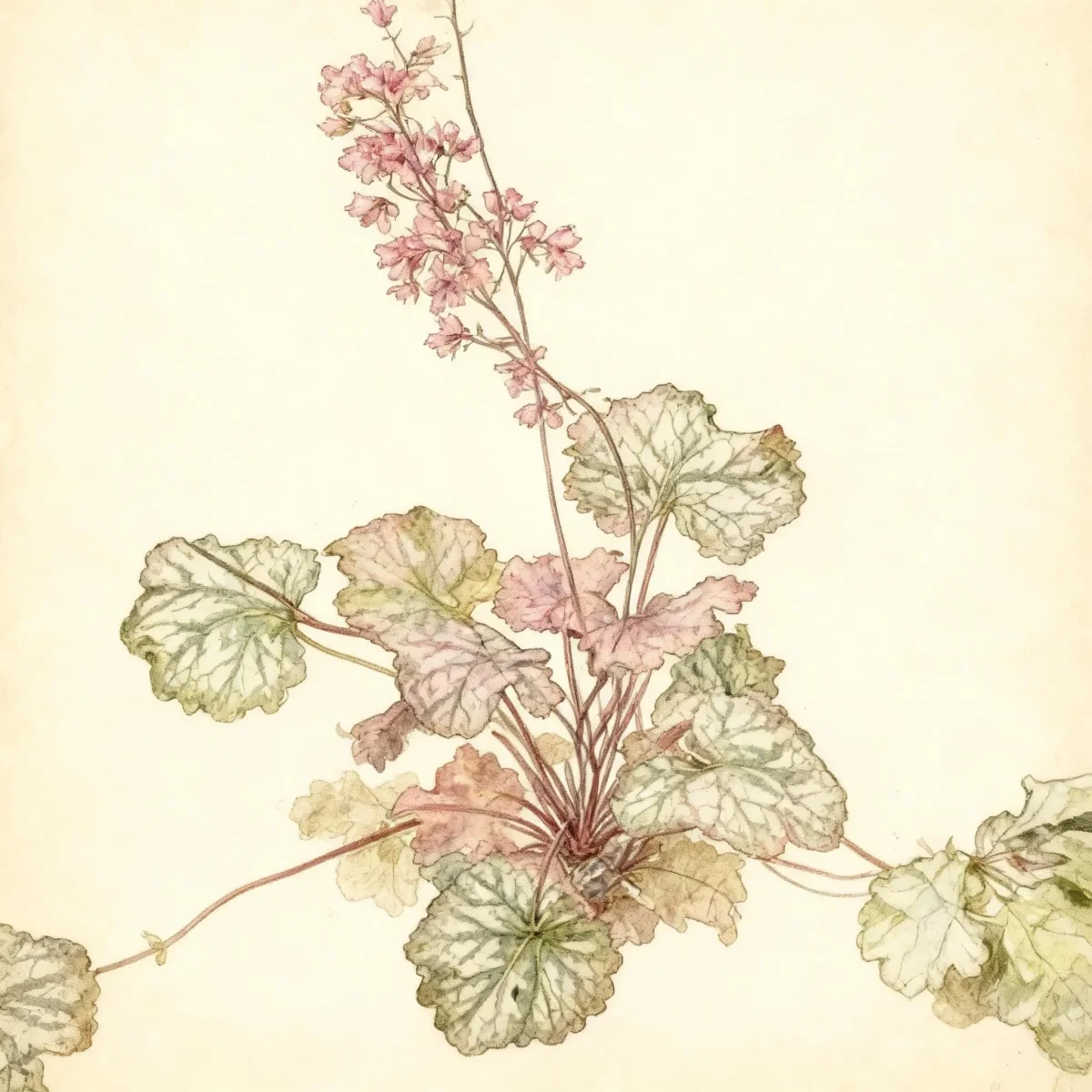
Heuchera ‘Veil of Passion’, a highly desirable cultivar of coral bells, stands out due to its exceptionally appealing foliage. This clump-forming hybrid provides rich, dark, silver-veiled leaves that maintain interest throughout the growing season, complemented by airy panicles of pink flowers. It is valued by gardeners for its vibrant color contrasts, offering texture and saturation, even when not in bloom.
As an herbaceous perennial native to North America, this variety offers reliable seasonal performance. Understanding its heritage helps gardeners determine its ideal placement, though the parentage of many commercial hybrids like Heuchera ‘Veil of Passion’ remains varied. Generally, these plants establish a tidy basal mound, making them excellent low-maintenance additions to shady or partially shaded garden spaces.
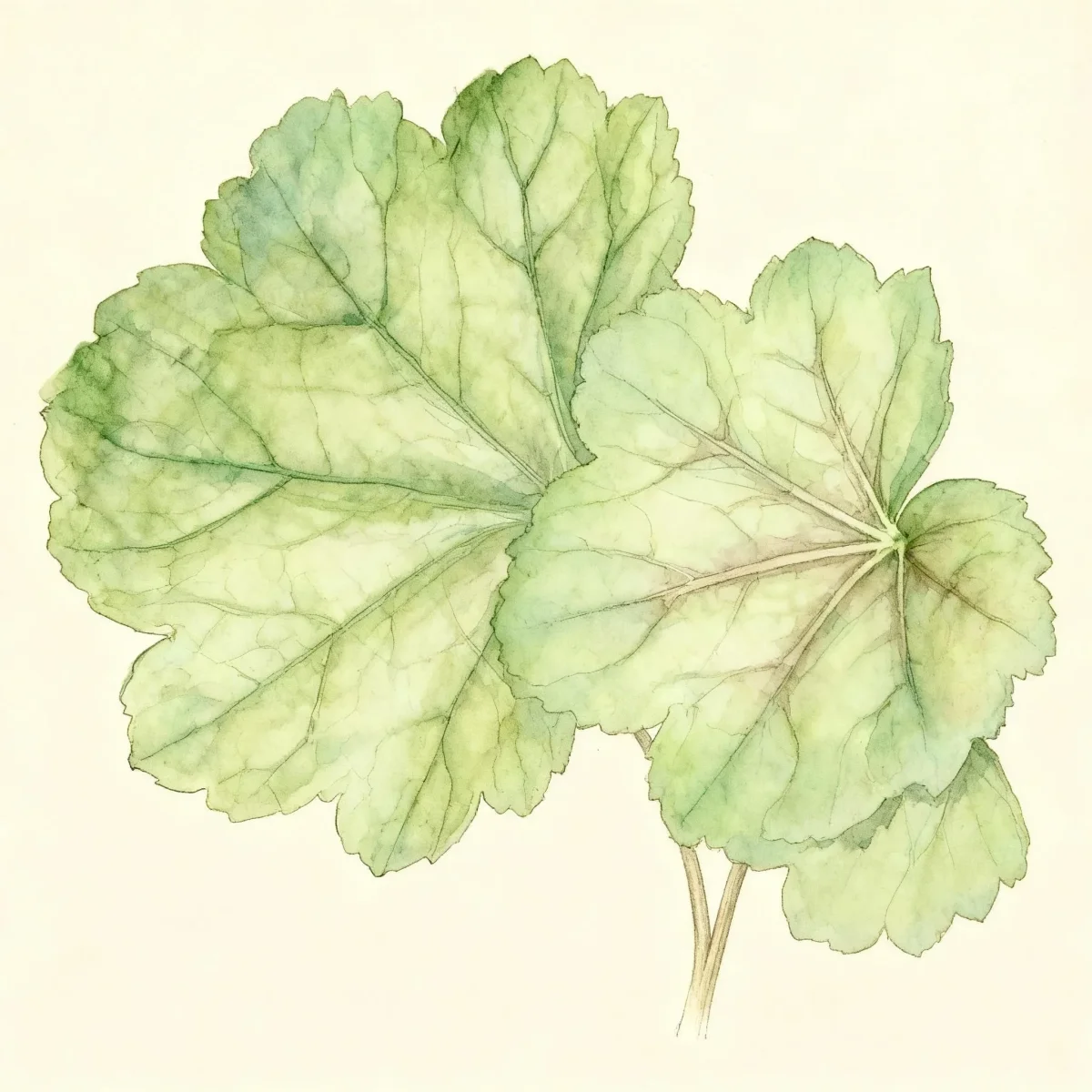
The enduring appeal of Heuchera ‘Veil of Passion’ lies in its versatility and unique leaf color. Whether used as an edger or integrated into mixed borders, these coral bells contribute significant visual weight. Gardeners should ensure rich, well-drained soil to promote robust growth and consistent moisture to prevent foliage scorch, especially if placed where it receives afternoon sun.
Fast Facts
- Plant Family: Saxifragaceae
- Plant Type: Herbaceous perennial
- Hardiness Zones: USDA Zones 4-9
- Size at Maturity:
- Height: 1.5-2 ft
- Spread: 1-1.5 ft
- Bloom Time: June to July
- Bloom Description: Pink
- Sun Exposure: Full sun to part shade
- Water Needs: Medium
- Maintenance Level: Medium
How to Grow
The cultivation sweet spot for most Heuchera hybrids involves organically rich, humusy soils that maintain medium moisture levels but drain exceptionally well. While Heuchera ‘Veil of Passion’ can tolerate full sun, particularly in cooler northern climates, most prefer protection from the intense afternoon heat, especially in southern regions. If you opt for a sunnier location, consistent soil moisture is non-negotiable, as drying out can quickly lead to foliage scorch.
Watering should be consistent; aim for evenly moist soil rather than saturated conditions. Little to no supplemental fertilization is usually required if the soil is prepared correctly with organic matter at planting. Deadheading faded flower stems is a straightforward maintenance task that can encourage the plant to produce additional blooms throughout its season.
Foliage retention varies seasonally based on climate severity. In warmer areas, the leaves of coral bells often remain evergreen. In harsher winters, applying a protective, insulating layer of compost mulch after the ground freezes prevents root heaving caused by fluctuating temperatures. For rejuvenation, plan to divide the clumps every three to four years during the spring.
Landscape Uses
Coral bells, including the striking Heuchera ‘Veil of Passion’, excel as foundation plants where year-round foliage structure is desired near walkways or borders. Their mounding habit makes them highly effective as an edger, clearly defining the transition between paths and garden beds without forming dense hedges. They are particularly effective when massed or planted in generous groups rather than used as solitary accents, allowing their leaf color to create a rich tapestry.
Due to their preference for partial shade, these plants integrate seamlessly into open woodland garden designs. They pair beautifully with plants that appreciate similar cultural conditions, such as Hostas, Ferns, or spring-blooming bulbs. Consider using them near lighter green or silver-leaved companions to maximize the dramatic, dark contrast provided by the ‘Veil of Passion’ cultivar.
For rock gardens, these cultivars fit nicely into pockets between stones, provided drainage remains adequate. Their moderate size ensures they do not overwhelm smaller companion plants, allowing you to build layered shade borders that feature rich textures and deep colors consistently across the season.
Standout Features
Flower Qualities
- Showy
Noteworthy Characteristics
Heuchera, commonly called coral bells or alumroot, is a genus consisting of about 55 species of evergreen to semi-evergreen herbaceous perennials which are all native to North America. Hybrid plants exhibit incredible leaf variation in colors like violet, purple, maroon, and bronze, often displaying streaked or mottled variegation. Specifically, ‘Veil of Passion’ is noted for its distinctive dark, silver-veiled foliage and superior flowering period, producing red flowers atop stems that can reach 28 inches tall.
Tolerances
- None listed in data
Potential Problems
The most common non-pathogenic issue arises from winter instability. Root heaving can occur if winter temperatures fluctuate widely, physically pushing the root crown out of the soil. Prevent this by applying a winter compost mulch only after the soil has frozen solid.
Disease pressure can introduce issues like powdery mildew, rust, and bacterial leaf spot. Ensure good air circulation by maintaining proper spacing and avoiding overhead watering to mitigate fungal risks. Insect pests occasionally include weevils and foliar nematodes, which require vigilance to detect early.
Frequently Asked Questions
What hardiness zones is Coral bells suitable for?
Heuchera ‘Veil of Passion’ coral bells are hardy and thrive across USDA Zones 4 through 9, giving gardeners wide latitude in choosing locations.
How large does Coral bells grow?
When fully mature, Heuchera ‘Veil of Passion’ typically reaches a height between 1.5 and 2 feet, and spreads moderately, generally between 1 and 1.5 feet wide.
What sun exposure does Heuchera ‘Veil of Passion’ need?
This variety performs best when situated in locations that receive full sun to part shade, though it benefits from afternoon shade, particularly in hotter summer climates.
When does Heuchera ‘Veil of Passion’ bloom?
This cultivar is appreciated for its prolonged bloom time, typically flowering from June well into July, producing attractive pink blossoms.
Conclusion
Heuchera ‘Veil of Passion’ offers exceptional value through its deeply colored, silver-veiled foliage, providing rich texture and contrast to nearly any garden setting. These reliable coral bells are a staple for shaded borders and woodland areas, requiring consistent moisture and good drainage to look their best. Before planting, confirm that your intended location aligns with USDA Zones 4-9 and offers adequate afternoon shade protection in hotter zones.
Propagation Tips
Propagation of Heuchera ‘Veil of Passion’ is most effectively handled through division. This fibrous-rooted perennial forms dense clumps over time, and separating these ensures you maintain the exact characteristics of this named hybrid. Division should ideally be performed in the spring, allowing the separated sections ample time to re-establish before the stress of summer heat or winter cold sets in. Ensure each new division has a healthy set of roots and several growing points for future success.
Companion Planting
The cultural requirements of Heuchera ‘Veil of Passion’—rich soil, medium moisture, and partial shade—make it an excellent partner for many shade-loving perennials. Combine it with plants that offer different foliage textures, such as large-leaved Hostas, delicate, lacy Ferns, or Japanese Forest Grass (Hakonechloa). These companions provide varied height and shape, ensuring the dark leaves of the coral bells pop visually against lighter greens or golds.