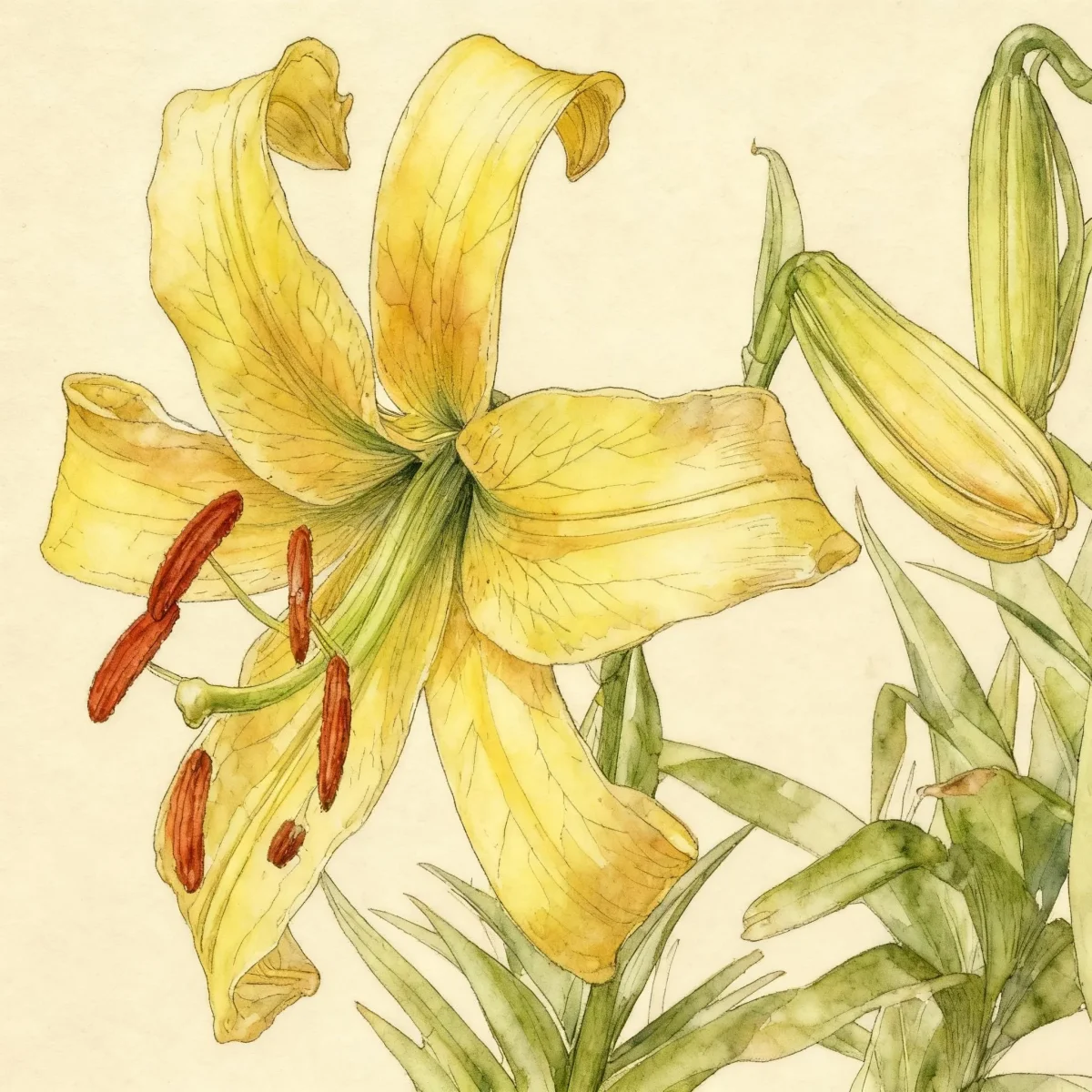
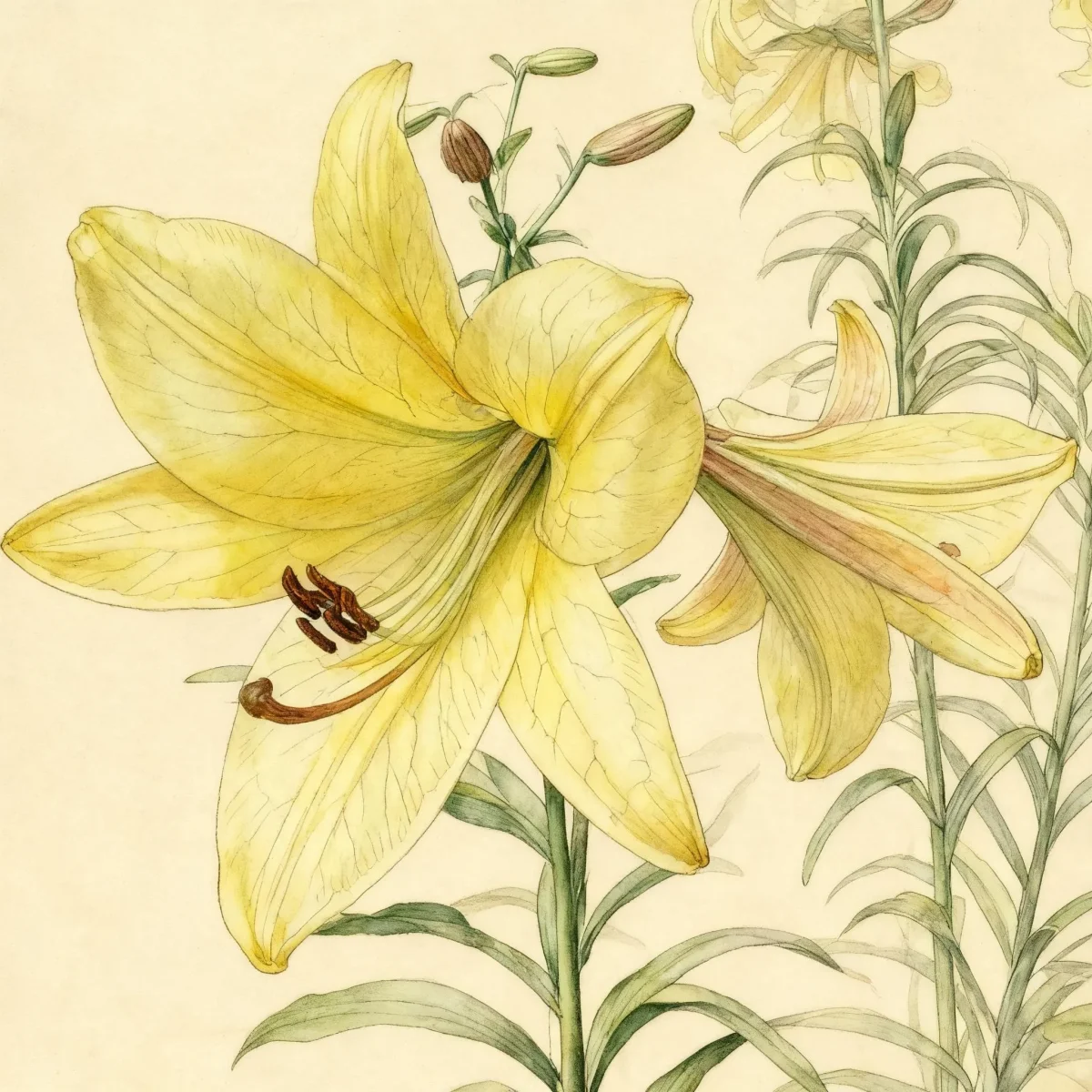
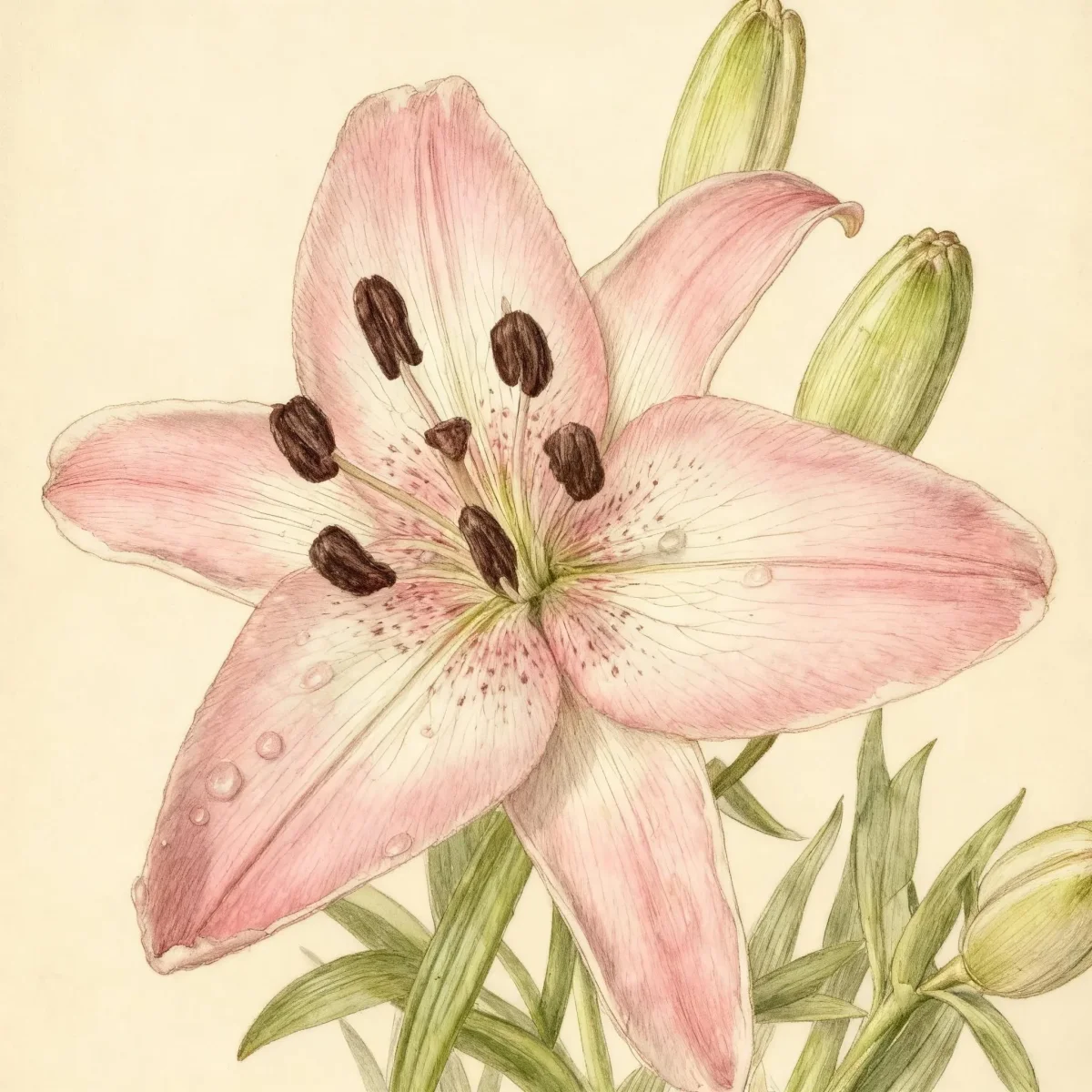
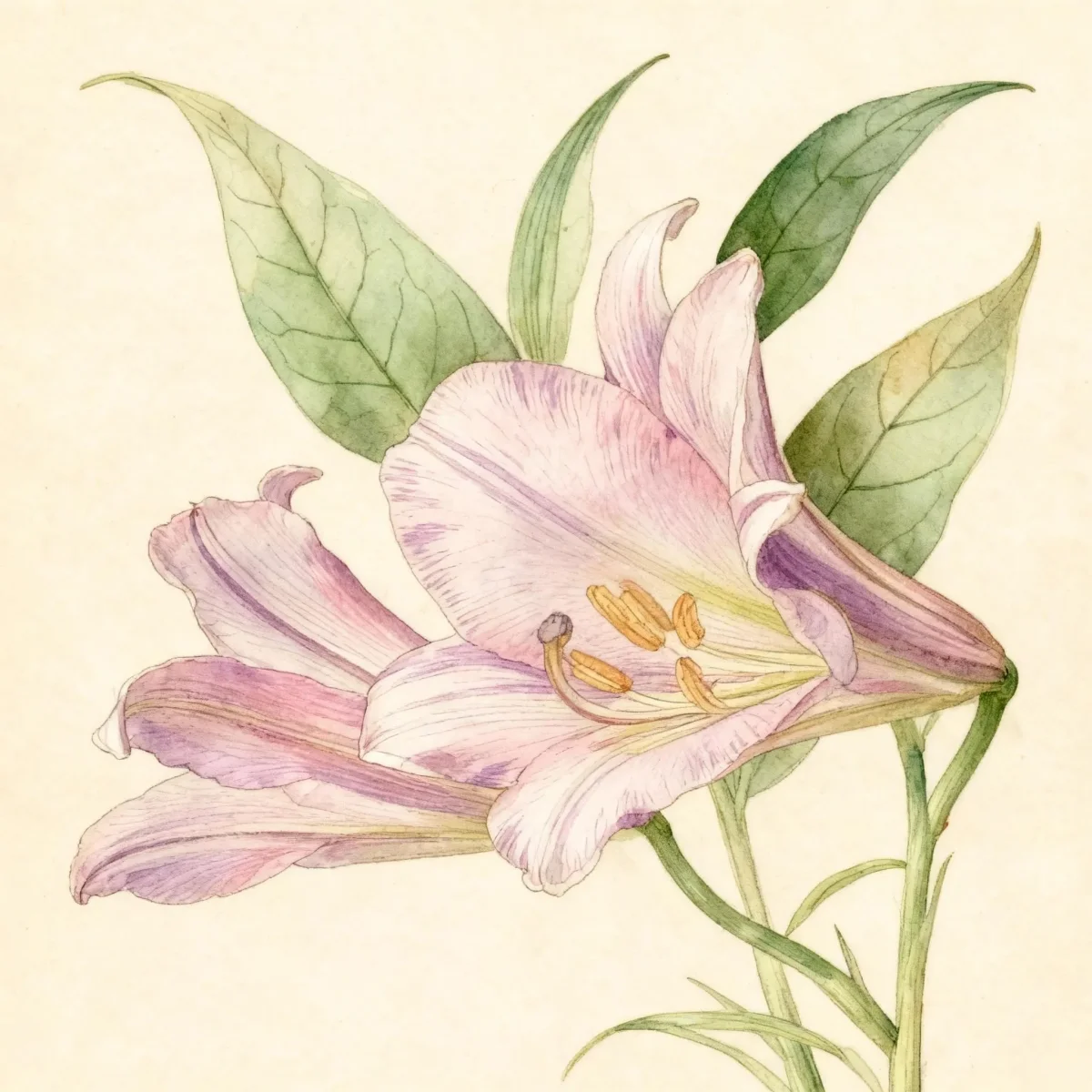
Lily (Lilium 'Emerald Temple')
Grow Lilium 'Emerald Temple' Lily for showy, fragrant trumpet flowers in July, reaching 4-6 ft tall in zones 4-8.
Scroll down to discover growing tips, care requirements, companion plants, and more
Complete Plant Information
Overview
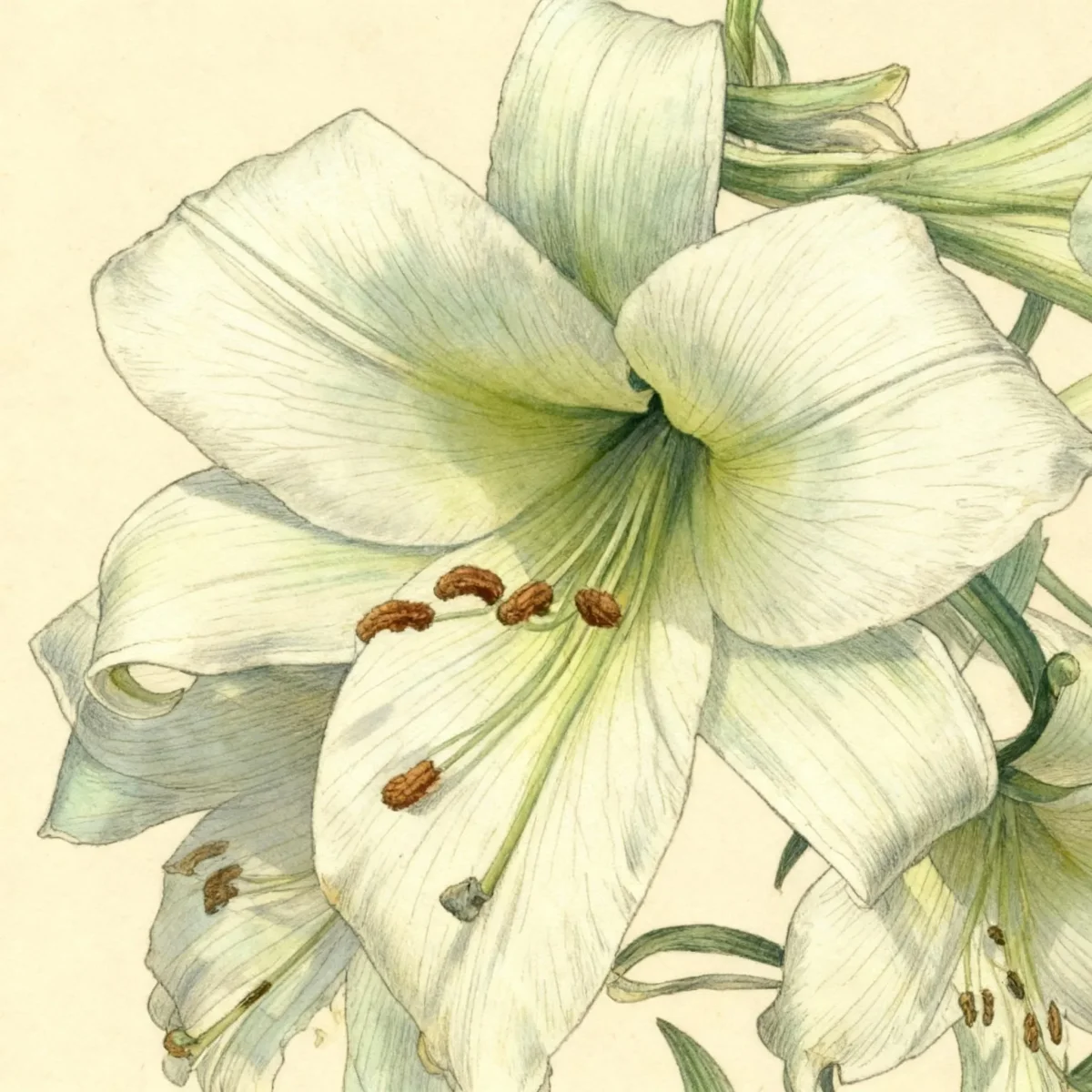
Lilium ‘Emerald Temple’ is a spectacular Division 6 trumpet hybrid Lily highly valued for its height and striking summer blooms. This variety produces large, trumpet-shaped flowers that are predominantly white, beautifully accented with an emerald green back and complementary green highlights, ensuring high visual impact in mature garden settings. As a robust bulbous perennial, Lilium ‘Emerald Temple’ thrives in well-drained soil, offering gardeners a reliable mid-summer display of showy and fragrant blossoms.
Successful cultivation of this Lily involves providing the right balance of sun and moisture—full sun exposure is ideal, though part shade is tolerated. A key cultural tip involves ensuring the roots remain cool, often achieved by mulching, while keeping the crown area directly exposed to the sun. Planting Lilium ‘Emerald Temple’ bulbs correctly in the fall or early spring sets the foundation for these impressive 4-to-6-foot spikes.
This Lily brings vertical drama and powerful scent to borders, making it an excellent specimen plant or feature when grouped together. Whether admired up close near a walkway or used as stunning cut flowers, the elegance of Lilium ‘Emerald Temple’ ensures it remains a favorite choice for perennial borders looking for significant mid-summer impact.
Fast Facts
- Plant Family: Liliaceae
- Plant Type: Bulb
- Hardiness Zones: USDA Zones 4-8
- Size at Maturity:
- Height: 4-6 ft
- Spread: 1-2 ft
- Bloom Time: July
- Bloom Description: White with green back and highlights
- Sun Exposure: Full sun to part shade
- Water Needs: Medium
- Maintenance Level: Medium
How to Grow
Planting Lilium ‘Emerald Temple’ bulbs should ideally occur in the fall or very early spring; ensure bulbs are set 4 to 6 inches deep. This Lily performs best in average, medium-moisture soil that is well-drained, preferably rich in organic matter. For optimal flowering, strive to situate the upper portion of the plant in full sun while keeping the root zone shaded, perhaps using companion plants or a thick layer of mulch to maintain a cool, moist environment.
Watering should be consistent throughout the year; the bulbs require good even moisture and must not be allowed to dry out, though excessive moisture must be avoided to prevent bulb rot. Plant Lily bulbs in clusters of three, spaced about 12 inches apart, to achieve the most substantial visual display. Taller specimens may benefit from staking, particularly if grown in heavier shade where stems can weaken.
Care involves removing faded flowers promptly to prevent seed setting. After the leaves and stems naturally yellow following the July bloom period, you can cut the stalks back. Potted Lilium ‘Emerald Temple’ can be planted anytime between spring and fall, though container blooms may be slightly smaller than those from in-ground bulbs.
Landscape Uses
Lilium ‘Emerald Temple’ serves as an excellent, showy vertical accent in the landscape, providing reliable color and strong contrast throughout the mid-summer season. These tall specimens shine when planted in repeating groups within the perennial border, creating a stately backdrop for lower-growing companions. The striking white blooms combined with the distinctive emerald highlights make this Lily a focal point.
Because the flowers are notably fragrant, consider planting containers of Lilium ‘Emerald Temple’ near seating areas or patios where the evening scent can be fully appreciated. While they perform beautifully in the ground, they also adapt well to growing in pots, offering flexibility for smaller gardens or seasonal displays. Their height and structure make them superb choices when pairing with medium-sized shrubs or late-summer flowering perennials.
Standout Features
Flower Qualities
- Showy
- Fragrant
Noteworthy Characteristics
Lilium is a genus of about 100 species of bulbous, herbaceous perennials native to Europe, North America and Asia south to the Philippines. Lilies typically feature 6-tepaled flowers in a variety of shapes (trumpet, funnel, cup, bell, bowl or flat), sometimes nodding, sometimes with reflexed petals, atop stiff, unbranched stems (1-8’ tall) clothed with linear to elliptic leaves. ‘Emerald Temple’ features trumpet-shaped, white flowers with an emerald back and green highlights, exhibiting the characteristics of a Division 6 (trumpet/Aurelian hybrid) lily.
Tolerances
Potential Problems
Gardeners must monitor for common Lily pests, notably the brightly colored Lily leaf beetle, which can cause significant defoliation if left unchecked. Disease management is also crucial; lily mosaic virus is potentially devastating, making prompt aphid control essential since no cure exists for infected plants. Additionally, ensure soil drainage is impeccable, as bulbs are highly susceptible to bulb rot in persistently wet conditions, and fungal issues like botrytis can occur.
Due to the significant vertical growth of Lilium ‘Emerald Temple’, staking often becomes a necessary preventative measure, especially in windy sites or if the plant receives too much afternoon shade, which leads to weaker stems. Proactive pest and disease management, combined with proper siting for strong stem support, will ensure healthy, upright specimens year after year.
Frequently Asked Questions
What hardiness zones is Lily suitable for?
Lilium ‘Emerald Temple’ is hardy in USDA Zones 4 through 8.
How large does Lily grow?
This Lily typically reaches heights between 4 and 6 feet, spreading 1 to 2 feet wide when mature.
What sun exposure does Lily need?
Lilium ‘Emerald Temple’ thrives best in locations receiving full sun, although it tolerates part shade.
When does Lily bloom?
This variety blooms in July, producing beautiful white flowers with distinct green accents on the backs of the petals.
Conclusion
Lilium ‘Emerald Temple’ delivers exceptional garden value through its towering stature and the elegant, fragrant, trumpet-shaped blooms displayed reliably in mid-summer. Incorporating this outstanding Lily variety into your planting scheme will introduce vertical interest and beautiful contrast to your borders. Ensure you check your local hardiness zone compatibility and plan for fall planting to enjoy the spectacular display of this magnificent Lily next summer.
Companion Planting
Selecting compatible neighbors is key to keeping the root zone of Lilium ‘Emerald Temple’ cool and shaded while the flowers reach for the sun. Excellent companions include ground-hugging perennials with lower habits, such as Lady’s Mantle (Alchemilla mollis), whose mounding foliage shades the soil effectively. Ferns or low-growing ornamental grasses also pair well, mimicking the natural environment where lilies develop best—sun above, shade below. Avoid planting species that require radically different soil pH or moisture regimes to simplify long-term care.
Seasonal Care Calendar
Spring preparation focuses on applying a fresh layer of mulch around the base of the Lily to retain moisture and keep the root crown cool immediately after the new shoots emerge. As summer progresses into July, deadhead spent blooms of the Lilium ‘Emerald Temple’ to direct energy back to the bulb, but resist cutting the foliage down until it yellows naturally in the fall. Late fall, after the ground begins to cool, is the optimal time for planting new bulbs or amending the soil around established clusters with compost to boost vigor for the following season.