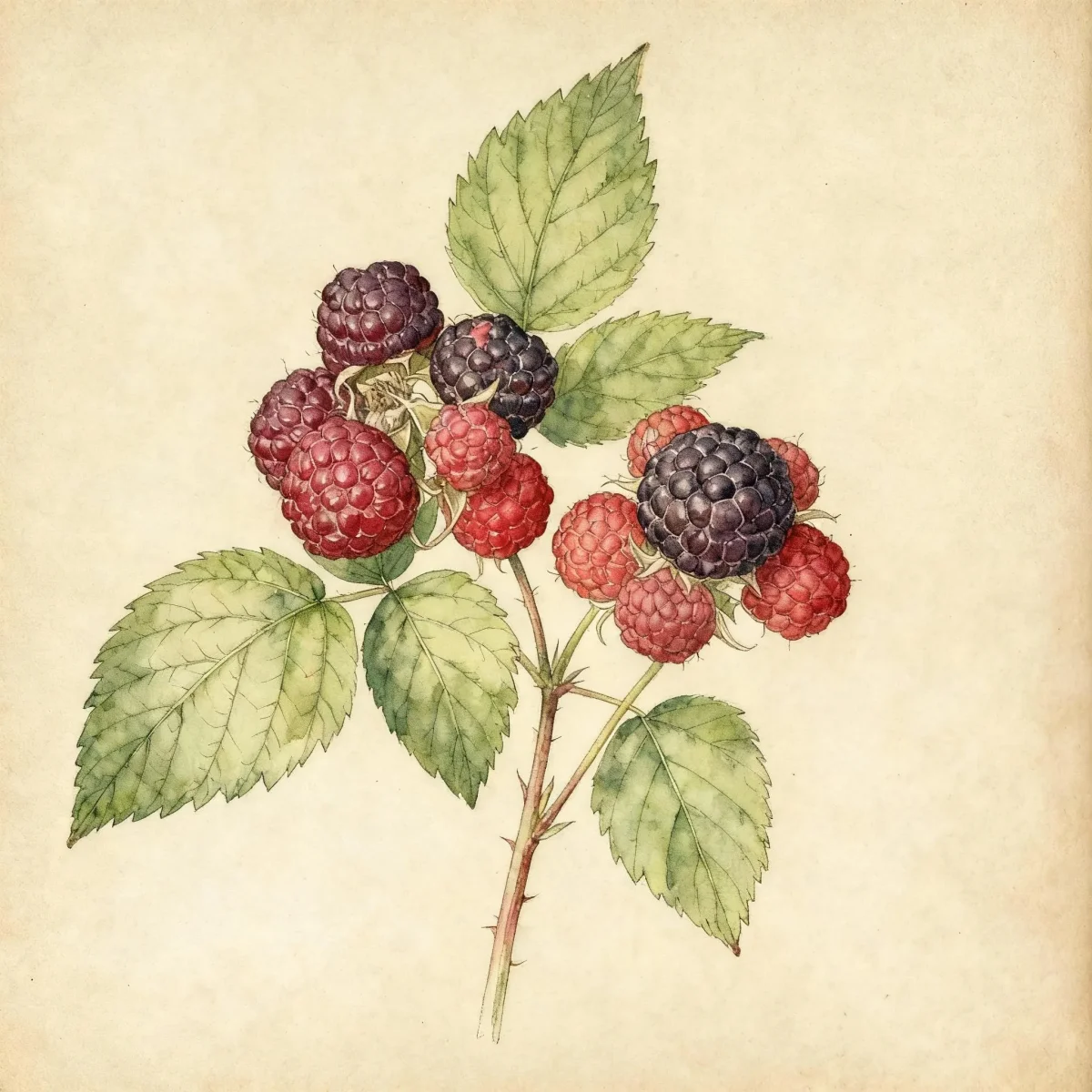
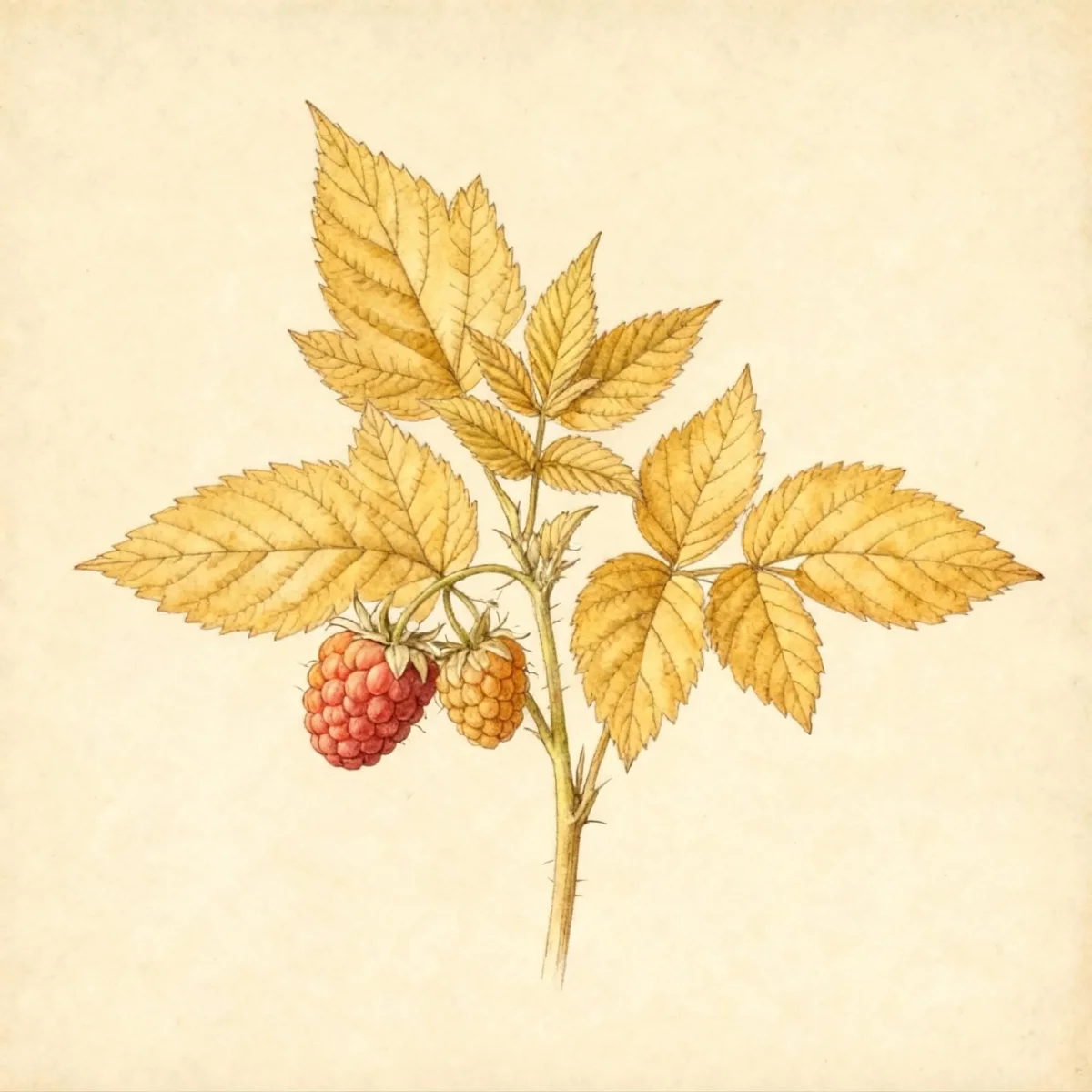
Raspberry (Rubus idaeus 'Aureus')
Rubus idaeus 'Aureus' is a distinctive, low-growing Raspberry valued for its bright yellow foliage accent and ground cover habit.
Scroll down to discover growing tips, care requirements, companion plants, and more
Complete Plant Information
Overview
Rubus idaeus ‘Aureus’, commonly known as the golden-leaved Raspberry, offers a vibrant twist on the traditional bramble. This cultivar is primarily grown for its ornamental appeal, specifically its compound leaves featuring bright yellow leaflets that brilliantly contrast with greener garden elements. While traditional Raspberry plants focus heavily on fruit production, Rubus idaeus ‘Aureus’ shines as a low-growing, suckering shrub ideal for accent planting.
This variety typically matures between 1 to 2 feet high with a spread up to 3 feet, making it a manageable ground cover compared to its taller cousins. It demands medium care but rewards diligent pruning with better foliage color, thriving best when sited where it receives full sun. Gardeners should note that this form infrequently produces the edible fruit, focusing instead on aesthetics.
Utilizing Rubus idaeus ‘Aureus’ allows gardeners to introduce texture and color contrast while enjoying the hardiness of the Raspberry family. Its ability to spread and naturalize makes it excellent for stabilizing slopes or filling large areas where a dense, colorful ground layer is desired.
Fast Facts
- Plant Family: Rosaceae
- Plant Type: Fruit
- Hardiness Zones: USDA Zones 5-8
- Size at Maturity:
- Height: 1-2 ft
- Spread: 1-3 ft
- Bloom Time: April to May
- Bloom Description: White
- Sun Exposure: Full sun to part shade
- Water Needs: Medium
- Maintenance Level: Medium
How to Grow
For optimal performance, plant your Rubus idaeus ‘Aureus’ in organically rich, slightly acidic soils that remain consistently moist but are extremely well-drained. This Raspberry cultivar is intolerant of wet feet; soggy conditions quickly lead to destructive root rot. Plan for a site enjoying full sun for the best development of its signature yellow foliage color, though partial shade is tolerated.
Maintenance involves consistent monitoring of spread, as this is a suckering shrub that can quickly colonize an area if left unchecked. Promptly remove excess new plants and suckers to maintain desired boundaries or control its use as a ground cover. Pruning is essential for health and appearance; remove any canes showing weakness or disease at any time.
Pruning canes should be performed strategically: fruit-bearing canes (floricanes) should be pruned out immediately after they finish fruiting during the summer. In late winter, thin out any canes damaged by winter cold, leaving the healthy, younger canes to produce next season’s growth.
Even though it is grown ornamentally, understanding its biennial cane structure is helpful: first-year shoots (primocanes) only bear leaves, while second-year canes (floricanes) flower and fruit before dying back. Consistent, medium watering is necessary to keep the soil uniformly moist throughout the growing season.
Landscape Uses
The primary landscape value of the Rubus idaeus ‘Aureus’ lies in its spreading habit and striking leaf color, making it highly effective when used as a vibrant ground cover or as a foliage accent in spreading colonies. Because it prefers to naturalize, consider placing it in large drifts where vigorous spread is not a concern, such as open woodland edges or banks. While traditional Raspberry varieties are prized for harvest, this specific cultivar shines where dense coverage and bright color are needed near borders or pathways.
Its relatively low height (1-2 ft) allows it to function well beneath taller, formally pruned shrubs, creating a bright skirt around their bases. When planning companionship, choose plants with deep green or burgundy foliage to maximize the luminous effect of the yellow leaves of Rubus idaeus ‘Aureus’. Avoid highly manicured flower beds where its wilder, suckering nature might seem unruly.
If you are looking to harness the naturalizing capability, consider using this Raspberry on slopes where its root structure can help stabilize the soil, provided drainage remains adequate. Its ornamental use capitalizes on its ability to rapidly colonize disturbed areas, offering quick coverage with year-round interest from the foliage, even outside the spring bloom time.
Standout Features
Flower Qualities
- Showy
Fruit Qualities
- Showy
- Edible
Noteworthy Characteristics
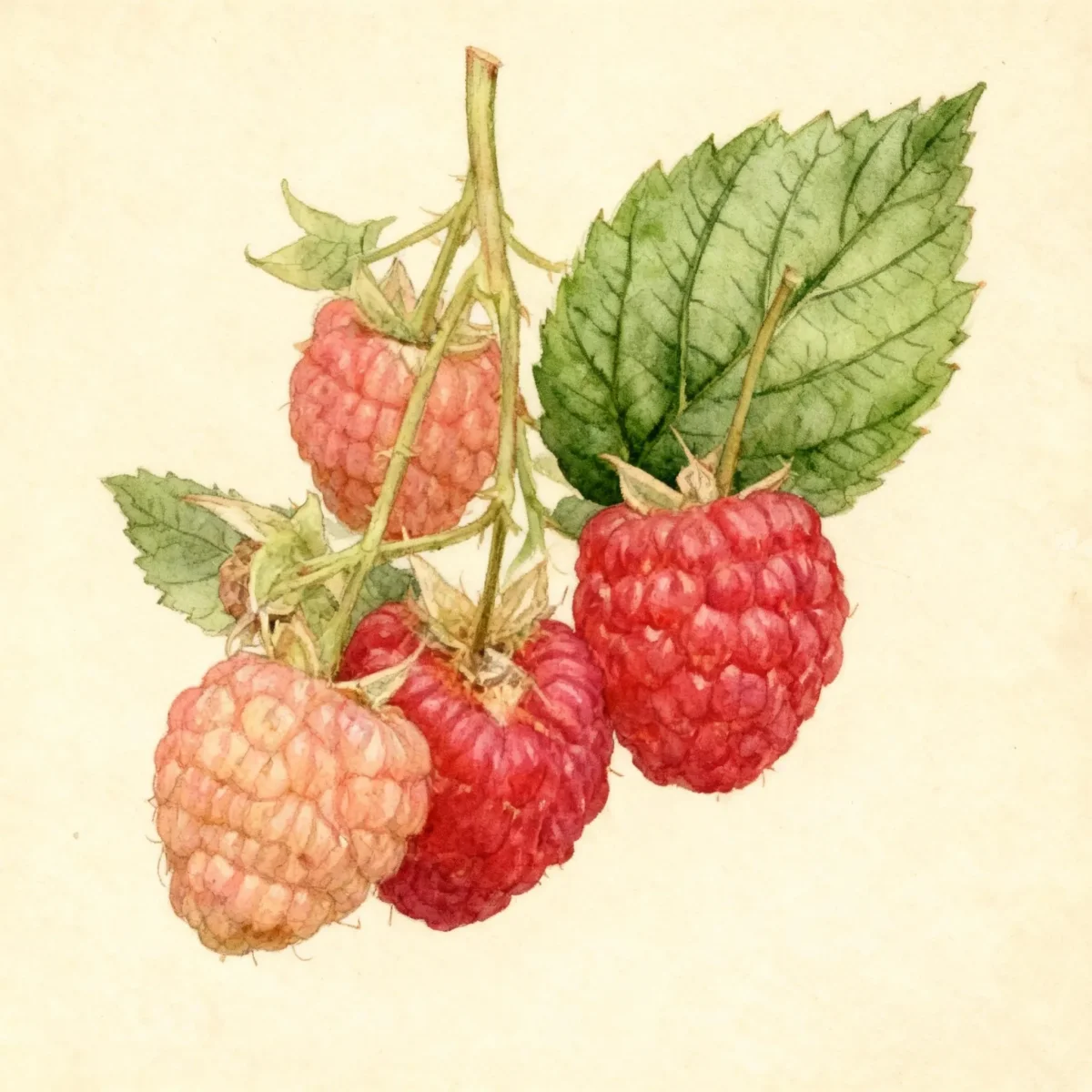
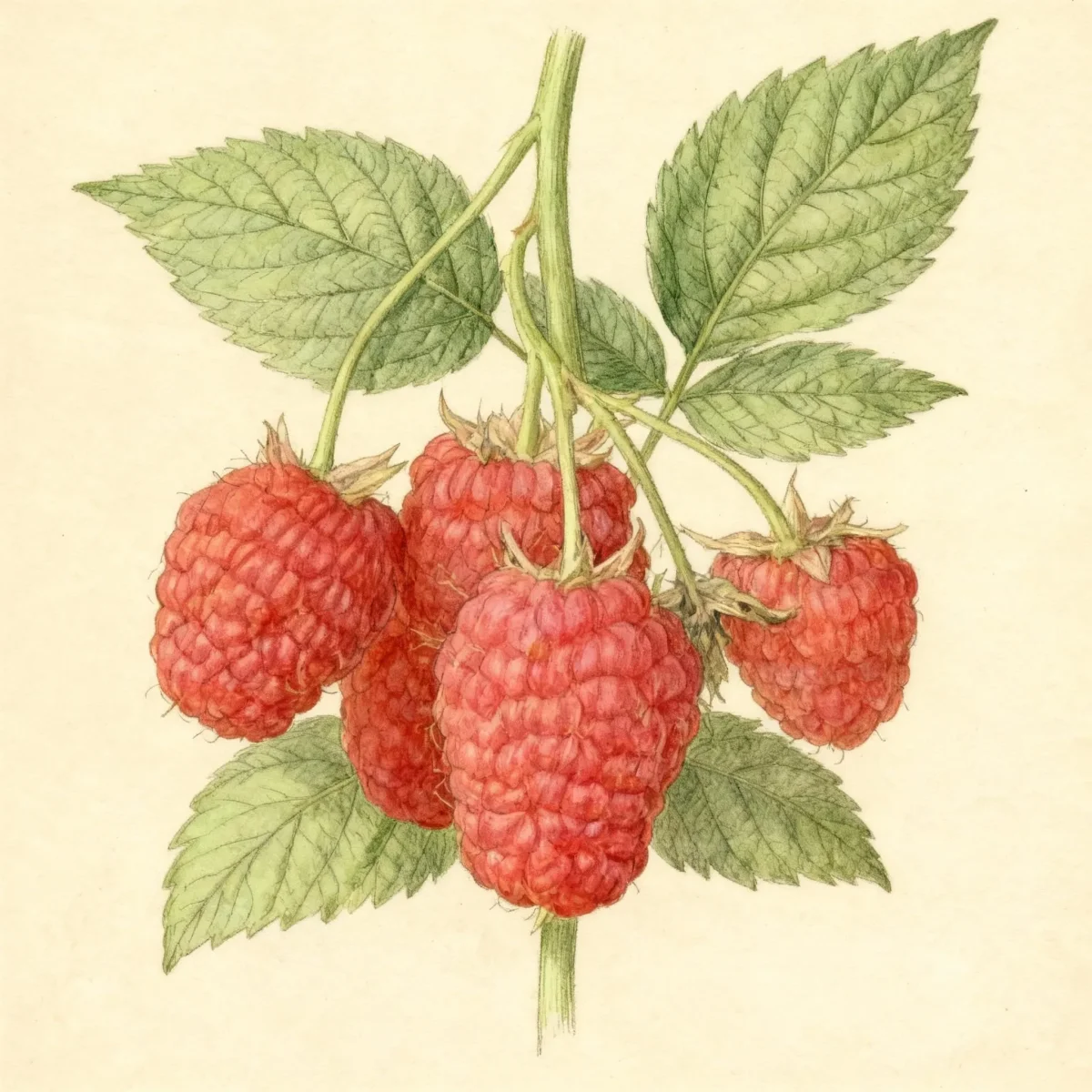
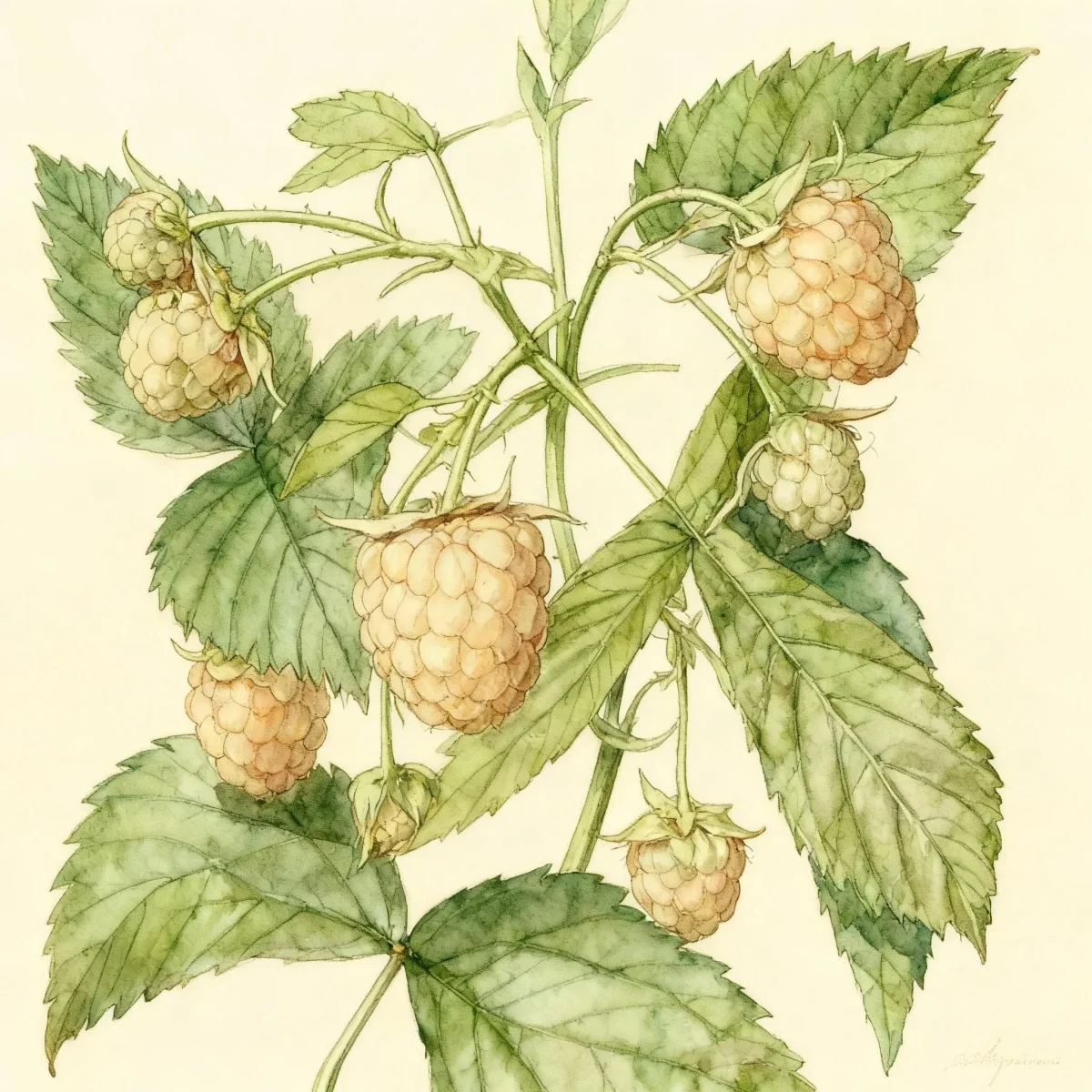
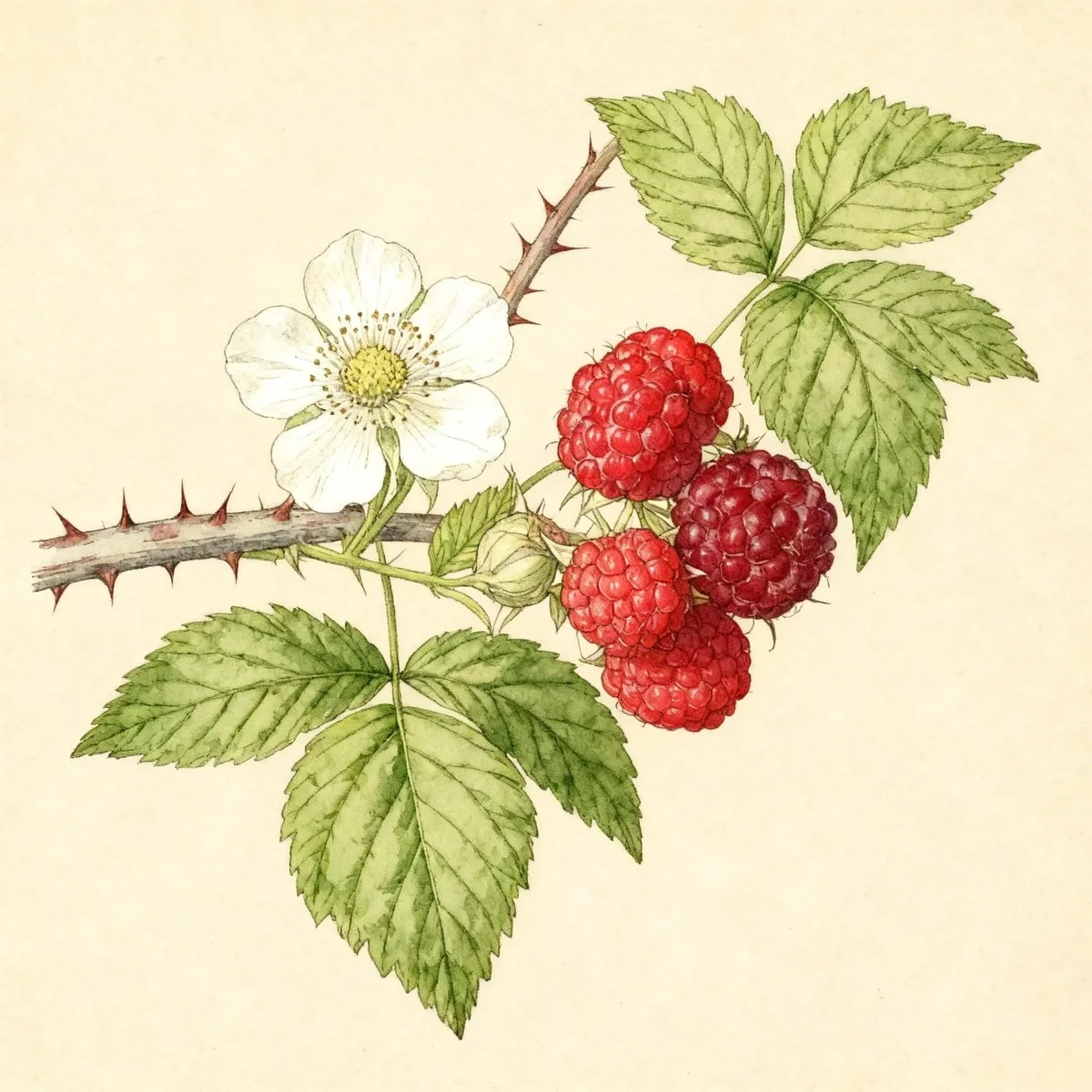
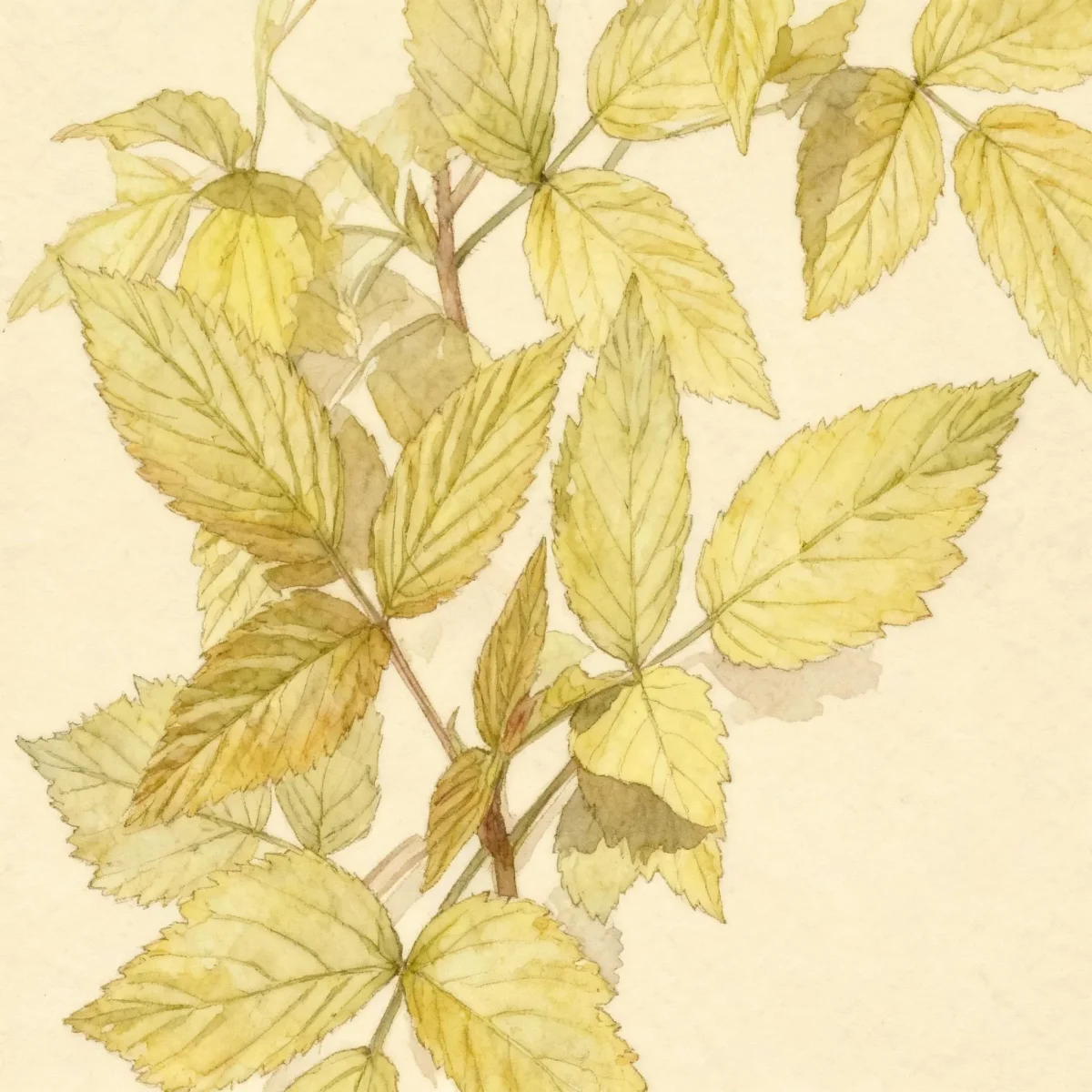
Rubus idaeus ‘Aureus’ is an ornamental, low-growing form of Raspberry typically grown for its foliage accent. It features compound leaves with 3-5 ovate, bright yellow leaflets, often displaying greenish veins. This suckering shrub has prickly stems and produces small white flowers in the spring, although it infrequently sets fruit.
Tolerances
- Intolerant of wet soils which can cause root rot
Potential Problems
Fungal diseases like anthracnose and botrytis pose significant threats that may require chemical intervention, emphasizing the need for good air circulation and avoiding overly wet conditions. Root rot is a major concern if drainage is poor, as the plant cannot tolerate saturated soil. Insect pests, specifically cane borers and crown borers, are potentially serious threats to the structure and longevity of the canes. Proper pruning and sanitation are crucial for management.
Frequently Asked Questions
What hardiness zones is Raspberry (Rubus idaeus ‘Aureus’) suitable for?
This specific cultivar of Raspberry is generally hardy in USDA Zones 5 through 8.
How large does Raspberry (Rubus idaeus ‘Aureus’) grow?
Rubus idaeus ‘Aureus’ usually reaches a height between 1 and 2 feet, spreading outward 1 to 3 feet.
When does Raspberry (Rubus idaeus ‘Aureus’) bloom?
The small white flowers of this golden-leaved Raspberry typically appear in spring, generally between April and May.
What sun exposure does Raspberry (Rubus idaeus ‘Aureus’) need?
For the best yellow foliage color, Rubus idaeus ‘Aureus’ requires full sun, although it can tolerate part shade.
Conclusion
The Rubus idaeus ‘Aureus’ provides exceptional ornamental value within the Raspberry cohort, primarily due to its luminous yellow foliage perfect for ground cover and accent planting. This low-growing shrub offers consistent visual interest, though gardeners must manage its spreading nature and prioritize excellent drainage for this Raspberry variety. Assess your site conditions, especially soil drainage, and plan on consistent pruning to maximize the aesthetic benefits of your Rubus idaeus ‘Aureus’.
Design Ideas
Containers offer a superb way to control the assertive spreading habit common to many Raspberry types, including the Rubus idaeus ‘Aureus’. Planting this golden-leaved cultivar solo in a large pot can create a stunning, manageable focal point where drainage can be meticulously controlled, preventing root rot issues common in heavy garden soils. Ensure the container is deep enough to accommodate the perennial root structure and wide enough to allow for the 1 to 3-foot spread.
When planting in the ground, use Rubus idaeus ‘Aureus’ strategically near the edge of woodland plantings or against dark green backgrounds like evergreen hedges. Its brightness acts as a natural light source in shady or partially shaded areas, significantly brightening borders. Since it spreads by suckers, installing a root barrier, even when using it as a ground cover accent, offers an extra layer of protection against encroachment into turf or formal beds.
Propagation Tips
Although prized for foliage, propagation of the Rubus idaeus ‘Aureus’ is best achieved through hardwood cuttings or more simply, by managing its natural tendency to spread via suckers. New plants readily develop from excess shoots or suckers that emerge from the root crown. These can be carefully dug up during the dormant season (late winter or very early spring) ensuring that you take a section of the established root system with the new cane.
If propagating from stem layering, take advantage of the fact that stems may root where they touch the ground. Gently bend an outer, healthy cane down to the soil level in mid-summer, slightly scarify the area of contact, and cover it with a small mound of soil or mulch. Once this layered section has developed a solid root system by the following spring, it can be severed from the mother plant and transplanted as a new Rubus idaeus specimen.