Sweet William (Dianthus barbatus 'Sooty')
Dianthus barbatus 'Sooty' offers unique maroon-chocolate blooms on this medium-maintenance Sweet William, thriving in zones 3-9.
Scroll down to discover growing tips, care requirements, companion plants, and more
Complete Plant Information
Overview
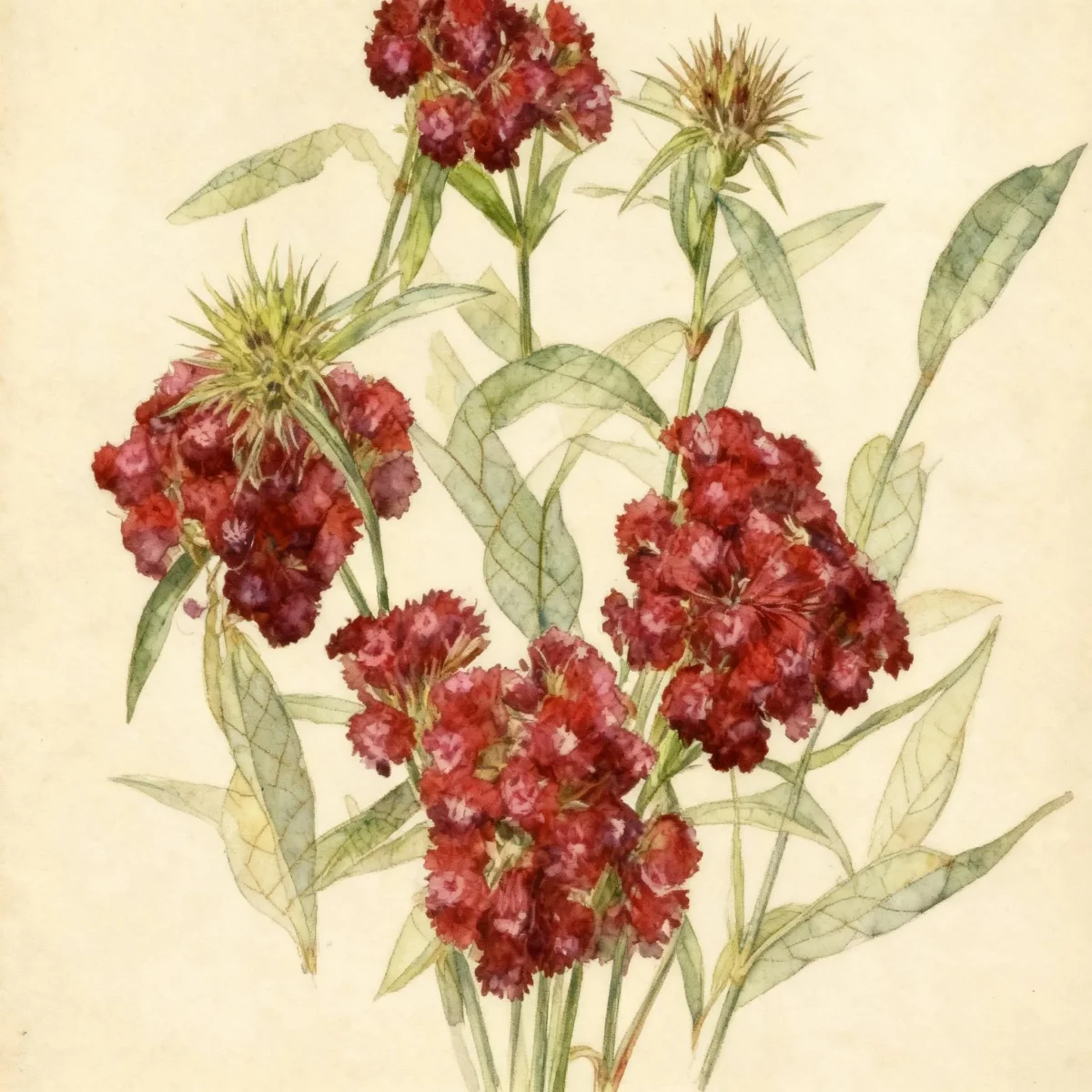
Dianthus barbatus ‘Sooty’, the distinctive variety of Sweet William, brings deep color interest to the late spring garden with its signature maroon-chocolate flowers and attractive red stems. While often grown as an annual or biennial, this herbaceous perennial offers the charm of classic cottage garden flowers in convenient, manageable sizing. Its dense, flat-topped flower clusters make it an excellent choice for adding visual weight to borders without becoming overly tall.
Valued for its unique dark coloration that contrasts beautifully with lighter blooms, Dianthus barbatus ‘Sooty’ thrives when given optimal conditions. Although it is winter hardy down to Zone 3, gardeners in hotter regions should ensure it receives some light afternoon shade to prevent stress during the height of summer. Establishing healthy root systems through well-drained, rich soil is key to encouraging this plant’s re-seeding tendencies.
Successful cultivation of Dianthus barbatus ‘Sooty’ often involves treating it as a short-lived perennial, using prompt deadheading to prolong flowering and encourage overwintering. Whether used in mass plantings or tucked into containers, this cultivar of Sweet William reliably delivers visual impact from late spring into early summer, rewarding minimal attention with reliable color.
Fast Facts
- Plant Family: Caryophyllaceae
- Plant Type: Herbaceous perennial
- Hardiness Zones: USDA Zones 3-9
- Size at Maturity:
- Height: 1-1.5 ft
- Spread: 0.75-1 ft
- Bloom Time: May to June
- Bloom Description: Maroon chocolate
- Sun Exposure: Full sun to part shade
- Water Needs: Medium
- Maintenance Level: Medium
How to Grow
For the best results with Dianthus barbatus ‘Sooty’, sow seeds indoors early for first-year blooms or direct sow in mid to late spring for bloom the following year. This variety of Sweet William performs best in deep, organically rich, well-drained soil. While it demands full sun, establishing it where it receives light afternoon shade is beneficial in warmer climates, preventing heat stress that can weaken this short-lived perennial.
Watering should be kept consistent—maintain medium moisture levels, ensuring the soil never becomes waterlogged, as this significantly increases susceptibility to crown rot. Fertilization is generally not required if the soil is organically rich, but a light application of balanced fertilizer in spring may benefit established clumps. Deadheading spent flowers promptly is crucial; shearing back large plantings after the main flush of bloom encourages perennial behavior and promotes further flowering.
Dianthus barbatus ‘Sooty’ is often treated as a biennial; sowing in the fall allows plants to establish roots over winter for blooming the next summer, mimicking the common practice of using cold-treated nursery stock. If you allow old blooms to remain, the plant may self-seed, potentially filling gaps between seasons, though remember that double-flowered forms will not reproduce true to type from seed.
Landscape Uses
The compact stature of Dianthus barbatus ‘Sooty’, typically around 18 inches tall, makes it exceptionally versatile in garden design. It functions beautifully as an edging plant along paths or tucked into the middle layer of established garden beds and borders where its dark chocolate flowers can provide deep contrast. Consider planting masses of this Sweet William variety near structures or walkways where their seasonal fragrance and unique coloration can be easily appreciated.
This dianthus integrates perfectly into traditional cottage garden schemes, pairing well with soft textures like Lady’s Mantle or taller summer bloomers such as Foxglove and Oriental Poppies. For modern arrangements, group several pots of Dianthus barbatus ‘Sooty’ together in containers alongside silvery foliage plants like Artemisia to highlight the rich maroon tones. Its relatively contained spread also makes it suitable for window boxes or mixed container plantings where it won’t overwhelm neighboring annuals.
Standout Features
Flower Qualities
- Showy
Noteworthy Characteristics
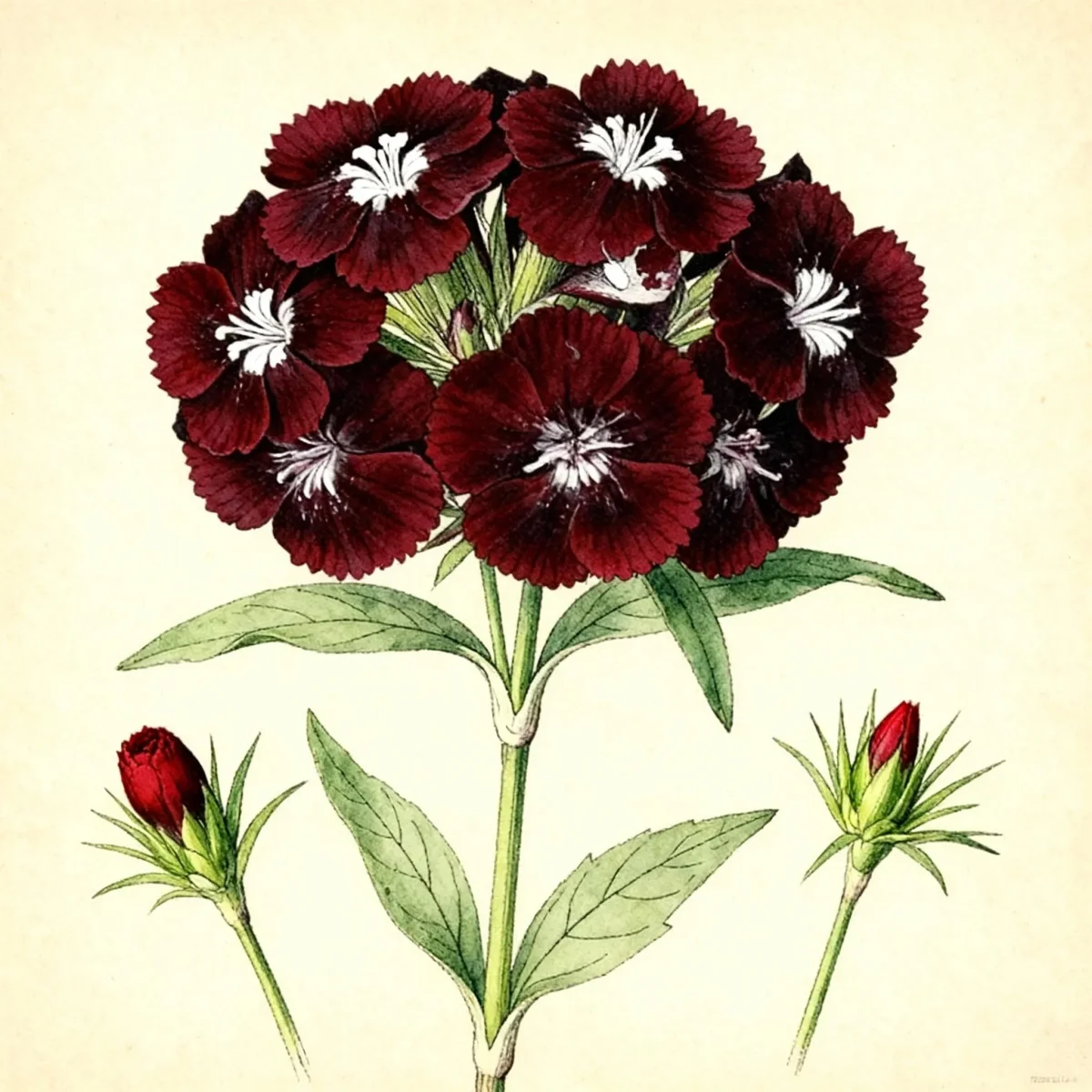
Dianthus barbatus, commonly called sweet William, typically grows 12-24” tall and features small flowers held in dense, flat-topped terminal clusters (3-5” wide). The specific cultivar ‘Sooty’ is primarily noted for its maroon-chocolate flowers (to 3/4”) and complementary red stems. Lance-shaped, medium green leaves mature to a mahogany shade as the season progresses, providing textural interest alongside the unique flower heads.
Tolerances
- Deer
Potential Problems
Dianthus barbatus ‘Sooty’ is susceptible to fungal issues, notably crown rot and rust, especially when drainage is poor. Prevent rot by ensuring your soil is light and drains freely; amending heavy clay with grit or compost is essential. Monitoring the undersides of leaves for rust spores and immediately removing infected foliage can help manage spread. Slugs and snails are known to feed on the foliage, so implementing standard preventative measures like slug bait or beer traps, particularly for young seedlings, is advisable.
Frequently Asked Questions
What hardiness zones is Sweet William (Dianthus barbatus ‘Sooty’) suitable for?
Dianthus barbatus ‘Sooty’ is winter hardy across USDA Zones 3 through 9.
How large does Dianthus barbatus ‘Sooty’ grow?
This cultivar typically reaches a height between 1 and 1.5 feet and spreads about 0.75 to 1 foot wide.
When does Dianthus barbatus ‘Sooty’ bloom?
Sweet William typically blooms from May into June, showcasing its distinctive maroon-chocolate flower color.
What sun exposure does Dianthus barbatus ‘Sooty’ need?
This plant thrives in full sun but appreciates some light afternoon shade, particularly in very hot summer climates.
Conclusion
The rich, almost black coloring of the flowers on Dianthus barbatus ‘Sooty’ provides a sophisticated element rarely found in traditional cottage plantings. This handsome variety of Sweet William offers reliable mid-season color and warrants inclusion in borders or containers for its deep visual texture. Before planting, ensure your site offers well-drained soil and check its compatibility with your local USDA hardiness zone.
Companion Planting
When designing beds around Dianthus barbatus ‘Sooty’, select companions that share similar moderate water needs and prefer well-drained conditions. Gray or silver foliage provides excellent contrast to the maroon-chocolate blooms; plants like Lamb’s Ears (Stachys byzantina) or various Mounds of Silver Artemisia work beautifully. For height variation, consider pairing it with shorter spring bulbs that fade before the sweet William reaches its peak, such as low-growing Daffodils or Spanish Bluebells.
Wildlife Benefits
While the main appeal of Dianthus species is ornamental, the flowers of Sweet William generally attract hummingbirds, suggesting that Dianthus barbatus ‘Sooty’ offers some nectar reward. Even if the dark color is less favored by primary pollinators than brighter hues, these dense flower heads provide a reliable source of floral resources during the late spring transition period. Planting in drifts ensures a more substantial resource pool for visiting wildlife.