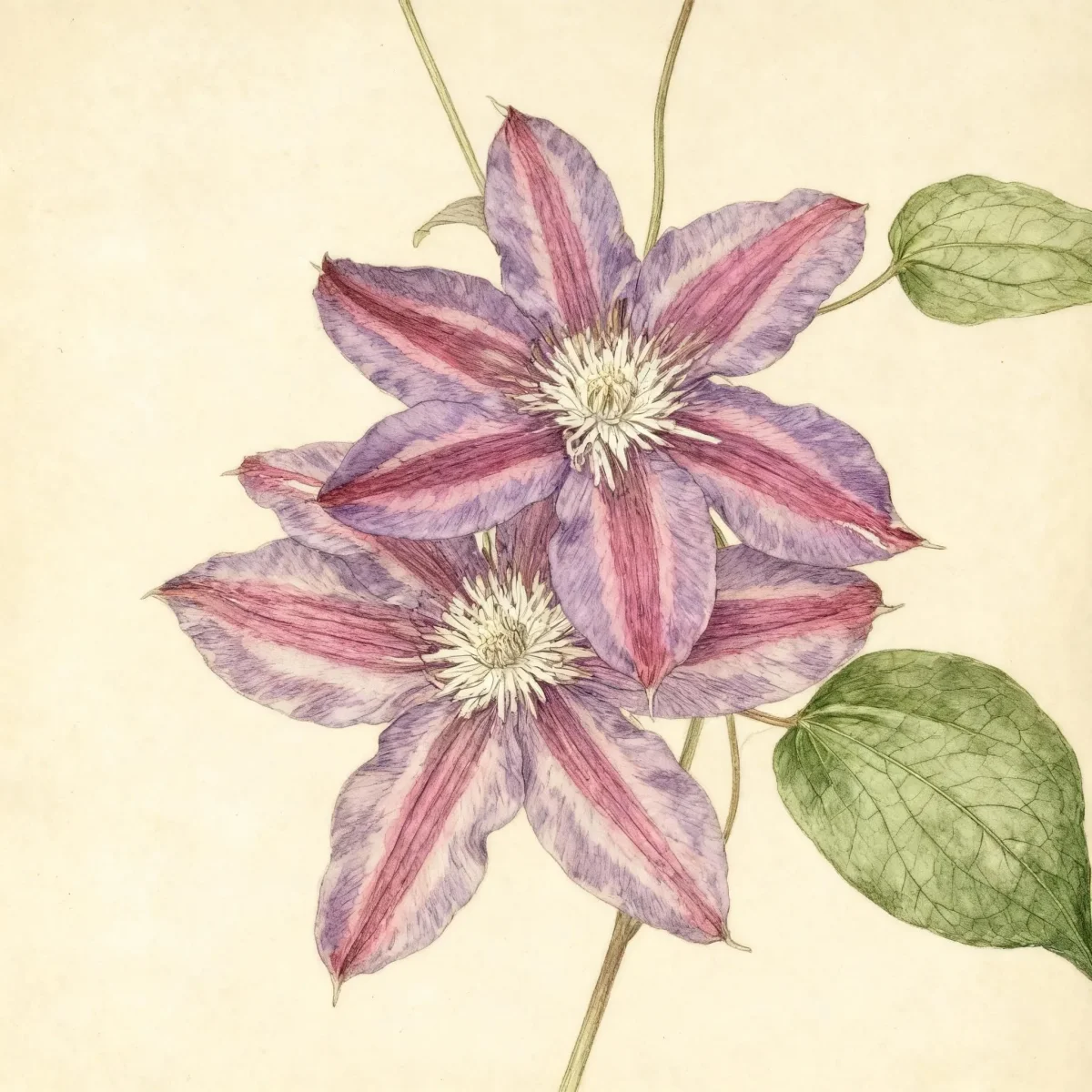
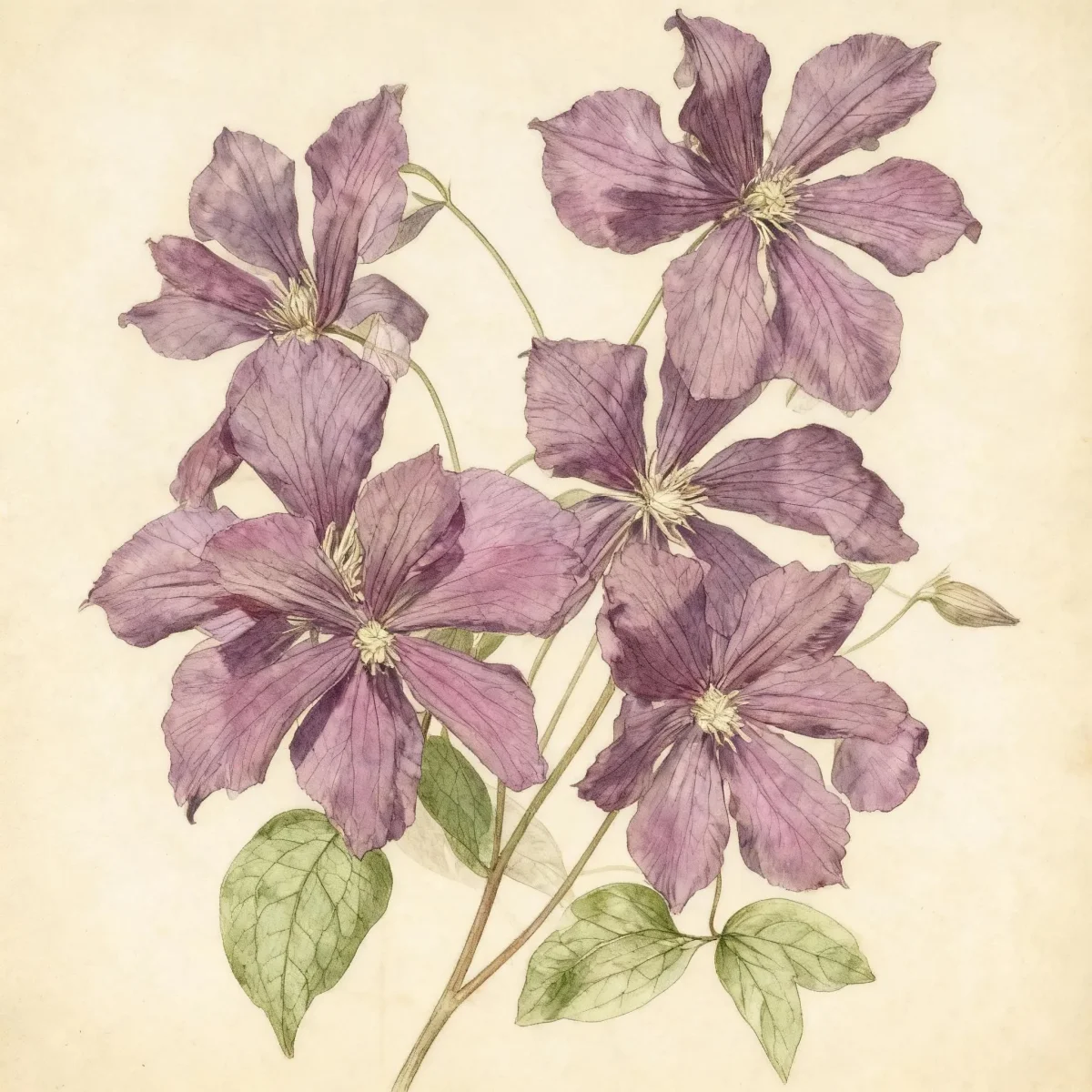
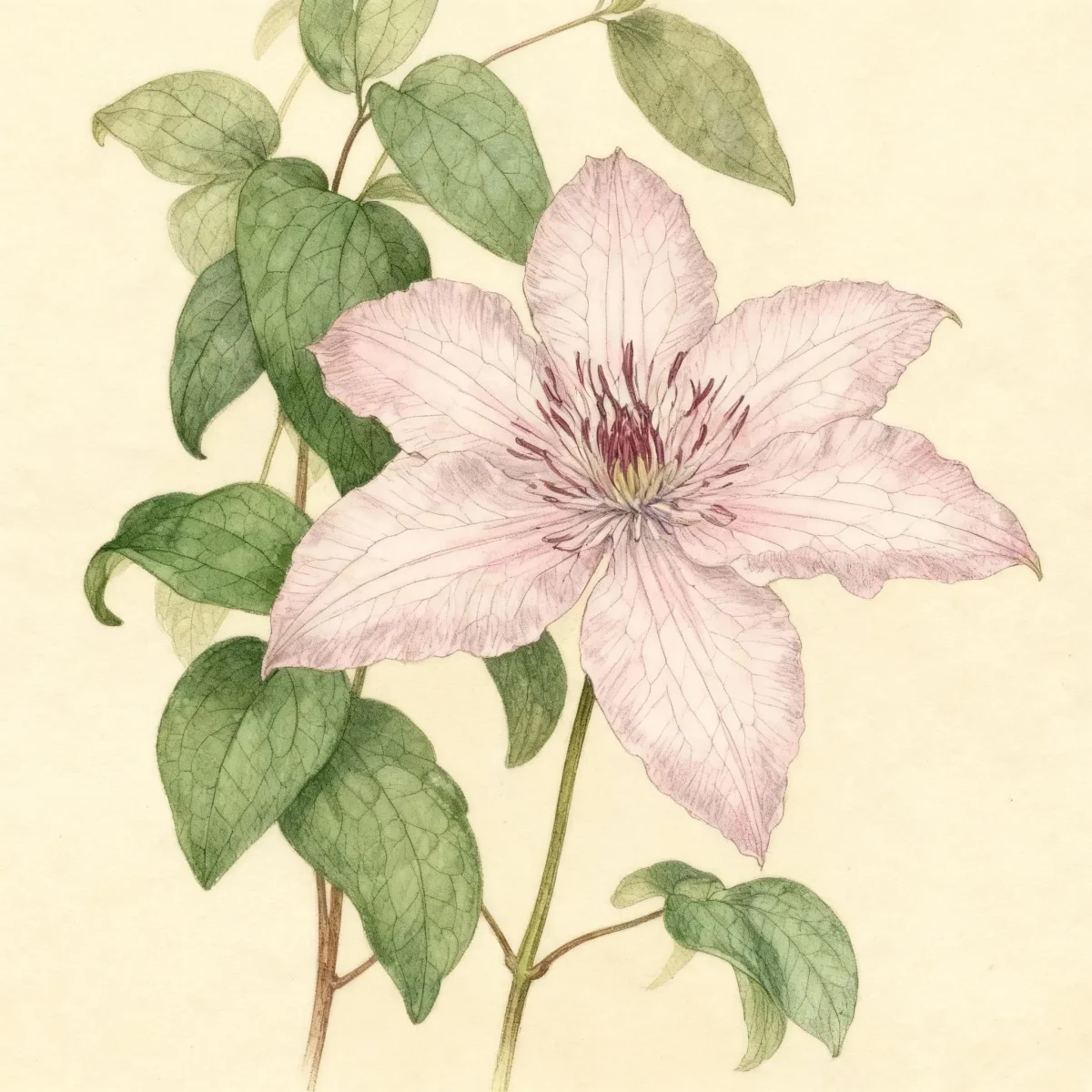
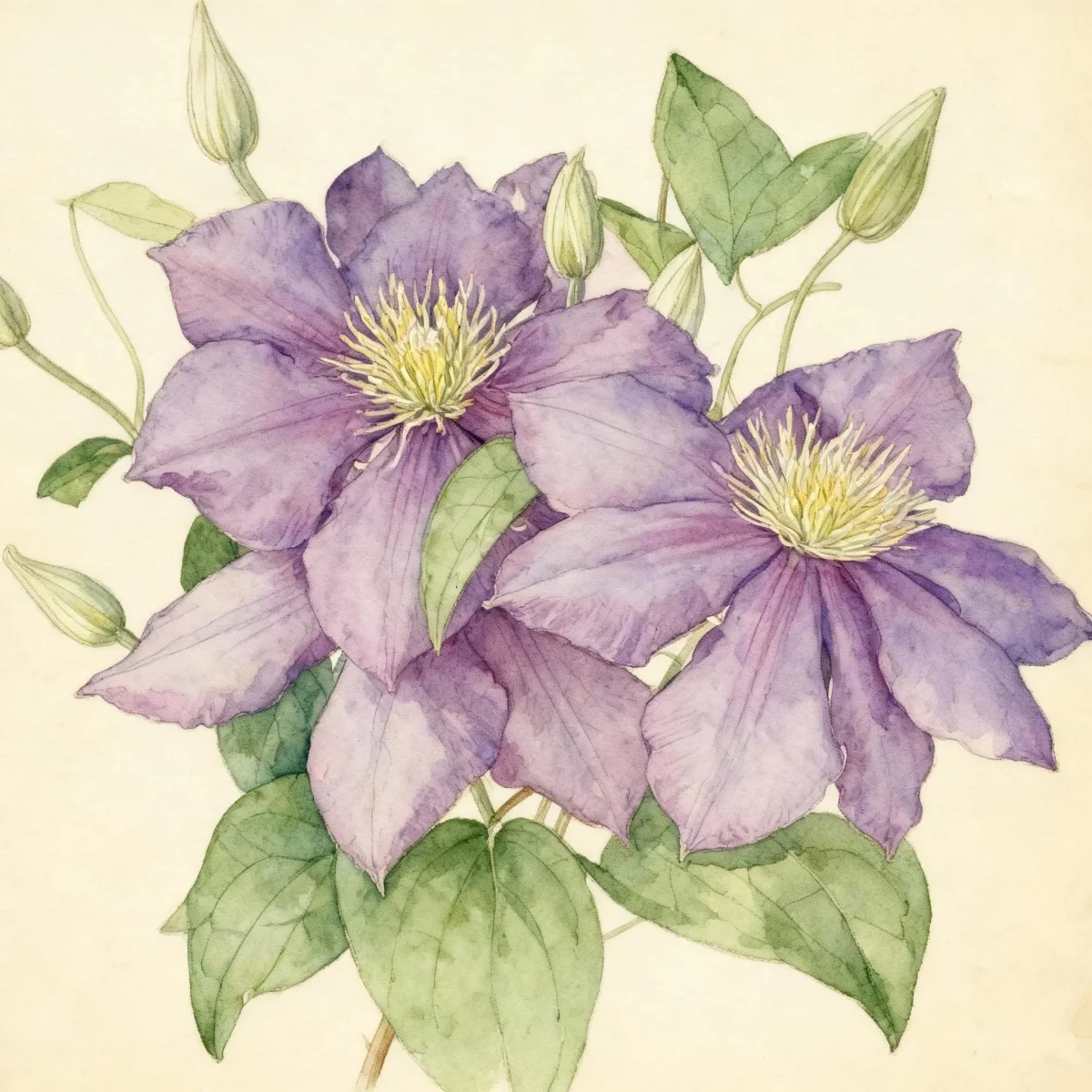
Clematis (Clematis 'Duchess of Albany')
Clematis 'Duchess of Albany' is a low-maintenance, Group 3 vine boasting profuse deep pink flowers from July to September.
Scroll down to discover growing tips, care requirements, companion plants, and more
Complete Plant Information
Overview
The Clematis ‘Duchess of Albany’ is a highly desirable, deciduous, small-flowering climbing vine celebrated for its vibrant summer performance. This cultivar of Clematis produces masses of tulip-shaped, deep pink flowers, typically measuring 2-3 inches across, offering spectacular vertical interest from mid-summer well into the fall. It is valued by gardeners for its relatively low maintenance needs once established and its prolific blooming habit.
As a vigorous climbing plant, the Clematis ‘Duchess of Albany’ requires consistent support, such as a trellis or arbor, for optimal growth and display. Gardeners should plan its placement carefully, ensuring that while the flowers reach for the sun, the root zone benefits from shade, a classic requirement for many showy Clematis varieties. This robust vine provides excellent architectural height in the garden design.
Reaching heights between 8 to 12 feet, Clematis ‘Duchess of Albany’ brings lush, medium green foliage alongside its stunning summer display. Its versatility allows it to serve as a focal point, screen, or integrated textile over existing structures. For those seeking dependable, colorful vertical coverage, this specific Clematis hybrid is an excellent choice.
Fast Facts
- Plant Family: Ranunculaceae
- Plant Type: Vine
- Hardiness Zones: USDA Zones 4-8
- Size at Maturity:
- Height: 8-12 ft
- Spread: 3-6 ft
- Bloom Time: July to September
- Bloom Description: Deep pink
- Sun Exposure: Full sun to part shade
- Water Needs: Medium
- Maintenance Level: Low
How to Grow
For successful establishment of your Clematis ‘Duchess of Albany’, plant it in spring or fall when conditions are mild. It requires fertile, medium moisture, well-drained soil. While the vine thrives in full sun, ensuring the root system receives shade is crucial; protect the roots by planting shade-loving perennials, small shrubs, or applying a thick layer of mulch around the base.
Watering must be consistent, especially during dry periods, as dryness is detrimental and should be strictly avoided. Due to its climbing nature, always provide a trellis or substantial support structure before the vine becomes too large. This genus, including the stunning Clematis ‘Duchess of Albany’, climbs using twining leaf stalks, so it needs a structure to grasp.
Pruning is straightforward as this cultivar is classified as Group 3. This means that Clematis ‘Duchess of Albany’ flowers entirely on new wood grown in the current season. Therefore, cut the entire vine back hard in late winter or early spring before active growth begins, encouraging vigorous new blooms later in the season. Light afternoon shade can prevent stress in regions with very hot, humid summers.
Landscape Uses
Clematis vines are indispensable for adding height and softness to vertical structures in the landscape. Clematis ‘Duchess of Albany’ is perfectly suited for training up walls, fences, arbors, or lampposts, instantly breaking up hard lines with its lush growth and deep pink flowers. Its vigorous nature makes it ideal for softening utilitarian structures or adding a dramatic canopy to a pergola.
Beyond vertical applications, this flexible vine can be allowed to sprawl naturally through supportive, large shrubs or scramble over old stumps for a cottage garden effect. For an elegantly layered look, plant it alongside lower-growing perennials whose foliage can help shade the root zone while their blooms offer contrasting textures and colors throughout the season. Container growing is also an effective option for patios, provided the pot is large enough to accommodate its deep root structure.
Standout Features
Flower Qualities
- Showy
Noteworthy Characteristics
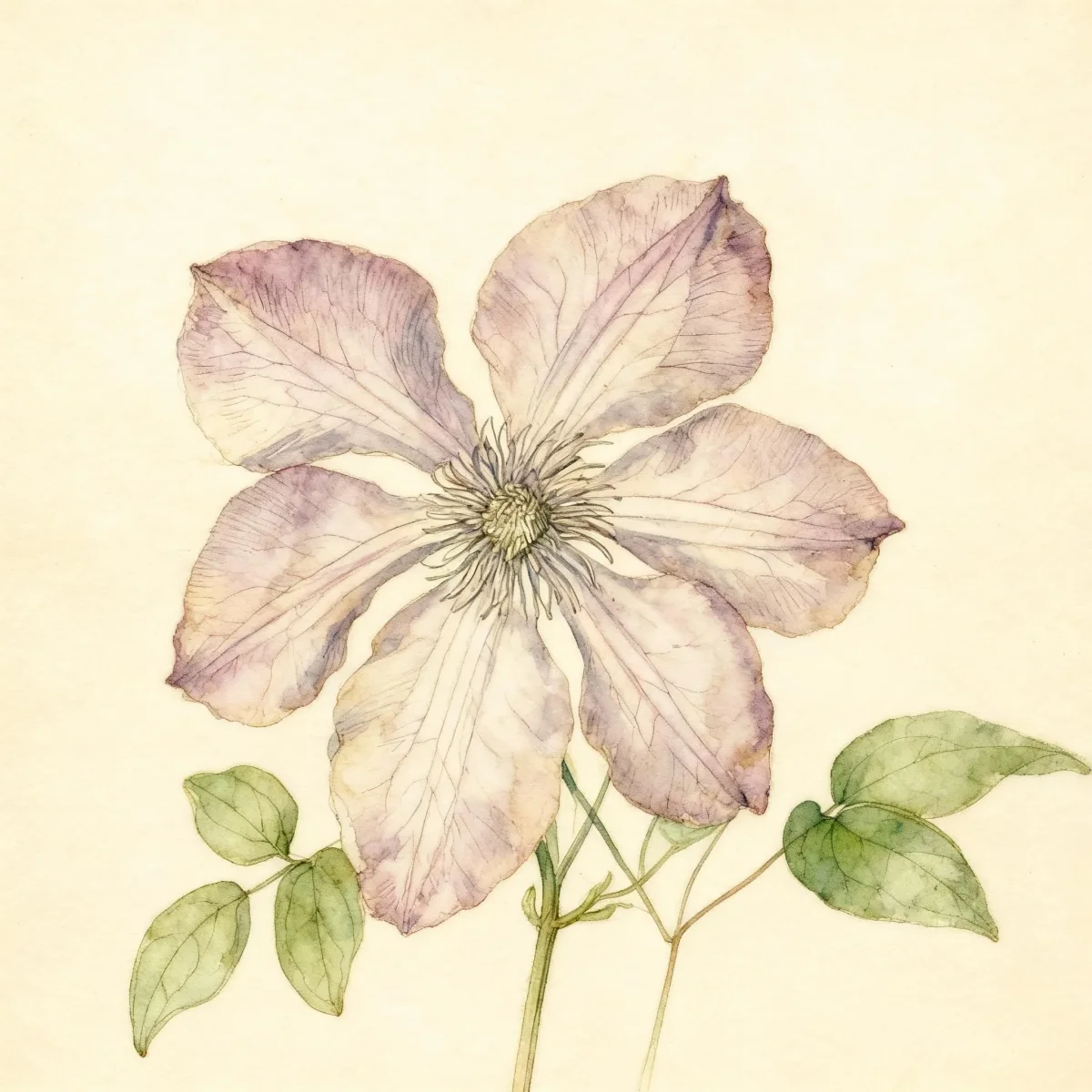
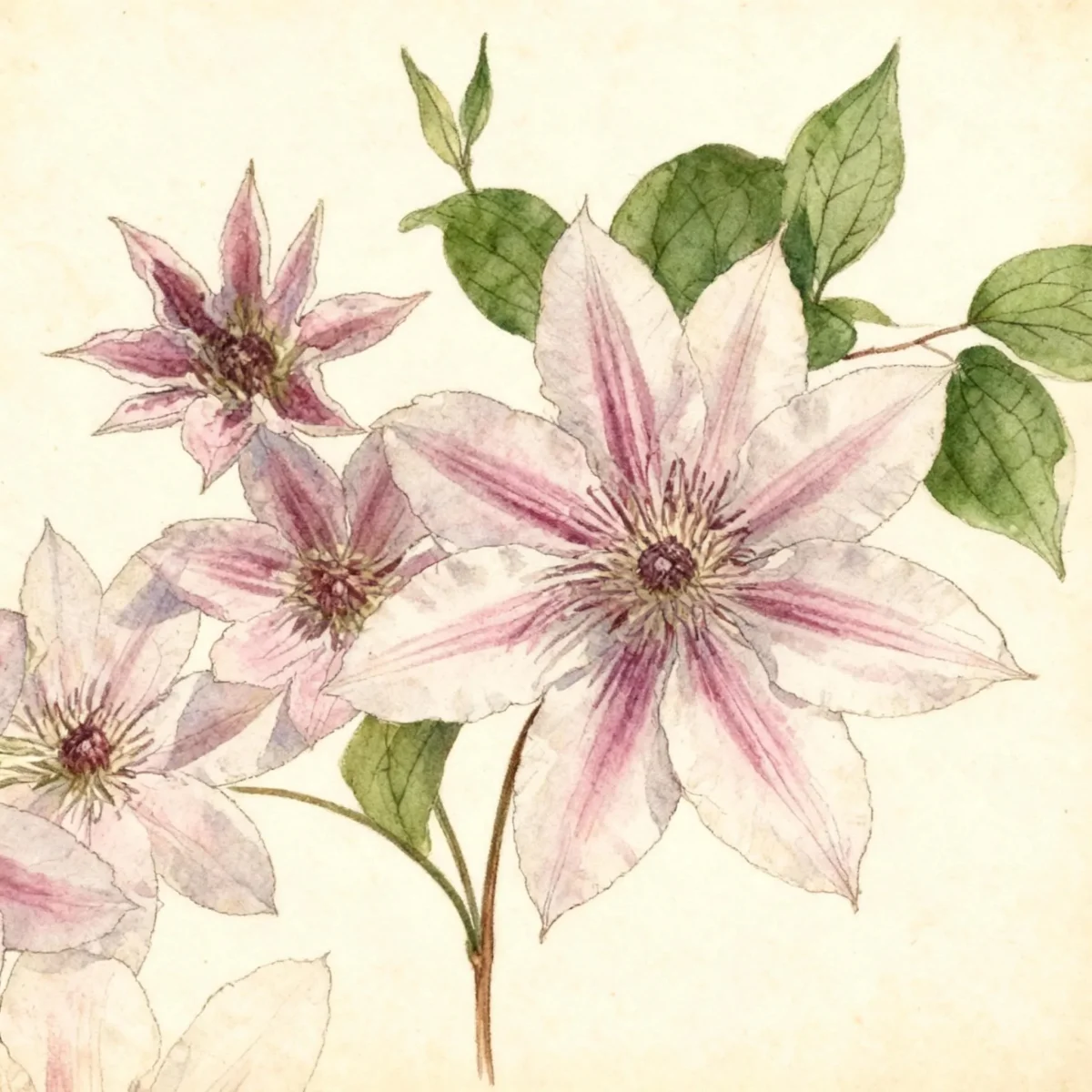
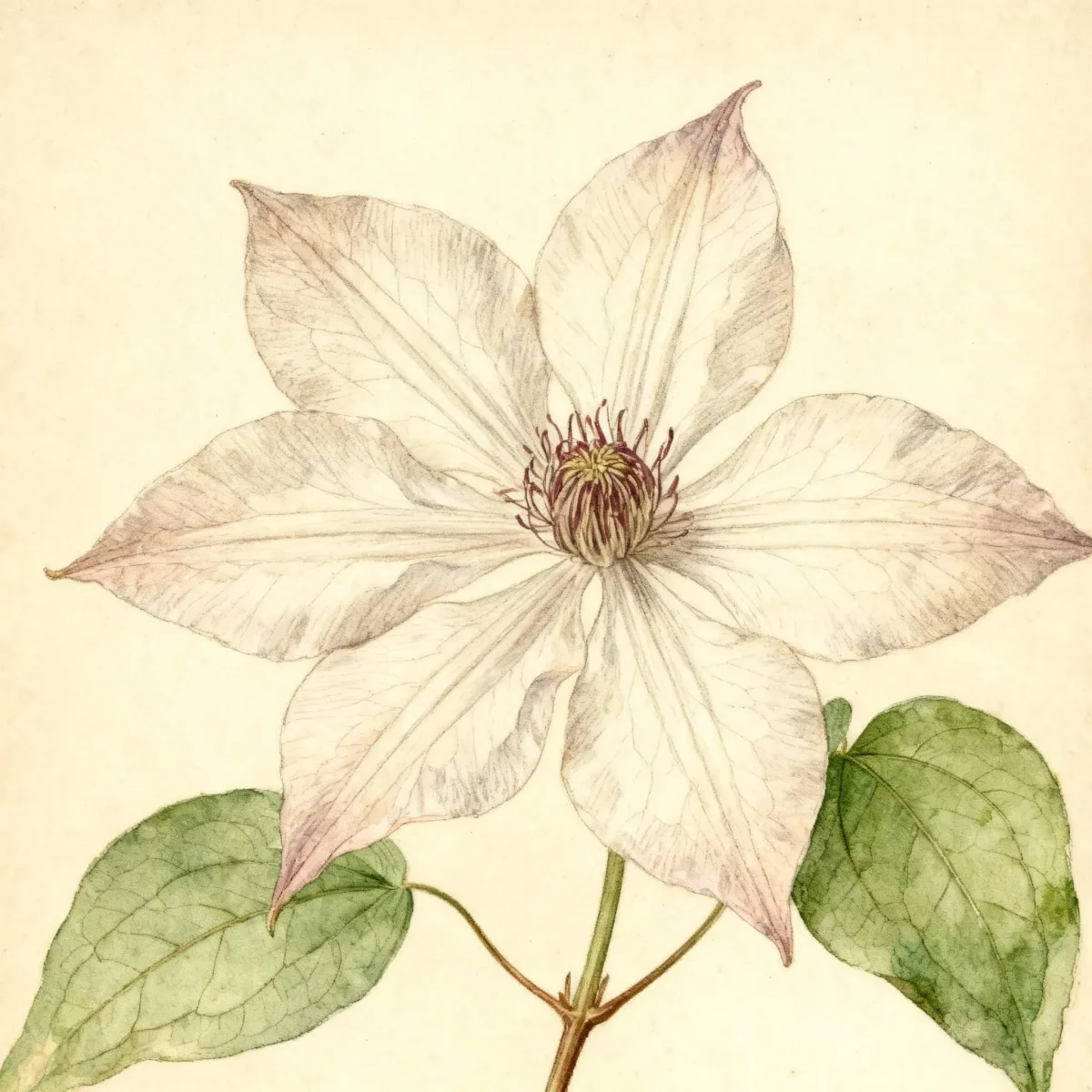
Clematis is a diverse genus featuring over 250 species, frequently appearing as woody or semi-woody deciduous vines. Specific to this hybrid, ‘Duchess of Albany’ is a deciduous climber displaying profuse summer bloom with lovely, tulip-shaped, deep pink flowers up to 3 inches in diameter, complemented by distinct darker pink centers and yellow stamens. Like all Clematis, its compound foliage is medium green, providing a fine texture beneath the striking blooms.
Tolerances
- Deer
- Black Walnut
Potential Problems
Gardeners should be vigilant against the most serious threat to Clematis, which is wilt or stem rot, a fungal issue that can prove fatal to even established vines. To mitigate this, ensure excellent drainage and avoid over-saturating the roots. Fungal issues like powdery mildew and leaf spots are common, which can be managed by ensuring good air circulation and avoiding overhead watering late in the day.
Potential insect pests include common garden nuisances like aphids, slugs, snails, and spider mites. Routine inspection, especially of new growth, allows for early intervention. Since the roots of the Clematis ‘Duchess of Albany’ must be kept cool and shaded, monitoring mulch depth is a preventative measure against both moisture stress and pests seeking shelter.
Frequently Asked Questions
What hardiness zones is Clematis ‘Duchess of Albany’ suitable for?
This resilient climbing vine is suited for USDA Hardiness Zones 4 through 8.
How large does Clematis ‘Duchess of Albany’ grow?
When mature, this Clematis typically reaches a height of 8 to 12 feet with a spread ranging from 3 to 6 feet wide.
What sun exposure does Clematis ‘Duchess of Albany’ need?
This plant prefers a site receiving full sun to light or part shade. Remember, the foliage and flowers should be in the sun, but the root zone benefits greatly from shade.
When does Clematis ‘Duchess of Albany’ bloom?
You can expect a profusion of deep pink flowers covering the vine from July right through September.
Conclusion
The Clematis ‘Duchess of Albany’ offers gardeners a fantastic combination of low maintenance care (Group 3 Pruning) and spectacular, long-lasting summer color. Its vibrant, deep pink flowers provide architectural beauty ideal for dressing up garden structures. Before planting, verify your location falls within USDA Zones 4-8 and ensure you have a sunny spot with a shaded root base ready for this magnificent Clematis.
Companion Planting Possibilities
Selecting the right companions is key to success with Clematis, especially in managing its preferred microclimate. Traditional companions include perennials that offer dense, low growth to shade the roots. Consider planting silvery foliage plants like Lamb’s Ears (Stachys byzantina) or mounding geraniums. These low growers keep the base of the Clematis cool and uniformly moist while their textures contrast beautifully with the climbing vine.
For color synergy, use companions that bloom before or after the July to September window of the Clematis ‘Duchess of Albany’. Early-season bloomers like Peonies or late-season bloomers like tall Asters can extend the garden’s visual interest. Ensure any companion you choose shares the medium water needs and does not aggressively compete with the root system of your vine.
Seasonal Care Calendar
Spring (Pre-bloom): This is the essential time for structure assessment and pruning. As a Group 3 Clematis, cut the entire framework of the Clematis ‘Duchess of Albany’ back to just above the lowest set of healthy buds, usually leaving 6-12 inches of old stem. Refresh the mulch layer to keep the roots cool and uniformly moist throughout the coming heat.
Summer (Bloom Season): Focus on consistent watering, delivering water directly to the root zone. Monitor established vines for signs of insect pests like aphids or spider mites, treating immediately. Ensure the vine is actively twining onto its provided support structure, guiding any errant branches gently.
Fall (Post-bloom): After flowering ceases, you can remove the spent flower heads to discourage unwanted reseeding if necessary. Continue deep watering until the first hard frost, allowing the plant to harden off naturally for winter dormancy. Do not heavily prune again until late winter or early spring.
Winter (Dormancy): In the coldest parts of Zones 4, protect the roots by adding a thick layer of straw or leaf mulch after the ground freezes. The vine itself remains dormant, requiring no pruning or watering until the spring thaw signals the start of the next growing season.