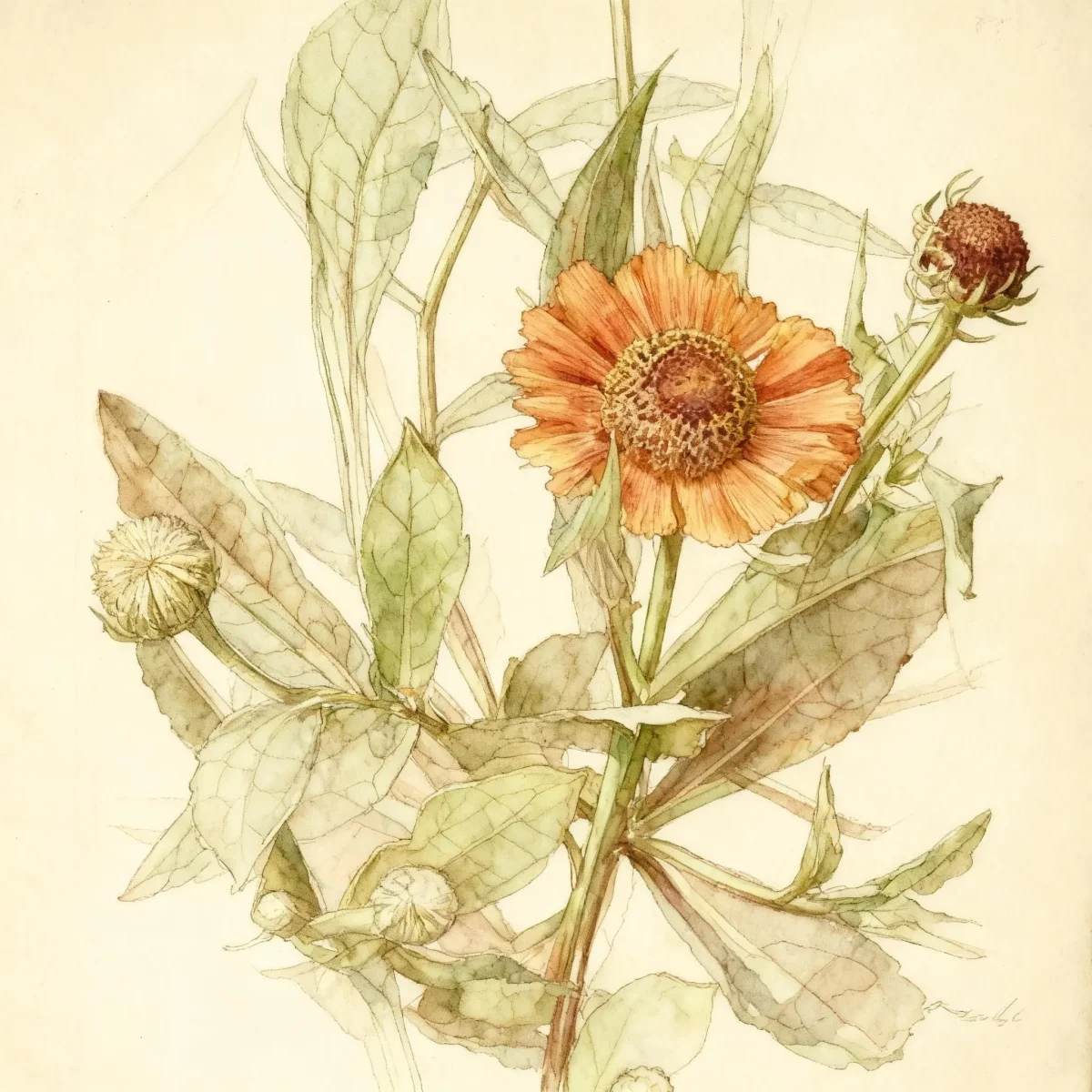
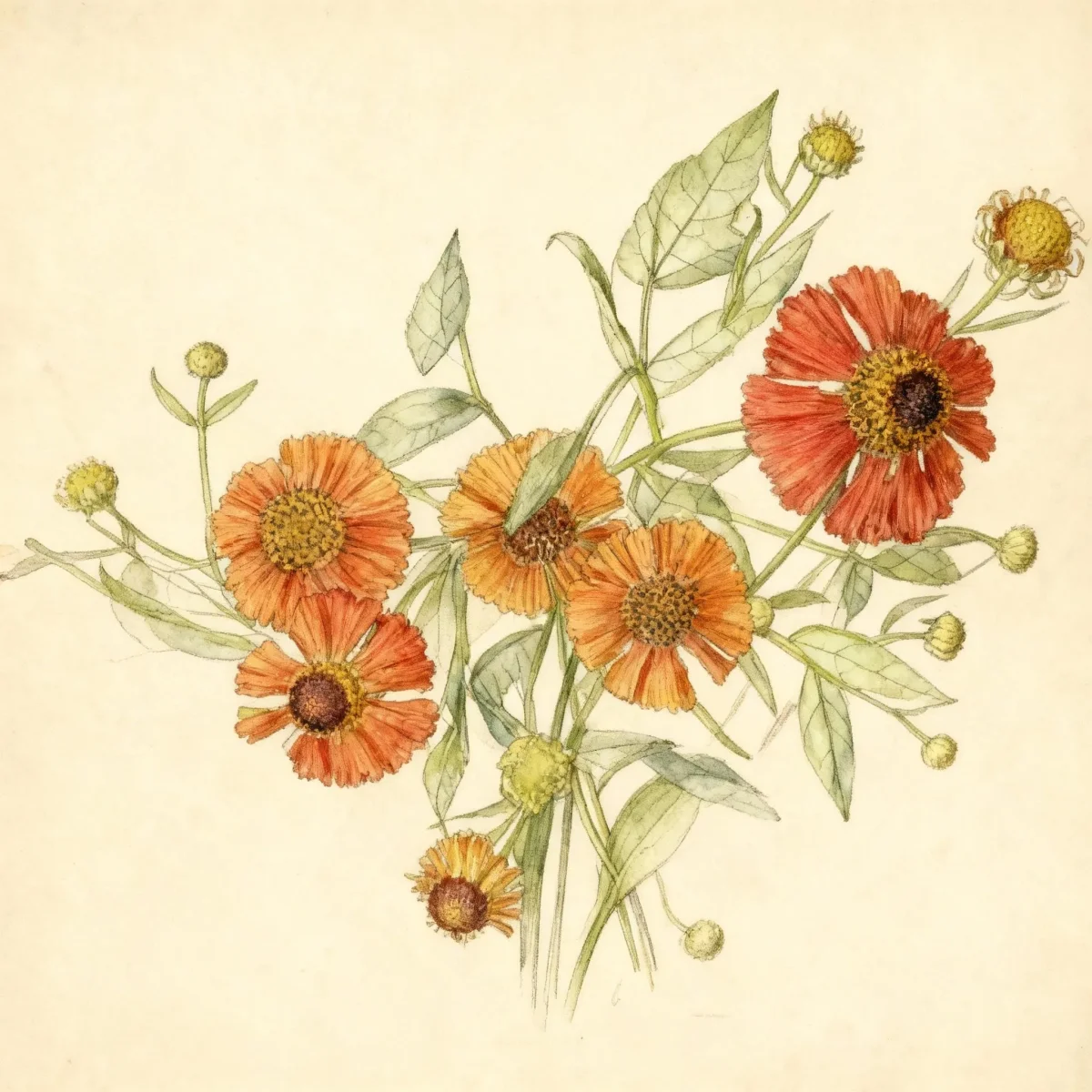
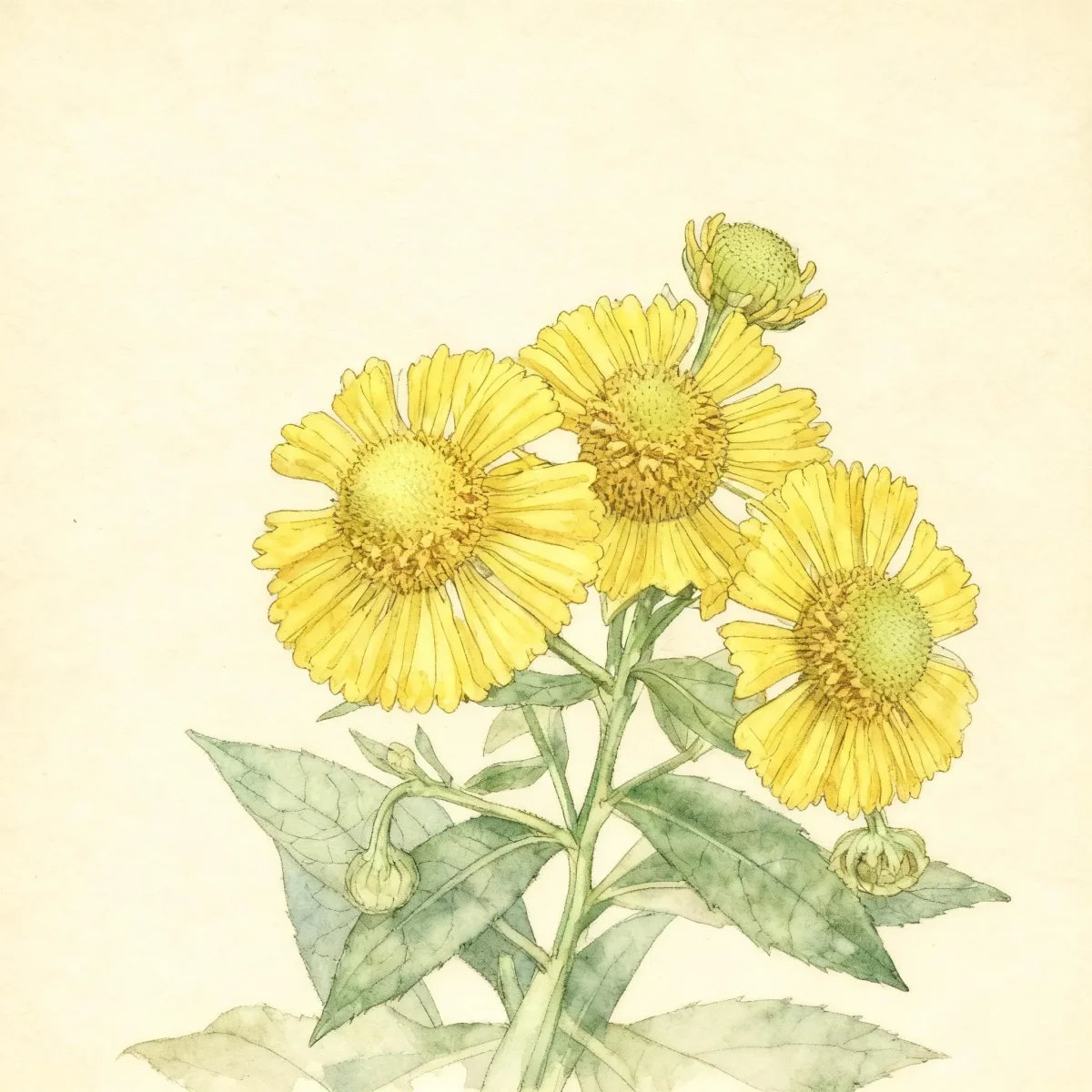
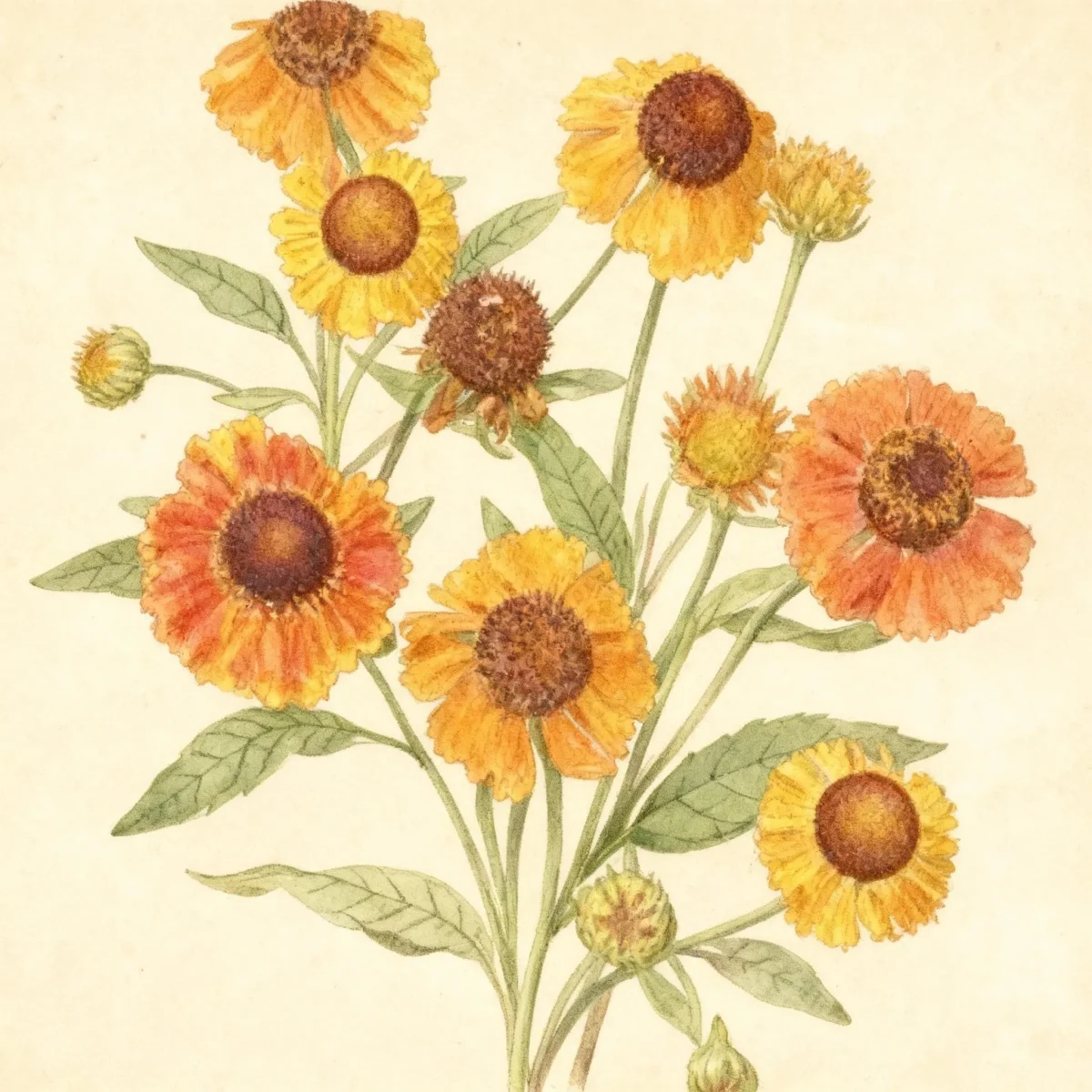
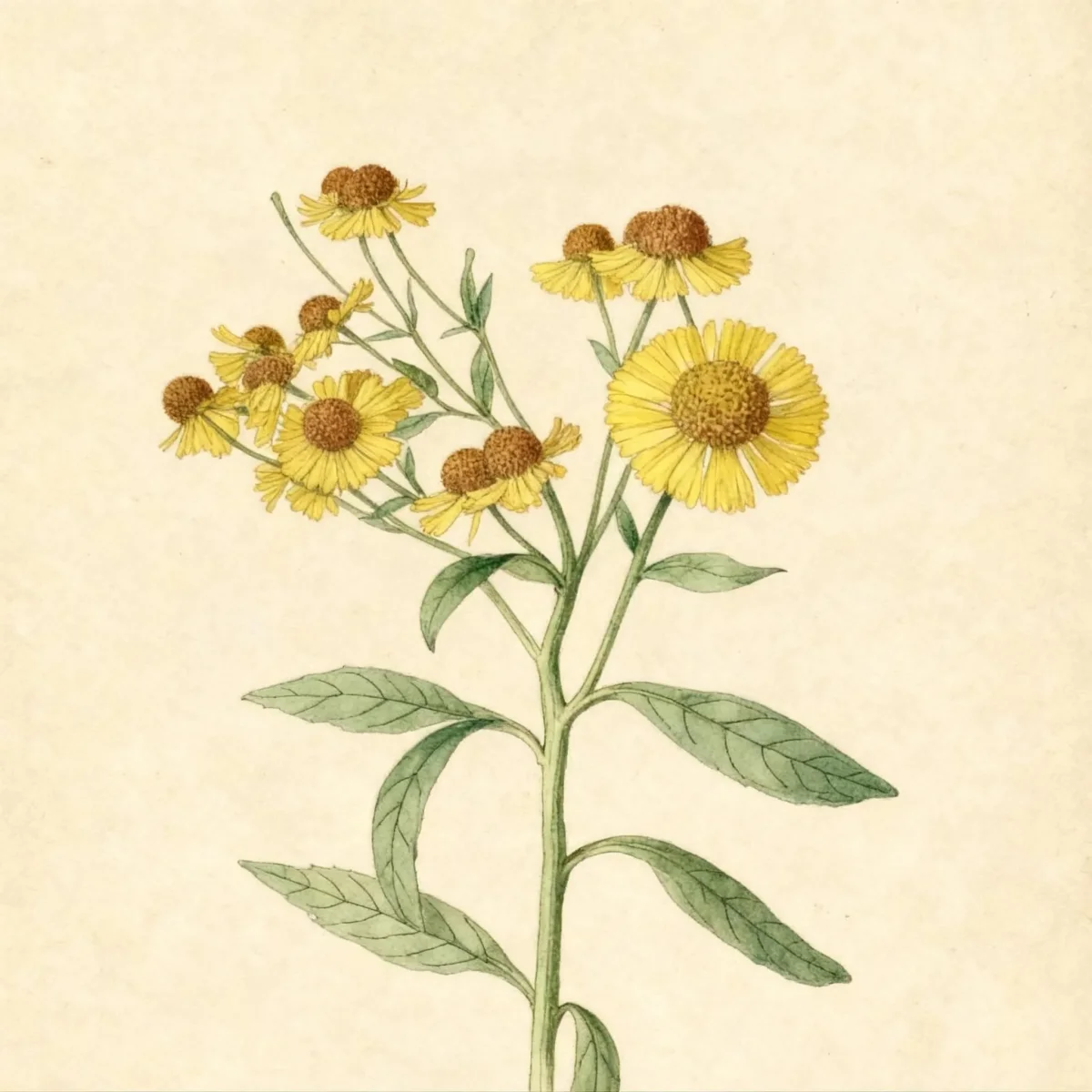
Sneezeweed (Helenium 'Goldlackzwerg' GILDED DWARF)
Discover Helenium 'Goldlackzwerg' GILDED DWARF Sneezeweed, a showy, deer-resistant perennial for wet soils, boasting orange-red blooms.
Scroll down to discover growing tips, care requirements, companion plants, and more

Complete Plant Information
Overview
Helenium ‘Goldlackzwerg’ GILDED DWARF, commonly known as Sneezeweed, is a standout herbaceous perennial prized for its late-season floral display. This cultivar offers brilliant orange-red flowers tipped in yellow, providing crucial color from late summer well into autumn when many other plants are fading. Its compact ‘dwarf’ nature, reaching 2 to 3 feet, makes it more manageable than some of its taller relatives.
Native to damp meadows and woodland edges in North and Central America, this Sneezeweed thrives where moisture is readily available. The rigid, distinctly winged stems support the daisy-like blooms, making Helenium ‘Goldlackzwerg’ GILDED DWARF an excellent structural element in perennial borders. It is a reliable choice for attracting essential insect pollinators during its long flowering window.
With medium maintenance requirements, the key to success with Helenium ‘Goldlackzwerg’ GILDED DWARF is ensuring consistent moisture, as it tolerates wet soil better than dry conditions. Gardeners seeking long-lasting late-season color and reliable performance in moist, sunny spots will find this Sneezeweed invaluable.
Fast Facts
- Plant Family: Asteraceae
- Plant Type: Herbaceous perennial
- Hardiness Zones: USDA Zones 4-8
- Size at Maturity:
- Height: 2-3 ft
- Spread: 1.5-2.5 ft
- Bloom Time: August to October
- Bloom Description: Orange-red rays tipped yellow and brown centers
- Sun Exposure: Full sun
- Water Needs: Medium to wet
- Maintenance Level: Medium
How to Grow
Plant Helenium ‘Goldlackzwerg’ GILDED DWARF in spring or fall in average, well-drained soil that remains consistently medium to wet. Full sun exposure is essential for robust blooming and to maintain strong stems on this Sneezeweed. This perennial is intolerant of dry soils, making it best situated in rain gardens or along pond edges.
Water regularly to maintain soil dampness, especially during establishment. Avoid over-fertilization, as excess nutrients often lead to overly tall, floppy growth, increasing the need for support. If you prefer a shorter, bushier plant, consider the optional mid-summer pruning: cut plants back by about one-third in early July (at least six weeks before flowering) to encourage branching and denser blooms.
Remove spent flowers promptly throughout the season to encourage continuous blooming of the Helenium ‘Goldlackzwerg’ GILDED DWARF. To maintain vigor and prevent overcrowding, plan to divide large clumps every three years during the early spring or fall.
Landscape Uses
The vibrant autumn display offered by Helenium ‘Goldlackzwerg’ GILDED DWARF positions it perfectly for use in Rain Gardens, where its tolerance for wet soil is fully utilized. It integrates stunningly into naturalistic plantings like prairies or meadows, providing necessary vertical interest alongside native grasses.
For structured settings, incorporate this Sneezeweed into the middle or back layers of perennial Borders. Its sturdy 2-3 foot height works well contrasting with shorter fall bloomers or anchoring waterside plantings. Its reliable color also makes it a welcome sight in rustic cottage gardens needing dependable late-season color saturation.
This robust plant thrives in consistently moist locations along bodies of water, bringing intense color right up to the moist edge. Gardeners should utilize its height to add depth behind shorter marginal plants or use it as a strong color accent point near paths or seating areas.
Standout Features
Flower Qualities
- Showy
- Good Cut
Noteworthy Characteristics
Helenium is a genus of about 40 species of annuals and hebaceous perennials from North and Central America, naturally found in damp meadows and along woodland edges. They are notable for a long season of bloom that readily attracts butterflies and other insect pollinators. Powdered disk flowers and leaves of this species have in the past been dried and used as snuff, leading to the common name of sneezeweed. GILDED DWARF is an erect, clump-forming sneezeweed that grows 2-3’ tall, featuring bright daisy-like flowers with distinctive orange-red rays tipped yellow and prominent dark brown center disks.
Tolerances
- Deer
- Wet Soil
Potential Problems
Helenium ‘Goldlackzwerg’ GILDED DWARF is susceptible to common fungal issues, including powdery mildew, leaf spot, and rust, particularly when air circulation is poor or humidity is high. Ensure plants have adequate space when establishing to promote good airflow, and site them in full sun. If mildew appears, treating with an appropriate fungicide or a horticultural oil may be necessary.
Most heleniums, though robust, benefit from staking or using plant supports, especially if they receive excessive fertilizer or are planted in very rich soil, which can lead to flopping. However, this specific cultivar, Helenium ‘Goldlackzwerg’ GILDED DWARF, has noticeably rigid stems, reducing the need for support compared to taller varieties. Fortunately, the common pest deer tends to avoid this plant.
Frequently Asked Questions
What hardiness zones is Sneezeweed suitable for?
Helenium ‘Goldlackzwerg’ GILDED DWARF is reliably hardy in USDA Zones 4 through 8.
How large does Helenium ‘Goldlackzwerg’ GILDED DWARF grow?
This cultivar typically reaches a mature height between 2 and 3 feet tall, with a spread of 1.5 to 2.5 feet wide.
What sun exposure does Sneezeweed need?
For best flowering performance and strong stems, Helenium ‘Goldlackzwerg’ GILDED DWARF requires full sun exposure in the garden.
When does Helenium ‘Goldlackzwerg’ GILDED DWARF bloom?
This vibrant Sneezeweed blooms profusely from August well into October, displaying gorgeous orange-red rays tipped yellow and set against brown central disks.
Conclusion
The Helenium ‘Goldlackzwerg’ GILDED DWARF offers gardeners an exceptional combination of late-season color, deer resistance, and a tolerance for moist garden conditions. Whether used as a reliable anchor in a Rain Garden or to provide vertical structure in borders, this Sneezeweed is a high-value addition. Consult your local hardiness map and plan to plant your Helenium ‘Goldlackzwerg’ GILDED DWARF during the spring or fall for established seasonal beauty.
Companion Planting
Because this Sneezeweed thrives in consistently moist, sunny conditions, companion planting should focus on species that share similar needs. Pair Helenium ‘Goldlackzwerg’ GILDED DWARF with other moisture-loving perennials that bloom at different times to maintain interest. Excellent companions include purple Coneflowers (Echinacea), tall varieties of Sedum, and various ornamental grasses that appreciate moisture retention.
Selecting companions that offer contrasting foliage, such as the fine texture of Switchgrass or the broad leaves of Rodgersia (if siting is more shade-tolerant), helps highlight the daisy-form flowers of the Sneezeweed. Ensure spacing allows for good airflow around the base of the Helenium, which helps mitigate potential powdery mildew issues.
Wildlife Benefits
The long bloom period of Helenium ‘Goldlackzwerg’ GILDED DWARF, stretching from late summer to the first hard frost, makes it a vital late-season nectar source. The prominent, dome-like brown centers are rich in pollen and nectar, strongly attracting various species of butterflies and beneficial native bees.
By incorporating this native genus member, you are supporting local ecosystems throughout the crucial transition months before winter. Planting dense clusters of Helenium, rather than isolated specimens, creates a stronger visual target for pollinators, maximizing the impact of this colorful autumn bloomer for both gardeners and insects.