Stokes' aster (Stokesia laevis 'Peachie's Pick')
Stokes' aster cultivar 'Peachie's Pick' offers showy, late-blooming blue flowers. A low-maintenance, drought-tolerant perennial for sunny borders.
Scroll down to discover growing tips, care requirements, companion plants, and more
Complete Plant Information
Overview
Stokesia laevis ‘Peachie’s Pick’ is a sought-after cultivar of Stokes’ aster, valued for its extended season of unusual, fluffy, cornflower-like blue blooms. This compact herbaceous perennial provides exceptional visual interest from early summer well into the fall, making it a reliable anchor in perennial beds. As a low-maintenance selection, it handles dry spells once established, provided it receives adequate sun.
Gardeners turn to Stokes’ aster for its unique texture and vibrant color, which contrasts beautifully with strap-leafed or fine-textured companion plants. While native to damp coastal plains, the cultivar Stokesia laevis ‘Peachie’s Pick’ exhibits surprising adaptability to average garden soils, though excellent drainage remains paramount for long-term success. Its evergreen foliage provides structure even when dormant in milder climates.
This cultivar earned its name from its discoverer, Peachie Saxton, and offers dense, robust performance, often with less flopping than older varieties of Stokesia laevis. It is an excellent choice for adding mid-height texture and continuous color to perennial borders and cottage gardens throughout USDA Zones 5 through 9.
Fast Facts
- Plant Family: Asteraceae
- Plant Type: Herbaceous perennial
- Hardiness Zones: USDA Zones 5-9
- Size at Maturity:
- Height: 1-1.5 ft
- Spread: 1-1.5 ft
- Bloom Time: June to September
- Bloom Description: Blue
- Sun Exposure: Full sun
- Water Needs: Medium
- Maintenance Level: Low
How to Grow
Planting Stokes’ aster should ideally occur in spring, allowing the root system to establish before the heat of summer or the cold of winter. Ensure the location receives full sun for the best performance, although filtered sunlight is tolerated. The absolute most critical factor for success with Stokesia laevis ‘Peachie’s Pick’ is soil drainage; it thrives in average, well-drained media and resents wet feet, especially during winter dormancy.
Watering should be consistent, aiming for medium moisture levels, especially during dry spells. While this Stokes’ aster cultivar has good drought tolerance once mature, consistent moisture helps fuel the lengthy bloom period. Fertilization is generally unnecessary; overly rich soil can encourage excessive foliage at the expense of flowers.
Maintenance is refreshingly low. Deadhead individual spent flowers regularly to promote continuous bloom production throughout the summer and into autumn. After the main flowering period concludes, you can cut the stems back to the basal foliage mound. In the northern limits of its range (Zone 5), applying a layer of winter mulch around the crown can provide insulation against freezing and thawing cycles that might otherwise damage the evergreen leaves.
Landscape Uses
Stokesia laevis ‘Peachie’s Pick’ excels when placed in border fronts, where its 1 to 1.5-foot height showcases the unique blossoms without obscuring shorter spring bloomers. It is also perfectly suited for traditional cottage gardens where a mix of textures and long bloom times are desired. Consider mass plantings for high impact, particularly along moist areas near ponds, streams, or water gardens, provided the soil remains fast-draining even in those locations.
This cultivar works well in small groupings nestled near plants that appreciate similar conditions, such as Salvia, Perovskia (Russian Sage), or shorter ornamental grasses. Its upright habit ensures it integrates neatly into the middle ground of mixed borders, pairing nicely with silvery foliage plants that make the blue flowers appear even more vivid.
Standout Features
Flower Qualities
- Showy
Noteworthy Characteristics
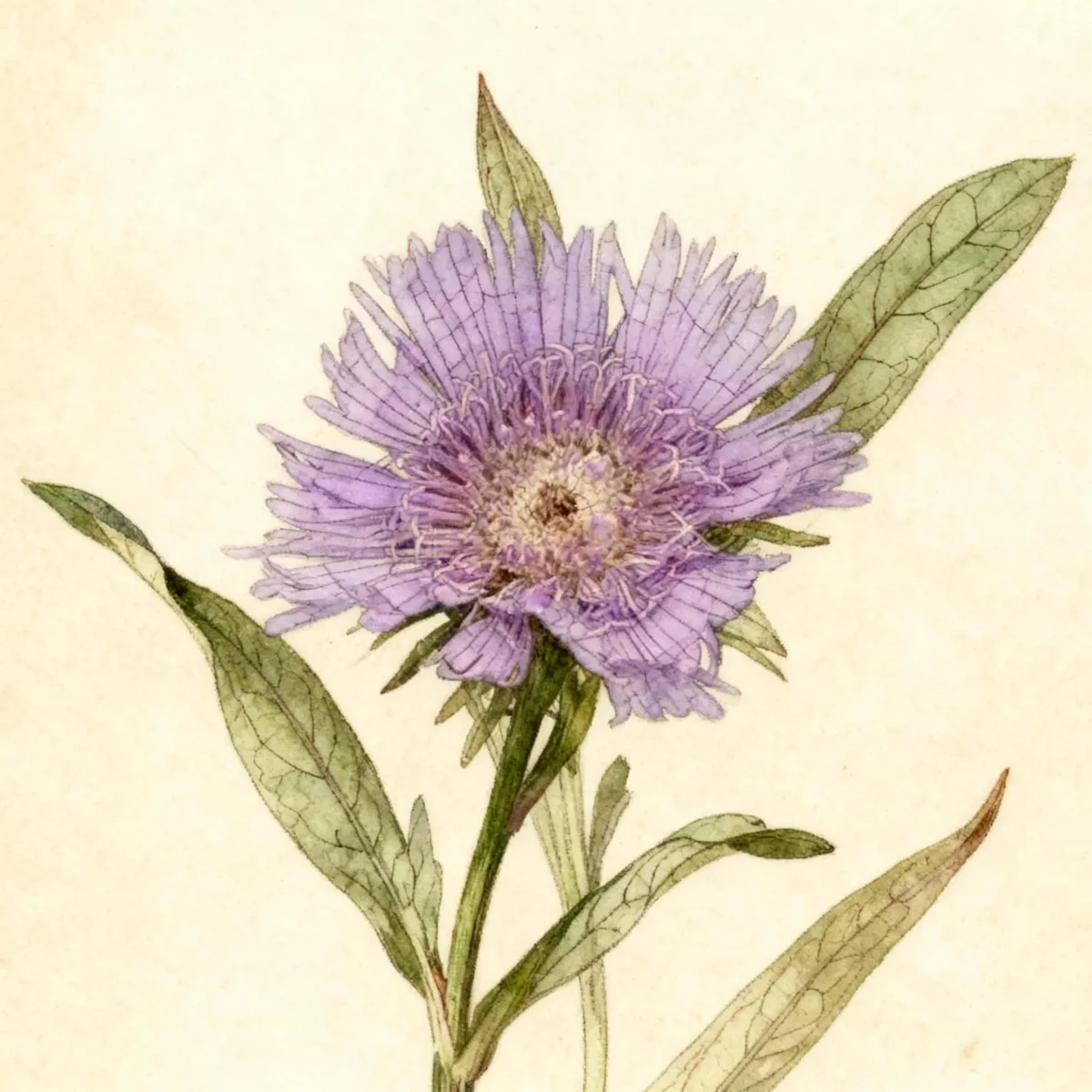
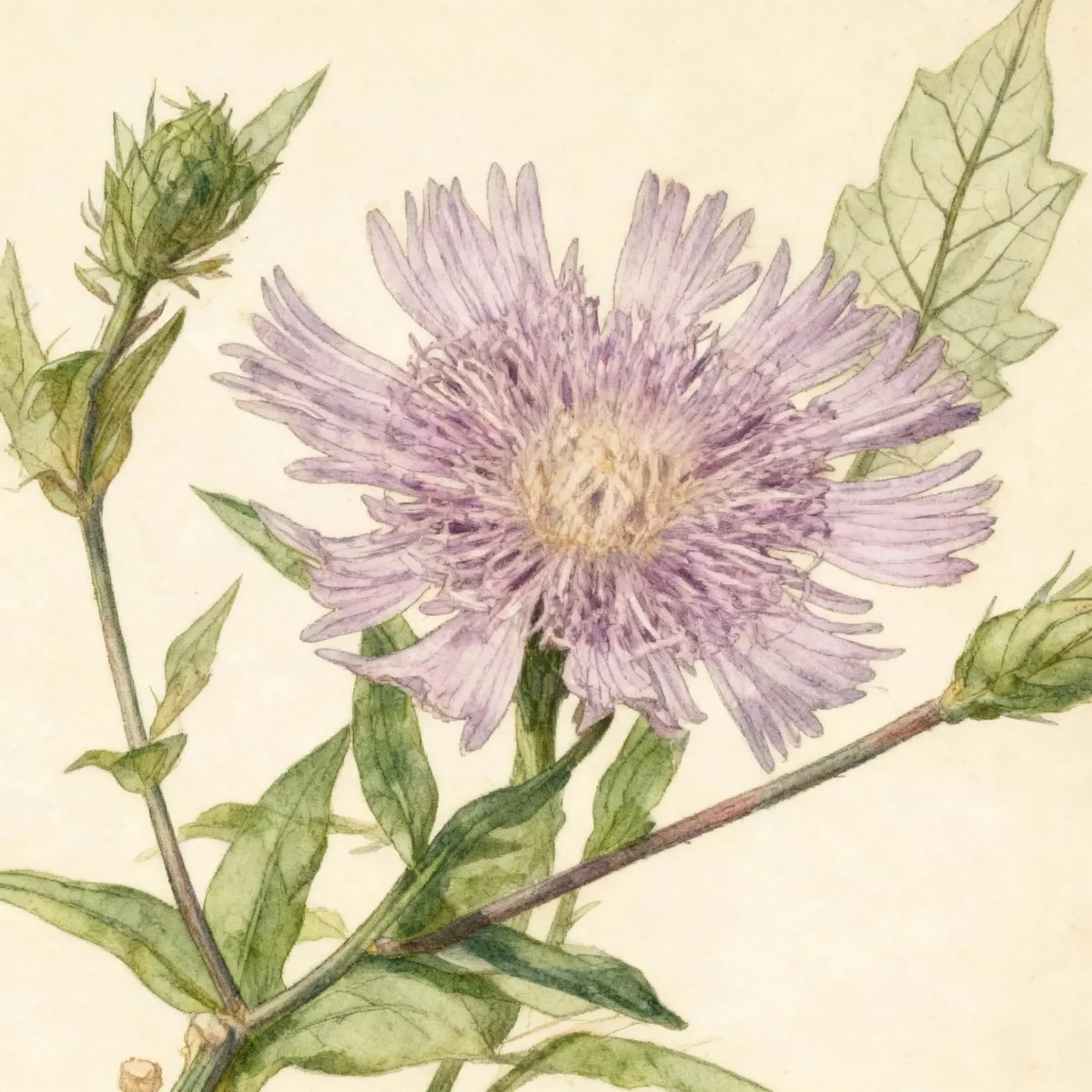
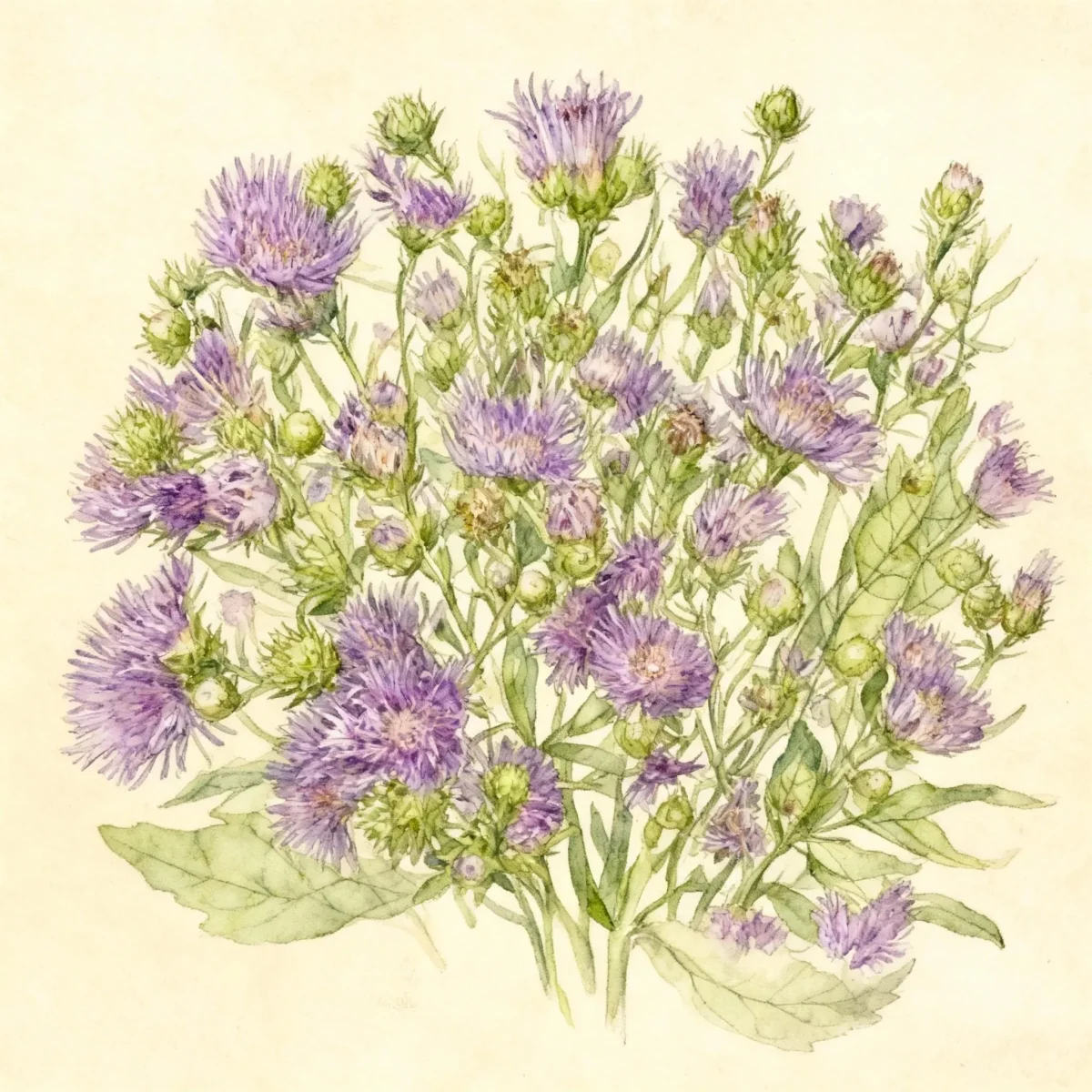
Stokesia laevis, commonly known as Stokes’ aster, is native to wetlands, bottomlands, wet pinewoods, savannas and ditches mostly along the coastal plain from North Carolina to Florida to Louisiana. It is an evergreen perennial that typically grows to 1-2’ tall. It features fluffy, cornflower-like, violet blue flowers (to 2 1/2” across), each with notched rays surrounding a pincushion center of feathery disk florets. Flowers bloom from early to mid-summer (sometimes with a fall rebloom) atop generally erect, leafy stems that rise from a basal rosette of lanceolate to elliptic, medium green leaves (to 6” long). The specific cultivar, ‘Peachie’s Pick’, is a compact, late-blooming highlight, featuring fluffy blue flowers up to 3 inches across on stems reaching 12-18 inches tall.
Tolerances
- Rabbit
- Drought
Potential Problems
Stokes’ aster generally remains free from serious insect or disease problems, making it a reliable garden staple. Gardeners should monitor for caterpillars, which occasionally feed on the foliage. The primary cultural challenge often involves stem integrity; flower stems can sometimes flop, particularly after heavy rain or strong thunderstorms, although the Stokesia laevis ‘Peachie’s Pick’ cultivar is noted to be more structurally sound than some other types. To prevent flopping, ensure excellent soil drainage and avoid excessive nitrogen fertilization.
Frequently Asked Questions
What hardiness zones is Stokes’ aster suitable for?
Stokesia laevis ‘Peachie’s Pick’ is reliably hardy in USDA Zones 5 through 9.
How large does Stokes’ aster grow?
This cultivar typically matures to a height between 1 and 1.5 feet tall, with a similar spread of 1 to 1.5 feet wide.
What sun exposure does Stokesia laevis ‘Peachie’s Pick’ need?
For the most prolific and sustained blue blooms, Stokesia laevis ‘Peachie’s Pick’ requires exposure to full sun.
When does Stokes’ aster bloom?
This perennial delights gardeners by flowering consistently from June throughout September.
Conclusion
Stokesia laevis ‘Peachie’s Pick’ is an outstanding choice for adding long-lasting, uniquely textured blue blooms to sunny borders, offering low maintenance and solid drought tolerance once established. Incorporating this durable Stokes’ aster into your landscape ensures reliable summer color. Before planting, confirm that your garden site offers the essential requirement of well-drained soil, especially as winter approaches.
Companion Planting
When planning pairings for Stokesia laevis ‘Peachie’s Pick’, focus on plants that thrive in full sun and do not require constant high moisture. Plants with contrasting textures, such as the fine foliage of ornamental grasses or the coarse, silvery leaves of Lamb’s Ears (Stachys byzantina), accentuate the fluffy look of the aster blooms. Consider pairing Stokes’ aster with plants that bloom earlier or later in the season to create an extended display; Lavender (Lavandula) or Coneflowers (Echinacea) make excellent partners, as they share similar sun and drainage needs.
Design Ideas for Cottage Gardens
The upright, clean habit of this specific Stokes’ aster cultivar makes it ideally suited for the middle layer of a classic cottage garden design. Position Stokesia laevis ‘Peachie’s Pick’ behind low-growing edging plants like creeping Thyme or Alyssum, allowing its stems to rise cleanly above them. Its true blue color blends harmoniously with pinks, yellows, and whites common in cottage plantings, providing cool visual relief during the peak summer heat. Massing them in groups of three or five creates a stronger impact than single specimens.