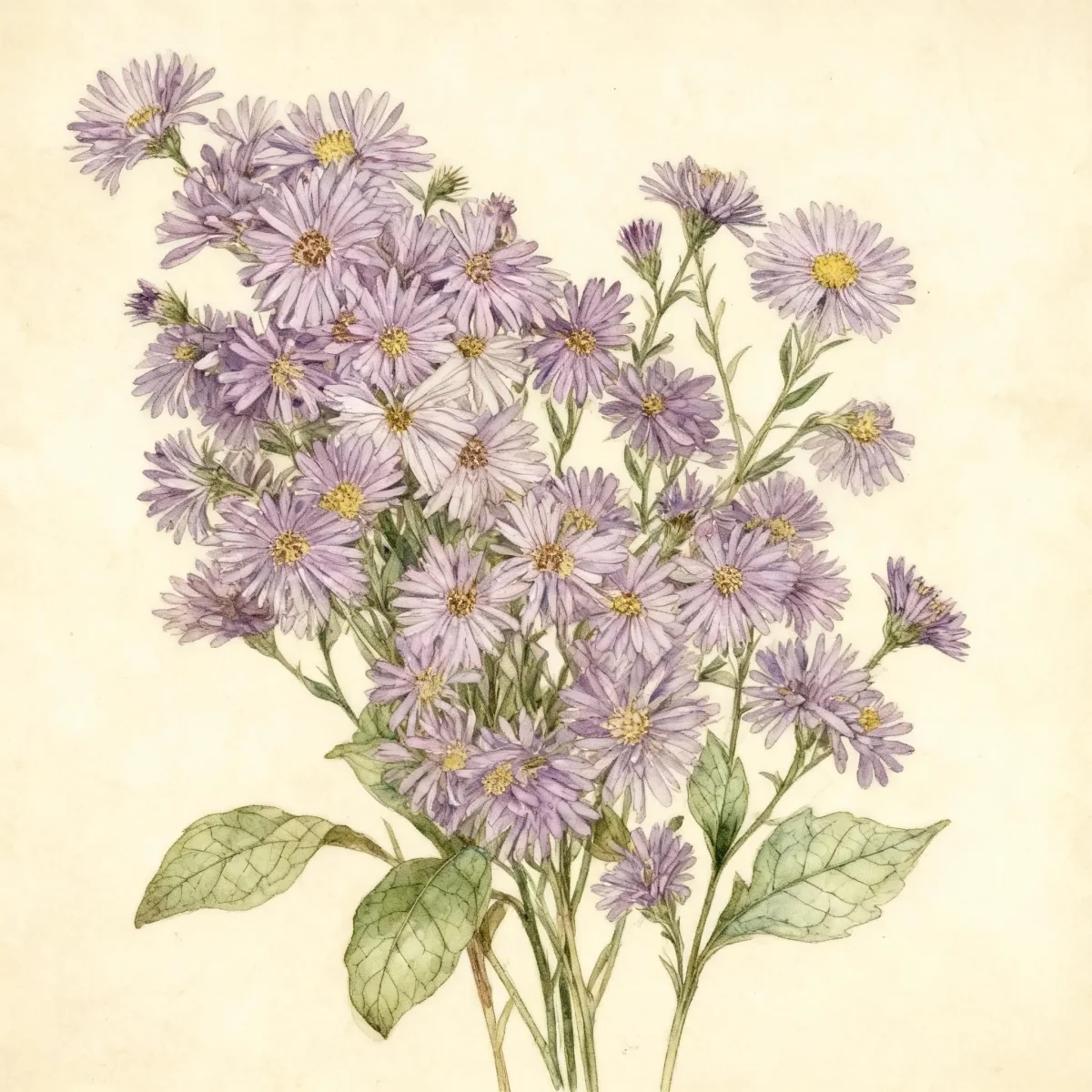
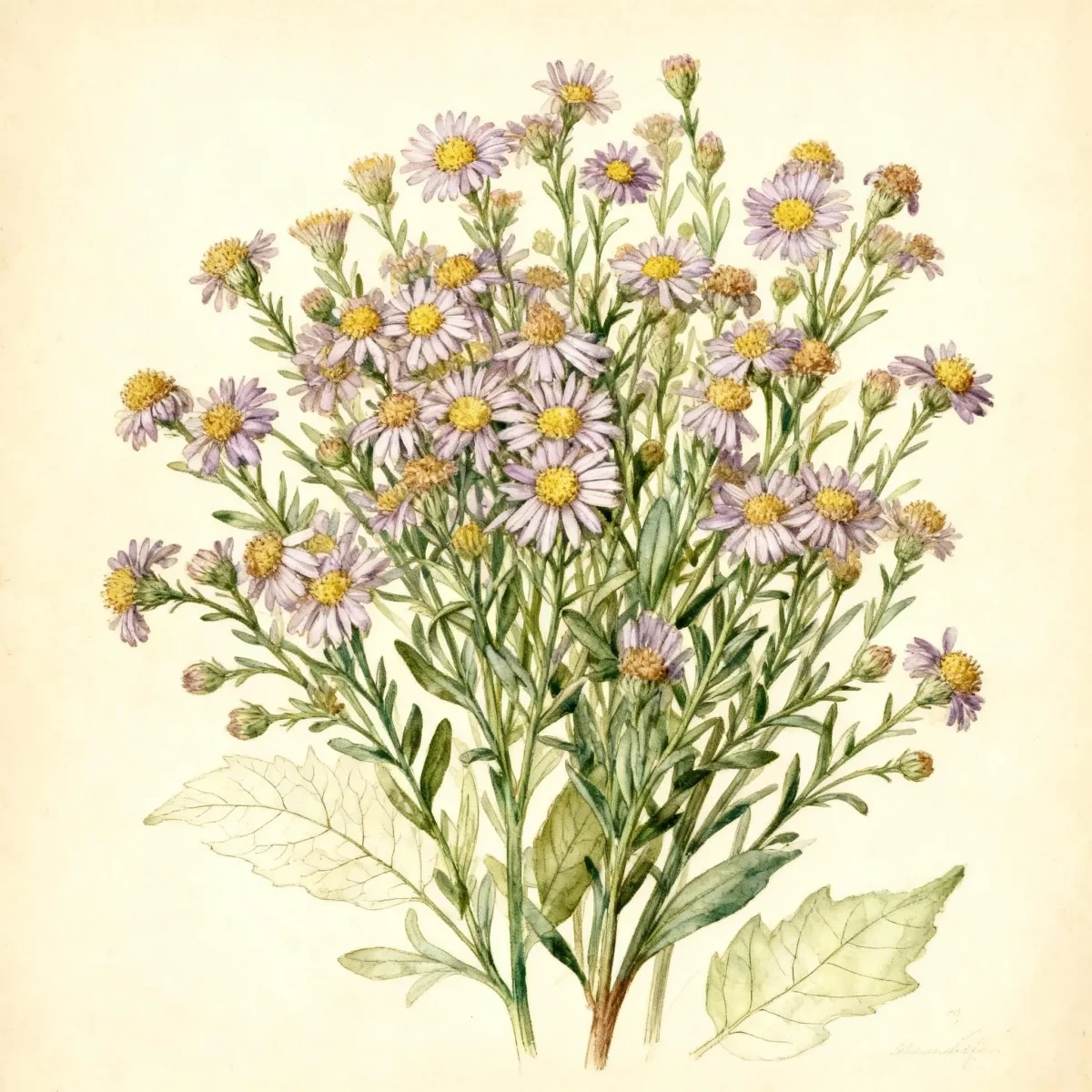
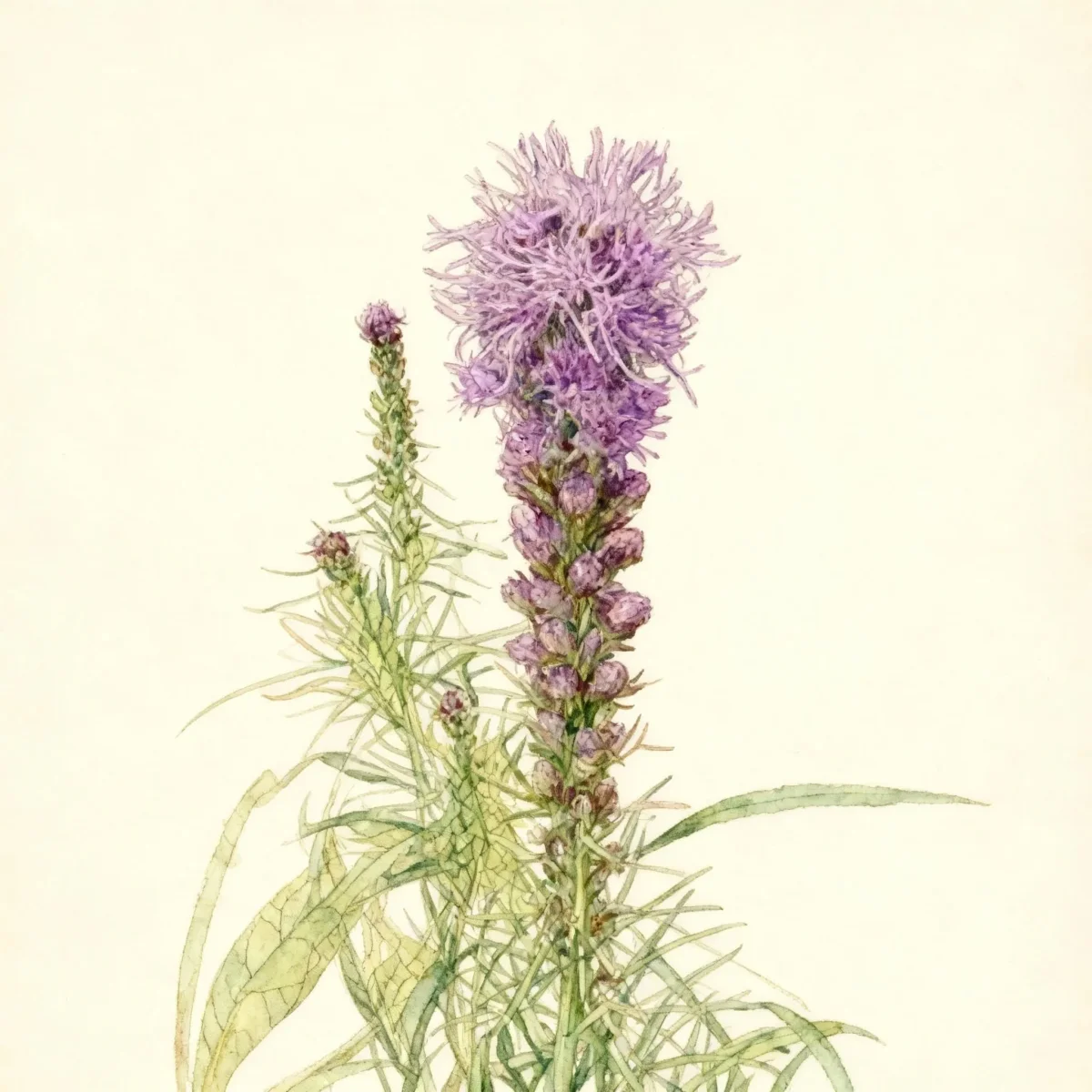
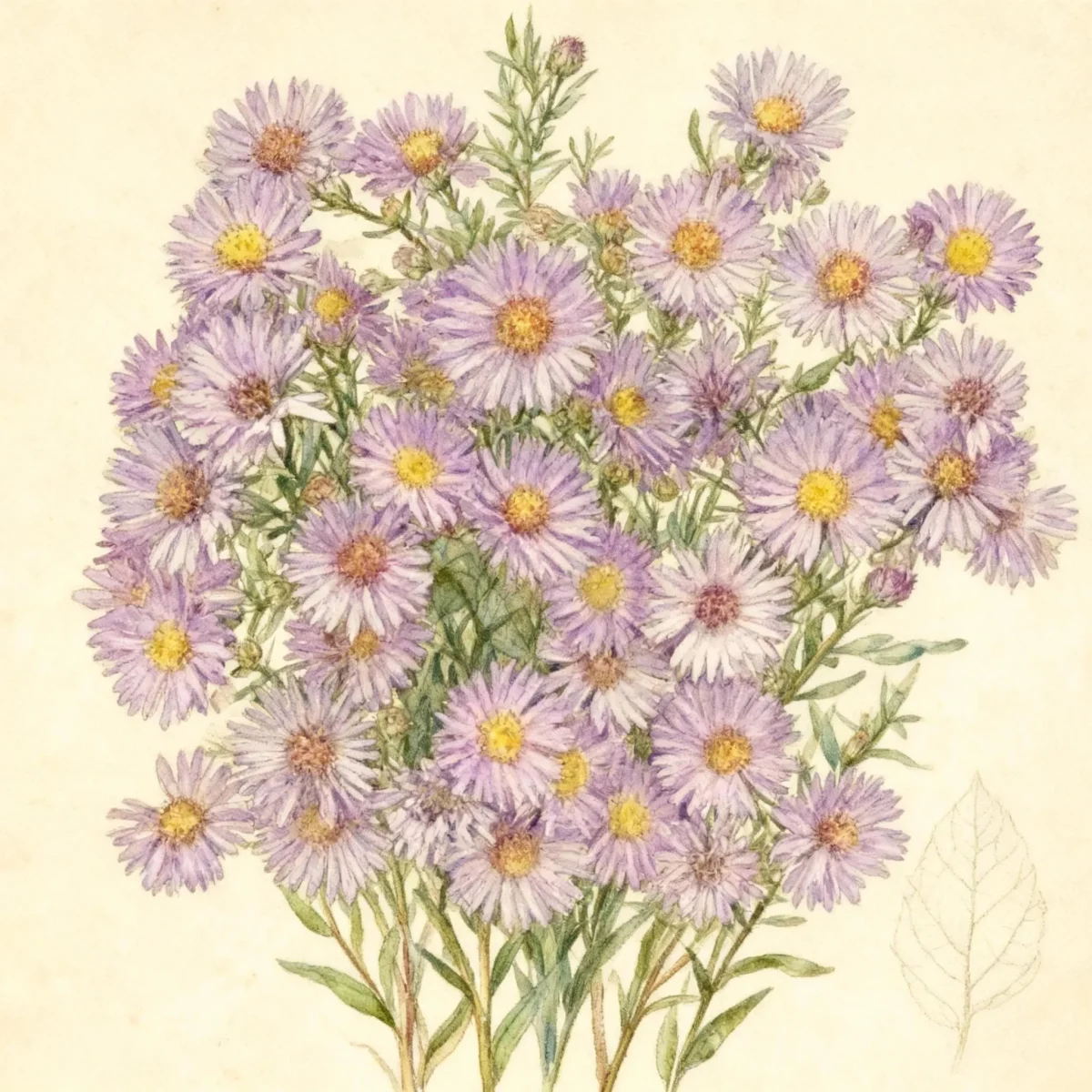
Aster (Aster 'Wood's Purple')
The compact Aster 'Wood's Purple' offers brilliant blue-violet fall color and excellent mildew resistance, perfect for borders.
Scroll down to discover growing tips, care requirements, companion plants, and more
Complete Plant Information
Overview
The Aster ‘Wood’s Purple’ is an indispensable choice for late-season garden structure and color. This compact Aster variety provides a welcome burst of blue-violet to purple, daisy-like flowers right as many summer blooms are fading, offering a crucial late-season display. Gardeners highly prize this cultivar for its sturdy, mounded habit, minimizing the need for staking typically associated with taller asters.
Belonging to the Asteraceae family, the genus name Aster originates from the Latin word for “star,” perfectly describing the flower shape. Aster ‘Wood’s Purple’ is particularly valued because it demonstrates significantly better disease resistance compared to some of its relatives, ensuring a healthier display from its glossy, dark green foliage. It is a low-maintenance perennial that brings excellent visual impact to the autumn landscape.
This specific Aster cultivar grows uniformly, usually reaching 1 to 1.5 feet tall, making it ideal for defined garden edges where shorter stature is required. Its ability to thrive in average soil and withstand periods of dryness adds to its dependable nature in mixed perennial beds, securing its spot as a fall garden mainstay.
Fast Facts
- Plant Family: Asteraceae
- Plant Type: Herbaceous perennial
- Hardiness Zones: USDA Zones 4-8
- Size at Maturity:
- Height: 1-1.5 ft
- Spread: 1-1.5 ft
- Bloom Time: August to September
- Bloom Description: Blue violet to purple
- Sun Exposure: Full sun
- Water Needs: Medium
- Maintenance Level: Low
How to Grow
For optimal performance, plant Aster ‘Wood’s Purple’ in the spring or fall into average, medium soil, ensuring it receives full sun exposure. While it tolerates average conditions, this Aster prefers organically rich soils to support its vigorous flowering schedule. Good air circulation is vital; place plants where they are not overly crowded to help mitigate potential foliar diseases.
Water needs are medium, requiring consistent moisture, especially when establishing, but the soil must always have good drainage. Avoid overly wet winter soil, which can exacerbate issues like Aster wilt, especially in heavier clay soils. Generally, fertilization is not required if the soil is reasonably fertile.
Pruning and maintenance for Aster ‘Wood’s Purple’ is typically minimal due to its naturally compact nature. While taller asters benefit greatly from pinching back stems before mid-July to control height and promote bushiness, this compact cultivar often manages its height without intervention. Thinning out some stems during the summer can still improve internal air circulation. Cut the plants back to the ground after they have finished blooming in late fall or early winter.
Landscape Uses
Aster ‘Wood’s Purple’ excels when used structurally within garden designs due to its reliable height and dense, mounding habit. It is perfectly suited for borders, acting as a vibrant endpoint to perennial beds or as a tidy perennial edging plant along walkways and paths where its deep color draws the eye. Its late bloom period makes it invaluable for extending the season in cottage gardens, providing necessary nectar for late-season pollinators.
Consider grouping this Aster with plants that share similar sun and water requirements, such as Sedum, ornamental grasses, or late-blooming Coneflowers. Because the Aster ‘Wood’s Purple’ maintains an attractive, tidy form, it also performs very well when grown in containers in sunny locations, adding vibrant fall color to patios or decks before the winter freeze.
Standout Features
Flower Qualities
- Showy
Noteworthy Characteristics
Asters are the mainstay of many fall gardens producing daisy-like flowers. The genus name comes from the Latin word aster meaning star for the shape of the flowers. ‘Wood’s Purple’ is a compact aster form that is similar to A. Novae-angliae in appearance, but is noted for having much better disease resistance. Small, semi-double, blue-violet to purple flowers bloom in late summer to early fall, supported by glossy dark green leaves that exhibit excellent disease resistance.
Tolerances
- Drought
- Clay Soil
Potential Problems
Aster ‘Wood’s Purple’ generally experiences no serious insect or disease problems, and this specific cultivar is noted for excellent mildew and rust resistance. However, susceptibility to powdery mildew or Aster wilt remains a potential issue, particularly if the plant is situated in poorly-drained clay soils or experiences poor air circulation. Management involves ensuring excellent drainage during planting and spacing plants adequately for airflow. If wilt occurs, promptly remove infected material, as plants do not come true from seed, limiting propagation from seed stock prone to disease.
Frequently Asked Questions
What hardiness zones is Aster ‘Wood’s Purple’ suitable for?
Aster ‘Wood’s Purple’ is suitable for USDA Zones 4 through 8.
How large does Aster ‘Wood’s Purple’ grow?
It typically matures to a height between 1 and 1.5 feet with a spread of 1 to 1.5 feet, forming a neat, mounded clump.
When does Aster ‘Wood’s Purple’ bloom?
This Aster blooms reliably from August into September, displaying blue-violet to purple flowers.
What sun exposure does Aster ‘Wood’s Purple’ need?
This perennial requires full sun to achieve its best form and bloom density.
Conclusion
The Aster ‘Wood’s Purple’ stands out as an exceptionally reliable source of late-season color, marked by its compact habit and robust performance. Providing deep blue-violet tones as the garden begins to fade, this low-maintenance Aster significantly enhances any fall border. Confirm your site offers full sun and well-drained soil, and then plant Aster ‘Wood’s Purple’ for dependable autumnal beauty.
Companion Planting
Selecting compatible neighbors is key to creating a beautiful, thriving late-season border. Since Aster ‘Wood’s Purple’ requires full sun and medium water, pair it with other sun-lovers that benefit from rich, well-drained soil. Good companions include Rudbeckia fulgida cultivars, late-blooming Coreopsis, and Russian Sage (Perovskia atriplicifolia), whose silvery foliage contrasts nicely with the dark green leaves of the Aster. Avoid crowding the base of the plant, as this can impede the air circulation necessary to keep the foliage healthy.
Wildlife Benefits
As a powerhouse for late-season insect activity, this Aster provides critical late nectar and pollen for many beneficial insects. Bees, butterflies, and beneficial wasps depend on late-flowering plants like Aster ‘Wood’s Purple’ to fuel their migration or prepare for winter. Planting this variety specifically supports local pollinator populations when other food sources are scarce. Ensure you delay heavy cleanup until early spring to provide shelter for overwintering insects.