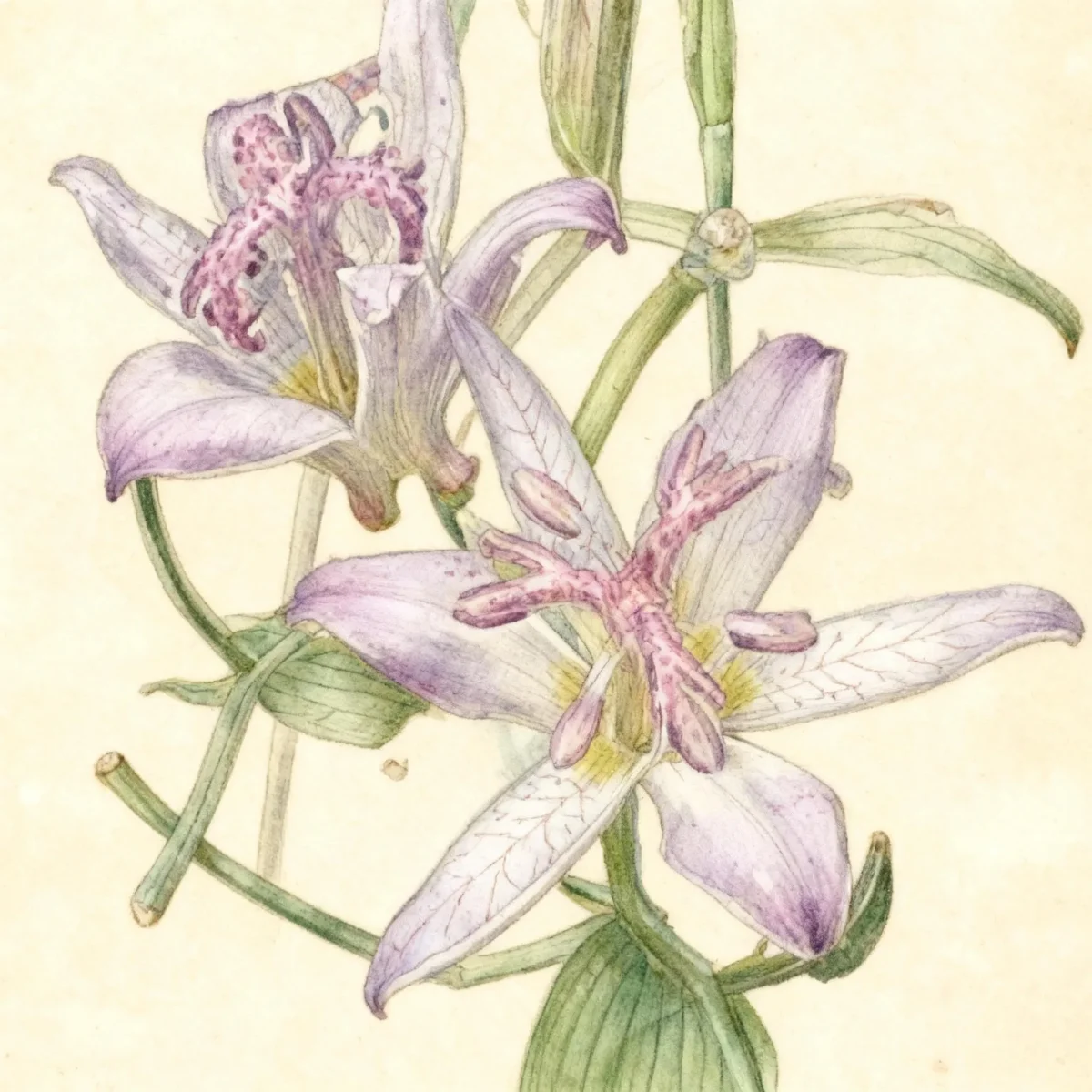
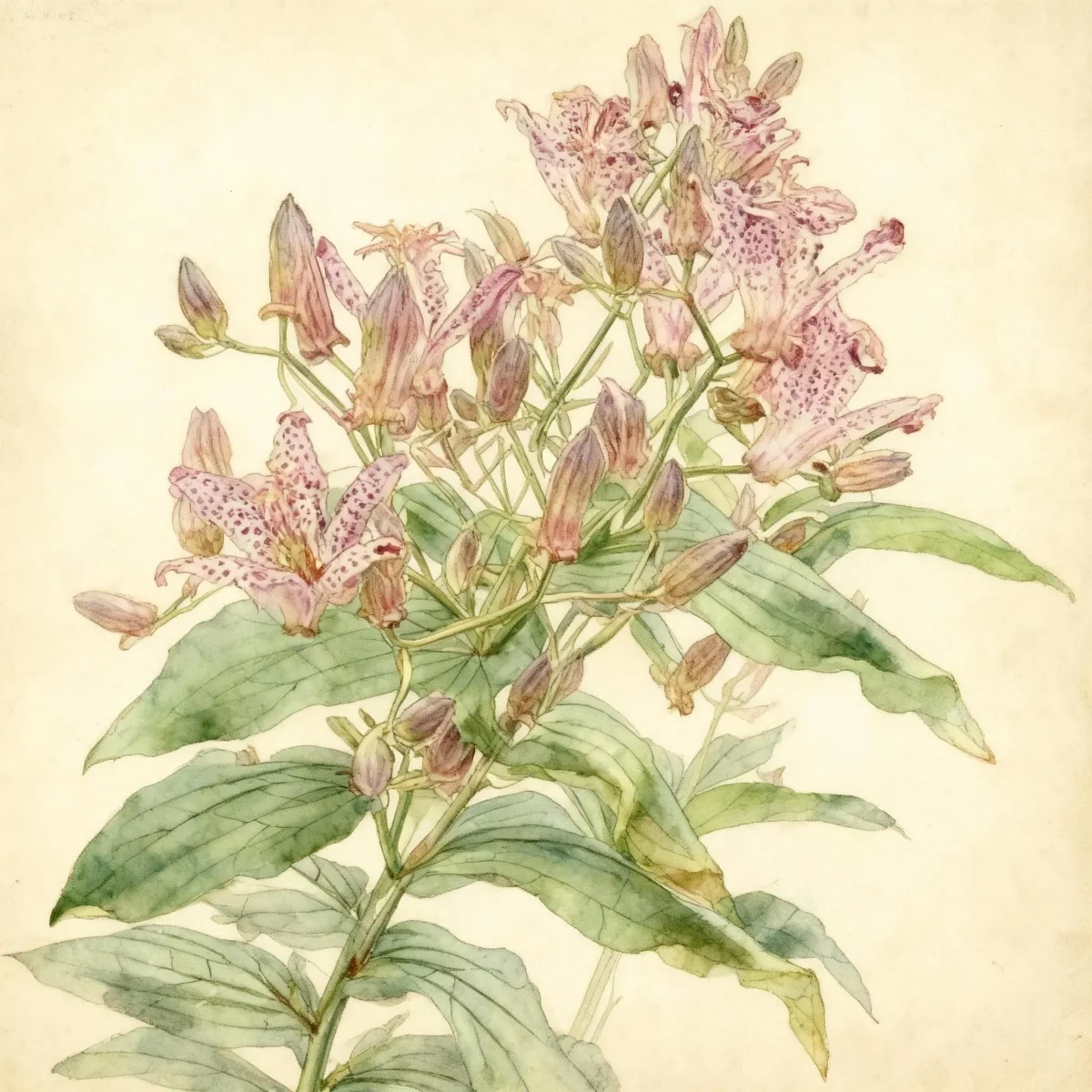
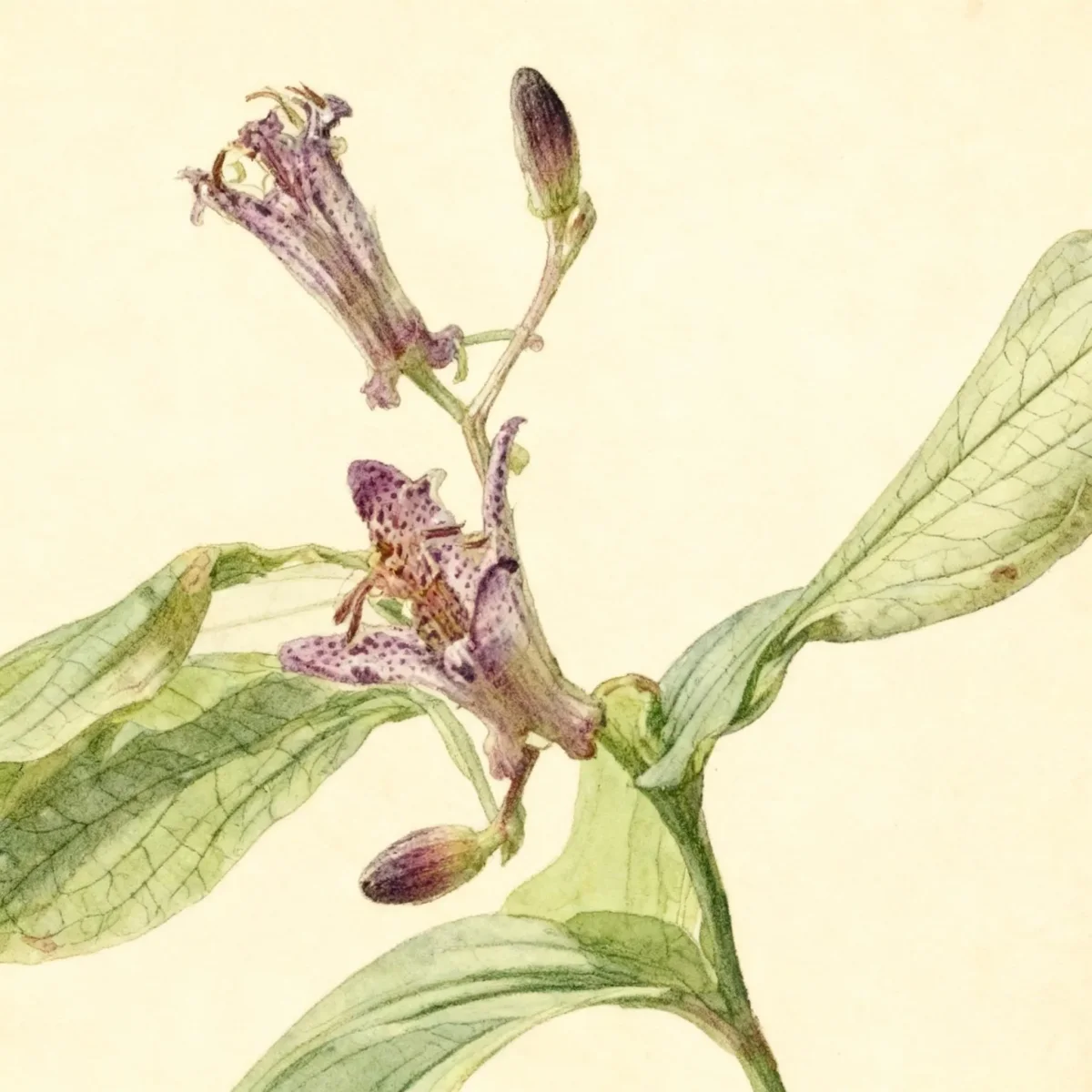
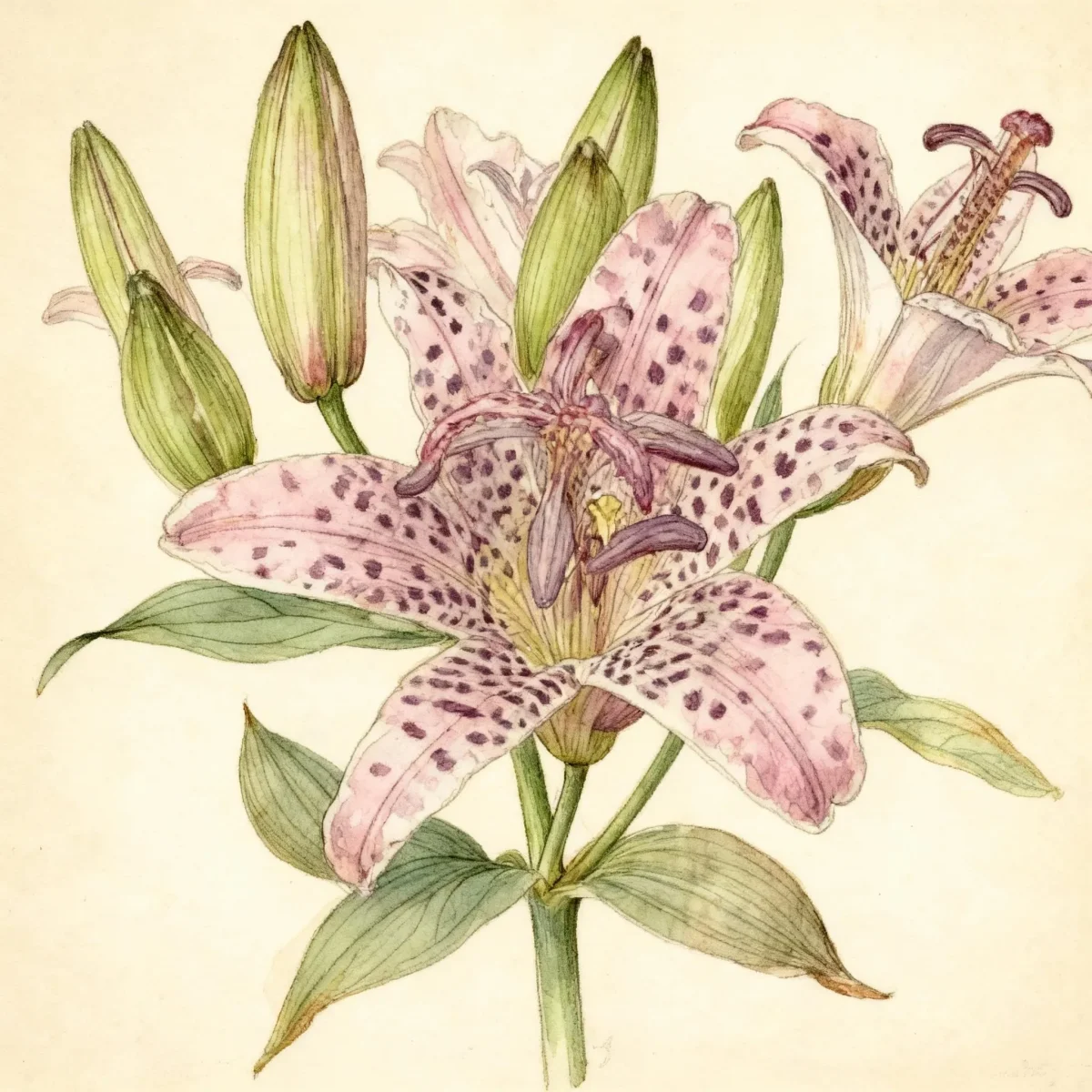
Toad lily (Tricyrtis formosana 'Gilt Edge')
Tricyrtis formosana 'Gilt Edge' is a striking Toad lily prized for its late-season, spotted flowers and gold-edged foliage.
Scroll down to discover growing tips, care requirements, companion plants, and more
Complete Plant Information
Overview
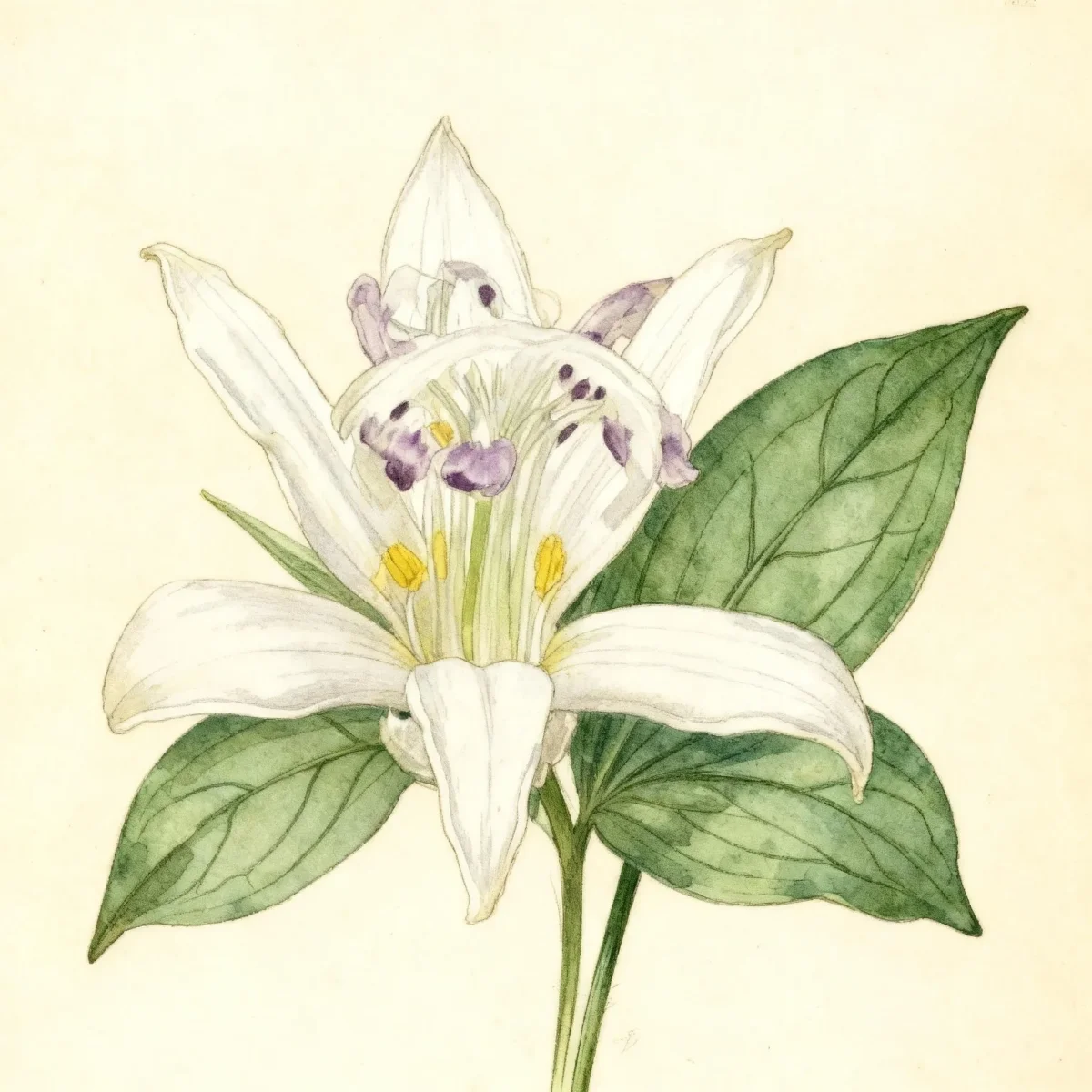
Tricyrtis formosana ‘Gilt Edge’ is a highly desirable herbaceous perennial, offering unique late-season interest when many other garden stars are fading. This specific cultivar of Toad lily stands out due to its variegated foliage, featuring leaves edged in creamy white to chartreuse, making it an attractive textural element even outside of bloom time. Its star-shaped, white flowers heavily spotted with purple provide a fascinating focal point from late summer into early fall.
As a low-maintenance addition to the shade garden, this Toad lily spreads gently via creeping rhizomes to form dense colonies, making it excellent for naturalizing under tree canopies. It thrives in consistently moist, humus-rich environments, rewarding gardeners who can provide the specific partial to deep shade conditions it prefers.
The delicate, intricately patterned blooms of Tricyrtis formosana ‘Gilt Edge’ are best appreciated up close, making it perfect for borders along pathways or tucking near seating areas. Its unique look elevates woodland gardens and shaded borders, ensuring visual interest carries well into the autumn months.
Fast Facts
- Plant Family: Liliaceae
- Plant Type: Herbaceous perennial
- Hardiness Zones: USDA Zones 5-8
- Size at Maturity:
- Height: 1-1.5 ft
- Spread: 1-2 ft
- Bloom Time: August to September
- Bloom Description: White with purple spotting
- Sun Exposure: Part shade to full shade
- Water Needs: Medium to wet
- Maintenance Level: Low
How to Grow
Planting Tricyrtis formosana ‘Gilt Edge’ should occur in spring or early fall to allow establishment before temperature extremes. Select a location that receives part shade to full shade, mimicking its native Asian forest floor environment. The soil must be well-drained yet consistently moist; this plant strongly prefers organically rich, humusy, slightly acidic conditions and absolutely cannot be allowed to dry out completely.
Once established, care is relatively simple. Maintain even moisture levels throughout the growing season, especially during dry spells, as consistent water is key to keeping the foliage lush and the blooms healthy. Fertilization is rarely required if the soil is rich in organic matter; excessive feeding can sometimes reduce flower production.
Maintenance is low for this tough perennial. Cleanup involves removing old foliage in early spring before new growth emerges. Because the plant spreads slowly via rhizomes, occasional division may be necessary every few years if the clump becomes too dense or encroaches on neighboring plants, though it spreads in a non-invasive manner.
Landscape Uses
Tricyrtis formosana ‘Gilt Edge’ is perfectly suited as a shade-loving perennial designed to naturalize areas beneath taller shrubs or deciduous trees. Its refined habit makes it an excellent anchor plant for woodland gardens or the shady border edge where its variegated leaves provide contrast against solid green hostas or ferns.
Because the unique, spotted flowers of the Toad lily are small, achieving maximum aesthetic impact requires siting the plant where it can be observed at close range. Consider placing it along frequently used walkways where visitors can appreciate the intricate markings of the blooms, which often appear near stem ends in late summer. It also performs beautifully when integrated into mixed borders designed for late-season color and texture.
Furthermore, the blooms of Tricyrtis formosana ‘Gilt Edge’ are good cut flowers, offering an unusual element to late-summer and early-fall floral arrangements, providing intricate detail that lasts well indoors. Its capacity to naturalize ensures that once happy, you will enjoy increasing drifts of this variegated Toad lily for years.
Standout Features
Flower Qualities
- Showy
Noteworthy Characteristics
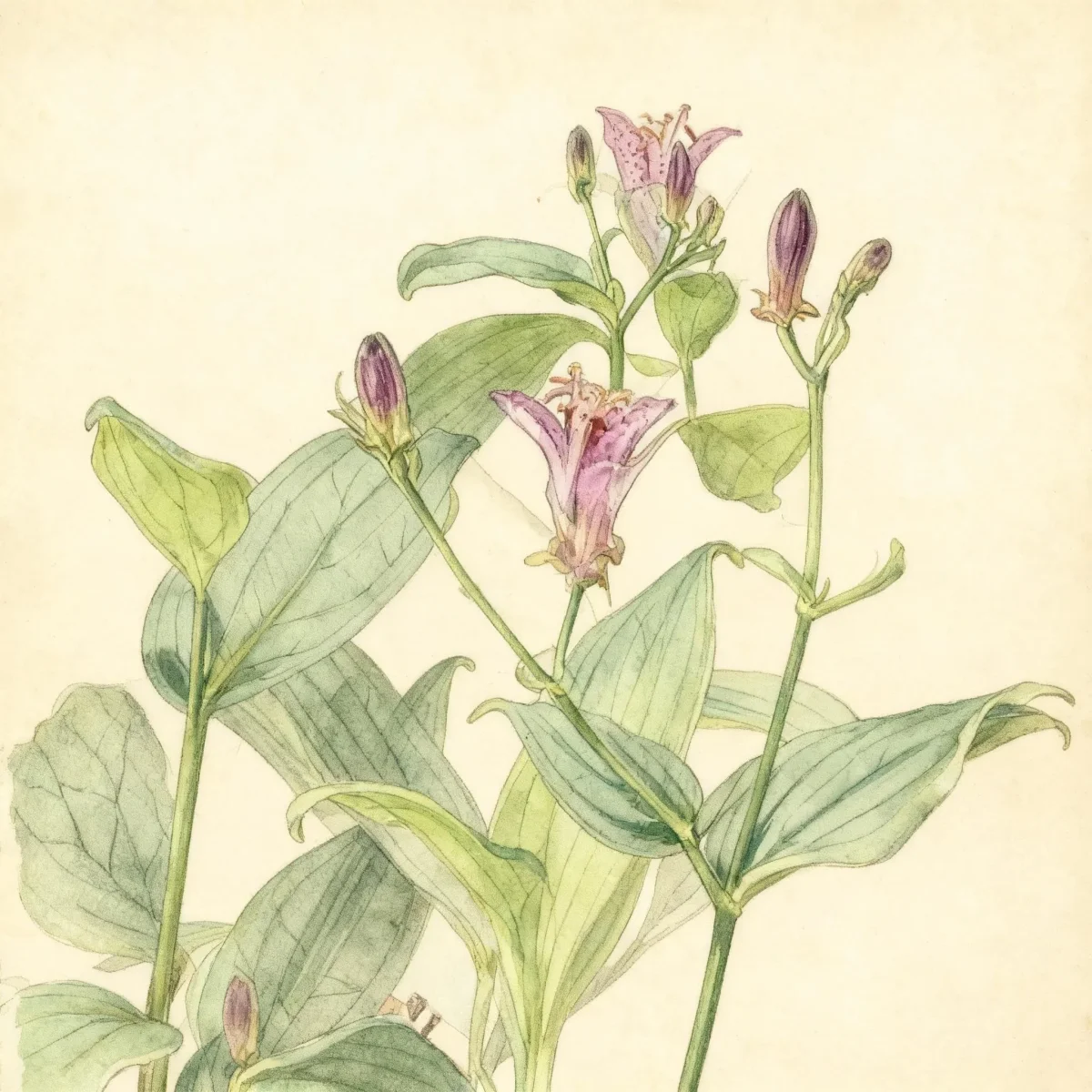
Tricyrtis formosana, commonly called toad lily, is an herbaceous shade-loving perennial of the lily family that typically grows in a spreading clump to 2-3’ tall. The cultivar ‘Gilt Edge’ is more compact, growing to about 1-1.5 feet tall but spreading wider over time. Its defining feature, besides the late-blooming, spotted flowers, is the ovate to lanceolate leaves which possess irregular creamy white to chartreuse margins that persist throughout the entire growing season.
Potential Problems
No serious insect or disease problems generally plague this Toad lily. Gardeners should remain vigilant for occasional visitors like slugs and snails, which may chew on the foliage, especially when new growth is tender. Proactive management, such as removing early-season debris or using appropriate snail bait if populations are high, will keep the leaves pristine.
Tolerances
- No data available
Frequently Asked Questions
What hardiness zones is Toad lily suitable for?
Tricyrtis formosana ‘Gilt Edge’ is reliably cold-hardy in USDA Zones 5 through 8, making it a dependable perennial for slightly cooler to mild temperate regions.
When does Toad lily bloom?
This specific Toad lily offers exceptional late-season color, with blooms appearing from August all the way through September, showcasing flowers that are white with purple spotting.
How large does Tricyrtis formosana ‘Gilt Edge’ grow?
This cultivar is moderately sized, typically reaching a height between 1 and 1.5 feet tall, and spreading out to cover an area between 1 and 2 feet wide over time.
What sun exposure does Tricyrtis formosana ‘Gilt Edge’ need?
The ideal lighting conditions for this plant are part shade to full shade; avoid intense afternoon sun which can scorch its variegated foliage.
Conclusion
Tricyrtis formosana ‘Gilt Edge’ provides invaluable textural contrast and unusual late-season bloom, making the otherwise dormant shade garden vibrant well into the autumn. The combination of strikingly edged leaves and delicate, spotted flowers ensures this Toad lily earns its premium spot in the landscape. Before planting, confirm that your site offers consistent moisture and protection from harsh sun to ensure many years of low-maintenance enjoyment.
Companion Planting
When planning a shade border featuring Tricyrtis formosana ‘Gilt Edge’, focus on companions that appreciate the same moist, organically rich soils and filtered light. Excellent partners include various cultivars of Hosta, particularly those with blue or dark green solids to contrast with the ‘Gilt Edge’ variegation. Ferns, such as Japanese Painted Fern or Autumn Fern, thrive in similar conditions and offer a complementary feathery texture to the broad leaves of the Toad lily.
Consider adding other late-season bloomers that tolerate shade, such as Astilbe (for height contrast when their plumes are spent) or various woodland Sedges (Carex), which offer fine texture near the ground plane. Siting these compatible plants together ensures that moisture and soil requirements are evenly met across the planting area, simplifying ongoing care for your entire shade collection.
Propagation Tips
Propagating standard green forms of Tricyrtis formosana is relatively straightforward, primarily achieved through division. Since Tricyrtis formosana ‘Gilt Edge’ spreads slowly via creeping rhizomes over time, division is the most reliable method to increase your stock while maintaining the exact variegated characteristics. Wait until early spring, just as new growth begins to emerge, though fall division can sometimes work if done long before the ground freezes.
Carefully dig up sections of the established clump, ensuring each division retains several healthy roots and some emerging shoots. Replant these divisions promptly into prepared, moist, humusy soil in their desired partial shade location. While difficult, seed propagation is possible, but seedlings will likely revert to the species green form, meaning desirable variegation will not be guaranteed with this method.