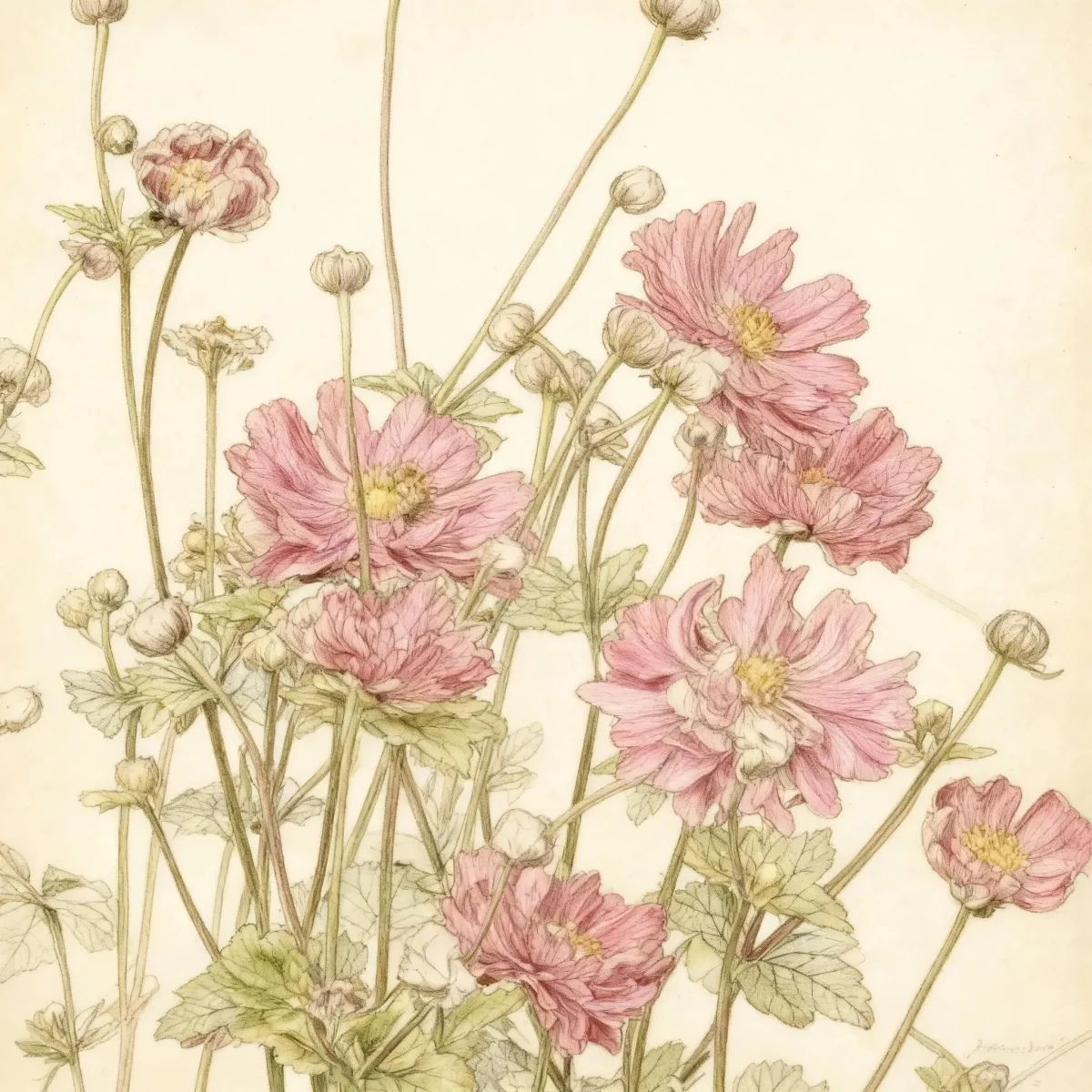
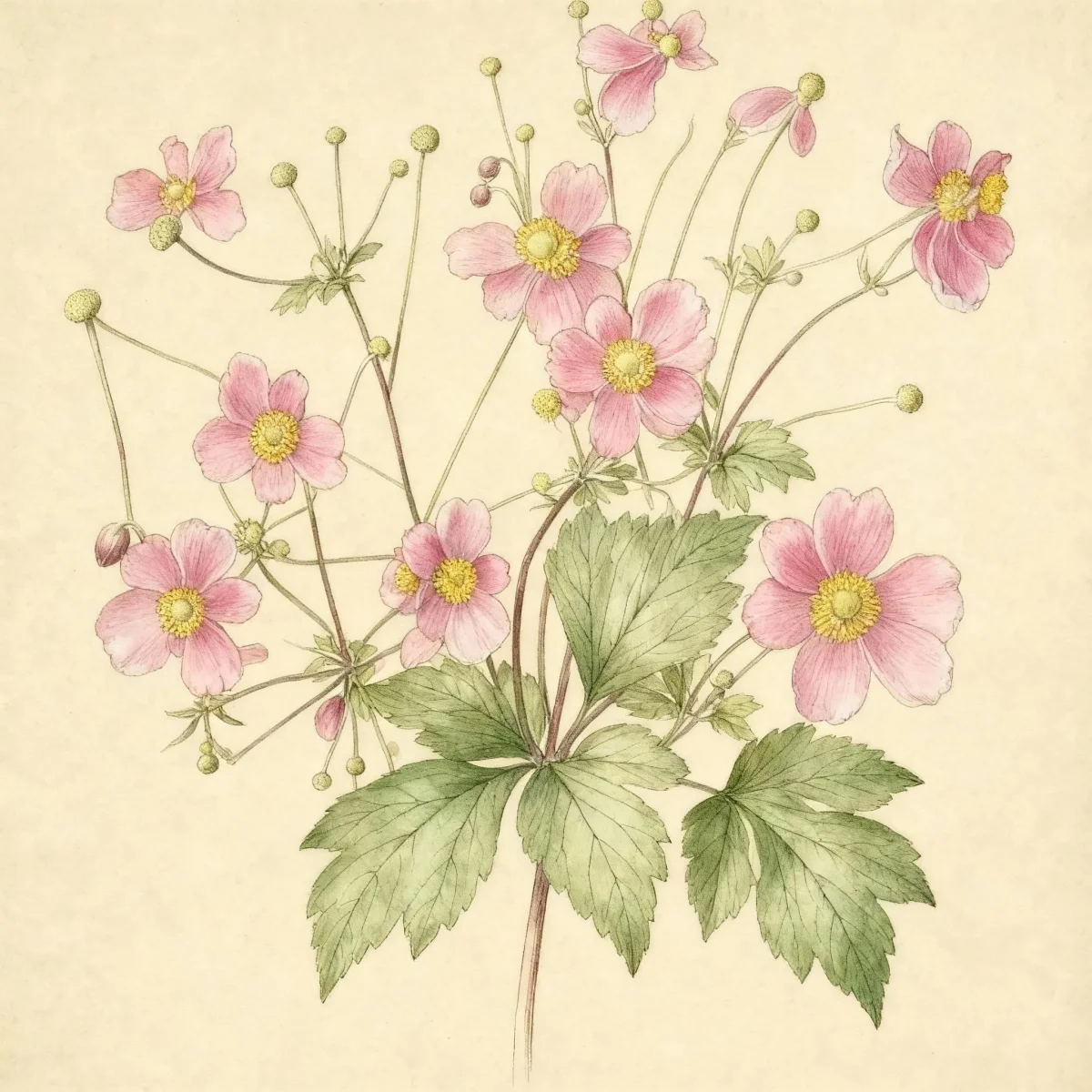
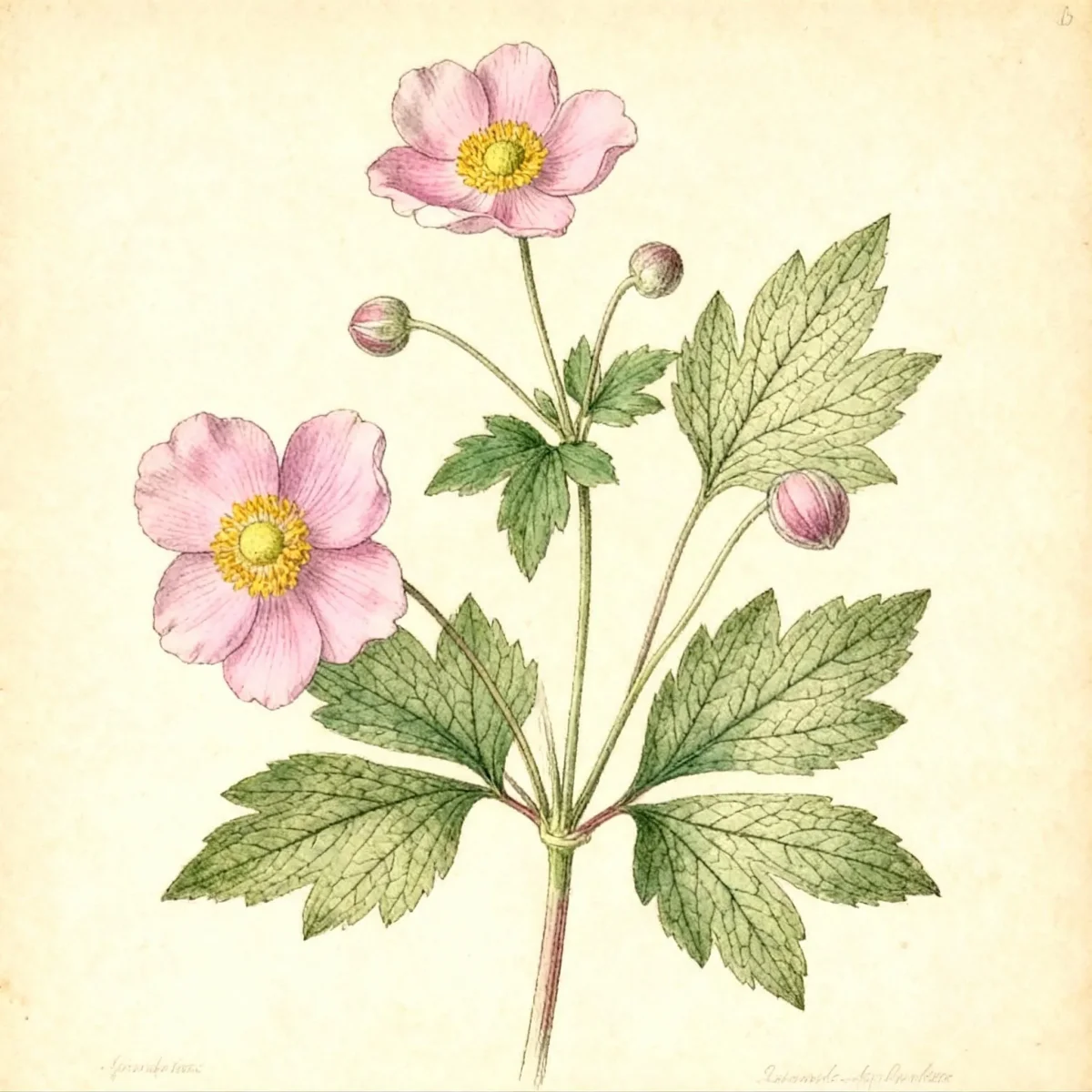
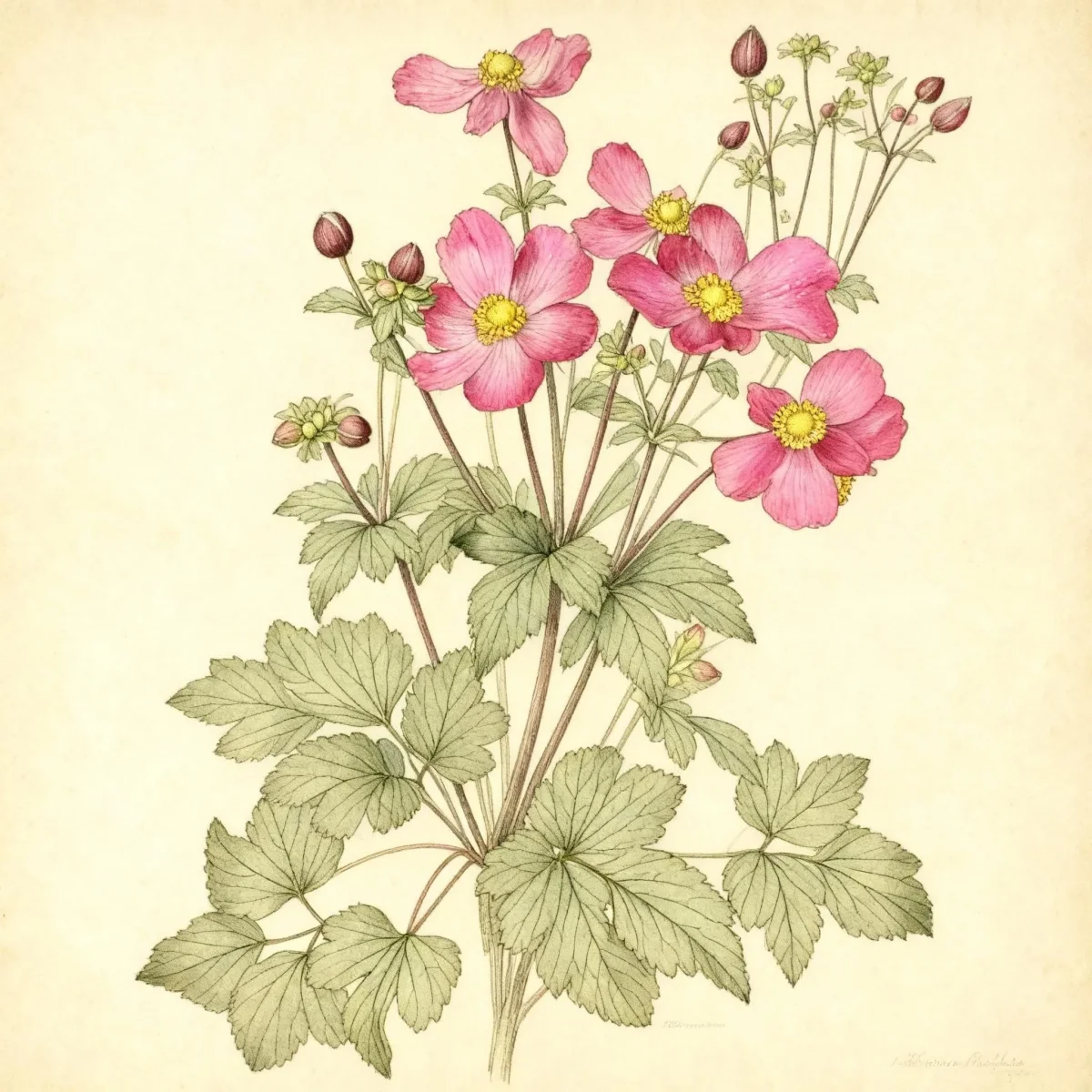
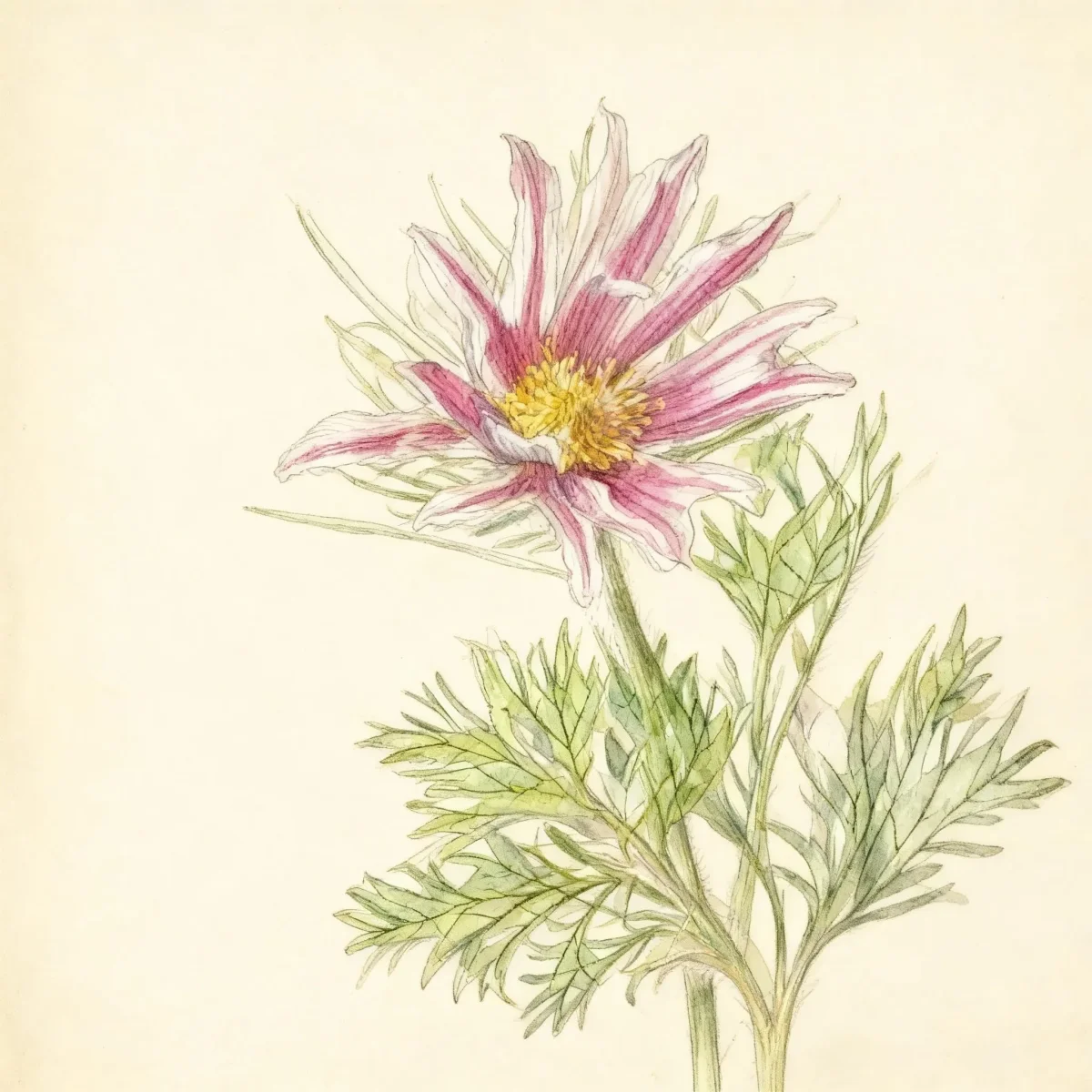
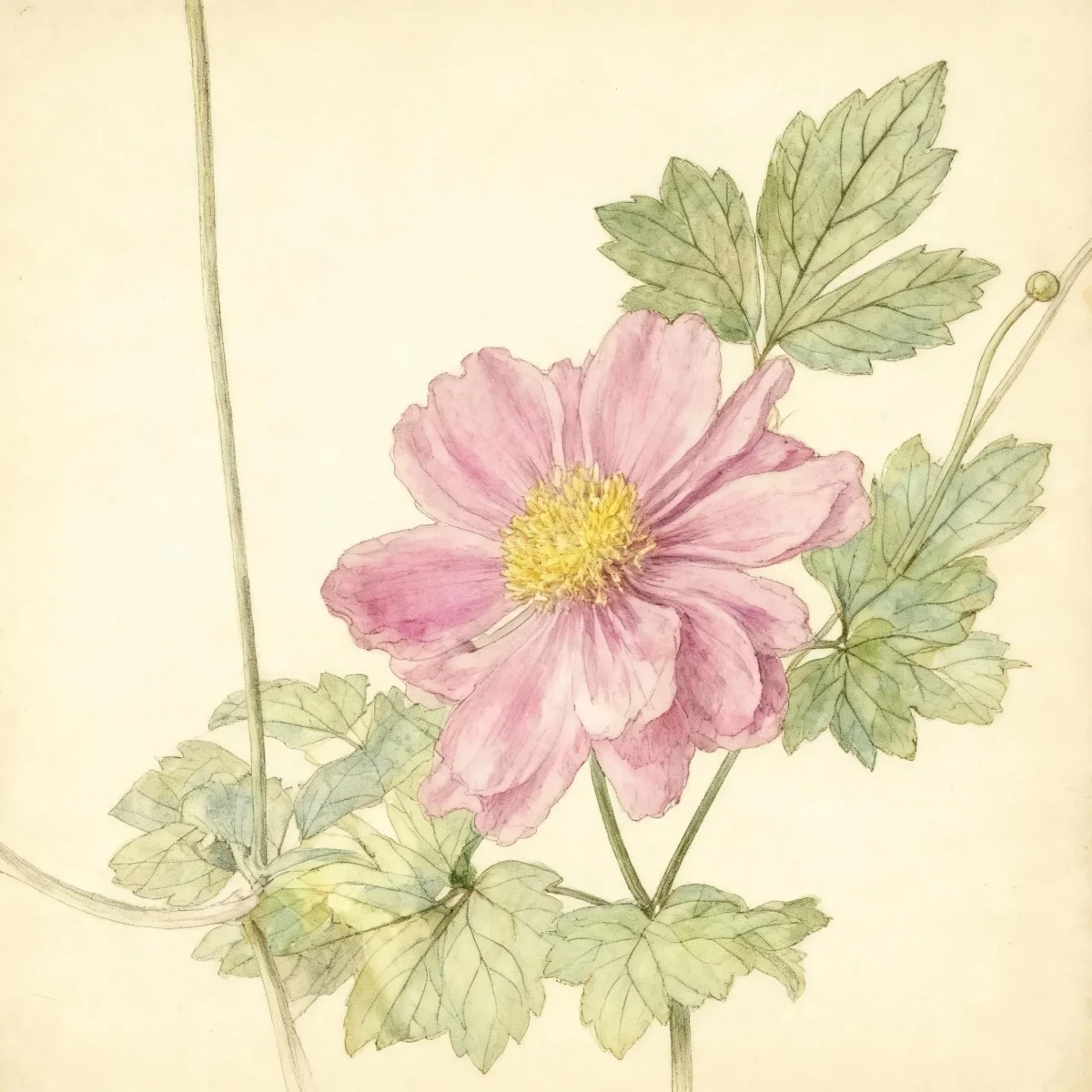
Japanese anemone (Anemone hupehensis var. japonica 'Pamina')
Anemone hupehensis var. japonica 'Pamina' offers deep rose-pink blooms late summer to fall, perfect for adding late-season color to borders.
Scroll down to discover growing tips, care requirements, companion plants, and more
Complete Plant Information
Overview
The Anemone hupehensis var. japonica ‘Pamina’, widely known as the Japanese anemone, is prized for its ability to reliably deliver vibrant color late in the gardening season when many other perennials are fading. This fibrous-rooted herbaceous perennial brings graceful height to the garden border through its wiry, branching flower stems which display double, deep rose-pink blooms. As a low-maintenance standout, the Anemone hupehensis var. Japonica ‘Pamina’ provides excellent late-season impact, often lasting until the first hard frost.
Originating in China but long cultivated in Japan, this reliable variety naturalizes slowly via suckering roots, forming attractive colonies over time in suitable locations. Gardeners appreciate this species for its structure and the elegance of its late-summer display, making the Japanese anemone a staple in classic cottage garden designs.
Its foliage forms a substantial basal clump, with flower scapes rising well above to showcase the rich bloom color, offering much-needed contrast in the autumn landscape.
Fast Facts
- Plant Family: Ranunculaceae
- Plant Type: Herbaceous perennial
- Hardiness Zones: USDA Zones 5-8
- Size at Maturity:
- Height: 2.5-3 ft
- Spread: 2-2.5 ft
- Bloom Time: August to September
- Bloom Description: Rose-pink with yellow centers
- Sun Exposure: Full sun to part shade
- Water Needs: Medium
- Maintenance Level: Low
How to Grow
Start establishing your Anemone hupehensis var. japonica ‘Pamina’ in spring or fall, ensuring the soil meets its specific needs. This plant thrives in average, well-drained soils, but prefers fertile, consistently moist, humus-rich conditions that lean toward neutral or slightly alkaline pH. While it tolerates full sun, it performs best in partial shade, especially where summer afternoons are intense, as hot, dry sun can scorch the foliage.
Consistent moisture is critical; the soils must not be allowed to dry out completely, especially during its long blooming period in late summer. Good drainage is paramount, as winter wetness can be fatal, preventing root rot that often causes failure in poorly-drained sites. If you live in colder regions within its range, applying mulch in winter helps protect the root structure.
Although it is low maintenance once established, be aware that taller plants may need some support if placed in too much shade, as this encourages leggier, floppier stems. Plants establish slowly, so patience is key; allow time for the fibrous roots to spread and form permanent colonies. Propagation is typically done via division or root cuttings.
Landscape Uses
The strong vertical habit and late blooming season make the Japanese anemone invaluable for adding structure to perennial and cottage gardens. Because Anemone hupehensis var. Japonica ‘Pamina’ will naturalize, planting it in masses or groups allows it to form beautiful, informal drifts over time, softening the transition between garden beds and lawn edges.
It works exceptionally well alongside plants that appreciate similar moisture but bloom earlier in the season, such as asters or sedums, ensuring continuous interest. Use this cultivar toward the middle or back of borders due to its 3-foot height, allowing shorter companions to buffer the foliage base while the graceful flower stems rise above. Its tolerance for part shade makes it a wonderful choice for brightening woodland garden settings where dappled light prevails.
Standout Features
Flower Qualities
- Showy
Noteworthy Characteristics
Anemone hupehensis, commonly called Japanese anemone, is a fibrous-rooted, woody-based late summer to fall flowering herbaceous perennial of the buttercup family that typically grows to 2-2 ½’ tall. This plant typically forms a basal foliage clump to 12” tall of 3-parted, dark green leaves, with long, upright, wiry-but-graceful, branching flower stems rising well above the foliage clump in late summer to 30” tall bearing single, cup-shaped, apetalous flowers. Each flower contains 5-7 showy, rounded tepals with a contrasting green button-like center containing a ring of yellow stamens, eventually leading to the cultivar ‘Pamina’ producing double deep rose-pink flowers across 2” wide blooms.
Tolerances
- Deer
Potential Problems
This plant generally faces few serious insect or disease issues, contributing to its low maintenance rating. However, gardeners should monitor for less common threats like foliar nematodes feeding inside the leaves. Fungal issues such as leaf spot, downy mildew, powdery mildew, and rust can appear, especially if air circulation is poor or humidity is high. Keep an eye out for grazing pests like slugs, caterpillars, and flea beetles, particularly when the plants are young or newly planted.
Frequently Asked Questions
What hardiness zones is Japanese anemone suitable for?
Anemone hupehensis var. japonica ‘Pamina’ is reliably hardy in USDA Zones 5 through 8.
How large does Anemone hupehensis var. japonica ‘Pamina’ grow?
This cultivar typically reaches a mature height between 2.5 and 3 feet tall and spreads to a width of 2 to 2.5 feet.
When does Japanese anemone bloom?
The prolific bloom period for this variety starts in August and extends through September, often welcoming the first frost.
What sun exposure does Anemone hupehensis var. japonica ‘Pamina’ need?
It performs well in locations receiving full sun to part shade, though part shade is often preferred to protect foliage from summer scorch.
Conclusion
The Anemone hupehensis var. japonica ‘Pamina’ is an essential late-season performer, offering deep rose-pink elegance when the garden needs it most, all while remaining relatively low maintenance. Its ability to naturalize gently makes the Japanese anemone a long-term asset in established garden spaces. Before planting, confirm your soil offers the consistent, medium moisture and good drainage this perennial demands, and place your orders for planting during the active growing season.
Propagation Tips
Propagating Anemone hupehensis var. japonica ‘Pamina’ successfully relies on patience, as these plants are known to be slow to establish from divisions or cuttings. The most accessible method for home gardeners is division, best performed in early spring just as new growth begins to emerge, or sometimes in the fall before hard dormancy. Carefully lift sections of the clump, ensuring each division retains healthy root material.
Root cuttings offer an alternative route for increasing your supply of this beautiful cultivar. Take pencil-sized root sections in late winter or early spring and place them horizontally, about one inch deep, in a prepared seed-starting mix kept consistently moist and shaded. Keep the medium warm, and be prepared for slow germination, though this method can yield many new plants over time.
Companion Planting
When designing a border for Anemone hupehensis var. japonica ‘Pamina’, select companions that complement its late-season bloom time and similar cultural needs for moisture and soil fertility. Plants that thrive in part to full sun and appreciate average moisture, such as Hydrangea paniculata cultivars or late-blooming hostas, make excellent partners.
Consider pairing the height of this Japanese anemone with shorter, structural perennials that bloom earlier, filling in the space left by their mid-summer fading. Astilbes, Toad Lilies (Tricyrtis), or late varieties of Geraniums are ideal candidates that share the need for humus-rich, well-drained soils, preventing the anemone foliage from looking isolated.