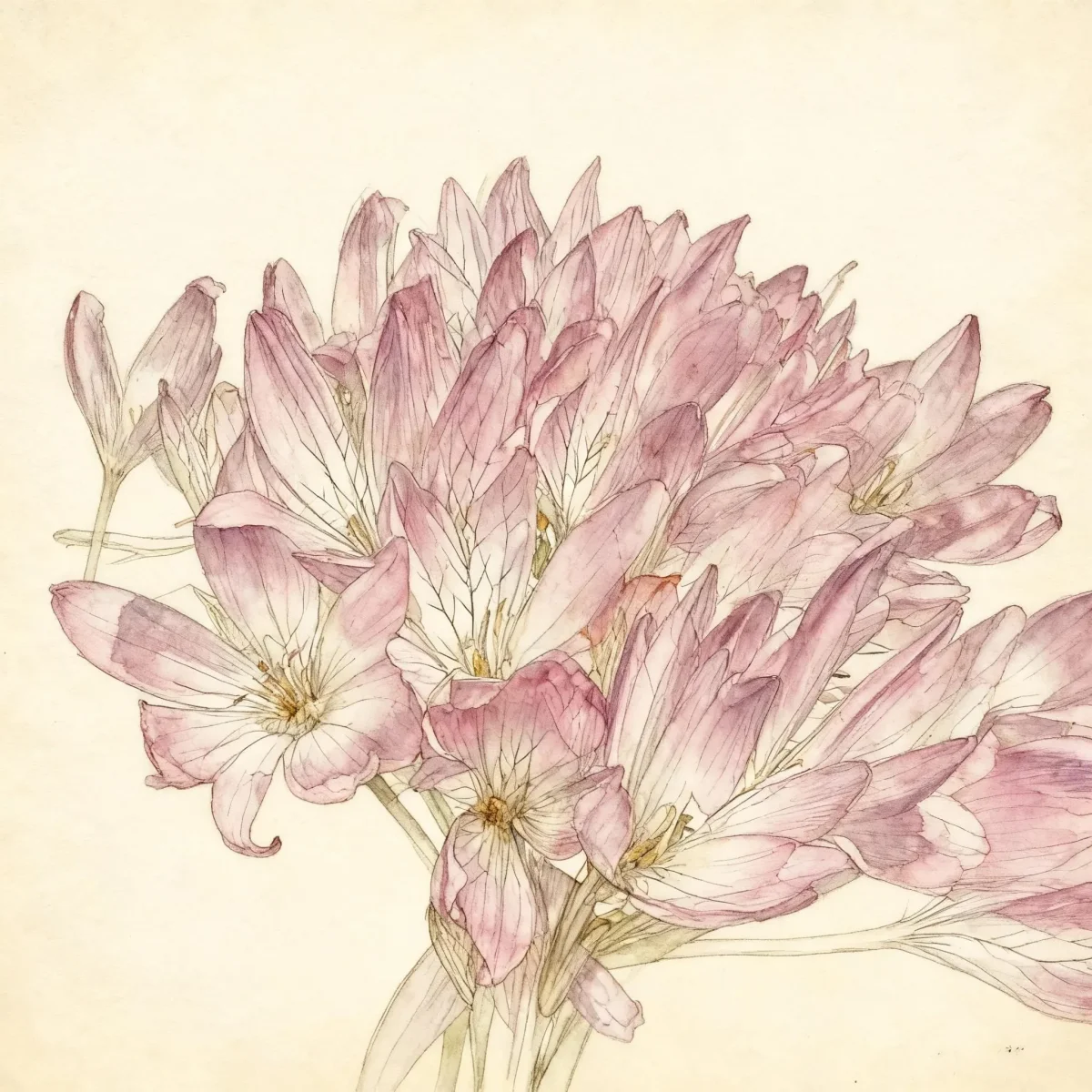
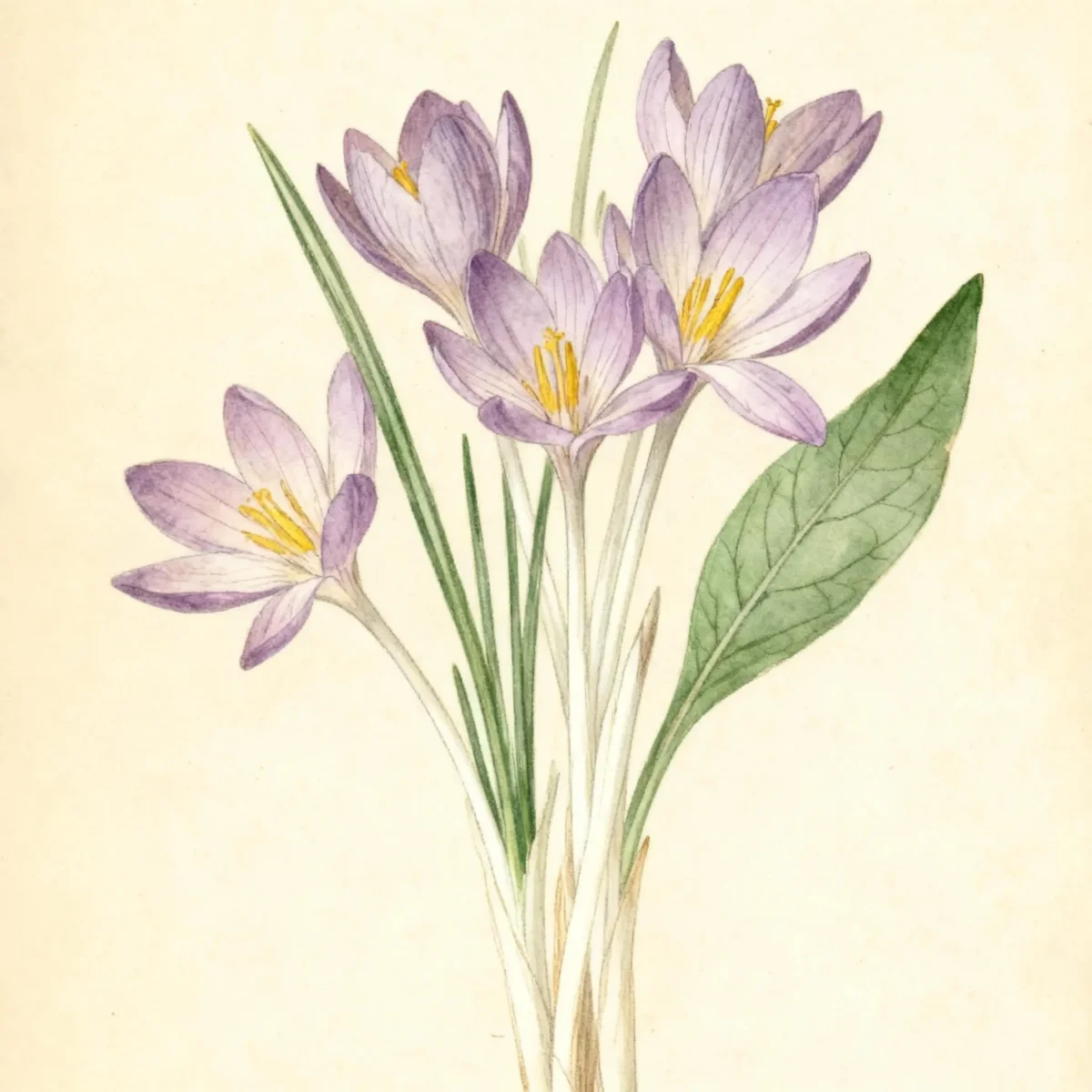
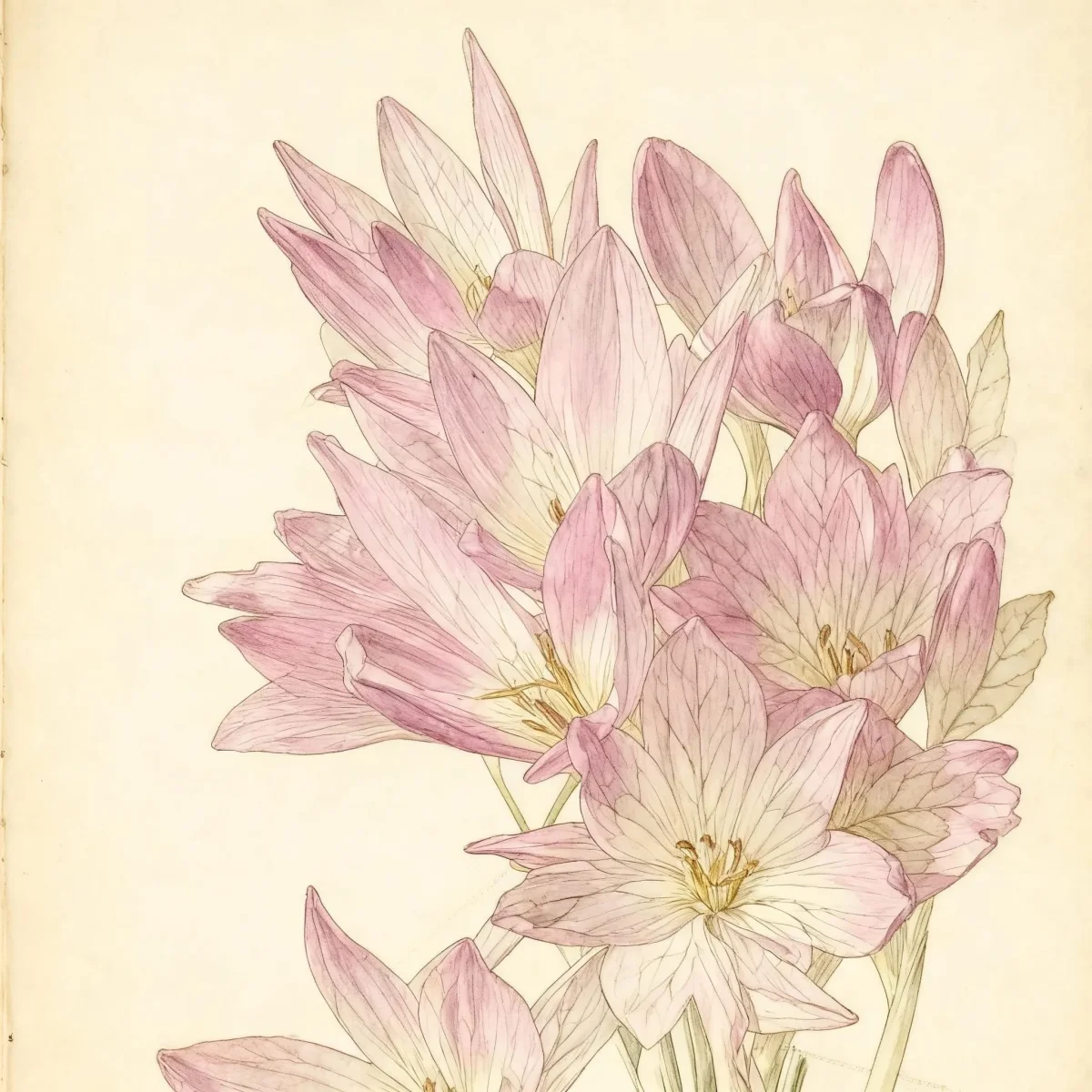
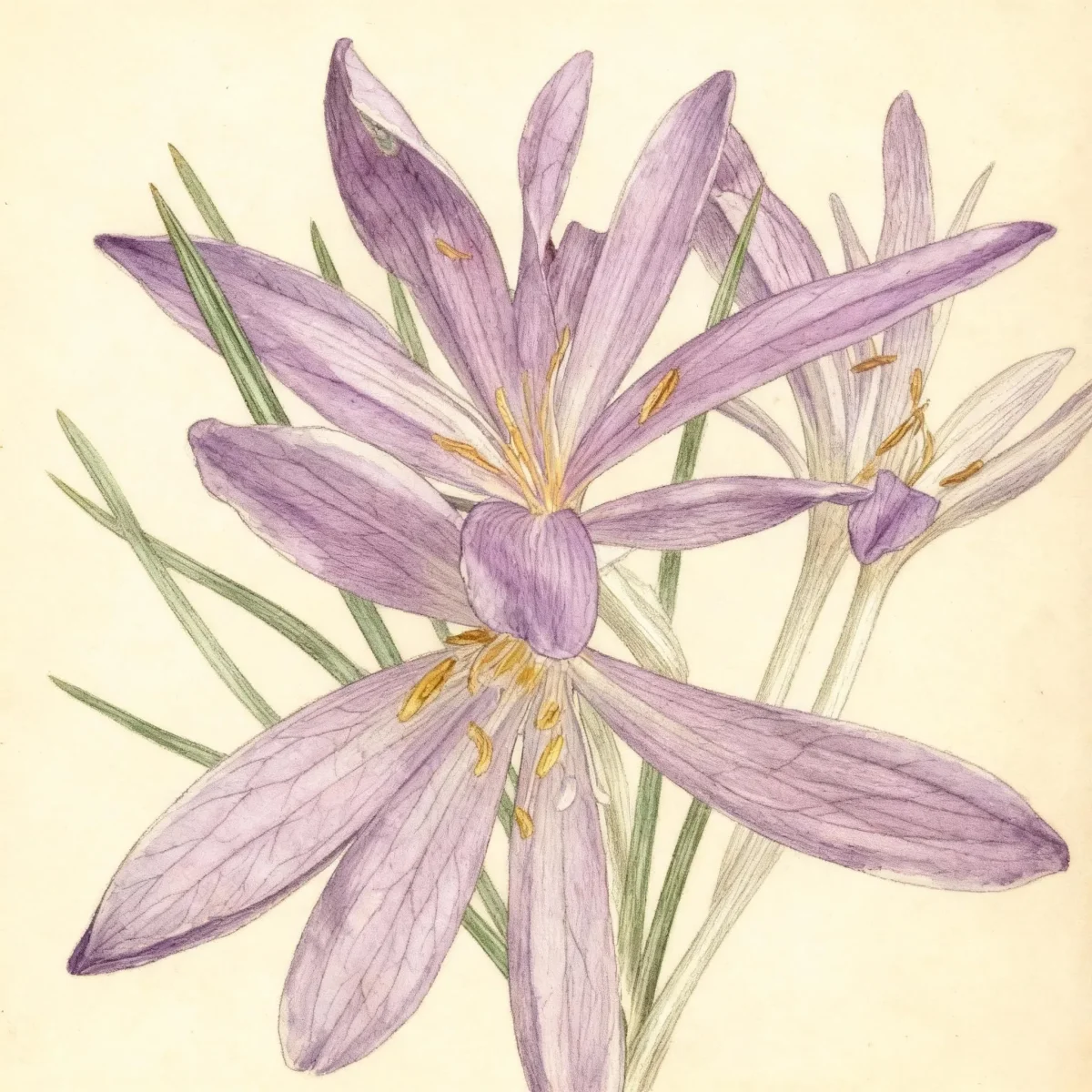
Autumn crocus (Colchicum 'Disraeli')
Colchicum 'Disraeli' produces striking rosy purple autumn flowers following summer foliage. An easy-care bulb perfect for fall color.
Scroll down to discover growing tips, care requirements, companion plants, and more

Complete Plant Information
Overview
The captivating Colchicum ‘Disraeli’, commonly known as Autumn crocus, provides a surprising burst of late-season color when most summer perennials are finished. This reliable bulb offers deep rosy purple, tulip-shaped flowers that seem to erupt directly from the ground, earning it the nickname ‘Naked Ladies’. While the flowers appear suddenly in fall, the striking foliage is produced in the spring before dying back completely by summer. Colchicum ‘Disraeli’ is valued for its low maintenance requirements and its ability to naturalize, creating drifts of welcome color.
As a member of the Colchicaceae family, this plant should not be confused with true spring crocuses, as the bloom timing and structure are distinctly different. For gardeners needing dependable fall interest, the Autumn crocus is an essential component, thriving in average well-drained soils. Its compact nature makes Colchicum ‘Disraeli’ perfect for smaller garden pockets or woodland edges.
Fast Facts
- Plant Family: Colchicaceae
- Plant Type: Bulb
- Hardiness Zones: USDA Zones 4-7
- Size at Maturity:
- Height: 0.5-0.75 ft
- Spread: 0.5-0.75 ft
- Bloom Time: September to October
- Bloom Description: Rosy purple
- Sun Exposure: Full sun to part shade
- Water Needs: Medium
- Maintenance Level: Low
How to Grow
Planting Colchicum ‘Disraeli’ is best accomplished in August to ensure blooms appear the same year, though planting earlier is always beneficial. Select a location offering full sun to light partial shade, ensuring the soil is average, well-drained, and ideally rich in humus. Space the corms about 6 inches apart, burying them approximately 3 inches deep.
Maintenance for the Autumn crocus is generally low. Water adequately to maintain medium soil moisture, especially during the growing periods. Avoid overly wet conditions to prevent corm rot. If division becomes necessary, carefully dig and divide the clumps during their mid-summer dormant period after the spring foliage has fully died back.
Remember the foliage of Colchicum ‘Disraeli’ appears in spring and can look unsightly as it yellows heading into summer dormancy. Planning site placement where this foliage decline is less noticeable is key to success for this lovely perennial, allowing the naked fall flowers to be the main feature.
Landscape Uses
Colchicum ‘Disraeli’ excels in providing late-season structure and color in areas where summer plants are fading away. They are highly recommended for naturalizing in meadows or under the dappled shade of woodland settings where the spring foliage decline is inconsequential. Consider planting them along winding walks or near patios to surprise visitors with their sudden fall display.
Because the stems are somewhat weak, placing the Autumn crocus near very low-growing ground covers can offer subtle support without obscuring the fall bloom. They work well in beds and borders, deliberately placed towards the back or middle where the foliage growth is masked by earlier blooming perennials that remain upright through summer.
Standout Features
Flower Qualities
- Showy
Noteworthy Characteristics
Colchicum is a genus of about 45 species of plants found across alpine regions of Europe, North Africa, and Asia, many of which are called autumn crocus due to their fall blooming habit. In late spring, each corm sends up basal foliage which dies back by summer, enabling the naked flower stems to rise 4-6” tall in late summer to early fall bearing goblet-shaped blooms. The common name is misleading, as Autumn crocuses belong to the Colchicaceae family, distinguishable from true spring crocuses by possessing six stamens and a superior ovary. Cultivar ‘Disraeli’ is noted for its bright rosy purple, tulip-shaped flowers featuring a white center, checkered petals, and purple anthers, growing modestly to less than a foot high.
Tolerances
- Deer
Potential Problems
Colchicum ‘Disraeli’ generally exhibits few serious insect or disease issues, but gardeners should actively watch for slugs and snails attracted to the foliage. Occasional Botrytis infection can occur, and the most significant cultural danger is corm rot, which is usually triggered by poorly-drained, excessively wet winter soils. A crucial consideration for all gardeners is that all plant parts, especially seeds and corms of the genus Colchicum, are toxic if ingested, requiring caution around pets and children. When handling the corms during planting or division, wearing gloves is advisable to prevent potential skin irritation.
Frequently Asked Questions
What hardiness zones is Autumn crocus suitable for?
Colchicum ‘Disraeli’ is best suited for gardeners residing in USDA Hardiness Zones 4 through 7.
How large does Autumn crocus grow?
This variety typically reaches a mature height and spread between 0.5 to 0.75 feet tall and wide.
What sun exposure does Colchicum ‘Disraeli’ need?
This plant prefers a location with full sun exposure, though it will also tolerate light to partial shade.
When does Colchicum ‘Disraeli’ bloom?
You can expect the magnificent rosy purple blooms of the Autumn crocus to appear from September through October.
Conclusion
Colchicum ‘Disraeli’ offers a magical element to the garden canvas, delivering essential, vibrant color precisely when the season shifts toward dormancy. The unexpected elegance of this Autumn crocus ensures that your landscape remains visually engaging well into October. To successfully enjoy the display from Colchicum ‘Disraeli’, ensure you plant the corms at the correct depth in August and are mindful of the transient spring foliage.
Companion Planting
Selecting appropriate partners is key to integrating the Autumn crocus successfully into the garden design. Since flowering occurs in fall but foliage emerges in the spring, choose low-growing perennials or groundcovers that provide attractive texture during the growing season but will not compete heavily with the late-season flowers. Low-growing Heuchera (Coral Bells) or creeping thyme can offer beautiful cover for the fading spring leaves of Colchicum ‘Disraeli’ without overwhelming their subsequent fall emergence.
Design Ideas for Fall Color
The unique timing of Colchicum ‘Disraeli’ makes it excellent for “surprise” plantings near entryways or along frequently used pathways where its sudden appearance will be most appreciated. Because the flowers hover close to the soil surface, intermingle them with plants that have upright, slender structures, such as ornamental grasses in their final season, or late-blooming Sedum varieties. This juxtaposition of textures highlights the singular, low-growing beauty of the rosy purple blossoms of this wonderful Autumn crocus.