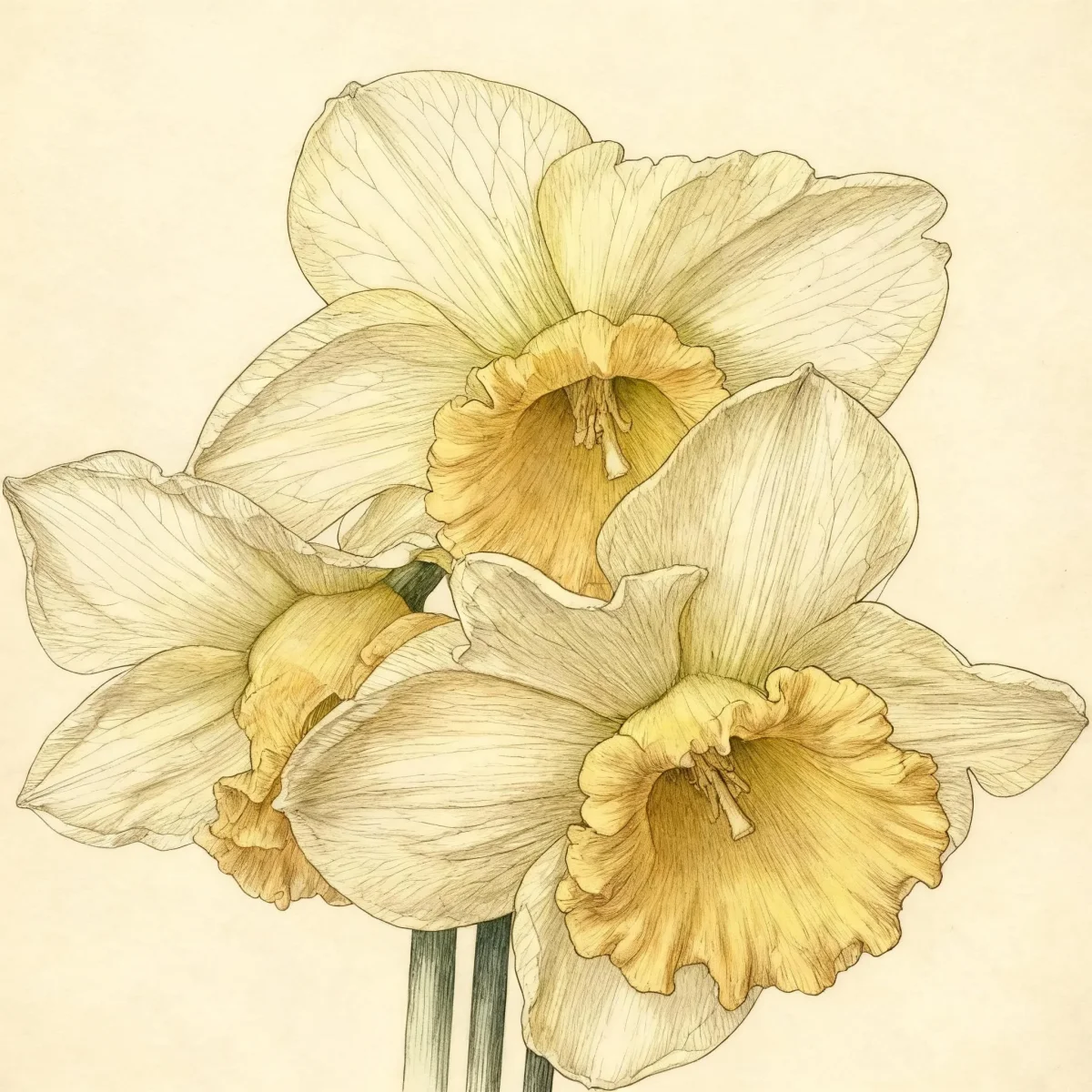
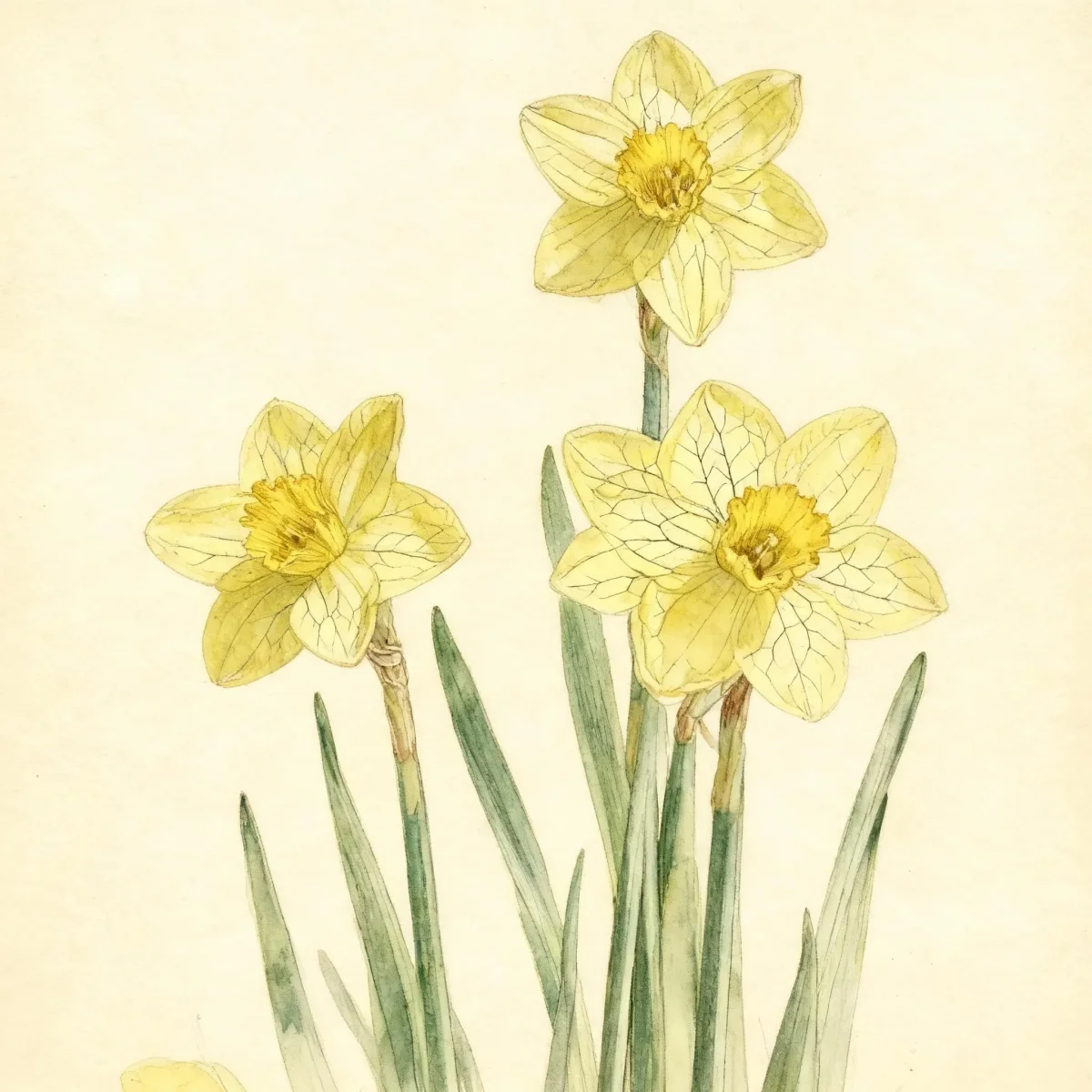
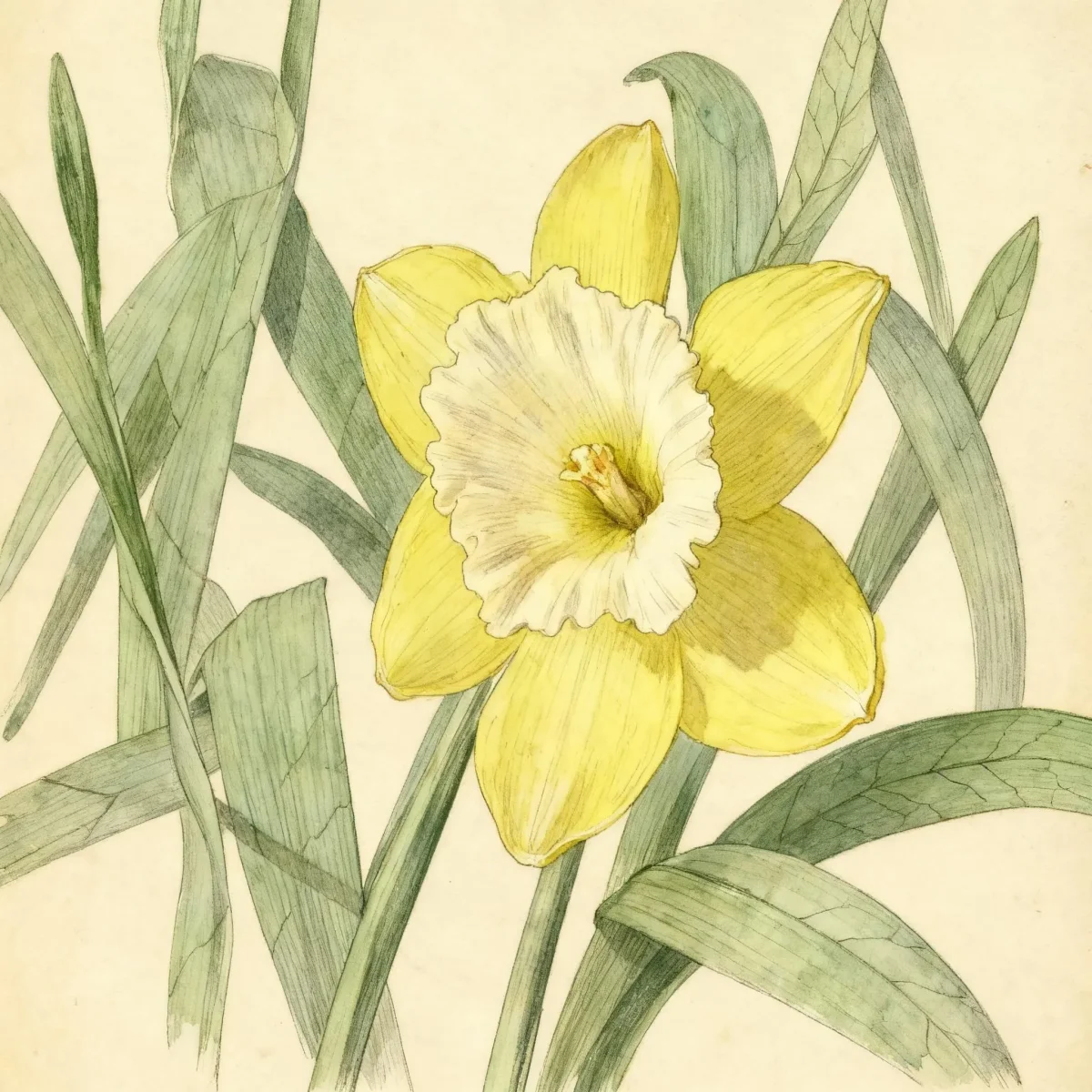
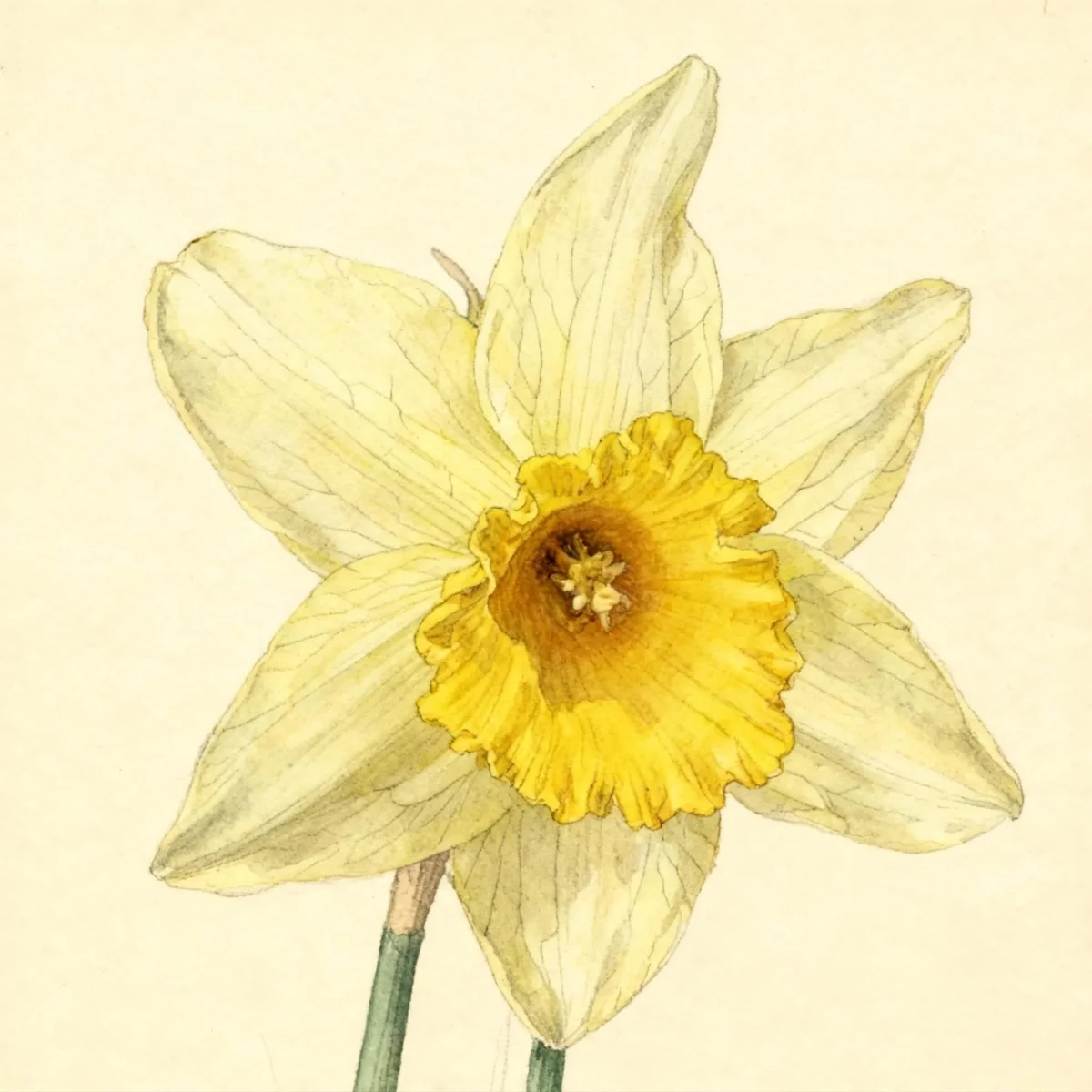
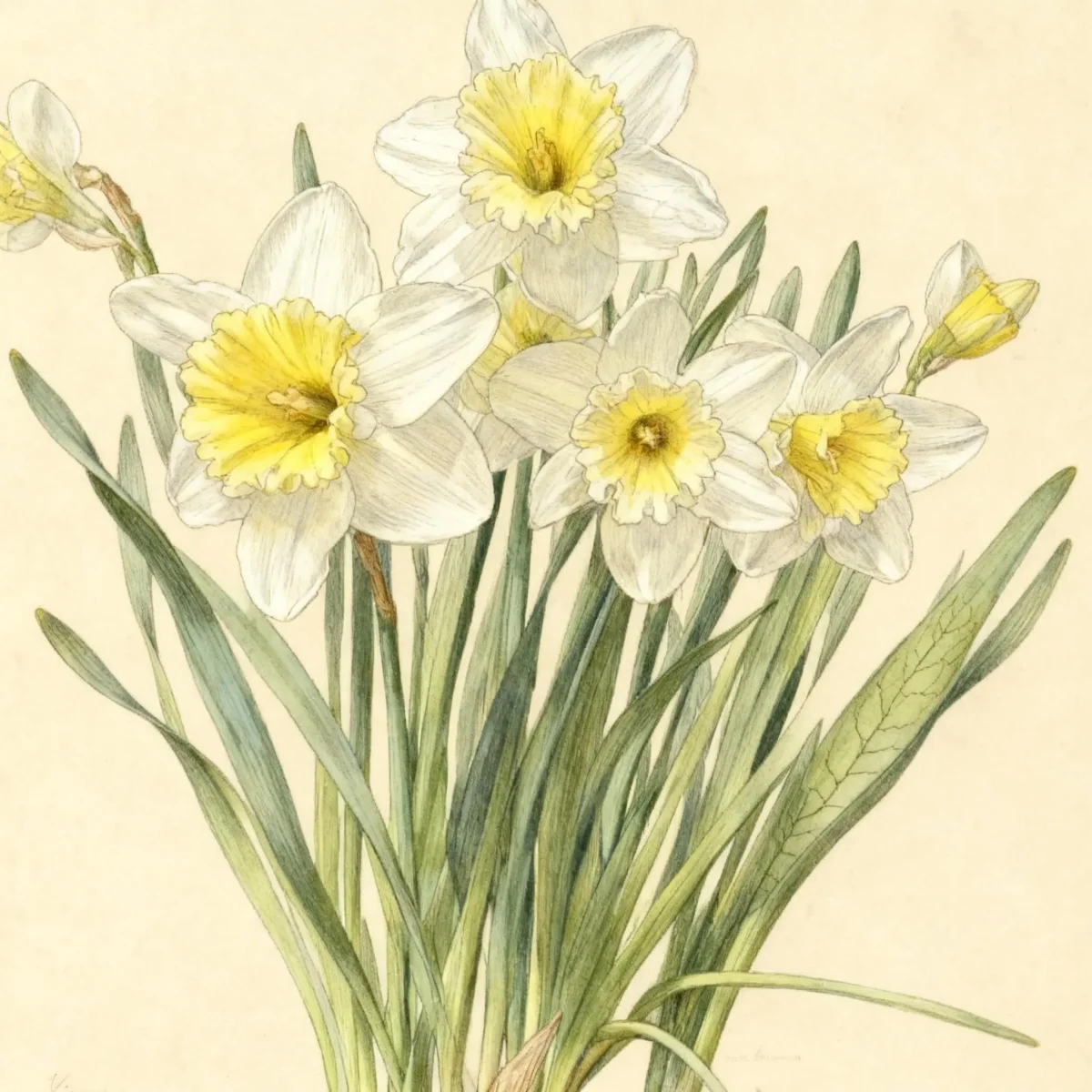
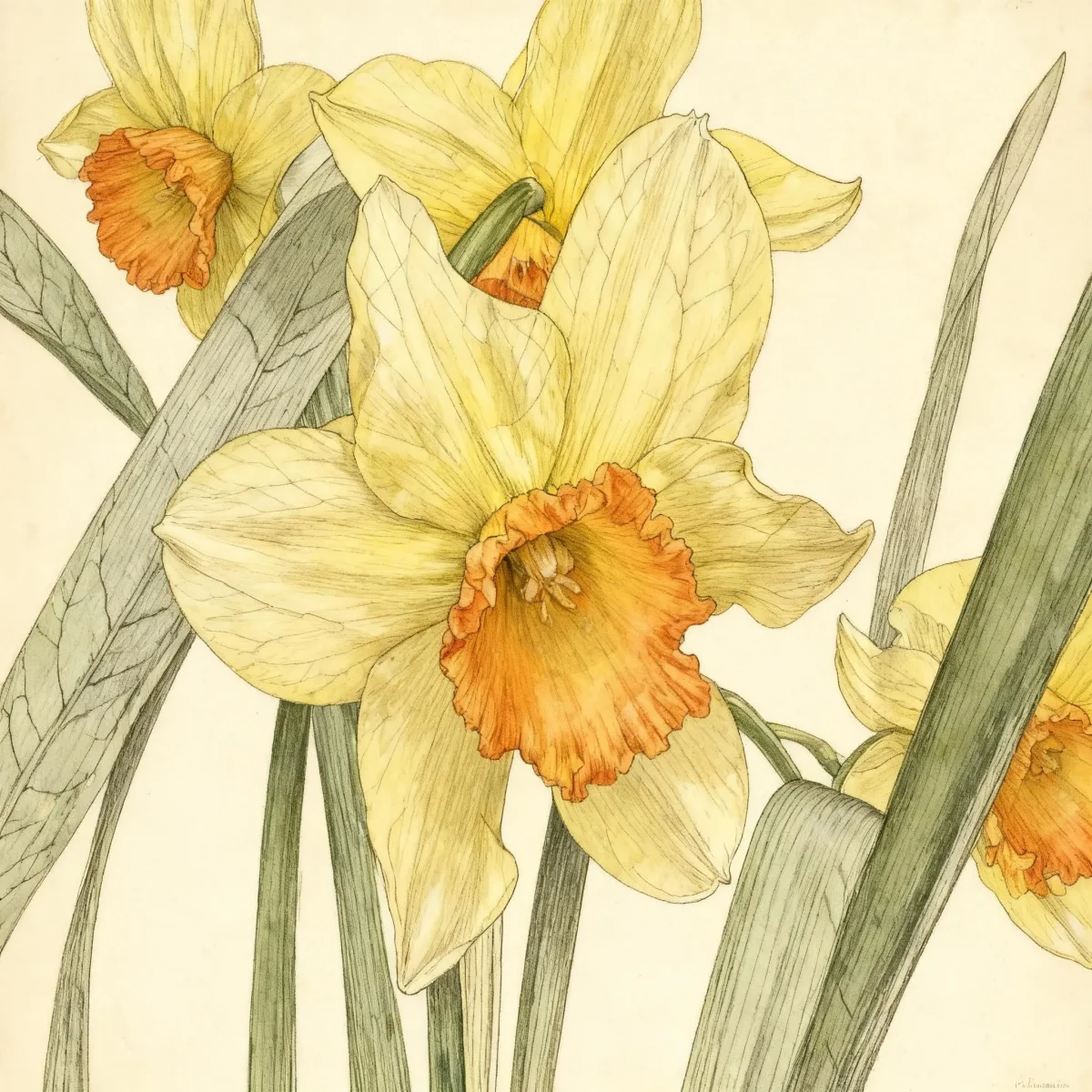
Large-cupped daffodil (Narcissus 'Pink Charm')
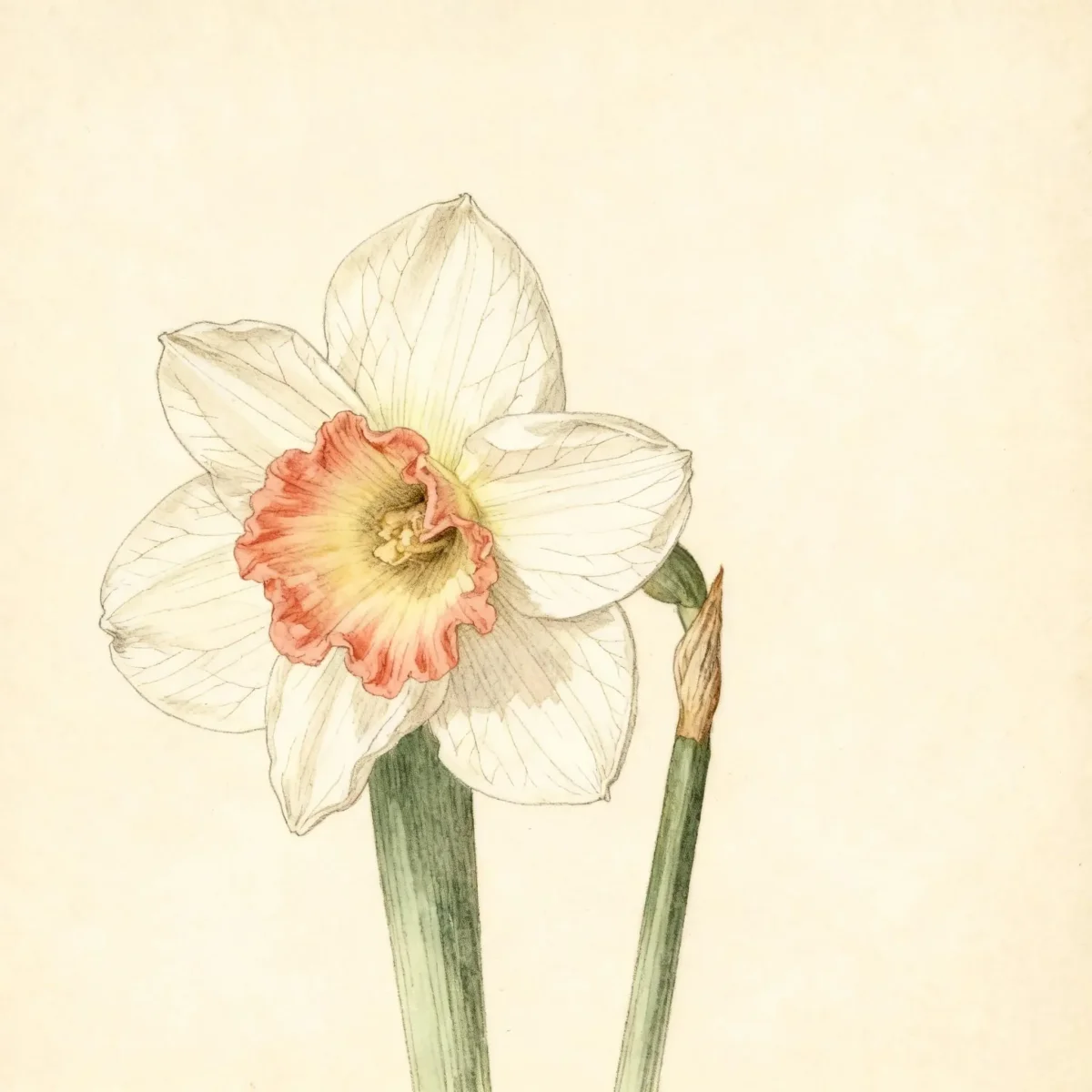
The Narcissus 'Pink Charm' is a stunning Large-cupped daffodil, prized for its ivory petals and coral-rimmed cup, blooming reliably in Zones 3-8.
Scroll down to discover growing tips, care requirements, companion plants, and more
Complete Plant Information
Overview
The Narcissus ‘Pink Charm’ stands out as a cherished spring perennial, immediately recognizable among the Large-cupped daffodil group. Its unique bloom features pristine white petals contrasting beautifully with a yellowish-white cup edged sharply in coral, offering an elegant focal point as winter fades. Grown easily from bulbs, this variety demands low maintenance once established, making it an ideal choice for both novice and experienced gardeners seeking reliable seasonal color.
As a classic bulb, Narcissus ‘Pink Charm’ adds dependable structure and fragrance to the early spring landscape. It thrives across USDA Zones 3 to 8, provided it receives full sun to partial shade and well-drained soil, conditions crucial for bulb health. This Large-cupped daffodil naturalizes well, meaning you can plant it once and enjoy increasing drifts of color year after year with minimal intervention.
Gardeners value Narcissus ‘Pink Charm’ not only for its mid-season beauty but also for its resilience; it is naturally avoided by common pests like deer and rabbits. Combining the enduring charm of daffodils with distinct bicolor accents, this selection is a cornerstone of any successful spring bulb display. Start planning your early spring planting now to welcome the vibrant rebirth signaled by the Narcissus ‘Pink Charm’.
Fast Facts
- Plant Family: Amaryllidaceae
- Plant Type: Bulb
- Hardiness Zones: USDA Zones 3-8
- Size at Maturity:
- Height: 1-1.5 ft
- Spread: 0.5-1 ft
- Bloom Time: April
- Bloom Description: White petals and coral-rimmed yellowish-white cup
- Sun Exposure: Full sun to part shade
- Water Needs: Medium
- Maintenance Level: Low
How to Grow
Planting Narcissus ‘Pink Charm’ bulbs is best undertaken in the early to mid-fall, allowing sufficient time for root development before the ground freezes. Select a site offering full sun to light, partial shade, ensuring the soil drains exceptionally well, as this is paramount for preventing bulb rot. For general guidance, plant bulbs 3 to 6 inches deep and space them between 4 and 8 inches apart; remember that larger bulbs require more room.
During the active growing season in spring, the soil moisture should be kept consistently medium. While dormant periods are more tolerant of drought, ensure adequate water while the foliage and flowers are emerging. Maintenance for this Low maintenance variety is minimal; however, once the flowers fade in spring, prune off the spent flower stem to stop seed production. Crucially, allow the foliage to remain uncut until it turns yellow, as this process replenishes the energy reserves needed for next year’s bloom of the Large-cupped daffodil.
If your clumps of Narcissus ‘Pink Charm’ begin to yield fewer flowers within several years, division is recommended. Perform this task immediately after the foliage completely dies back. For aesthetic staging, remember that daffodils naturally face the light; plan plantings so that any surrounding shade areas are situated behind the bulbs to maximize flower visibility in your borders.
Landscape Uses
Daffodils, unlike many springtime annuals, offer dependable return performance, making Narcissus ‘Pink Charm’ an excellent candidate for permanent landscape architecture. They excel when massed in great drifts rather than small, isolated groupings, creating a sweep of color reminiscent of naturalized settings. Consider placing them in beds, along the front edges of shrub borders where their spring color contrasts nicely with emerging woody textures, or naturalized beneath open woodlands.
These bulbs mix beautifully with other spring bloomers like early tulips or grape hyacinths, providing layered interest throughout the season. Because the foliage dies back relatively early, plan to pair the Narcissus ‘Pink Charm’ with later-emerging perennials whose new growth will mask the fading daffodil leaves. Their reliable growth and pest resistance also make them suitable for wild gardens or natural areas where intense care is impractical.
If you seek vertical interest, ‘Pink Charm’ is slightly taller than some varieties, making it effective in the middle ground of a border where it can be admired from shaded seating areas or windows. Planting in quantities of at least six bulbs will ensure a substantial visual impact as the clumps mature and spread over time.
Standout Features
Flower Qualities
- Showy
Noteworthy Characteristics
Narcissus is a genus of about 50 species of bulbous perennials from Europe and North Africa, serving as a mainstay of the spring garden. ‘Pink Charm’ is classified as a large-cupped daffodil (Division II), meaning its cup (corona) is longer than one-third but shorter than the petals (perianth segments). This specific cultivar rises 16-18 inches, presenting ivory white petals framing a yellowish white cup distinctly edged in coral, blooming reliably mid-season in April.
Tolerances
- Rabbit
- Deer
- Drought
Potential Problems
Daffodils generally enjoy a reputation for being nearly pest-free when cultural requirements, especially excellent drainage, are met. The most common issues arise from overly wet conditions, leading to the potential for bulb rot. Infrequently, gardeners may encounter pests such as slugs and snails on new growth, or less commonly, narcissus bulb fly or narcissus nematode. While Narcissus yellow stripe virus exists, it is not common. Take preventative measures by ensuring soil is amended for sharp drainage, thereby keeping your Large-cupped daffrodil healthy year after year.
Frequently Asked Questions
What hardiness zones is Narcissus ‘Pink Charm’ suitable for?
The Narcissus ‘Pink Charm’ is suited for USDA Hardiness Zones 3 through 8.
How large does Large-cupped daffodil grow?
This daffodil typically reaches a height between 1 and 1.5 feet, with a spread ranging from 0.5 to 1 foot.
When does Narcissus ‘Pink Charm’ bloom?
This variety blooms in April, featuring white petals and a yellowish-white cup with a striking coral rim.
What sun exposure does Narcissus ‘Pink Charm’ need?
This bulb performs best when planted in locations receiving full sun or partial shade.
Conclusion
The Narcissus ‘Pink Charm’ offers superb value for any garden setting, delivering reliable, low-maintenance color with its distinctive ivory and coral-tipped blooms. As a standout Large-cupped daffodil, it anchors the spring season and naturally repels many common garden visitors. Ensure you purchase and plant these bulbs in the fall within your compatible hardiness zone to guarantee a spectacular welcome to spring next year.
Companion Planting
Selecting appropriate companions is key to maximizing the visual appeal of Narcissus ‘Pink Charm’ throughout spring and summer. Since daffodil foliage fades relatively early, plants that emerge later serve as excellent fillers, hiding the yellowing leaves of the dying bulb foliage. Consider pairing this Large-cupped daffodil with late-blooming perennials like Hostas or early-season Iris, whose emerging upright leaves will contrast nicely with the low, mounding habit of the daffodil.
For early spring color synergy, interplant the bulbs with low-growing, early-flowering choices like snowdrops (Galanthus) or Scilla, which will bloom slightly before the Narcissus ‘Pink Charm’ emerges. Additionally, because daffodils are deer and rabbit resistant, they can be used effectively as a protective visual barrier near more palatable spring plants like tulips, deterring pests from sampling the more vulnerable nearby blooms during their initial growth phase.
Design Ideas for Drifts
To truly capture the elegance of Narcissus ‘Pink Charm’, design plantings intended for naturalization rather than rigid formality. Planting bulbs in sweeping, irregular drifts mimics how they appear in nature and maximizes the visual impact of their coral-rimmed cups. Avoid single-bulb placements; instead, group bulbs in clusters of 10 or more across lawns, borders, or woodland edges to achieve the most breathtaking effect when they bloom in April.
When planting in borders, place the daffodils toward the front or middle ground, utilizing their 1-1.5 foot height to bridge the gap between groundcovers and taller shrubs. Since the blooms typically face the sun, strategically position the planting area so that the best view from your house or patio faces the sunniest exposure of the narcissus display. Allowed to naturalize, these bulbs will spread and increase, transforming a sparse planting into a dense, low-effort tapestry of spring color.