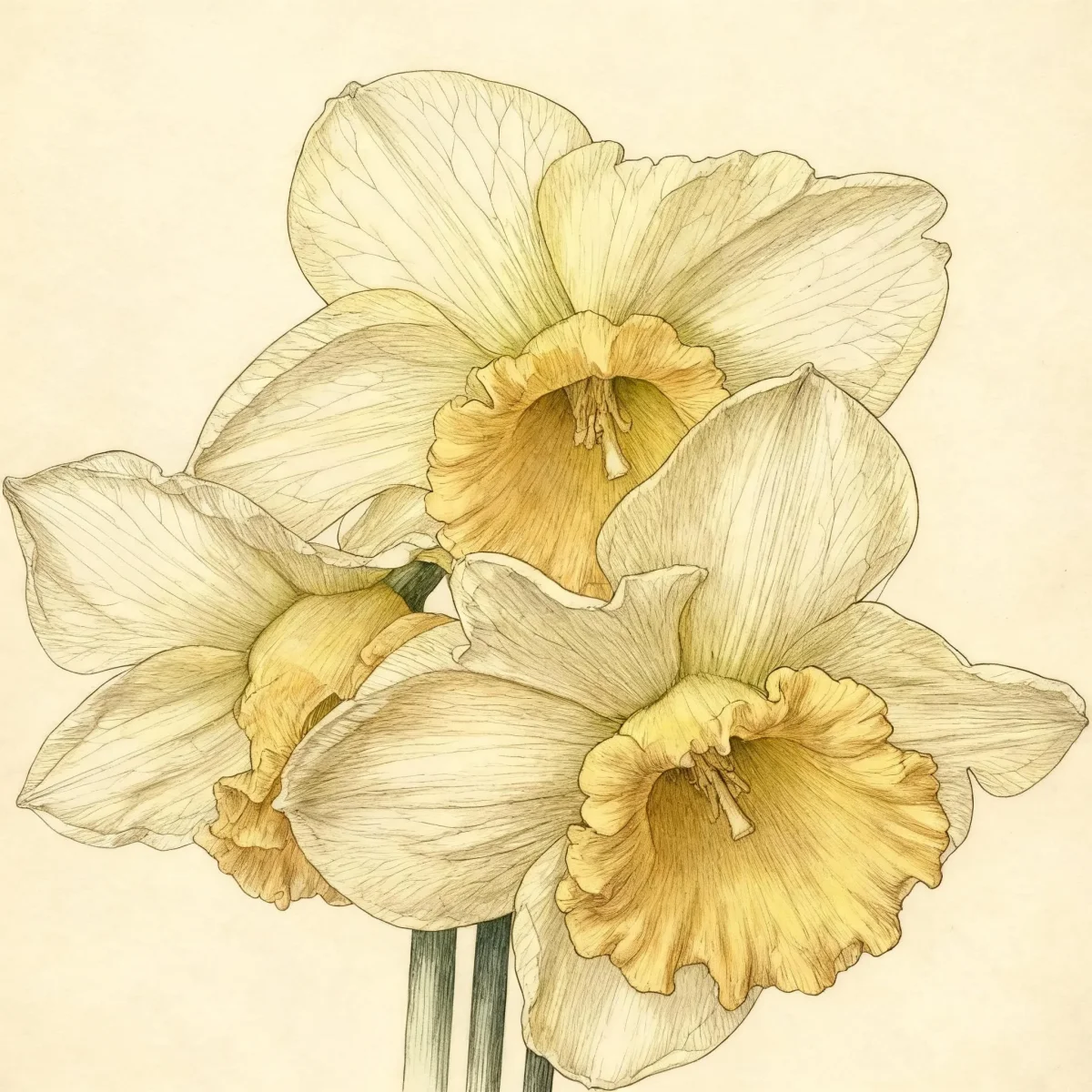
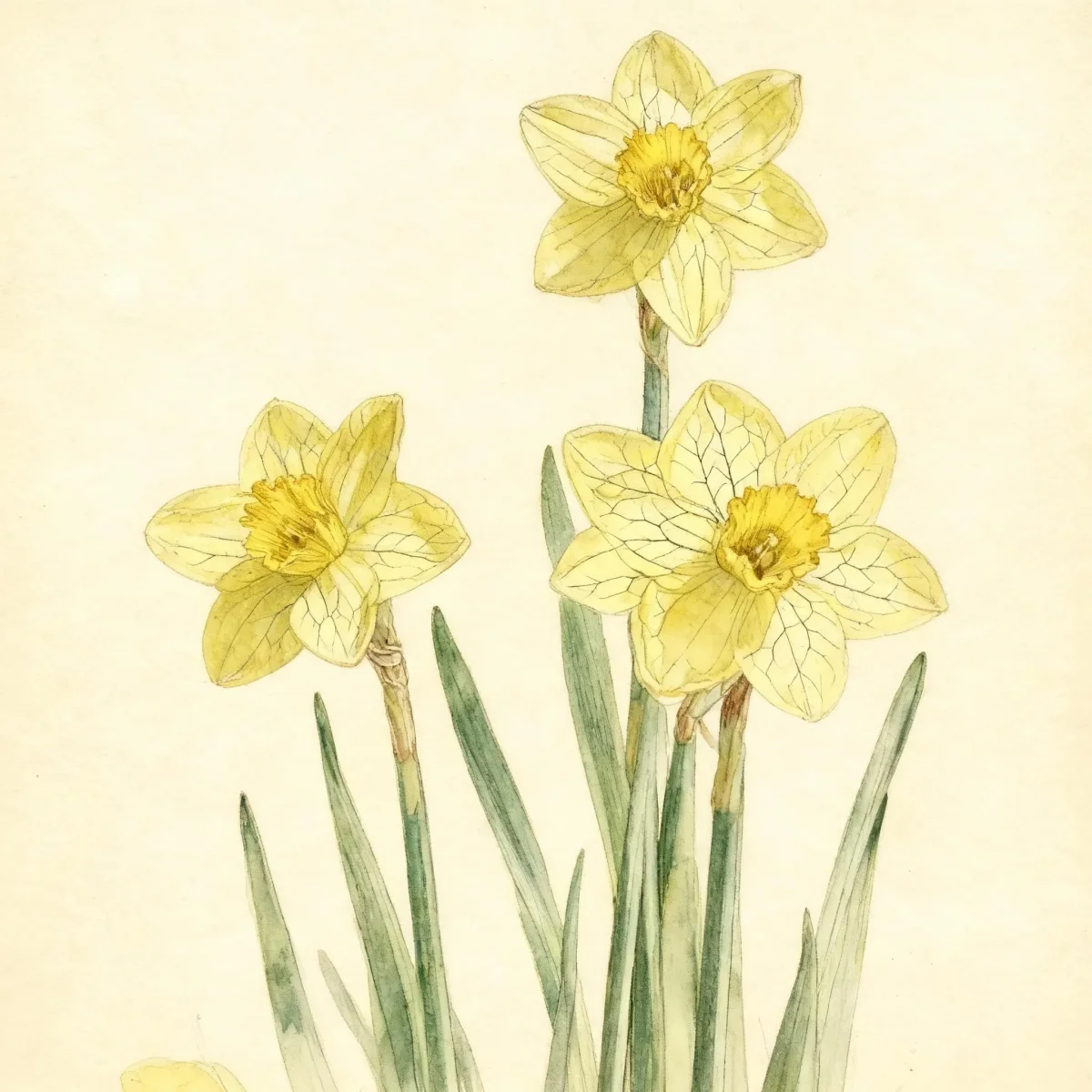
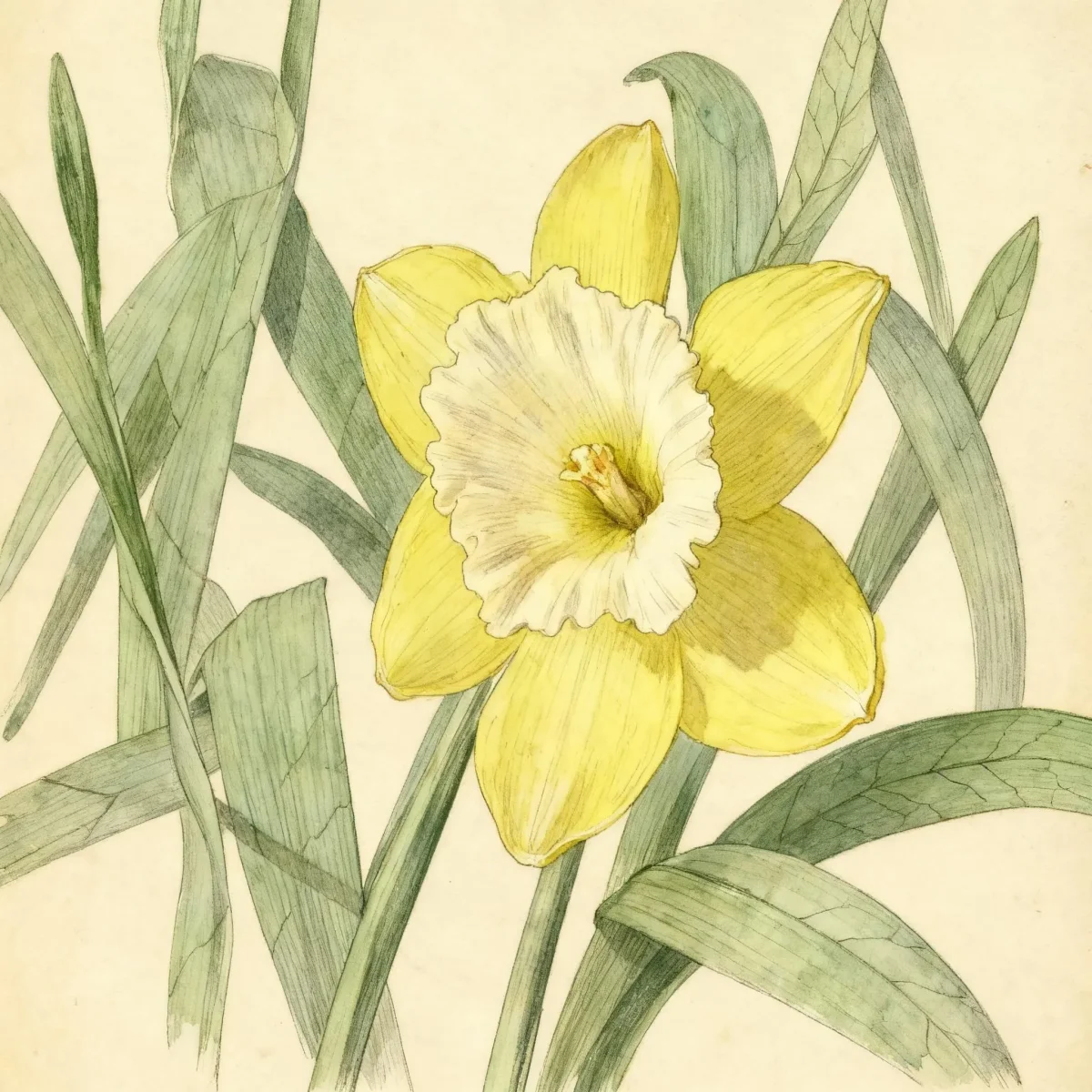
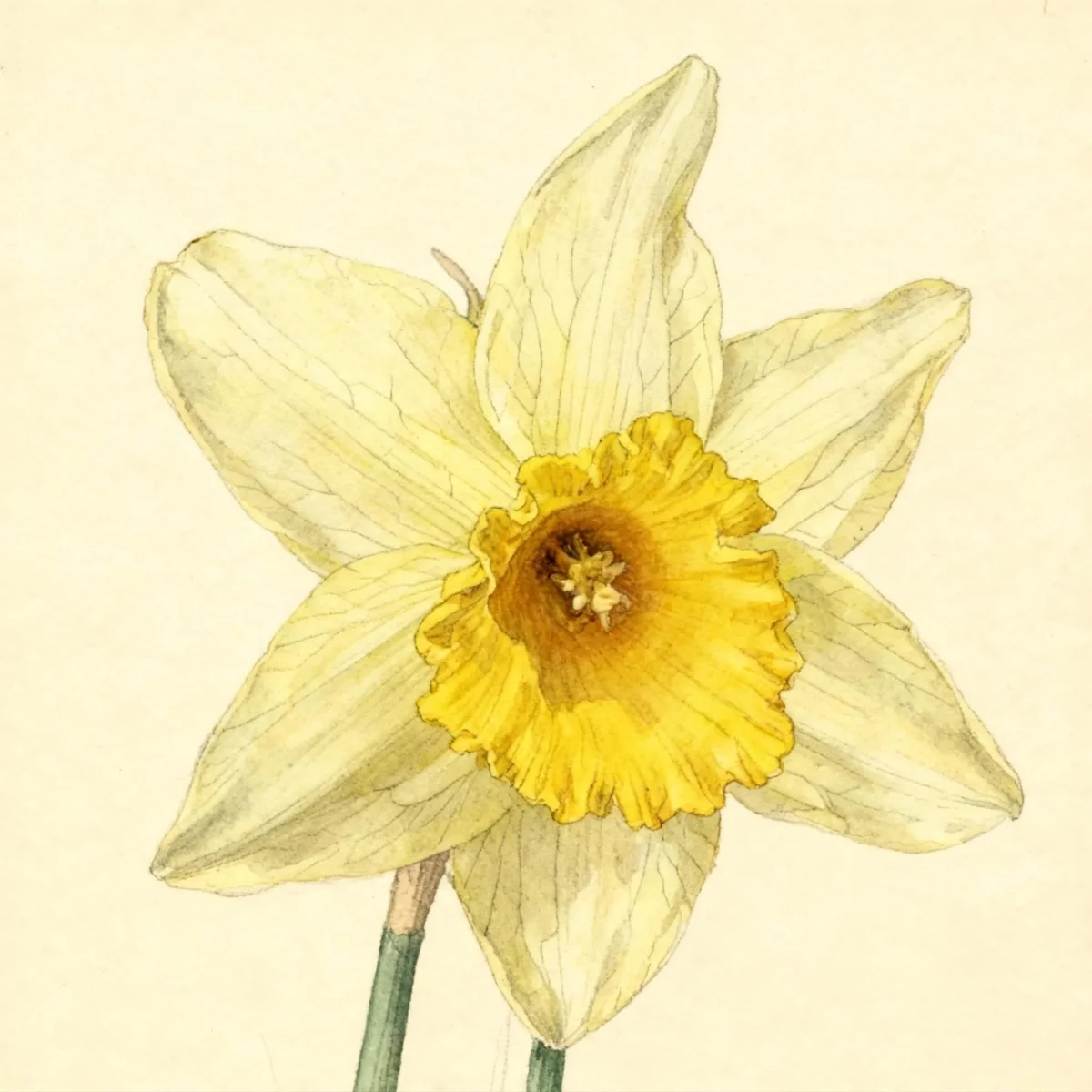
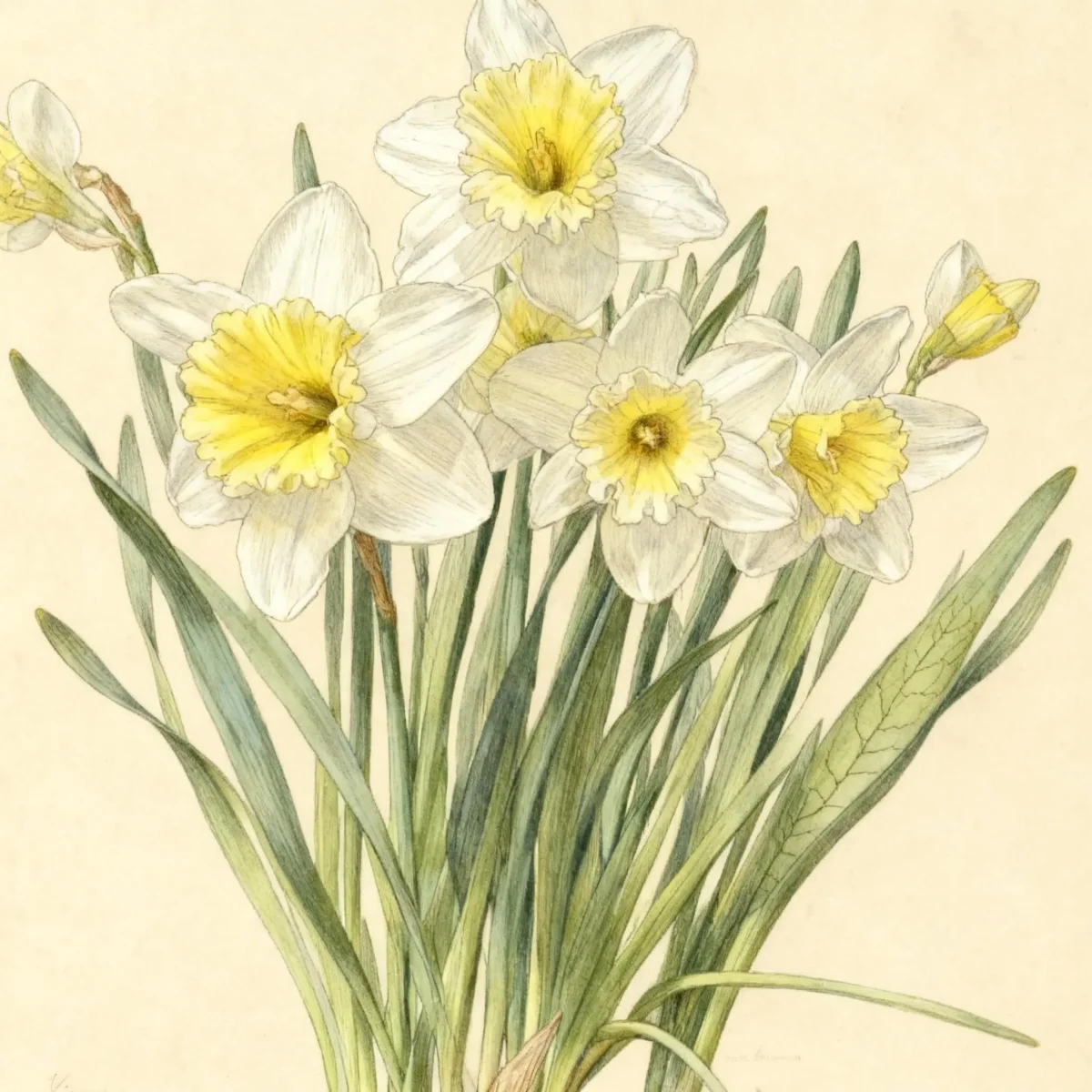
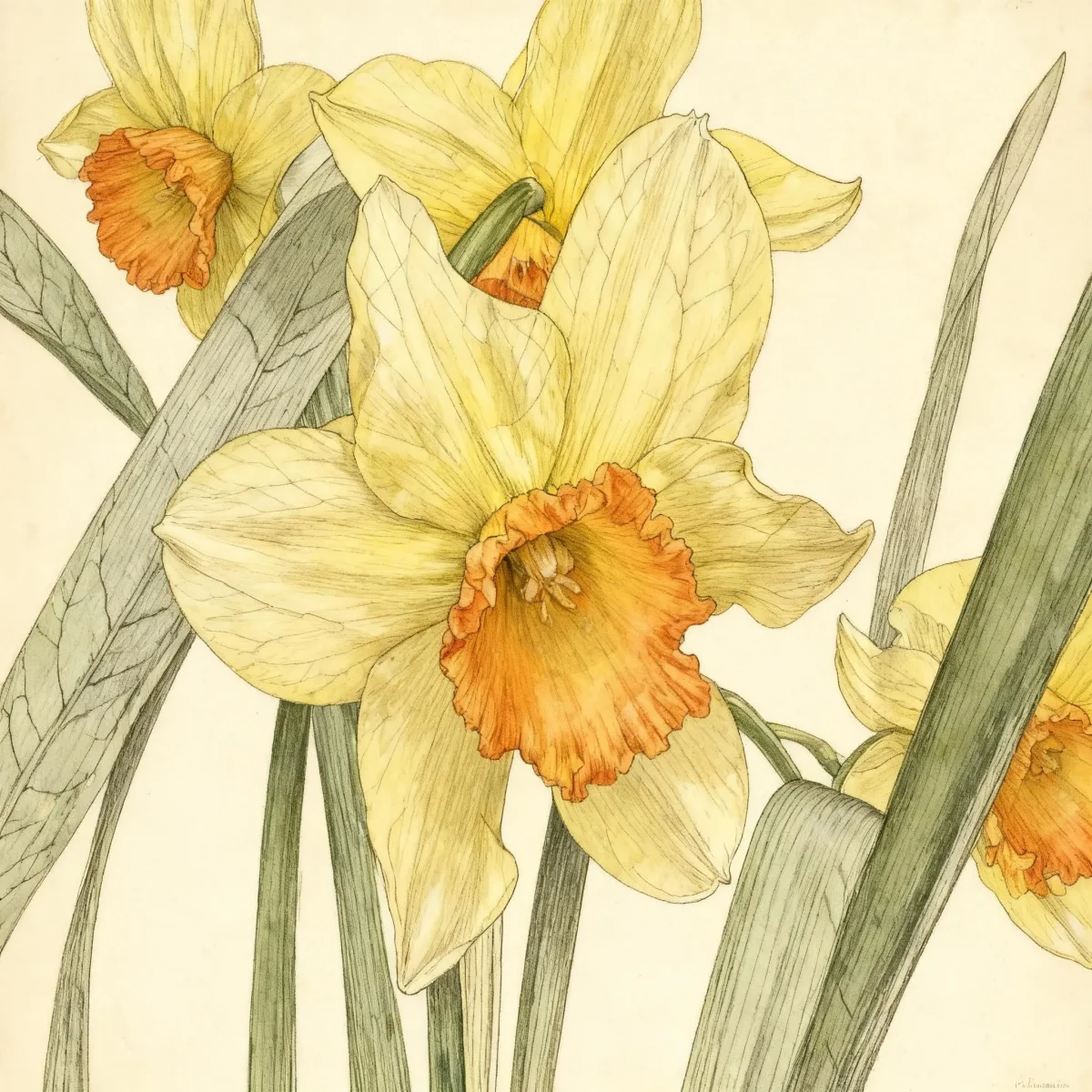
Large-cupped daffodil (Narcissus 'Ring of Fire')
Narcissus 'Ring of Fire' is a stunning Large-cupped daffodil offering white petals and a striking red-edged cup in April.
Scroll down to discover growing tips, care requirements, companion plants, and more
Complete Plant Information
Overview
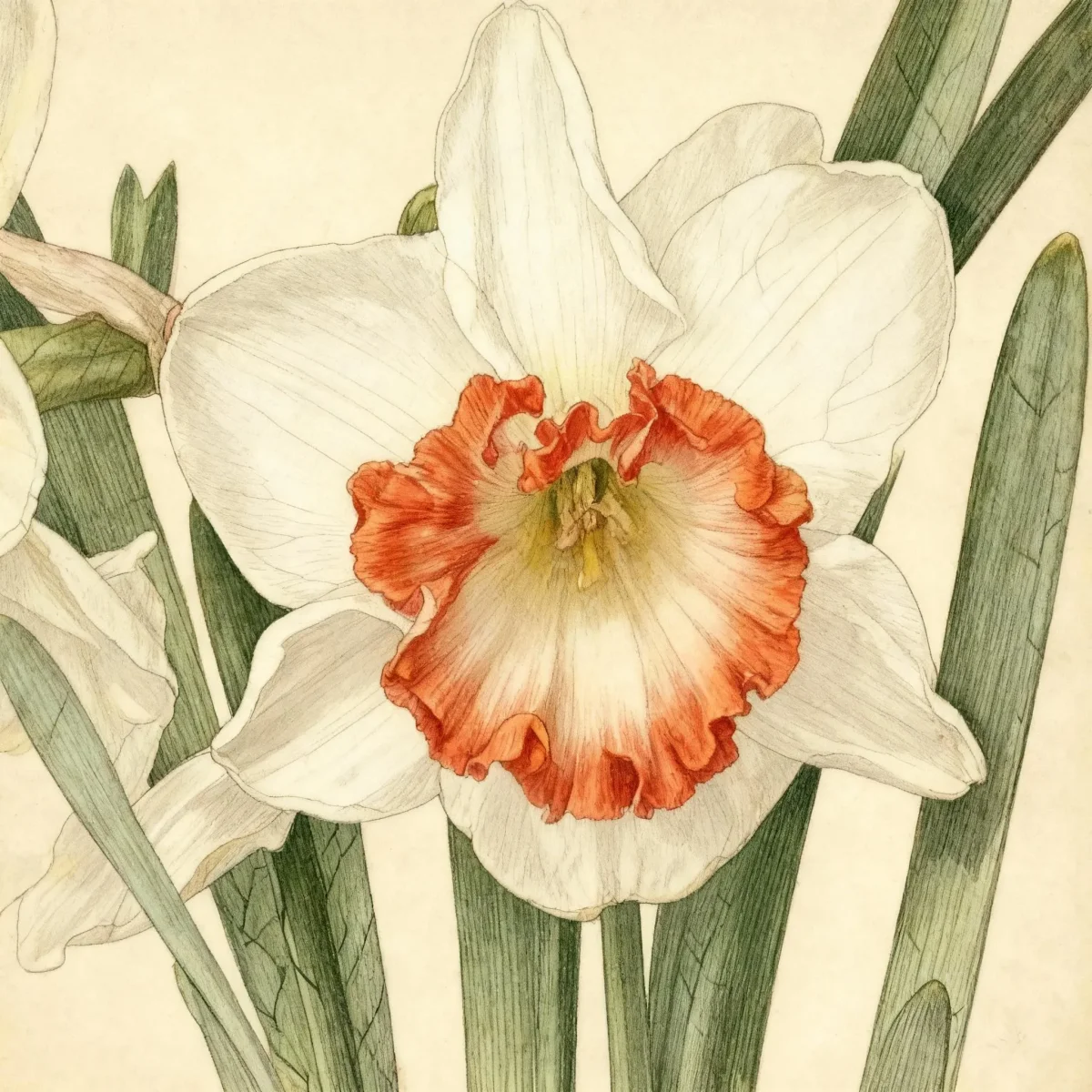
The Narcissus ‘Ring of Fire’ is a celebrated spring-blooming bulb, recognized widely as a stately Large-cupped daffodil. Its dramatic coloration—pure white petals contrasting sharply with a distinctive ivory cup rimmed in bright red—makes it a commanding focal point in the early garden landscape. Gardeners prize this cultivar for its reliable return and low maintenance requirements, offering vibrant color reliably every year.
As a classic daffodil belonging to Division II (Large-cupped), this variety produces flowers where the cup length is substantial but does not exceed the perianth segments. Plant breeders have engineered Narcissus ‘Ring of Fire’ to stand about 18 to 20 inches tall, ensuring its bicolored blooms are easily visible above awakening spring borders. It thrives in average, well-drained soils, providing exceptional ornamental value without demanding constant attention.
This perennial bulb is drought-tolerant once dormant and actively repels common garden pests like deer and rabbits. Incorporating Narcissus ‘Ring of Fire’ guarantees a spectacular, low-effort performance immediately following winter thaw, marking the transition to the growing season with undeniable brilliance.
Fast Facts
- Plant Family: Amaryllidaceae
- Plant Type: Bulb
- Hardiness Zones: USDA Zones 3-8
- Size at Maturity:
- Height: 1-1.5 ft
- Spread: 0.75-1 ft
- Bloom Time: April
- Bloom Description: White with red-edged cup
- Sun Exposure: Full sun to part shade
- Water Needs: Medium
- Maintenance Level: Low
How to Grow
Plant Narcissus ‘Ring of Fire’ bulbs in early to mid fall before the ground freezes solid. These bulbs thrive in organically rich loams that must have excellent drainage, as poor drainage leads directly to bulb rot. Plant each bulb 2 to 3 times as deep as the bulb is tall, ensuring at least 3 inches of soil covers the top; spacing should range from 4 to 10 inches apart, allowing drifts to fill in over several seasons.
Provide medium moisture throughout the spring growing season. While they tolerate drought once the foliage yellows and the plant goes dormant, consistent moisture during active growth helps maximize bulb vigor for subsequent seasons. Since this is a low-maintenance perennial, fertilization is rarely needed if the initial soil amending was thorough.
After the stunning flowers of this Large-cupped daffodil fade in spring, remove the spent flower stems to prevent seed set, but crucially, do not cut back the foliage. Leaves must remain intact until they naturally yellow—this is how the bulb gathers energy for next year’s bloom. Orient plantings so that any shade sources are behind the flowers, as they naturally face the strongest light source.
Landscape Uses
Daffodils generally outperform tulips in long-term landscape planning because they naturalize beautifully, and Narcissus ‘Ring of Fire’ is no exception. These bulbs are best massed in quantity—groupings of six or more bulbs create a far more effective display than single specimens. They work excellently in woodland gardens, naturalized meadows, or along the front edge of perennial borders where their height of up to 1.5 feet won’t obscure taller spring ephemerals.
For formal beds, plant them in sweeping drifts among early-blooming perennials or beneath deciduous shrubs where they receive full sun before the canopy fills in. They integrate seamlessly with other spring bloomers like grape hyacinths (Muscari) or early tulips, creating layered sequences of color. Because the foliage dies back relatively early, plan companions that emerge later in the season to fill the void left by the fading daffodil leaves.
Standout Features
Flower Qualities
- Showy
Noteworthy Characteristics
Narcissus is a genus of about 50 species of bulbous perennials from Europe and North Africa. Flowers generally feature a trumpet or cup (the corona) surrounded by six petals (perianth segments), in colors ranging from white to yellow to orange to pink to bicolors. ‘Ring of Fire’ is a large-cupped narcissus (Division II), meaning its corona is more than 1/3 but less than the length of the perianth segments. This specific cultivar rises tall with white petals and a frilled ivory cup uniquely rimmed in red.
Tolerances
- Rabbit
- Deer
- Drought
Potential Problems
The Large-cupped daffodil variety, Narcissus ‘Ring of Fire’, is generally exceptionally robust and reliably pest-free under correct cultural conditions. The primary threat comes from poor site selection; bulb rot is a serious risk if the soil remains waterlogged or heavy clay inhibits drainage. Prevent this by ensuring rich, well-drained soil during the fall planting time. Infrequent issues include slug and snail damage to emerging foliage, and occasionally, narcissus yellow stripe virus, for which prompt removal of infected plants is the best control measure.
Frequently Asked Questions
What hardiness zones is Narcissus ‘Ring of Fire’ suitable for?
This Large-cupped daffodil is hardy across a broad range, thriving in USDA Zones 3 through 8.
How large does Narcissus ‘Ring of Fire’ grow?
This cultivar typically reaches heights between 1 and 1.5 feet tall, with a spread of 0.75 to 1 foot once fully established.
When does Large-cupped daffodil bloom?
Narcissus ‘Ring of Fire’ blooms reliably in April, displaying its characteristic white petals and red-edged cup.
What sun exposure does Narcissus ‘Ring of Fire’ need?
For the best flowering performance from your Narcissus ‘Ring of Fire’, plant it where it receives full sun to light part shade.
Conclusion
The vivid contrast and ease of care make Narcissus ‘Ring of Fire’ an indispensable bulb for the early spring garden. This spectacular Large-cupped daffodil delivers pest resistance and reliable perennial performance, coloring the transition from winter to spring. Ensure you acquire your bulbs in the fall and plant them deeply in well-drained soil to guarantee the fiery red edge returns year after year in your garden.
Companion Planting
When planning your spring display around Narcissus ‘Ring of Fire’, look for companions whose foliage emerges later or whose bloom times slightly overlap. Early-flowering spring ephemerals like Scilla or Chionodoxa complement the daffodil’s structure nicely, providing solid blocks of blue or white beneath the taller stems. Later emerging perennials, such as Peonies or Siberian Iris, are excellent partners because their larger leaves will soon cover the unsightly yellowing foliage of the Narcissus as it senesces post-bloom.
Design Ideas
To maximize the visual impact of the stunning bicoloration of Narcissus ‘Ring of Fire’, consider using drifts of three different colors or flower types nearby—perhaps solid yellow late-blooming tulips interspersed with white snowdrops nearby. Since this variety is quite tall for a daffodil (up to 1.5 ft), reserve front-of-the-border planting for shorter varieties. Instead, use ‘Ring of Fire’ as a mid-layer planting in mixed perennial borders, or mass plant it beneath established deciduous trees where the early spring sun penetrates easily.