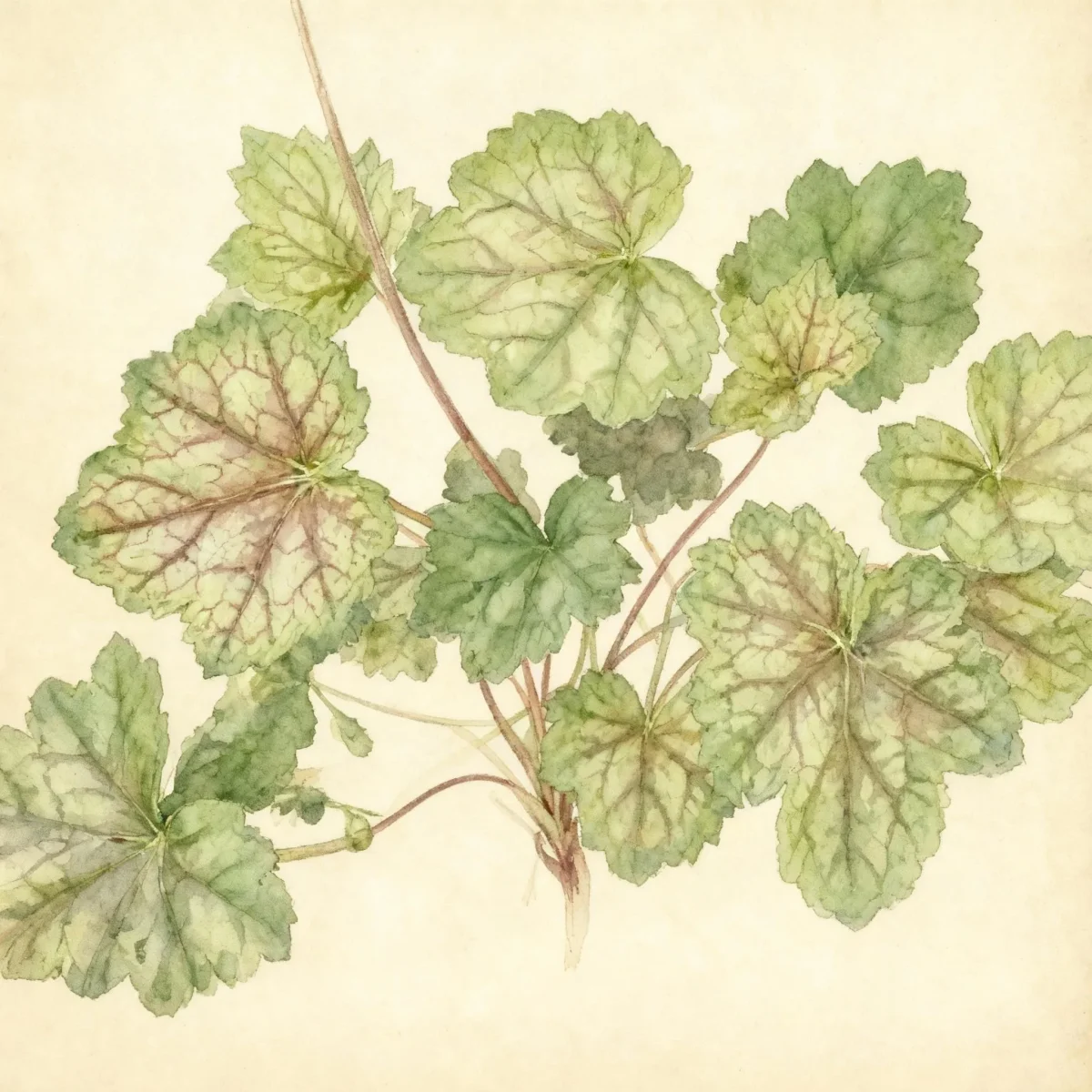
Coral bells (Heuchera micrantha var. diversifolia 'Palace Purple')
Heuchera micrantha var. diversifolia 'Palace Purple' offers deep purple foliage and airy blush blooms. A hardy Coral bells cultivar for zones 4-9.
Scroll down to discover growing tips, care requirements, companion plants, and more
Complete Plant Information
Overview
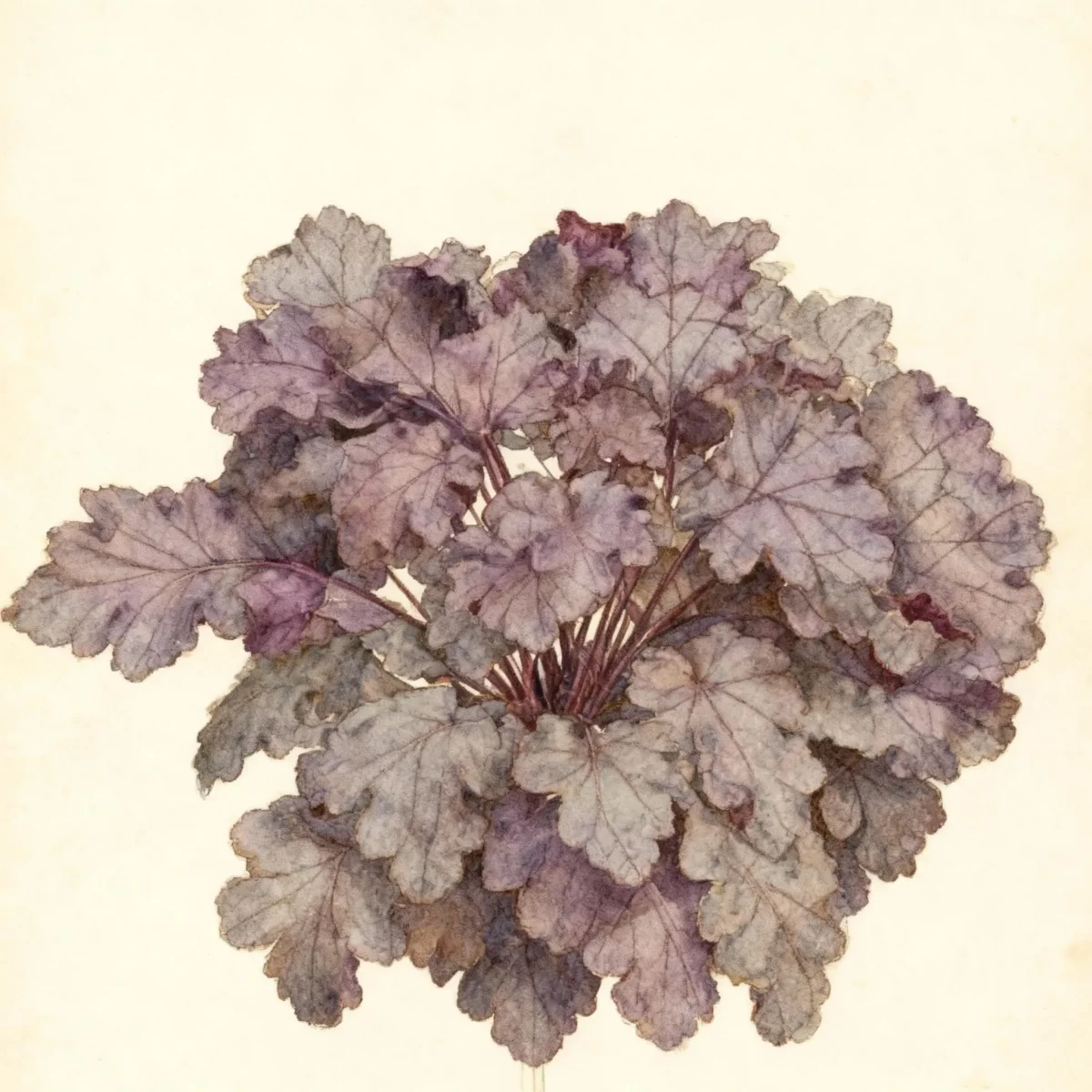
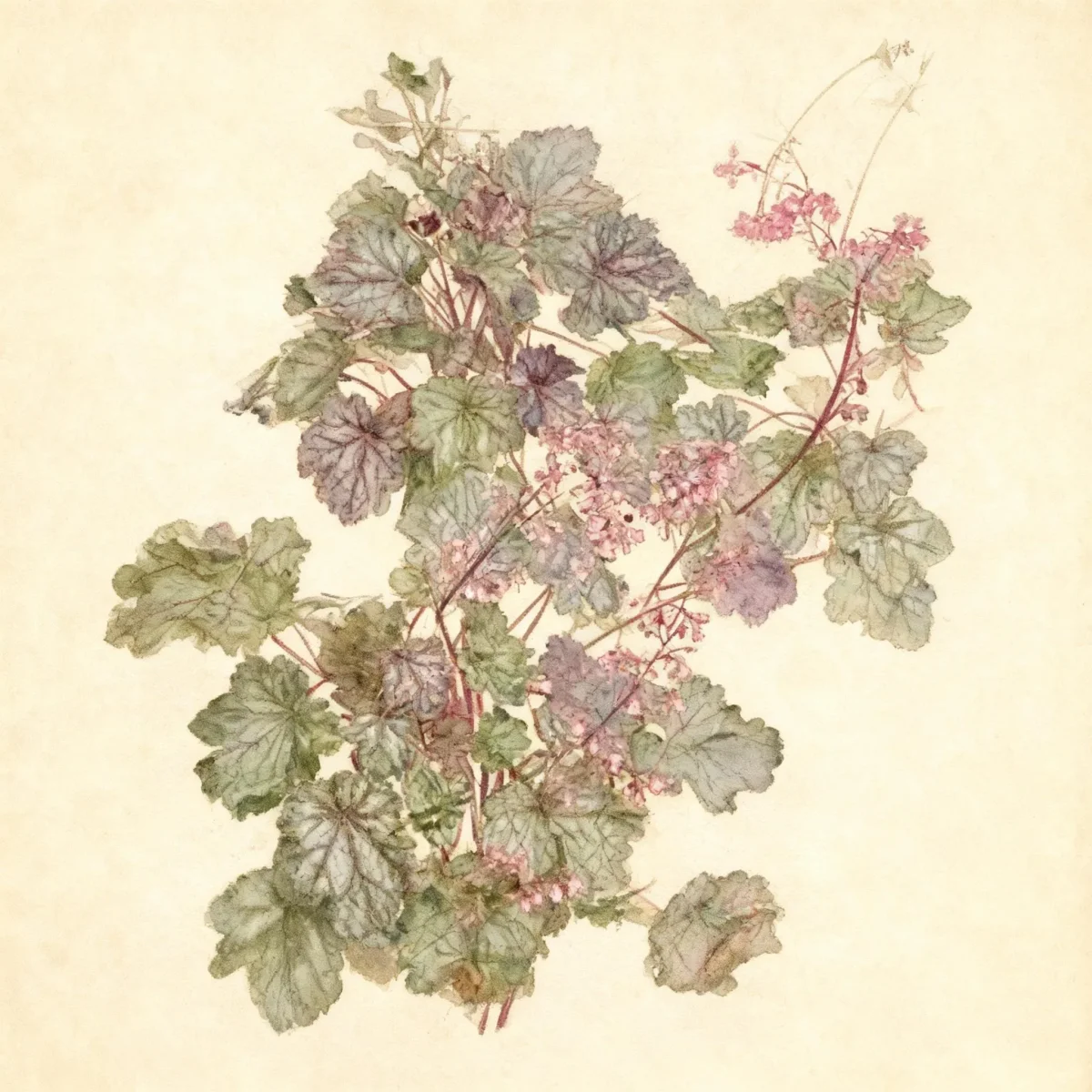
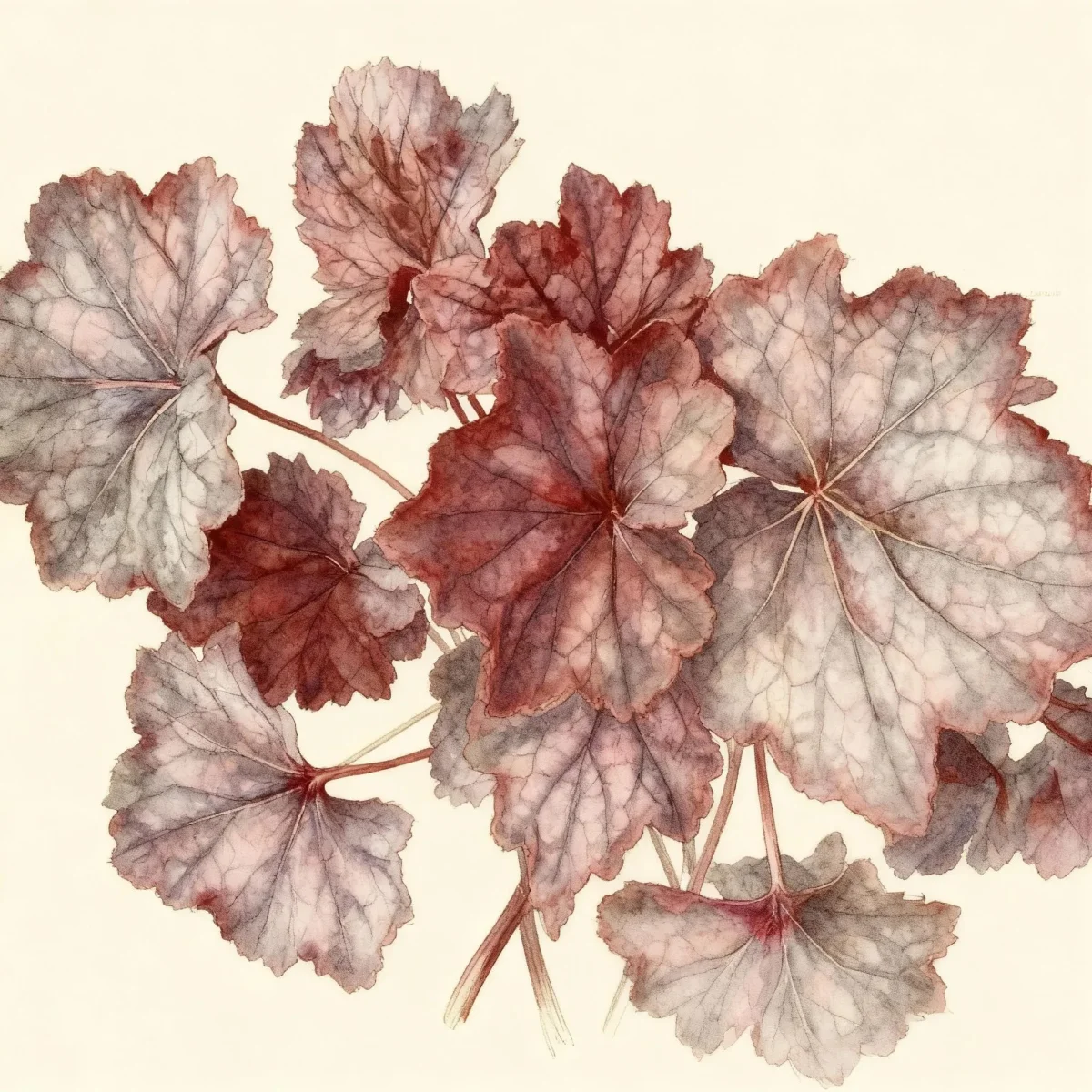
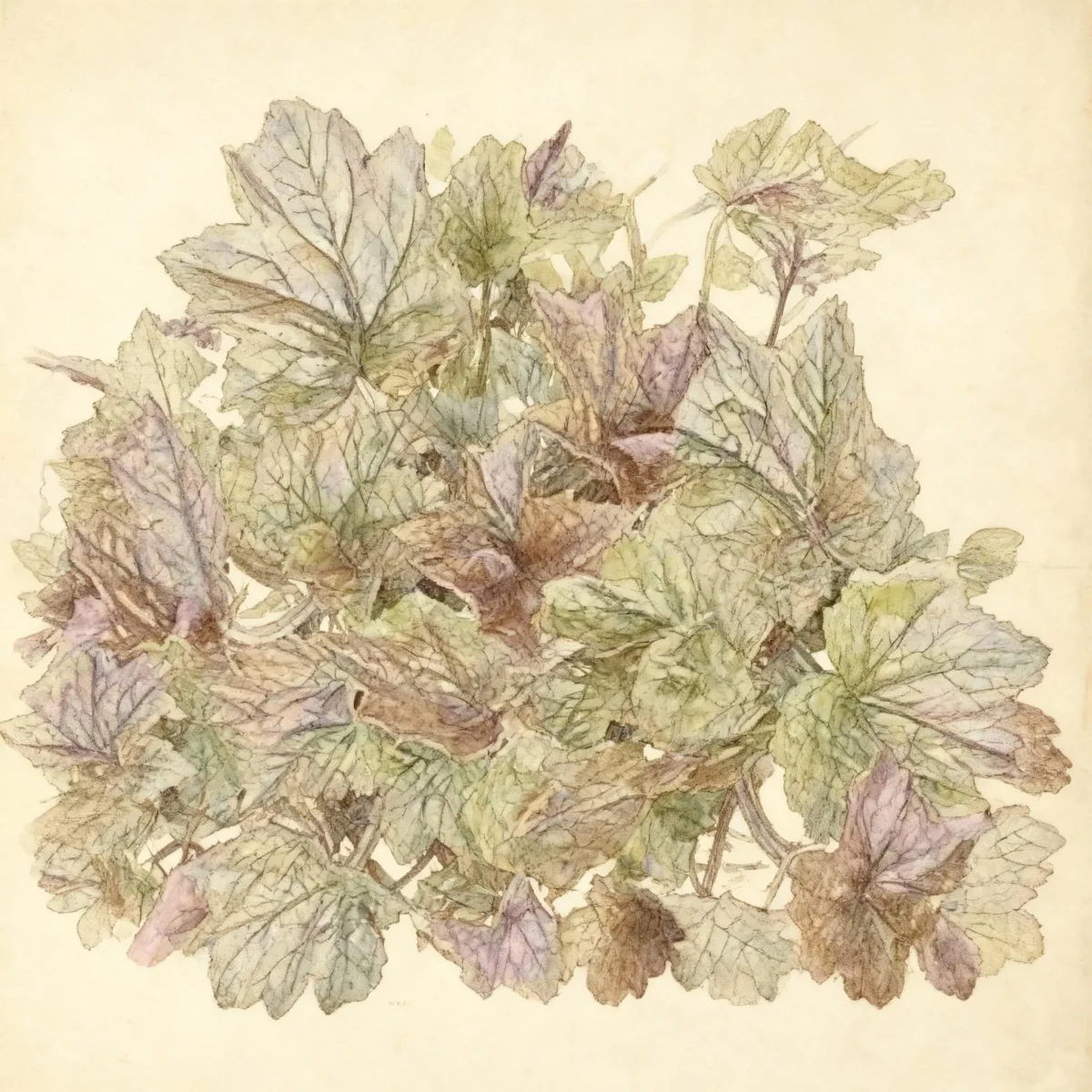
Heuchera micrantha var. diversifolia ‘Palace Purple’ is a celebrated cultivar, often known simply as Coral bells, prized for its dramatically colored foliage that provides year-round structure. This clump-forming perennial maintains a basal mound of leaves featuring deep purple coloring on the upper side and rich beet-red underneath, offering exceptional contrast in mixed plantings. While it produces delicate, airy panicles of blush white flowers in early summer, its primary garden value lies in the striking leaf display of this specific Coral bells selection.
Culturally, this variety performs best in organically rich, humusy, and well-drained soil, requiring consistent moisture, especially if sited in full sun in warmer regions. Heuchera micrantha var. Diversifolia ‘Palace Purple’ balances sun tolerance better than some darker-leaved types but appreciates afternoon shade when summer heat is intense. Gardeners rely on the dependable performance of Heuchera micrantha var. diversifolia ‘Palace Purple’ to add texture and deep color to borders and shaded areas from USDA Zone 4 through Zone 9.
Fast Facts
- Plant Family: Saxifragaceae
- Plant Type: Herbaceous perennial
- Hardiness Zones: USDA Zones 4-9
- Size at Maturity:
- Height: 1-2 ft
- Spread: 1-1.5 ft
- Bloom Time: June to July
- Bloom Description: Blush white
- Sun Exposure: Full sun to part shade
- Water Needs: Medium
- Maintenance Level: Medium
How to Grow
The ideal location for Heuchera micrantha var. diversifolia ‘Palace Purple’ features organically rich, humusy soil with excellent drainage, maintained at a medium moisture level. While it can handle full sun in the cooler northern reaches of its range (Zone 4), gardeners in hotter climates (deep South) must ensure afternoon shade prevails to prevent foliage scorch, though this variety handles sun better than many dark-leaved types. If grown in full sun, constant moisture is non-negotiable; the soil must not be allowed to dry out completely between waterings.
Maintenance is generally medium. Remove spent flower stems (panicles) after blooming to encourage potential repeat flowering, which is more likely to occur in cool summer climates. Because Coral bells are relatively shallow-rooted, they benefit from a winter mulch applied just after the ground freezes in cold regions to prevent root heaving.
To maintain vigor and shape, divide the clumps every three or four years, ideally during the spring season. This division helps combat the natural tendency of these plants to develop woody bases over time, keeping the attractive foliage mound dense and vigorous.
Landscape Uses
The deep, rich foliage of Heuchera micrantha var. diversifolia ‘Palace Purple’ makes it an indispensable tool for providing year-round color contrast. The finely lobed leaves form an attractive basal mound, perfect for softening the edges of hardscaping or lining pathways. Its stature, reaching 1-2 feet tall when flowering, makes it suitable as a reliable edging plant along borders.
For woodland or shade gardens, the foliage of Coral bells shines brilliantly under filtered light, contrasting beautifully with ferns and hostas. Massing several plants together creates an effective, low-maintenance ground cover that requires less mowing than turfgrass. The airy, wiry stems bearing tiny flowers add an important textural element above the solid leaf mounds, ensuring visual interest throughout the summer months.
Standout Features
Flower Qualities
- Showy
Noteworthy Characteristics
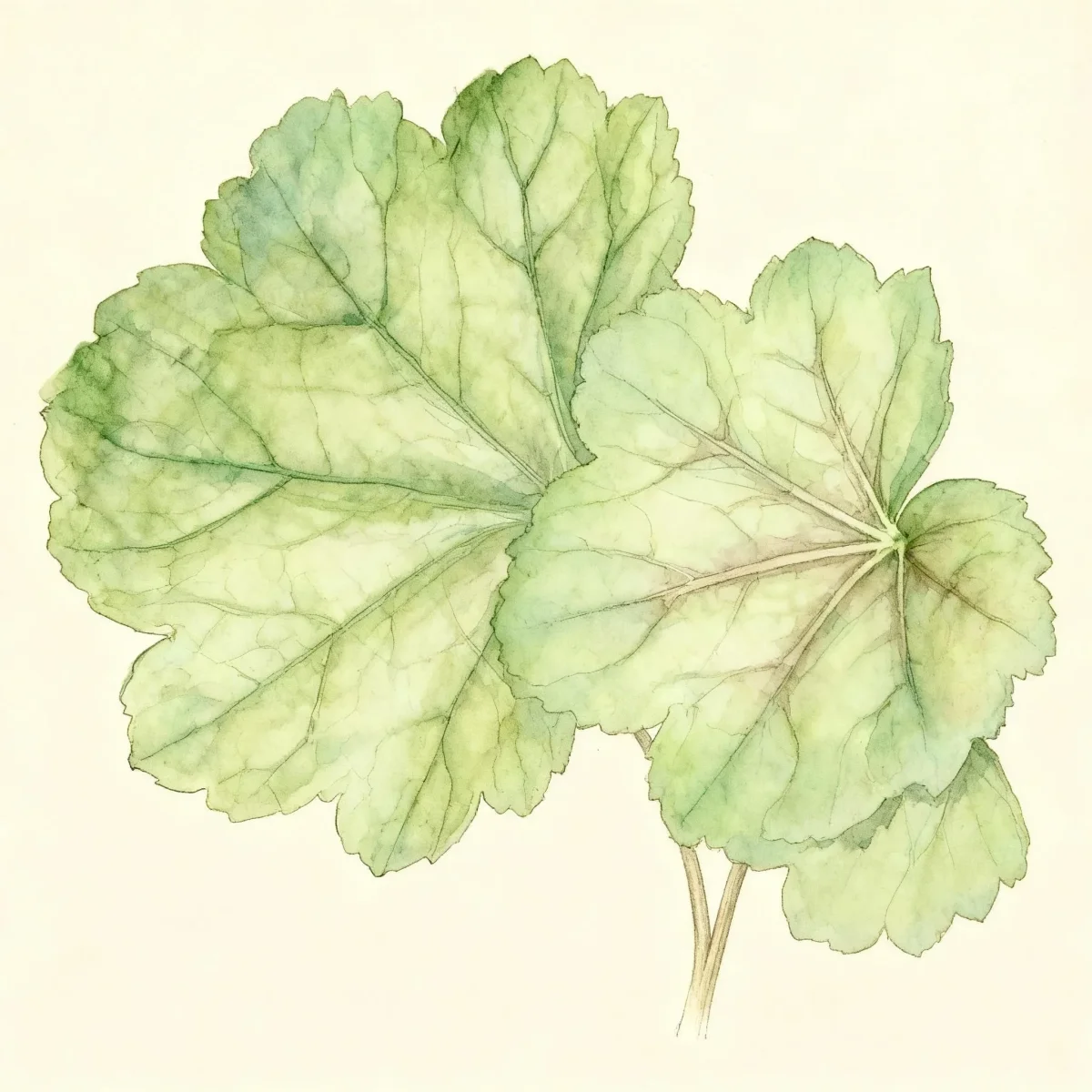
This coral bells cultivar is a clump-forming perennial which features a basal mound (typically to 12” tall) of maple- or ivy-like long-petioled leaves (3-5” wide) which are an attractive deep purple above and beet-red beneath. Foliage color may fade to a bronze-green in hot summers. Tiny, pinkish white, bell-shaped flowers in open, airy panicles are borne on slender, wiry, dark red stems extending well above the mound of leaves, typically to a height of 15-24” in late spring to early summer. 1991 Perennial Plant of the Year.
Tolerances
No specific listed tolerances are provided for this plant.
Potential Problems
Gardeners will find that Heuchera micrantha var. diversifolia ‘Palace Purple’ generally experiences no serious insect or disease problems under proper cultivation. Good air circulation and well-drained soil are the best preventatives against potential fungal issues, although widespread pest infestations are rare for this cultivar. Monitoring for slug or snail activity, particularly when the foliage is young, is wise, although serious damage is uncommon.
Frequently Asked Questions
What hardiness zones is Coral bells suitable for?
Heuchera micrantha var. diversifolia ‘Palace Purple’ is reliably hardy across USDA Zones 4 through 9, making it adaptable to a wide range of climates across North America.
How large does Coral bells grow?
This perennial typically forms a basal mound that is about 12 inches tall, with flower scapes extending up to 24 inches high. The spread generally ranges from 1 to 1.5 feet wide.
What sun exposure does Coral bells need?
This plant thrives in full sun to part shade. For the best foliage color and performance, provide full sun in cooler northern locations, but ensure it receives afternoon shade where summers are intense.
When does Coral bells bloom?
The Coral bells blooms from June to July, featuring small, airy panicles of blush white flowers held high above the purple foliage mound.
Conclusion
The deep, unique purple foliage of Heuchera micrantha var. diversifolia ‘Palace Purple’ offers unparalleled contrast in the perennial landscape, solidifying its status as a garden staple. This cultivar, known widely as Coral bells, provides texture and color that lasts far beyond the blooming season. Before planting, confirm your local USDA zone compatibility (4-9) and prepare rich, well-draining soil to ensure decades of magnificent performance.
Design Ideas: Utilizing Purple Foliage
The dark coloring of Heuchera micrantha var. diversifolia ‘Palace Purple’ serves as a superb foil for lighter-colored plants, creating dramatic visual pop. Pair it with silver-leaved plants like Lamb’s Ears (Stachys byzantina) or bright green foliage such as Hosta ‘Sum and Substance’ to maximize contrast. In spring, cluster them near early-blooming bulbs like white tulips or pale yellow daffodils, allowing the rich leaves to anchor the emerging spring color palette.
Consider using Coral bells beneath taller, airy shrubs like Japanese maples or dogwoods. The semi-shade offered by these high canopy plants protects the purple leaves from scorching while allowing enough light for the best color saturation. This technique integrates the ground layer seamlessly with the mid-story structure of the garden design.
Propagation and Division for Coral Bells
Since Heuchera micrantha var. diversifolia ‘Palace Purple’ is a clump-forming perennial, the most effective way to propagate or rejuvenate the plant is through division. This process is best undertaken in the spring as new growth begins to emerge. Inspect established clumps; if they look overly thick, woody at the base, or if flowering has become sparse, division is necessary every 3 to 4 years.
Carefully lift the entire clump using a spade or garden fork. Gently tease the root ball apart into several smaller sections, ensuring each division has a healthy portion of roots and at least two or three emerging shoots. Replant these divisions immediately at the same depth they were previously growing, watering thoroughly to encourage reestablishment and prevent stress throughout the growing season.