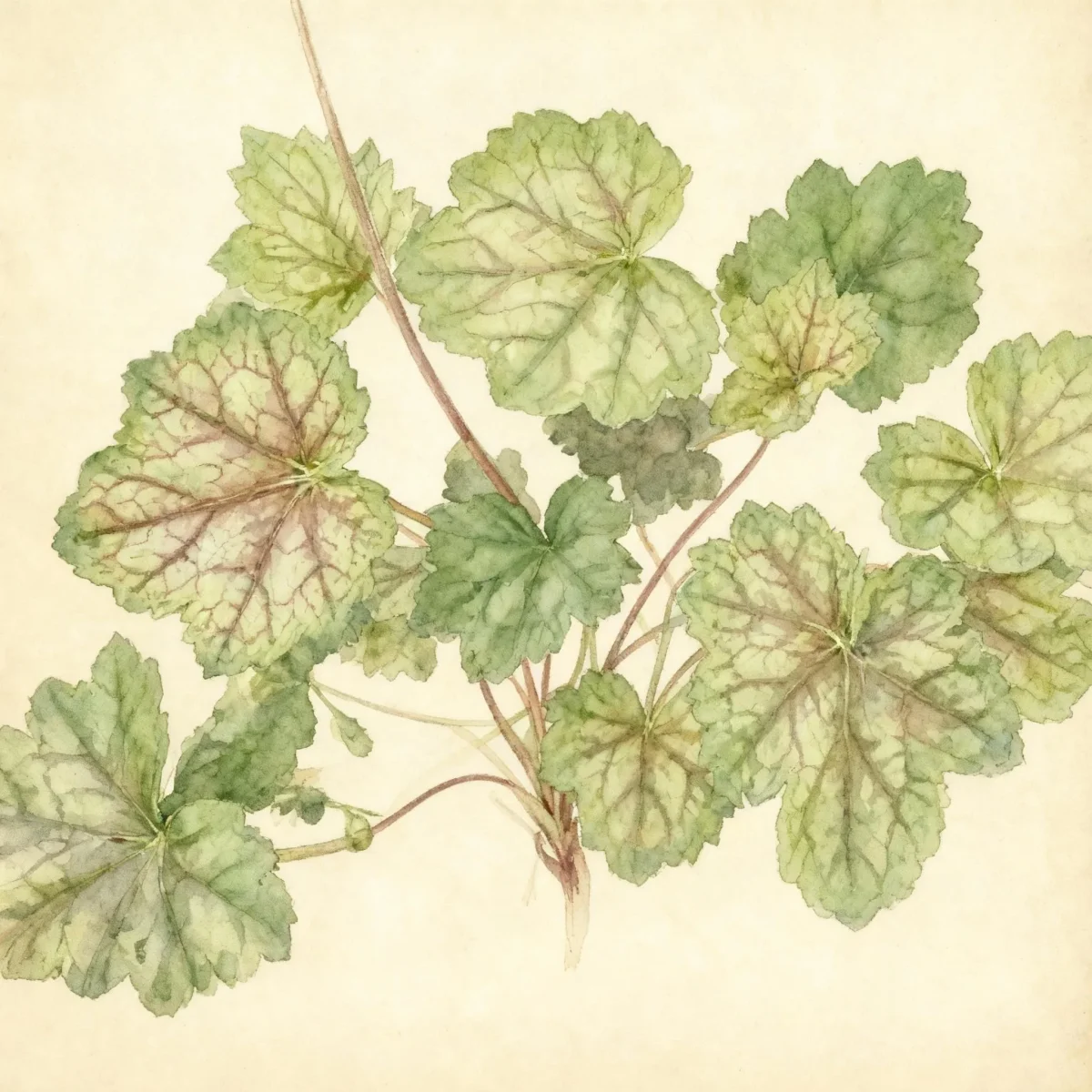
Coral bells (Heuchera americana (Dale's Strain))
Heuchera americana (Dale's Strain) coral bells provides striking chartreuse/silvery foliage and airy pink blooms suitable for zones 4-9.
Scroll down to discover growing tips, care requirements, companion plants, and more
Complete Plant Information
Overview
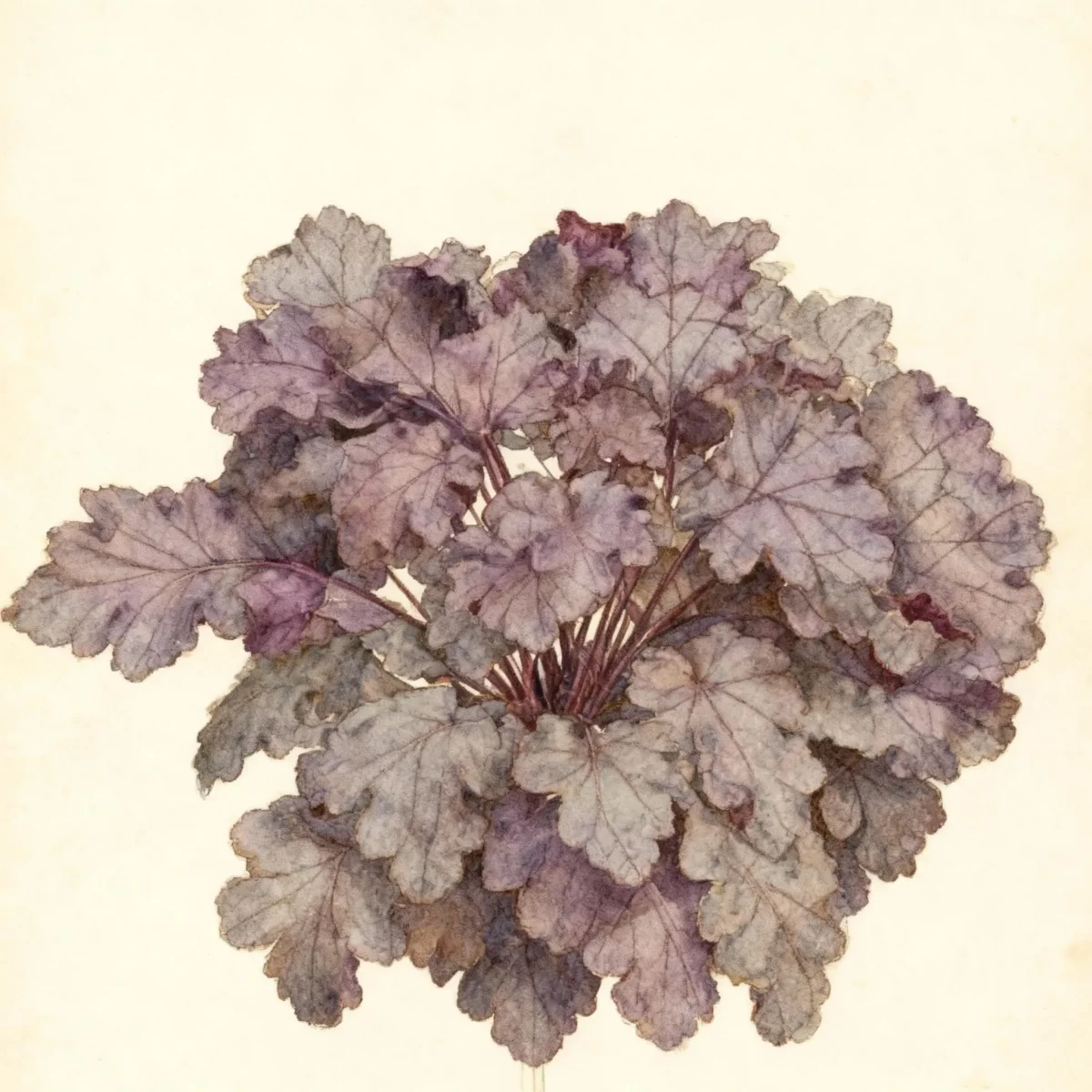
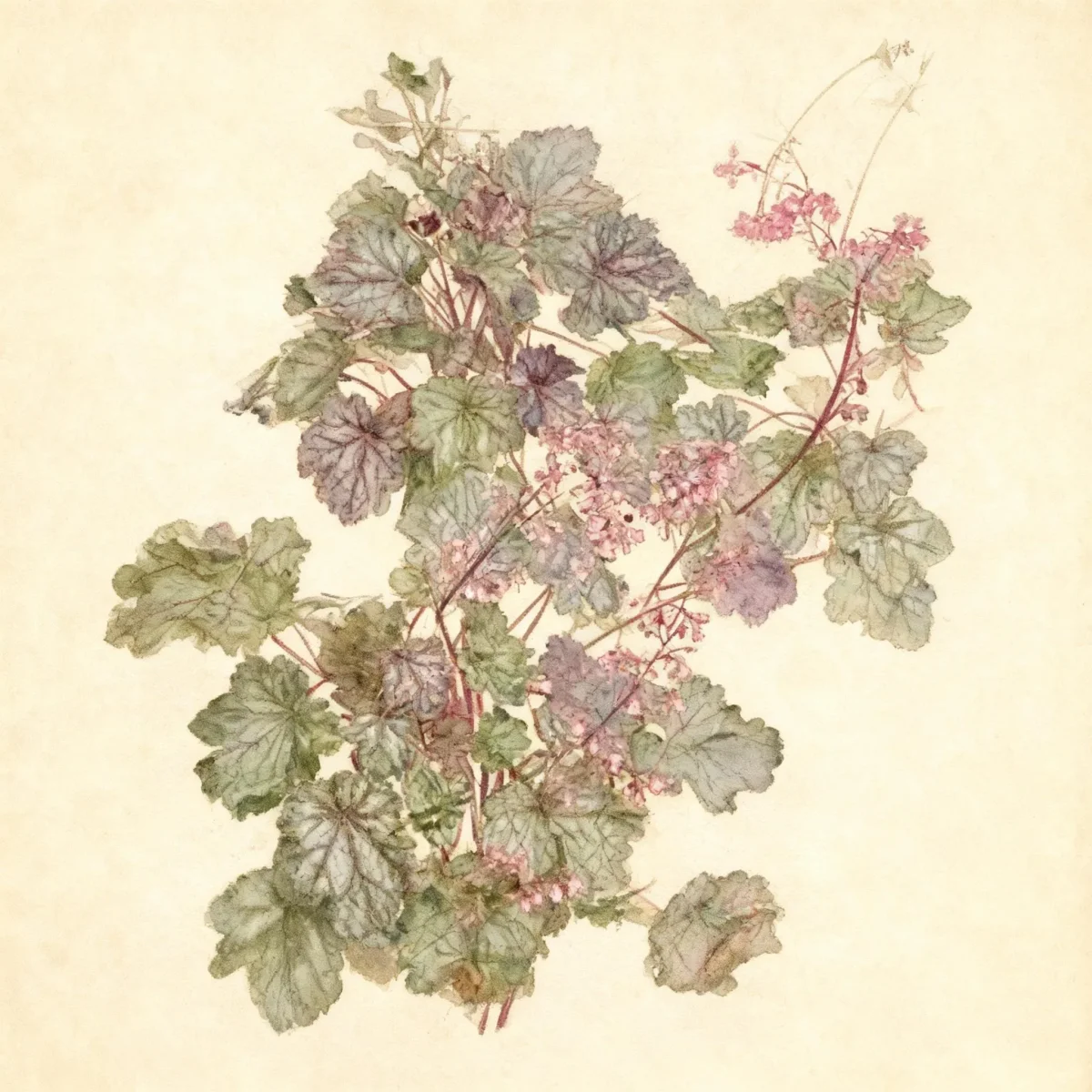
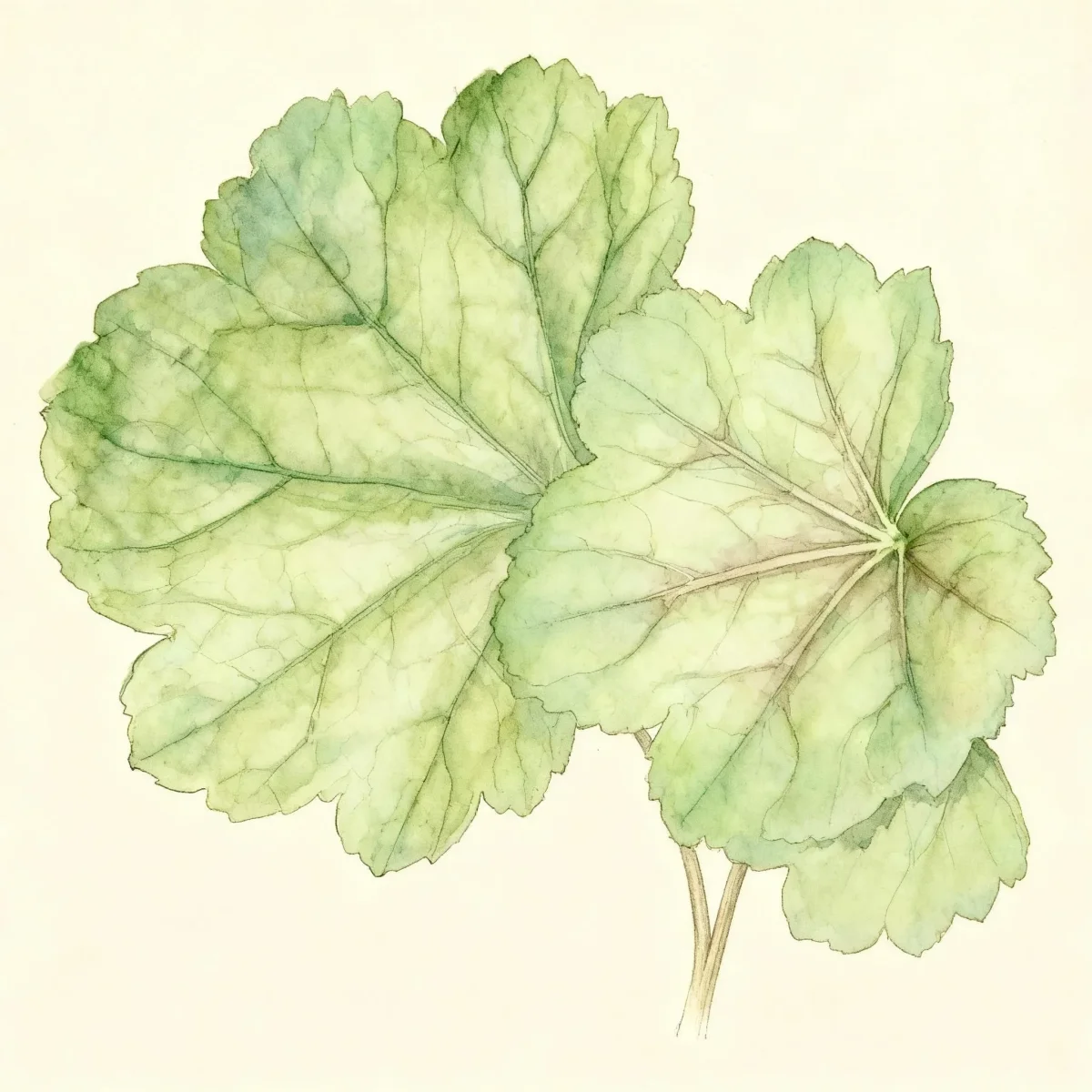
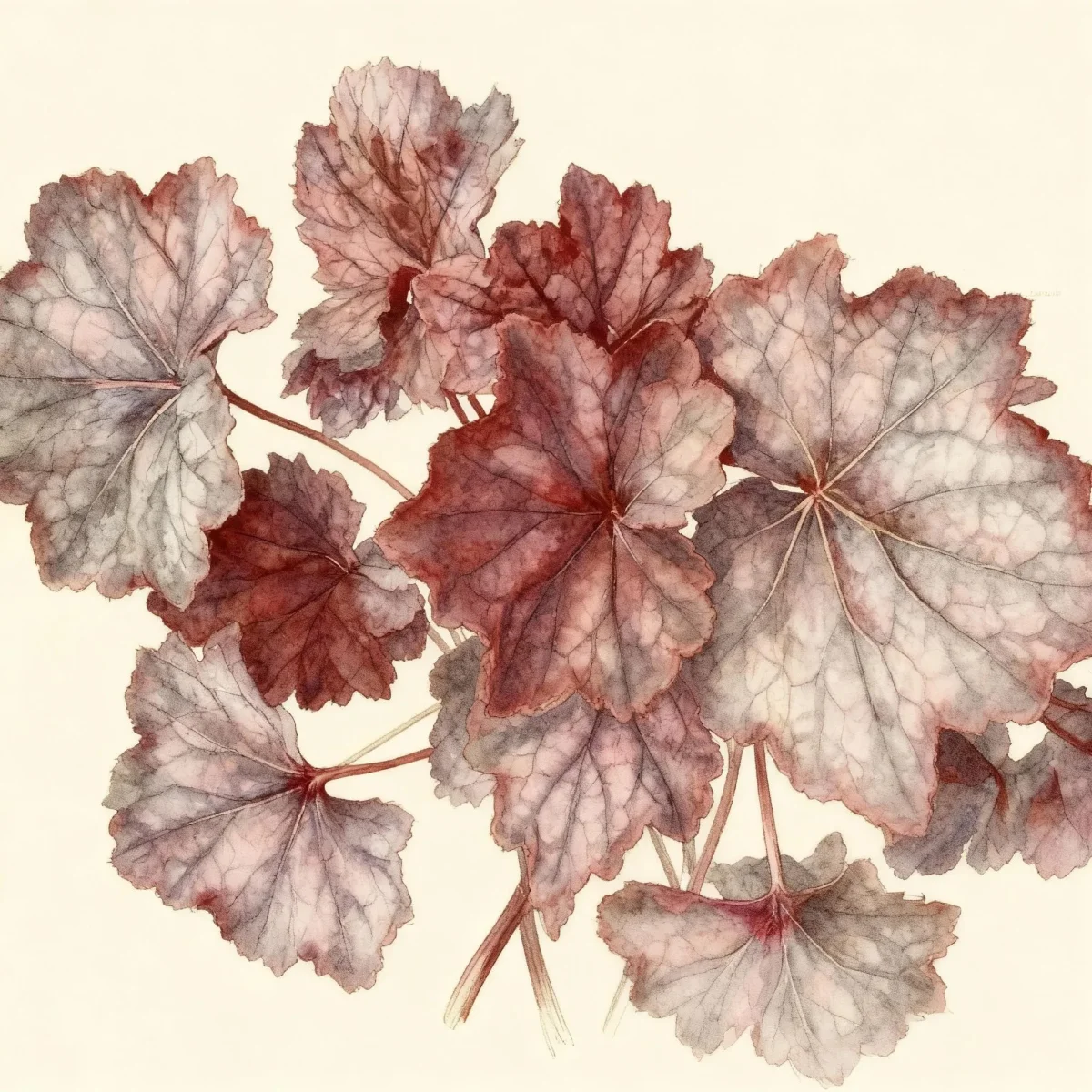
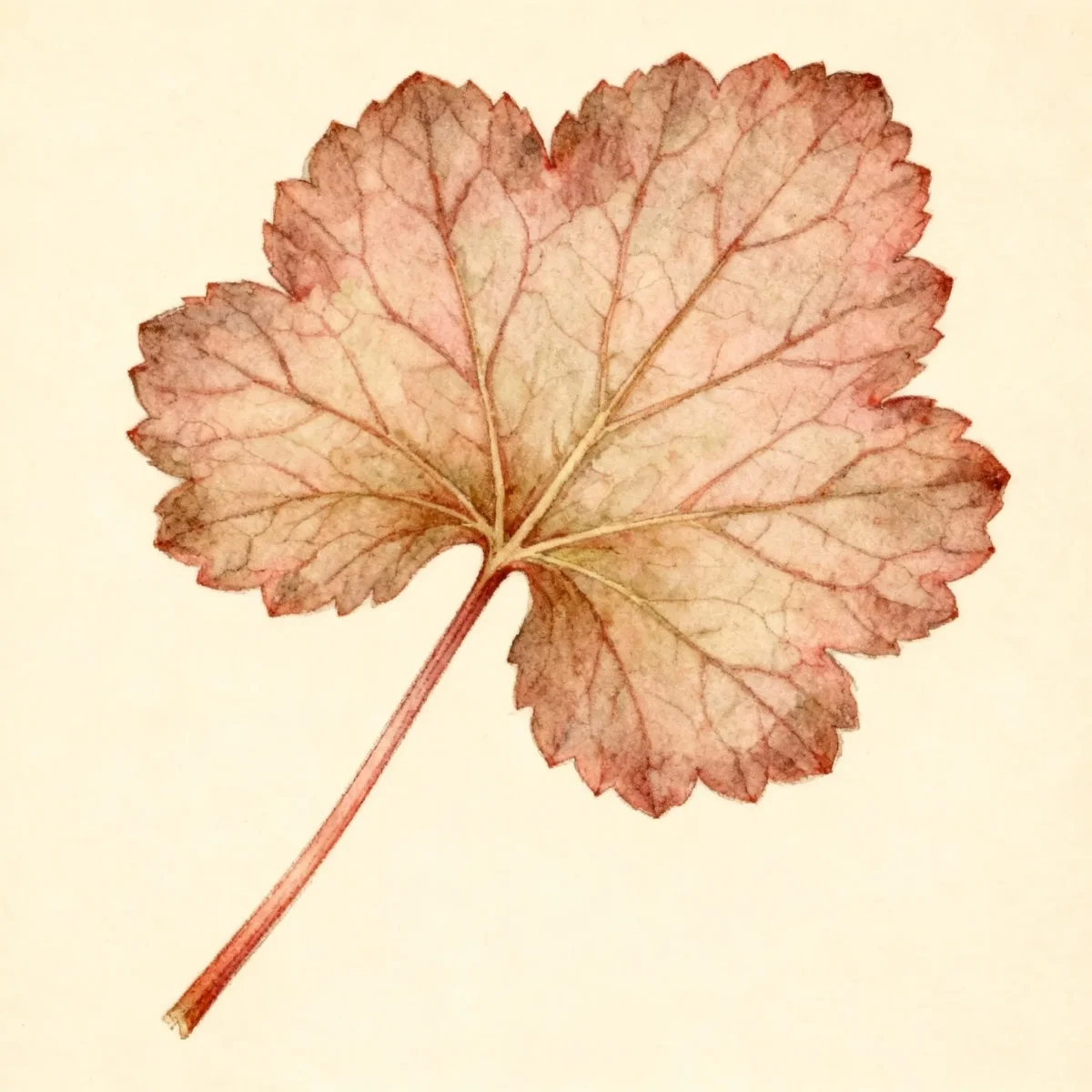
The Heuchera americana (Dale’s Strain), widely known as coral bells or alumroot, is a prized herbaceous perennial offering year-round interest through its unique foliage. This cultivar stands out as its leaves emerge chartreuse with olive-green markings before maturing into a sophisticated silvery-green backdrop laced with spruce-green veins. It forms a dense, clump-forming mound perfect for adding lasting texture to shaded or partially sunny garden spaces.
This American native thrives across a wide hardiness range, making it a versatile choice for many landscapes. While it produces tiny, airy panicles of pink, bell-shaped flowers in late spring to early summer, the primary draw remains the visually dynamic foliage mound. Heuchera americana (Dale’s Strain) offers exceptional performance as ground cover or edging material.
Caring for coral bells is straightforward, requiring rich, well-drained soil that maintains consistent medium moisture. Successful cultivation involves balancing sunlight—full sun is tolerated well in cooler summers, but afternoon shade is critical where heat and humidity dominate. This reliable perennial provides beautiful contrast and structure throughout the growing season.
Fast Facts
- Plant Family: Saxifragaceae
- Plant Type: Herbaceous perennial
- Hardiness Zones: USDA Zones 4-9
- Size at Maturity:
- Height: 1-2 ft
- Spread: 1-1.5 ft
- Bloom Time: May to June
- Bloom Description: Pink
- Sun Exposure: Full sun to part shade
- Water Needs: Medium
- Maintenance Level: Medium
How to Grow
For optimal establishment, plant Heuchera americana (Dale’s Strain) in spring or fall. The ideal location receives full sun in cooler northern climates but benefits from protection from strong afternoon sun in regions with hot summers. Success hinges on providing organically rich, humusy soil that provides excellent drainage.
Keep soil consistently moist, particularly when the plant is in full sun, as consistent moisture is crucial for maintaining foliage quality. While coral bells can tolerate short periods of drought, allowing them to dry out repeatedly will cause the foliage appearance to depreciate. Deadhead spent flower stems to encourage any potential rebloom, though the flowers are secondary to the leaf display.
In zones experiencing harsh winters, apply a winter mulch once the ground has frozen solid to minimize the risk of root heaving from freeze-thaw cycles. To refresh and invigorate older plants, plan to divide the clumps of Heuchera americana (Dale’s Strain) every three to four years during the spring season.
Landscape Uses
The architectural mound of silvery foliage makes Heuchera americana (Dale’s Strain) invaluable for adding contrast. Its texture and color work exceptionally well when massed together to form a dense, attractive ground cover beneath trees or across slopes. This plant excels as a thoughtful edging element along pathways or borders.
Consider using coral bells within native plant gardens or open woodland settings where its natural habitat preferences are reflected. The airy flower panicles provide lovely, light vertical accents above the low foliage mounds. Plant this variety near plants that appreciate similar partial shade and moisture conditions, such as ferns or hostas, to create layered interest.
Standout Features
Flower Qualities
- Showy
- Good Cut
Noteworthy Characteristics
Heuchera americana, commonly called coral bells or alumroot, is a clump-forming perennial native to much of eastern and central North America. Dale’s Strain notably features leaves that emerge chartreuse with olive-green markings before maturing to silvery-green with spruce-green veins, contrasting beautifully with the native green forms. Tiny, pink, bell-shaped flowers are borne on slender stems extending above the foliage mound in late spring to early summer, adding an airy element.
Tolerances
- Drought
Potential Problems
This cultivar generally exhibits remarkable resilience against common pests and diseases. The most significant cultural vulnerability involves environmental stress, specifically frost heaving. This occurs when fluctuating winter temperatures cause the soil to repeatedly freeze and thaw, potentially pushing the roots upward and damaging the crown.
To prevent frost heaving, ensure you apply a protective layer of mulch around the base of the Heuchera americana (Dale’s Strain) only after the ground has completely frozen in late autumn. Proper planting adherence—ensuring the crown is level with the soil line—also mitigates this risk.
Frequently Asked Questions
What hardiness zones is Coral bells suitable for?
Heuchera americana (Dale’s Strain) is successfully grown in USDA Hardiness Zones 4 through 9.
How large does Coral bells grow?
This perennial typically reaches a mature height of 1 to 2 feet and spreads between 1 and 1.5 feet wide.
What sun exposure does Heuchera americana (Dale’s Strain) need?
It performs best in mixed light conditions, thriving in full sun to part shade, though protection from harsh afternoon sun is recommended in hotter regions.
When does Coral bells bloom?
This variety displays its pink, bell-shaped flowers typically from May into June.
Conclusion
The distinctive, silvery-green foliage combined with its easy-care nature makes Heuchera americana (Dale’s Strain) an excellent investment for textural interest in any garden design. Ensure you site your coral bells where they receive rich, well-drained soil and appropriate moisture levels for the best display. Check your local USDA zone compatibility before planning your spring planting.
Companion Planting
Choosing appropriate neighbors is key to maximizing the appeal of Heuchera americana (Dale’s Strain). Since it requires well-drained soil and appreciates dappled light, classic woodland companions work well. Pair this perennial with Hosta varieties that offer contrasting large, blue, or variegated leaves.
Shade-loving ground covers like wild ginger (Asarum) or low-growing sedges (Carex) also pair naturally, creating a rich tapestry of textures near your silvery coral bells. Avoid planting near moisture-loving bog plants, as the drought tolerance of this Heuchera suggests it prefers drying out slightly between waterings.
Propagation Tips
The primary and easiest method for increasing your stock of Heuchera americana (Dale’s Strain) is through division. This process is best conducted in the spring as new growth begins to emerge. Gently lift the entire clump using a garden fork to minimize root disturbance.
Once lifted, use a sharp, clean spade or knife to carefully divide the clump into sections, ensuring each new division contains a healthy set of roots and several active growing points. Replant these new divisions immediately into prepared soil at the same depth they were previously growing.
If you wish to save seeds from the spent blooms, collect the small seed capsules once completely dry in mid-to-late summer. For the best chance of producing plants true to the ‘Dale’s Strain’ characteristics, division remains the most reliable propagation strategy.