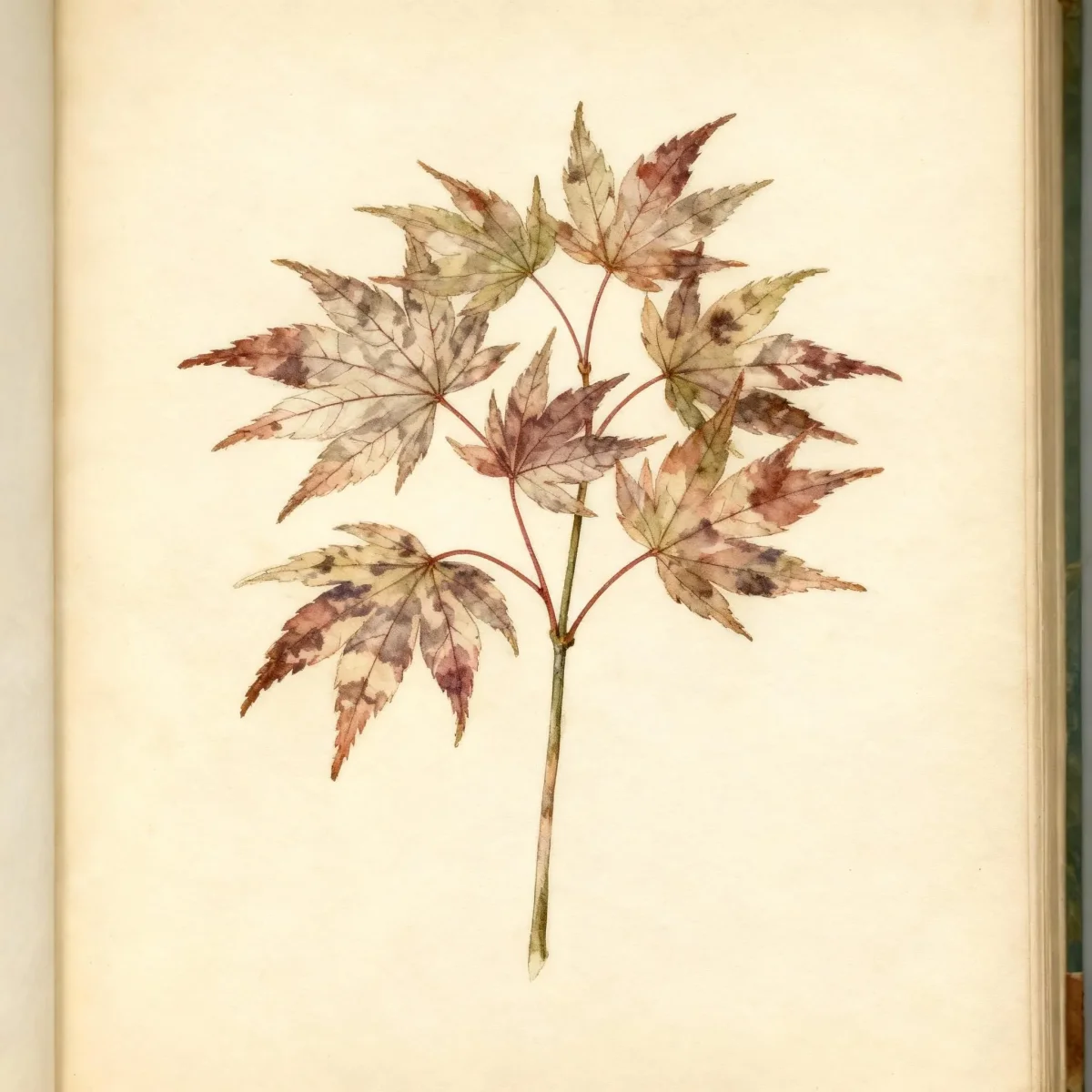
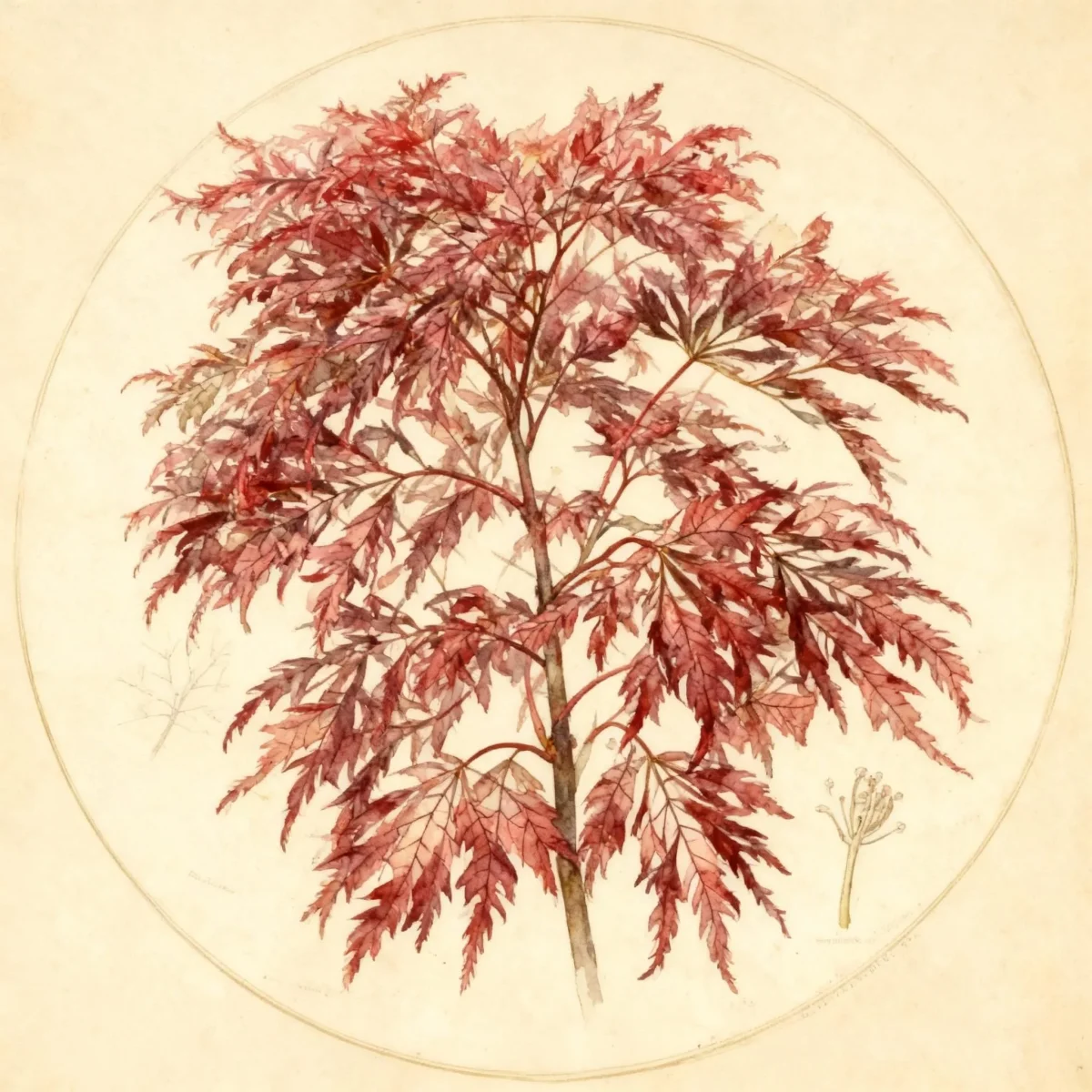
Japanese maple (Acer palmatum var. dissectum 'Crimson Queen')
Acer palmatum var. dissectum 'Crimson Queen' is a striking Japanese maple known for its deeply cut, lacy crimson foliage and low, cascading habit.
Scroll down to discover growing tips, care requirements, companion plants, and more
Complete Plant Information
Overview
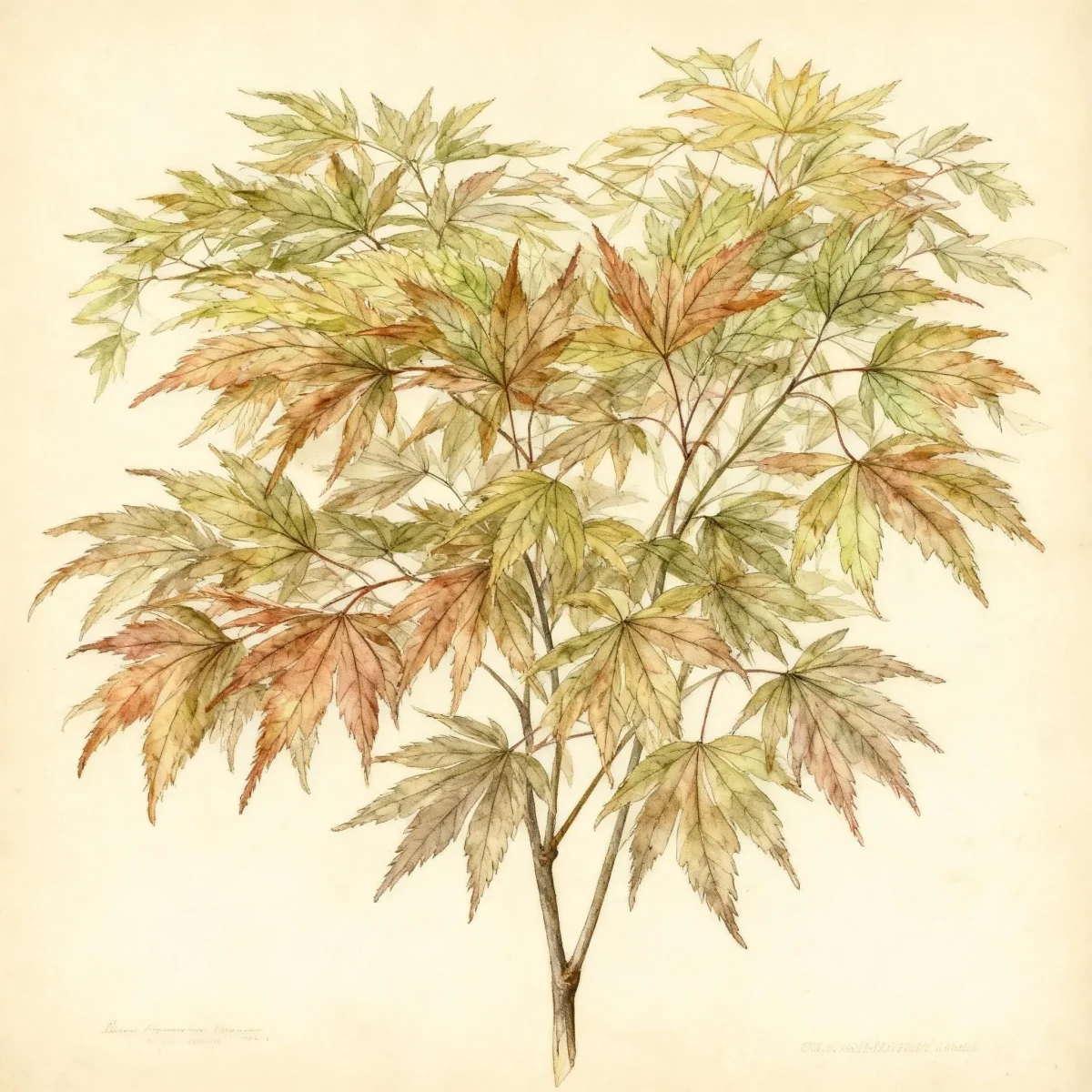
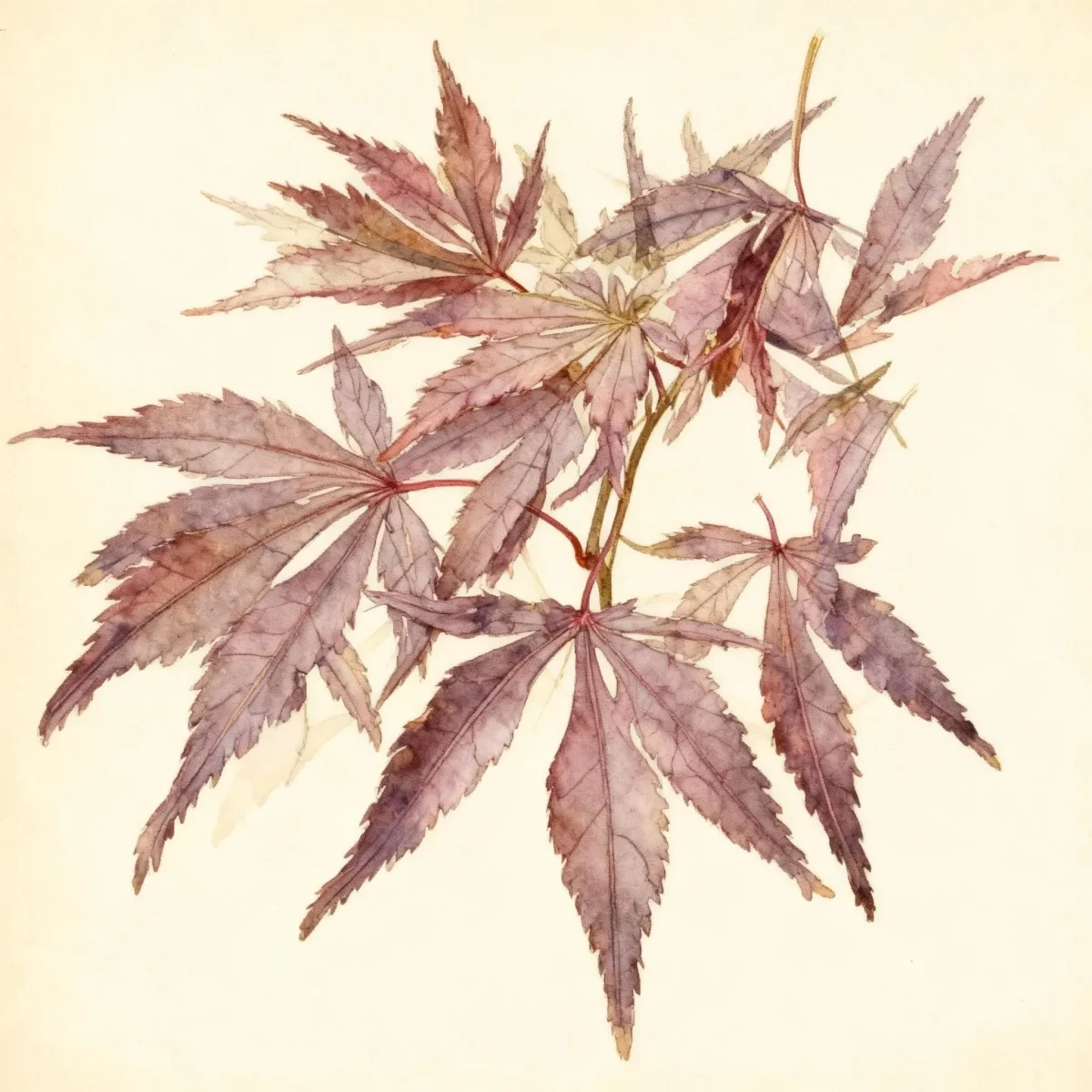
The Acer palmatum var. dissectum ‘Crimson Queen’ is a highly sought-after laceleaf Japanese maple, prized by gardeners for its dense, finely dissected foliage that holds a rich, deep crimson color throughout the growing season. This cultivar offers a delicate, almost weeping presentation, making it a masterful focal point in any garden design. Its slow growth and manageable size ensure that this specific Japanese maple remains refined and architectural for years to come.
Valuable for its intense year-round color contrasted with its finely cut texture, the ‘Crimson Queen’ brings structure to mixed borders and rock gardens alike. While it maintains its deep red coloration, it performs best when protected from the most intense afternoon sun, which can sometimes scorch the fine leaves. This low-maintenance specimen tree delivers exceptional aesthetic impact without demanding constant pruning, provided it is sited correctly.
As a classic example of the Dissectum group, Acer palmatum var. Dissectum ‘Crimson Queen’ provides essential texture in the landscape. Its cascading form is celebrated near water features or planted on slight slopes where its drape can be fully appreciated. For landscape professionals and home gardeners seeking reliable, year-round interest, this Japanese maple remains a top contender.
Fast Facts
- Plant Family: Sapindaceae
- Plant Type: Tree
- Hardiness Zones: USDA Zones 5-8
- Size at Maturity:
- Height: 8-10 ft
- Spread: 10-12 ft
- Bloom Time: April
- Bloom Description: Red
- Sun Exposure: Full sun to part shade
- Water Needs: Medium
- Maintenance Level: Low
How to Grow
Planting the Acer palmatum var. dissectum ‘Crimson Queen’ is best achieved when the ground is workable, typically in spring or fall. Ensure the location provides moist, organically rich, and slightly acidic soil that drains exceptionally well. This variety thrives in full sun in cooler northern zones, but gardeners in southern regions must site it where it receives relief from hot afternoon sun to prevent leaf scorch.
Consistent moisture is critical for success, especially during establishment and hot summers; soils must not be allowed to dry out completely. Applying a layer of mulch will greatly aid in keeping the root zone cool and retaining necessary soil moisture. Protect this delicate leafed Japanese maple from harsh, drying winds, which can damage the fine foliage.
Pruning for the ‘Crimson Queen’ should be minimized, as this cultivar naturally maintains a beautiful, rounded shape. If cutting is necessary, perform renovations or shape correction only in very late fall or mid-winter. Avoid pruning during the spring or summer months, as spring pruning frequently results in significant sap “bleeding” from the cuts.
Landscape Uses
Dissected forms like the Acer palmatum var. dissectum ‘Crimson Queen’ are primarily utilized for their stunning foliage and low, spreading profile. They excel as singular specimen plants where their cascading habit can be observed from all angles, or used as an accent near patios or entries. Their ability to tolerate dappled shade makes them excellent choices for planting beneath larger, established trees.
The feathery, deep red texture of this Japanese maple contrasts beautifully with plants that offer broad leaves or bright green foliage. Consider grouping or massing them around the periphery of a border to create rich textural depth against foundation plantings or evergreen screens. The beautiful cascading effect is particularly dramatic when positioned near the edge of a pond or water feature, allowing the foliage to weep toward the water surface.
Smaller specimens of Acer palmatum var. dissectum ‘Crimson Queen’ adapt well to containers, offering portable color for decks or terraces. For a naturalistic planting, place them where they can serve as an effective, colorful understory plant in a woodland setting.
Standout Features
Flower Qualities
- Insignificant
Noteworthy Characteristics
The genus name Acer comes from the Latin word for maple tree, while the specific epithet refers to the palmate leaf structure, resembling an outstretched hand. The cultivar ‘Crimson Queen’ is particularly valued because it maintains excellent leaf color retention throughout the entire growing season, resisting fading even in bright light conditions. The overall plant form is a slow-growing shrubby mound, often featuring sweeping, cascading branches that distinguish it from upright Japanese maples.
Tolerances
- Rabbit
- Black Walnut
Potential Problems
The primary cultural challenge for this Japanese maple involves environmental stress. Foliage is susceptible to damage from late spring frosts, as the leaves tend to emerge relatively early. Furthermore, water stress is damaging; new foliage may scorch in intense summer sun if soils are not kept consistently moist.
Monitor for pests such as scale, borers, and mites, which can weaken the tree over time. Fungal issues like leaf spots and root rots can appear, usually accelerated by poor drainage or high humidity. To minimize fungal risk, ensure excellent air circulation around the plant and avoid overhead watering when possible. High pH soils can induce chlorosis, leading to yellowing leaves due to nutrient unavailability.
Frequently Asked Questions
What hardiness zones is Japanese maple suitable for?
The Acer palmatum var. dissectum ‘Crimson Queen’ is reliably hardy in USDA Zones 5 through 8.
How large does Acer palmatum var. dissectum ‘Crimson Queen’ grow?
This laceleaf Japanese maple typically reaches a mature height between 8 and 10 feet, with a spread ranging from 10 to 12 feet wide, often wider than it is tall.
What sun exposure does Acer palmatum var. dissectum ‘Crimson Queen’ need?
It performs best with full sun to part shade exposure; however, afternoon shade is highly recommended in hotter climates to prevent leaf scorch.
When does Japanese maple bloom?
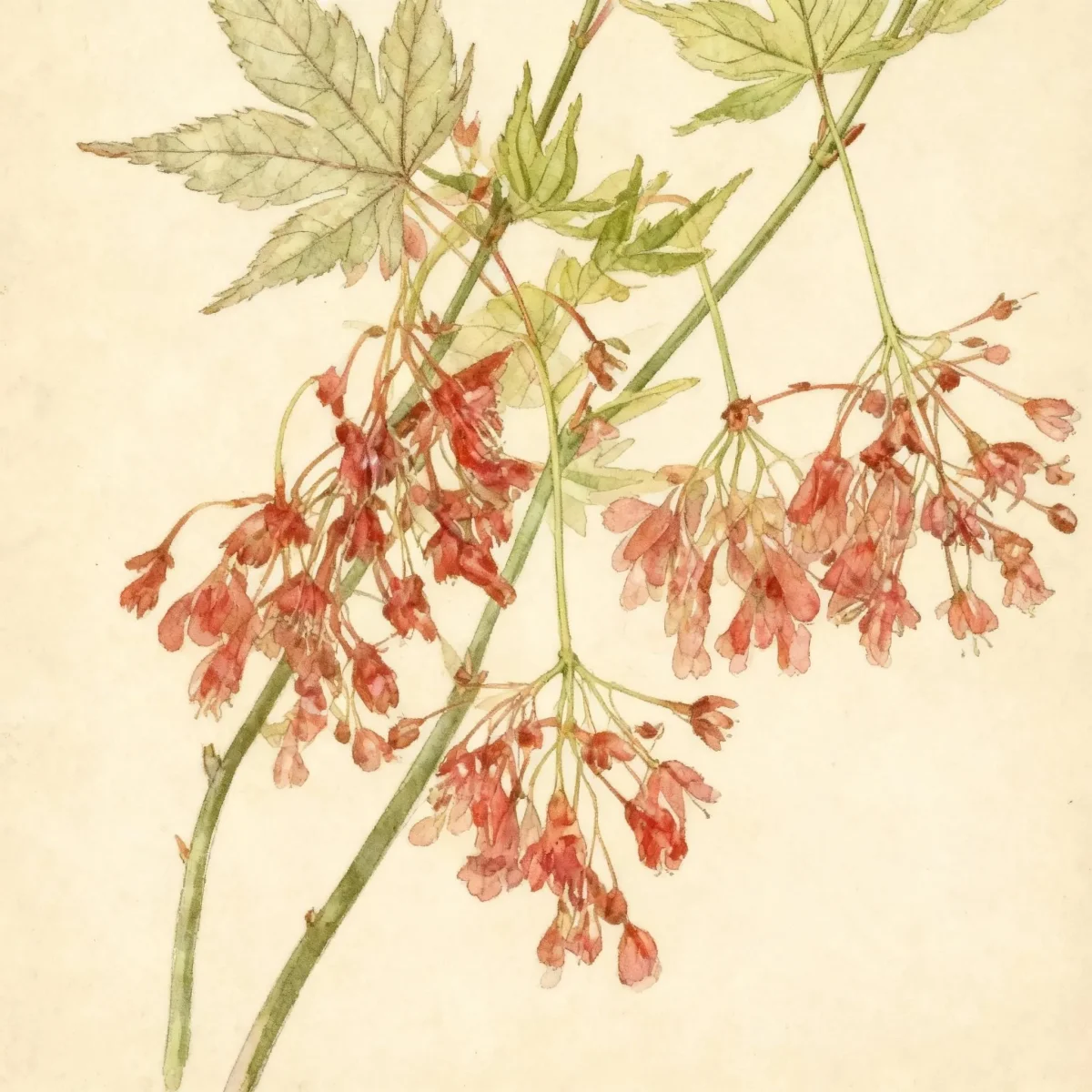
The small, often overlooked flowers appear in April and display a reddish color before developing into winged samaras.
Conclusion
The Acer palmatum var. dissectum ‘Crimson Queen’ offers unparalleled textural contrast and reliable deep crimson color, securing its position as a premier ornamental tree. Gardeners seeking a low-maintenance focal point with graceful, cascading structure should strongly consider this venerable Japanese maple. Before planting, confirm your site provides the acidic, well-drained soil and appropriate light conditions necessary for this cultivar to flourish.
Companion Planting
Choosing companions that share similar cultural needs enhances the appeal of your ‘Crimson Queen’. Since this Japanese maple demands moist, well-drained, slightly acidic soil, pair it with acid-loving shrubs such as Rhododendrons, Azaleas, or Camellias. These plants appreciate the same filtered light that protects the laceleaf foliage from summer burn.
For aesthetic contrast, combine the finely dissected leaves of the Dissectum form with plants possessing bold, large leaves. Hostas in variegated or blue shades offer excellent groundcover beneath the canopy, complementing the Acer palmatum var. dissectum ‘Crimson Queen’ while fulfilling that need for shade-tolerant neighbors. Avoid planting directly under large trees that compete aggressively for surface water.
Seasonal Care Calendar
Spring is the period for caution; protect emerging foliage of the Japanese maple from unexpected late frosts, perhaps covering the young branches temporarily if cold snaps are forecast after leaf-out. Ensure consistent moisture is maintained as temperatures begin to rise, and apply a fresh layer of mulch if the previous year’s layer has decomposed.
Summer care centers entirely on hydration and sun protection. Water deeply and regularly, prioritizing slow, soaking irrigation rather than frequent shallow sprinkles, especially in dry regions. If you notice the margins of the leaves browning, immediately increase watering frequency or increase afternoon shade coverage.
As fall approaches, admire the long-lasting color retention of the Acer palmatum var. dissectum ‘Crimson Queen’. Prepare for potential winter exposure by ensuring the plant is fully hydrated before the ground freezes hard; a good deep watering in late fall is crucial for deciduous plants entering dormancy.