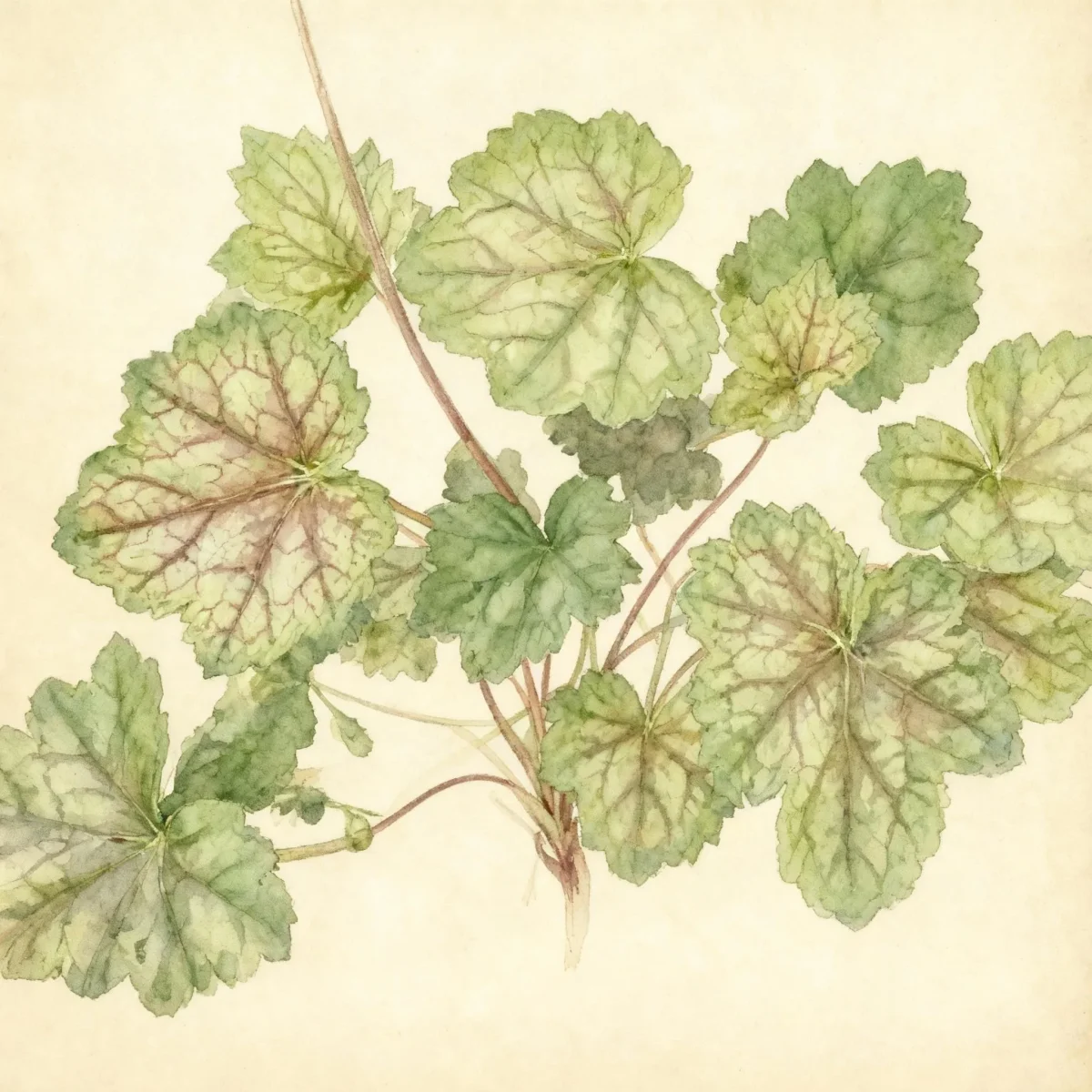
Coral bells (Heuchera 'TNHEU044' DOLCE LICORICE)
Explore Heuchera 'TNHEU044' DOLCE LICORICE, a vigorous Coral bells cultivar with glossy ebony leaves and creamy white summer blooms.
Scroll down to discover growing tips, care requirements, companion plants, and more
Complete Plant Information
Overview
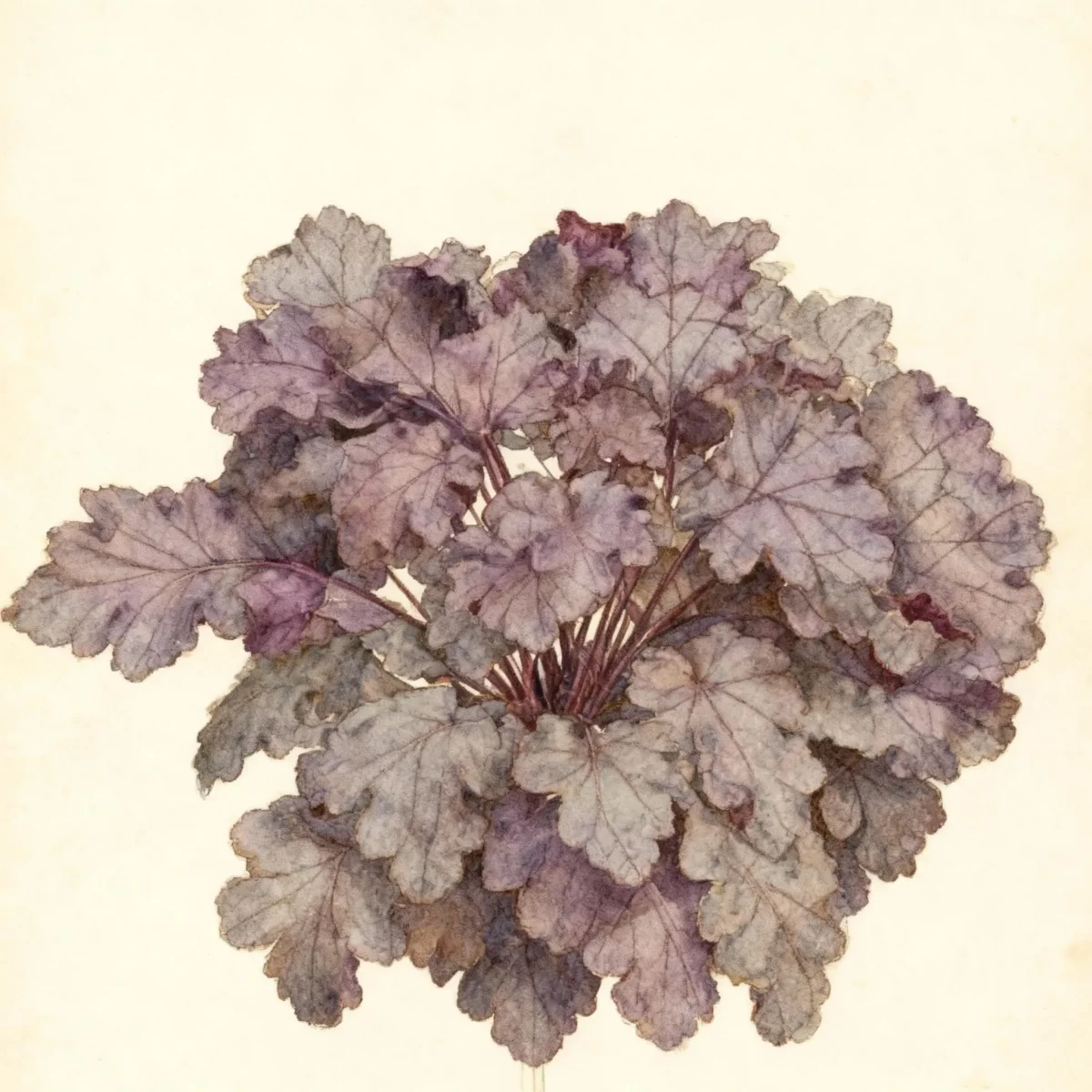
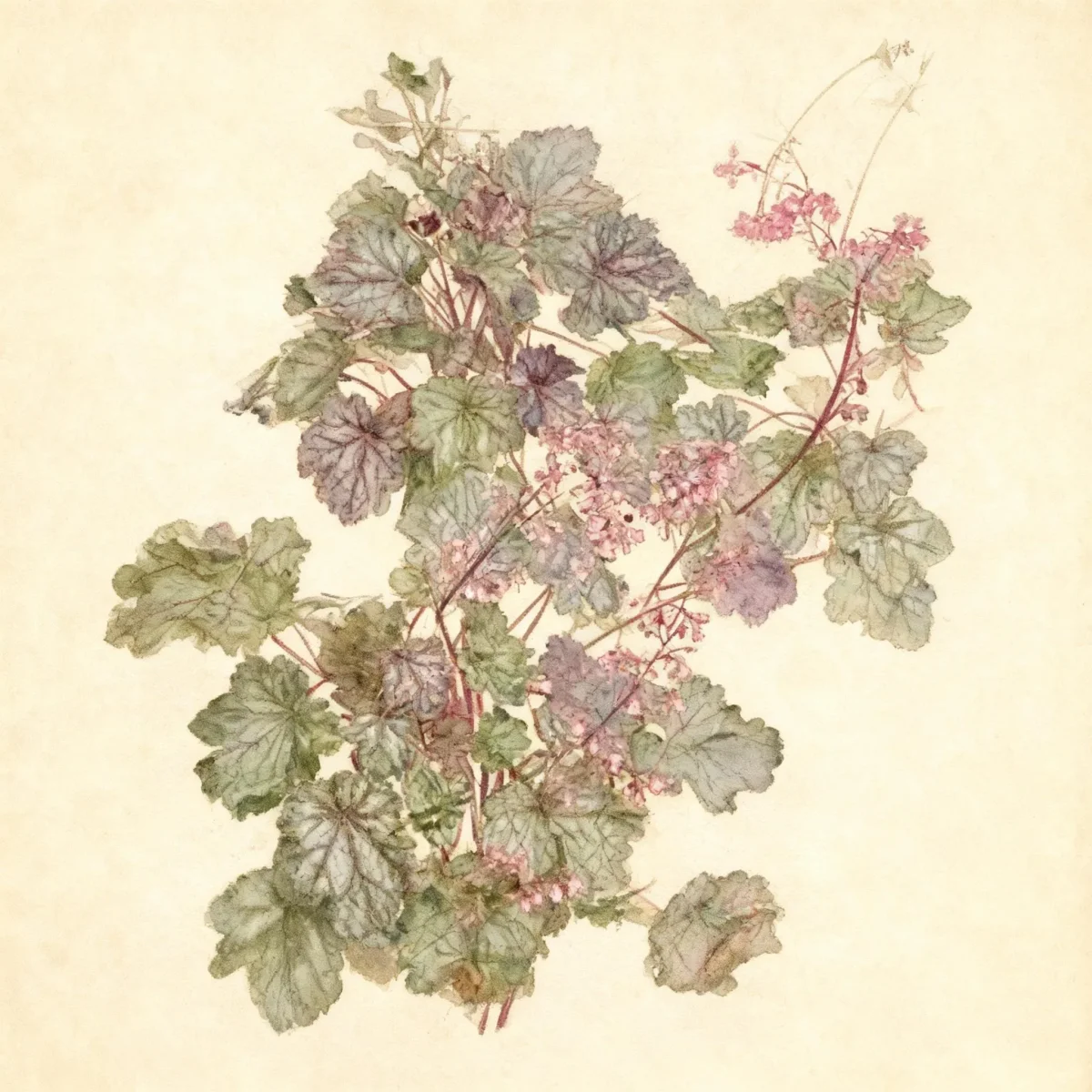
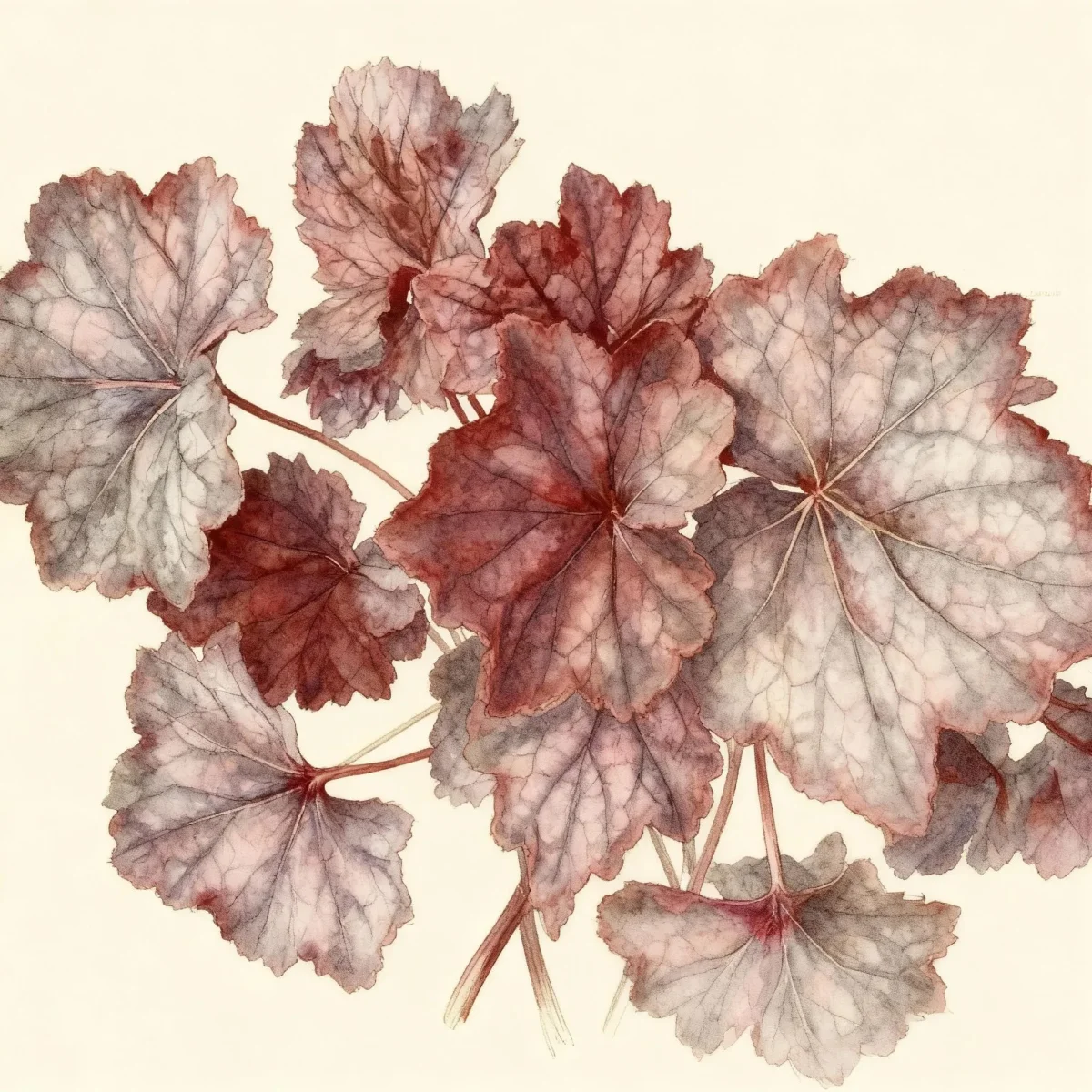
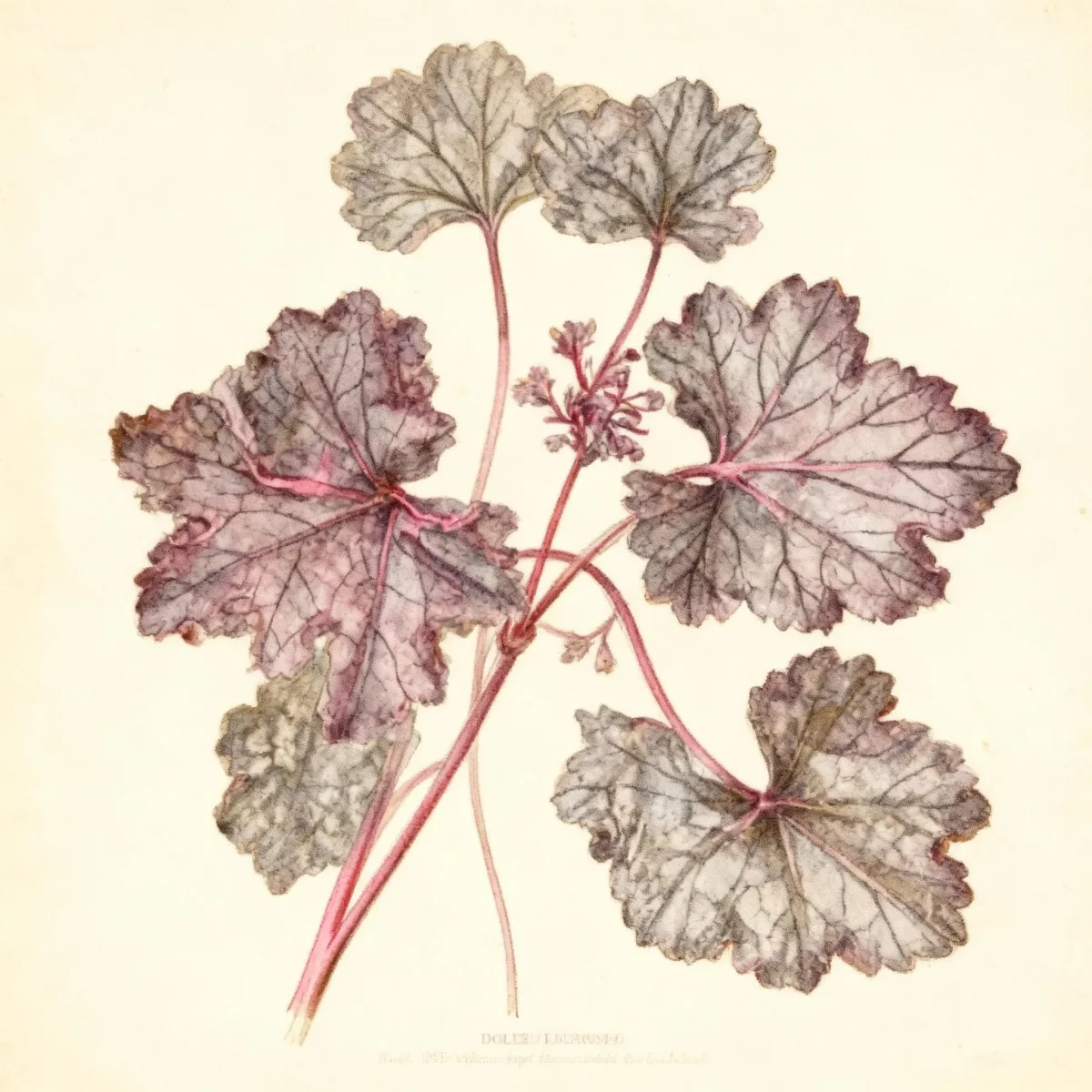
Heuchera ‘TNHEU044’ DOLCE LICORICE, commonly known as Coral bells, is a highly valued herbaceous perennial renowned for its striking, dark foliage texture. This cultivar forms a vigorous, clump-forming mound perfect for adding year-round color contrast in shaded garden settings. Its glossy, ebony leaves, often displaying subtle silver mottling, provide a dramatic backdrop to the airy spires of creamy white flowers produced mid-summer.
As a member of the Saxifragaceae family, this Coral bells variety brings robust structure and manageable size to garden borders. While its unknown parentage likely includes H. americana, its performance leans towards adaptability, handling conditions from full sun in cooler areas to filtered light in warmer climates. Heuchera ‘TNHEU044’ DOLCE LICORICE provides excellent low-maintenance coverage, making it a staple for sophisticated perennial groupings.
Gardeners appreciate the dual season interest provided by this plant; the evergreen nature of the foliage in mild winters means color persists long after the charming, tall flower stems have faded. Introducing Heuchera ‘TNHEU044’ DOLCE LICORICE is an effective way to establish deep, rich tones across the landscape design.
Fast Facts
- Plant Family: Saxifragaceae
- Plant Type: Herbaceous perennial
- Hardiness Zones: USDA Zones 5-9
- Size at Maturity:
- Height: 0.75-1.5 ft
- Spread: 1-1.5 ft
- Bloom Time: June to July
- Bloom Description: Creamy white
- Sun Exposure: Full sun to part shade
- Water Needs: Medium
- Maintenance Level: Medium
How to Grow
Heucheras thrive best when planted in locations that offer protection from the harshest afternoon sun, especially as summer heat intensifies, though some varieties tolerate more light. The key cultural requirement is soil: ensure it is organically rich, humusy, and crucially, well-drained, with medium moisture retention. Plant these perennials during spring or fall, giving them time to establish roots before facing extreme temperatures.
Consistent moisture is vital, particularly if you site your Heuchera ‘TNHEU044’ DOLCE LICORICE where it receives more light. Allow the soil to dry slightly between waterings, but avoid letting it become completely parched, which can lead to scorch on the dark foliage. Good drainage prevents root issues, which are more common than pest problems.
For maintenance, routinely trim off the spent flower stems to encourage any potential repeat blooming. In cold winter climates, applying a winter compost mulch after the ground freezes helps insulate the roots and prevents damaging frost heaving that can push the crown out of the soil. Clumps should be divided every 3-4 years in the spring to maintain vigor.
Landscape Uses
Coral bells excel when used to define edges or provide deep-toned contrast within mixed plantings. Heuchera ‘TNHEU044’ DOLCE LICORICE is highly effective when massed or planted in groups, creating a carpet of dark, glossy color against lighter green foliage companions. Its tidy, mounded habit makes it an excellent textural choice for borders along walkways and paths where its near-black leaves can be fully appreciated.
Consider pairing this dark-leafed cultivar with plants offering bright chartreuse foliage or silvery textures, such as Hakonechloa grass or Brunnera, to maximize the visual impact of the deep purple-black tones of the leaves. It performs beautifully in foreground plantings in woodland gardens or nestled among rocks in a well-designed rock garden, providing structural interest where overhead canopy limits sunlight.
Standout Features
Flower Qualities
- Showy
Noteworthy Characteristics
Heuchera, commonly called coral bells or alumroot, is a genus of evergreen to semi-evergreen herbaceous perennials native across North America, thriving in diverse habitats from woodlands to rocky cliffs. Hybrid cultivars like Heuchera ‘TNHEU044’ DOLCE LICORICE now offer an expansive palette of leaf colors, far exceeding the original species. This specific variety features glossy ebony leaves with silver mottling, complemented by tiny, creamy white flowers appearing on slender stems rising above the foliage mound.
Tolerances
Potential Problems
Frost heaving is a potential cosmetic issue where fluctuating winter temperatures can lift the roots, requiring attention in early spring across Zones 5-7. More significant threats usually involve fungal issues; be vigilant for powdery mildew, rust, and bacterial leaf spot, which thrive in overly damp conditions. Control these diseases through proper air circulation and watering practices focused on the soil rather than the leaves. Less common insect nuisances might include weevils or foliar nematodes, though they are generally secondary concerns.
Frequently Asked Questions
What hardiness zones is Coral bells suitable for?
Heuchera ‘TNHEU044’ DOLCE LICORICE is reliably hardy in USDA Zones 5 through 9.
How large does Coral bells grow?
This cultivar typically reaches a height between 0.75 to 1.5 feet tall, spreading outward to between 1 and 1.5 feet wide.
What sun exposure does Heuchera ‘TNHEU044’ DOLCE LICORICE need?
This plant prefers full sun to part shade, but generally benefits from afternoon shade in hotter climates to prevent foliage scorch.
When does Coral bells bloom?
The characteristic bloom time for this Heuchera is from June into July, presenting creamy white flowers.
Conclusion
Heuchera ‘TNHEU044’ DOLCE LICORICE offers exceptional value through its vigorous habit and deep, sophisticated ebony foliage that enlivens the garden floor. This specialized Coral bells cultivar provides strong textural contrast and near-evergreen performance across a wide range of suitable climates. Before planting, ensure your site provides the required humus-rich, well-drained soil and check that your USDA zone falls within the 5 to 9 range for optimal success.
Companion Planting
Selecting appropriate neighbors enhances the visual appeal and cultural success of growing Heuchera ‘TNHEU044’ DOLCE LICORICE. Due to its preference for medium moisture and part shade, pair it with other woodland edge plants that share similar needs. Excellent choices include Hostas, Astilbe, Tiarella (foamy bells), or various ferns, which appreciate the dappled light that best suits the dark leaves of this Coral bells.
When designing borders, use these companions to highlight the deep purple-black color. For instance, planting next to a bright green Hosta or a silver-leafed Brunnera creates immediate, high-contrast impact in shaded areas. Avoid planting directly beneath dense tree canopies where competition for moisture is too fierce, ensuring your Heuchera has enough resources to maintain its glossy sheen.
Propagation Tips
While garden centers typically offer Heuchera ‘TNHEU044’ DOLCE LICORICE as established nursery stock, this hybrid cultivar is most reliably increased through division. Perform division in the spring when new growth is beginning to emerge but before the plant has fully committed to summer production. Gently lift the entire clump using a sharp spade or garden fork, taking care not to damage the crowns.
Once lifted, separate the root ball into smaller sections, ensuring each division has a healthy root system attached to a viable crown and several leaves. Replant these divisions immediately into prepared, improved soil at the same depth they were previously growing. Keep the newly divided clumps consistently moist for several weeks following the process to encourage rapid re-establishment.