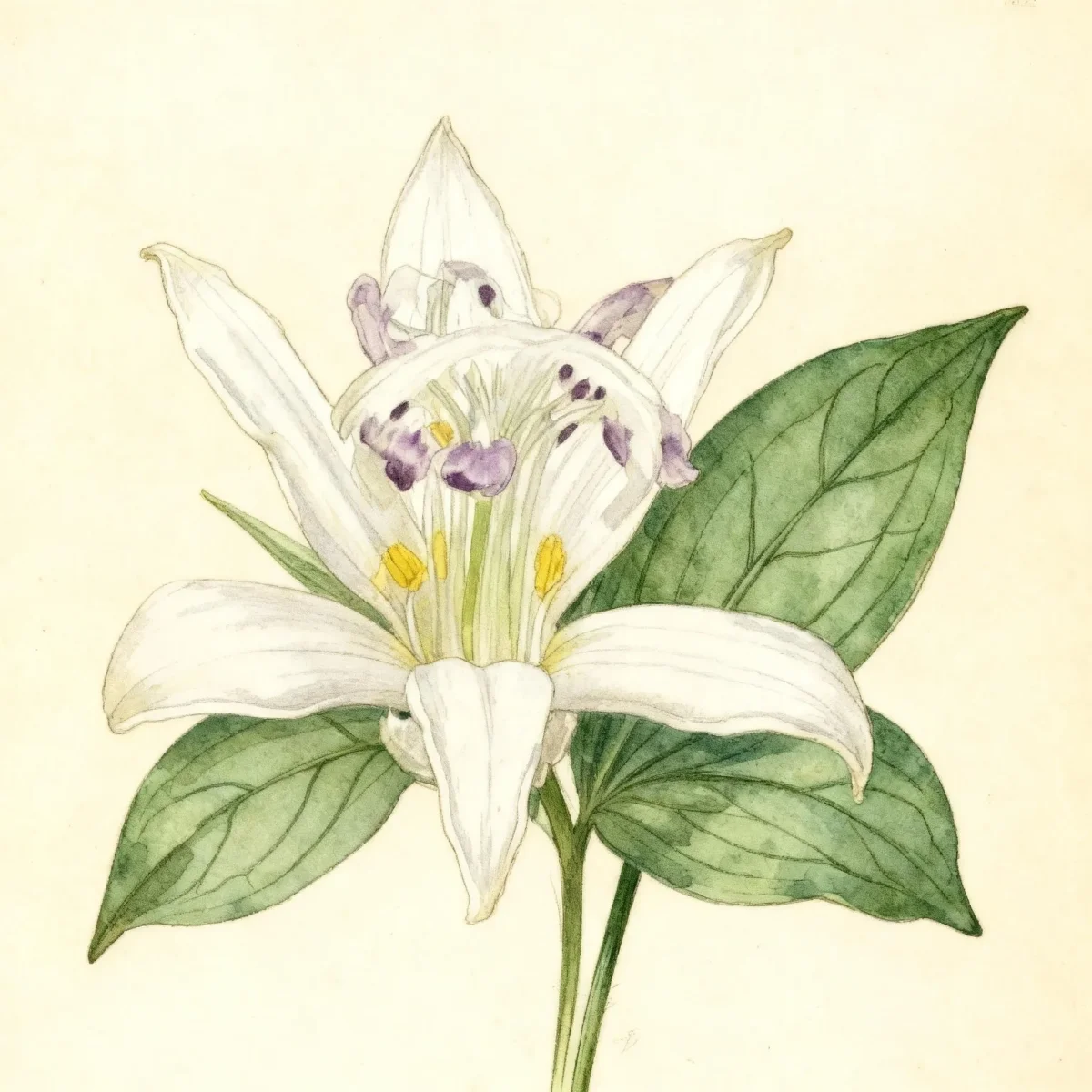
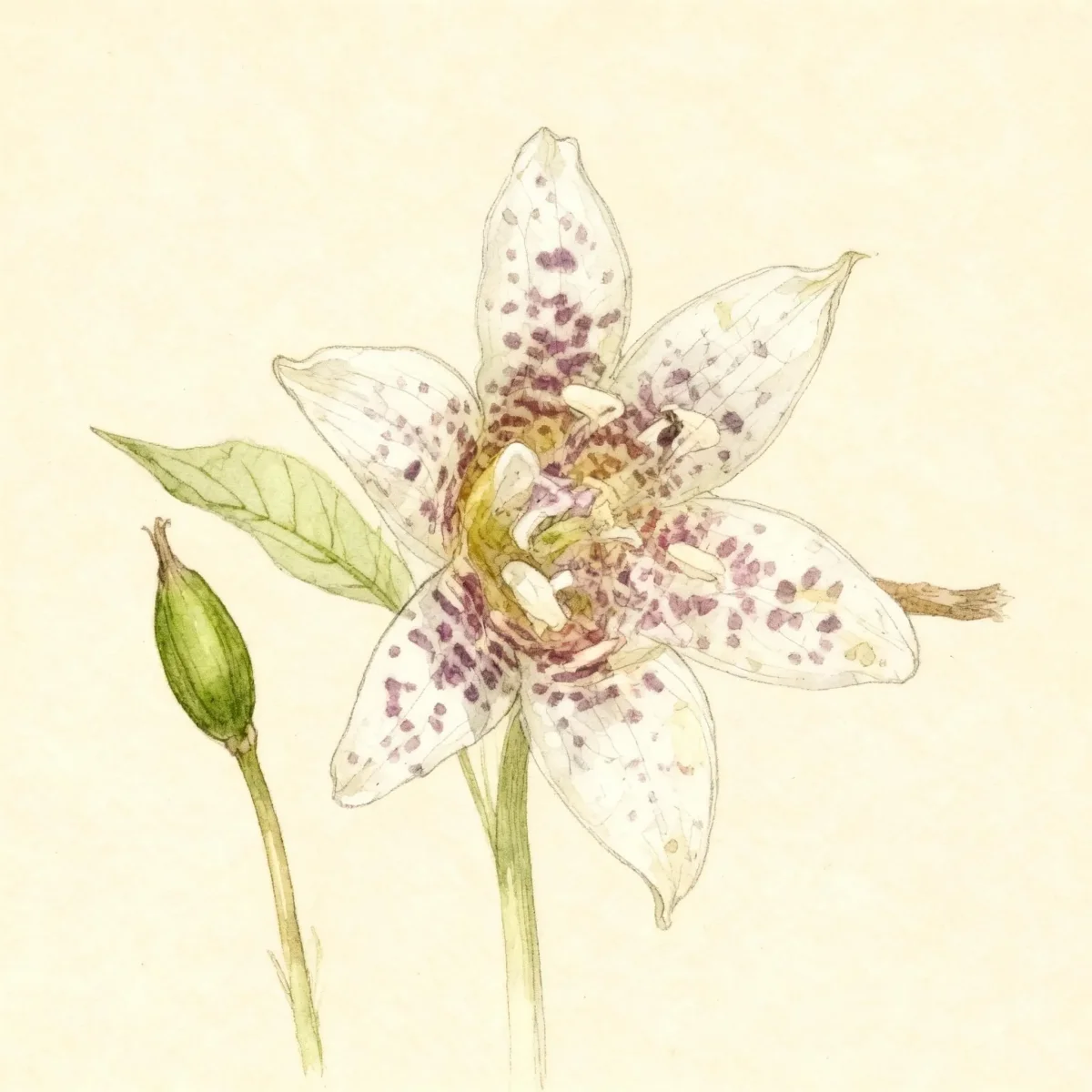
Toad lily (Tricyrtis formosana (Stolonifera Group))
Discover Tricyrtis formosana (Stolonifera Group), the enchanting Toad lily. A low-maintenance perennial for deep shade.
Scroll down to discover growing tips, care requirements, companion plants, and more
Complete Plant Information
Overview
The graceful Tricyrtis formosana (Stolonifera Group), commonly known as Toad lily, offers unique late-season interest when many other perennials have finished blooming. These herbaceous perennials feature delicate, star-shaped flowers that resemble droplets speckled with intricate spotting, making them highly prized by shade garden enthusiasts. The Toad lily is valued for its ability to thrive in deep shade, bringing light and detail to dark corners of the landscape.
This specific group is known for forming dense colonies via creeping rhizomes, allowing it to naturalize beautifully without becoming aggressive. Growing typically between 2 to 3 feet tall, the Tricyrtis formosana (Stolonifera Group) thrives in consistently moist conditions. Its dark green, glossy foliage remains attractive throughout the season, providing an excellent backdrop for its unusual August to September blossoms.
Gardeners seeking low-maintenance structure in woodland settings should consider adding this species. The resulting colonies of Tricyrtis formosana (Stolonifera Group) create a lush texture, and the exceptional detail in the flowers rewards closer inspection, perfectly fulfilling its role as a shade-loving perennial.
Fast Facts
- Plant Family: Liliaceae
- Plant Type: Herbaceous perennial
- Hardiness Zones: USDA Zones 4-9
- Size at Maturity:
- Height: 2-3 ft
- Spread: 1.5-2 ft
- Bloom Time: August to September
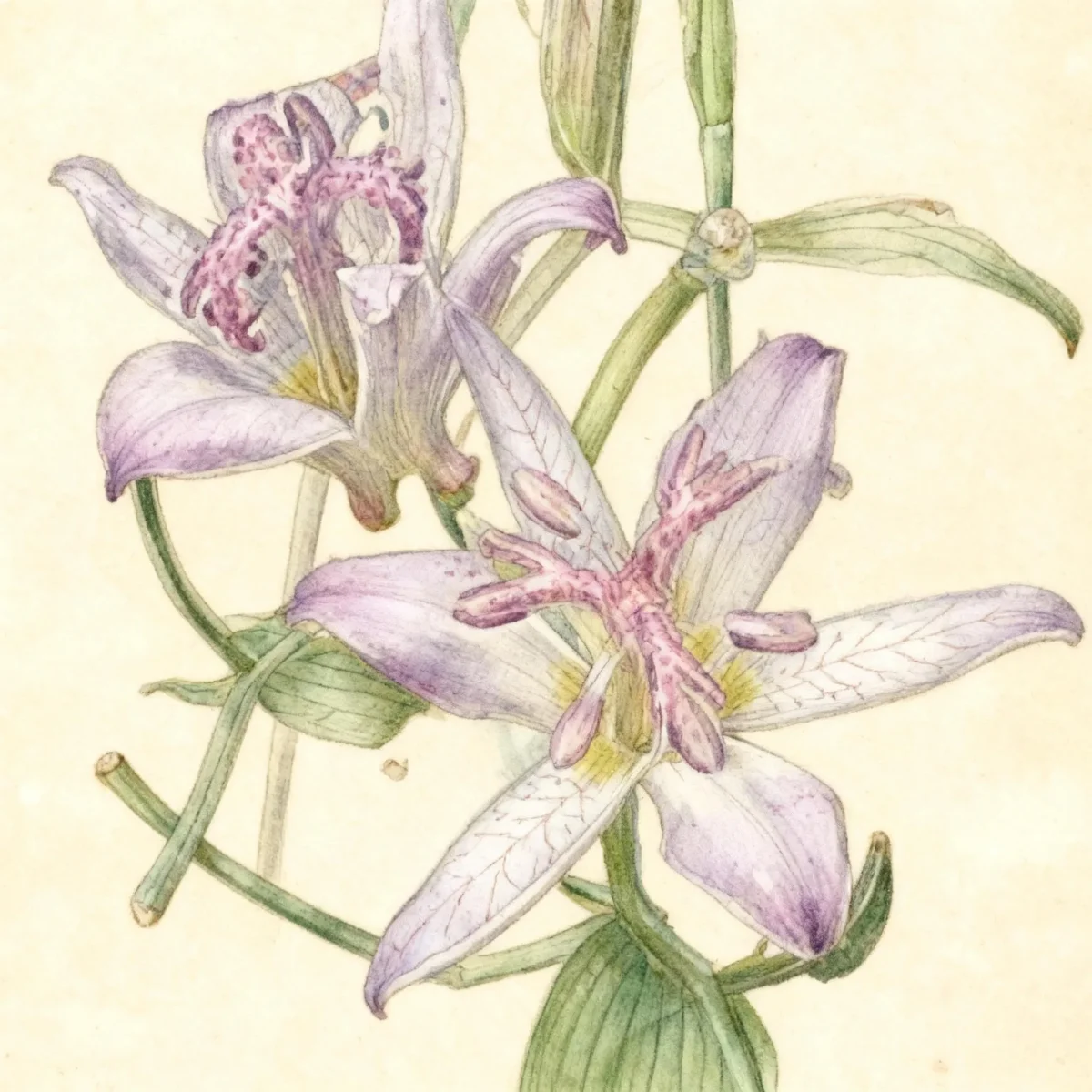
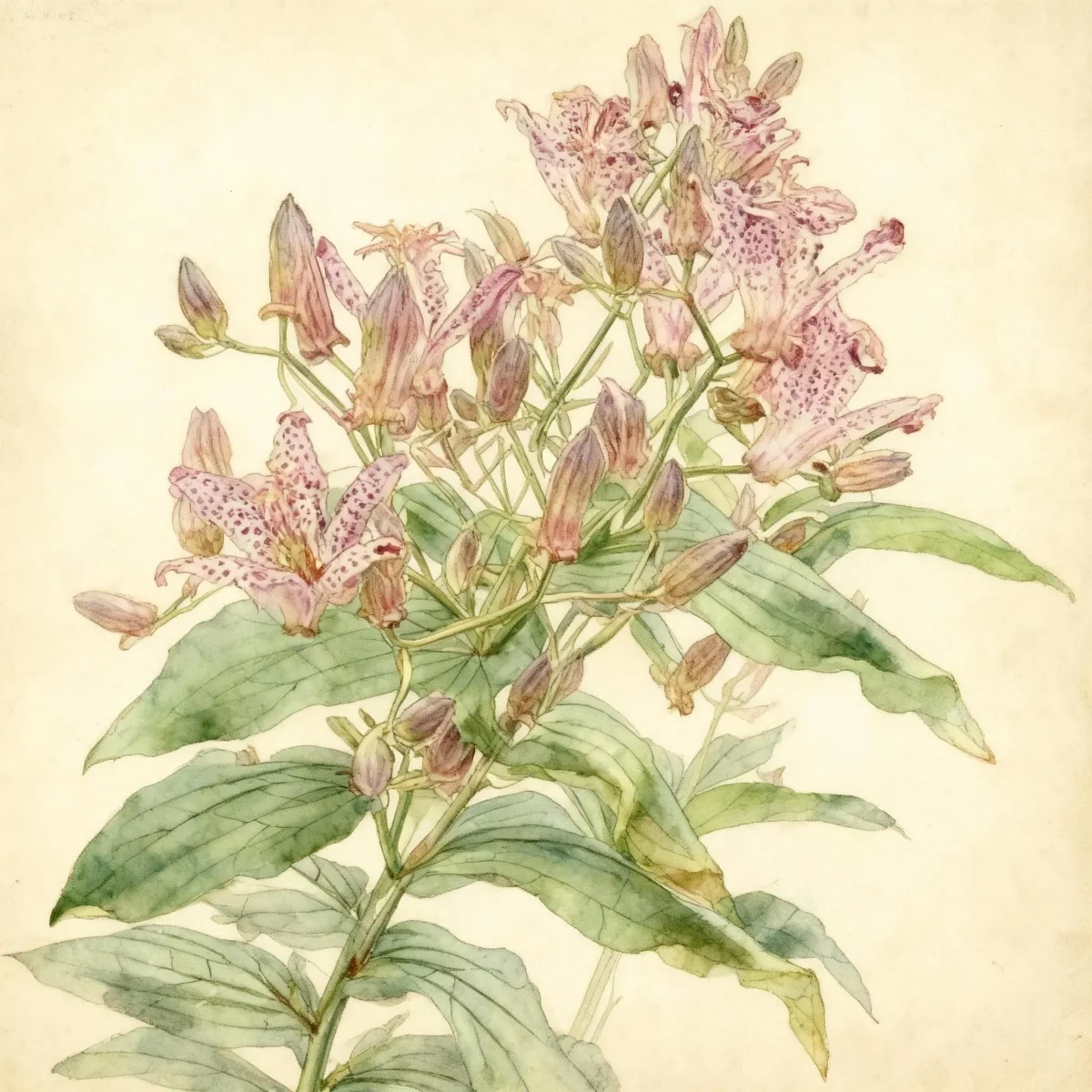
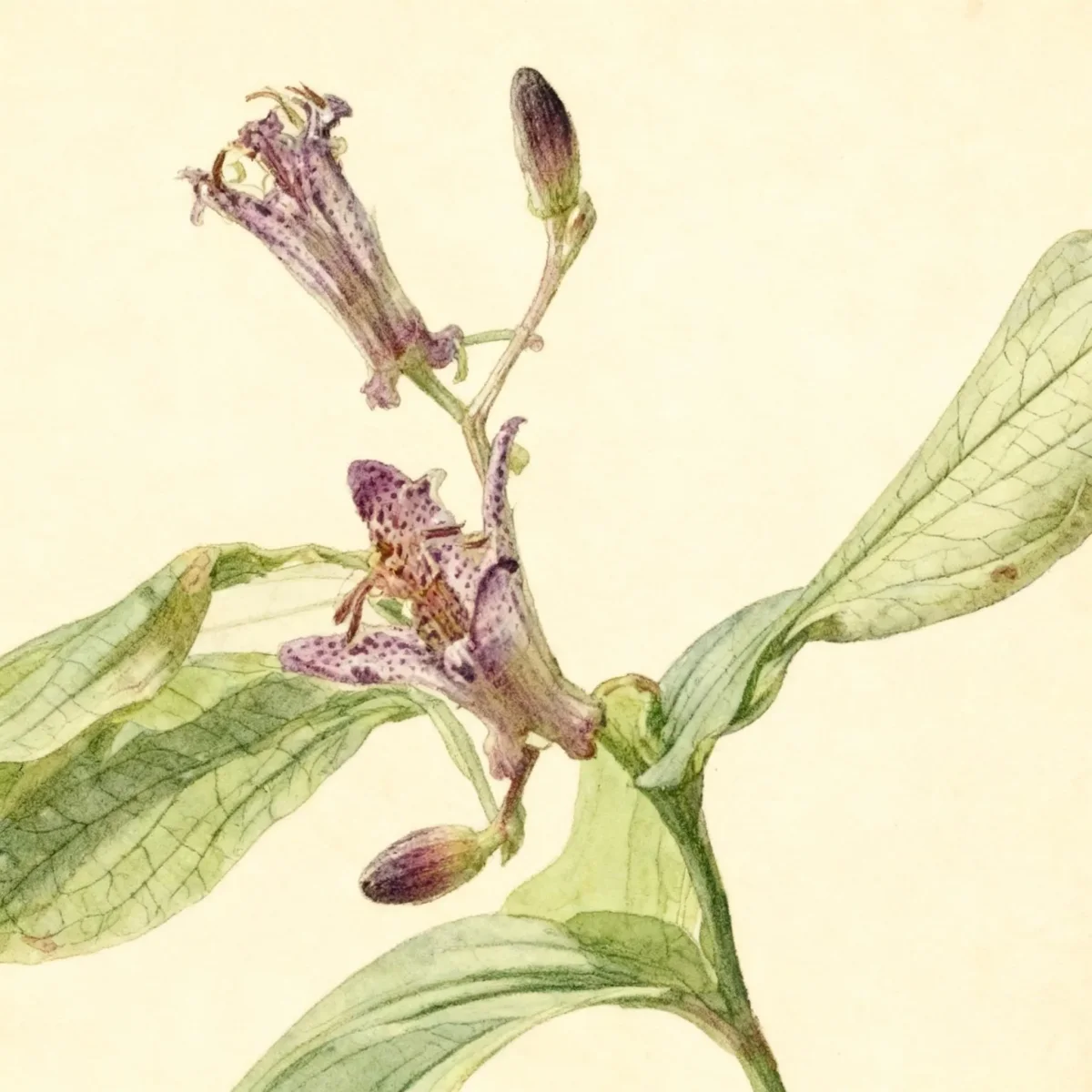
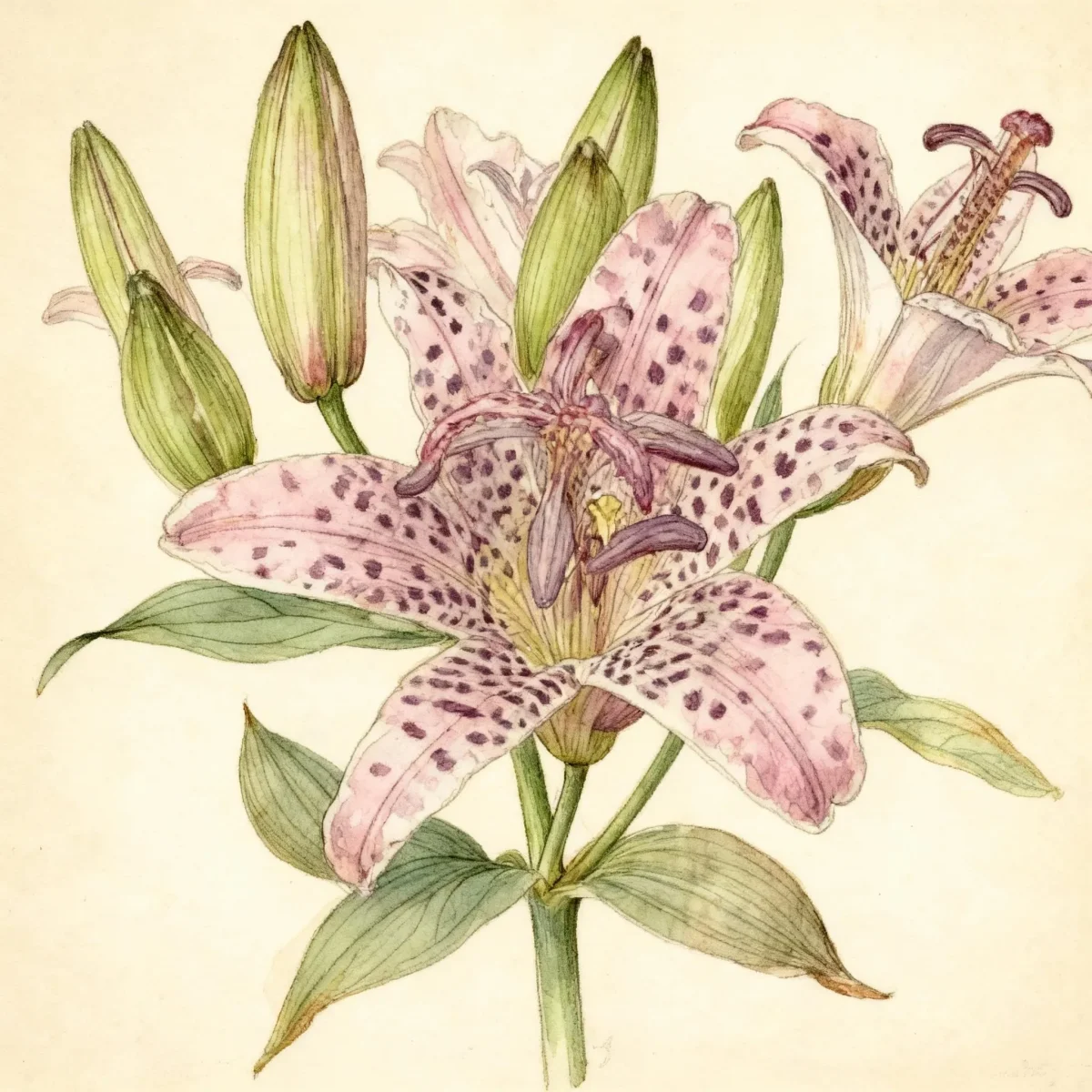
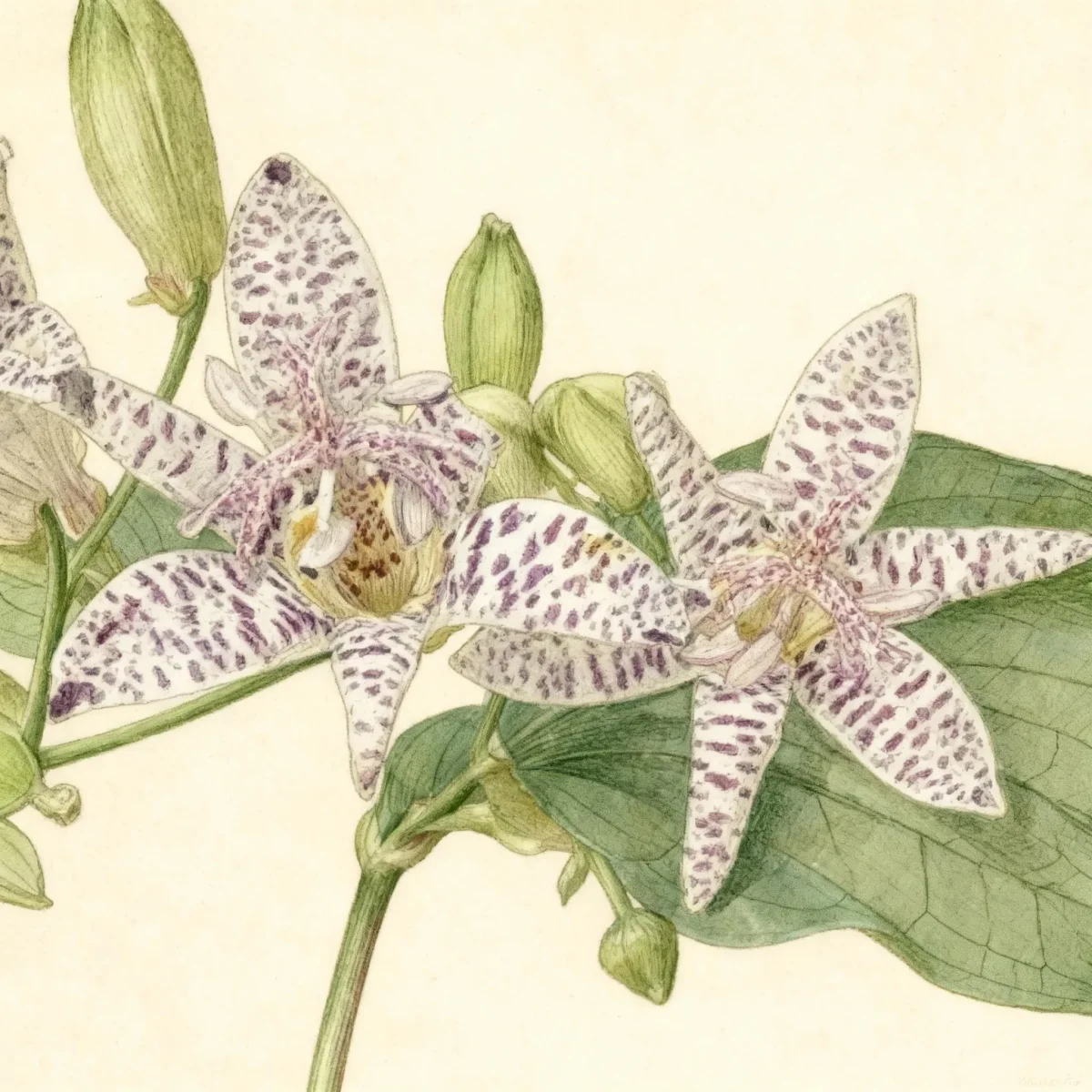
- Bloom Description: White, reddish-purple spots and yellowish throats
- Sun Exposure: Part shade to full shade
- Water Needs: Medium to wet
- Maintenance Level: Low
How to Grow
Planting the Toad lily is best done in spring or early autumn, allowing the roots time to establish before seasonal extremes. Choose a location that mimics its native habitat: part shade or full shade, situated in organically rich, humusy soils that drain well but retain consistent moisture. The soil should ideally be slightly acidic for optimal performance.
Care for your Tricyrtis formosana (Stolonifera Group) is straightforward due to its low maintenance needs. Water regularly to ensure the soil never dries out, especially during hot, dry spells, as consistent moisture is critical for this plant’s health. Fertilization is rarely necessary if the soil is rich in organic matter; top-dressing annually with compost is usually sufficient.
As a dependable perennial, the Tricyrtis formosana (Stolonifera Group) requires minimal pruning other than removing old foliage in early spring before new growth emerges. Its ability to naturalize by creeping rhizomes means you should allow it space to spread; this process helps form those dense, attractive colonies that define its use in woodland gardens.
Landscape Uses
The recommended uses center around exploiting the plant’s preference for deep shade and its unique late-season flowers. This Toad lily excels when allowed to naturalize beneath established trees or large shrubs, creating effortless woodland borders. Its spreading habit makes it a superb groundcover substitute in areas too dark for conventional turf.
For best appreciation, site Tricyrtis formosana (Stolonifera Group) where it can be viewed up close, such as along shaded paths or near seating areas. In more formal borders, it pairs beautifully with rich, deep green companions like Hosta or ferns, providing structural contrast until its spotted blooms appear in late summer. Furthermore, the unusual flowers make it a surprisingly good choice for cutting gardens, provided the stems are harvested just as the buds begin to open.
Standout Features
Flower Qualities
- Showy
Noteworthy Characteristics
Tricyrtis formosana, commonly called toad lily, is an herbaceous shade-loving perennial of the lily family that typically grows in a spreading clump to 2-3’ tall. It is native to shaded areas of forests, thickets and roadsides in Taiwan. Small, star-shaped, lily-like flowers (1” long) feature six showy tepals (3 inner petals and 3 outer sepals which are similar in appearance). Flowers bloom in branched clusters (cymes) primarily at the stem ends but also in the upper leaf axils in late summer to early fall. Flowers are white with heavy reddish-purple spotting and yellowish throats. Broad lanceolate to obovate, shiny, dark green leaves (to 4-6” long) have parallel veins, hairy undersides and clasping leaf bases. Leaves generally remain attractive throughout the growing season. Genus name comes from the Greek words tri- meaning three and kyrtos meaning humped as the bases of the three outer petals are swollen and sacklike. Specific epithet is in reference to this species being native to Formosa (now Taiwan). Common name has a number of possible origins, the simplest one being the resemblance of the spotted flowers to the skin of some toads. Stolonifera Group has elliptic leaves with long creeping rhizomes. Some authorities classify these plants in a separate species, T. Stolonifera.
Tolerances
(No data provided)
Potential Problems
Generally, Tricyrtis formosana (Stolonifera Group) suffers from no serious insect or disease problems, making it highly reliable for low-stress gardening. The primary pests to watch for are slugs and snails, which occasionally view the tender foliage as a tasty snack, especially when conditions are damp. Management is simple: place slug bait strategically around the plants early in the season or employ cultural practices that keep the immediate surroundings less conducive to mollusk congregation.
Frequently Asked Questions
What hardiness zones is Toad lily suitable for?
The Toad lily, Tricyrtis formosana (Stolonifera Group), is reliably hardy in USDA Zones 4 through 9.
How large does Toad lily grow?
This herbaceous perennial generally reaches a height of 2 to 3 feet tall, with a spread ranging from 1.5 to 2 feet wide as it spreads via rhizomes.
What sun exposure does Tricyrtis formosana (Stolonifera Group) need?
Tricyrtis formosana (Stolonifera Group) performs best when sited in part shade to full shade conditions. Avoid intense, direct afternoon sun exposure.
When does Toad lily bloom?
Bloom time for the Toad lily typically occurs in the late season, specifically from August into September, displaying its signature spotted white flowers.
Conclusion
For gardeners seeking unique, spot-patterned blooms that extend color into the late season, the Toad lily is an indispensable shade perennial. Its combination of low maintenance, reliable spreading habit via rhizomes, and beautiful foliage makes Tricyrtis formosana (Stolonifera Group) a sophisticated choice for woodland or deeply shaded borders. Ensure you meet its requirement for medium to wet, consistently moist soil, and plant it within USDA Zones 4-9 to enjoy its charms for years to come.
Companion Planting for Shade
Successful companion planting for Tricyrtis formosana (Stolonifera Group) relies on selecting plants that share its preference for moist, well-drained, humus-rich soils and low light levels. Ferns are excellent partners, providing fine texture that contrasts beautifully with the broad, glossy leaves of the Toad lily. Consider planting Astilbe or woodland Phlox nearby, as they share similar pH and moisture requirements, creating a fully integrated tapestry of late-summer shade interest.
Design Ideas for Woodland Gardens
When utilizing Tricyrtis formosana (Stolonifera Group) in a woodland design, treat it as a mid-layer element, placed slightly in front of taller shrubs or trees but behind low-growing groundcovers. Because the flowers demand close inspection due to their diminutive size, place clumps adjacent to natural pathways or stepping stones. The tendency of the Stolonifera Group to form dense, non-invasive colonies means it can effectively cover the woodland floor, softening hard edges of stone work or retaining walls while providing rich, dark green coverage throughout spring and summer.