Trumpet honeysuckle (Lonicera sempervirens 'Alabama Crimson')
Discover Lonicera sempervirens 'Alabama Crimson', the low-maintenance Trumpet honeysuckle, featuring showy crimson flowers attractive to hummingbirds.
Scroll down to discover growing tips, care requirements, companion plants, and more
Complete Plant Information
Overview
Lonicera sempervirens ‘Alabama Crimson’ offers gardeners a vigorous, twining vine renowned for its spectacular floral display. This cultivar of Trumpet honeysuckle stands out with its deep crimson tubular flowers that reliably bloom from late spring into summer, providing crucial nectar for hummingbirds. It is valued for its relatively low maintenance requirements combined with high ornamental impact.
Unlike some aggressive honeysuckles, the native Trumpet honeysuckle tends to be less invasive, making Lonicera sempervirens ‘Alabama Crimson’ a manageable yet dramatic choice for vertical gardening. It requires adequate support to thrive but can also function effectively as a sprawling ground cover if left unchecked.
Its attractiveness to pollinators, coupled with the evergreen tendency in warmer climates (Zones 8 and above), ensures season-long visual interest. Successful cultivation of Lonicera sempervirens ‘Alabama Crimson’ relies on providing structural support and positioning it where its vibrant blooms can be fully appreciated.
Fast Facts
- Plant Family: Caprifoliaceae
- Plant Type: Vine
- Hardiness Zones: USDA Zones 4-9
- Size at Maturity:
- Height: 10-20 ft
- Spread: 3-6 ft
- Bloom Time: May to June
- Bloom Description: Crimson red
- Sun Exposure: Full sun
- Water Needs: Medium
- Maintenance Level: Low
How to Grow
Plant Trumpet honeysuckle in spring or fall when conditions are moderate. For optimal performance, select a location that receives full sun, though it will tolerate partial shade—flower production is best with maximum light. Lonicera sempervirens ‘Alabama Crimson’ thrives in average, medium moisture, well-drained soils. Incorporate organic matter, as it prefers humusy, organically rich soil profiles for best health.
Water regularly to establish deep roots, maintaining medium moisture levels thereafter. Once established, this vine is relatively drought-tolerant but benefits from supplemental watering during prolonged dry spells. Fertilization is rarely necessary if the soil is enriched initially, supporting its low maintenance profile.
Pruning should be done immediately following the main flowering period in early summer to encourage dense growth and manage size. Avoid heavy pruning in late summer or fall, as this might remove next year’s flower buds. In colder regions, it may lose its leaves, but in warmer USDA Zones 8 and higher, expect some foliage retention.
Landscape Uses
The climbing habit of Lonicera sempervirens ‘Alabama Crimson’ makes it an excellent choice for softening hardscape features. Utilize this stunning vine on sturdy trellises, robust arbors, or along secure fences where its vibrant blooms can cascade vertically. It is a superb specimen plant to attract hummingbirds to specific garden areas.
Because it can sprawl if not directed upward, this Trumpet honeysuckle also functions well as an unsupported, dense ground cover over banks or open areas, suppressing weeds effectively. Consider pairing it with later-blooming perennials or shrubs, as its main show is concentrated in late spring and early summer, allowing other plants to fill the void later in the season.
Standout Features
Flower Qualities
- Showy
Fruit Qualities
- Showy
Noteworthy Characteristics
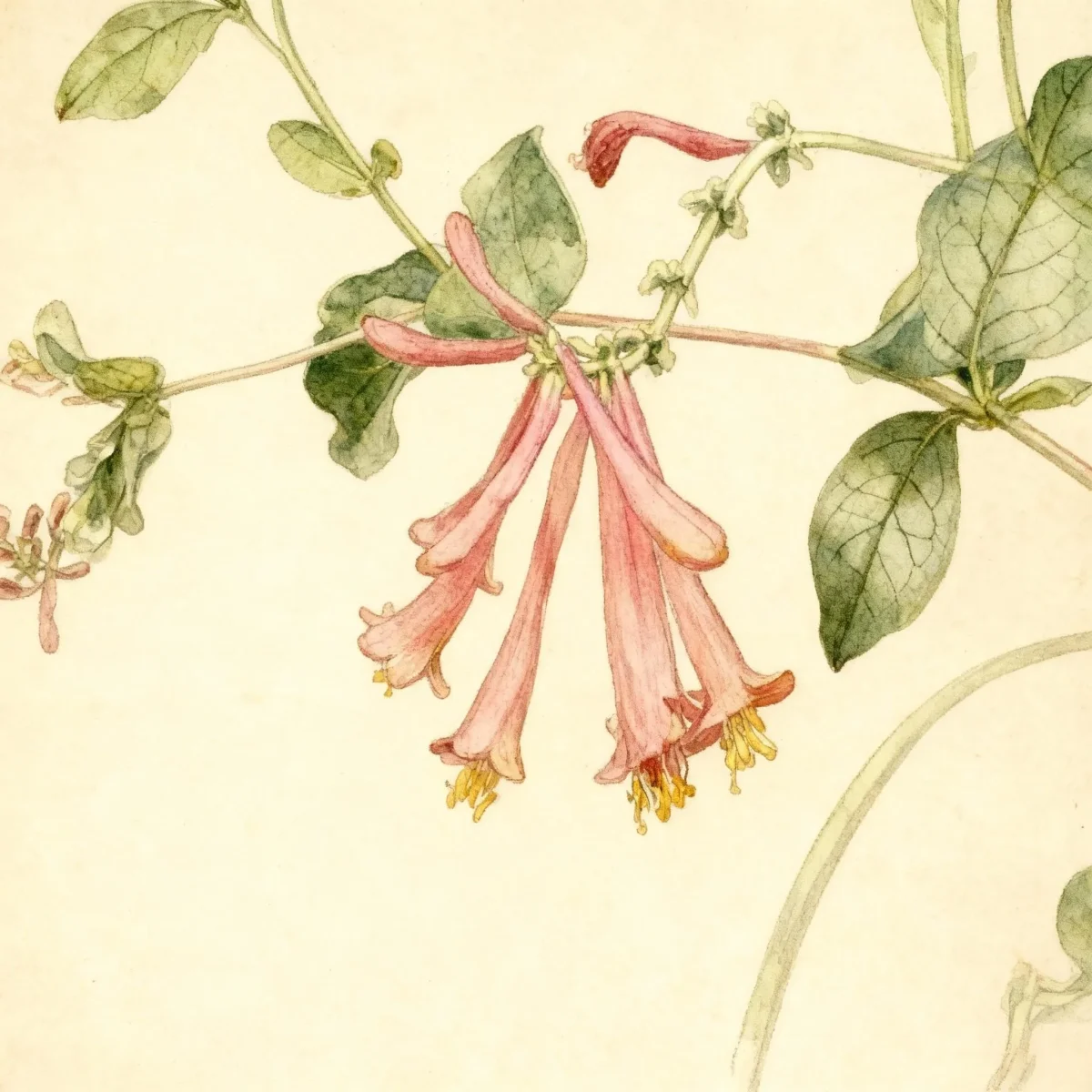
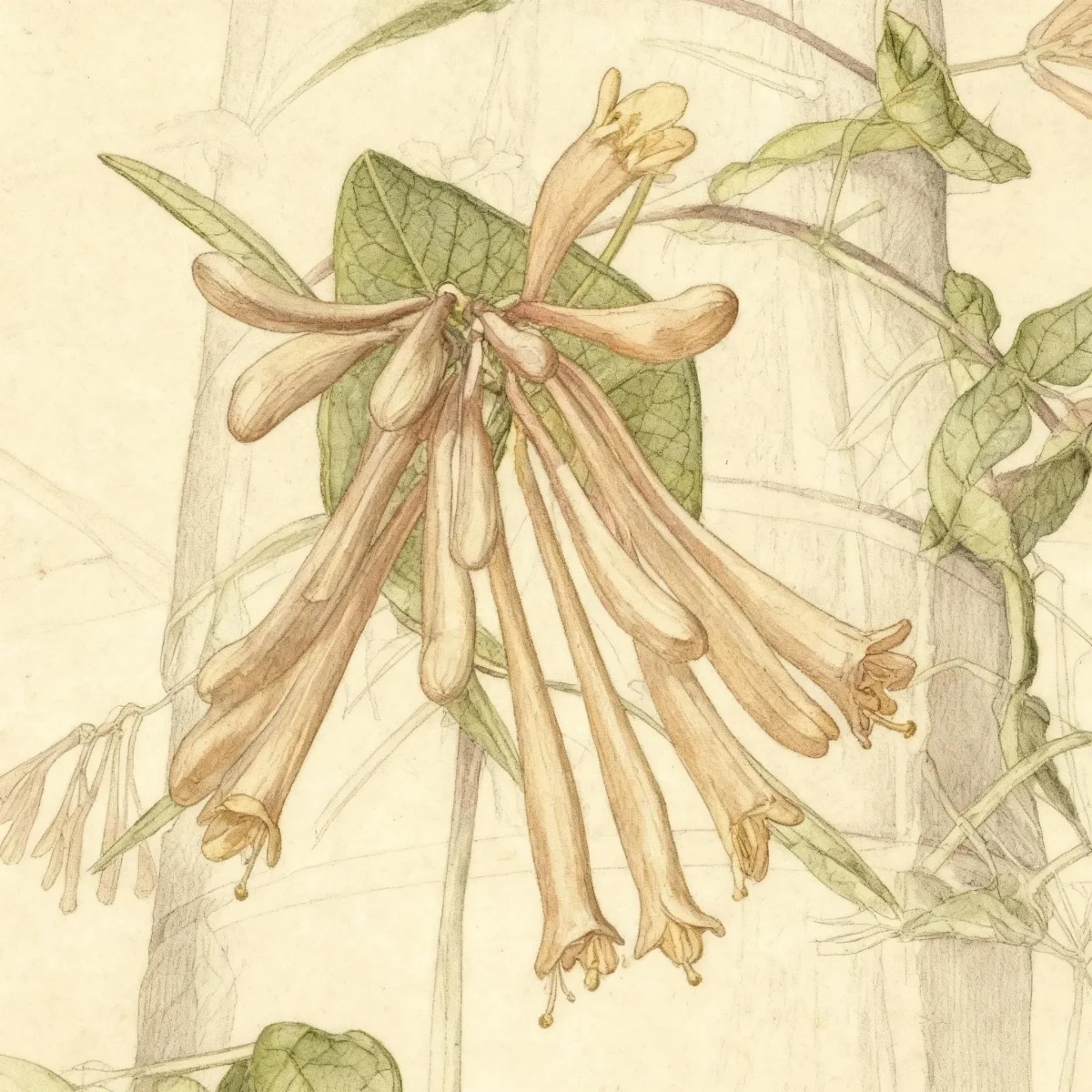
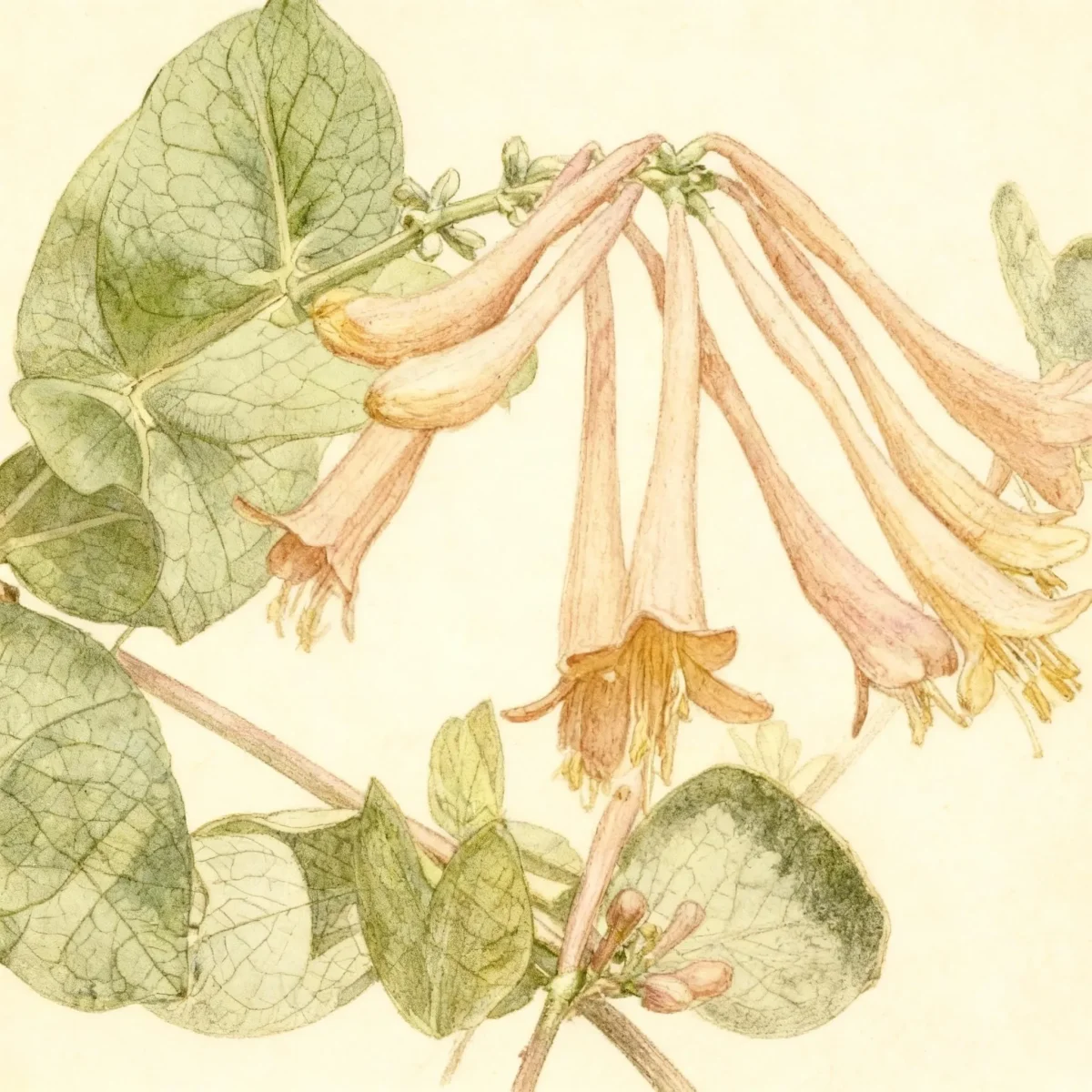
Lonicera sempervirens, commonly called trumpet honeysuckle, is a vigorous, deciduous, twining vine which typically grows 10-15’ (less frequently to 20’) and is one of the showiest of the vining honeysuckles. It is primarily native to the southeastern U.S., but has escaped from gardens and naturalized in many other areas of the eastern U.S. Including several counties in central and southern Missouri where it typically occurs along roadsides, along stream banks and in thickets (see Steyermark). Large, non-fragrant, narrow, trumpet-shaped flowers are scarlet to orangish red on the outside and yellowish inside. Flowers appear in late spring at stem ends in whorled clusters. They are attractive to hummingbirds, butterflies and bees. Inedible red berries form in late summer to early fall and can be ornamentally attractive. The small red berries are attractive to birds. Oval, bluish-green leaves are glaucous beneath. This vine is evergreen in the warm winter climates of the deep South.Genus name honors Adam Lonitzer (1528-1586), German botanist, the author of an herbal (Kreuterbuch) many times reprinted between 1557 and 1783.Specific epithet means evergreen.‘Alabama Crimson’ is a crimson-flowered cultivar that typically grows 10-20’ long. It is noted for its dark blue-green leaves, tubular crimson flowers and red berries. The bright crimson flowers (to 2” long) in terminal whorls bloom primarily from May to June, with some sporadic additional bloom until fall.
Tolerances
- Deer
- Clay Soil
- Black Walnut
Potential Problems
This cultivar generally benefits from low pest and disease pressure. Powdery mildew and minor leaf spots can occasionally appear, especially when the plant is situated in hot, humid summer climates or if air circulation is poor. Monitor for the occasional presence of aphids or leaf miners, though serious infestation is rare. Ensuring good air movement around the foliage through proper spacing or pruning helps mitigate fungal issues.
Frequently Asked Questions
What hardiness zones is Trumpet honeysuckle suitable for?
This plant, Lonicera sempervirens ‘Alabama Crimson’, is hardy across USDA Zones 4 through 9, offering versatility across many regions.
How large does Trumpet honeysuckle grow?
Lonicera sempervirens ‘Alabama Crimson’ typically reaches heights between 10 to 20 feet, with a moderate spread between 3 and 6 feet.
What sun exposure does Trumpet honeysuckle need?
This vine requires full sun for the absolute best flowering performance, although it can adapt to some light shade.
When does Trumpet honeysuckle bloom?
The primary bloom time for this variety is May to June, showcasing distinctive crimson red flowers.
Conclusion
The Lonicera sempervirens ‘Alabama Crimson’ is a spectacular choice for vertical gardening, delivering vibrant, hummingbird-attracting crimson blooms with minimal effort. Its low maintenance and tolerance for various soils make the Trumpet honeysuckle a reliable performer. Before planting, confirm your local hardiness zone is within the 4 to 9 range and prepare a sturdy support structure for this enthusiastic grower.
Wildlife Benefits
The tubular, bright red flowers of Lonicera sempervirens ‘Alabama Crimson’ are specifically adapted for pollination by hummingbirds. Planting this vine near decks or patios provides excellent viewing opportunities for these hovering visitors throughout the early summer months. Furthermore, the small red berries that follow the bloom, while inedible to humans, are a food source highly valued by native birds later in the season.
Pruning and Training Schedule
Effective training is essential to maximizing the visual impact of this twining vine. Install a strong trellis, wire system, or arbor before planting, as mature Trumpet honeysuckle can become heavy. Gently wrap new shoots around the support structure as they emerge in spring to guide their growth direction. For maintenance, prune immediately after the main May/June flowering concludes to shape the plant and remove spent flower clusters; avoid late-season pruning to protect next year’s flower wood.