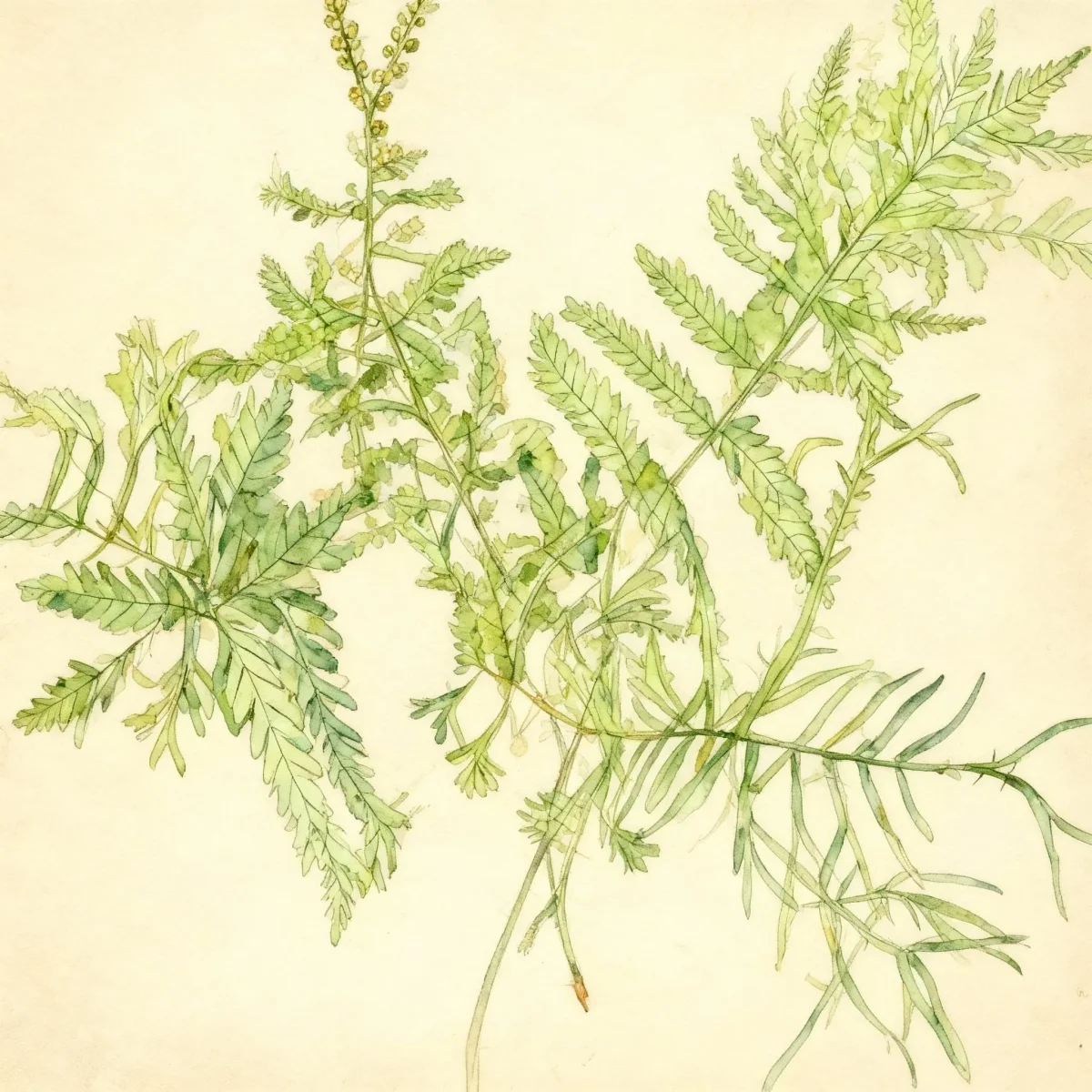
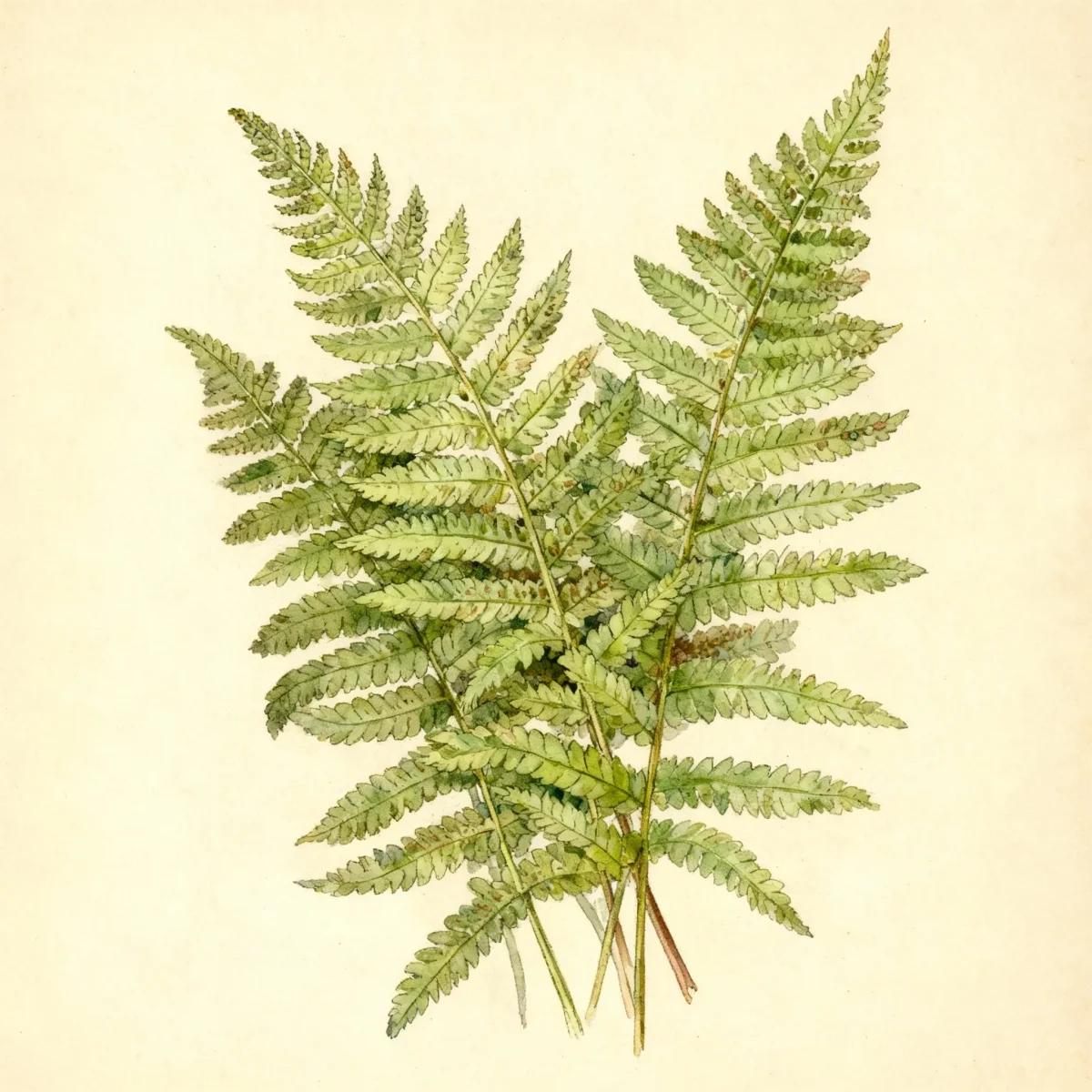
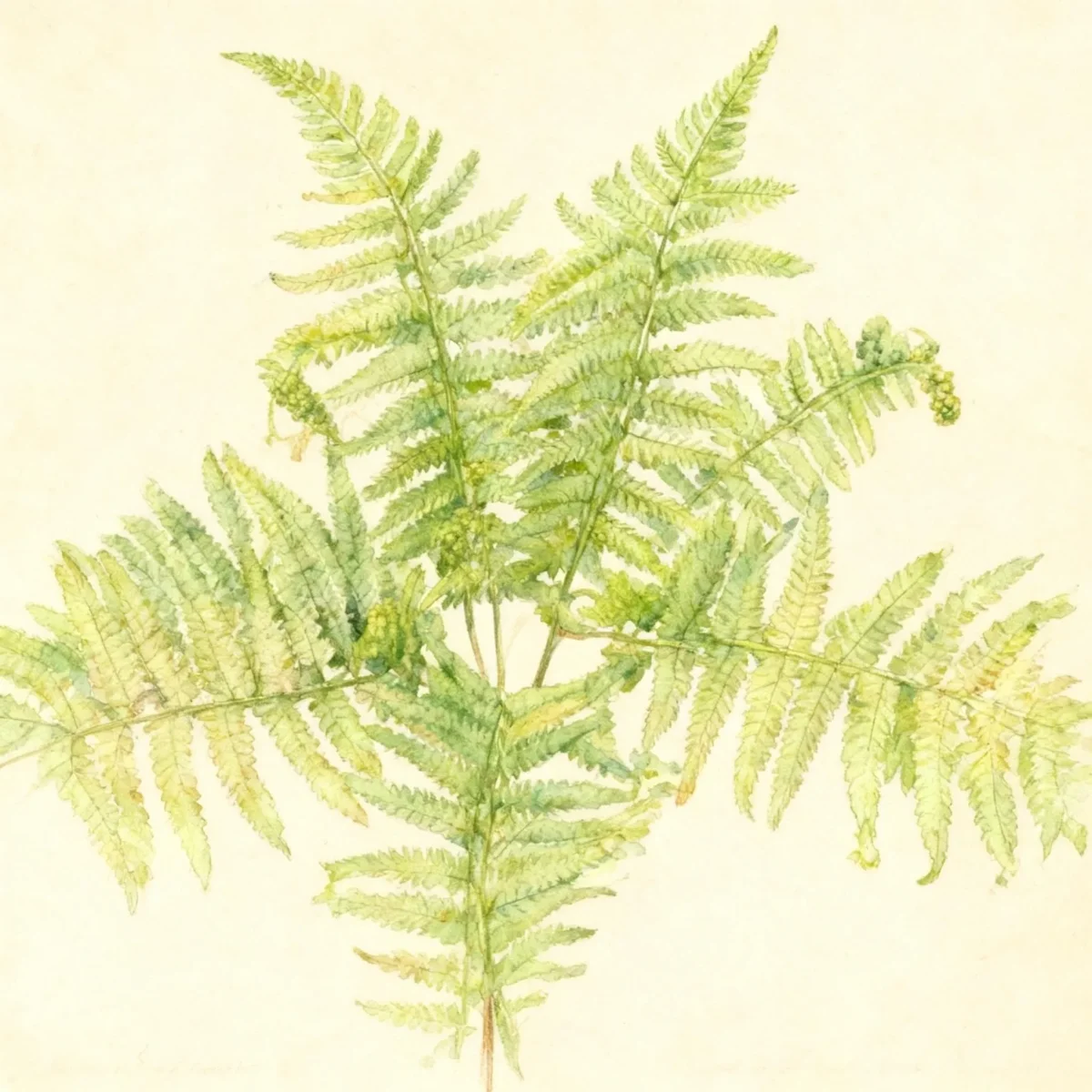
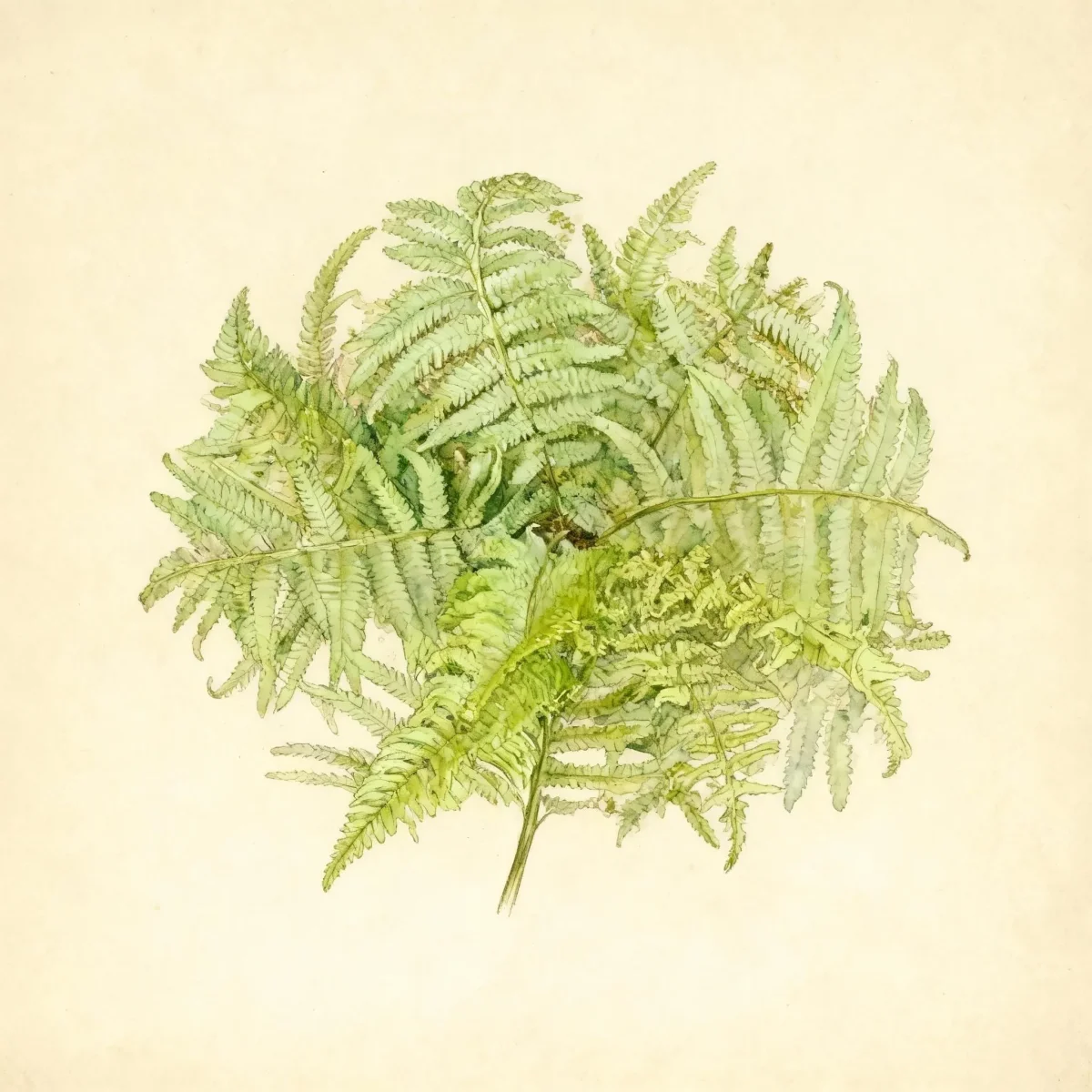
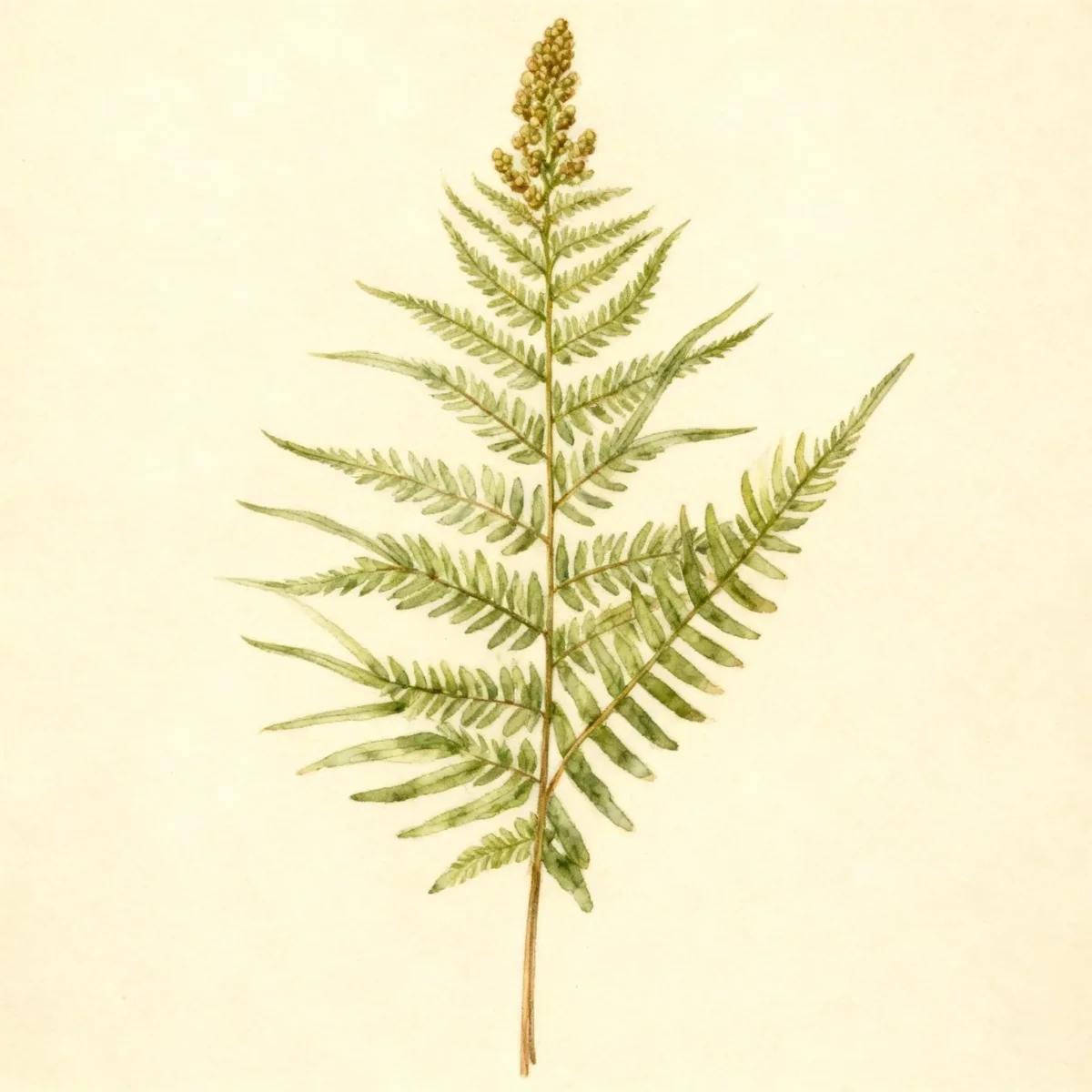
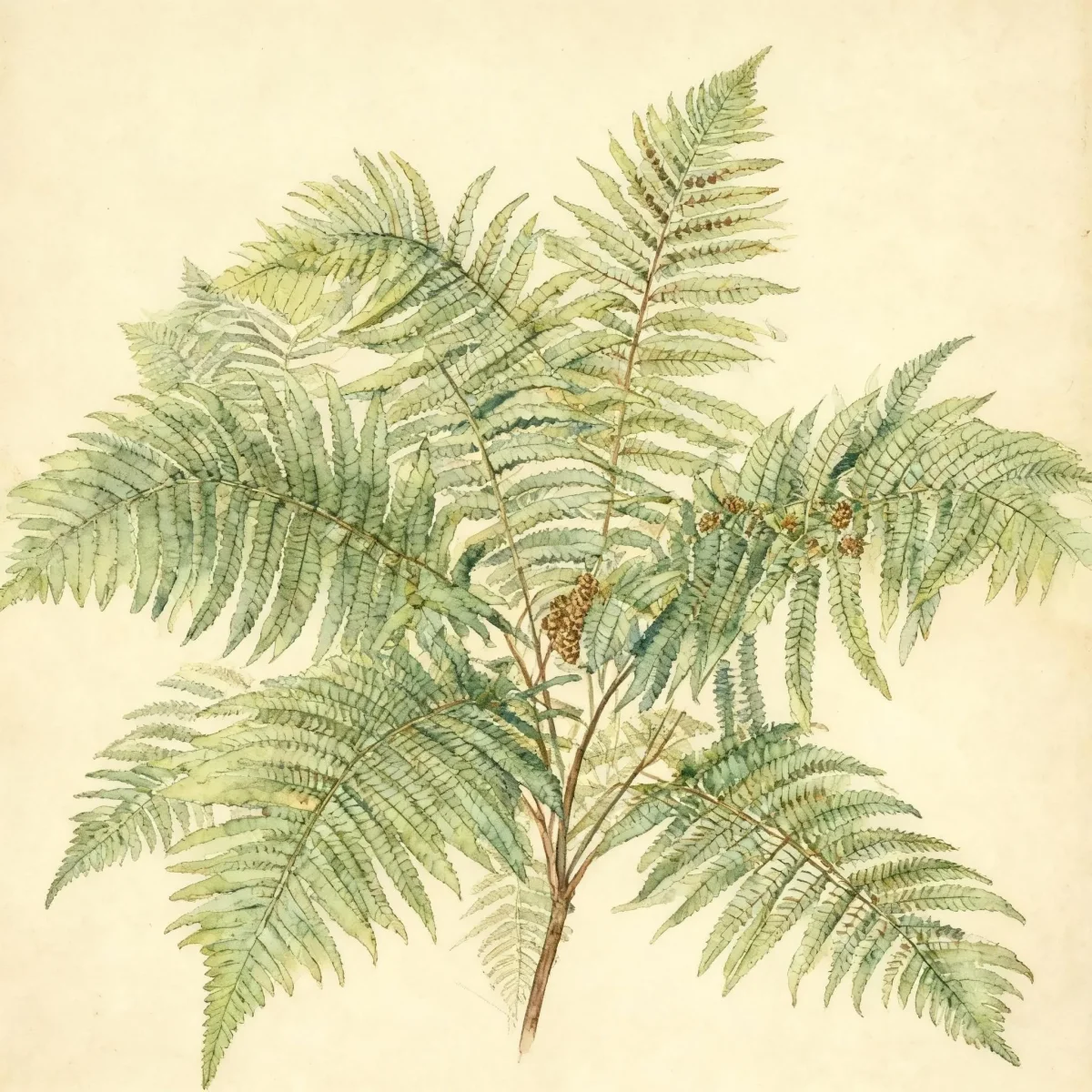
Male fern (Dryopteris filix-mas 'Crispatissima')
Discover Dryopteris filix-mas 'Crispatissima', a low-maintenance Male fern for deep shade. Hardy in zones 4-8.
Scroll down to discover growing tips, care requirements, companion plants, and more
Complete Plant Information
Overview
The Dryopteris filix-mas ‘Crispatissima’, commonly known as the Male fern, offers excellent texture for shaded landscapes. This cultivar is prized for its ornately twisted and crinkled pinnae margins, providing an unusually decorative element compared to standard ferns. It is a robust, low-maintenance perennial that thrives where many flowering plants struggle.
As a deciduous fern, the Male fern provides reliable, year-round garden structure, although its appearance is most dramatic during the growing season. It performs best when provided consistent moisture, making it an ideal choice for creating lush, cool woodland settings under a dense canopy. Gardeners appreciate the reliability of Dryopteris filix-mas ‘Crispatissima’ for establishing deep shade areas.
This specific variety, sometimes referred to as the dwarf crinkled male fern, stays relatively compact, reaching only about 15 inches tall according to some descriptions, yet it maintains the stately presence typical of the Dryopteris genus. Its tolerance for heavy shade and clay soil enhances its practical application in diverse garden environments.
Fast Facts
- Plant Family: Dryopteridaceae
- Plant Type: Fern
- Hardiness Zones: USDA Zones 4-8
- Size at Maturity:
- Height: 1-1.5 ft
- Spread: 0.75-1 ft
- Bloom Time: Non-flowering
- Sun Exposure: Part shade to full shade
- Water Needs: Medium
- Maintenance Level: Low
How to Grow
Planting the Dryopteris filix-mas ‘Crispatissima’ is best done in the spring or fall, ensuring the crowns are set level with the soil surface. This Male fern establishes well in average, well-drained soils, although it truly excels in humus-rich, consistently moist conditions. Incorporate plenty of organic matter before planting to mimic its preferred woodland habitat. Locate it in areas protected from harsh winds, which can damage the delicate fronds.
Watering needs are medium; the soil must not be allowed to dry out, especially during establishment or hot summer periods. While no heavy fertilization is required, enriching the soil with compost annually helps sustain the deep moisture and organic content that the Dryopteris filix-mas ‘Crispatissima’ needs to flourish. Avoid overhead watering late in the day if possible to help mitigate potential fungal issues, though serious problems are rare.
Maintenance for this fern is generally low. In late winter or early spring, trim away any dead or tattered fronds from the previous season before new growth emerges. The crowns of this Male fern can be divided regularly if you wish to propagate new clumps or manage spreading in tighter spaces.
Landscape Uses
The reliability of Dryopteris filix-mas ‘Crispatissima’ makes it an excellent anchor for woodland or shade gardens. Its upright yet arching form provides vertical interest without becoming overly aggressive. This fern is superb for softening the edges of stone pathways or integrating into rock gardens, adding a contrasting texture to bolder foliage plants.
Consider planting the Dwarf crinkled male fern as an effective specimen plant where deep shade persists, allowing its unique frond structure to be easily appreciated. It pairs beautifully with hostas, bleeding hearts, and various heucheras, all of which share similar requirements for moist, humusy soil and shade protection.
Standout Features
Noteworthy Characteristics
Dryopteris filix-mas, commonly called male fern, is native to Europe and North America. This is a large, arching, deciduous male fern with erect, stout rhizomes and medium green blades (fronds) that grow to 3’ (less frequently to 4’) tall. Blade is pinnate-pinnatifid (almost 2-pinnate) with 20-30 pair of long-pointed pinnae (leaflets) per blade. Each leaflet is divided into short, rounded, finely-serrated pinnules (sub-leaflets). Sori (fruit dots) on the leaflets are located closer to the midvein than the margin. Crisped, crested, forked and dwarf variants of this species exist. In North America, this fern ranges from Newfoundland to British Columbia, from New England to the Great Lakes, and from South Dakota to Washington south to California and Texas. It is typically found in cool, moist, rocky woods, but in New England it is uncommon and limited only to areas with calcareous soils. In Europe, it is commonly found in a variety of locations including roadsides.Genus name from Greek dryas meaning oak and pteris meaning fern in reference to the presence of some species of wood ferns in woodland areas populated with oaks.Specific epithet means male fern in reference to the somewhat vigorous growing habits of ferns in this species.‘Crispatissima’ (sometimes commonly called dwarf crinkled male fern) that is noted for its ornately twisted pinnae margins. Triangular green fronds are narrow and erect, typically growing to 15” tall.
Tolerances
- Rabbit
- Heavy Shade
- Clay Soil
Potential Problems
This variety of Male fern generally experiences no serious insect or disease problems when sited correctly. Poor drainage or prolonged periods of dryness are the primary threats to the health of Dryopteris filix-mas ‘Crispatissima’. Ensure soils are well-drained to prevent crown rot, and consistent moisture will deter common fern stress issues.
Frequently Asked Questions
What hardiness zones is Male fern (Dryopteris filix-mas ‘Crispatissima’) suitable for?
This fern is suitable for USDA Zones 4 through 8, offering a broad range of adaptability across temperate climates.
How large does Male fern (Dryopteris filix-mas ‘Crispatissima’) grow?
The Dryopteris filix-mas ‘Crispatissima’ typically reaches a height between 1 to 1.5 feet, with a spread of 0.75 to 1 foot.
What sun exposure does Male fern (Dryopteris filix-mas ‘Crispatissima’) need?
This cultivar performs best in environments ranging from part shade to full shade, thriving under a protective canopy.
When does Male fern (Dryopteris filix-mas ‘Crispatissima’) bloom?
As a fern, the Dryopteris filix-mas ‘Crispatissima’ is non-flowering and reproduces via spores, not traditional blooms.
Conclusion
The Dryopteris filix-mas ‘Crispatissima’ brings unique textural appeal and reliable performance to challenging garden environments. If you seek a low-maintenance accent capable of handling heavy shade and clay, this Male fern is an excellent selection. Before planting, confirm your site meets its water needs and check your local USDA hardiness zone compatibility.
Companion Planting in Shade Gardens
When planning a vignette around your Dryopteris filix-mas ‘Crispatissima’, look for other shade-loving perennials that complement its upright, crinkled structure. Plants offering broad, smooth leaves contrast beautifully with the finely divided texture of this fern. Consider using Hosta varieties with blue or chartreuse foliage for textural contrast, as they share similar moisture preferences. Astilbes are another wonderful partner, providing summer color near the ground plane of the Male fern.
Propagation Tips
The most straightforward way to increase your stock of this desirable cultivar is through division. Since the crowns of the Dryopteris filix-mas ‘Crispatissima’ can be divided regularly, do this activity either in early spring before new growth fully inflates or in early autumn. Carefully dig up the established clump, gently tease apart sections ensuring each division has healthy rhizome material and a set of developing fronds, and replant immediately into prepared, moist soil.