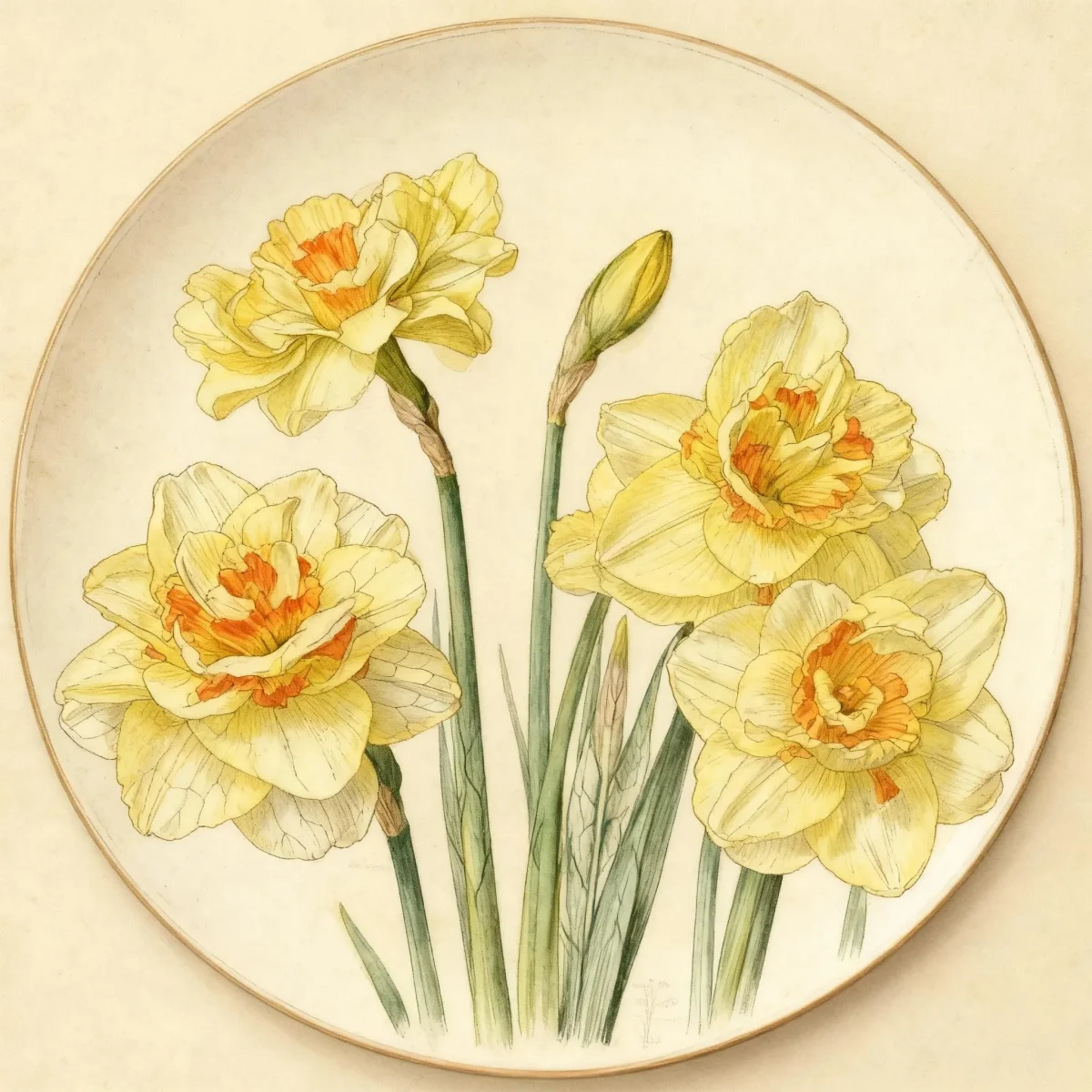
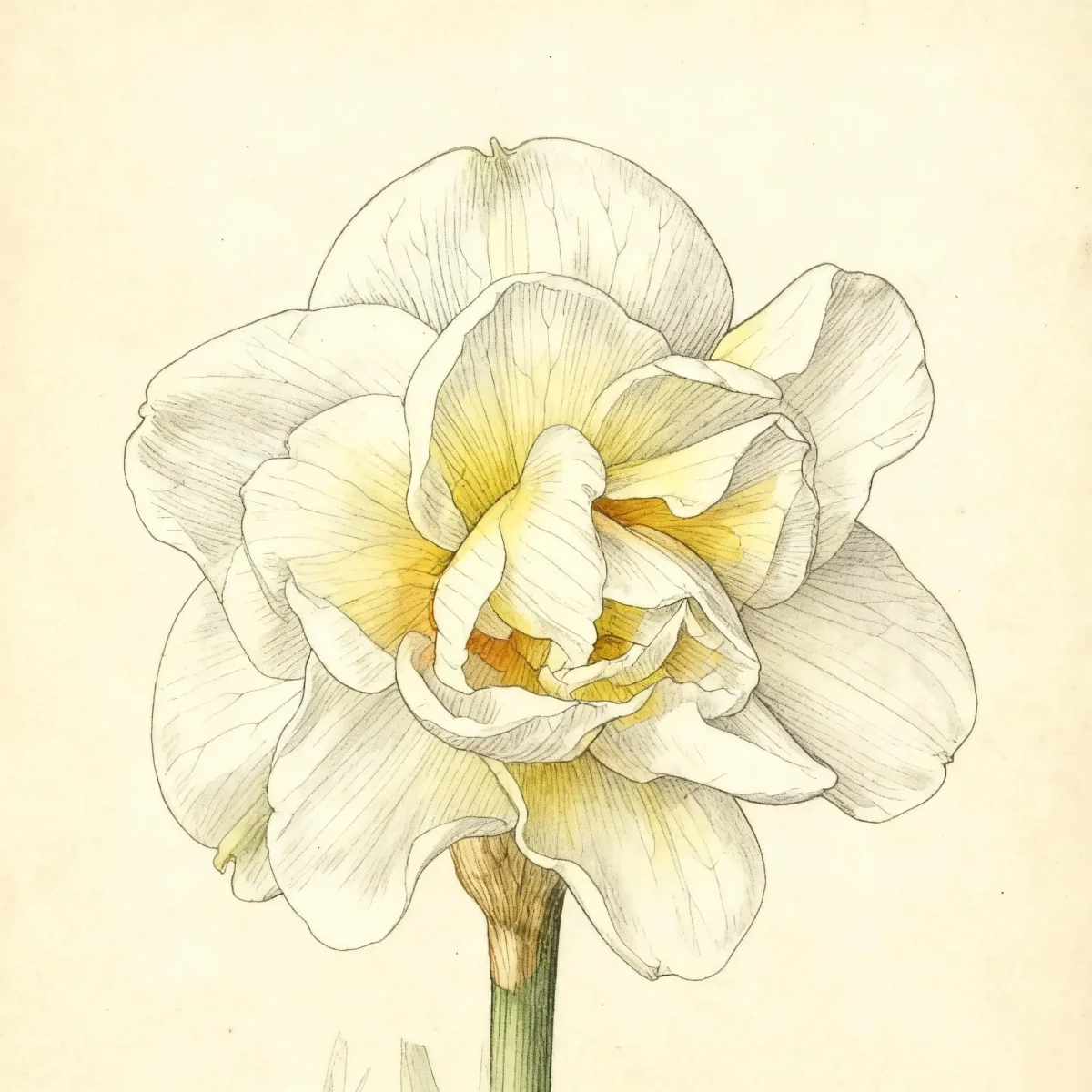
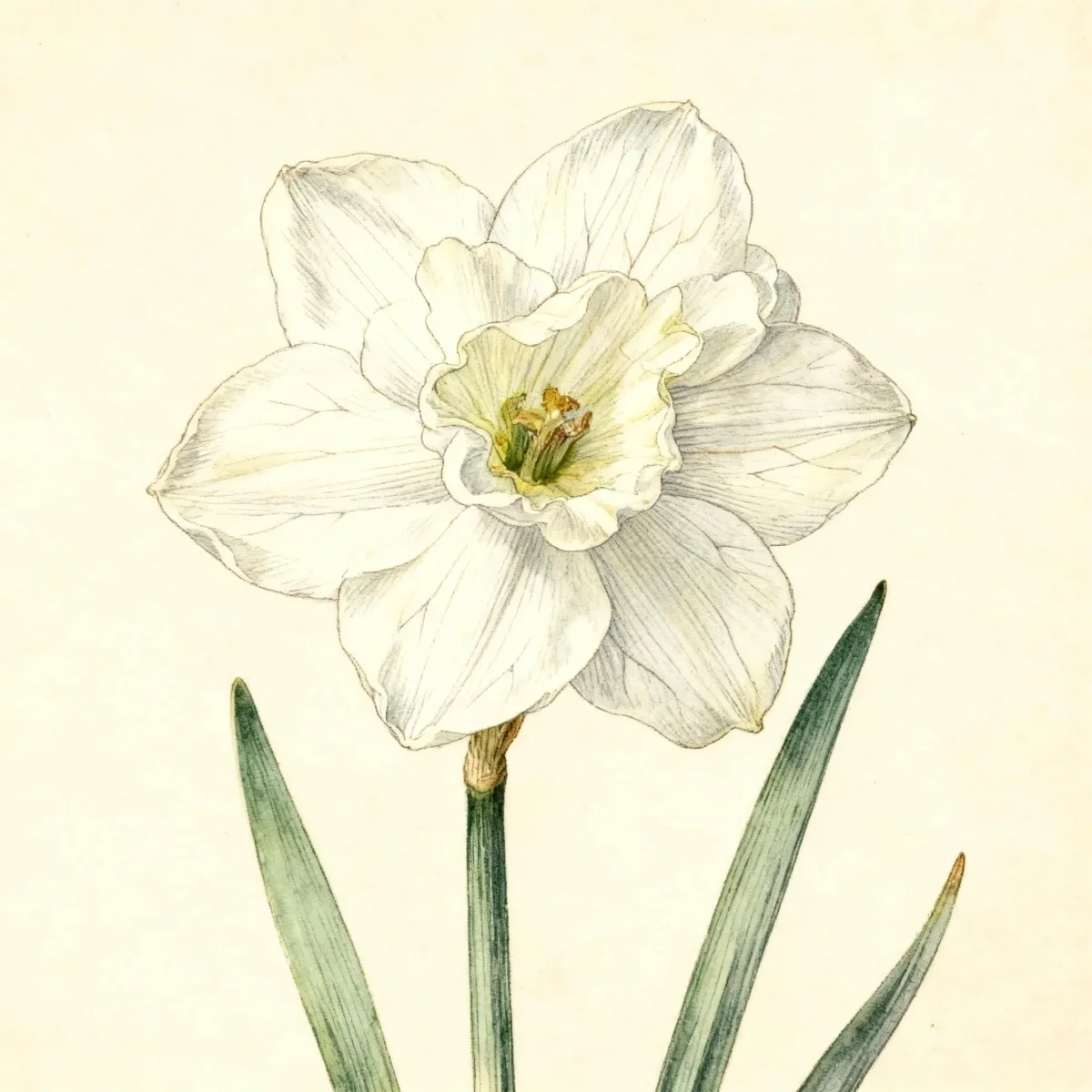
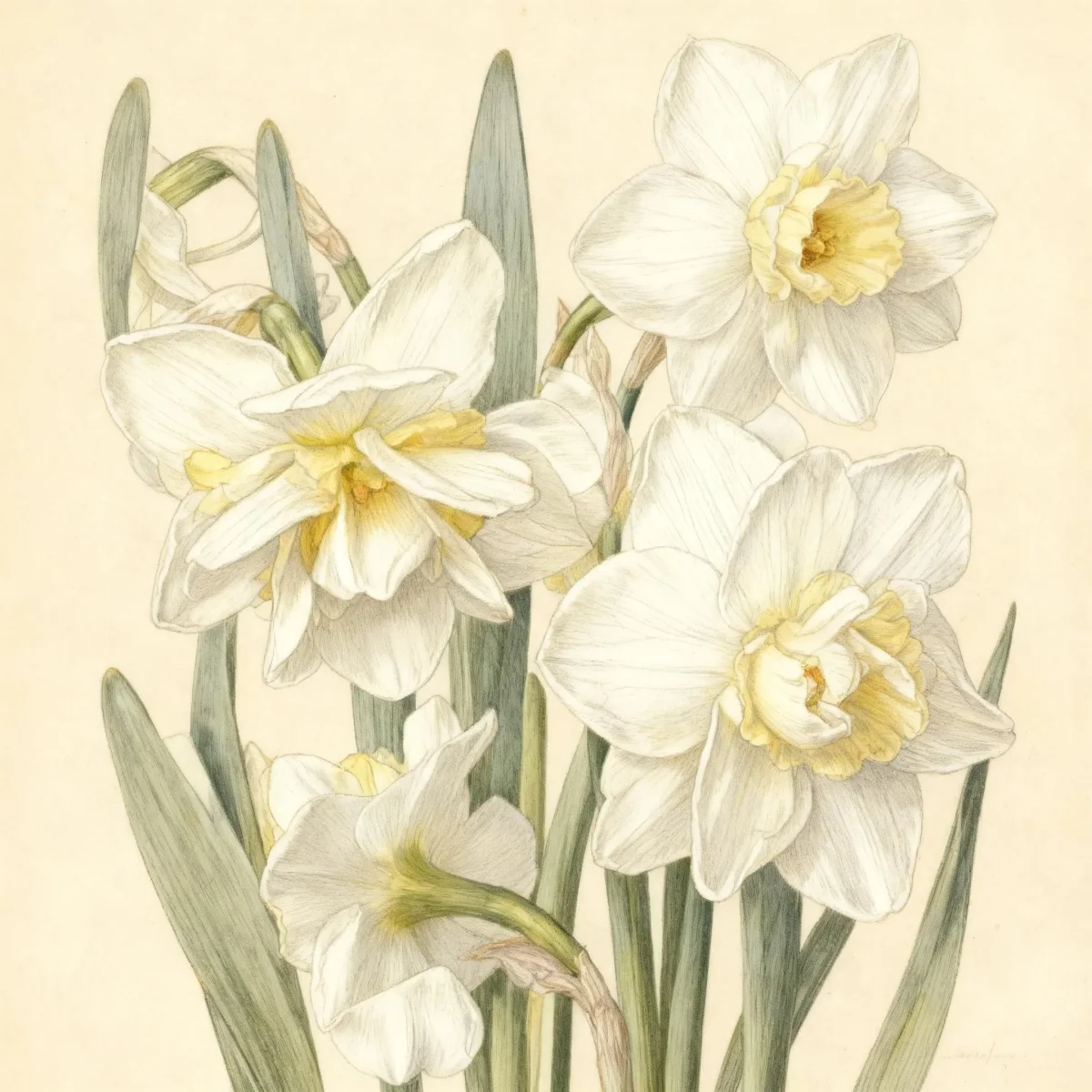
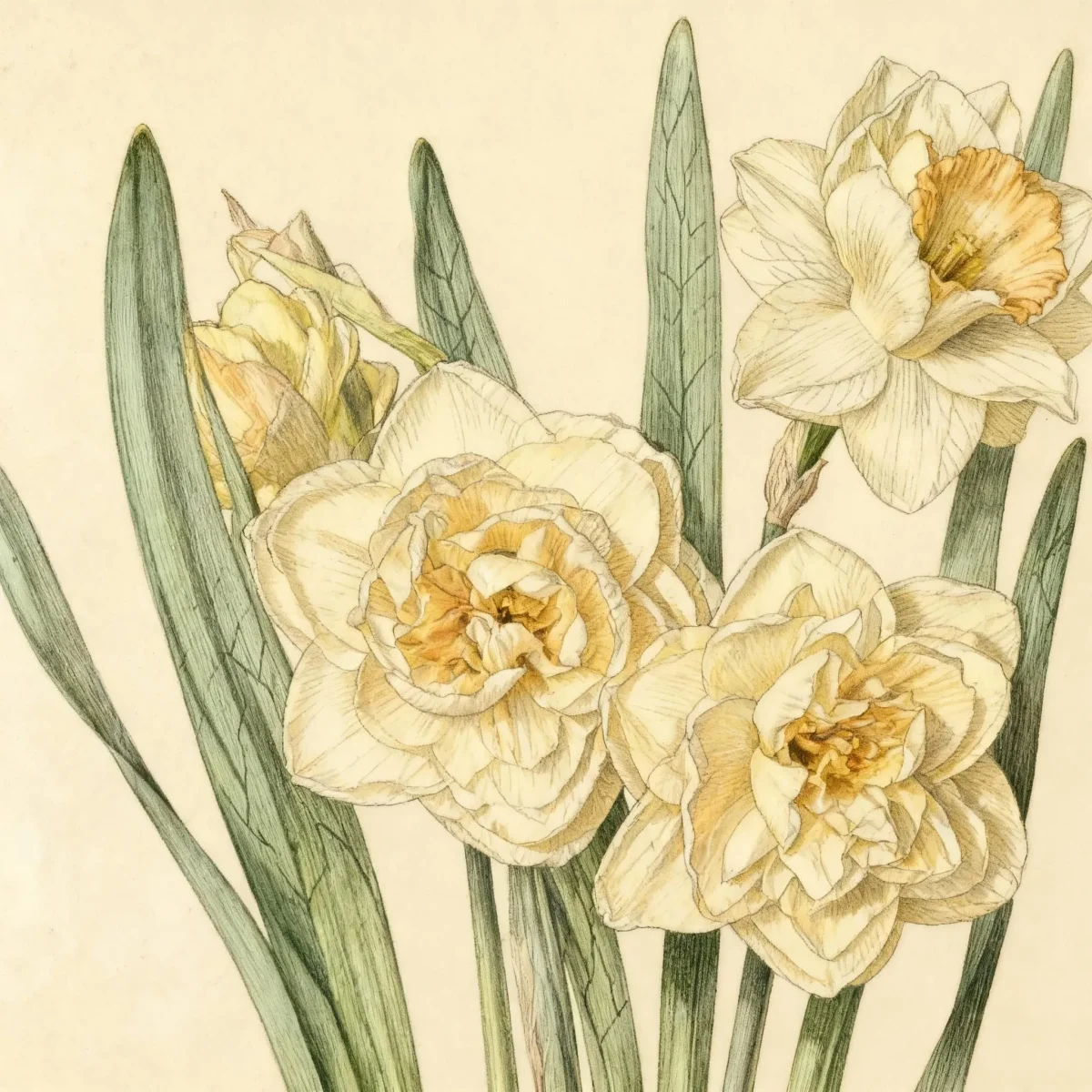
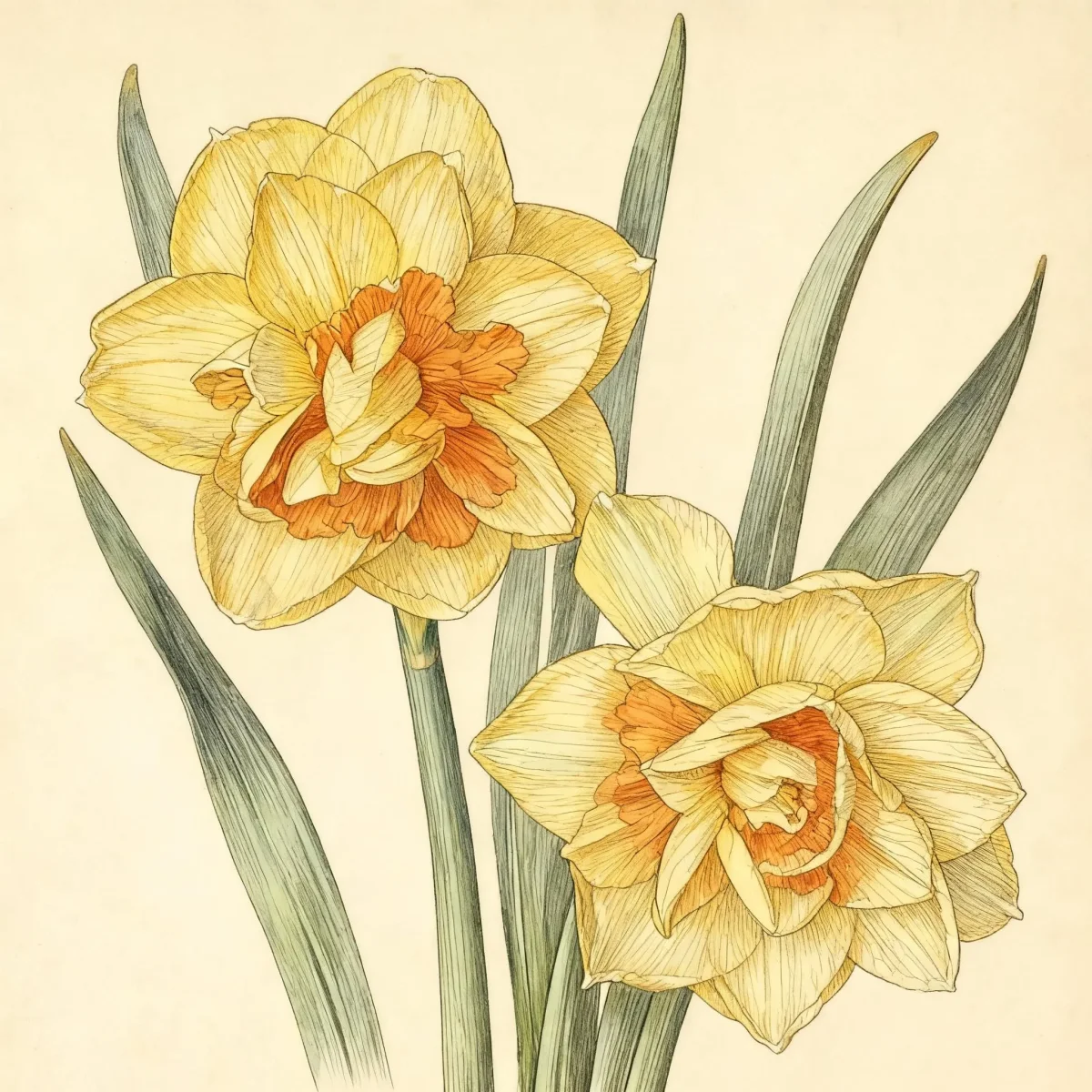
Double daffodil (Narcissus 'Meeting')
Narcissus 'Meeting' delivers beautiful, mid-season double daffodil blooms with greenish-yellow petals in USDA Zones 3-8.
Scroll down to discover growing tips, care requirements, companion plants, and more
Complete Plant Information
Overview
Narcissus ‘Meeting’ is a standout variety within the genus, valued by gardeners for its distinct, doubled blooms appearing reliably in mid-spring. As a Division IV double daffodil, it features an abundance of petals and corona segments, offering a lush texture unmatched by single-form types. This bulbous perennial thrives across a wide range of cold climates, making the vibrant yellow display of Narcissus ‘Meeting’ accessible to many gardeners.
This specific cultivar typically reaches 1 to 1.5 feet tall, emerging from sleek, strap-shaped foliage that provides essential backdrop interest. Its cultural requirements are straightforward, leaning toward low maintenance once established, mirroring the general hardiness and reliability expected from classic daffodils. Its long blooming life and propensity to naturalize ensure that your spring landscape is consistently enhanced by this showy performer.
For optimal impact, plant Narcissus ‘Meeting’ in quantities, allowing the mid-season color to flood beds and borders. Gardeners appreciate the resilient nature of this double daffodil, which, despite its ornate flower structure, requires minimal fuss regarding pests and diseases, provided cultural needs, especially drainage, are met.
Fast Facts
- Plant Family: Amaryllidaceae
- Plant Type: Bulb
- Hardiness Zones: USDA Zones 3-8
- Size at Maturity:
- Height: 1-1.5 ft
- Spread: 0.5-1 ft
- Bloom Time: April
- Bloom Description: Greenish-yellow petals and yellow corona
- Sun Exposure: Full sun to part shade
- Water Needs: Medium
- Maintenance Level: Low
How to Grow
Planting Narcissus ‘Meeting’ bulbs must occur in the early to mid-fall to allow sufficient root development before the ground freezes. Choose a site offering full sun to light afternoon shade, ensuring the location benefits from well-drained soil, preferably an organically rich loam, as poor drainage is the primary threat to bulb health. Proper depth is crucial: aim to set the bulb 2 to 3 times as deep as the bulb is tall, ensuring at least 3 inches of soil tops the bulb, spacing them generally 4 to 8 inches apart.
During the active growing season (spring), keep the soil uniformly moist, though this tough double daffodil tolerates drier conditions once the foliage begins to yellow naturally. Immediately after the blooms fade in spring, remove the spent flower stem, but crucially, leave the foliage intact. The leaves must be allowed to yellow completely to photosynthesize and recharge the bulb for next year’s display of Narcissus ‘Meeting’.
These bulbs are perfect for leaving undisturbed for many seasons; however, if bloom quality wanes significantly, division is necessary. Wait until the foliage has fully died back, then carefully lift and separate the clumps before replanting them promptly. Remember that light catches the moving blooms best, so position plants so that shady areas are behind the planting, allowing the flowers to naturally face the best available light source.
Landscape Uses
Daffodils, including the striking Narcissus ‘Meeting’, are foundational elements for year-round garden structure, unlike many annuals or short-lived perennials. They shine when planted en masse, creating bold sweeps of color that signal the true arrival of spring across beds, borders, and informal woodland settings. If you desire a naturalized look, allow the groups of bulbs to spread; this reduces the need for repetitive division later on.
This double daffodil excels when placed in the foreground of shrub borders or under deciduous trees where the spring sunlight reaches the bulbs before the tree canopy fills in. They mix beautifully with other spring bloomers such as early tulips or grape hyacinths, creating layered color effects. While they thrive in the ground, Narcissus ‘Meeting’ is also effective when planted densely in containers for patio displays, lifted, and then transferred to the garden once the container season is over.
Standout Features
Flower Qualities
- Showy
Noteworthy Characteristics
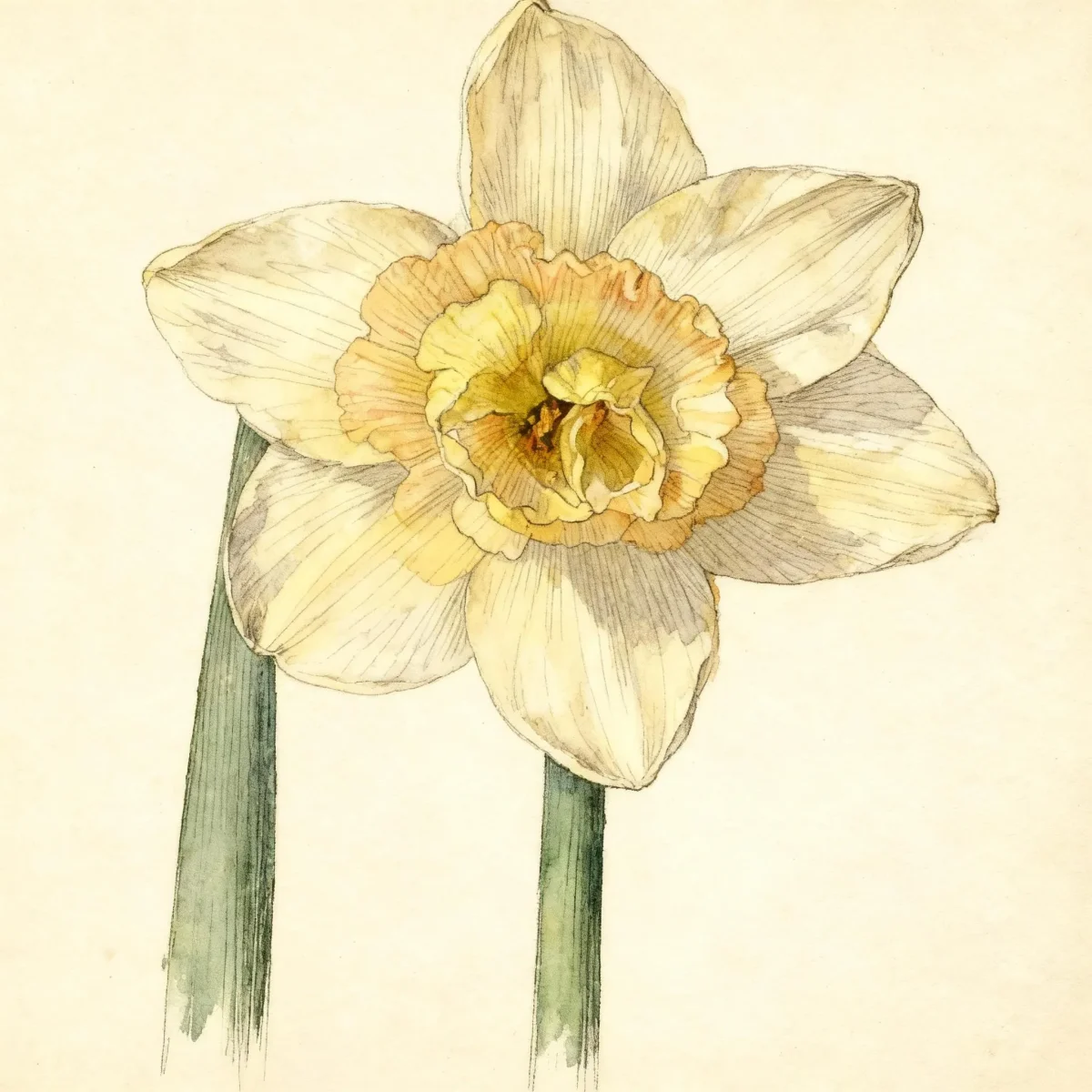
Narcissus ‘Meeting’ is classified as a double daffodil (Division IV), meaning its six petals (perianth segments) or its central cup (corona) are doubled, creating a fuller bloom than standard trumpets. Each flower exhibits light greenish-yellow petals contrasted by segments of vivid yellow in the corona, appearing mid-season in April. The genus name honors the mythical character Narcissus, infatuated by his own reflection, and these bulbs remain a cherished mainstay of the early spring garden.
Tolerances
- Rabbit
- Deer
- Drought
Potential Problems
Daffodils, including this desirable double daffodil, are generally robust and boast few serious insect or disease issues when planted in appropriate conditions. The most critical cultural requirement is excellent soil drainage; poorly drained soil invites bulb rot, which can quickly decimate a planting. Infrequently, gardeners may contend with pests like slugs and snails near emerging shoots, or occasionally internal issues like the narcissus bulb fly or nematode, though these are rare with good care. Proactively ensuring aeration and drainage prevents the vast majority of potential problems for your Narcissus ‘Meeting’.
Frequently Asked Questions
What hardiness zones is Double daffodil suitable for?
Narcissus ‘Meeting’ performs reliably in a wide temperature range, thriving best in USDA Zones 3 through 8.
How large does Narcissus ‘Meeting’ grow?
This bulb typically matures to a height between 1 and 1.5 feet, spreading approximately 0.5 to 1 foot wide.
When does Double daffodil bloom?
The blooms appear in April, featuring greenish-yellow petals and a contrasting yellow corona.
What sun exposure does Narcissus ‘Meeting’ need?
For the best flowering, ensure your planting receives full sun, though it tolerates partial shade, especially in hotter climates.
Conclusion
The Narcissus ‘Meeting’ offers gardeners a dependable, low-maintenance splash of texture and color right when the garden needs it most. As a classic double daffodil, its unique flower form adds deep visual interest early in the season. Ensure you plant these bulbs in early fall in well-draining soil within USDA Zones 3-8 to enjoy these showy spring perennials for years to come.
Companion Planting
Selecting companions for Narcissus ‘Meeting’ involves choosing plants that tolerate similar soil moisture regimes, especially those that will emerge later in the season to help disguise the unattractive yellowing foliage. Consider pairing them with early-blooming Hellebores (Lenten Roses) which enjoy similar light conditions and help cover the daffodil’s dying leaves. Later spring bloomers such as early deciduous Iris varieties or emerging perennials like Peonies work well, as their fresh green foliage will emerge just as the daffodil foliage fades. The uniform height of this 1 to 1.5-foot variety also makes it an excellent middle-layer component in a layered border design.
Design Ideas for Mass Planting
For the most dramatic effect, utilize the recommendation to plant Narcissus ‘Meeting’ bulbs in large, sweeping drifts rather than small, isolated clumps. Think of them as a flowing river of yellow color that guides the eye through the early spring landscape. Because they are so robust, they are effective planted near architectural elements like stone walls or dark evergreen foundation plantings, which make the bright, doubled blooms pop visually. When planning, recall that the flowers tend to face the direction of the strongest light, so place taller features or darker backgrounds opposite the main viewing area to catch the best floral display.