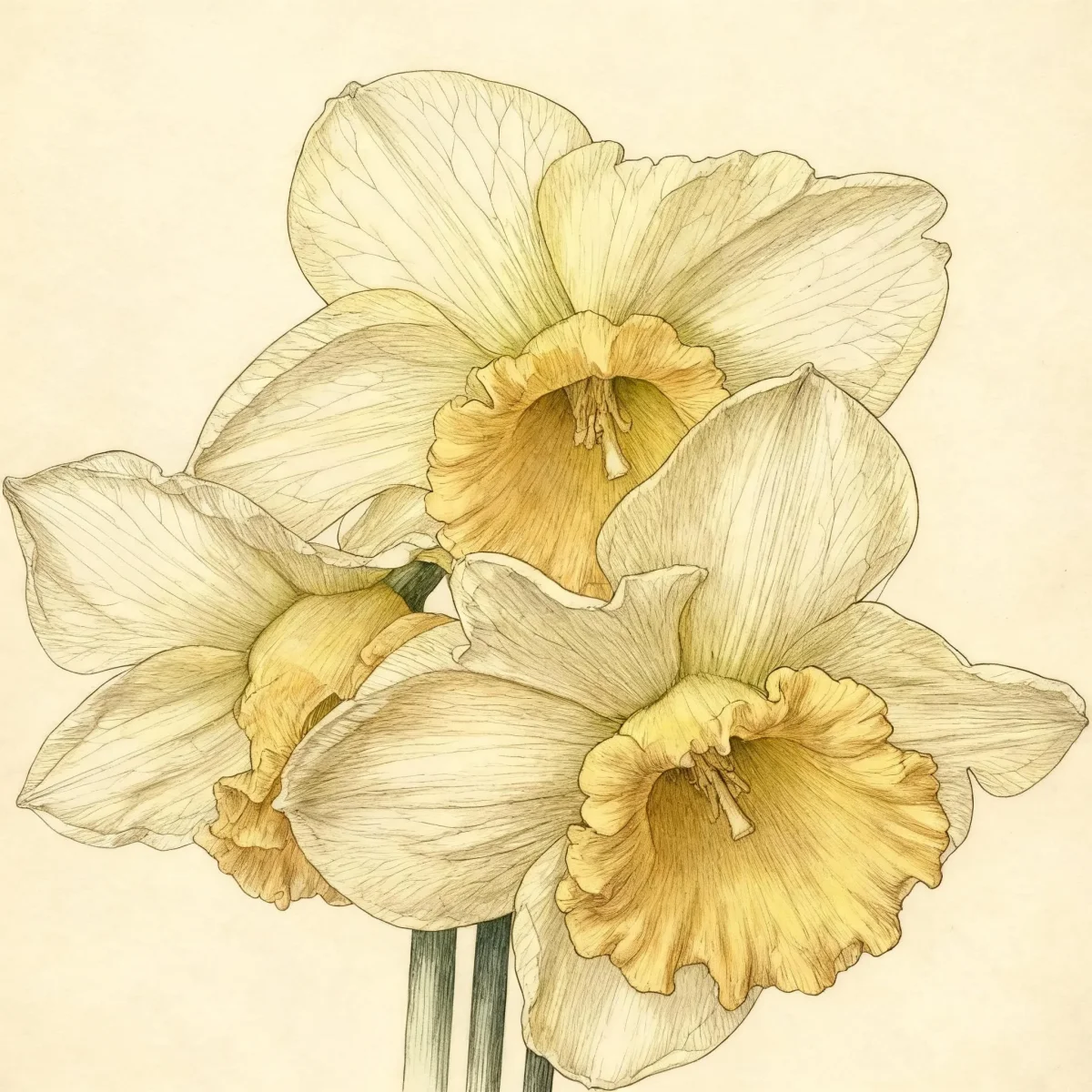
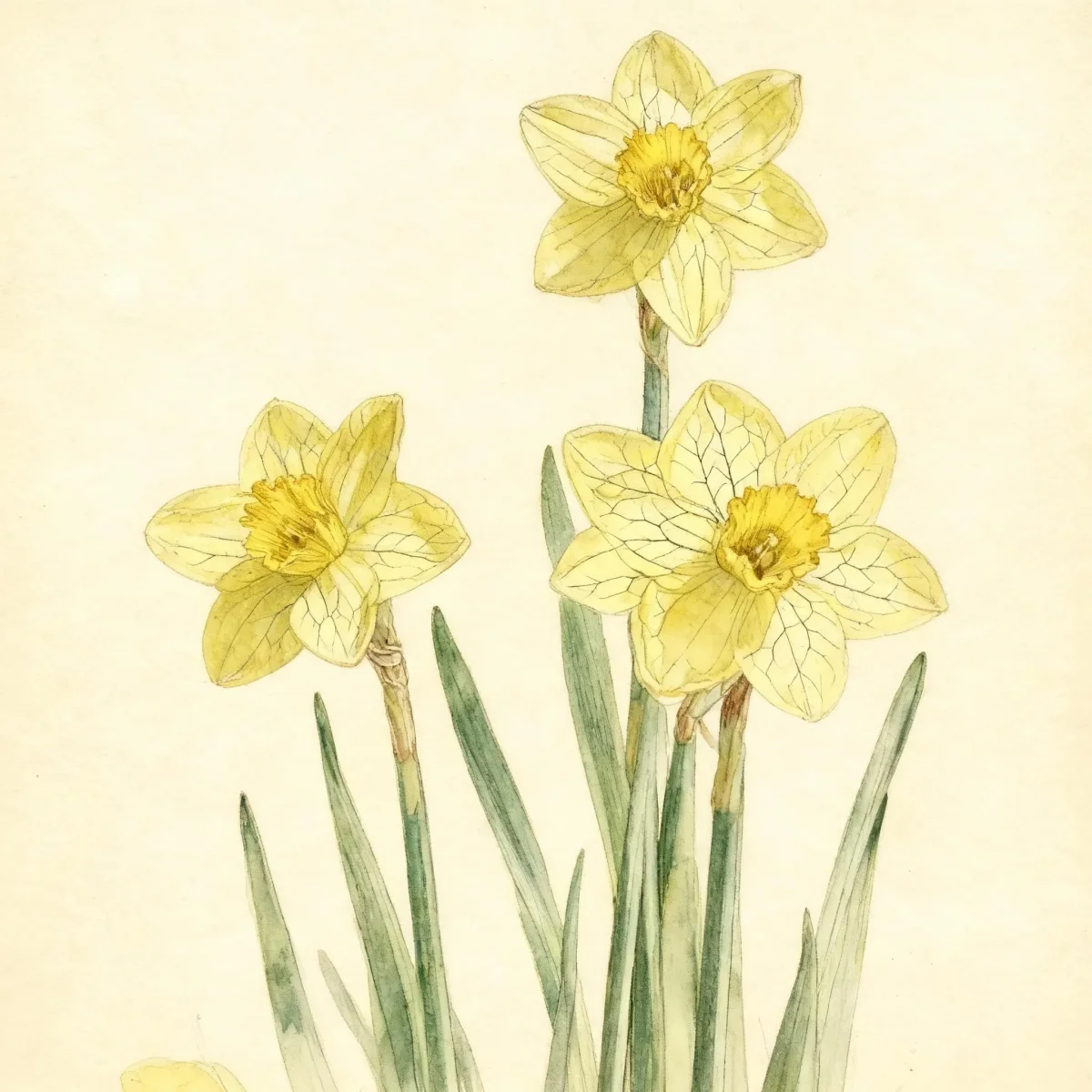
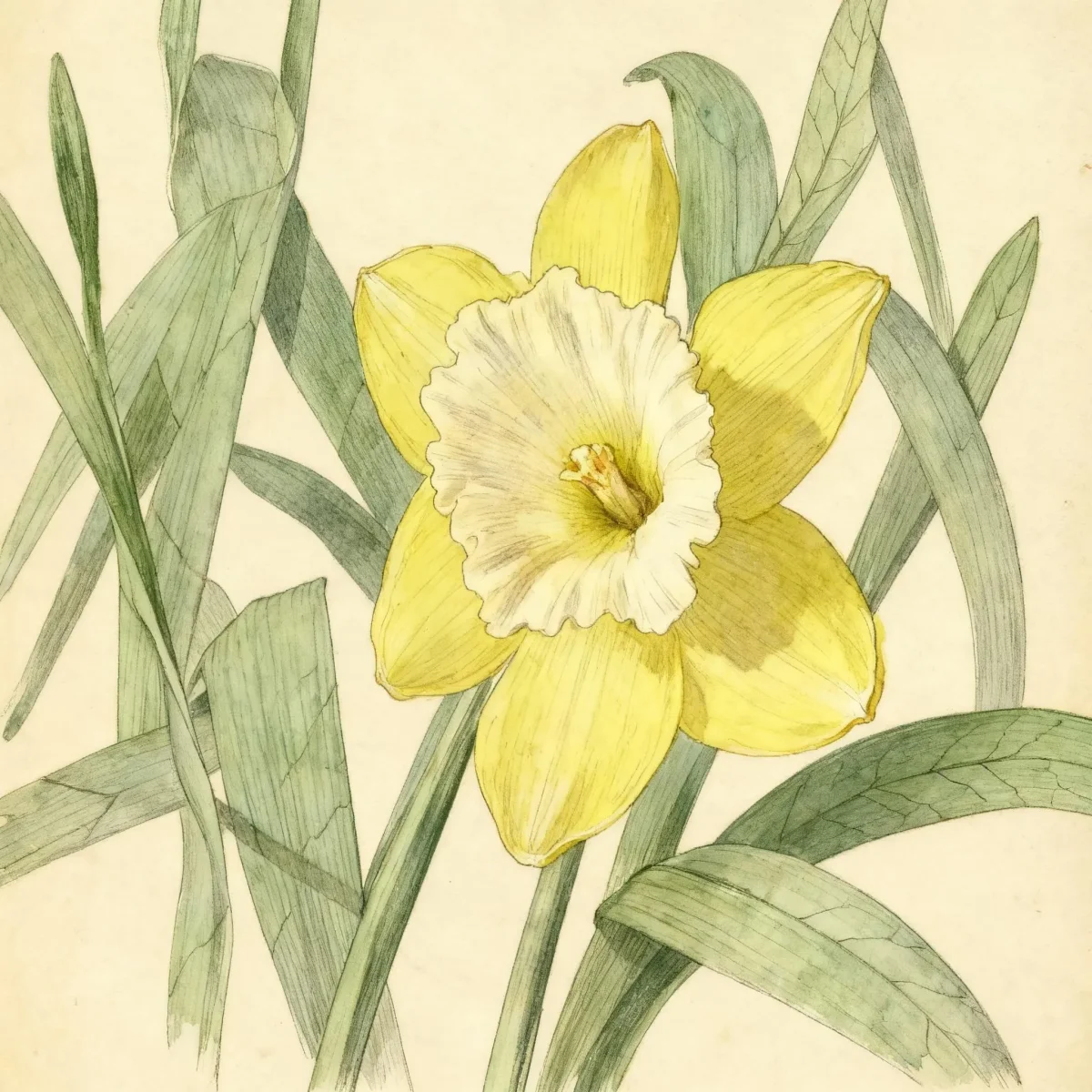
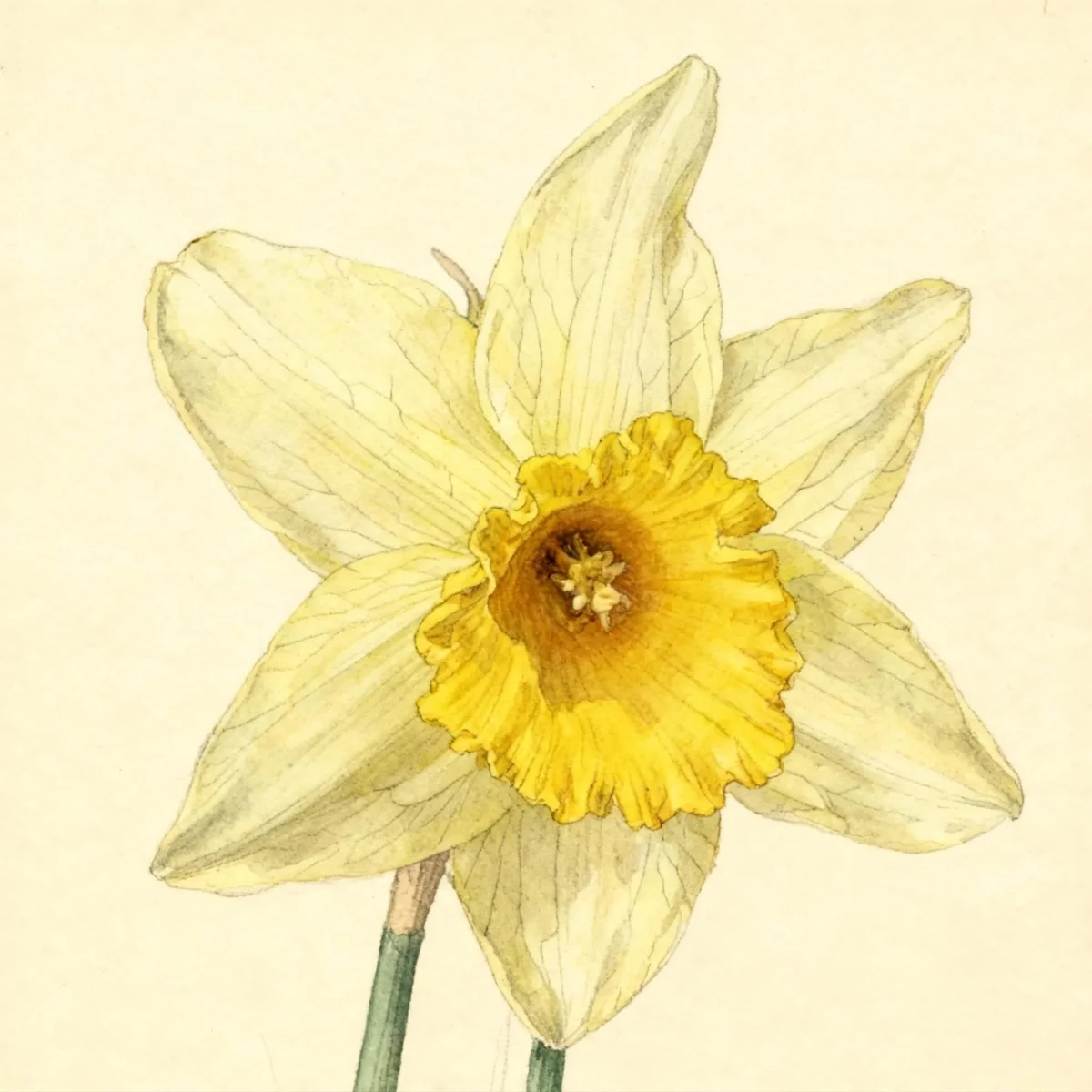
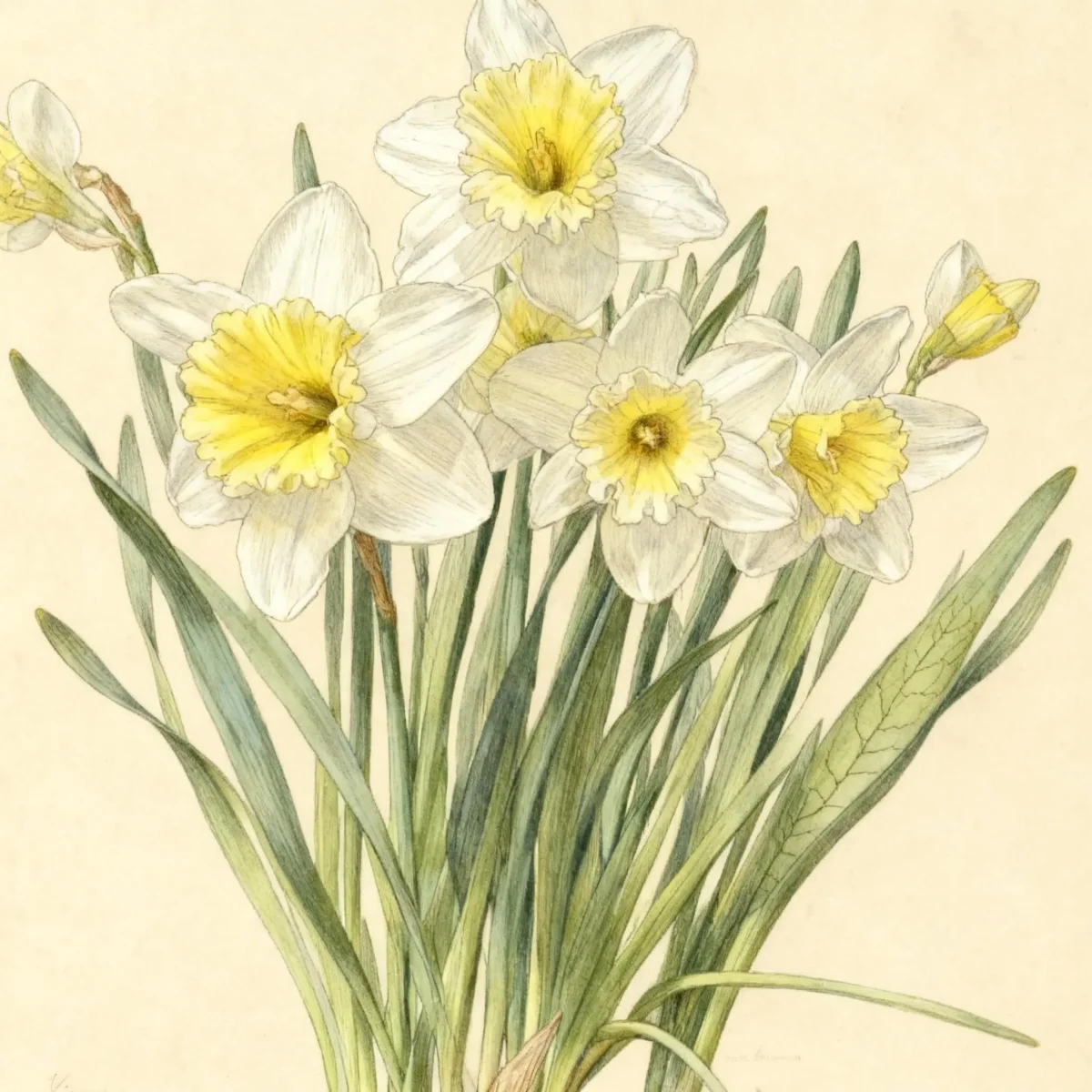
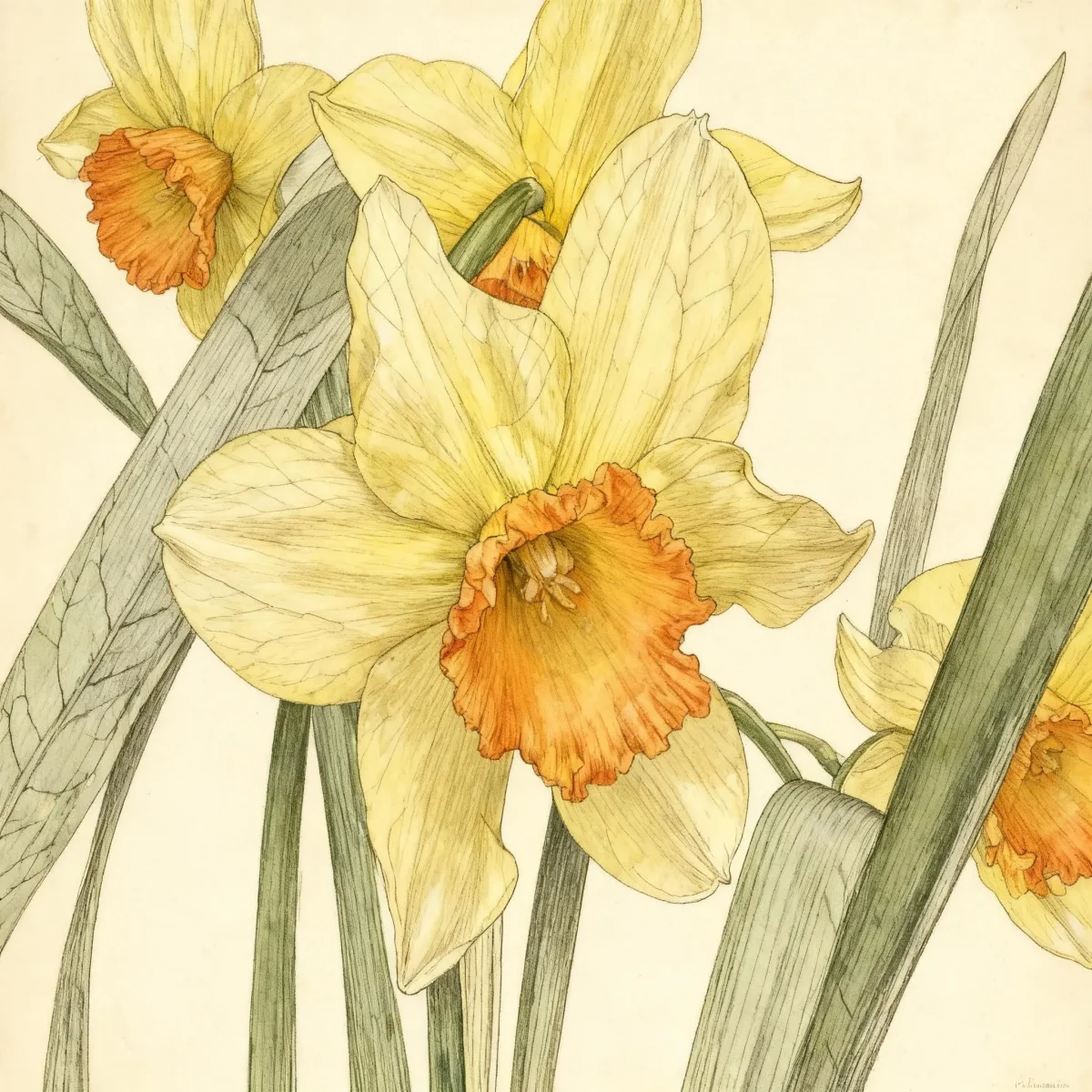
Large-cupped daffodil (Narcissus 'Stylish')
Narcissus 'Stylish' offers striking bicolor blooms—light orange petals and a strong orange cup—ideal for low-maintenance spring displays.
Scroll down to discover growing tips, care requirements, companion plants, and more
Complete Plant Information
Overview
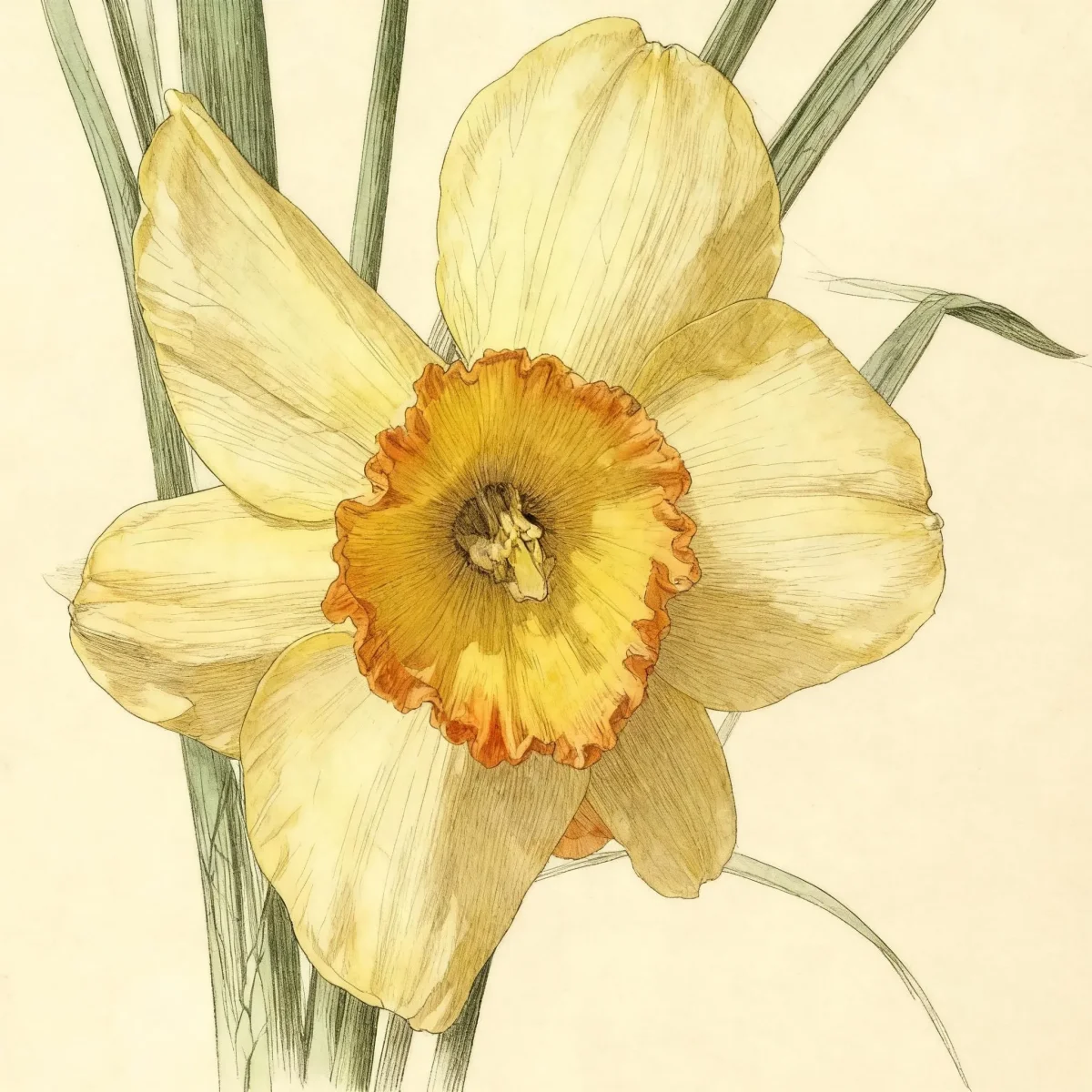
The Large-cupped daffodil, specifically the cultivar Narcissus ‘Stylish’, is a highly valued addition to any early spring garden, providing dependable color when many other plants are just waking up. This cultivar is recognized for its beautiful contrast, featuring delicate light orange petals set against a bold, strong orange center cup. As a Division II daffodil, Narcissus ‘Stylish’ fits perfectly into traditional, mixed borders.
This bulbous perennial thrives with minimal intervention, making the maintenance level low once established. It offers reliable spring interest, typically flowering in April, rewarding gardeners with structure and color before summer heat arrives. Furthermore, its natural resistance to common foraging pests adds significant practical value.
For gardeners seeking long-term spring impact, this Large-cupped daffodil naturalizes well, meaning clumps will multiply over the years, requiring less frequent division. Plant Narcissus ‘Stylish’ in groups to create the sweeping drifts that showcase their ornamental quality best.
Fast Facts
- Plant Family: Amaryllidaceae
- Plant Type: Bulb
- Hardiness Zones: USDA Zones 3-8
- Size at Maturity:
- Height: 1-1.5 ft
- Spread: 0.75-1 ft
- Bloom Time: April
- Bloom Description: Light orange with strong orange cup
- Sun Exposure: Full sun to part shade
- Water Needs: Medium
- Maintenance Level: Low
How to Grow
Planting Narcissus ‘Stylish’ bulbs should occur in the early to mid-fall season to allow for root development before the ground freezes. Select a location that receives full sun to partial shade; remember that daffodils usually orient their flowers toward the sun, so plant with any potential shade areas positioned behind the display. Good soil drainage is non-negotiable; they perform best in organically rich loams with medium moisture levels throughout the active growing period.
When planting, depth is critical: bury each bulb two to three times as deep as the bulb is tall, ensuring at least 3 inches of soil covers the top. Spacing should range from 4 to 10 inches apart, depending on the bulb size. While wider spacing may look sparse initially, the clump will fill in over time, often reducing the need for future division.
Post-bloom care centers on foliage health. After the light orange flowers fade, remove the spent flower stem just above the leaves to prevent seed formation. Crucially, the foliage must remain intact and only be cut back after it naturally yellows. This process allows the leaves to photosynthesize and store energy back into the bulb for next year’s display of this excellent Large-cupped daffodil.
Landscape Uses
Daffodils, including the elegant Narcissus ‘Stylish’, are foundational plants for achieving sequential spring color in the garden. Unlike tulips, they reliably return and multiply, making them perfect for mass plantings in beds, borders, or naturalized areas under deciduous trees. Plant them in large groupings—ideally drifts of six or more bulbs—to maximize visual impact as they emerge in April.
These reliable bulbs pair beautifully with later-blooming perennials or early shrubs, providing foundational structure before summer color palettes come online. They mix well with other spring ephemerals like grape hyacinths or early peonies. Consider planting Narcissus ‘Stylish’ near walkways or openings where their mid-season bloom can be easily appreciated up close.
Because they tolerate drought once dormant and are largely pest-free, these bulbs thrive in mixed woodland or shrub borders where they emerge before the canopy fully leafs out. Their foliage dies back neatly, giving way to summer plantings, ensuring the border remains attractive throughout the season.
Standout Features
Noteworthy Characteristics
Narcissus ‘Stylish’ belongs to the genus known for its bulbous perennials originating in Europe and North Africa, forming the backbone of the spring garden. Flowers typically feature a central cup, or corona, surrounded by six petals. This specific Large-cupped daffodil falls into Division II, meaning its cup length is greater than one-third but less than the full length of the petals. The resulting bloom stands 16-18 inches tall, presenting narrow, strap-shaped green leaves in tidy clumps, providing excellent texture throughout its growth cycle.
Tolerances
- Rabbit
- Deer
- Drought
Potential Problems
Daffodils generally require little chemical intervention, as Narcissus ‘Stylish’ is noted for being almost pest-free when planted in appropriate conditions. The primary threat comes from poor soil management; bulb rot is a significant risk if the planting site maintains soggy, poorly-drained soil through the active season. Infrequent issues may include slugs, snails, or the narcissus bulb fly.
Management primarily relies on prevention. Ensure the soil is adequately amended for drainage before planting in the fall. If bulbs still decline, monitor for signs of pests or viral issues like Narcissus yellow stripe virus. On the plus side for wildlife management, deer and rabbits typically ignore this plant due to the mild toxicity inherent in the bulbs.
Frequently Asked Questions
What hardiness zones is Large-cupped daffodil suitable for?
Narcissus ‘Stylish’ is hardy across USDA Zones 3 through 8, offering wide suitability across temperate climates.
How large does Large-cupped daffodil grow?
This variety typically reaches heights between 1 and 1.5 feet tall, with a spread of 0.75 to 1 foot wide.
What sun exposure does Narcissus ‘Stylish’ need?
For best performance and bloom quality, Narcissus ‘Stylish’ prefers a location receiving full sun to partial shade.
When does Large-cupped daffodil bloom?
This cultivar is known for its mid-season bloom time, typically occurring in April, featuring light orange petals and a strong orange cup.
Conclusion
The Narcissus ‘Stylish’ offers gardeners a reliable, low-maintenance source of vivid spring color, characterized by its attractive two-toned orange blooms. As a resilient Large-cupped daffodil, it naturally resists deer and rabbits while tolerating dry spells once established. Plan your fall planting now, ensuring well-drained soil is used, to guarantee magnificent seasonal displays for years to come.
Companion Planting
Selecting companions that emerge later or have contrasting foliage texture enhances the visual appeal of Narcissus ‘Stylish’. Consider underplanting the bulbs with low-growing groundcovers like creeping sedums or ajuga. These groundcovers hide the untidy dying foliage of the daffodil in late spring, masking the transition period effectively.
For vertical contrast, pair the 1 to 1.5-foot height of this daffodil with emerging perennials that develop later in the season, such as Peonies or Siberian Iris. By the time these perennials mature, the daffodil foliage will have yellowed and can be cut back without disrupting the summer garden scheme.
Design Ideas for Mass Planting
The effectiveness of any daffodil is multiplied when planted in quantity, and Narcissus ‘Stylish’ is no exception. Aim for drifts rather than solitary specimens; a minimum grouping of six bulbs will create a noticeable spring statement, while sweeping drifts of twenty or more create a tapestry effect. Position these plantings where they catch the morning light, as the flowers often face the sun’s direction throughout the day.
Massing bulbs beneath the bare branches of deciduous trees or large shrubs is an ideal application. The bulbs thrive in the early spring sun reaching the woodland floor before the summer canopy develops. This placement ensures the site benefits from dappled light during warmer months while the bulbs receive necessary full sun during their critical early growth phase.