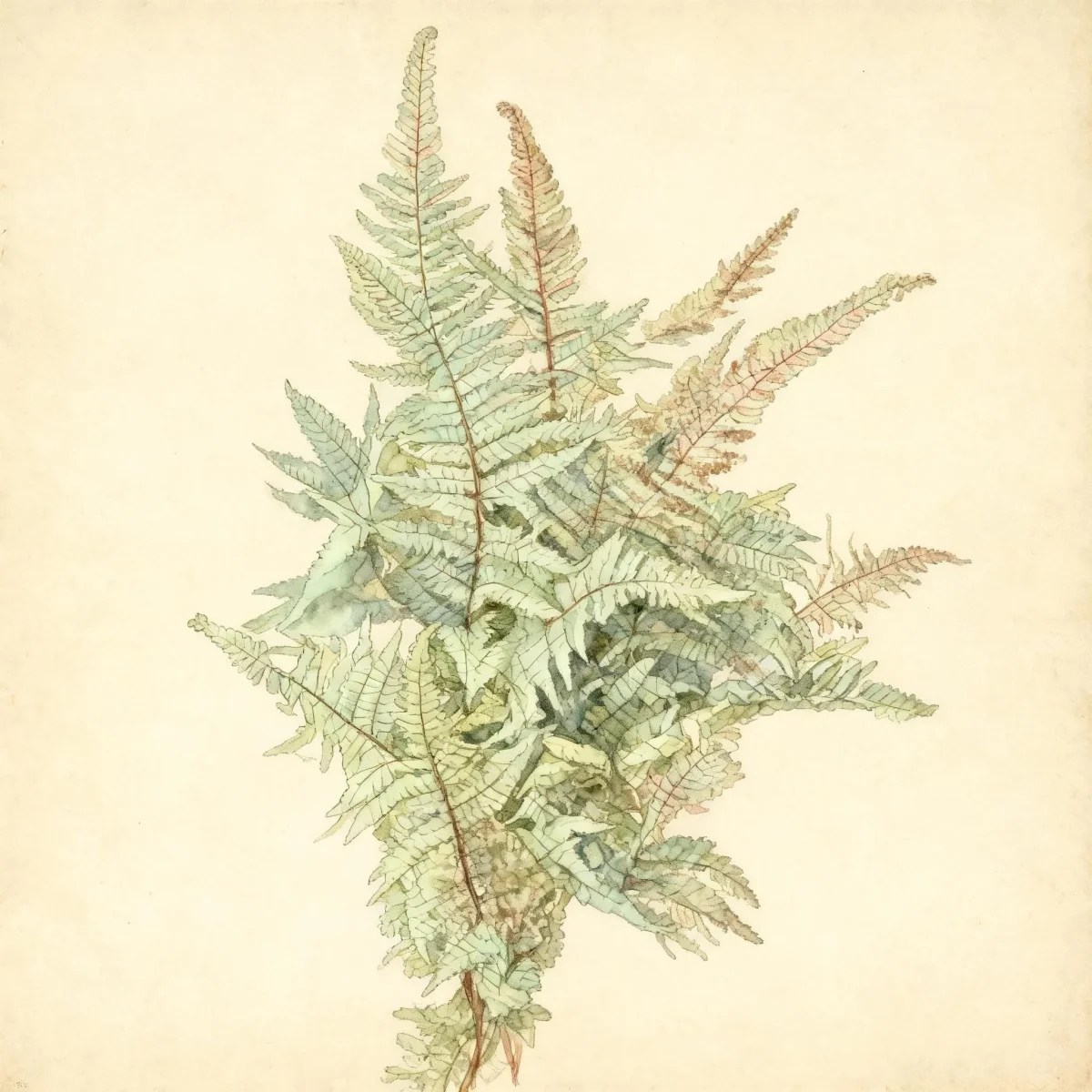
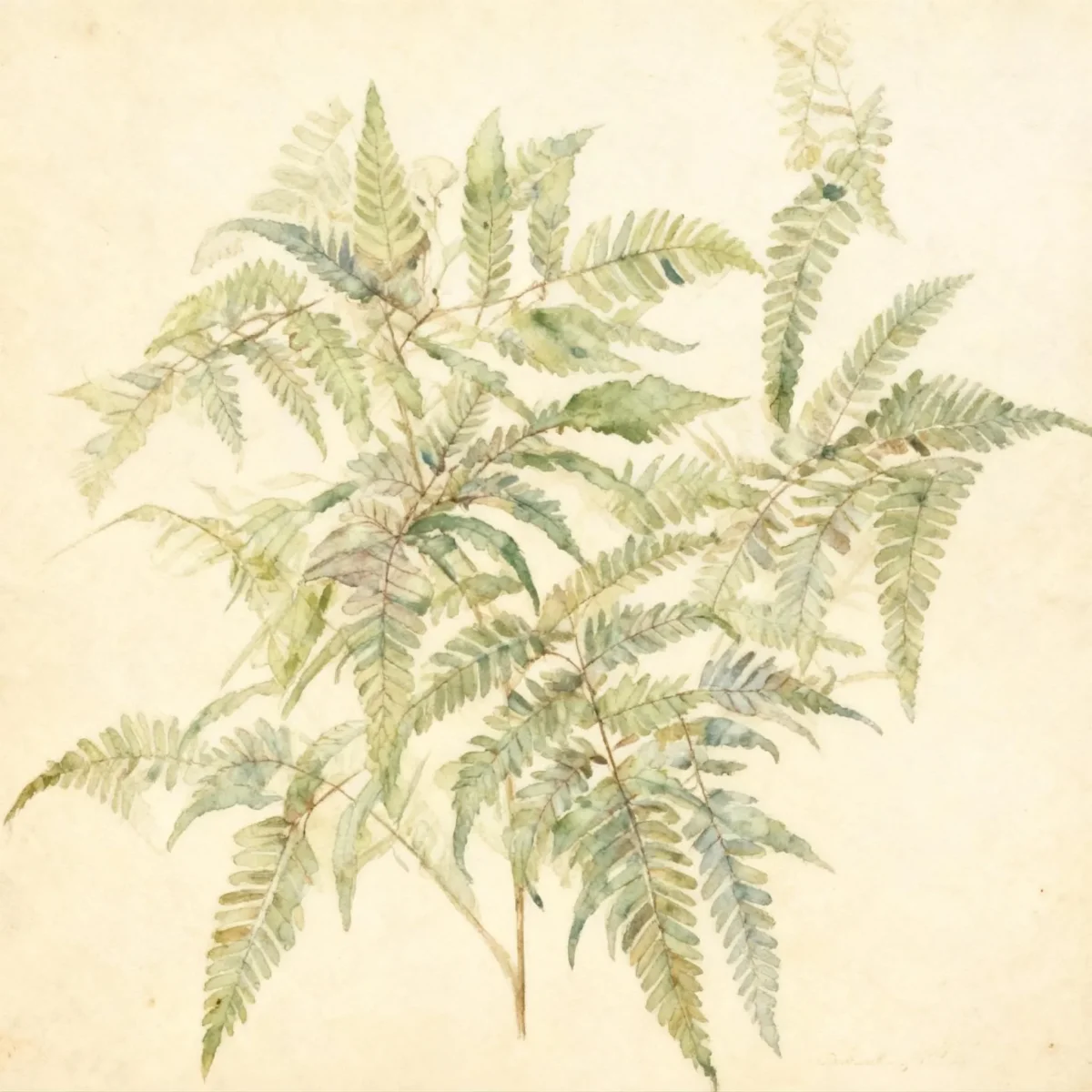
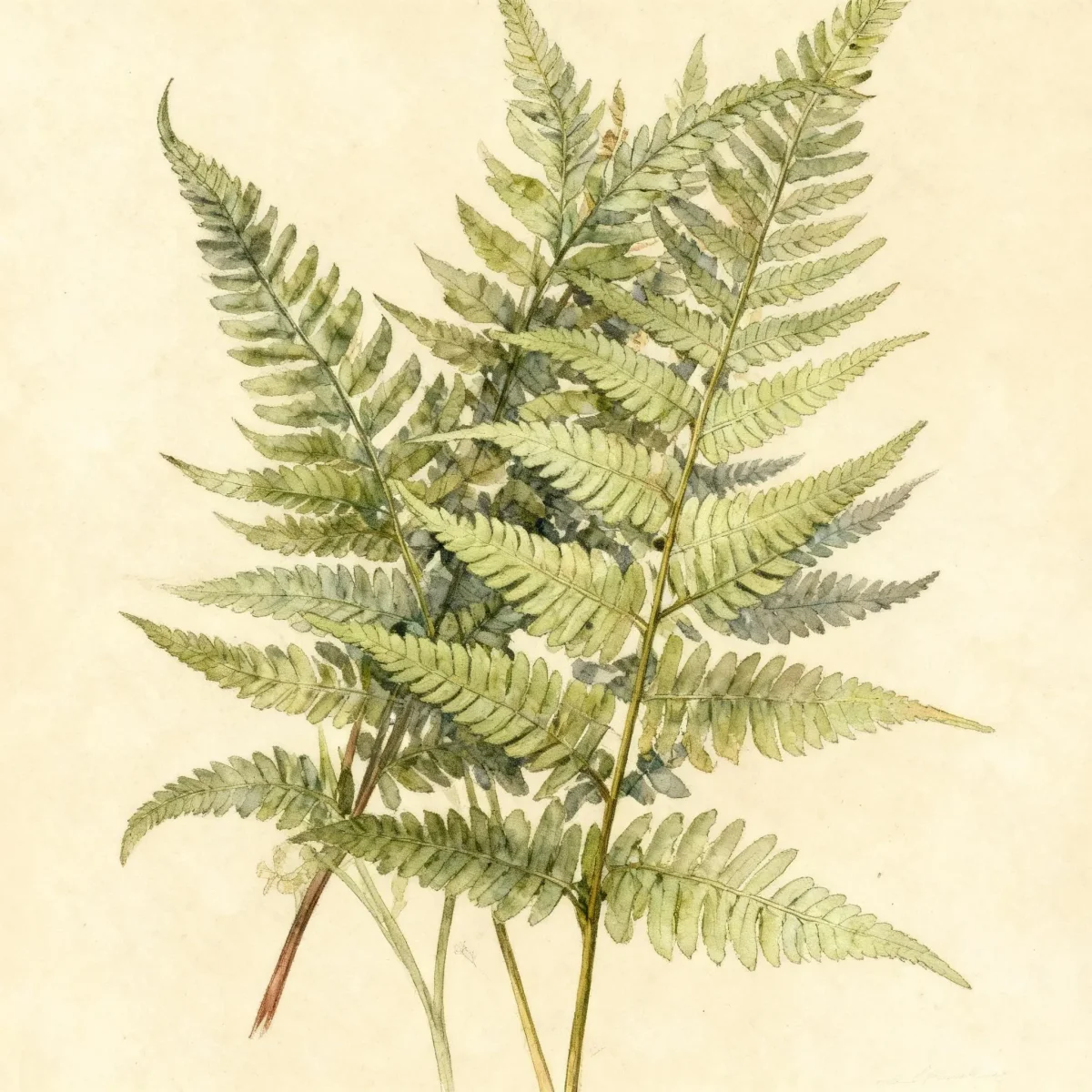
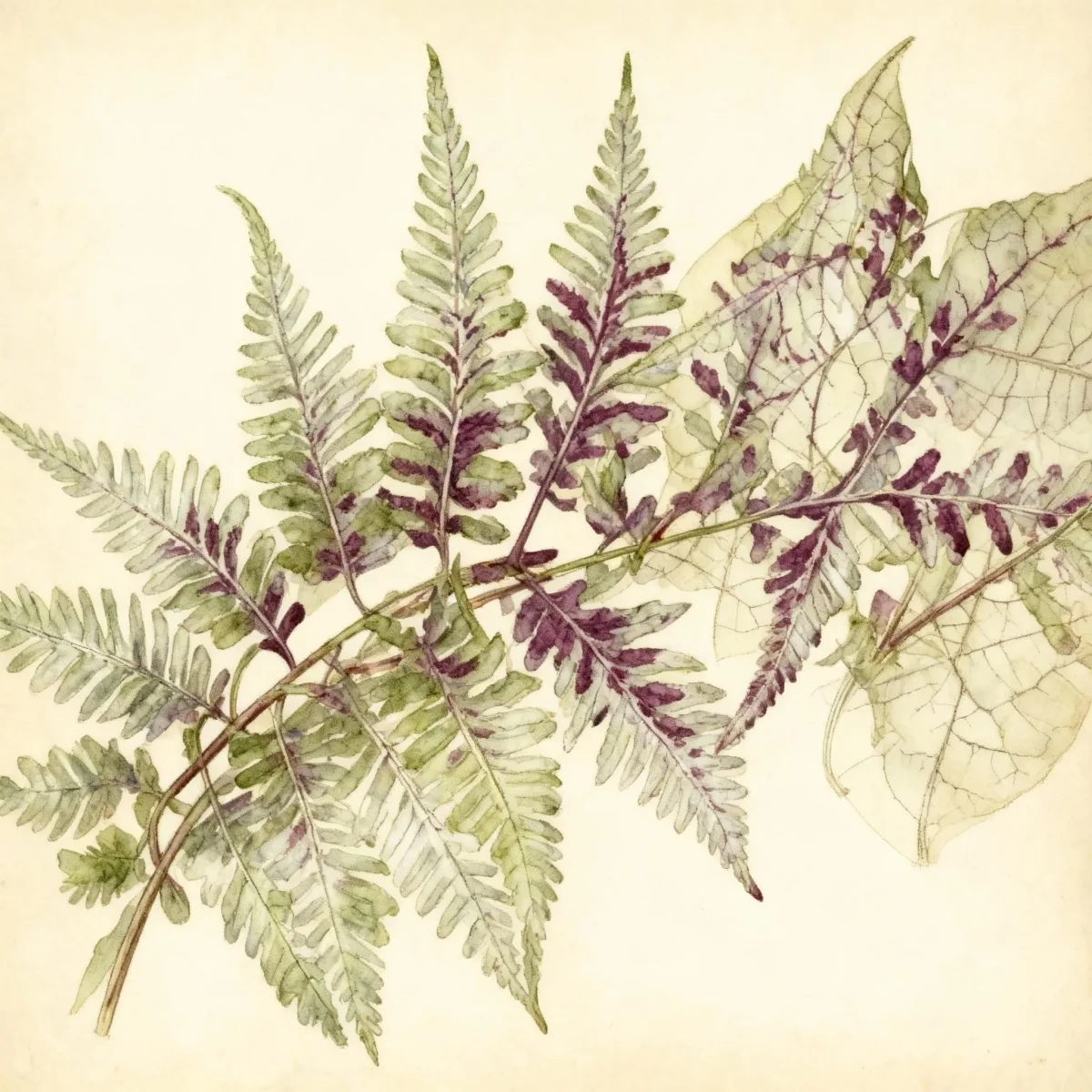
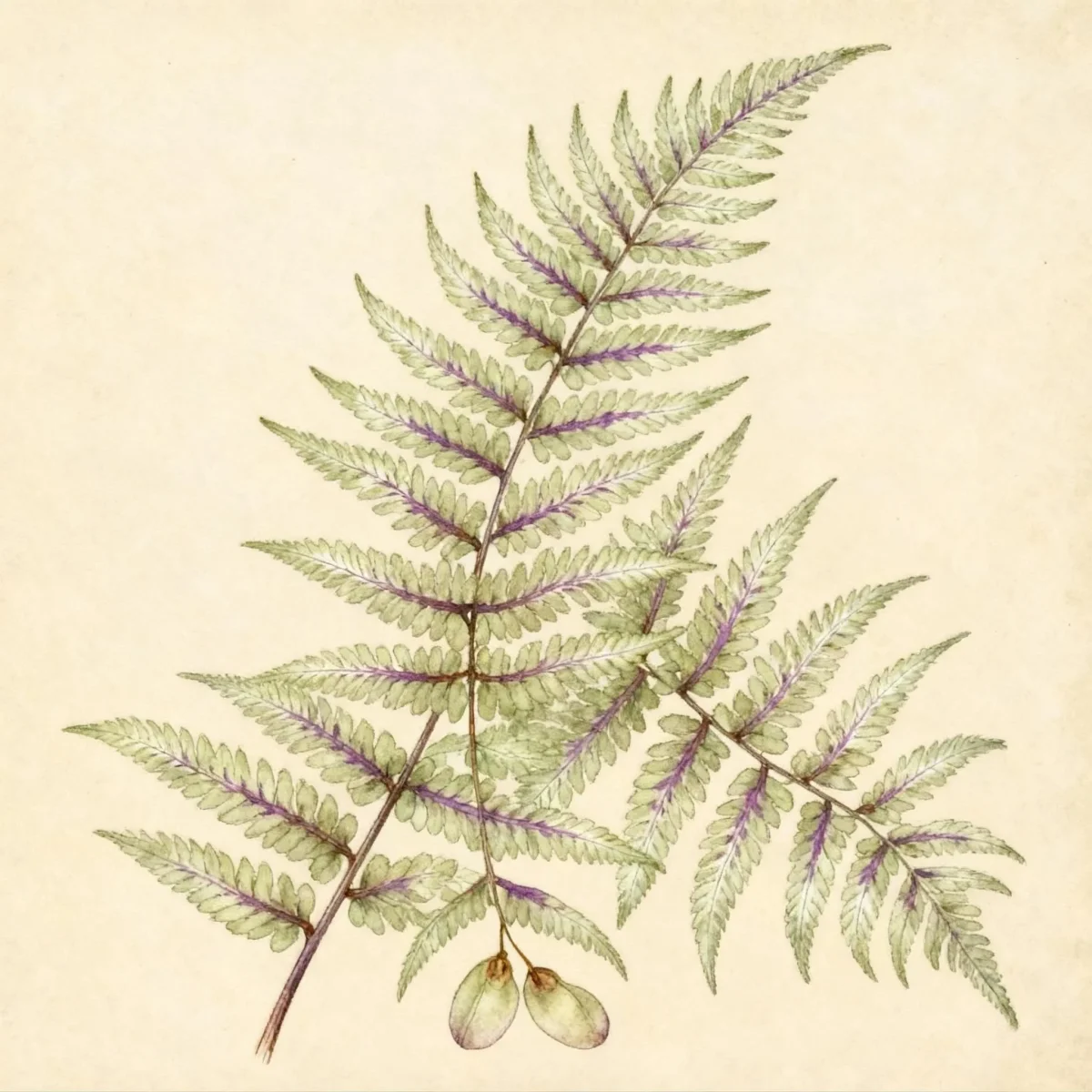
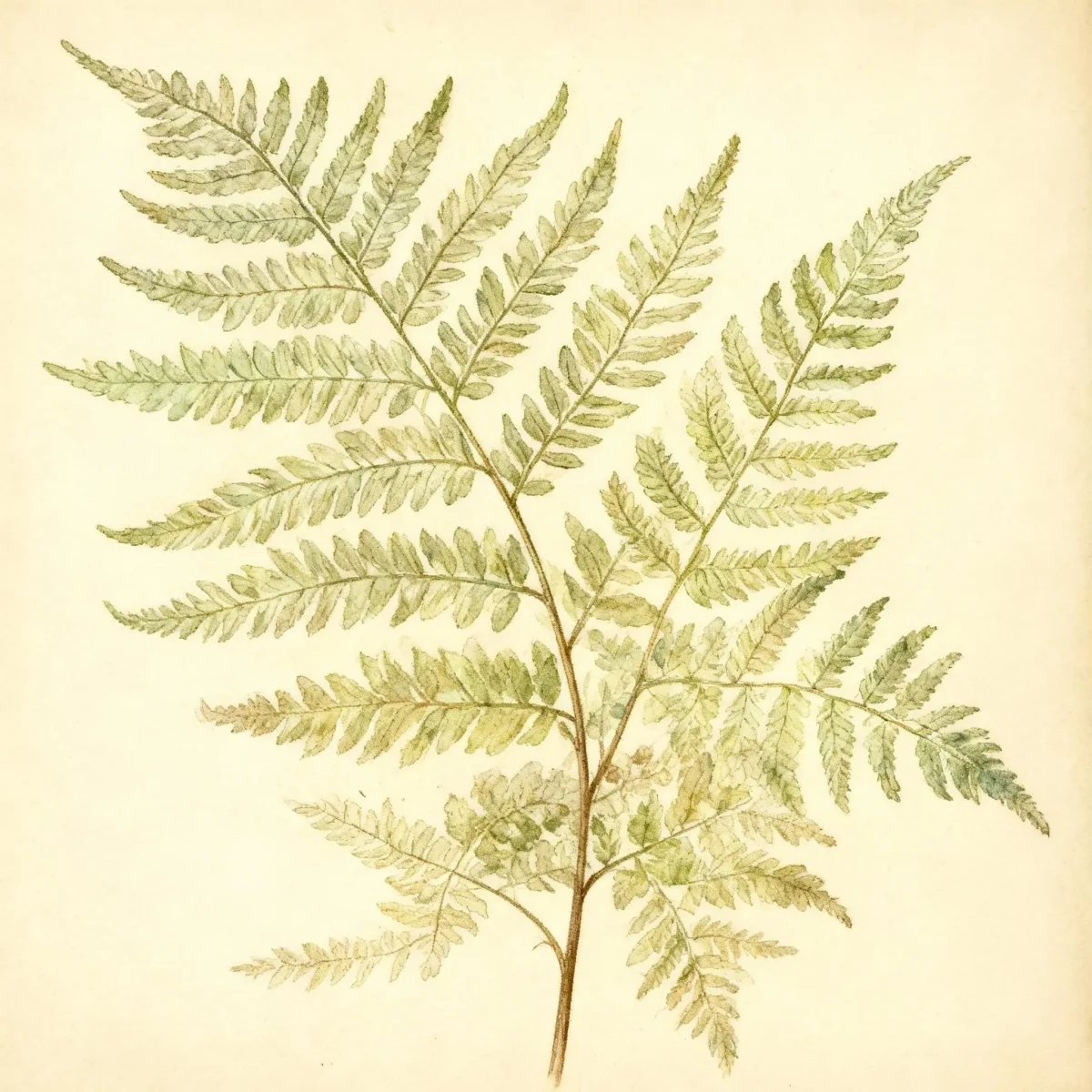
Japanese painted fern (Athyrium niponicum var. pictum 'Pewter Lace')
Athyrium niponicum var. pictum 'Pewter Lace' offers stunning pewter fronds. This low-maintenance Japanese painted fern thrives in heavy shade.
Scroll down to discover growing tips, care requirements, companion plants, and more

Complete Plant Information
Overview
The Japanese painted fern, specifically the cultivar Athyrium niponicum var. pictum ‘Pewter Lace’, brings exceptional silvery foliage into the darkest corners of the garden. This rhizomatous, deciduous fern is prized for its arching habit and striking, variegated fronds that often display pewter, silver, and maroon tones. While ornamental ferns rarely flower, the visual impact of Athyrium niponicum var. Pictum ‘Pewter Lace’ makes it a perennial favorite for adding texture and cool color contrast.
As a relatively low-maintenance plant, this Japanese painted fern is ideal for gardeners seeking lasting seasonal interest without demanding constant care. It forms slowly spreading colonies, making it excellent for naturalizing in woodland settings or establishing consistent groundcover beneath deciduous trees. Its ability to tolerate heavy shade ensures reliable color where many flowering perennials might struggle.
Gardeners value this cultivar for its ability to transform shaded areas from dull expanses into dynamic, textured landscapes. The specific selection ‘Pewter Lace’ offers enhanced pewter coloration and a longer period of good color compared to the species, making Athyrium niponicum var. pictum ‘Pewter Lace’ a worthwhile investment for dedicated shade gardening.
Fast Facts
- Plant Family: Athyriaceae
- Plant Type: Fern
- Hardiness Zones: USDA Zones 5-8
- Size at Maturity:
- Height: 1-1.5 ft
- Spread: 1-1.5 ft
- Bloom Time: Non-flowering
- Sun Exposure: Part shade to full shade
- Water Needs: Medium
- Maintenance Level: Low
How to Grow
The best success for your Japanese painted fern begins with site selection and soil preparation. Plant during spring or fall, ensuring the location provides part shade to full shade conditions; best frond color develops in areas receiving lighter, filtered shade. It requires humusy, organically rich, medium-moisture, well-drained soil. Avoid heavy clay or overly dry sites, as the soil must not be allowed to dry out completely.
Once established, routine care is minimal. Water medium to keep the soil consistently moist, especially during dry spells. Fertilizing is generally unnecessary if the soil is rich in organic matter. Pruning is typically limited to removing any winter-damaged fronds in early spring before new growth emerges.
Since this is a patented cultivar, vegetative reproduction is required for new plants. For existing clumps that become too dense, divide them gently in early spring before growth starts. This fern naturalizes well via short, branching rhizomes, slowly forming dense colonies over time in optimal, sheltered locations.
Landscape Uses
The architectural form and striking color palette of the Japanese painted fern make it versatile in shaded designs. It excels when used to soften hard edges in woodland gardens, providing a lacy counterpoint to broad-leaved hostas or darker evergreens. They are highly effective when mass-planted along shaded border fronts, creating a continuous band of cool, silver-toned foliage.
Consider utilizing Athyrium niponicum var. pictum ‘Pewter Lace’ near water features or streams where consistent moisture can be guaranteed. Their upright, arching habit also performs beautifully when used as an edging plant in shaded borders, contrasting nicely with solid green foliage plants. Look for companions that appreciate similar moisture and shade levels, such as Astilbe, Hellebores, or Tiarella (Foamflower).
Standout Features
Noteworthy Characteristics
Athyrium niponicum var. Pictum, commonly known as Japanese painted fern, is a rhizomatous, deciduous fern with an arching habit that typically grows to 18” tall. It features a slowly spreading clump of triangular, variegated fronds to 20” long, displaying soft grayish-green with silvery hues accented by dark maroon midribs. The cultivar ‘Pewter Lace’ is distinguished by its pewter fronds and pink rachis, offering an improved, longer period of good coloration described patent documents as having an overall look of purplish gray green with a white overlay.
Tolerances
- Rabbit
- Heavy Shade
Potential Problems
The Japanese painted fern generally faces no serious insect or disease problems, offering reliable pest resistance. A notable benefit is that rabbits tend to avoid this plant, making it a safer choice for areas susceptible to browsing pressure. Monitor moisture levels closely; the primary cultural problem arises from allowing the soil to become too dry, which will scorch the delicate fronds rapidly.
Frequently Asked Questions
What hardiness zones is Japanese painted fern suitable for?
Athyrium niponicum var. pictum ‘Pewter Lace’ is winter hardy in USDA Zones 5 through 8.
How large does Japanese painted fern grow?
This decorative fern typically reaches a height between 1 and 1.5 feet tall with a similar spread, forming a graceful, arching clump.
What sun exposure does Japanese painted fern need?
This plant prefers part shade to full shade conditions. For the best silvery coloration on the fronds, site it in light shade rather than deep, heavy shade.
When does Japanese painted fern bloom?
Being a fern, Athyrium niponicum var. pictum ‘Pewter Lace’ is non-flowering and is grown strictly for its handsome, textured foliage throughout the growing season.
Conclusion
The distinctive, silvery elegance of the Japanese painted fern ensures it remains a highlight in any shaded landscape design. Athyrium niponicum var. pictum ‘Pewter Lace’ provides unmatched texture and cool tones, establishing itself as a low-maintenance workhorse for dark spots. Before planting, confirm your local USDA zone compatibility and ensure you have rich, consistently moist soil prepared for this magnificent specimen.
Companion Planting
Selecting companions that share the love for rich soil and consistent moisture greatly enhances the visual appeal of the Japanese painted fern. Consider pairing it with contrasting textures, such as the bold, solid leaves of Hostas or Heuchera (Coral Bells) whose darker purples or greens will make the silvery pewter of the fern pop. Epimediums (Barrenwort) are excellent groundcover companions that offer early spring blooms beneath the arching canopy of the $Athyrium$ $niponicum$ $var.$ $pictum$ ‘$Pewter$ $Lace$’.
Seasonal Care Calendar
Early spring is the most critical time for preparation; divide overgrown clumps right before new fiddleheads emerge. As spring progresses and temperatures rise, pay close attention to watering; the Japanese painted fern requires medium moisture and wilts quickly if allowed to dry out. Summer maintenance is mostly confined to watering during dry spells, avoiding overhead sprinkling if possible to keep the delicate foliage pristine. In autumn, let the fronds naturally decay on the plant; they offer protection over winter, or you can tidy up the dead foliage just before the ground freezes solid.